Home Blog Page 991

Sri Lanka ‘Highly Wealthy’ people get special attention at IRD New Unit.

0

By: Staff Writer

March 08, Colombo (LNW): The Inland Revenue Department (IRD) will be paying closer attention to the tax compliance of highly wealthy individuals numbering 137 in the country as a part of the IRD’s efforts to restore fairness and confidence in Sri Lanka’s tax administration by ensuring that the wealthy contribute their fair share and pay the right amount of taxes.

Sri Lanka which has a population of 22 million only had 137 persons who paid income taxes above 5 million rupees and there were only 3,020 value added tax files, official data showed.

Sri Lanka had 5.8 million households and there were 293,305 tax files in 2020 and 120,000 had filed returns in 2021. About and 58,000 had paid tax.

Of the total 28,621 individuals had paid less than 10,000 rupees, 22,368 had paid 100,000 rupees or less, and 5,493 had paid 500,000 rupees or less,.

For the purpose of serving high net worth tax payers a High Wealth Individuals Unit (HWIU) has been established at the IRD, which is located in the Large Taxpayer Office.

Accordingly, the HWIU has received additional resources to focus on high-income and high-wealth individuals.

As a first measure, the HWIU will be contacting a select number of wealthy individuals and will work with them and their advisors to ensure that they are up to date with their filings of Tax Returns.

IRD will also help them identify and avoid mistakes or omissions early in the filing process. The HWIU will be conducting additional risk assessments and profiling of wealthy taxpayers to conduct audits on cases that have the highest risks.

At the same time, the IRD is enhancing its collaboration with both domestic and international organizations to access information that will help the HWIU to identify potential tax non-compliance.

The IRD will also be working closely with Banks, the Financial lntelligence Unit (FIU) and other tax administrations through its extensive Treaty network with 45 countries.

This collaboration will help the HWIU to identify banking records and assets of wealthy individuals that may not have been disclosed.

The IRD is committed to monitoring the tax compliance of wealthy individuals and their related groups.

By enhancing the focus and engaging with them, the IRD can be confident that wealthy individuals are duly paying their right amount of taxes.

Through this engagement approach, we hope to enhance their willingness to participate and contribute to the government’s revenue collection efforts to overcome the critical socio-economic issues confronted by the country, said the Inland Revenue Department in a statement issued on Thursday (7).

Land Management Trust on the cards to tackle state land issues.

0

By: Staff Writer

March 08, Colombo (LNW): Land Management Trust is to be established to address various challenges and inconsistencies surrounding the utilisation of Government lands across the country.

The Cabinet of Ministers approved the establishment of this trust as land management in Sri Lanka appears to be all over the place.

Several ministries and Government departments appear to be responsible for State land management including for forests management, wildlife conservation area management, residual land management agriculture land management and tea, rubber and coconut land management.

At present, the Government owns around 82% of the total land area in the country, managed by various agencies tasked with protecting and controlling these lands, cabinet spoksman minister Bandula Gunawrdena said.

However, the absence of a unified approach has led to numerous issues in releasing Government land for investment purposes.

These challenges have hindered investment opportunities, potential for new industries, services and job creation.

The establishment of a dedicated mechanism with proper authority is considered essential to overcome these obstacles and create a conducive environment for investments

A Circular enabling Government to hand over forests to companies enforced’ on 9 November states that “In a blatant move of violating eco-conservation laws, the Government has issued a circular, 1/2020, enabling them to hand over lands to multinational companies and businessmen, by revoking the Circular ‘05/2001,’ ‘02/2006,’ ‘5/98’ issued for the protection of the remaining remnant forests for the acquisition of lands required for the National Physical Plan implemented till 2050.

This 82.25% of land belongs equally to the 22 million people of the country living now and the future generations yet to be born. This land is held in trust by all governments on behalf of both components of owners

A land policy therefore cannot benefit a few ministers and parliamentarians and their dependents, but the current and yet to be born Sri Lankans.

Neither can a land policy benefit a country other than Sri Lanka. Selling State land to foreigners will not benefit Sri Lanka. In fact, it will have a negative effect in the long term.

It is presumed that State lands include forest land, wildlife conservation lands, wildlife lands, agriculture land and estate land that belongs to the State, unproductive land distributed amongst these (probably what is termed residual land) and other classified lands. It is not clear whether temple, church, mosque and kovil land is included as State land.

President Wickremesinghe Convenes Meeting with Opposition Leaders and IMF Delegation to Discuss Economic Progress

0

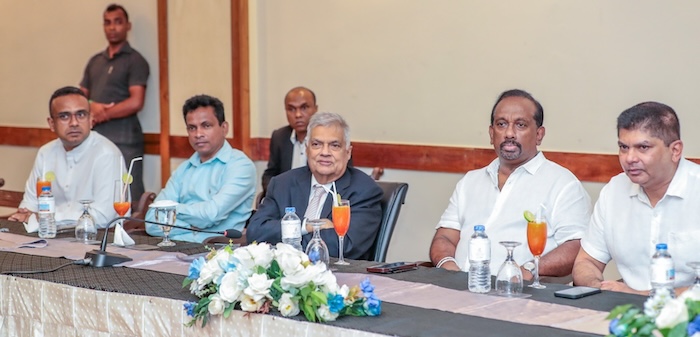
President Ranil Wickremesinghe has called for a meeting on Monday, March 11, with leaders of recognized opposition parties in parliament and a high-level delegation from the International Monetary Fund (IMF). The session, set to take place at the Presidential Secretariat, will provide opposition leaders an opportunity to engage with the IMF’s proposals and discuss key economic matters.

The IMF’s Senior Mission Chief for Sri Lanka, Peter Breuer, is leading the delegation for the second review of the Extended Fund Facility (EFF) program in the country. The review process commenced on March 7 with a meeting between President Wickremesinghe and Mr. Breuer, who expressed optimism about the program’s effectiveness and the positive outcomes resulting from the commitment of Sri Lankan authorities.

President Wickremesinghe, in response, reiterated the government’s unwavering dedication to sustaining economic momentum and advancing the nation’s economic agenda. Finance State Minister Shehan Semasinghe highlighted the government’s aim to conclude a successful review by June and secure a staff-level agreement, unlocking the third tranche of the IMF’s bailout package totaling USD 2.9 billion.

The IMF executive board had previously indicated that the second review could be completed in the first half of 2024, contingent on meeting debt restructuring and revenue targets outlined in the program. The first review was approved in December 2023, providing approximately USD 337 million as the second tranche to address the fallout from Sri Lanka’s severe financial crisis. The initial tranche was disbursed in March 2023, following the approval of the 48-month EFF program.

Govt takes action to arrest corruption vulnerabilities at Inland Revenue Dept.

0

By: Staff Writer

March 08, Colombo (LNW): The government has taken necessary policy measures to prevent corruption vulnerabilities occurring at points of interaction between Inland Revenue Department officials and the public, State Ministry of Finance sources divulged.

It has been observed that the tax amount in default as at 30.06.2023 is approximately Rs. 7.72 billion.

The IRD officials have said that only Rs. 175 billion out of Rs. 904 billion could be recovered, but no action has been taken by the department so far.

This is magnified when revenue officials exercise discretion without adequate safeguards with opportunities when assessing income or expenses, classifying goods and tax rates, or granting concessions.

Cumbersome procedures that are open to abuse, along with collusion between officials create strong incentives in an environment of few, if any, consequences for a taxpayer to offer and/or for a revenue official to solicit a bribe.

Such deals benefit the colluding corrupt parties at the expense of the government and wider society, a high official of the ministry said.

Revenue collection agencies internationally are renowned to be some of the most corruption-prone government institutions.

Countering this risk requires an explicit policy of high integrity and zero-tolerance to corruption supported by robust institutional arrangements to enforce and reinforce such a culture.

These characteristics are mostly absent in Sri Lanka; an observation confirmed by the business community and accounting profession.

Corruption vulnerabilities occur at points of interaction between revenue officials and the public.

The total number of personal tax files stood at 292,000 that was only 10 per cent of the eligible taxes paid through these files.

On the other hand there are 105,000 registered companies, but only 15 per cent of them are contributing to tax revenue.

Surprisingly, a significant 86 per cent of the government’s revenue is receiving from a mere 494 companies, Ministry data showed.

The target of IRD is in the process of opening up 1.2 million tax files whilst the target of tax files given by the Budget 2023 is 1.5 million.

However, IRD has not yet identified a mechanism to achieve the target of opening 1.2 million tax files which was set by the IRD itself. It has been revealed that it would take a number of years to fulfil this task.

This is magnified when revenue officials exercise discretion without adequate safeguards with opportunities when assessing income or expenses, classifying goods and tax rates, or granting concessions.

While this policy is justified by the specialised nature of revenue administration, it acts as a binding constraint that has led to very inward-looking institutions that are reluctant to change, particularly given strong union influences.

Furthermore, the revenue departments are hamstrung from building skills and expertise needed for the modern economy, with the Inland Revenue Department (IRD) unable to recruit specialist information technology staff and data analysts needed to move away from the corruption-prone embedded work practices.

Hindus Worldwide Celebrate Maha Shivaratri, the Night of Lord Shiva

0

March 08, Colombo (LNW): On this day, the 8th of March, Hindus across the globe observe Maha Shivaratri, an annual festival dedicated to the worship of Lord Shiva. Also known as ‘The Night of Shiva,’ this festival is marked by profound devotion and religious fervor, celebrating one of the key deities in the Hindu Trinity.

Maha Shivaratri falls on the moonless 14th night of the new moon in the Hindu month of Phalguna, signifying a significant period for spiritual reflection and worship. Devotees partake in a day and night fast, engaging in ritual worship of the Shiva Lingam, symbolizing their reverence for Lord Shiva.

A crucial aspect of the celebration involves observing a “jaagaran,” a night-long vigil believed to commemorate Lord Shiva’s role in saving the universe from darkness and ignorance. The festival holds deep spiritual significance, symbolizing the triumph of light over darkness.

Additionally, Maha Shivaratri is revered as the auspicious day marking the divine union of Lord Shiva and the Goddess Parvati. As Hindus worldwide come together to honor Lord Shiva, the festival serves as a time for reflection, prayer, and communal celebration of their faith and devotion.

Health Trade Union Alliance Sets One-Week Deadline for Allowance Resolution

0

March 08, Colombo (LNW): In a decisive move, the Health Trade Union Alliance has issued a one-week ultimatum to the Ministry of Finance to address the ongoing allowance issue. Co-Convener Chanaka Dharmawickrama announced that if a satisfactory solution is not reached within this timeframe, the alliance, representing 72 health trade unions, will resort to strike action once again, commencing on the 19th of March.

This decision was finalized during a discussion held with union representatives, highlighting the urgency and seriousness of the matter at hand.

Renowned Actress, Journalist, and Former Radio News Presenter Ramya Wanigasekara Passes Away at 73

0

March 08, Colombo (LNW): It has been reported that veteran actress, journalist, and former radio news presenter, Ramya Wanigasekara, passed away on the morning of March 8th. At the age of 73, Wanigasekara’s extensive career in the entertainment and media spheres has left an enduring impact on audiences and colleagues alike.

Having excelled in various roles throughout her distinguished career, Wanigasekara was celebrated for her versatility and proficiency as an actress, journalist, and radio personality. Her contributions to the cultural and media landscape have garnered her widespread recognition and respect.

Sri Lanka Original Narrative Summary: 08/03

0

1. During the meeting between President Ranil Wickremesinghe and the IMF team at the Finance Ministry, Peter Breuer, the Senior Mission Chief for Sri Lanka, emphasized that the IMF program is exhibiting promising signs of efficacy, translating into tangible outcomes.He commended the authorities for their unwavering commitment to the program’s implementation, noting that such dedication is instrumental in driving positive change.

2. Opposition Leader MP Sajith Premadasa has requested the government to look into the failure to provide appointments to nearly 465 graduates. MP Premadasa said that nearly 60,000 graduates had received appointments from the government recently.

3. Leader of the National Peoples’ Power (NPP) MP Anura Kumara Dissanayake met with foreign diplomats from six countries during a meeting at the Janatha Vimukthi Peramuna’s (JVP) Head Office. The meeting took place with the Palestinian Ambassador Zuhair M.H. Dar Zaid, Turkish Ambassador R. Demet Sekercioglu, Bangladesh Ambassador Tareq M.D. Ariful Islam, Indonesian Ambassador Dewi Gustina Tobing, Indonesian Consulate General Heru Prayitno, Malaysian High Commissioner Badli Hisham Bin Adam, and the Acting Maldivian Ambassador Fathimath Ghina.

4. SLPP MP Rohitha Abegunawardhana elected as the Chairman of the Parliament Committee on Public Enterprises (COPE)

5. Minister of Power and Energy, Kanchana Wijesekera, announced that the revised Electricity Act has been sent to the Legal Draftsman’s Department for review. He anticipates presenting it to Parliament for approval in April following Cabinet endorsement. The minister expressed readiness to engage stakeholders to discuss reducing fuel prices further through a transparent pricing formula. 

6. In February 2024, Sri Lanka experienced a significant surge in both workers’ remittances and tourism earnings, as reported by the Central Bank of Sri Lanka. Workers’ remittances saw a remarkable 16.88% increase, reaching USD 476.2 million, while tourism earnings skyrocketed by nearly 114%, totaling USD 345.7 million compared to the previous year. 

7. A Fundamental Rights (FR) petition has been lodged with the Supreme Court, contesting the Sri Lanka-Thailand Free Trade Agreement (SLTFTA). The petitioners seek an order from the Supreme Court to halt the execution of the trade agreement. The respondents in this petition include 27 individuals, such as the Attorney General (representing the President), the Prime Minister, Cabinet Ministers, Secretary to the Finance Ministry, and Secretary to the Trade Ministry.

8. The Inter-University Students’ Federation (IUSF) convenor, Madushan Chandrajith, along with another student activist, who were apprehended during a demonstration in Colombo, have been granted bail. The Colombo Magistrate’s Court directed their release on personal bonds of Rs. 500,000 each when they appeared before the court on the 7th.

9. The Inland Revenue Department (IRD) has announced its intensified focus on tax compliance among affluent individuals in Sri Lanka. In a bid to uphold fairness and bolster confidence in the tax administration, the IRD is determined to ensure that high-net-worth individuals contribute their equitable share and fulfill their tax obligations accurately. As part of this initiative, a specialized unit named the High Wealth Individuals Unit (HWIU) has been established within the IRD, housed in the Large Taxpayer Office.

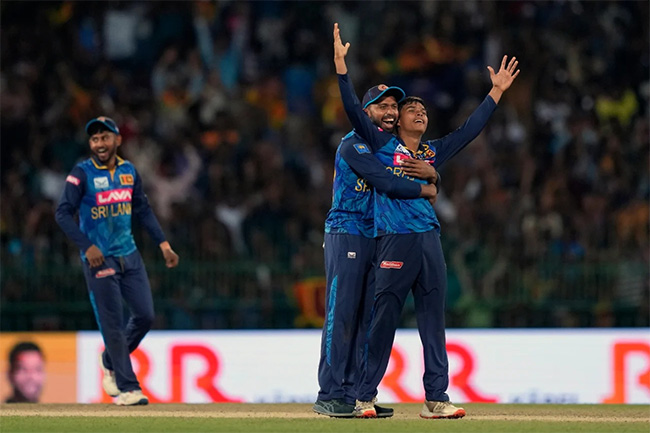
10. The second T20I between Sri Lanka and Bangladesh was marred by controversy as a disputed Decision Review System (DRS) call sparked early debate. Sri Lanka’s assistant coach, Naveed Nawaz, expressed disappointment over the overturned caught-behind decision for Bangladeshi batsman Soumya Sarkar, suggesting its potential influence on the game’s outcome.

GAVI Commends Sri Lanka’s National Immunization Programme for Outstanding Success

0

March 08, Colombo (LNW): The Global Alliance for Vaccines and Immunization (GAVI) has praised Sri Lanka’s National Immunization Programme, recognizing its significant achievements. During a meeting with Health and Industries Minister Dr. Ramesh Pathirana at the Health Ministry, GAVI’s Director of Middle-Income Countries, Adriana Jimenez Cuen, and Senior Manager for Strategic Partnerships, Middle-Income Countries, Sophie La Vincent, shared insights into their organization’s support for Sri Lanka’s vaccination efforts.

GAVI has been actively involved in providing free vaccines for the children’s vaccination program in Sri Lanka since 2003. Additionally, the alliance has played a crucial role in supplying vaccines at subsidized prices since 2008. Minister Dr. Ramesh Pathirana expressed deep appreciation for GAVI’s contributions, emphasizing the positive impact on suppressing vaccine-preventable diseases in the country.

Highlighting the outstanding level of Sri Lanka’s national vaccination program, Minister Pathirana mentioned that the World Health Organization has recognized the country for providing excellent health services at a low cost. He extended gratitude for GAVI’s support in maintaining the free health service in Sri Lanka and emphasized seeking ongoing assistance when needed.

The GAVI representatives affirmed their commitment to facilitating equitable access to vaccines for preventable diseases globally. During their two-day visit to Sri Lanka, the focus will be on strengthening existing relations and enhancing monitoring measures for vaccine storage and cold storage. Additional Secretary (Public Health) of the Health Ministry, Dr. Lakshmi Somatunga, also participated in the meeting, reinforcing the collaboration between GAVI and Sri Lanka.

Foreign Affairs Minister Unveils Revolutionary Agricultural Program to Empower Farmers

0

March 08, Colombo (LNW): Foreign Affairs Minister Ali Sabry addressed Parliament on the 7th, announcing the commencement of a revolutionary government program that involves releasing a portion of state land for cultivation purposes. Stressing the government’s commitment to protecting farmers, he participated in the debate on the adjournment motion focusing on mitigating the damage inflicted on the agriculture industry by wild animals.

Minister Sabry highlighted the significant role farmers play in the country, constituting 27 percent of the workforce, yet only eight percent contribute to the national economy. He expressed concern over the insufficient income received by hardworking farmers, emphasizing the need to address the underlying issues in the agricultural sector.

Citing the fact that 80 percent of land cultivated by peasants belongs to smallholders, Minister Sabry outlined the government’s groundbreaking initiative to allocate part of the government-owned land to farmers. This move aims to empower farmers and enhance productivity, particularly in the face of challenges posed by wild animals and insect-related damage affecting crops like maize and coconut.

Minister Sabry urged the formulation of a comprehensive program to modernize the agriculture industry, emphasizing the importance of introducing modern technology and new crop varieties. Drawing a parallel with Vietnam’s success in rice exports, he underscored the impact of granting land rights to Vietnamese peasants and emphasized the need for a similar approach in Sri Lanka.

The Minister emphasized the government’s responsibility to train farmers in innovative crop protection methods and advocated for the introduction of an insurance system to compensate farmers for crop damage. Additionally, he stressed the need for regulating fertilizer usage, as excessive application was reported, leading to wastage. Minister Sabry called for a streamlined system in the crop sales process, post-harvest crop protection, and increased attention to food safety measures, ultimately fostering progress in the agriculture sector.