By: Isuru Parakrama
July 07, Colombo (LNW): The Negombo prison clash in Sri Lanka has become a major international headline because it was unusually deadly, involved both inmates and prison officers, and exposed deeper concerns about prison security, gang violence, and overcrowding.
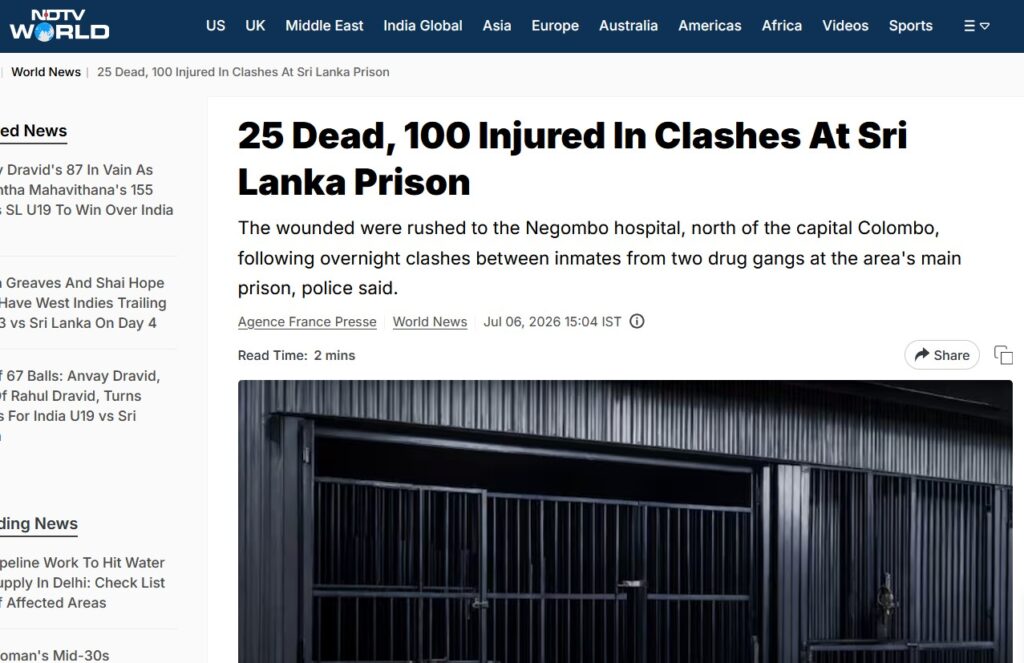
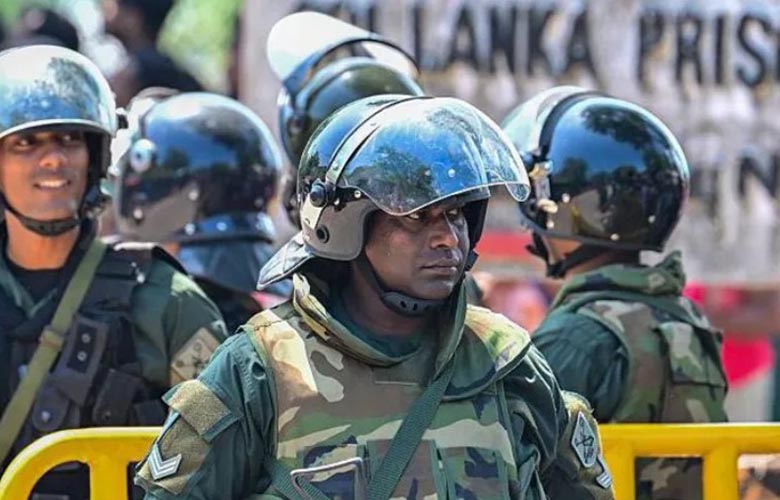
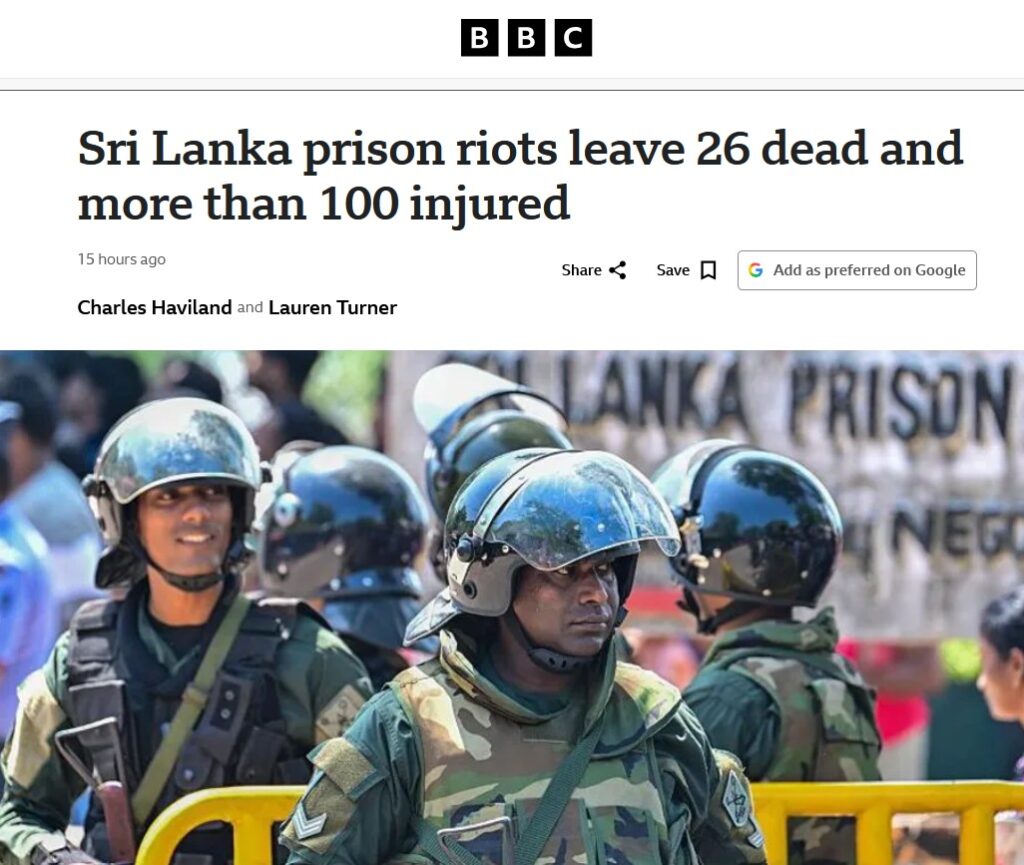
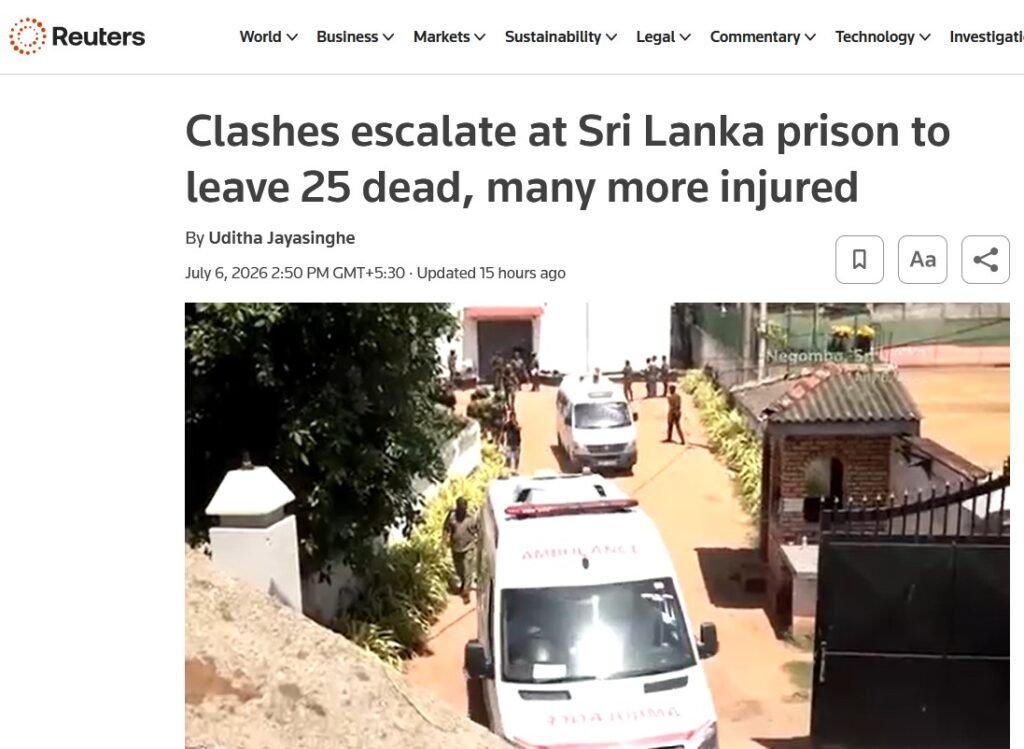
Reuters reported that the violence at the prison in Negombo left 25 people dead and about 100 injured, while Sri Lankan authorities later said the death toll rose to 26 and a probe committee was appointed. Later it was confirmed that the death toll has risen to 27.
What happened
The violence broke out at Negombo Prison, about 35 kilometres north of Colombo, on Sunday and continued into Monday. Reported triggers included a clash between rival inmate groups, with early accounts linking the unrest to drug-trafficking networks inside the prison.
The situation escalated when inmates reportedly seized firearms from the prison armory, turning the confrontation into a far more lethal incident. International coverage repeatedly described the event as one of Sri Lanka’s deadliest prison riots in years.
Why it drew global attention
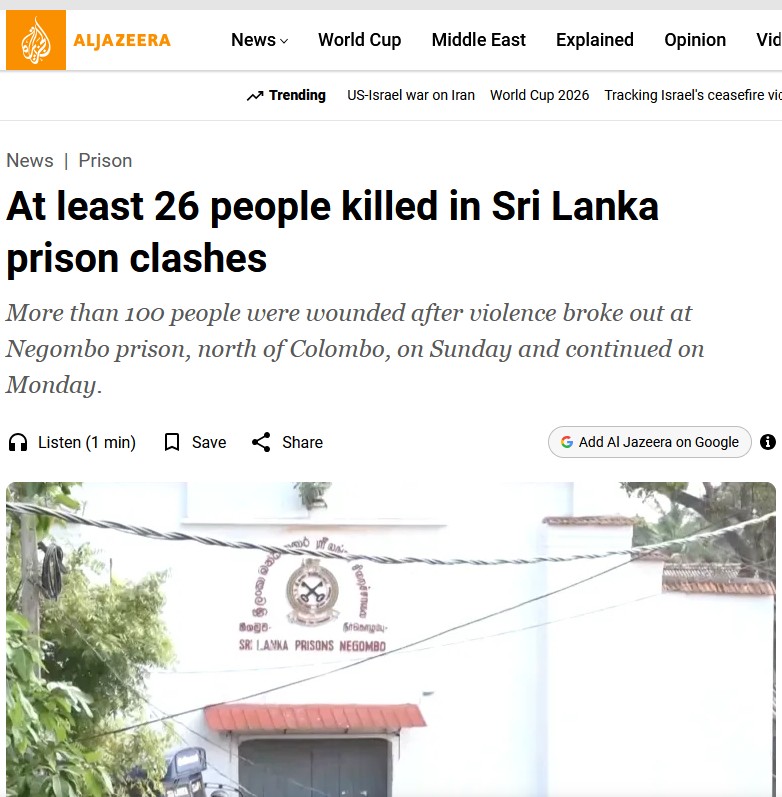
The scale of casualties is the main reason the story traveled so widely. International outlets including Reuters, ABC News, Al Jazeera, The Hindu, The Independent, and the Straits Times all carried versions of the report, showing that it quickly moved beyond local Sri Lankan coverage.
The case also touched on issues that resonate internationally: organised crime, prison governance, and state capacity. Reports said Sri Lanka’s prisons are severely overcrowded, with one estimate putting the prison population at about four times capacity.
Official response
Sri Lanka’s Justice Minister Harshana Nanayakkara said a three-member committee would investigate the violence and recommend preventive measures. The committee was chaired by retired Supreme Court Judge Priyantha Fernando, with two senior legal figures as members.
Authorities also said they were examining how firearms became available inside the prison and whether failures by officials contributed to the escalation. Security measures were tightened, and inmates involved in the clashes were moved to other facilities to prevent further violence.
Wider significance
This incident is likely to intensify scrutiny of Sri Lanka’s prison system, especially the overlap between incarceration, drug gangs, and institutional weakness. With the Opposition parties calling out for the immediate resignation of the Justice Minister, the National Peoples Power (NPP) administration is now facing enhanced scrutiny over its consequent governance setbacks. For an international audience, it is not just a prison riot; it is a warning sign about how overcrowding and criminal networks can turn a localised dispute into a mass-casualty crisis.