
By: Staff Writer
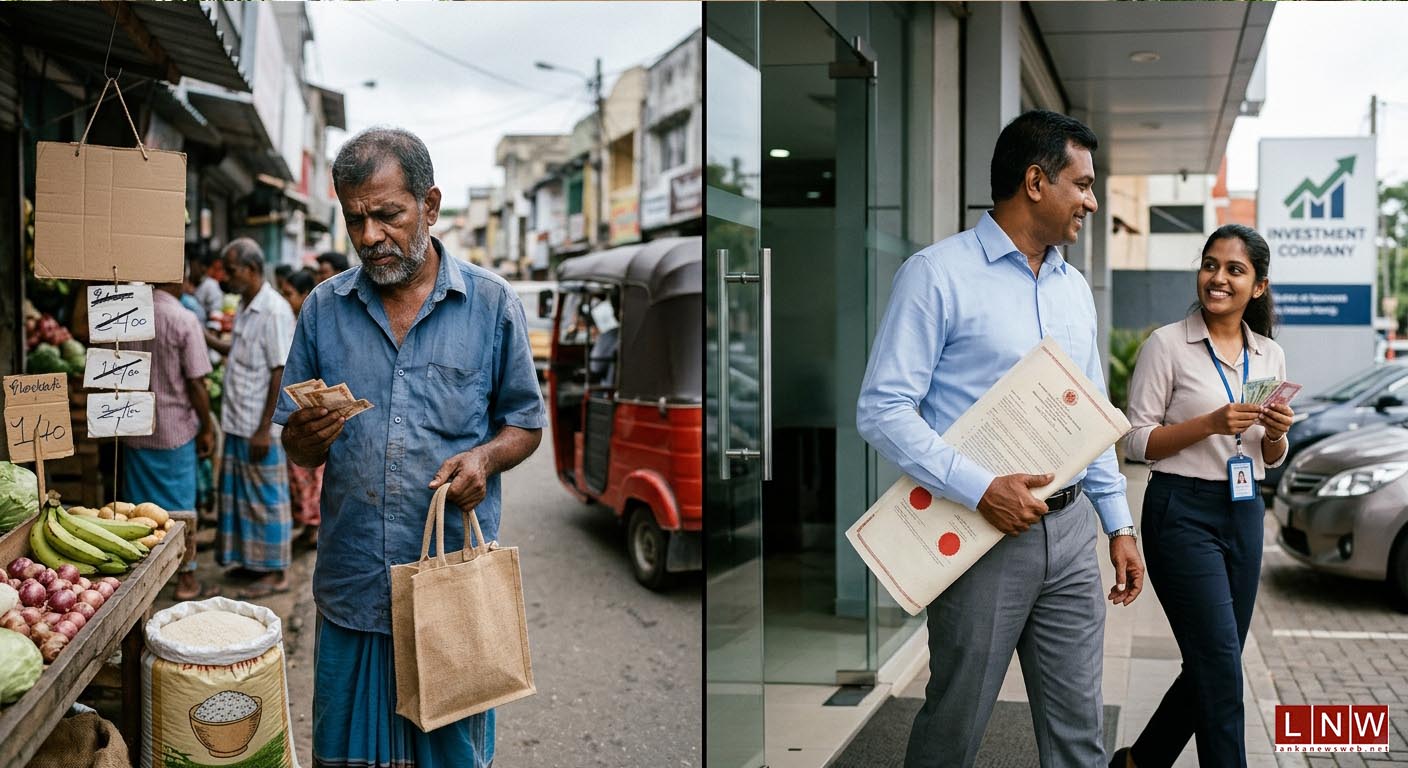
November 15, Colombo (LNW): Sri Lanka’s 2027 Budget promises economic transformation, higher salaries for selected public servants, tax relief for professionals and new incentives for investors. But beneath the impressive financial allocations and political assurances lies a fundamental question: who is actually benefiting from the country’s economic recovery, and who continues paying for it?
Presented by President and Finance Minister Anura Kumara Dissanayake on November 12, the Budget attempts to move the country from economic stabilisation towards growth-oriented development.
However, a closer examination of its household-level implications suggests that the benefits remain unevenly distributed, with millions of ordinary citizens continuing to face high living costs, indirect taxation and inadequate income protection.
The most revealing evidence comes from the Government’s revenue projections.Budget 2027: Ordinary Sri Lankans Continue Paying the Price
Of the projected Rs. 5,687 billion in tax revenue for 2027, Rs. 3,592 billion, or 63.2%, is expected from taxes on goods and services. Another Rs. 754 billion is projected from external trade taxes.
This continuing dependence on consumption-related taxation has serious implications for household budgets.
Unlike income taxes, which are linked to earnings, consumption taxes affect people regardless of their financial circumstances.
A low-income worker and a highly paid professional purchasing the same taxable product face the same tax component, although its impact on their disposable income is vastly different.
Economist Umesh Moramudali has previously warned that Sri Lanka must rebuild its revenue-raising capacity after decades of declining tax collection. His analysis highlights the dangers of indiscriminate tax reductions without a sustainable alternative revenue strategy.
The question is whether the present tax structure distributes the responsibility of financing the Government fairly.
The Budget’s educational and food concessions illustrate the limited scale of immediate household relief.
Removing 18% VAT on exercise books, textbooks, dictionaries and other educational publications will help parents. A family spending Rs. 15,000 annually on books for two children could save approximately Rs. 2,288.
However, other essential school expenses, including pens, pencils, schoolbags and shoes, remain subject to VAT.
Reductions in import levies on dried sprats, Maldive fish and dried chillies also offer some relief. Yet, after accounting for the higher sugar levy, the illustrative four-person household in the accompanying budget assessment saves only Rs. 123 monthly on these food items.
Combined with educational savings, the estimated benefit is Rs. 313.68 monthly, or approximately Rs. 3,764 annually.
These concessions are modest when compared with the continuing erosion of household purchasing power.
October 2026 inflation reached 8.3%, while the national poverty line stood at Rs. 17,742 per person monthly in September.
For a family spending Rs. 45,000 monthly on essential necessities, an 8.3% increase represents approximately Rs. 3,735 in additional monthly expenditure if the same consumption basket rises proportionately.
Against this background, the Government’s decision to maintain Aswesuma allocations at Rs. 230 billion without an across-the-board increase in benefits raises questions about the adequacy of social protection.
Only selected disability and chronic kidney disease allowances receive an additional Rs. 2,500 monthly.
The personal income tax reforms, effective April 2027, provide considerably greater direct benefits to salaried professionals.
The monthly tax-free threshold increases from Rs. 150,000 to Rs. 162,500. Employees earning Rs. 300,000 monthly could save Rs. 5,250, while those earning Rs. 450,000 or more could save up to Rs. 15,750 monthly.
Daily wage earners, informal workers and many estate employees receive no direct benefit from these reforms.
The wider economic consequences cannot be ignored. Budget expenditure reaches Rs. 7,933 billion, including Rs. 2,643 billion in interest payments and Rs. 260 billion for Cyclone Ditwah reconstruction. The projected deficit stands at 4.5% of GDP.
External risks, including Middle East tensions, higher fuel prices and the predicted El Niño weather pattern, could further undermine the limited household concessions.
The Government must therefore move beyond presenting tax concessions as evidence of social relief.
A budget cannot be judged by the number of concessions announced but by how effectively it protects the purchasing power of ordinary citizens.
Unless essential food, transport, electricity and education become more affordable, Sri Lanka’s economic recovery will continue to be measured through Treasury figures rather than the financial realities of its people.