
By: Staff Writer
November 15, Colombo (LNW): Forty-eight wealthy international travellers will arrive in Sri Lanka in May 2028 as part of a luxury journey costing US$238,000 per person. Their destination will be Cape Weligama, one of the country’s prestigious luxury hospitality properties.
The announcement is being celebrated as a significant international endorsement of Sri Lanka’s tourism potential. Yet an important economic question deserves closer examination: how much of this extraordinary travel expenditure will actually enter the Sri Lankan economy?
The Four Seasons Private Jet Experience, branded Coastlines & Culture, will operate from May 4 to 26, visiting eight countries aboard a specially customised Airbus A321 private jet.
Sri Lanka will feature for the first time, with the visitors scheduled to spend May 12–15 at Cape Weligama, operated by Resplendent Ceylon.
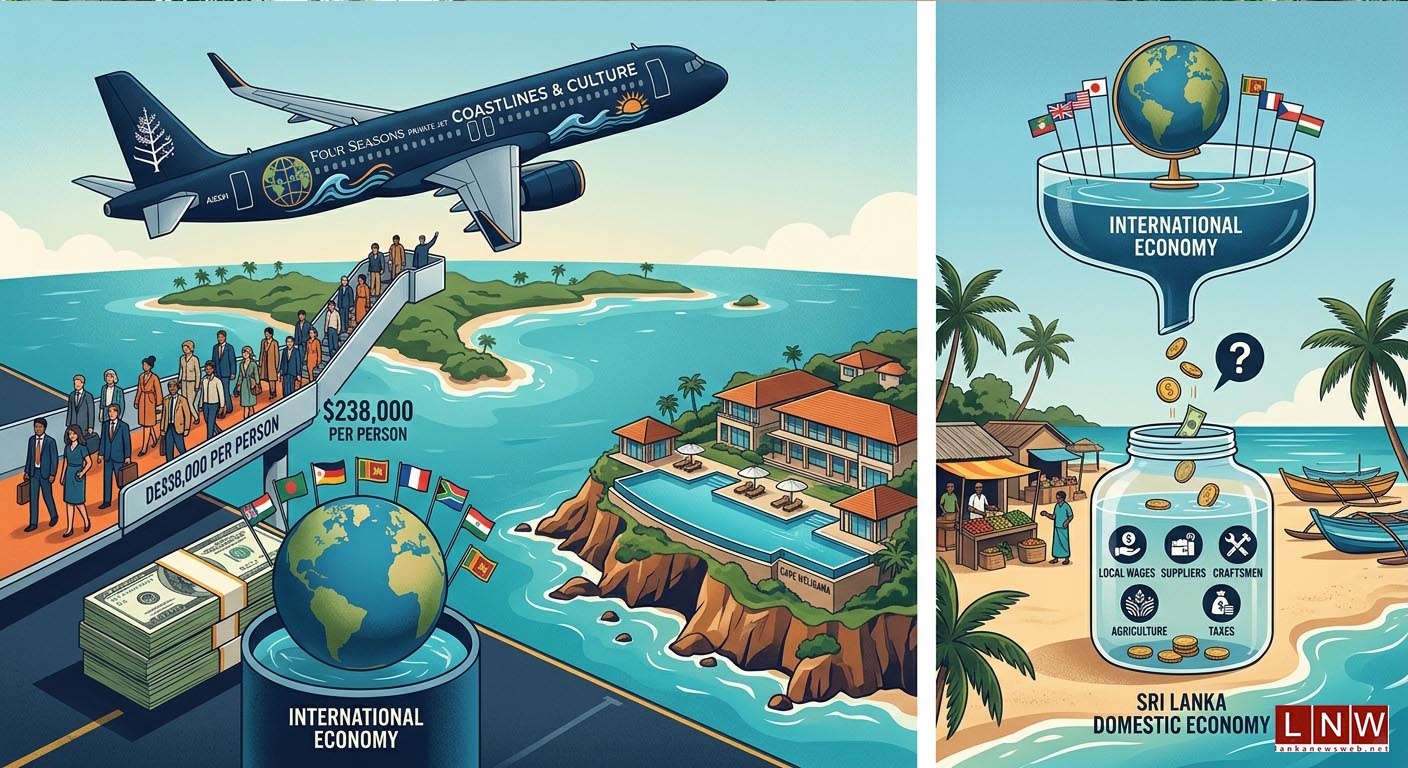
At US$238,000 per traveller, the 48-person group represents a combined package value of US$11.424 million.
That figure is impressive. But presenting it as potential Sri Lankan tourism revenue would be economically misleading.
The package covers 23 days of international travel across eight destinations. The US$11.424 million is therefore the overall value of the international experience, not money earned by Sri Lanka.The actual domestic economic contribution has not been disclosed.
This distinction matters because Sri Lanka’s foreign exchange position, tourism earnings and wider economic recovery depend not simply on the number of wealthy visitors arriving but on how much they spend locally and how effectively those earnings circulate through the economy.
Malik J. Fernando, Chairman of MJF Leisure and Co-Chairman of MJF Holdings, described the selection of Cape Weligama as a privilege and an important recognition for the country’s hospitality industry.
His assessment is understandable. Being selected by an internationally recognised luxury hospitality brand provides valuable exposure for a Sri Lankan-owned hospitality group.
However, the national economic impact must be measured against more substantial indicators.
How much will the 48 visitors spend on accommodation, food, transportation, excursions and local experiences? How many Sri Lankan employees and suppliers will benefit? Will local agricultural producers, artisans, transport operators and small businesses participate in delivering the experience?
These are questions that matter beyond the publicity surrounding an exclusive international itinerary.
Sri Lanka needs high-spending visitors because luxury tourism can generate substantial revenue without requiring the same visitor volumes as mass tourism. But the benefits must extend beyond a small number of premium establishments.
There is also an important opportunity to promote Sri Lankan culture, cuisine, wildlife, craftsmanship and heritage to an influential international audience.
If the visitors return, recommend the destination or introduce Sri Lanka to other wealthy travellers, the long-term promotional value could exceed the immediate expenditure of their three-day stay.
Nevertheless, the country should resist confusing international prestige with measurable economic success.The real achievement will not be the announcement that 48 millionaires are coming to Sri Lanka.
It will be whether their visit creates lasting opportunities for the wider tourism industry, strengthens local supply chains and brings additional foreign exchange into the country.Luxury tourism must deliver more than luxury headlines.