
LISTEN TO STORY
By: Isuru Parakrama
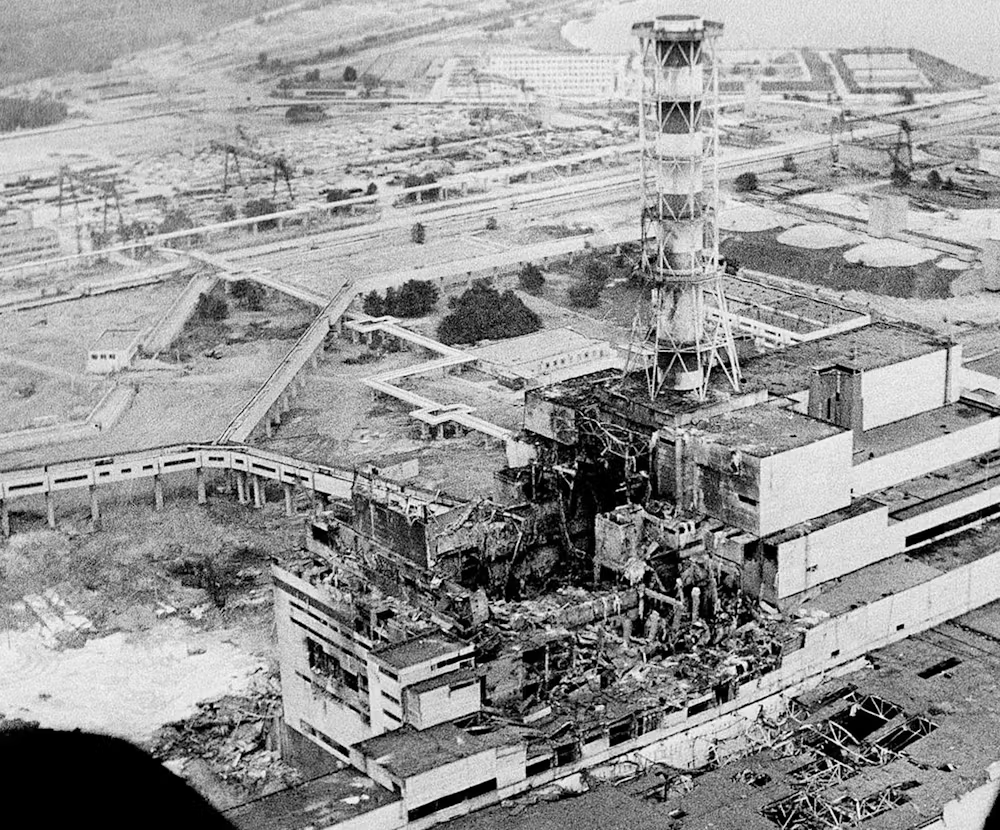
August 16, World (LNW): On April 26, 1986, Reactor No. 4 at the Chernobyl Nuclear Power Plant in northern Ukraine exploded during a poorly planned safety test, unleashing the worst nuclear disaster in history. The blast and subsequent fire released massive quantities of radioactive material into the atmosphere, contaminating large parts of Europe, killing dozens within weeks, and triggering long-term health, environmental, and political consequences that continue to shape the region four decades later.
The Chernobyl Nuclear Power Plant and the RBMK Reactor
The Chernobyl plant, located about 130 kilometres north of Kyiv near the town of Pripyat, was a flagship of Soviet nuclear engineering. By 1986, it comprised four operational RBMK-1000 reactors (with two more under construction), each capable of generating 1,000 megawatts of electricity. The RBMK (Reaktor Bolshoy Moshchnosti Kanalny, or “High-Power Channel-type Reactor”) was a uniquely Soviet design: a graphite-moderated, light-water-cooled reactor that used natural uranium fuel in individual pressure tubes rather than a single large pressure vessel.
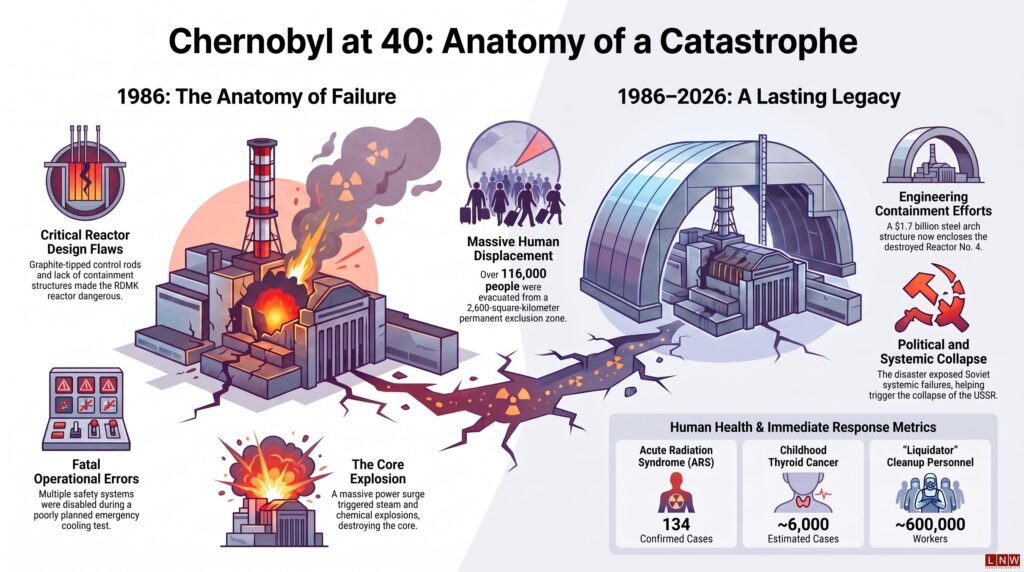
This configuration had advantages—simpler construction, the ability to refuel while operating, and dual use for electricity and weapons-grade plutonium production—but also critical safety weaknesses. Unlike Western pressurised-water or boiling-water reactors, RBMKs lacked a robust containment structure capable of withstanding a major accident and preventing the release of radioactivity. More dangerously, they exhibited a positive void coefficient at low power: as cooling water turned to steam (“voids”), reactivity increased rather than decreased, creating a potential runaway feedback loop under certain conditions. In addition, the control rods—meant to shut down the reactor in an emergency—had graphite “displacers” at their tips. When inserted, these graphite tips initially displaced neutron-absorbing water and briefly increased reactivity before the neutron-absorbing part of the rod took effect, a design flaw that would prove fatal on the night of the accident.
These technical vulnerabilities were known to some Soviet engineers and regulators but were classified and not fully communicated to plant operators, leaving crews unaware of how the reactor could behave under abnormal conditions.
The Fateful Safety Test: Night of April 25–26, 1986
The disaster unfolded during a scheduled test intended to verify whether, in the event of a total power loss, the spinning turbine could generate enough electricity to run emergency cooling pumps for about 40–50 seconds until backup diesel generators came online. Such a test had been attempted before without success; on April 25, 1986, the day-shift crew began preparing Reactor No. 4 for another try.
The test procedure required the reactor to operate at a stable thermal power of around 700–1,000 megawatts. However, due to a combination of grid operator requests and operational delays, the power level was reduced far below the intended range, eventually dropping to around 30 megawatts thermal—well outside the safe envelope for the test. At such low power, the reactor became highly unstable because of xenon poisoning (a buildup of neutron-absorbing fission products) and the positive void coefficient.
To compensate, operators withdrew most of the control rods, leaving only a small number inserted—far fewer than regulations required for safe operation. Multiple safety systems were also deliberately disabled to prevent the reactor from automatically shutting down during the test, including the emergency core cooling system and certain automatic trip mechanisms. The shift change at midnight further complicated matters, with the night crew inheriting an already precarious configuration and incomplete handover.
By the early hours of April 26, the reactor was in an extremely unstable state: low power, high xenon concentration, minimal control rod insertion, and several key safety systems offline. At 01:23:04, the test officially began, with coolant pumps driven by the turbine as it coasted down. As water flow decreased and steam formation increased, the positive void coefficient caused power to rise sharply.
At 01:23:40, recognising the dangerous surge, someone in the control room pressed the AZ-5 (emergency shutdown) button, commanding all control rods to insert fully. Because of the graphite tips on the rods, their initial insertion displaced neutron-absorbing water in the lower core and momentarily increased reactivity instead of reducing it. In the already unstable core, this triggered an enormous power spike—estimated at roughly 100 times the reactor’s normal operating level within seconds.
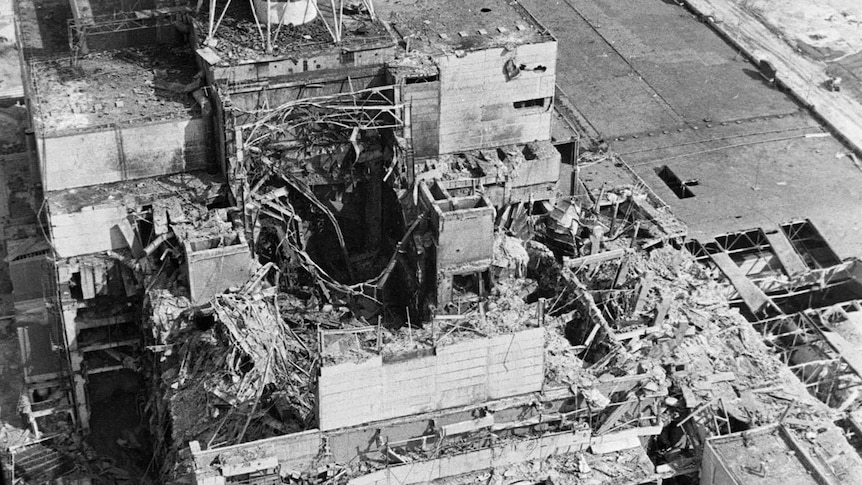
The resulting energy release caused a massive steam explosion that blew off the 1,000-tonne reactor lid, ruptured fuel channels, and exposed the core to the atmosphere. A second explosion followed shortly after, likely from hydrogen or another rapid chemical reaction, scattering burning graphite and highly radioactive fuel fragments across the site and starting multiple fires. The reactor core was effectively destroyed, and the containment building severely damaged.
Immediate Aftermath: Firefighting, Acute Radiation, and the First Deaths
Within minutes, plant firefighters and local emergency crews arrived, initially unaware that they were confronting a catastrophic radiation release rather than an ordinary industrial fire. The first fire brigade, led by Lieutenant Volodymyr Pravik, attacked flames on the roof of the ventilation building and around Reactor No. 4, followed by additional units from Pripyat and Chernobyl.
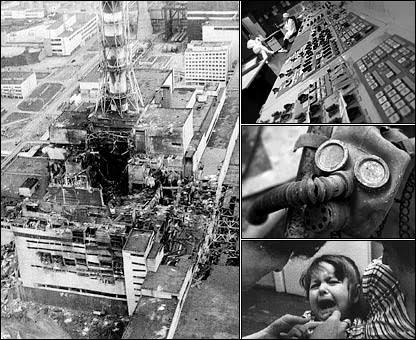
These first responders received enormous radiation doses from gamma rays and inhaled radioactive particles, as they had no specialised protective equipment for such conditions. Many developed acute radiation syndrome (ARS), characterised by nausea, vomiting, skin burns, bone marrow failure, and immune collapse. Of approximately 600 workers and emergency personnel on site in the early hours of April 26, 134 were officially diagnosed with ARS; 28 of them died within weeks from radiation injuries compounded by severe burns and infections. Two plant workers were killed instantly by the explosion itself.
Firefighting efforts continued through the night and into the next day, gradually bringing the visible fires under control, though the reactor core continued to burn and release radioactivity for days. Helicopters began dropping sand, boron, lead, and other materials onto the exposed core in an attempt to smother the fire and absorb neutrons, exposing pilots and crews to further high doses.
Cover-Up, Delayed Evacuation, and International Detection
Despite the scale of the accident, the Soviet authorities initially treated it as a local industrial incident and imposed strict secrecy. For more than 36 hours, residents of Pripyat (population ~49,000), located just three kilometres from the plant, were not informed of the danger or told to stay indoors. Children played outside, and people went about their normal routines while a plume of radioactive isotopes—including iodine-131, cesium-137, and strontium-90—drifted over the town and beyond.
Only on the afternoon of April 27 did authorities begin evacuating Pripyat, organising buses to move residents to temporary shelters and eventually to other parts of Ukraine and the Soviet Union. In total, about 116,000 people were evacuated from the immediate 30-kilometre exclusion zone in 1986, with tens of thousands more resettled in subsequent years from contaminated areas in Ukraine, Belarus, and Russia.
The Soviet government’s initial silence began to crack only when radiation monitors in Scandinavia detected abnormally high levels. On April 28, Swedish and Finnish nuclear facilities registered elevated radioactivity and traced it back to the Soviet Union, prompting international inquiries and forcing Moscow to acknowledge that a serious accident had occurred. This external detection shattered the illusion of control and exposed the regime’s reluctance to share critical safety information, even with its own citizens.
The “Liquidators”: Massive Cleanup and Containment Efforts
In the months and years following the explosion, the Soviet Union mobilised an enormous human and material response. An estimated 600,000 people—known as “liquidators”—were involved in cleanup, containment, and decontamination operations between 1986 and the early 1990s.
This cohort included plant workers, firefighters, military personnel, miners, engineers, pilots, and civilians conscripted or volunteered for hazardous duty.
Their tasks were extraordinarily dangerous: removing highly radioactive debris from the reactor roof and surrounding areas; constructing the initial “sarcophagus” to enclose the destroyed reactor; decontaminating buildings, roads, and soil; culling and burying contaminated livestock; and draining water from beneath the reactor to prevent a potential steam explosion if molten core material reached groundwater. Many liquidators received significant radiation doses, though precise figures remain debated.
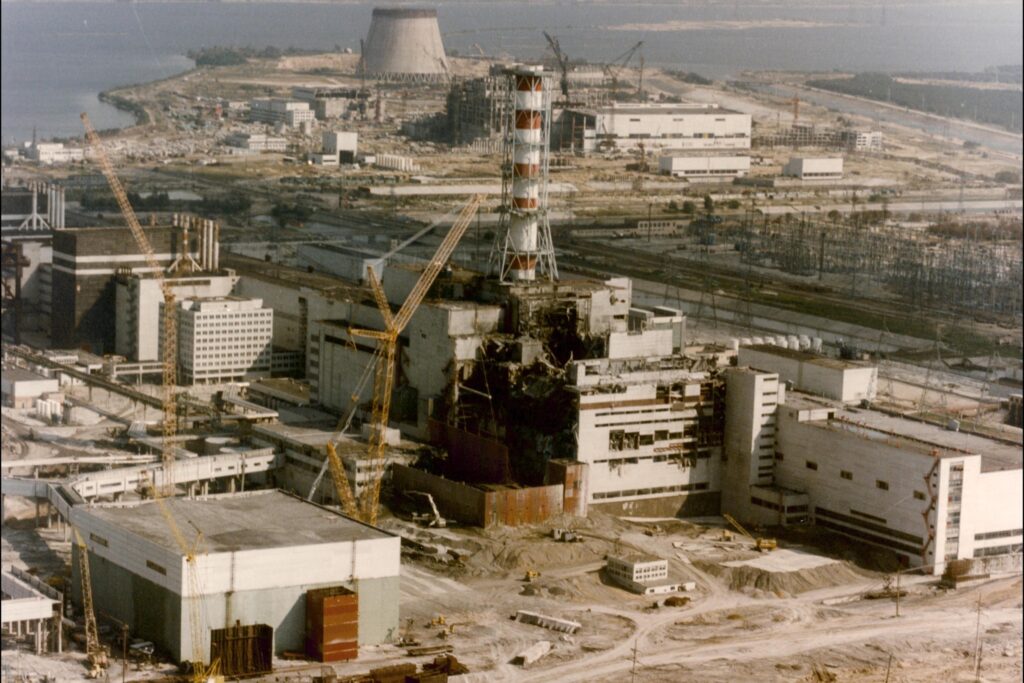
The most visible engineering achievement was the “Object Shelter,” commonly known as the sarcophagus: a massive steel-and-concrete structure hastily built over Reactor No. 4 between May and November 1986 to isolate the damaged core and limit further releases.
Constructed under extreme radiation conditions, often by remote-controlled machinery and workers with limited protection, the sarcophagus was an extraordinary feat but always intended as a temporary solution. Over time, corrosion and structural stress raised concerns about its long-term integrity, prompting plans for a more durable containment system.
Health Consequences: From Acute Radiation to Thyroid Cancer Epidemic
The human health toll of Chernobyl has been both immediate and long-term, and remains the subject of extensive scientific study and public debate. The clearest direct effects were the acute radiation injuries and deaths among plant staff and first responders: 31 deaths in 1986 are widely attributed to the explosion and ARS, with additional ARS-related fatalities in the following years.
Among the broader population, the most robustly documented long-term effect is a sharp increase in thyroid cancer, particularly among those who were children or adolescents at the time of the accident. Radioactive iodine-131, released in large quantities, concentrated in the thyroid gland after being inhaled or ingested via contaminated milk and food. In Belarus, Ukraine, and Russia, thousands of thyroid cancer cases were recorded in the subsequent decades, with estimates around 6,000 cases among those exposed as children. While thyroid cancer generally has a high survival rate when treated, the psychological and medical burden has been substantial.
Other potential health impacts—such as increases in leukemia, solid cancers, cardiovascular diseases, and hereditary effects—have been more difficult to quantify definitively. Some studies suggest elevated risks for certain cancers and non-cancer diseases among highly exposed groups, including liquidators and residents of heavily contaminated areas, but results are mixed and confounded by factors like stress, displacement, and socioeconomic disruption. Major international assessments (e.g., by the UN Scientific Committee on the Effects of Atomic Radiation and the IAEA) conclude that, apart from thyroid cancer, there is no clear evidence of large-scale increases in cancer or genetic effects in the general population attributable to Chernobyl radiation, though uncertainties remain for some subgroups.
Beyond direct medical effects, the disaster produced profound psychological and social consequences: trauma from evacuation, loss of homes and communities, stigma faced by evacuees and liquidators, and persistent anxiety about radiation and health. These “radiophobia” effects, compounded by mistrust of authorities, have had lasting impacts on mental health and social cohesion in affected regions.
Environmental Legacy: Exclusion Zone, Red Forest, and Radioactive Contamination
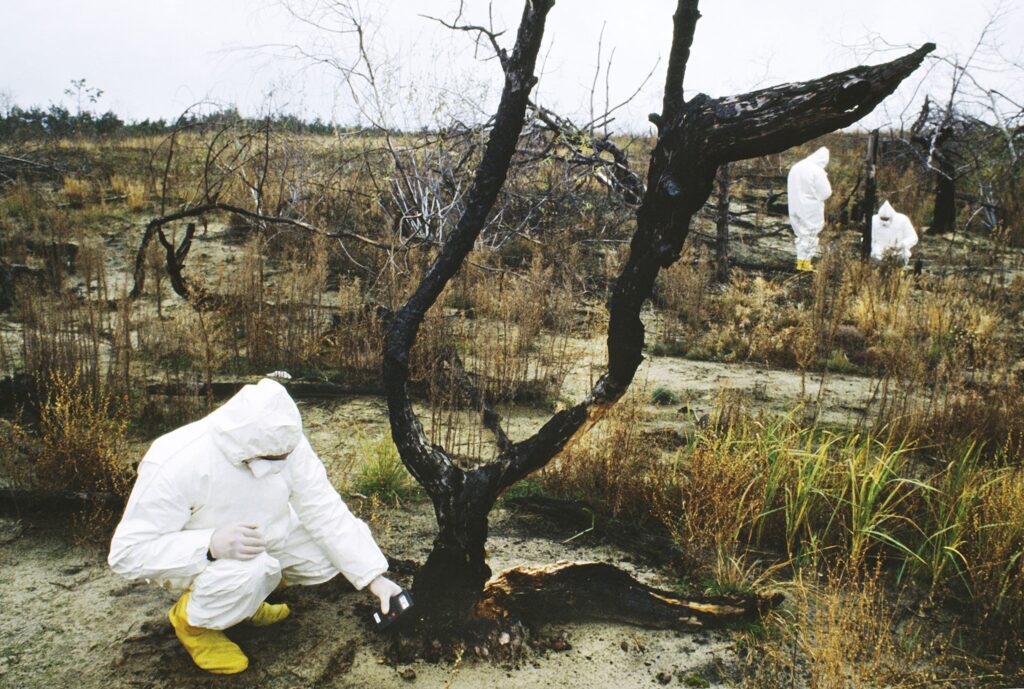
The environmental footprint of Chernobyl is vast and enduring. A 30-kilometre exclusion zone around the plant was established in 1986 and remains largely off-limits to permanent human settlement, encompassing roughly 2,600 square kilometres of forests, fields, and abandoned towns. Within this zone, the so-called “Red Forest”—a pine woodland near the plant—received such intense radiation that trees died and their needles turned reddish-brown before being bulldozed and buried.
Radioactive isotopes deposited across large areas of Belarus, Ukraine, and Russia contaminated soil, water, and vegetation, entering food chains and requiring long-term agricultural restrictions. Cesium-137, with a half-life of about 30 years, remains the primary long-term contaminant of concern in many areas, continuing to affect land use and local ecosystems.
Paradoxically, the exclusion zone has also become an unintended wildlife sanctuary. With human activity largely removed, populations of wolves, boar, deer, bison, and other species have rebounded, leading to complex ecological studies on how wildlife copes with chronic low-dose radiation. Research indicates both resilience and subtle biological effects, with ongoing debates about the net impact of radiation versus the benefits of reduced human pressure.
Wildfires in the exclusion zone, such as those in 2020, have raised concerns about remobilising radioactive particles in smoke and ash, potentially affecting nearby populations and complicating long-term management of the contaminated landscape.
Political Shockwaves: Chernobyl, Glasnost, and the Unraveling of the USSR
Chernobyl was not only a technological and humanitarian catastrophe; it was also a political earthquake that helped accelerate the collapse of the Soviet Union. The initial cover-up, delayed evacuation, and downplaying of the disaster starkly contradicted Mikhail Gorbachev’s emerging policies of glasnost (openness) and perestroika (restructuring), exposing the deep-rooted culture of secrecy, denial, and institutional incompetence within the Soviet system.
Gorbachev himself later described Chernobyl as a turning point that shattered public confidence in the state and revealed systemic failures that reform could no longer conceal. The disaster forced greater transparency, as the government could no longer hide the scale of the accident once foreign governments and media began reporting on it. This newfound openness, in turn, emboldened critics, nationalist movements, and civil society across the Soviet republics, contributing to the momentum for independence and systemic change.
The economic burden was also immense. Soviet officials allocated an estimated 18 billion rubles (equivalent to several tens of billions of dollars in later valuations) to containment, evacuation, compensation, and decontamination, straining an already faltering economy. Belarus, Ukraine, and Russia continued to devote significant portions of their national budgets to Chernobyl-related programmes for decades, with Belarus alone spending over $13 billion between 1991 and 2003 and estimating total economic losses in the hundreds of billions.
In this sense, Chernobyl acted as both symptom and catalyst: it revealed the weaknesses of the Soviet model—centralised decision-making, suppression of information, prioritisation of prestige over safety—and hastened the political and economic crises that culminated in the USSR’s dissolution in 1991.

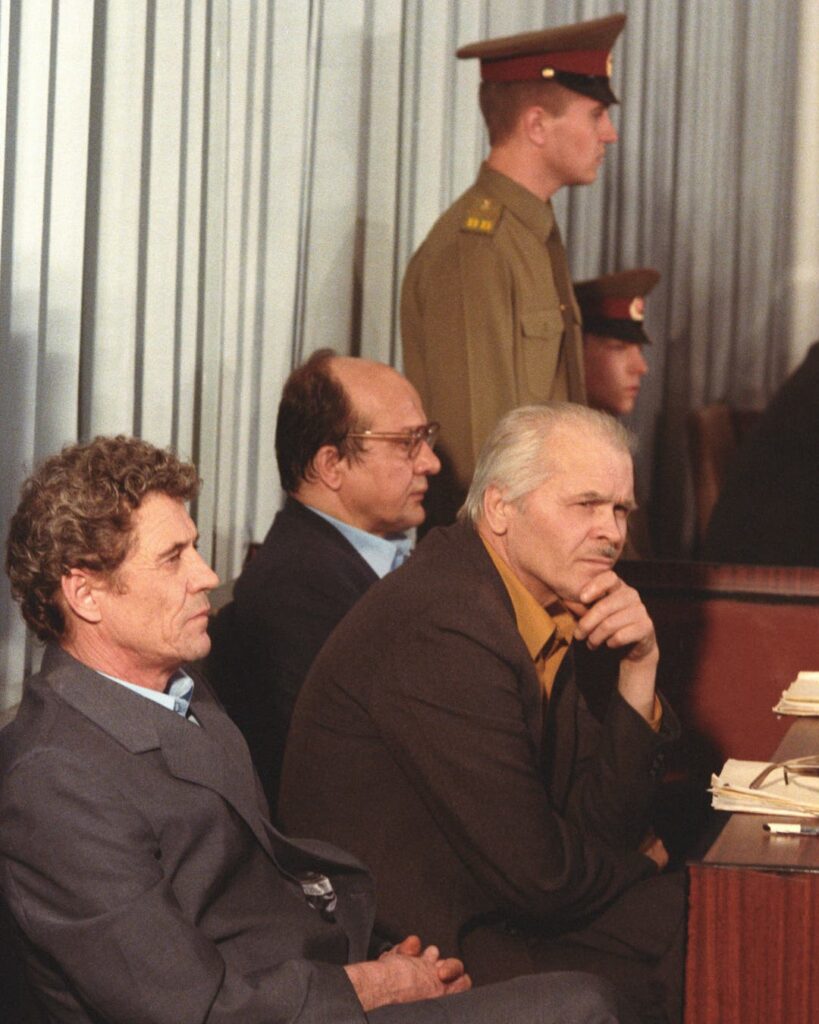
Photo: Igor Kostin
Global Nuclear Safety Reforms and Regulatory Transformation
The Chernobyl disaster profoundly reshaped international nuclear safety norms and regulatory frameworks. In its aftermath, the International Atomic Energy Agency (IAEA) and other bodies intensified efforts to develop global safety standards, improve accident reporting, and foster a culture of transparency and peer review. The IAEA’s INSAG reports, particularly INSAG-7, provided detailed technical analyses of the accident and became foundational documents for understanding RBMK vulnerabilities and human-factor issues.
Key lessons from Chernobyl influenced subsequent reactor designs, operational procedures, and regulatory philosophies worldwide. Modern nuclear regulations now emphasise:
– Independence of regulatory bodies from plant operators and political authorities.
– Defense-in-depth safety concepts, with multiple redundant barriers and systems.
– Rigorous emergency preparedness and public communication protocols.
– International cooperation, information sharing, and joint safety assessments.
The disaster also spurred the development of the International Nuclear Event Scale (INES), which classifies nuclear accidents by severity; Chernobyl and the 2011 Fukushima Daiichi accident remain the only two Level 7 (major accident) events on this scale.
While nuclear power continued to expand in many countries, Chernobyl also fueled anti-nuclear movements and prompted some states to reconsider or phase out nuclear programmes, reflecting enduring public anxiety about catastrophic risk.
The Sarcophagus, New Safe Confinement, and Ongoing Engineering Challenges
The original sarcophagus, completed in late 1986, succeeded in reducing radioactive releases but was always a stopgap measure, vulnerable to corrosion, seismic activity, and structural fatigue. By the 1990s and 2000s, international concern grew that its failure could lead to another major release of radioactivity.
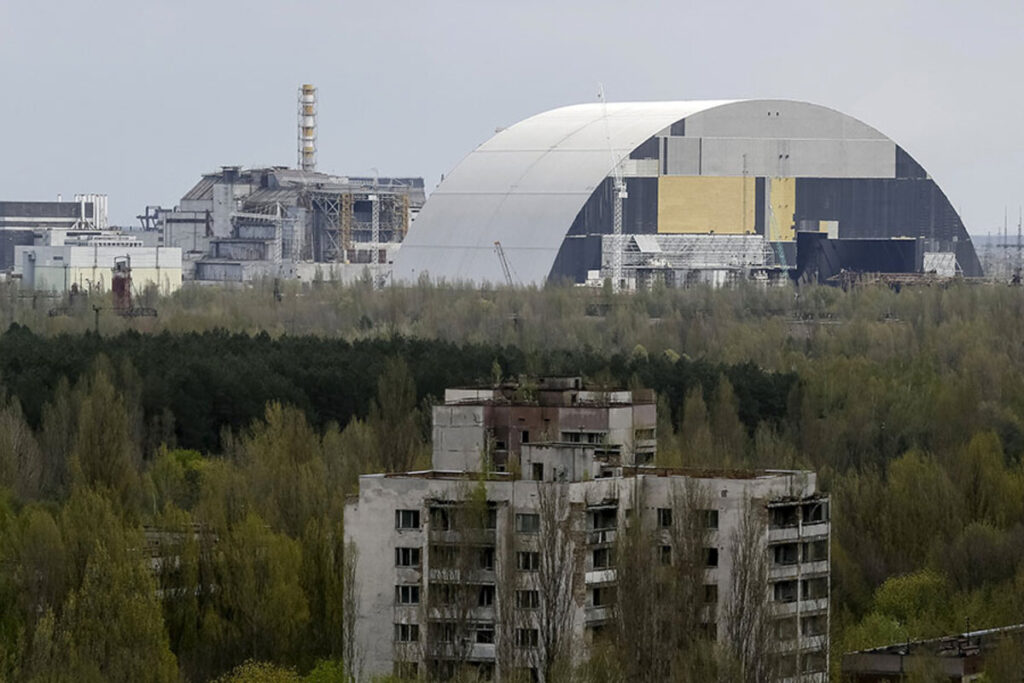
In response, an ambitious international project was launched to construct a New Safe Confinement (NSC): a massive steel arch structure designed to slide over the existing sarcophagus and provide a sealed, ventilated environment for dismantling unstable components and managing radioactive waste over the next century. Completed in 2016 and moved into place in 2017, the NSC cost approximately $1.7 billion, funded by more than 40 donor countries and institutions.
The NSC represents one of the largest and most complex radiological engineering projects ever undertaken, intended to remain functional for at least 100 years. However, the site remains dynamic and hazardous. In 2026, workers had to seal a new breach in the NSC caused by damage, with preliminary repair estimates around $570 million and additional EU funding pledged for reconstruction. These developments underscore that Chernobyl is not a closed chapter but an ongoing technical and financial commitment.
Chernobyl in Culture, Memory, and Contemporary Relevance
Four decades on, Chernobyl endures as a powerful symbol of technological hubris, state failure, and human resilience. It has inspired a vast body of literature, documentary films, investigative journalism, and artistic works exploring the scientific, political, and human dimensions of the disaster. The 2019 HBO miniseries “Chernobyl”, while dramatised, brought renewed global attention to the event, sparking debates about historical accuracy, the ethics of representation, and the lessons for contemporary nuclear governance.
Photographers like Gerd Ludwig have documented the exclusion zone and affected communities over decades, creating visual archives that capture both the haunting abandonment and the persistence of life in contaminated landscapes. Meanwhile, controlled tourism to parts of the exclusion zone has grown, raising ethical and safety questions about “disaster tourism” versus education and remembrance.
Chernobyl’s relevance has been reinforced by more recent events, including the 2022 Russian occupation of the plant during the war in Ukraine and subsequent shelling in the region, which revived fears of renewed radiological risk in a conflict zone. The 2020 wildfires in the exclusion zone further highlighted the fragility of long-term containment and the potential for climate change to interact with legacy contamination.
Enduring Lessons: Technology, Transparency, and Trust
At its core, the Chernobyl disaster illustrates how technical flaws, operational errors, and institutional pathologies can converge with catastrophic results. The RBMK’s design vulnerabilities were necessary but not sufficient conditions for the accident; they became deadly when combined with a poorly executed test, violation of safety protocols, and a culture that discouraged questioning authority and reporting problems.
The Soviet response—initial denial, delayed evacuation, and information control—magnified the human and political costs, eroding public trust and exposing the dangers of prioritising state image over citizen safety. In contrast, the subsequent international cooperation on containment, monitoring, and research demonstrates how transparency and shared expertise can mitigate long-term risks, even if they cannot erase them.
Forty years later, Chernobyl remains a stark reminder that nuclear technology demands not only engineering excellence but also robust regulatory independence, a safety-first organisational culture, and honest communication with the public. As the world grapples with energy transitions, climate change, and renewed interest in nuclear power, the lessons of Chernobyl—about the costs of secrecy, the fragility of complex systems, and the enduring burden of radioactive contamination—retain urgent relevance.
The exclusion zone, the sarcophagus, and the New Safe Confinement stand as physical monuments to both human error and human ingenuity: to the capacity for catastrophic failure and for sustained, collective effort to contain its consequences. For the hundreds of thousands affected—evacuees, liquidators, and subsequent generations—Chernobyl is not an anniversary marker but a lived reality, a “wound that never fully closes,” in the words of those who continue to work and live in its shadow.
Photos: Internet
References:
https://rri.co.id/sintang/iptek/2642890/kronologi-bencana-nuklir-chernobyl-1986
https://www.youtube.com/watch?v=jTBs3l2mM5w
https://www.youtube.com/watch?v=BlYUa3oAQro
https://www.spiegel.de/thema/tschernobyl/
https://www.youtube.com/watch?v=BF1gX1ntlsU
https://www.platform.benelli.com/journal/the-legacy-of-chernobyl
https://cnu.libguides.com/ps1980s/chernobyl
https://www.youtube.com/watch?v=jTBs3l2mM5w
https://www.studocu.com/en-au/document/james-sheahan-catholic-high-school/modern-history/chernobyl-impact-on-public-trust-and-governance-in-the-ussr/168815792?sid=6e1dddde-5a58-463a-bb24-601801e923b71786887604
https://directivepublications.org/journal-of-biomedicines/dependence-between-hormonal-status-and-pathology-in-women-exposed-to-radioactive-iodine-during-pregnancy-as-a-result-of-the-chernobyl-disaster
https://staff.frontierpubs.co.uk/chapter/chernobyl-prelude-of-a-disaster-a-tale-of-man-mad
https://www.vozpopuli.com/indux/en/meet-the-men-who-sealed-a-new-breach-at-chernobyl-a-high-stakes-engineering-feat-they-say-pushed-them-to-the-absolute-limit/7446/
https://www.youtube.com/watch?v=OJluJZc_M3k
https://cookyourtech.com/what-happened-on-april-26-1986/
https://freeenergy.pl/poparzenia-radiacyjne-po-czarnobylu-prawda-o-obrazeniach
https://en.fmyly.com/article/how-many-people-died-from-chernobyl/
https://en.wikipedia.org/wiki/Individual_involvement_in_the_Chernobyl_disaster
https://www.youtube.com/watch?v=zcz14F0bcBI
https://www.platform.benelli.com/journal/chernobyl-scoppio-alla-centrale
https://www.youtube.com/watch?v=SIEDyitmZL8
https://cargas.embramaco.com.br/report/chernobyl-prelude-of-a-disaster-a-tale-of-man-mad
https://www.facebook.com/watch/?v=1368934101409687