
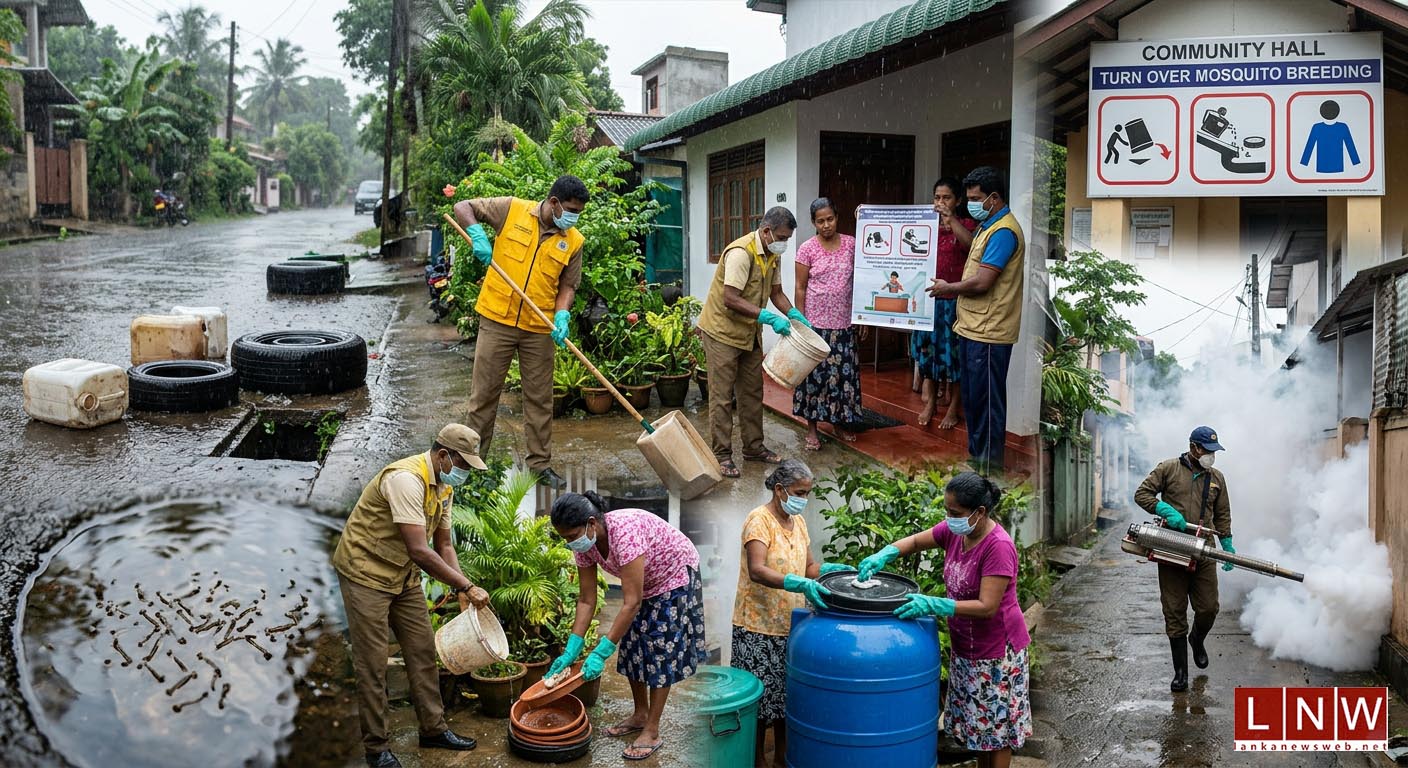
November 08, Colombo (LNW): The Health Ministry is preparing to launch a six-day nationwide dengue prevention campaign from 9 to 14 November, with intensified mosquito-control operations planned across 74 Medical Officer of Health (MOH) divisions identified as particularly vulnerable to the disease.
The special initiative will bring together several government institutions and community-based organisations in a coordinated effort to reduce mosquito breeding and minimise the possibility of a fresh dengue outbreak.
Participating agencies will include the National Dengue Control Unit, the Ministry of Public Administration, Provincial Councils and Local Government, the Clean Sri Lanka Secretariat, Sri Lanka Police, the Tri-Forces and various voluntary organisations.
According to the Health Ministry, the campaign has been organised in response to changing weather patterns, concerning developments in dengue-related risk indicators and lessons drawn from previous outbreaks. Authorities are seeking to strengthen preventive action before conditions become more favourable for a significant increase in infections.
A major component of the operation will involve teams conducting inspections of residential and commercial properties to locate potential mosquito breeding grounds. Particular attention will be given to abandoned and unoccupied buildings, where stagnant water and neglected surroundings can create suitable conditions for mosquito multiplication.
Large-scale environmental cleaning activities will also be carried out at schools, Pirivenas, universities and religious institutions as part of efforts to eliminate breeding sites in public spaces and educational establishments.
The relevant MOH offices will oversee activities within their respective areas, ensuring that inspection and cleaning operations are carried out in accordance with local requirements. A special operations room will also be established to track implementation, assess daily progress and coordinate responses throughout the campaign.
Acting Director of the National Dengue Control Unit, Dr Kapila Kannangara, said the authorities were maintaining close surveillance of mosquito-related indicators and reported dengue infections to identify emerging threats and take timely preventive measures.
The ministry emphasised that the success of the programme would depend not only on institutional intervention but also on active public participation, particularly through regular cleaning of household surroundings and the removal of containers capable of collecting rainwater.
The campaign was originally due to take place from 2 to 7 November. However, adverse weather conditions prompted the authorities to reschedule the programme to 9–14 November.
Health officials are urging residents in the targeted areas to cooperate with inspection teams and take responsibility for keeping their surroundings free of mosquito breeding sites, stressing that consistent preventive action remains essential in controlling dengue transmission.