
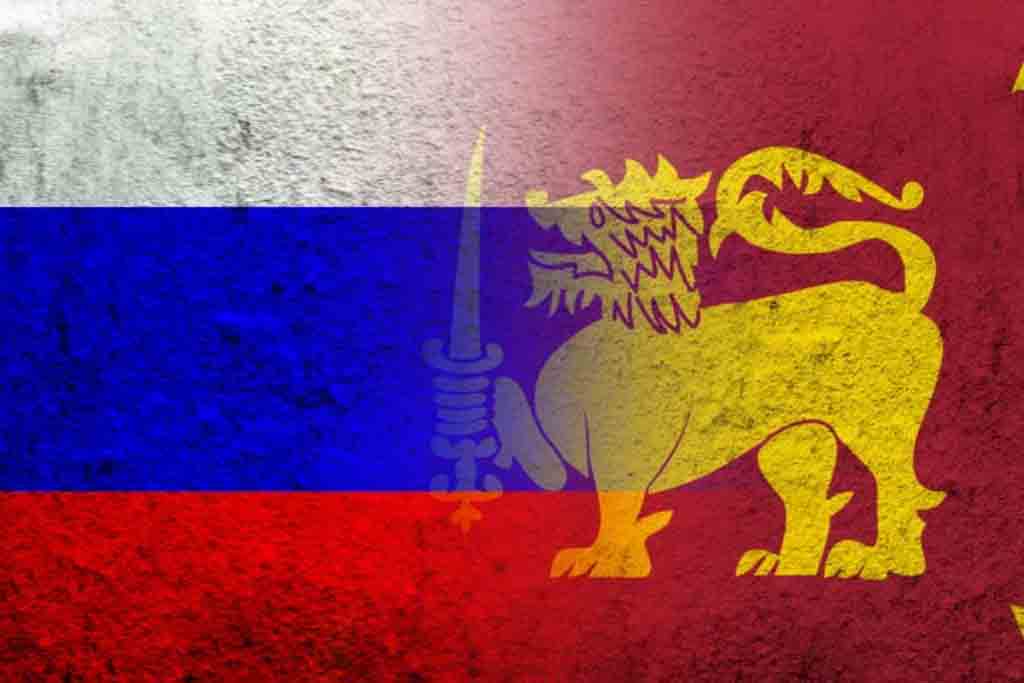
Sri Lanka’s decision to strengthen legal and law-enforcement cooperation with Russia has opened a new chapter in bilateral relations, offering potential benefits in combating corruption, cybercrime, money laundering and transnational organised crime. However, the agreement also raises important questions about institutional accountability, information security and the country’s ability to protect its national interests while expanding cooperation with a major international power.
Justice and National Integration Minister Harshana Nanayakkara and Russian Prosecutor General Aleksander Gutsan signed an agreement in Colombo on November 26, expressing the willingness of both countries to work together against criminal activities.
The proposed cooperation includes exchanging information and providing technical training to address increasingly sophisticated criminal activities involving advanced technology. Corruption, cybercrime, organised crime, money laundering, terrorism and other transnational offences have been identified as priority areas.
For Sri Lanka, the potential advantages are considerable. Cybercriminal networks increasingly operate across national borders, making investigations difficult when suspects, digital evidence, financial transactions and criminal proceeds are located in different jurisdictions.
Cooperation with Russian law-enforcement institutions could provide access to technical expertise, investigative experience and technological capabilities that Sri Lanka may find difficult or expensive to develop independently.
The country’s financial institutions, businesses and ordinary citizens face growing exposure to digital fraud, online financial scams, identity theft and sophisticated cyberattacks. Stronger international cooperation could improve the capacity of investigators to trace criminal transactions, identify perpetrators and recover illicit proceeds.
Nevertheless, signing an agreement is only the beginning. Its effectiveness will depend on the practical mechanisms established to implement it, the quality of information exchanged and the ability of Sri Lankan institutions to translate technical assistance into successful investigations and prosecutions.
There are also important questions concerning the protection of sensitive information. Law-enforcement cooperation involving international data exchanges requires clearly defined procedures governing confidentiality, access, storage, permitted use and independent oversight.
Sri Lanka must ensure that information supplied by its investigative agencies is protected against unauthorised disclosure or misuse. Equally important is maintaining the independence of domestic investigations and ensuring that cooperation respects Sri Lankan laws and internationally recognised legal safeguards.
The geopolitical dimension cannot be ignored. Russia remains an important international power, while the United States maintains significant strategic and maritime interests in the Indian Ocean. Sri Lanka has traditionally sought to preserve balanced relations with competing international partners.
However, the agreement signed by the Justice Minister is a law-enforcement initiative, not a military alliance or defence pact. Its implications should therefore be assessed according to its actual provisions rather than assumptions about military alignment.
The Government must now explain the agreement’s implementation framework, funding arrangements, oversight mechanisms and measurable objectives.
Ultimately, the success of the Russian partnership should be judged by whether it delivers stronger investigations, recovered stolen assets, successful prosecutions and improved protection for citizens.
Without transparent implementation and accountability, international agreements risk remaining diplomatic announcements rather than instruments of meaningful institutional reform.