By: Rashika Hennayake
November 21, Colombo (LNW): At present, smartphones have become technological devices that we cannot do without in our daily lives. From young children to adults, these devices, which are held in everyone’s hands, are constantly the subject of intense discussion in society. What has given rise to this is the fear: “Does prolonged mobile phone use cause fatal cancer?”
Although the suspicion that smartphones cause cancer through radiation has been widespread in society, medical science tells a different story.
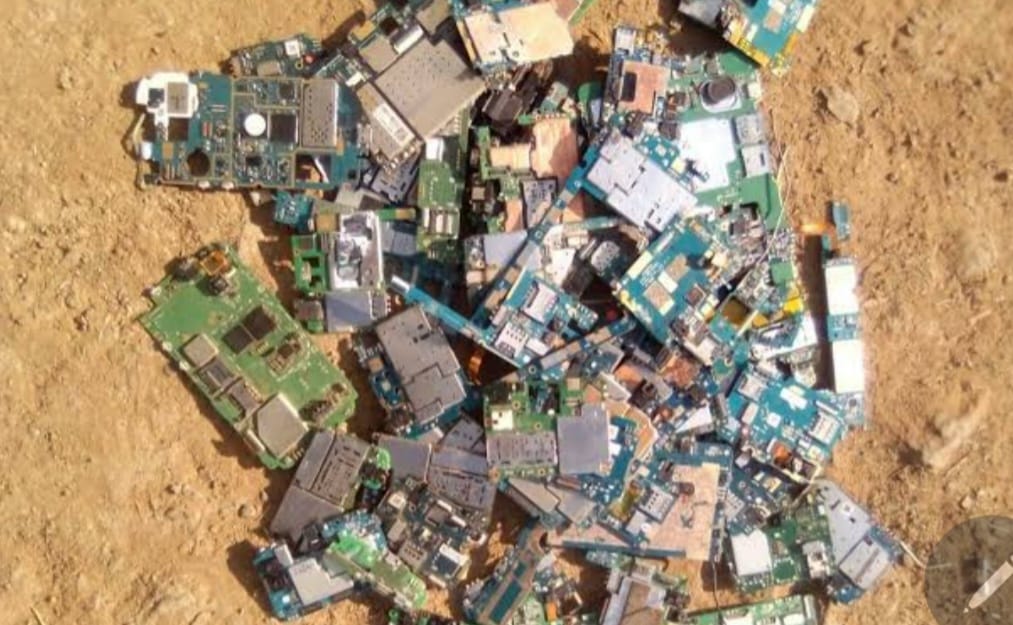
The reason is that toxic heavy metals emerging from discarded mobile phones, batteries and chargers thrown into waste today are quietly preparing to have negative consequences for our children and for society as a whole in the future.
Therefore, although many people fear that mobile phone use causes cancer, experts in the field suggest that the real danger lies in how these devices are disposed of once they become inactive.

The invisible real danger: the untold story of your old smartphone
Experts say that discarded batteries and digital devices scattered from rural homes to urban rubbish bins are polluting the soil and water, and that their impact on human beings is immense.
The real crisis we face in exploring the European Union’s Green Transition targets and environmental justice is not the so-called radiation supposedly arising from holding a mobile phone to one’s ear, but in what we ought to do once they become inactive disposed of in the open.
I am prompted to reveal this information in this manner for the benefit of tomorrow and for awareness, reaffirming the social responsibility I bear.
Let us unfold this investigative story about the hidden reality extending from human health to our country’s e-waste.

Is the fear of cancer a myth?
The first stop on this journey of mine was a discussion with a medical specialist (Dr Bimantha Gunasekara, General Manager, Innovative Health Solutions (Pvt) Ltd) regarding mobile phone radiation and health problems.
There is a wide gap between the fear prevailing in society and the scientific reality.
“Mobile phones use radio-frequency electromagnetic radiation (RF-EMF) for communication. Unlike ionising radiation, such as X-rays or gamma rays used in hospitals, which can directly damage the DNA in the body and cause cancer, what is emitted from mobile phones is non-ionising radiation. That is, they do not have enough energy to break the chemical bonds in cells.” — Dr Bimantha Gunasekara, General Manager, Innovative Health Solutions (Pvt) Ltd
Question: “Doctor, the biggest fear many people in society have today is the claim that prolonged mobile phone use causes brain cancer. What exactly is this mobile phone radiation?”
The doctor: “That is a very important question. Mobile phones use radio-frequency electromagnetic radiation (RF-EMF) for communication. Unlike ionising radiation, such as X-rays or gamma rays used in hospitals, which can directly damage the DNA in the body and cause cancer, what is emitted from mobile phones is non-ionising radiation. That is, they do not have enough energy to break the chemical bonds in cells.”
Researchers discussed a number of extensive studies conducted regarding head-related cancers (glioma, meningioma, acoustic neuroma and salivary gland cancer).
Although the International Agency for Research on Cancer (IARC) of the World Health Organisation classified this radiation as “possibly carcinogenic” (Group 2B) in 2011, this did not mean that cancer had been confirmed, but that further study was required.
However, the World Health Organisation’s latest systematic review in 2024 and the COSMOS international study, involving more than 264,000 individuals, have confirmed that even among those who have used mobile phones for more than 15 years, there is no increased risk of brain cancer.
Although children’s nervous systems are still developing, there is no scientific evidence that brain cancer in children is increasing or that 5G technology causes cancer.
However, it is sensible to follow precautions such as using hands-free devices and limiting calls in areas with weak signals.
The reality at ground level — rural women and the darkness of ignorance
Although no cancer risk has been medically confirmed, my random field observations in rural areas revealed another serious crisis.
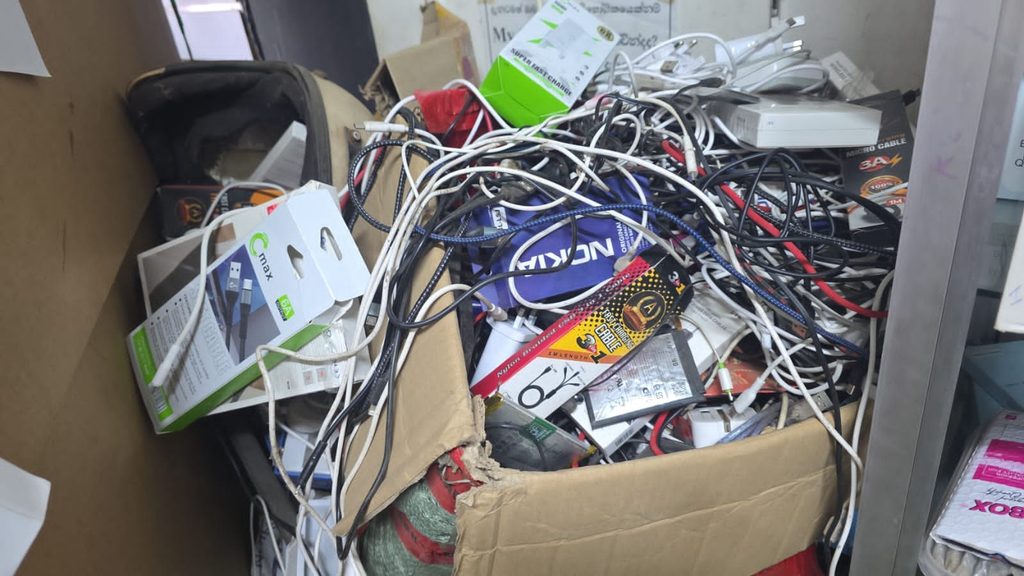
“Although women living in rural areas and ordinary citizens use smartphones extensively, they have no awareness whatsoever of what should be done once these devices become inactive or are broken. Some said that they had already discarded inactive mobile phones, batteries and chargers by putting them into regular waste.”
Toxic heavy metals such as lead, mercury and cadmium are used in the manufacture of mobile phones, and if they leak into the soil and groundwater along with ordinary refuse, severe health and environmental damage can occur.
According to global data (ITU report), 57.4 million tonnes of electrical and electronic waste (WEEE) were generated in 2021, and only 17.4 per cent of it was recycled.
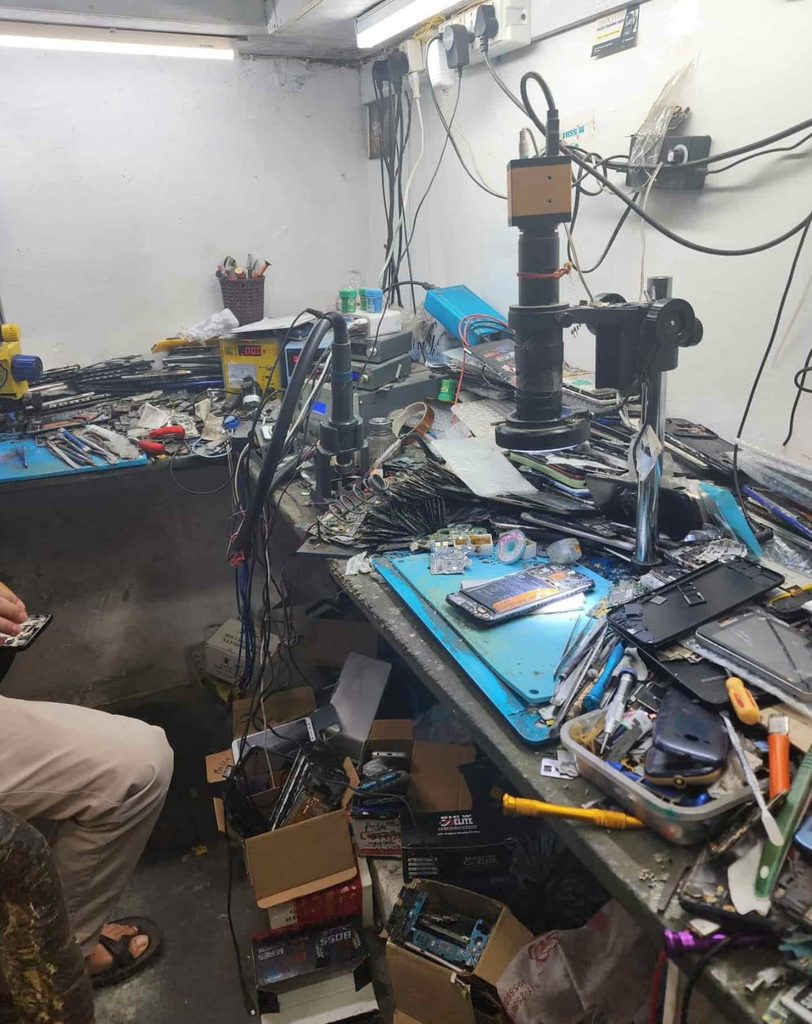
The hidden network — at the doorstep of a recycling institution
In order to explore the commercial dimension of this problem and its international journey, I met and spoke with the head of a private institution engaged in the recycling of registered electrical and electronic waste.
There, I heard information that was extremely astonishing. Here is the conversation that took place between us:
Question: “How are discarded phones and batteries collected from the ordinary market or from repair businesses? What price is paid for them?”
The head of the institution: “We, and our collectors, purchase discarded mobile phones, batteries and electrical devices from electronic repair businesses at a high price of between Rs 15,000 and Rs 35,000 per kilogramme of fragments. The value lies in the metals contained within them.”
Question: “What happens afterwards to the materials collected in that manner? How are they processed here in Sri Lanka?”
The head of the institution: “No, we sort these and break them into pieces. Afterwards, valuable copper components obtained from these devices are exported to India. Similarly, the main motherboards and board components from computers and phones are sent to China and Pakistan.”
`This makes clear that, if properly managed, digital waste is not merely refuse to be discarded, but a resource capable of generating enormous economic value within a circular economy.`
Towards a green future and a just green transition…
In seeking solutions to this crisis, the Ministry of Environment, the Central Environmental Authority (CEA) and selected leading private institutions are currently working together to operate e-waste collection networks through communication service centres across the island.
Interventions are also taking place at institutional level through policy frameworks such as “Extended Producer Responsibility” (EPR).
However, for the 2050 Net Zero green target to become a reality, this process must become a ‘Just Transition’ that extends beyond urban boundaries and empowers rural communities and women as well.
Moving forward in this manner, it is said that the Central Environmental Authority and Dialog Axiata PLC have jointly implemented a special programme for e-waste management in the Monaragala District.
Under this, a special awareness programme for public officials was held at the Monaragala District Secretariat on the 12th.
The primary objective of this programme is to expand facilities for the safe and environmentally friendly collection of e-waste across the island.
In particular, it is intended to provide citizens with greater opportunities to hand over unnecessary electronic devices, including mobile phones that are no longer in use, to authorised collection centres, and thereby to direct them towards responsible waste management in a manner that causes no harm to the public or the environment.
This programme, held under the leadership of Ms C. P. Palihapitiya, Provincial Director of the Central Environmental Authority for Uva Province, and Mr M. K. J. Sadath, Assistant Director for Monaragala, was attended by Ms Deepanika Senaviratne, Assistant Legal Officer at the Uva Provincial Office of the Central Environmental Authority, and Mr T. M. Saman Thennakoon, Senior Environmental Officer at the District Office, who participated as resource persons and delivered lectures.
In addition, a large number of public officials and representatives of non-governmental organisations, including Ms M. A. N. Lakshani, Deputy Director (Systems Development) at the Monaragala District Secretariat, and Mr Chathuranga Ranasinghe, Sustainable Innovation Specialist at Dialog Axiata PLC, also attended the occasion.
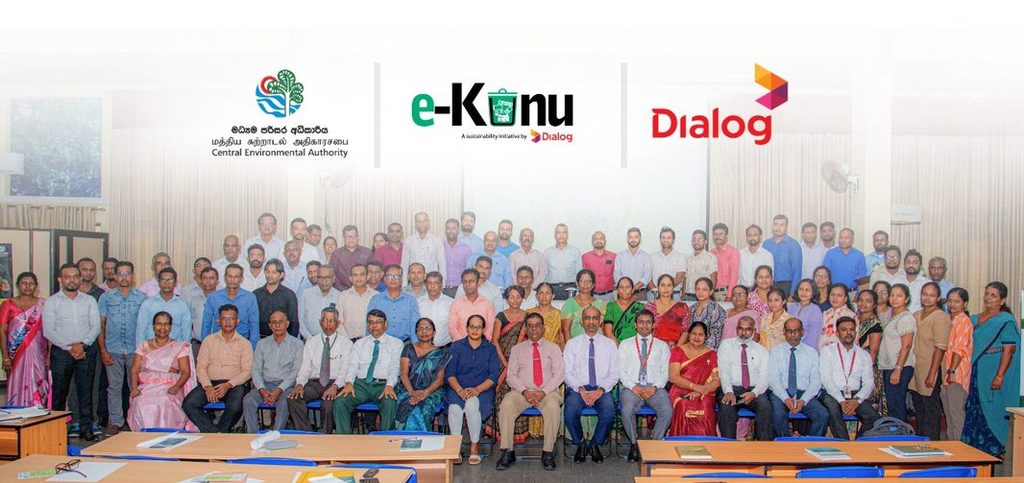
`In parallel, the Central Environmental Authority (CEA) has taken steps to expand this project across the island by holding a special Training of Trainers (ToT) programme at its auditorium.`
`One hundred people participated, including 75 district officers representing all 25 districts of the island and 25 officers of the Central Environmental Authority.`
`There, they were provided with guidance on circular economy concepts, e-waste regulations and the practical guidance required to raise awareness among schools and community organisations.`
Twenty-four ‘e-Kunu’ collection bins have been installed at Dialog consumer service centres across the island for the general public to hand over old mobile phones, batteries and other small e-waste items in their possession.
All the waste collected in this manner is disposed of in an environmentally friendly manner through licensed waste management institutions, and the ekunu.lk website has also been introduced for further information.
In 2025 alone, Dialog is said to have responsibly managed 3.74 metric tonnes of e-waste collected from the public and 668 metric tonnes of its own internal e-waste, while steps have also been taken to recycle 100 per cent of retired mobile phone network equipment through official recycling partners.
From e-waste to a green tomorrow
Although there is no need to fear scientifically the suspicion that mobile phone radiation causes cancer, the danger posed to the soil, water and the health of our children by the improper disposal of inactive phones, batteries and chargers is indeed real.
Accordingly,
– Rural awareness: `The ignorance of placing inactive devices in waste must be eliminated, and everyone, including rural women, must be directed towards the correct methods.`
– Circular economy and export value: `By properly sorting and recycling metals such as copper and components such as motherboards found in discarded devices, and exporting them, great economic value can be obtained from them.`
– Interventions at district and national level: `Various awareness programmes, as well as productive interventions by the public and private sectors, trained officers and programmes, provide a strong foundation for responsible management.`
When all of this is properly implemented, it will not only minimise environmental damage and build a healthy, green Sri Lanka, but will also have a beneficial impact on the country’s economy and Gross Domestic Product (GDP) through resource recycling and sustainable processes.
Therefore, directing every digital device we discard to the proper channel is an investment in our future and in the country’s economy.
If properly managed, digital waste is not merely rubbish, but a valuable resource within a circular economy.
By eliminating the ignorance of rural communities, building a ‘Just Transition’ that involves rural women and every citizen, rather than being limited to the city alone, on the journey towards the 2050 Net Zero target is a collective responsibility for all of us.
“The correct solution given to an inactive phone is a safe promise made for our children’s tomorrow.”