Home Blog Page 1002

Sri Lanka to be promoted as premier wellness destination in France/Germany

0

By: Staff Writer

February 26, Colombo (LNW): Sri Lanka wellness tourism has been boosted by a ground-breaking strategic action plan by the Export Development Board (EDB) focusing attention on product development, brand evaluation and development as well as marketing strategy.

The objective of the project is to provide an overview and analysis of Sri Lanka’s wellness tourism capacity and define its unique selling propositions (USPs)

Based on the analysis, the assessment will provide key recommendations for a short-, medium- and long-term strategy to maintain and secure new markets to position the country as an attractive destination for wellness tourists.

The UK, Austria, Germany, Switzerland and Australia have been recognised as initial focused markets to promote wellness tourism.

Interface Tourism, a leading marketing and communications agency in the tourism has announced the launch of a ground-breaking wellness campaign to promote Sri Lanka, targeted at the French and German markets.

This initiative, commissioned by the European Union Delegation with the support of Sri Lanka Tourism Promotion Bureau, is a part of Sri Lanka’s strategic effort to position itself as a premier wellness destination in Asia.

Interface Tourism is launching a 2-month digital campaign to promote Sri Lanka as the premier wellness destination in Asia, tapping into the burgeoning global wellness tourism market.

This initiative underscores Sri Lanka’s unparalleled wellness offerings, such as authentic Ayurveda, Yoga, meditation, Pancha Karma, and Hela Wedakama, against the backdrop of the country’s abundant biodiversity.

At the heart of the campaign are thirty influencers from France and Germany, embarking on journeys through Sri Lanka to share the country’s wellness experiences on their social media platforms, bringing to life the authentic and captivating aspects of their travels.

Supplementing these influencer stories is a well-crafted digital media strategy, featuring captivating video content, a lively social media footprint, and targeted display advertising.

A multilingual microsite further enriches the campaign, acting as a comprehensive source of information and experiences related to Sri Lanka’s wellness offerings.

The campaign commenced on 15 February with the introduction of six German influencers to Sri Lanka.

They are set to discover the country’s distinct landscapes, rich culture, and diverse wellness services. Their experiences will be broadcasted on Instagram and TikTok, providing a glimpse into their journeys to a global audience.

Sri Lanka Tourism Promotion Bureau Chairman Chalaka Gajabahu said, “This collaborative effort with the European Union in promoting wellness tourism segment through this campaign will definitely support the Srilankan Tourism stakeholders to capture a lucrative market having a great potential for Sri Lanka especially from the European countries.”

 He also expressed his sincere gratitude to the European Union, Interface Tourism and local industry for their contribution in making this campaign a success.

Russian Embassy denounces racial discrimination amid controversy over Unawatuna event

0

February 26, Colombo (LNW): In light of recent controversy surrounding a planned evening gathering in Unawatuna, the Russian Embassy in Colombo has released a statement denouncing all forms of racial discrimination and nationalism.

The event, organised with a “dress-code: white” theme by a group of entrepreneurs, initially sparked concerns.

While it was revealed that the primary promoter and the bar owners agreeing to host the event were reportedly Russian citizens, these claims remain unverified, as stated by the Embassy.

Following confusion and apprehensions regarding entry requirements, the organisers subsequently issued apologies and clarified that their intentions were not to propagate harm.

Consequently, the event was cancelled.

In its statement, the Russian Embassy reiterated Russia’s steadfast stance against injustices of any kind and affirmed its dedication to combatting such behaviours.

Furthermore, the embassy advised all Russian nationals visiting or residing in Sri Lanka to adhere strictly to the country’s laws and to show respect for local customs.

France joins with Paris Club to reach consensus on SL debt restructure soon

0

By: Staff Writer

February 26, Colombo (LNW): Sri Lanka and the official creditor committee has agreed on a debt restructuring deal, the Paris Club Secretariat said.

“The OCC and Sri Lanka agreed on the main parameters of a debt treatment consistent with those of the Extended Fund Facility (EFF) arrangement between Sri Lanka and the IMF,” the statement said.

French Ambassador to Sri Lanka Jean-François Pactet yesterday said France’s collaborative efforts with fellow members of the Paris Club group of creditors to finalise an agreement addressing Sri Lanka’s debt negotiations.

He highlighted the dedication of Paris Club members in striving to achieve a consensus to tackle Sri Lanka’s debt crisis.

The Ambassador said that Paris Club members are diligently working towards reaching a consensus to address Sri Lanka’s debt crisis.

“It is a very complex negotiation and we need to build consensus,” the Ambassador told a group of journalists yesterday.

Despite the complexity of the negotiations, the Ambassador remained optimistic about the progress being made. While he refrained from setting a specific timeline for the agreement, he assured that efforts were underway to expedite the process.

Ambassador Pactet also highlighted France’s collaboration with the French Development Agency to support ongoing and new projects in Sri Lanka.

He pointed out that despite the challenges posed by the debt crisis, France remained committed to continuing its developmental initiatives in the country.

The Ambassador underscored the importance of resolving the debt crisis promptly to facilitate future collaborations and projects between France and Sri Lanka.

“This is why it is essential to reach a consensus swiftly with the Official Creditors Committee to be able to move forward with our commitments and projects,” he added.

Ambassador Pactet commended the positive turnaround in the economy over the last year and reiterated France’s dedication to supporting Sri Lanka during this challenging period and reiterated its readiness to assist as soon as an agreement is reached.

Temporary relief expected from dry weather as showers forecasted in Eastern and Uva Provinces

0

By: Isuru Parakrama

February 26, Colombo (LNW): The prevailing dry weather condition in Eastern and Uva provinces is expected to temporarily change from today (26), the Department of Meteorology said in its daily weather forecast today.

Showers will occur at times in Nuwara-Eliya, Matale and Polonnaruwa districts, the statement added.

Several spells of showers will occur in Eastern and Uva provinces.

Showers or thundershowers may occur at a few places in Western and Sabaragamuwa provinces and in Kandy, Galle and Matara districts in the evening or night.

Fairly strong winds about (30-40) kmph can be expected at times in eastern slopes of the central hills and in Northern, North-central, Southern, North-western, Uva and Eastern provinces.

The public is kindly requested to take adequate precautions to minimise damages caused by temporary localised strong winds and lightning during thundershowers.

Condition of Rain:
Showers or thundershowers may occur at several places in the sea areas off the coast extending from Trincomalee to Pottuvil via Batticaloa.
Winds:
Winds will be north-easterly and wind speed will be (25-35) kmph. Wind speed may increase up to (50-55) kmph at times in the sea areas off the coasts extending from Colombo to Kankasanthurai via Puttalam and Mannar and from Galle to Hambantota via Matara. Wind speed may increase up to (40-45) kmph at times in the sea areas off the coasts extending from Kankasanthurai to Hambantota via Trincomalee and Pottuvil.
State of Sea:
The sea areas off the coasts extending from Colombo to Kankasanthurai via Puttalam and Mannar and from Galle to Hambantota via Matara can be rough at times. The sea areas off the coasts extending from Kankasanthurai to Hambantota via Trincomalee and Pottuvil can be fairly rough at times. Temporarily strong gusty winds and very rough seas can be expected during thundershowers.

Former SL Cricketer Tillakaratne Dilshan awarded Australian citizenship

0

February 26, Colombo (LNW): Former Sri Lankan cricket star Tillakaratne Dilshan has been awarded Australian citizenship, a development confirmed by Australian MP Jason Wood in a recent social media update.

Dilshan, known for his dynamic batting prowess, notably contributed to numerous victories for the Sri Lankan cricket team during his illustrious career.

With his retirement from professional cricket, the 47-year-old’s acquisition of Australian citizenship signifies a significant milestone in his post-playing days.

“Today’s citizenship ceremony was graced by the presence of Tillakaratne Dilshan, the former Sri Lankan cricketer and captain of the Sri Lanka national cricket team,” remarked MP Jason Wood in his social media post.

Wood highlighted Dilshan’s remarkable cricketing achievements, emphasising his reputation as Sri Lanka’s leading run-scorer in ODI run-chases and his pivotal role in the team’s triumphs, including the 2011 ICC Cricket World Cup and the 2014 ICC World Twenty20.

Welcoming Dilshan as a new Australian citizen and local resident, Wood expressed optimism about the veteran cricketer potentially joining a local cricket team.

He also mentioned Dilshan’s daughter Resandi, who appears to be following in her father’s footsteps.

Dilshan’s cricketing legacy includes over 10,000 runs from 330 ODIs, 5492 runs from 87 Test matches, and 1889 runs from 80 T20I matches. Known for his innovative batting techniques, such as the famous scoop shot, Dilshan’s versatile and effective style left an indelible mark on the cricketing world across formats.

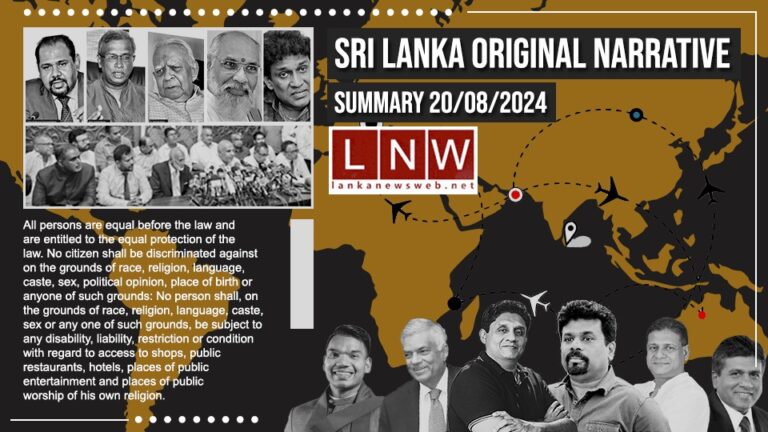
Sri Lanka Original Narrative Summary: 26/02

0
  1. President Ranil Wickremesinghe launches the “Presidential Academic Scholarship Programme 2024/2025” to support Sri Lankan students from Grade 01 to Grade 11 across all schools nationwide: The initiative, funded by the President’s Fund with Rs. 3,600 million, aims to aid 100,000 students annually and ensure uninterrupted education for those facing financial challenges.
  2. Opposition Leader Sajith Premadasa says he will never accept an invitation by an administration that protects thieves to build the country together: asserts the country needs good policies rather than public figures: stresses had he pledged allegiance to the current regime upon invitation, he too would have to raise hand in favour of the former Health Minister who executed the importation of sub-standard medicines.
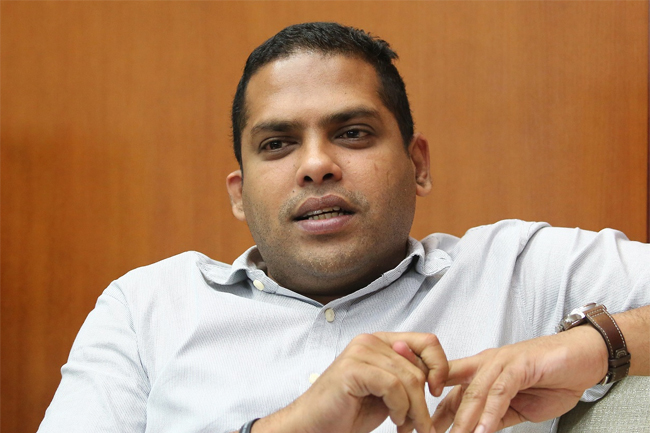
  3. NPP MP Dr. Harini Amarasuriya invites all women to join hands for a change in era: says the NPP has no individual expectations but a collective effort: adds every person is important to play a role in building the country: stresses the context of ‘servant-and-master’ should be replaced with equal citizens who are fighting for their rights: asserts diversity among the communities should be the strength of the people.
  4. Finance State Minister Shehan Semasinghe emphasises the need for collective agreements among BIMSTEC countries: highlights the importance of progressing a free trade agreement within the group, aiming to strengthen trade relations and enhance regional security: also addresses the challenge of increasing financing amidst global interest rate hikes and stresses opportunities for investment and trade in the energy sector, particularly in renewable energy sources like wind and solar power: affirms Sri Lanka’s efforts to promote regional investment in power generation and engage in global forums to address climate change.
  5. The Army grants public access to seven Hindu temples (Kovils) located within the high-security zone in Jaffna: Civilians can now participate in weekly poojas and rituals at these temples, following appeals from temple trustees and civil organisations: Previously, permissions were limited to monthly and special poojas.
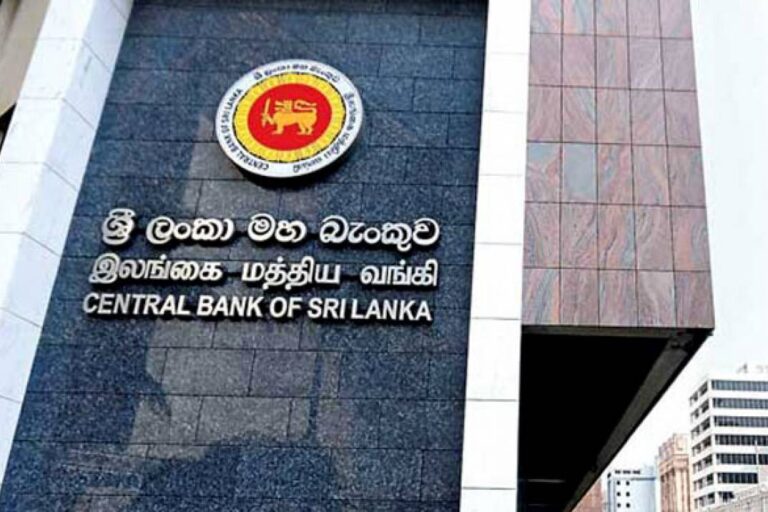
  6. The Central Bank requests a forum with MPs to explain the recent salary adjustments for CBSL personnel: Governor Weerasinghe conveyed the request to President Ranil Wickremesinghe, emphasising transparency and accountability: says the salary recalibration was endorsed by the Governing Board within the triennial Collective Agreement negotiated with Trade Unions: expresses readiness to provide clarifications upon receiving the requested platform or relevant inquiries from authorities.
  7. Foreign Affairs Minister Ali Sabry says for the first time in history, tourist arrivals to Sri Lanka may surpass 2.5 million in 2024: asserts considering the tourist arrivals in the months of January and February this year compared to last year, it is clear that the relevant target can be easily achieved.
  8. Fishermen in Tamil Nadu’s Thangachimadam and Rameswaram regions, along with their families, commence a hunger strike protesting against ongoing arrests by the Sri Lankan Navy: Recent imprisonment of five fishermen prompted the strike: demand unconditional release of detained fishermen and assurance against future arrests: Leaders vow to continue strike until demands are met and call for Central government intervention to secure release of fishermen and their boats.
  9. The Russian Embassy issues a statement condemning racial discrimination and nationalism amidst controversy over a planned evening gathering in Unawatuna with a “dress-code: white” theme: While the event’s promoters and the bar owners were reportedly Russian citizens, the Embassy asserts these claims were unverified: Following concerns and confusion over entry requirements, the organisers apologised and cancelled the event: The Embassy reaffirms Russia’s stance against injustice and advises Russian nationals in Sri Lanka to obey local laws and customs.
  10. Former Sri Lankan cricket star Tillakaratne Dilshan granted Australian citizenship, confirms Australian MP Jason Wood: Wood highlights Dilshan’s cricketing achievements, including leading Sri Lanka to victories in the 2011 ICC Cricket World Cup and the 2014 ICC World Twenty20: welcomes Dilshan as a new citizen and expressed hope for his involvement in local cricket.

Tea prices up in the second auction 2024 amidst a dip in crop production

0

By: Staff Writer

February 26, Colombo (LNW): Forbes and Walker Tea Brokers said tea production in January was 18.73 million kilos, down by 2% or 0.4 million kilos from a year earlier.

All elevations except for the medium grown elevation have shown a decrease in comparison with the corresponding period of 2023.

Compared to 22.87 million kilos of crop in January 2022, the production in January 2024 is down by 4.14 million kilos or 18%.

Tea crop in 2023 improved marginally reflecting the struggle for recovery after detrimental policy decisions and climate change.

The production in 2023 was 256.04 million kilos, registering an increase of 4.20 million kilos compared with 251.84 million kilos in 2022. December crop was up 0.51% YoY to 19.81 million kilos.

 However Sri Lanka’s tea prices went up across elevations at the second auction of 2024, with most grades of tea moving up, market data showed.

The weekly sale average went up 51.53 rupees to 1,274.74 rupees a kilogram, according to industry data published by Ceylon Tea Brokers.In the second week 4.5 million kilos were sold by public auction..

High Grown BOP teas went up with Best Westerns going up by between 50 to 100 rupees. Below Bests were up 50 rupees, while plainer categories fell 50 rupees.

There were hardly any offerings from Nuwara Eliya’s and Uda Pussellawa’s gained by about 100 rupees and Uvas were up by 50 rupees.The high grown sale average was up 31.50 rupees to 1,087 rupees a kilo.

BOP1, Select Best and Bests were up 50 rupees. OP1, select bests were also up 50 rupees, while bests and below bests were up 100 rupees.OP/OPA, Select Best gained by 100 rupee a kilo and best and below best moved up by 50 rupees.

PEK, Select Bests were firm. Best and below best gained by 50 rupees per kilo. PEK1 – Select Best and Best were down 50 rupees.The medium grown sale average was up 25.68 rupees to 1,064.73 rupees.

OP1 Select Best were firm whilst Best, Below Best were higher. OPA in general were higher. Select Best were firm.

PEKOE1 Select best together with PEK’s were firm. Select best PEK1’s were firm to lower whilst balance sold around last week levels.

FBOP/FBOP1 Select best were lower, whilst best and below best were fully firm to dearer.The Low Growns average went up 60.02 rupees to 1,330.30 rupees kilogram.

Low Growns had overcast conditions with showers, with Sabaragamuwa expecting heavy showers. Whilst Uva and Low Growns recorded a decline, Udapussellawa and Nuwara Eliya maintained their crop intakes.

Tamil Nadu fishermen begin hunger strike against SL Navy arrests, demand release and assurance

0

February 26, Colombo (LNW): Fishermen from Thangachimadam and Rameswaram regions in Tamil Nadu, accompanied by their families, initiated a relay hunger strike on Saturday (24) in protest against the ongoing arrests of Tamil Nadu fishermen by the Sri Lankan Navy, a report by Indo-Asian News Service (IANS) disclosed.

Expressing concern over the recent imprisonment of five fishermen by the Sri Lankan authorities, with sentences ranging from six months to two years, P Jesu Raja, a prominent leader among the fishermen, conveyed to IANS that they have refrained from fishing activities for the past eight days.

The hunger strike will persist until all detained fishermen are unconditionally released, and assurances are provided by the Sri Lankan government to refrain from further arrests of fishermen, he emphasised.

Leaders within the fishermen association reiterated their commitment to the strike, even if it leads to dire consequences, including starvation.

Jesu Raja appealed to the Central government to promptly intervene, urging for the release of the fishermen along with their mechanised boats.

President launches Academic Scholarship Programme to enhance educational access for SL children

0

February 26, Colombo (LNW): In a bid to bolster educational opportunities for Sri Lankan children, President Ranil Wickremesinghe has introduced the “Presidential Academic Scholarship Programme 2024/2025,” the President’s Media Division (PMD) announced.

This initiative, facilitated through the President’s Fund, is geared towards extending financial aid to 100,000 students ranging from Grade 01 to Grade 11, encompassing all 10,126 schools nationwide, according to the official statement.

The programme is structured to annually grant scholarships to one hundred thousand (100,000) students across Grades 01 to 11, encompassing the entirety of Sri Lanka’s school network.

A total allocation of Rs. 3,600 million has been earmarked from the President’s Fund to sustain this endeavour.

President Wickremesinghe, recognising the economic challenges prevailing in the nation, envisions this initiative as a means to ensure uninterrupted education for deserving students, particularly those facing financial constraints.

By investing in the country’s future leaders, the programme seeks to nurture talent and bolster Sri Lanka’s human capital.

Further details concerning the selection criteria and implementation of the programme will be communicated soon through the official Facebook page of the President’s Fund: www.facebook.com/president.fund.

Disturbing echoes of the last phase of the civil war in Sri Lanka and the treatment of Palestinians under Zionist Occupation (Part 2)

0

Part 2                                                                                                              Michael Cooke

The fantasy of the colonist defence

Faced with a growing body of evidence of mass killings of civilians, the Lankan and the Israeli governments, as mentioned have fallen back on demonising the colonised . Professor Tony Taylor has discussed this historical and political trend in the discussion of the Armenian Genocide, the denial of the methodical killing of the Jews in Europe by the Nazis and their collaborators (6 million died out of out of 9 million in the occupied territories), the stubborn denial of successive Japanese governments of the Japanese role in the massacres of indigenous populations  in China and Korea, the denial of atrocities committed by Stalinists in the USSR, Serbian and Croatian atrocities during the breakup of Yugoslavia, and a reluctance by Australians (only now changing) to acknowledge the massacres of Aboriginal people by colonial occupiers.[i]

Historical deniers, according to Professor Taylor, display the following behaviours: an acquiescence to authority and leaders, hostility towards ‘others’ who are usually defenceless and hence an easy target, a simplistic analysis of complex circumstances, antagonism to ideas beyond their frame of reference, belief in the purity of their beliefs and in the evil of the others, and a belief that their own group is superior to other groups.[ii] These characteristics are very evident in the Israeli attitude to Palestinians and in the treatment of Tamils in Lanka.

Sinhala chauvinists and Zionist zealots alike cling to the unexamined assumption that their armed forces cannot commit atrocities and that their military responses are measured. They point instead to their opponents’ misdeeds. Mahinda Rajapaksa, the then President of Lanka whose government oversaw the massacre of tens of thousands of Tamil civilians, said this at a victory parade two years after the end of the conflict:

I will recall what I said in the past that our troops went into the battlefront carrying a gun on one hand, the Human Rights Charter in the other, food for the innocent displaced on their shoulder, and love of their children in their hearts. They did not target any communities or religions, and did not march ahead with hatred towards anyone.[iii]

Echoes of this can be found in the Israeli response to the evidence of the targeting of civilians in Gaza, the destruction of infrastructure and the blocking of supplies. The current Israeli government is sadly exploiting a great European tragedy – the attempted extermination of Jews by the Nazis and their allies – as justification for its actions.

A cameo of life under occupation

Both the Tamils and the Palestinians are ringed in by a series of institutional, military, and legal constraints that make their lives insufferable compared to their neighbours. this can only be described as apartheid. Apartheid was a system in place in South Africa which was a system of segregation and discrimination on the grounds of race.[iv] Both the Lankan government and the Zionist state bristle at the very suggestion.

The Palestinians are harshly dealt with on every indicator, be it the level of unemployment, restriction of travel, the right of refugees to return to their homes, and allocation of resources and land. Gaza has around 70 per cent youth unemployment. The few lucky enough to work in the ‘promised land’ endure severe economic and military harassment and restrictions. Jonathan Cook contends that is a “slow-motion ethnic cleansing”. It is one of the ways that the political realisation of Greater Israel, a homeland for Jews only, is being implemented.[v]

Another instrument of the Zionist apartheid state is the Right of Return. Within two years of the Zionist state being proclaimed in the Knesset, ‘The Law of Return’ was established, a law which allows all Jews around the world to migrate to Israel and automatically become citizens. Two years later, in 1952, the Knesset passed the Citizenship Law, which effectively bars any Palestinian not living in Israel from returning and claiming their former land and house back from the colonisers. This directly effects the 750,000 Palestinian refugees who were ethnically cleansed in first Arab-Israeli war of 1948, and known to Palestinians as the Nakba (catastrophe). A Palestinian who want to marry another Palestinian living in land expropriated during the 1967 war, but in Israel, is barred from marrying. There are also barriers to intermarriage. Echoing the laws of miscegenation that were still in place in many of the states in the US till the 1960s and was one of the pillars of apartheid South Africa.

In the distribution of resources, the division is just as blatant. 93 per cent of the Palestinian community in Israel cling to less 3 per cent of their land, mostly in the built-up areas of their towns and villages. After waves of confiscation by the Zionist state which forcibly expropriated around 70 per cent of their land. This confiscated land and other pieces of land are kept in trust for Jewish settlers and for Jews around the globe, who might want to become citizens. Even Palestinians living in Israel cannot claim back land illegally taken from them. It is done under the aegis of the Absentee Property Law of 1950.

Reinforcing this is the Planning and Building Law of 1965, which confines the vast majority of Palestinians to overcrowded ghettoes like Gaza, while their Jewish neighbours are awarded significant land reserves. Even illegal Jewish settlements on the West Bank have access to lavish state subsidies denied to Palestinians.

Among the member states of the OECD Israel has the highest poverty rate. This is because poverty is largely concentrated in the occupied territories, similar to Bantustans,[vi] where Palestinians are forced to live. Only a fifth of Jewish children live below the poverty line, whilst two thirds of Palestinian children in Israel do.[vii]

The Tamils in the North, a decade and half after the end of the civil war, have had to contend with at least 70,000 Lankan troops (some estimates put the figure at 160,000). That is one soldier for every 12 civilians, together with 15,000 police. Most of these security personnel do not speak Tamil and the occupied do not speak Sinhalese. This suffocating armed presence creates incomprehension, fear, and resentment in the civilian population.

Land and resources are affected. Large permanent army camps take up valuable arable land near towns and villages. The armed forces of the state are involved in large-scale economic development, including market gardens and golf courses, holiday resorts, hotels, farming, restaurants, cafes, and travel agencies on land expropriated from local Tamil farmers. No independent authority determines whether the land can be handed back.

As in Palestine, hundreds of thousands of Tamils were forced to vacate their land because of the civil war, and once the conflict ended many were prevented from returning because these areas were deemed high security zones. Some compensation is offered, usually on land that is arid and devoid of infrastructure, making fishing and farming (the two traditional income earners) difficult.[viii]

There have been many instances of Tamils who have been tortured and detained by the armed forces in Tamil areas since the end of the civil war. These shadowy forces act with impunity and a predatory approach is taken even if the detainee has only tenuous links to the LTTE. These abductions are a tried and true method of retaining control through fear. It is fear which prevents people from testifying against the armed forces. Its aim is also to make life unbearable for Tamils so they will flee the country. Abductions are done in plain sight by coordinated team of security and intelligence personnel. Those abducted are then tortured where all the tools of torture are also on full display – cables, wooden sticks, batons, plastic pipes filled with sand, water barrels. The detainees are whipped, burnt with cigarettes, branded with hot metal rods and suffer other unspeakable acts. In at least half the cases the security forces broker a ransom. Prices range from Rs350,000 to a million rupees. This is another profitable sideline of the armed forces.[ix]

The assault of women in Lanka is distressingly widespread, being most acute in the North and East. There is credible evidence that sexual violence was systematically used against Tamils. Rape was used to intimidate the Tamil population, especially in the immediate aftermath of the war. Human Rights Watch (HRW) concluded that sexualised violence and torture was used to gather information about the LTTE to force others to ‘confess’ and as method of ethnic cleansing. As a result of the war there was in 2017, 90,000 households headed by women, of whom many are widows.[x] These women face many hurdles in getting permanent housing and jobs to support themselves and their families. Some have been forced to resort to prostitution and suffer a lack of physical security. Young women are abducted, raped, and returned to their communities. Many are too terrified to report their rape to the authorities, who are their occupiers. Widows are regularly harassed, raped, or forced to submit to sex. Many of the victims are then forced to endure it all again.[xi]

The third section looks at what happened in the last stages of the Lankan civil war and what the people of Gaza are currently being forced to endure. It starts off by looking at the rarefied arguments the powerful conjure up to keep the oppressed, dispossessed.

To be continued

25 February 2024


[i] Taylor, T. (2008). Denial: History Betrayed. Melbourne University Press.

[ii] Ibid., p. xi.

[iii] ‘Second National Day Anniversary Celebrations Honour invaluable Ranaviru Sacrifices.’ Retrieved: http://www.army.lk/news/second-national-victory-day – anniversary-celebration-honour-invaluable-rainvaru-sacrifices.

[iv] Soames, Catherine and Hawker, Sara (eds.) (2008). The Compact Oxford English Dictionary. Oxford University Press, p. 38.

[v]Cook, Jonathan, `Why Israel is an Apartheid State’ in Malloy, Sean. Lorimer, Doug. Cook, Jonathan. Thier, Hadas. Sheppard, Barry. Palestine, Israeli Apartheid and Antisemitism. Resistance Books. 2011, p. 16.

[vi] Land allocated to Blacks during the apartheid era in South Africa.

[vii] Op. cit.: Jonathan Cook, pp. 15 to 35.

[viii] ‘The Long Shadow of War: The Struggle for Justice in Post-War Sri Lanka’. The Oakland Institute. Retrieved: http://www.oaklandinstitute.org/long-shadow-war

[ix] Women under Siege Project. Retrieved: www.womenunder seigeproject.org/conflicts/profile/Sri-lanka

[x] The figure is taken from the Department of Foreign Affairs and Trade country report: DFAT Country Information Report, Sri Lanka, January 24, 2017, p. 23

[xi] Op. cit.: Women Under Siege Project.

Previous Article: