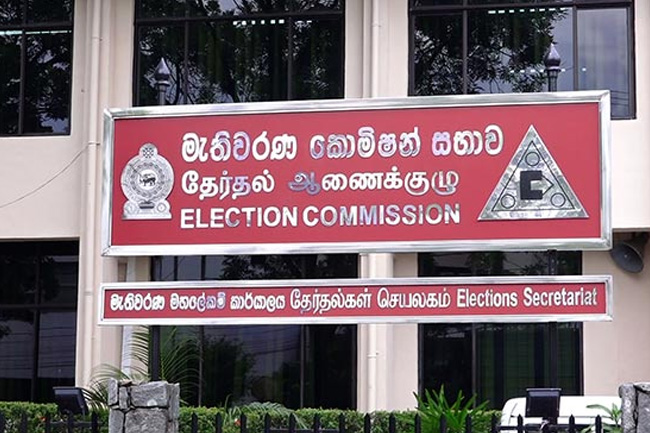
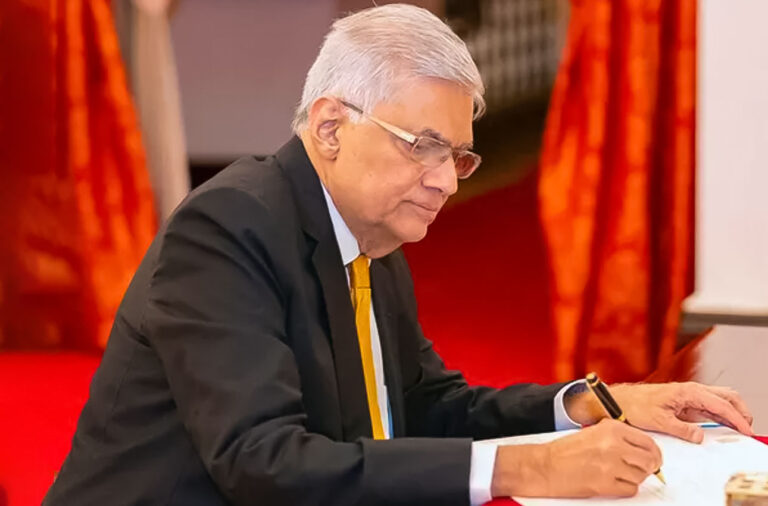
June 18, Colombo (LNW): Election Commission Chairman R.L.A.M. Rathnayake warned all political parties not to produce premature announcements on the holding of the elections, asserting that the decision rests solely with his office under constitutional authority.
Recently, NPP Leader Anura Kumara Dissanayake suggested potential polling dates of either September 28 or October 5, urging overseas Sri Lankans to consider travel arrangements for voting.
Additionally, Tourism Minister Harin Fernando indicated October 5 as a likely polling day.
Responding to such claims, Rathnayake clarified that the Commission is empowered by the Constitution to determine the election date, with action slated to commence after July 17.
The polling period is set between September 17 and October 17, inclusive of weekdays and weekends, affording flexibility for the Commission’s decision-making, he noted.
Previously, Rathnayake confirmed that the Commission will adhere strictly to constitutional and statutory provisions when calling for nominations for the presidential election.
Political parties are actively preparing for the election, with alliances anticipated to bolster candidate support.
To date, Anura Kumara Dissanayake and Opposition Leader Sajith Premadasa have declared their candidacy for the upcoming elections.
June 18, Colombo (LNW): The Ministry of Finance, Economic Stabilisation and National Policies of Sri Lanka has clarified details regarding the implementation of a proposed property tax, described as an imputed rental income tax within the context of the International Monetary Fund (IMF) supported Extended Fund Facility (EFF) programme documents.
In response to misconceptions, the Ministry emphasised that Sri Lanka faces a profound economic crisis primarily due to a significant decline in government tax revenue, leading to substantial budget deficits and unsustainable levels of public debt.
To address these challenges, rigorous fiscal consolidation efforts have been undertaken aimed at increasing government revenue from a low of 8.3% of GDP in 2022 to 15% of GDP by the end of 2025.
Regarding specific fiscal measures, the Ministry outlined that progressive reforms in corporate and personal income taxes were implemented in 2023, followed by Value Added Tax (VAT) reforms in 2024.
These reforms are on track to meet the revenue target of 13.5% of GDP by the end of 2024, with further gains expected to achieve the 15% target by 2025. A key component of these measures includes the introduction of a wealth tax focused on property.
The Ministry underscored that details of the envisaged property tax, aimed predominantly at high-wealth individuals rather than average income earners, are still under design and will be subject to legislative amendments.
Initial estimates suggest the tax could contribute 0.2% of GDP by 2025 and 0.4% in subsequent years. The tax structure will include mechanisms to prevent double taxation and minimise economic distortions.
Furthermore, the Ministry highlighted that property taxes are common globally, including in developing countries like India, and are considered efficient, progressive, and non-distortive revenue sources for funding public services.
The proposed tax is anticipated to be enacted by April 2025, pending legislative processes and improvements in valuation mechanisms and databases.
It was clarified that similar imputed income calculations have been included in Sri Lanka’s existing tax framework, such as the “Net Annual Value” under the Inland Revenue Act No. 10 of 2006.
Moreover, the Ministry noted that property in Sri Lanka is already subject to local authority rates and stamp duty, establishing a precedent for the proposed property tax.
The Ministry concluded by asserting that enhancing government revenue and reducing budget deficits have been instrumental in stabilising the economy, contributing to lower interest rates and currency appreciation, which benefit all citizens.
Failure to achieve the necessary revenue levels, however, could risk a resurgence of economic crises with severe implications for the country.
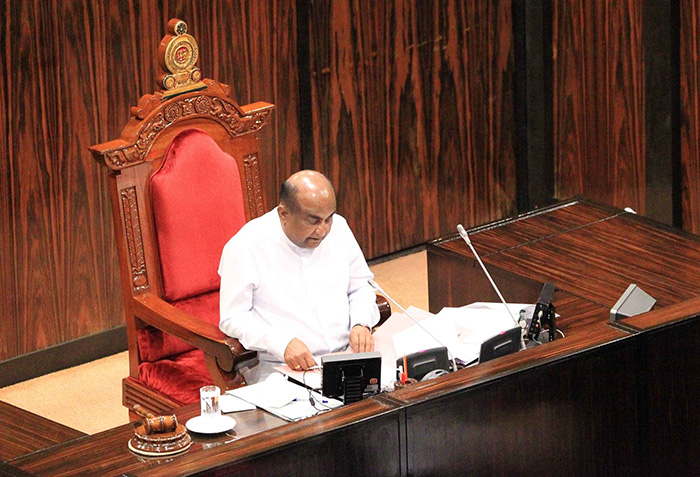
June 18, Colombo (LNW): The Speaker of Parliament has disclosed the Supreme Court’s verdict on the proposed ‘Sri Lanka Telecommunications (Amendment) Bill’.
The Supreme Court has found several clauses of the Bill to be in conflict with the Constitution.
Consequently, these clauses will necessitate a special majority in Parliament for approval.
However, the Court indicated that if the contentious clauses are amended, they could pass with a simple majority.
June 18, Colombo (LNW): The prevailing rainy condition in the south-western part of the island is expected to be somewhat enhanced in the next few days from tomorrow (19th),the Department of Meteorology said in its weather forecast today (18).
Several spells of showers will occur in Western, Sabaragamuwa and North-western provinces and in Galle, Matara, Kandy and Nuwara-Eliya districts.
Showers or thundershowers may occur at a few places in Uva province and in Ampara and Batticaloa districts in the evening or night.
Strong winds of about (40-50) kmph can be expected at times over the Western slopes of the central hills, Northern, North-central and North-western provinces and in Trincomalee, Hambantota and Monaragala districts.
Marine Weather:
Condition of Rain:
Showers may occur at several places in the sea areas off the coast extending from Puttalam to Matara via Colombo and Galle.
Winds:
Winds will be south-westerly and wind speed will be (30-40) kmph. Wind speed can increase up to 60 kmph at times in the sea areas off the coasts extending from Kankasanthurai to Puttalam via Mannar and from Hambantota to Pottuvil. Wind speed can increase up to 50 kmph at times in the sea areas off the coasts extending from Puttalam to Hambantota via Colombo and Galle and from Trincomalee to Kankasanthurai via Mullaitivu.
State of Sea:
The sea areas off the coasts extending from Kankasanthurai to Puttalam via Mannar and from Hambantota to Pottuvil can be rough at times. The sea areas off the coasts extending from Puttalam to Hambantota via Colombo and Galle and from Trincomalee to Kankasanthurai via Mullaitivu can be fairly rough at times. Naval and fishing communities are requested to be attentive in this regard.
Fashion Bug, Sri Lanka’s leading fashion retailer with 14 flagship stores island-wide, was recently bestowed with the recognition of being ranked among the Top 10 Most-Loved Brands in the Retail Lifestyle category by LMD readers, in the prestigious LMD Brands Annual Ranking 2024.
This recognition reflects Fashion Bug’s unwavering commitment to providing exceptional customer experiences and delivering the latest fashion trends to a wide range of Sri Lankans.
Commenting on the recognition, Shabier Subain, Director of Fashion Bug (Pvt.) Ltd, remarked: “This honor is a testament to our dedicated team and our unwavering commitment to offering high-quality, affordable fashion that meets the diverse needs of our customers. We are passionate about making fashion accessible to everyone and will continue to innovate and curate exciting collections that resonate with the Sri Lankan style.”
Fashion Bug prides itself on its inclusivity, offering a variety of styles to suit every taste and budget. Staying at the forefront of fashion trends, they ensure customers have access to the most stylish and contemporary looks. Through their curated range of exclusive label brands, Fashion Bug caters to the unique preferences of their diverse clientele.
The recognition by LMD readers further cements Fashion Bug’s position as a leading force in Sri Lanka’s fashion industry. The company is committed to continuing its tradition of exceeding customer expectations and providing an unparalleled shopping experience.
Fashion Bug (Pvt.) Ltd is one of Sri Lanka’s leading and largest fashion retailers with an ever-growing workforce of over 1,000 employees. The company is committed to its vision of being the most preferred fashion retailer in Sri Lanka, and with consistent growth, truly lives up to its official slogan: ‘Changing Lifestyles’.
June 17, Colombo (LNW): The eagerly anticipated 11th annual CFA Society Sri Lanka Capital Market Awards is scheduled to be held on Tuesday, 18 June 2024, at the Oak Room, Cinnamon Grand, and Colombo.
The CFA Society Sri Lanka Capital Market Awards has been a flagship event in the CFA Society Sri Lanka calendar since its inception in 2012 and is among the most sought-after accolades recognising and rewarding excellence in the local capital markets.
This year’s event will be held under the theme of “The Power of Public-Private Partnerships”, focusing on the current status of public-private partnerships (PPPs) in Sri Lanka and their future potential.
It is also set to include a panel discussion in the form of a knowledge-sharing session on how PPPs can help Sri Lanka as the country emerges from an economic crisis, while raising awareness on how CFA Charterholders’ skills are crucial to executing PPPs successfully.
The discussion will focus on key topics including the rationale for PPPs and the context in which they are beneficial to an economy, and the importance of project identification and preparation in ensuring the success of a PPP.
Furthermore, it will encompass where Sri Lanka stands at the moment in terms of regulations and legislature to facilitate PPP projects and the improvements that are needed, as well as the key success factors in executing PPPs in Sri Lanka, and how project structuring has been critical in attracting the private sector.
Sri Lanka’s initial PPP framework was formulated during the early 1990s, however, PPPs were not fully utilised to fund the projects as expected.
To support the development of robust and sustainable PPPs, and meet the International Monetary Fund (IMF) requirements of improved governance and transparency, the national budget presented to the Parliament in August 2022 proposed the re-establishment of the National Agency for Public Private Partnership (NAPPP) to identify and facilitate PPP investments, alongside the establishment of the State-Owned Enterprise Restructuring Unit (SERU) to facilitate the restructuring of Government-owned business entities.
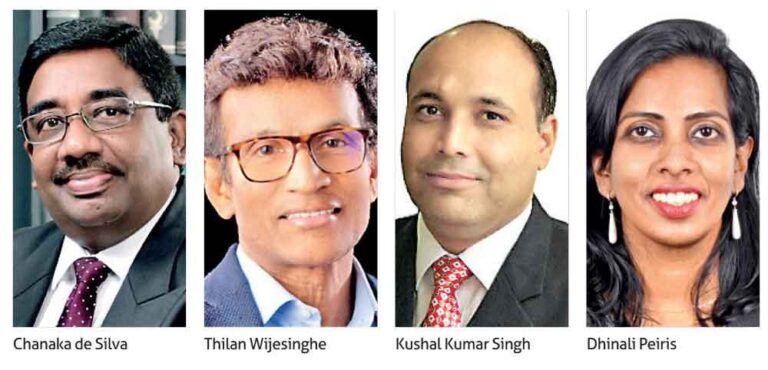
The knowledge-sharing session at this year’s CFA Society Sri Lanka Capital Market Awards is set to feature a panel of leading industry figures – namely, President’s Counsel and Nithya Partners Partner Chanaka de Silva, Deloitte India Partner Kushal Kumar Singh and TWCorp [TWC] Chairman/CEO Thilan Wijesinghe with USAID Sri Lanka Energy Program Transaction Advisor and Competitive Procurement Specialist CFA Dhinali Peiris acting as the moderator.
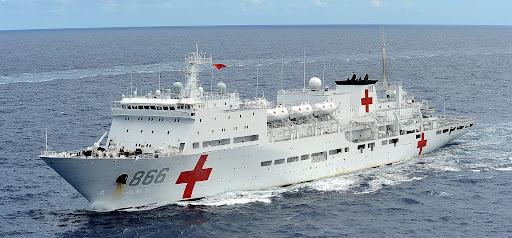
June 17, Colombo (LNW): In the wake of Sri Lanka’s ban on Chinese research vessels docking in Sri Lanka ports for one year pacifying India’s wary, the Chinese People’s Liberation Army (PLA) Navy hospital ship “Peace Ark” set sail from a military port in Zhoushan to visit several countries, including Sri Lanka.
The ship set sail from a military port in Zhoushan in east China’s Zhejiang Province on Sunday morning for Mission Harmony-2024.
During the mission, the ship will visit 13 countries, namely, Seychelles, Tanzania, Madagascar, Mozambique, South Africa, Angola, the Republic of the Congo, Gabon, Cameroon, Benin, Mauritania, Djibouti and Sri Lanka, and provide medical service to local people. It will also make port calls to France and Greece.
This is the 10th Mission Harmony for “Peace Ark” since its commissioning in 2008. The “Peace Ark” will offer free diagnosis and treatment for common and prevalent diseases to local residents, people in Chinese institutions, and overseas Chinese through onboard clinics and dispatched medical teams.
There are over 100 personnel on board the maritime hospital, featuring 17 clinical departments and 5 auxiliary diagnostic departments.
The “Peace Ark” is the first domestically designed and constructed standard ocean-going hospital ship in China. It has visited 45 countries and regions, providing medical services to over 290,000 people.
Clarifying previous Chinese research vessels to Sri Lanka, China claims the vessels are only for scientific purposes, but the Chinese ships that have docked in Sri Lanka are known to have dual scientific and intelligence-gathering purposes, informed sources said .
The accompanying excerpted articles report on Sri Lanka’s decision for a one-year moratorium on foreign research vessels docking in the country’s ports beginning 1 January 2024, and demonstrate how Sri Lanka continues to be a focal point in tensions between India and China
India’s independent think tank Observer Research Foundation states that Sri Lanka’s moratorium is an attempt to appease India by not allowing Chinese ships to carry out intelligence gathering activities so close to India under the guise of scientific research.
While Sri Lanka has become more economically tied with China over the past several years, it still relies on India as an economic and political partner
Sri Lanka’s ties with India, while strained at times, go back further than its ties with China. An immediate impact of the moratorium resulted in the Chinese ship Xiang Yang Hong 3 being prohibited from docking in Sri Lanka in early January
Sri Lanka’s one year moratorium on foreign ships reflects India’s influence in Sri Lanka. However, the docking of the Xiang Yang Hong 3 in the Maldives likewise demonstrates that India’s ability to influence only extends so far, allowing China to project power and maintain a presence near India.
June 17, Colombo (LNW): The government is compelled to introduce to introduce imputed rental income tax instead of property tax which is delayed due administrative issues connected with its formulation, finance ministry announced.
The envisaged property tax is in an advanced stage of design and therefore, it is premature to outline specific details of rates and thresholds.
However, the focus of this tax is on high wealth individuals, and not on average income earners. This objective will be achieved by a suitable tax-free threshold to ensure that the tax is targeted on very high value property or multiple properties that are owned by wealthy members of society.
This specific targeting is evidenced by the fact that the tax is expected to yield 0.2% of GDP by 2025 and 0.4% of GDP in a full year in 2026.
The design of the tax will also ensure appropriate set off mechanisms to avoid double taxation and any elements that distort economic incentives. Property taxes are implemented in many countries (including developing countries like India) since they are considered to be a highly efficient, progressive, and non-distortive means of generating revenue to fund public services, the ministry disclosed.
However professor in the Department of Economics and Statistics at the University of Peradeniya Wasantha Athukorala, a, alleges that the government is working to introduce an imputed rental income tax, as it has failed to prepare plans for the implementation of a property tax by April 2025, as proposed by the International Monetary Fund (IMF).
Furthermore, Prof. Athukorala expressed that if a property tax is implemented in the country, all ill-gotten gains will be exposed.
It was announced that Sri Lanka will likely introduce an imputed rental income tax, as part of the ongoing revenue mobilization efforts.
The new tax comes as a substitute for the property tax, as the introduction of the property tax and the gift and inheritance tax by 2025 encountered delays, due to constitutional restrictions on sharing revenues between the central and local authorities and the lack of adequate information on property values.
Accordingly, Sri Lanka will promptly initiate preparatory work to introduce an imputed rental income tax, though the expected gains would only fully materialize in 2026.
The imputed rental income tax on owner-occupied and vacant residential properties will be introduced before the beginning of the tax year on April 1st, 2025, as per the IMF Country Report No. 24/161.
To ensure that the imputed rental income tax is fully operational by 2026, Sri Lanka will undertake the following measures;
Establish the first database on estimated current market values by end-December 2024 with immediate efforts to;
(i) Digitize the valuation records held by the government valuation department, starting with municipal councils, finalizing this effort by end-2025,
(ii) Collect information from a representative sample of 5,000 standard properties that includes key variables, including annual values, latest assessment date, and property type, of all properties in all municipal councils by August 2024.
June 17, Colombo (LNW): As part of the ‘Urumaya’ national initiative, President Ranil Wickremesinghe today (17) has distributed 1,524 freehold deeds to eligible settlers in the Mahaweli and Walawe regions.
The distribution ceremony took place at the Embilipitiya Mahaweli office auditorium.
This programme aims to grant a total of two million freehold deeds nationwide.
Additionally, the President conducted a symbolic deed distribution event in the Mannar district, awarding 442 deeds at the Mannar Municipal Council auditorium yesterday.
President Ranil Wickremesinghe underscores the Hajj celebration as a catalyst for fostering sentiments of equality and fraternity among all individuals, imparting a profound message for global peace: In his address marking the Hajj festival, the President extends his sincere wishes to the Muslim community in Sri Lanka and across the globe, encouraging a meaningful observance where collective efforts converge to realise the universal aspirations of humanity.
SJB MP Eran Wickramaratne says the economy of Sri Lanka cannot be developed, should the country fail to build a united nation at the social and political level: asserts the economy cannot develop if there is no political stability: reveals the people and political leaders of the North asked Opposition Leader Sajith Premadasa to reactivate the Office of Missing Persons and the Office established to compensate for the losses in the North: assures these requirements will be fulfilled under a SJB-rule.
Ruling Party MP S.B. Dissanayake says both President Ranil Wickremesinghe and the Sri Lanka Podujana Peramuna (SLPP) will fail if the SLPP does not back Wickremesinghe in the upcoming Presidential Polls: suggests that the two parties, therefore, should reach a consensus, and Wickremesinghe, accordingly, too has to provide the necessary initiative for such agreement.
Foreign Minister Ali Sabry announces Japan plans to resume paused development projects in Sri Lanka upon the country’s debt repayment commencement: discloses plans for negotiations during his upcoming visit to Japan in July, aiming to finalise project restarts: Assurances were received that all Japanese-supported initiatives would resume post-agreement with bilateral creditors.
Education Minister Susil Premajayantha announces Grade 5 exam changes: 30% based on 4th and 5th-grade classroom work: emphasises need for comprehensive evaluation, proposes teacher-conducted assessments: reveals reforms at Naththandiya event; plans 2,500 smart board distribution to top schools from August.
The management of Colombo Lotus Tower (Private) Limited announces plans to illuminate the iconic structure in vibrant shades of green and white today (17), marking the occasion of the Eid al-Adha Hajj Festival: The initiative seeks to celebrate and honour the significant cultural and religious event within the community.
The Export Development Board (EDB) launches Sri Lanka’s ‘Creative Sri Lanka 2030’ export brand at London’s ‘Sourced Sri Lanka Textile & Apparel Roadshow’, promoting sustainability and national identity.
The National Water Supply and Drainage Board announces an interruption in water supply to several areas: Godagama, Homagama, Pannipitiya, Pelanwatta, Rukmalgama, and Mattegoda: The disruption is due to damage sustained by the transmission pipeline originating from the Kalatuwawa Treatment Plant: Reports indicate that the pipeline ruptured at Godagama near the High-Level Road following a vehicular accident earlier today, resulting in significant damage to the infrastructure.
Authorities urge verification of plainclothes officers’ IDs after Maradana robbery by imposters posing as police: assert the public is entitled to verify plainclothes officers’ IDs: Victims assaulted, belongings worth Rs. 200,000 stolen: Police arrest suspect linked to robbery after seizing heroin; hunt ongoing for second suspect.
Sri Lanka, despite being eliminated, beat the Netherlands by 83 runs in the T20 World Cup Group D match at Daren Sammy Stadium: Kusal Mendis and Charith Asalanka scored 46 each, setting a record 201-run total: Netherlands faltered to 118 all out, with Nuwan Thushara taking 3 wickets.