May 31, Colombo (LNW): The Department of Examinations is expected to release the results of the 2023 GCE Advanced Level Examination either today or tomorrow, according to a report by Lankadeepa Newspaper.
A total of 346,976 students participated in the 2023 GCE Advanced Level Examinations, which were held in January. Among these, 281,445 were school applicants and 65,531 were private applicants.
The Commissioner General of Examinations has stated that once released, the results will be available on the following websites:
May 31, Colombo (LNW): Notorious underworld figure and drug trafficker Ruwan Jayasekara, alias “Midigama Ruwan,” has been brought back to Sri Lanka from Dubai by a team of officers from the Criminal Investigations Department (CID), Police Spokesman DIG Nihal Thalduwa announced today.
Jayasekara is accused of being involved in planning the escape attempt of infamous drug trafficker Nadun Chinthaka, alias ‘Harak Kata,’ from the CID headquarters in Colombo. In March, it was reported that “Midigama Ruwan” had been arrested by the Dubai Police based on an Interpol warrant, with expectations of his extradition to Sri Lanka.
Considered one of the leaders of Harak Kata’s drug network following the latter’s arrest in Madagascar and subsequent extradition to Sri Lanka, Jayasekara is also accused of orchestrating an attack on the CID head office in Colombo to free Harak Kata. This plot, however, was ultimately foiled.
1. President Ranil Wickremesinghe stated that he is actively working to address wage disparities across all sectors of the public sector. Highlighting the country’s economic recovery, the President acknowledged that while Sri Lanka is beginning to regain its footing, there remains a significant journey ahead. He emphasized the need for the trade union movement to adapt to current changes and contribute to the nation’s progress.
2. Transport, Highways and Mass Media Minister Dr. Bandula Gunawardhana stated that Opposition Leader Sajith Premadasa going to schools is a political farce. Speaking at the inauguration of Odatugama-Adiyagala road renovation project at the request of founder of Jathika Namal Uyana Ven. Wanawasi Rahula Thera, the Minister said that every government has carried out development projects, road development projects on credit.
3. Power and Energy Minister Kanchana Wijesekera announced that coal power plants in Sri Lanka will be decommissioned, as per the country’s long-term generation plan. He said that Sri Lanka has set a target of securing 70% of the country’s energy requirement via renewable energy, by 2030.
4. Seylan Bank PLC, in collaboration with the Asian Development Bank (ADB) and the Government of Sri Lanka (GoSL), will disburse Working Capital and Long-Term Loans from the ADB, aimed at bolstering the Small and Medium Enterprise (SME) sector in the country. In an effort to stimulate economic growth and support local businesses, Seylan Bank will offer financial assistance to SMEs engaged in various industries, including Agriculture, Fisheries, Ornamental Fisheries, Aquaculture, Livestock, Animal Husbandry, Poultry, Tourism, and Export-Oriented Businesses.
5. State Minister for Finance, Shehan Semasinghe stated that only those wishing to plunge the country back into an economic crisis would oppose the Economic Transformation Bill. He emphasized that while the current government is focused on an optimistic economic outlook, the opposition groups are driven solely by political motives.
6. A ship, owned by an Indian company, has been taken into custody by Sri Lanka’s Marine Environment Protection Authority (MEPA) for causing an oil spill while anchored at the Colombo Port, it was reported. According to a MEPA official, compensation was sought for the oil spill under the Marine Environment Protection Authority Act, while the company’s owner has admitted to the incident and agreed to provide compensation.
7. Minister of Foreign Affairs Ali Sabry says that the western countries have shown their ‘double standards’ by ‘turning a blind eye’ to the crisis in Gaza and that, serious amendments must be made to the international laws on how the United Nations functions in order to protect international democracy. Minister stated that Sri Lanka is of the view that the Israel-Palestine war must come to an end immediately and both countries must exist as per the borders announced in 1965.
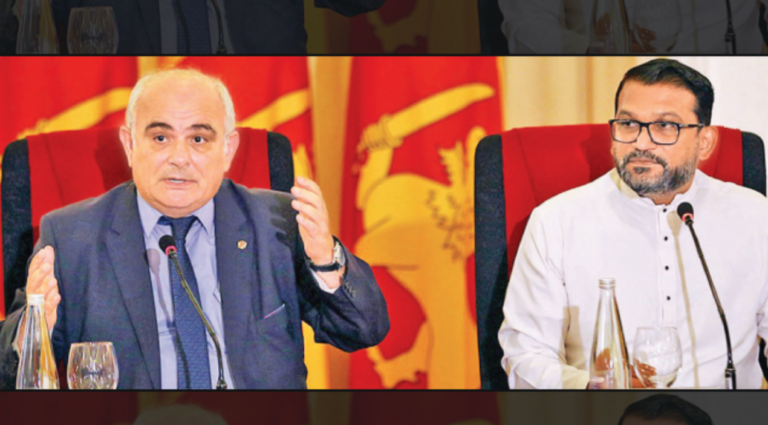
8. State Minister of Foreign Affairs Tharaka Balasuriya states that Sri Lanka is working closely with the Government of Russia to repatriate Sri Lankans who are working with the Russian forces. Russia’s Ambassador to Sri Lanka Mr. Levan Dzhagaryan, the State Minister also expressed that the ministry has requested that those who choose to remain will not be sent to the frontlines of the war in Ukraine, and will continue to receive their salaries and benefits in full.
9. The Committee on Public Finance (CoPF) has directed the officials of the Welfare Benefits Board to prioritise the criteria that can be verified and determined in order to accurately identify poverty while selecting the “Aswesuma” beneficiaries. Drawing examples, the committee pointed out that individual poverty can be identified better based on the electricity bill amount considering the electricity units consumed in each home, the Parliamentary Communications Department said in a statement.
10. Police have arrested two Canadians for assaulting several persons at Chunnakam. Police said that the attackers had forcibly entered a house and assaulted those present over a financial dispute.Police arrested the two Canadian passport holders after those who had been assaulted lodged a complaint with Chunnakam police. They were to be produced before the Mallakam Magistrate court.
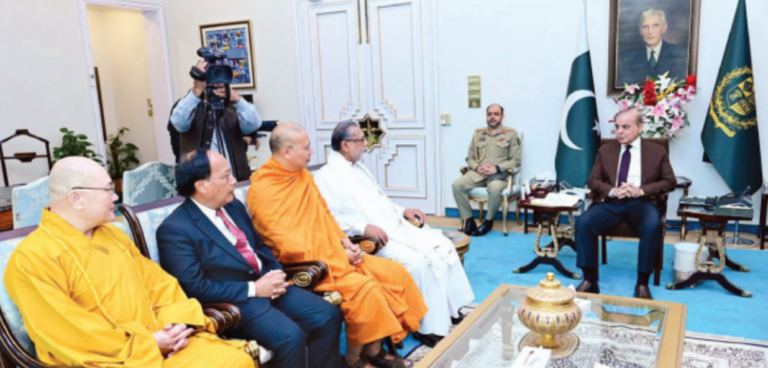
May 31, Colombo (LNW): A delegation of Buddhist leaders met with Pakistan’s Prime Minister Shehbaz Sharif in Islamabad during their visit to attend a symposium and exhibition titled ‘From Gandhara to the World,’ organized by Pakistan’s Foreign Affairs Ministry. The delegation included Buddhasasana, Religious and Cultural Affairs Minister Vidura Wikramanayake, Most Ven. Thich Duc Tuan Thera from Vietnam, Most Ven. Anil Sakya Thera from Thailand, and Dr. Keshabman Shakya from Nepal.
Prime Minister Sharif expressed gratitude for their participation in the symposium, held in connection with Vesak Day, which commemorates the birth, enlightenment, and passing away of the Buddha. He highlighted Pakistan’s pride in its ancient Buddhist heritage, particularly the Gandhara art and culture that flourished in Northwest Pakistan over two thousand years ago. Sharif emphasized his government’s commitment to interfaith harmony and acknowledged the significant contributions of Buddhist scholars and monks to promoting understanding and harmony among different faiths.
The Buddhist leaders appreciated the Prime Minister’s dedication to fostering a culture of inclusivity and respect for all religions. They commended Pakistan’s efforts to preserve and promote its Buddhist heritage sites and cultural artifacts and expressed a keen interest in collaborating with Pakistan on these preservation efforts.
During the meeting, they discussed ways to strengthen interfaith dialogue and cooperation, as well as opportunities for cultural and academic exchanges between Pakistan and Buddhist-majority countries. The meeting concluded with a commitment to continue exploring avenues for mutual understanding and cooperation, and to work together towards a more harmonious and peaceful world. They also discussed the possibility of establishing a joint forum for dialogue and collaboration.
The meeting was attended by Pakistan’s Religious Affairs Minister Salik Hussain, Information and Broadcasting and Cultural Heritage Minister Ataullah Tarar, and Special Assistant to the Prime Minister Syed Tariq Fatemi.
May 31, Colombo (LNW):Russian Ambassador in Colombo, Levan Dzhagaryan, stated yesterday that Western countries are exploiting the issue of trafficked Sri Lankan ex-servicemen to harm bilateral relations between Russia and Sri Lanka. He questioned why these countries are not addressing the presence of mercenaries in Ukraine.
Dzhagaryan emphasized that Russia is taking this matter seriously, with a special discussion scheduled at the Russian Defence Ministry between senior officials and the head of the Sri Lankan Mission in Moscow. This discussion, which took place yesterday evening, marks the first step towards resolving the issue. The ambassador assured that collaborative efforts will be made to address the situation promptly.
Furthermore, Dzhagaryan remarked that Ukrainian President Volodymyr Zelenskyy is no longer in office, as his tenure has ended.
May 31, Colombo (LNW):Education Ministry’s Additional Secretary, Chandima Janaki, announced yesterday (30) that steps have been taken to increase the interest-free loan given to students aspiring to pursue higher education in private universities from Rs. 800,000 to Rs. 1.5 million. The Cabinet has approved this increase, benefiting seven groups of students since the scheme’s inception in 2017.
Janaki noted that while loans had been provided without a guarantor, recent attempts by two groups to evade repayment have prompted the introduction of a guarantee requirement to secure these loans.
The revised loan amounts are Rs. 1.5 million for an engineering degree, Rs. 1.2 million for a chemistry degree, Rs. 1 million for a technology degree, and Rs. 900,000 for freshmen. Additionally, the loan scheme, initially facilitated by state banks, will now also include private banks.
May 31, Colombo (LNW): State Foreign Affairs Minister Tharaka Balasuriya announced yesterday that the Sri Lankan Foreign Ministry is working with Russian authorities to prevent trafficked Sri Lankan ex-servicemen from being deployed to the battlefront. As of yesterday, all males visiting Russia on a visit visa must possess a no-objection letter from the Defence Ministry to obtain a visa.
At a joint press conference with Russian Ambassador in Colombo, Levan Dzhagaryan, Balasuriya stated that a Sri Lankan delegation will visit Russia on June 5 to address this issue with Russian authorities. Discussions will focus on ensuring that Sri Lankans are not sent to the battlefront.
Balasuriya emphasized that Sri Lankan officials are striving to repatriate those who wish to return from Russia. He revealed that job agencies have trafficked ex-servicemen to Russia with promises of higher wages and Russian citizenship, leading many to take loans or sell possessions to fund their journey.
Some individuals traveled to Russia via Dubai and India. The government has received over 455 complaints about ex-servicemen being sent to the warfront in Russia, with 16 reported missing and 26 repatriated after seeking help from the Sri Lankan mission in Moscow.
Balasuriya noted the difficulty in determining the exact number of Sri Lankans on the warfront or the total fatalities. He acknowledged that the number of missing, injured, or deployed ex-servicemen might be higher.
These individuals entered Russia under various pretexts, making it challenging to prevent their legal entry. Balasuriya clarified that the conflict is not in Russia but in Ukraine, complicating the situation further.
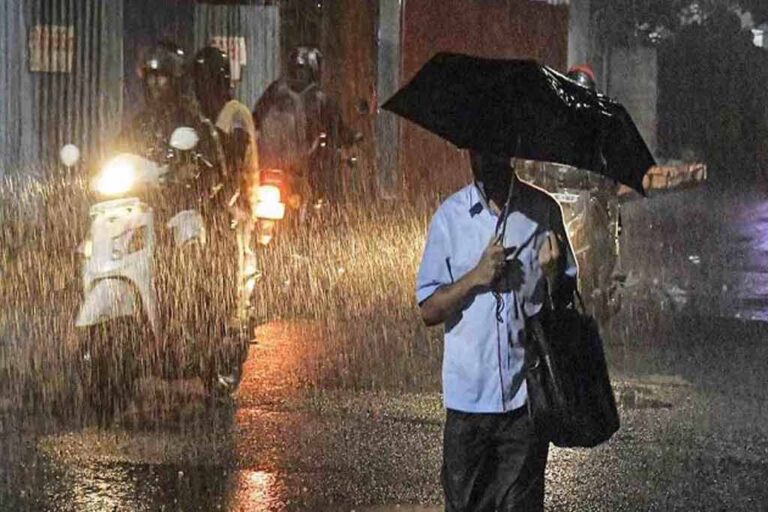
May 31, Colombo (LNW): The prevailing showery and windy conditions over the island are expected to continue due to the active South West Monsoonal conditions.
Showers will occur at times in the Western, Sabaragamuwa, Central, and Southern provinces, with several spells of showers also occurring in the North-Western province. Fairly heavy showers, exceeding 50 mm, are likely in some areas within the Western and Sabaragamuwa provinces, as well as in the Nuwara-Eliya district.
Showers or thundershowers are expected in a few locations within the Uva, North-Central, and Eastern provinces during the evening or night. Strong winds, ranging between 40-50 km/h, can be expected intermittently over the western slopes of the central hills and in the North-Central, Western, Southern, and North-Western provinces, as well as in the Trincomalee and Monaragala districts.
May 30, World (LNW): We all heard the tunes, the most beautiful high pitch of Agnetha and the perfect low pitch of Frida, combined in an uncanny multiplication of themselves at a studio in Archipelago, articulated by and glued with the brilliant guitar sounds of Björn and the dreamy piano gliding of Benny – simply put, ABBA – the legacy that continues to live on for five decades since the group’s formation, from winning the Eurovision Song Contest in Briton in 1974, dominating the world’s pop industry in the 70s, producing eight studio albums with two major world tours, falling short in a hiatus in the 80s, developing musicals based on their greatest hits in the 90s, contributing to the rumours of a reunion in the late 2010s, to finally regrouping in their digitally mastered younger-appearances in a holographic realm with a brand new album ‘Voyage’ released post-Covid, people of five generations still crave for the music of ABBA.
ABBA | Photo: https://abbasite.com/
Their music remains timeless, innovative, and according to some musicians quite complex despite the melodies sounding simple, and still continues to captivate audiences worldwide. As they built and navigated the pillars for the modern pop landscape, ABBA’s future looks promising with exciting developments on the horizon.
But what future will hold for this amazing foursome that once dominated the world? All four members of ABBA are in their seventies, resting as senior citizens preferring privacy over fame.
The first ‘A’ Agnetha Fältskog, who had already earned her superiority pre-ABBA with seven solo albums from 1967 to 1981 that hit Swedish charts, upon her departure from ABBA in 1982 produced three more solo albums, and quite recently in 2023 a rebranded version of her 2013 album ‘A’ as ‘A+.’ The ‘Bs’ Björn Ulvaeus and Benny Andersson, whose careers pre-ABBA as ‘The Hootenanny Singers’ and ‘The Hep-Stars’, respectively, had already been granted musical royalty in Sweden in the 60s, carried out a number of ABBA-inspired projects, out of which the “The ABBAtars,” a concert in which the actual four members of ABBA perform in their digitised younger-selves, is truly bright as a button pumping money and fame, in a strategic move for future generations to recognise their legacy. The last ‘A’ Anni-Frid Lyngstad, whose recognition for pitch perfection and opera through her debut winning of the Flugan Contest as the “Vocalist of the Year” in 1964 and the subsequent Barnens Dag Contest in Stockholm in 1967 gained her royalty in Swedish music, contributed her part for ‘Voyage’ as a vocalist and as a performer in “The ABBAtars”.
The ABBAtar show, as groundbreaking and state-of-the-art as it sounds, featuring digital avatars of the foursome, has been a significant milestone in ABBA’s journey. The revolutionary concert experience allows fans to enjoy a virtual performance that feels remarkably real.
In a recent interview with Björn Ulvaeus, he revealed that all four members of ABBA are set to reunite to discuss the future of this record-breaking show. The ABBAtar alias “The Voyage Concert” has not only brought ABBA’s music to a new generation but has also set a precedent for other artists exploring virtual performances.
Björn Ulvaeus and Benny Anderson | Photo: Getty
According to ‘The US Sun,’ the upcoming reunion of Agnetha, Björn, Benny and Frida will mark a pivotal moment for ABBA. This meeting will focus on evaluating The Voyage Concert’s success and planning future ventures. The band members have expressed both excitement and caution about expanding their virtual presence. This careful and strategic move underscores their commitment to maintaining the quality and integrity of their brand. It further illustrates the enduring appeal of ABBA’s sound and their ability to adapt to modern music trends while staying true to their roots.
The Eurovison Song Contest 2024 pays tribute to ABBA | Photo: Getty
This blend of old and new not only attracts long-time fans but also engages younger audiences who may be discovering ABBA’s music for the first time. To prove further, the official music video for “Little Things” features a group of children who performs ABBA-style for Christmas. This strategic approach ensures that ABBA remains relevant in an ever-evolving music industry.
ABBA members Benny Andersson, Agnetha Faltskog, Anni-Frid Lyngstad and Björn Ulvaeus attend the World Premiere of “ABBA Voyage” in London in May 2022. David M. Benett | Photo: Getty Images
ABBA’s latest album ‘Voyage,’ released after a 40-year hiatus, topped charts worldwide and reaffirmed their place in contemporary music and even was nominated for the Grammys in 2022. In 2010, ABBA was included to “Rock and Roll Hall of Fame”. Despite the four being nominated for the Grammys for first time in their career, Benny is of the viewpoint that his proudest moments were the winning of the 1974 Eurovision Song Contest with “Waterloo” and being included in the “Rock and Roll Hall of Fame’s” artist inductees, according to ‘The Independent’.
Björn Ulvaeus and Benny Andersson outside the Abba Voyage arena (Bjorn Ulvaeus and Benny Andersson)
As ABBA charts its future course, they face both challenges and opportunities. The Voyage Concert’s success has set high expectations for future projects. Expanding their virtual performances or exploring new technological innovations will require significant investment and creativity. Additionally, the band must navigate the complexities of preserving their legacy whilst embracing new opportunities.
On the flip side, ABBA’s rich musical catalogue and strong brand identity provide a solid foundation for future endeavours. Collaborations with contemporary artists, new music releases, and expanded virtual experiences are all viable paths that can further cement their legacy.
ABBA’s future is a fascinating blend of nostalgia and innovation. With the upcoming reunion to discuss the ABBAtar show’s future, fans can look forward to new developments that honour ABBA’s legacy while embracing modern technology.
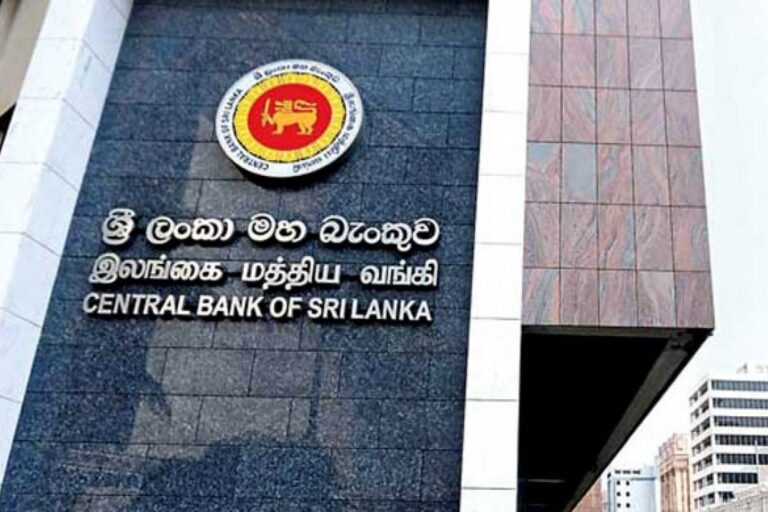
May 30, Colombo (LNW): The Monetary Policy Board of the Central Bank of Sri Lanka (CBSL) has decided to maintain the Standing Deposit Facility Rate (SDFR) and the Standing Lending Facility Rate (SLFR) at their current levels of 8.50 per cent and 9.50 per cent, respectively.
The Board arrived at this decision, at its meeting held on 27 May 2024, after carefully assessing the current and expected macroeconomic developments and possible risks on the domestic and global fronts with a view to maintaining inflation at the targeted level of 5 per cent over the medium term while supporting the economy to reach its potential, the statement said.
While the medium term inflation outlook remains compatible with the current level of policy interest rates and inflation expectations are well anchored, the Board said it observed the need for a further reduction in market lending interest rates.
This was in line with policy interest rates and other benchmark interest rates, which is imperative for the easing of domestic monetary conditions and domestic economic recovery.
The aim is to provide the previous rate cuts to do their work in bringing down the rest of the market lending rates further as inflation expectations remain well anchored.
After staying the rates, Central Bank Governor Dr. Nandalal Weerasinghe said the Board would like to give more time for market lending rates to adjust to its previous policy actions.
There are long and variable lags between the monetary policy action and their impact on the financial markets and the real economy.
Therefore, he said it is natural for the lending rates, which have already come down substantially, to further respond to more recent policy rate cuts.
The Central Bank in March cut its key policy rate by 50 basis points as inflation remained well below expectations and also to spur economic activities which were crushed by their own follies.
It is increasingly becoming evident that the inflationary spiral back in 2022 and part of 2023 was misread, and reacted by making the monetary policy bone crushingly tight.
That pushed swaths of businesses and people out of business and jobs, tipped scores of people into dire poverty and hunger.
What exacerbated economic hardships were the standard International Monetary Fund prescription which raised taxes to sky high levels, slapped new taxes and tied energy and utilities prices to market prices. And all these policies crushed demand and prolonged an otherwise short term economic dip. Perhaps understanding the folly, the Central Bank changed track and pivoted to cut policy rates from June last year.