Home Blog Page 1119

Forty Asia and Pacific countries agreed transforming agri-food systems

0

By: Staff Writer

February 25, Colombo (LNW): Forty countries from the Asia and Pacific region agreed that transforming agrifood systems was imperative to providing food security for their children’s generation and beyond, the Food and Agriculture Organization of the United Nations (FAO) reported

The summation was delivered at close of the 37th Session of the FAO Regional Conference for Asia and the Pacific (APRC37) in Colombo. The conference was hosted by the Government of Sri Lanka.

Forty countries of Asia and the Pacific attended the APRC, with the vast majority attending in-person, including some 20 government Ministers.

It was the first time since 2018 that a large in-person gathering of the region’s food and agriculture Ministers and other policymakers was convened by FAO, and is seen as emblematic of the attention needed to recover from the pandemic and disruptions caused to food production and distribution that has plagued many countries in the region ever since.

The global pandemic, coupled or followed closely with a shortage of food, feed fuel, fertilizer and access to finance, caused food price to jump significantly.

 Lessons were learned and many called it a ‘wake-up call’ to ensure that food affordability and availability and agricultural production must be a global priority.

“Food and agriculture are now at the centre of the global development agenda and this is an opportunity for all of us, including civil society and private sector organizations to decisively reimagine and reshape agrifood systems for global economic, social and environmental benefits,” said Jong-Jin Kim, FAO’s Assistant Director-General and Regional Representative for Asia and the Pacific.

“This transformation will be important for you to maintain a sustainable environment and increase biodiversity, while providing opportunities for decent jobs for people. That is the added value of modern farming,” Kim said to the delegates at the end of the four-day conference.

Kim called on the FAO Member Nations gathered to address these issues holistically. “We must do this together with all relevant key partners, not only with the Ministers for Agriculture, Food and Rural Affairs, but also with Ministers for Welfare, Women, Children, Environment, Science, Education, Trade Investment and Finance. These are their duties too. So, we must work together as a team.”

“Science and Technology are constantly evolving. In the agrifood sector, we should lead,” said Kim. “Agriculture, food and nutrition are at the core of humanity’s needs – and the world casts its eyes towards Asia and the Pacific region for leadership.

As the Director-General said – we are the Agents of Change,” Kim added, referring to the opening statement to the conference by the FAO Director-General, Dr QU Dongyu.

Sri Lanka gets ready to face any eventuality of nuclear radiation in the region

0

By: Staff Writer

February 25, Colombo (LNW): Sri Lanka is ready to face energy ionizing and thermal radiation as result of nuclear weapon attack in the region, officials of the atomic energy board claimed adding that they were equipped with well trained human resources and modern equipment to handle such an eventuality.

Nuclear weapon attack and shockwave consist of 50% of total energy thermal radiation: 35% of total energy. Ionizing radiation: 5% of total energy (more in a neutron bomb) residual radiation: 5–10% of total energy with the mass of the explosion, they explained.

The atomic energy board officials disclosed these details when they attended the sectoral oversight committee on Energy and Transport met at parliamentary committee recently.  

Meanwhile the committee appointed to look into forming the laws and regulations necessary for Sri Lanka to commence nuclear power generation projects is expected to complete that process by June this year (2024).

This was stated by the Sri Lanka Atomic Energy Board (SLAEB) Chairman Prof. S.R.D. Rosa, who serves as a member of the said committee.

He noted that the committee in question has taken into account the relevant legal and regulatory frameworks in place in the international context.

“If Sri Lanka is going for nuclear power generation, we first have to amend the Sri Lanka Atomic Energy Act, No. 40 of 2014, he said.

It currently provides for the non-power application of atomic energy,” he explained, referring to the Act which allows for the utilisation of radioactive materials and ionising radiation “for medical, environmental, agricultural, industrial, and other peaceful purposes, and for scientific and technological advancement, as may be required for national development.”

Prof. Rosa noted that the committee looks into the legal and regulatory frameworks of countries including Pakistan, and that the committee’s aim is to form laws and regulations that suit Sri Lanka.

The committee includes experts and officials representing a number of institutions including the SLAEB, the Sri Lanka Atomic Energy Regulatory Council (SLAERC), the Legal Draftsman’s Department, and the Attorney General’s Department, which, according to Prof. Rosa, commenced work several months ago under the leadership of Court of Appeal Judge, Justice Sobhitha Rajakaruna.

A letter shared by the SLAERC Chairman Saminda Jayasekara on LinkedIn showed that the committee, which is tasked with recommending amendments or a replacement for the said Act, includes members from the Foreign Affairs Ministry, the Ceylon Electricity Board, and the Power and Energy Ministry, in addition to independent experts.

Sri Lanka is looking into creating a suitable legal and regulatory environment for nuclear power generation in the backdrop of proposals and discussions regarding the construction of an onshore or offshore nuclear power plant with Russia’s support as a solution to the increasing energy demand.

SL downs in a whirlpool till 2028 after debt restructure: Global Analyst

0

By: Staff Writer

February 25, Colombo (LNW): Sri Lanka will face difficulties till 2027-28 in order to gain international market access due to high debt despite its post debt restructuring phase according to the Debt Sustainability Analysis (DSA) targets, a global sovereign debt expert said.

Speaking at the Committee on Public Finance (COPF) on Tuesday (20), Global Sovereign Advisory Research Analyst Theo Maret said that the International Monetary Fund (IMF) has used a different model to assess the DSA of Sri Lanka than it has used for low-income countries, providing higher DSA targets for Sri Lanka.

“The IMF used Sri Lanka the same model that applies to Japan, the US, France with a  strong revenue base and these countries are able to sustain a higher debt than what Sri Lanka can reasonably sustain,” he said.

Maret said that this was due to the fact that Sri Lanka has graduated in the past as a middle-income country. Sri Lanka was downgraded to the low-income level in 2022.

Sri Lanka sent a new restructuring proposal to dollar bondholders through its adviser Lazard as the South Asian nation seeks to complete overhauling its defaulted debt, according to people familiar with the matter.

A counter proposal to a bondholder group’s offer in October for a 20% haircut and the issuance of macro-linked bonds was conveyed through Lazard, the people said, declining to be named because negotiations are private.

They did not elaborate on the details of the offer. Government representatives may travel to London soon to meet Sri Lanka’s commercial creditors, one of the people said.

Completing the overhaul of Sri Lanka’s $ 27 billion of foreign debt is critical to ensure financing from the International Monetary Fund bailout keeps flowing. President Ranil Wickremesinghe said this month that authorities expect to complete the restructuring within the first six months of the year.

Calls to Sri Lanka’s treasury secretary, junior finance minister and central bank governor went unanswered. Representatives of the bondholder group and Lazard weren’t immediately available for comment.

The Government had already struck restructuring deals with official creditors, including China, India and the Paris Club as well as with holders of its local debt.

He said that the IMF has provided a debt-to-GDP target of 60% for other low-income countries. In comparison, for Sri Lanka, the DSA target is 95% while in the case of Zambia, the external debt servicing target is more than double that of Sri Lanka although both countries will have a higher revenue base and a similar fiscal situation coming out of the debt restructuring.

“So in that regard, Sri Lanka will be exiting its restructuring even if it fits within the IMF targets with still a debt level that is quite significant,” he added.

He noted that Sri Lanka has to decide on what kind of proactive fiscal policies and debt management policies could be implemented to reduce the debt stock further and reduce refinancing risk in the years after restructuring because the market will probably still consider Sri Lanka in a precarious situation because of these high debt metrics.

“So it won’t be smooth sailing till 2027-28 when the country is supposed to regain access to international capital markets,” Maret said.

He added that this will require proactive debt management, medium-term debt strategies and annual borrowing plans trying to change the financing mix towards more concessional sources.

India, Maldives, and Sri Lanka Launch ‘DOSTI-16’ Trilateral Maritime Security Exercise in Indian Ocean Region

0

February 25, Colombo (LNW): Coast guard personnel from India, the Maldives, and Sri Lanka have commenced a four-day trilateral exercise aimed at bolstering maritime security and interoperability in the Indian Ocean Region.

Known as ‘DOSTI-16,’ the exercise involves Indian Coast Guard ship Samarth, ICGS Abhinav, and Sri Lanka Naval Ship Samudura, with Bangladesh participating as an observer.

The trilateral exercise seeks to enhance cooperation, strengthen friendship, improve mutual operational capability, and develop interoperability among the Coast Guard personnel of the participating nations.

Welcoming ADG S Paramesh, Additional Director General of the Indian Coast Guard, the Maldives National Defence Force (MNDF) expressed warm greetings upon his arrival at the VIA.

Commanding Officers of the participating ICG ships held discussions with Commandant MNDF CG to explore avenues of cooperative engagement.

Activities throughout the exercise will include joint sea exercises involving the Indian Coast Guard, Sri Lanka Coast Guard, and Maldives National Defence Force.

The 16th edition of the India-Maldives-Sri Lanka trilateral exercise ‘Dosti’ underscores regional synergy to enhance maritime security and interoperability, as highlighted by the Indian Mission in Maldives.

Participating in such exercises enables the Sri Lanka Navy to augment cooperation and interoperability with other maritime stakeholders in the region, fostering knowledge exchange, strategy sharing, and collaborative problem-solving for emerging maritime challenges in the Indian Ocean Region.

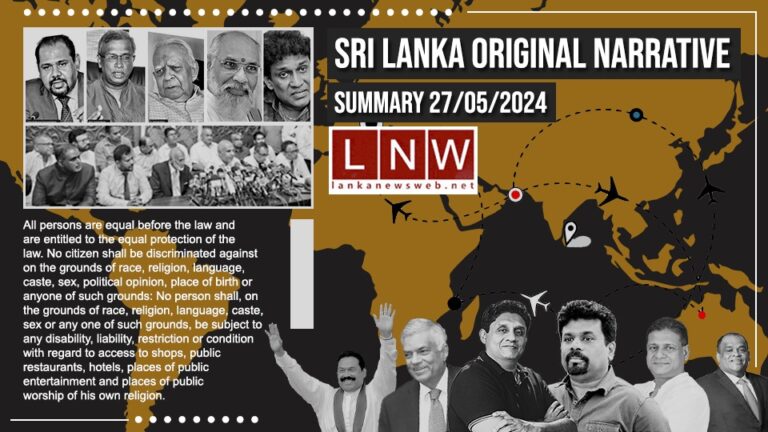
Sri Lanka Original Narrative Summary: 25/02

0

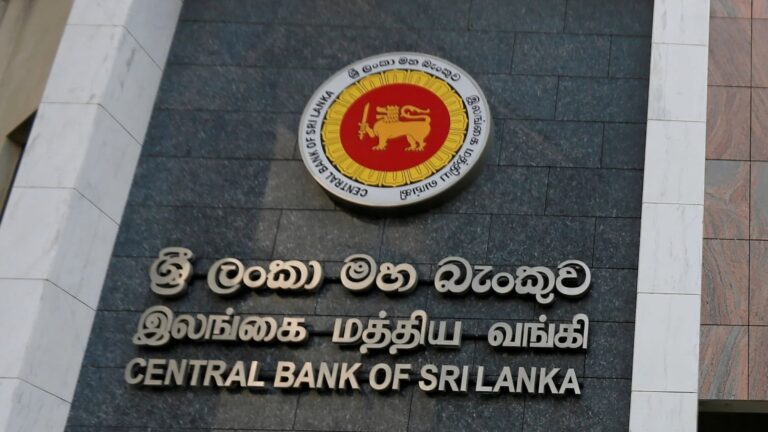
  1. Tensions rise over surging salaries at the Central Bank, sparking political speculation: Sources disclose that UNP leaders express public discontent to President Ranil Wickremesinghe, hinting it could influence the upcoming presidential polls: Wickremesinghe deflects responsibility, citing the Central Bank’s autonomy and suggests parliamentary intervention: Speculation mounts about the salary spike’s political impact.
  2. Opposition Leader Sajith Premadasa and wife Jalani Premadasa announce parenthood to a baby girl: says as a father his ultimate hope is that his daughter grows up, receives a good education, and becomes a virtuous, civilised, educated and intelligent citizen of the country, just as any other parent.
  3. NPP/JVP Leader MP Anura Kumara Dissanayake says Sri Lanka had always stuck in the process of moving forward due to its vanity towards centuries-old accomplishments, when other nations moved forward: laments politicians who came to power from time to time harboured this vanity instead of building the nation by measuring the country’s development in ancient establishments, thus losing major transformations.
  4. The government is considering establishing a prison or rehabilitation centre on Mantheevu Island in Batticaloa, currently housing only two leprosy patients: Minister Wijeyadasa Rajapaksha visited the island to explore this possibility due to prison overcrowding concerns: The 100-acre island was previously used as a quarantine facility during the COVID-19 pandemic.
  5. The Health Ministry is investigating suspected fatalities at Kurunegala Teaching Hospital’s dialysis unit: At least five deaths have occurred since January: A five-member committee, led by Chief Epidemiologist Dr. Samitha Ginige, will investigate the matter: The incident may be linked to unidentified pathogens introduced into the unit: The Ministry is conducting a comprehensive inquiry, and as a precaution, the unit has been closed, with patients redirected to nearby facilities.
  6. The Asian Development Bank plans to offer Sri Lanka up to $500 million in assistance for 2024, contingent on policy reform progress: This includes a $100 million power sector loan pending approval of an electricity reform bill, another $100 million for Small and Medium Enterprises pending establishment of a credit guarantee agency, and a $200 million credit line for the financial sector: Additionally, $100 million is under consideration for the water sector.
  7. Several SriLankan Airlines flights at Bandaranaike International Airport faced delays due to ground staff temporarily ceasing duties around 4:30 AM: Operations resumed after about two and a half hours following discussions: The protest stemmed from airport workers’ concerns about perceived inefficiencies within the flag carrier.
  8. Labour and Foreign Employment Minister Manusha Nanayakkara has committed to establishing a SLBFE office in Kegalle District following a joint appeal from the Kegalle Migrant Workers Committee and the district’s political authority: The decision addresses concerns about the absence of an SLBFE office in the district, despite it having the highest number of migrant workers in the Sabaragamuwa Province.
  9. Coast guard personnel from India, Maldives, and Sri Lanka join for a four-day trilateral exercise called ‘DOSTI-16’ in the Indian Ocean Region, aimed at enhancing maritime security and interoperability: The exercise involves ships and helicopters from the participating countries, with activities including joint sea exercises and discussions on mutual cooperation: Bangladesh participates as an observer.
  10. Sports Minister Harin Fernando, along with Director General of Sports Professor (Rear Admiral) Shemal Fernando Ph.D., and the National Sports Council led by Dr. Maiya Gunasekara, select 58 athletes to join the National High Performance Pool for the Paris Olympic Games and Paralympics 2024: The pool includes 33 athletes from 11 Olympic sports and 25 para-athletes across eight Paralympic sports.

Political stir over CB salary surge: UNP delegation sparks speculation in meeting with President

0

February 25, Colombo (LNW): In the realm of political gossip, tensions are running high as the salaries of Central Bank of Sri Lanka employees skyrocket.

A recent rendezvous between a cadre of UNP heavyweights and President Ranil Wickramasinghe stirred the pot even further.

During the meeting, the UNP stalwarts laid bare the public’s simmering discontent over the salary surge, hinting that it could even sway the upcoming presidential election.

In response, President Wickremesinghe swiftly deflected responsibility, asserting the Central Bank’s autonomy and emphasising that parliamentary intervention is key to addressing such matters.

Were the manner by which the Central Bank operates to be changed, the Parliament itself should respond to amend the Central Bank Act, sources cited the President’s comments.

Yet, whispers within political circles suggest that the salary spike at the Central Bank has added fuel to the already fiery public sentiment, igniting widespread speculation about its potential impact on the political landscape.

Ground staff protest leads to delays in SriLankan Airlines flights at BIA

0

February 25, Colombo (LNW): Several SriLankan Airlines flights experienced delays at Bandaranaike International Airport (BIA) this (25) morning due to a temporary cessation of duties by ground staff, local correspondents said.

The ground staff reportedly ceased their duties at 4:30 AM, leading to delays in at least four SriLankan flights.

However, operations resumed after approximately two and a half hours following discussions prompted by authorities.

The protest was reportedly initiated by airport workers seeking prompt resolutions to perceived inefficiencies within SriLankan Airlines.

SL plans to recruit foreign volunteers to address English teacher shortage

0

February 25, Colombo (LNW): The Ministry of Higher Education in Sri Lanka has announced plans to enlist foreign and expatriate volunteers to teach English to Sri Lankan students.

This initiative comes amidst a significant exodus of teachers migrating to other countries following the nation’s unprecedented economic crisis.

According to Education Ministry officials, over five thousand teachers have departed the country with official permission under the government’s circular allowing temporary leave from state positions.

Additionally, tens of thousands of teachers have left without informing the authorities, exacerbating the acute teacher shortage nationwide.

Suren Raghavan, the State Minister for Higher Education, highlighted that the shortage has been exacerbated by many graduates with English degrees opting for careers in writing or the private sector due to higher salaries, rather than joining government schools.

To address this challenge, Raghavan emphasised the need for an online system.

Raghavan also mentioned engaging with the Canadian and Australian High Commissions to enlist the assistance of English teachers experienced in teaching English as a second language in South Asia.

He noted the interest shown by teachers in the United Kingdom, who have experience teaching in Asian countries such as Burma and India, to offer their services free of charge.

This initiative coincides with concerns about a decline in the country’s English literacy rate, highlighted the Minister.

President Ranil Wickramasinghe introduced the “English-for-all” initiative three months ago with the aim of enhancing English literacy levels at both school and university levels.

SL anticipates $500 mn support from ADB in 2024, says Country Director

0

February 25, Colombo (LNW): Takafumi Kadono, Country Director of the Asian Development Bank (ADB), has indicated that Sri Lanka may receive $500 million in assistance from the ADB in 2024, contingent upon the progress of policy reforms.

The ADB is poised to present a $100 million power sector loan proposal to its Board around March or April, pending approval of a revised electricity reform bill by the Cabinet of Ministers.

Another $100 million loan to bolster Small and Medium Enterprises (SMEs) could be greenlit early in the year as Sri Lanka establishes a credit guarantee agency to facilitate credit for small businesses.

Additionally, a $200 million credit line is earmarked for the financial sector, with the ADB having disbursed the initial installment of this financial sector policy loan in the latter part of last year.

Further funding, amounting to $100 million, is under consideration for the water sector, with potential approval later in the year.

Sri Lanka may access $200 to $300 million annually at a concessional rate of 2 per cent under the ADB’s concessional ordinary capital resources (COL) framework, with the remaining balance linked to the SOFR-based ordinary capital resource rate.

Moreover, the ADB has commenced crafting a ‘Country Partnership Strategy’ for Sri Lanka spanning the period of 2024 to 2028, Kadono disclosed.

Ministry launches probe into dialysis unit fatalities at Kurunegala hospital

0

February 25, Colombo (LNW): The Health Ministry has initiated an investigation and formed a committee to examine the circumstances surrounding suspected fatalities at the dialysis unit of Kurunegala Teaching Hospital.

Secretary of the Ministry of Health, Dr. Palitha Mahipala, confirmed at least five deaths since January in the dialysis unit.

A five-member committee, led by Chief Epidemiologist Dr. Samitha Ginige, has been established to investigate the matter thoroughly.

Sources suggest that the incident may be linked to the introduction of unidentified pathogens into the blood dialysis unit.

However, the Health Ministry is conducting a comprehensive inquiry to determine the root cause of the fatalities.

As a precautionary measure, health authorities have promptly closed the unit and redirected kidney patients to nearby facilities.