May 28, Colombo (LNW): Sri Lanka will start collecting movable and immovable property details in view of introducing a nation-wide property tax and a gift and inheritance tax with minimal exemptions, according to a deal reached with the International Monetary Fund and the government.
Sri Lanka has promised to “introduce a nationwide real property tax including a review of related fiscal transfers, requesting technical assistance as needed,” IMF program documents said.
Sri Lanka is trying to raise taxes to maintain a large public service and cabinet, under revenue based fiscal consolidation. Under revenue based fiscal consolidation in a previous program, spending to GDP went up from 17 to around 19 percent of GDP
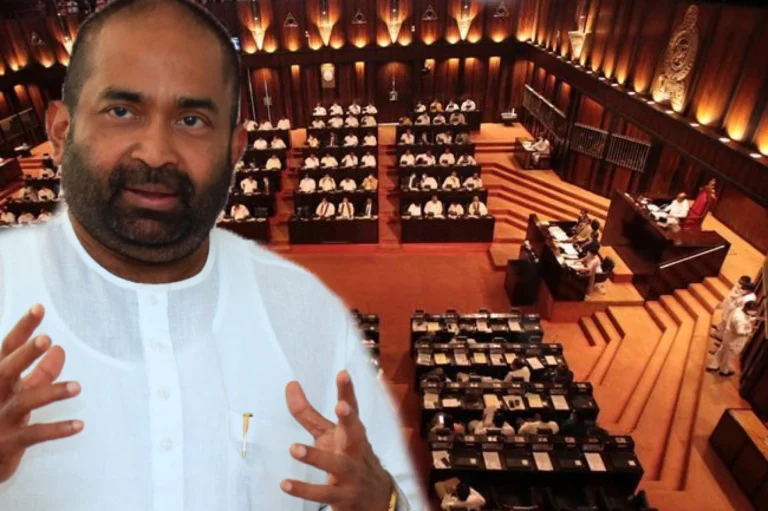
State Minister of Finance Ranjith Siyambalapitiya has clarified that the recent gazette issued by President Ranil Wickremesinghe, mandating the disclosure of movable and immovable property details to the Inland Revenue Department (IRD) from 1 July, does not introduce new laws. Instead, it reinstates an existing, previously inactive law.
Speaking to the media, Siyambalapitiya stressed that this measure is an exercise of the Government’s right to obtain necessary information for revenue purposes and will not be retroactively enforced to affect past transactions.
The State Minister explained that the implementation of the gazette notification issued on 21 March was formally announced by the Inland Revenue Commissioner on 21 May.
Starting 1 July, relevant institutions such as the Land Registry Department, Company Registry Department, Stock Market, Bank and Non-Bank Financial Institutions, and Motor Transport Department are required to provide property details to the IRD.
He said the move is seen as part of broader efforts to reform the country’s tax system and improve Government revenue without imposing undue burdens on the citizens.
Siyambalapitiya pointed out that the non-implementation of such regulations has contributed to Sri Lanka’s status as one of the countries with the lowest Government revenue globally, leading to severe economic challenges.
He highlighted that only 20% of the country’s tax revenue comes from direct taxes, while a significant 80% is derived from indirect taxes, disproportionately affecting the general population.
Sri Lanka is trying to raise taxes to maintain a large public service and cabinet, under revenue based fiscal consolidation. Under revenue based fiscal consolidation in a previous program, spending to GDP went up from 17 to around 19 percent of GDP
Siyambalapitiya pointed out that the non-implementation of such regulations has contributed to Sri Lanka’s status as one of the countries with the lowest Government revenue globally, leading to severe economic challenges.
Assuring the public, the State Minister stated: “At a time when society is oppressed, there is no intention to go back to the past and look for information and implement these laws to oppress the people further.”
The application deadline for the 2024/2025 ICT scholarship programme by the Sri Lanka Telecommunication Regulatory Commission and the President’s Fund has been extended to 7th June 2024. Students must complete applications carefully and get endorsements from relevant officials. Applications should be sent by registered post to the Secretary, President’s Fund, Colombo 10. The extension follows numerous student requests due to administrative issues and adverse weather.
Opposition Leader Sajith Premadasa says the so called ‘dunno socialists’ use Social Media to propagate false information against the SJB’s contribution as the Opposition thereby misleading the public, echoing what had happened in 2019: urges them to stop such deceptions and join the SJB to help the people of Sri Lanka, her hospitals and schools, as the benefit of such contributions are enjoyed by the people.
Leader of the Jathika Nidahas Peramuna (NFF) Wimal Weerawansa says he had never used the term ‘womb war’ (garbasha yuddhaya) during the unrest provoked by the allegations levelled against Dr. Shyabdeen Safi: claims the allegations against Dr. Safi was levelled by the Director of Kurunegala Hospital and the aggrieved mothers: However, Director of Kurunegala Hospital Sarath Weera Bandara is widely known to be a close associate of Weerawansa, and there are substantial public footage to prove that the NFF Leader did use the term ‘womb war’ during his speeches in 2019.
The Health Ministry and Sri Lanka Medical Nutrition Association (SLMNA) to improve in-patient meal quality at government hospitals: Meals to be packaged in trays with rice and curries arranged separately, covered with a transparent wrapper, and delivered directly to patients’ bedsides: A pilot project to begin at Maharagama Apeksha Hospital in July before expanding nationwide: Hospital kitchen staff to receive training from five-star hotel chefs and new uniforms to ensure high food hygiene standards: This initiative replaces the current system where patients collect meals from trolleys.
Finance State Minister Ranjith Siyambalapitiya says around 24 Regional Plantation Companies (RPCs) currently lease Government-owned plantation land: warns if any company claims inability to pay the recently increased wages entitled to the plantation workers, the Finance Ministry will form a committee to investigate the matter: adds companies failing to meet the new wage standards due to internal inefficiencies risk losing their leases: asserts the GOSL is prepared to terminate tax agreements with non-compliant companies and seek news investors for the estates.
Katunayake Bandaranaike International Airport (BIA) bans parking driverless vehicles outside the Arrival Terminal to reduce traffic congestion: Vehicles must now arrive at specified times and leave from designated parking areas: Drivers lingering over 30 minutes without valid reason will face a special fee: Chairman of Airport and Aviation Services (Sri Lanka) Athula Galketiya says these measures aim to streamline transport services and prevent unauthorised access.
Heavy rains raise health authorities’ concerns about a surge in seasonal illnesses like dengue, leptospirosis, diarrheal diseases, and influenza: Experts warn that stagnant water from increased rainfall boosts Aedes mosquito breeding, escalating dengue risks: advise eliminating standing water and using mosquito repellents: An uptick in influenza cases is also noted: Flooded areas may spread leptospirosis, urging protective measures for those in waterlogged conditions: The monsoon season increases diarrheal diseases due to contaminated water, highlighting the need for clean drinking water and good hygiene: Additionally, respiratory infections rise, necessitating precautions against cold and flu.
Elon Musk’s ‘Starlink’ satellite internet service is set to launch in Sri Lanka this year, following an invitation from President Ranil Wickremesinghe: Pre-orders are now open with a refundable $99 deposit: The service, pending regulatory approval, aims to start in 2024 and will be fulfilled on a first-come, first-served basis: Starlink, which provides high-speed internet using low-orbit satellites, is already available in 32 countries: The service is especially effective in remote areas with limited internet access, offering speeds of 150 Mbps download and 20 Mbps upload: Over 2,000 satellites have been launched since 2019.
The CEB partially settles its outstanding dues to West Coast Power (Pvt.) Ltd by divesting a 28% shareholding in LTL Holdings (Pvt.) Ltd.: The Colombo Stock Exchange (CSE) reveals the CEB transferred the shares on Feb. 07, 2024, for a total consideration of over Rs. 26 billion: The transaction was carried out under Section 8.2 of the Listing Rules of the CSE: As a result, the CEB’s stake in LTL Holdings (Pvt.) Ltd has now been reduced to 35%.
Marketing and Media Manager of the Sri Lanka National Olympic Committee Gobinath Sivaraja was arrested at the airport while trying to flee the country despite a travel ban, violating court orders and bail conditions: remanded until June 5 and is a suspect in a fraud case involving Secretary Maxwell de Silva: The probe includes alleged financial fraud in domestic sports organisations with international support.
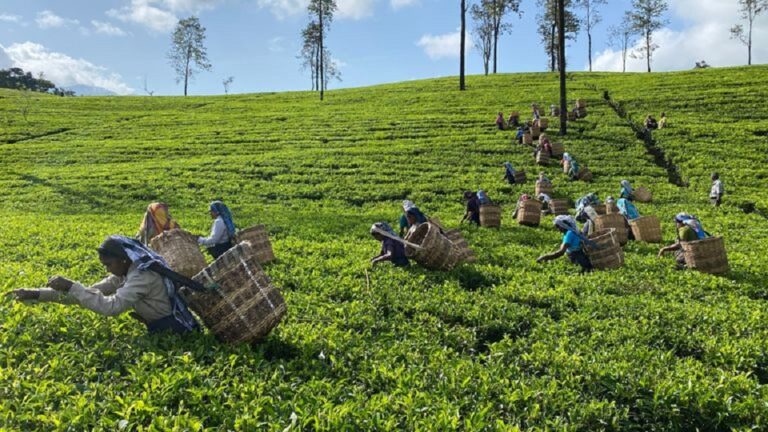
May 28, Colombo (LNW): The Government has issued a new gazette on 21 May, mandating an increase in the wages of plantation workers consequent to President Ranil Wickremasighe’s directive to cancel the lease agreements of state-owned estates, land, and property leased to plantation companies and private firms if they fail to pay Rs. 1,700 per estate worker.
Even 30 years after privatization of 24 regional plantation companies, the plantation industry says companies cannot bear the cost of unprecedented 70% wages hike for workers toiling hard to maintain the plantations.
They raised its strongest possible objections to the Government’s arbitrary, reckless, unilateral decision to drastically hike minimum wages for tea and rubber sector workers.
Issuing a statement the Planters’ Association of Ceylon stated that this current effort to force such a clearly unsustainable mandatory minimum wage on tea and rubber smallholders and the Regional Plantation Companies (RPCS) is impossible for the industry to absorb, even with radical cuts to basic operational necessities.
The continuity of the entire plantation sector is now at risk, and most critically the livelihoods of the very workers and communities who are connected to the industry across Sri Lanka, leading members of the association said.
The Private sector management of RPC’s failure to make the plantation industry profitable even after 30 years of their administration clearly indicates that something was wrong somewhere, several senior officials of the finance ministry said.
Planters association’s blame of handing over loss making plantations 30 years ago cannot be justified and they should explain the reasons behind the failure to improve the productivity of the industry, they added.
The Finance Ministry will form a committee to investigate the issue. The committee will assess whether these companies’ financial difficulties stem from external factors or internal management problems, state minister of finance Ranjith Siyambalapitiya said.
According to the gazette, the basic salary of plantation workers will rise to Rs. 1,350 per day, effective immediately. This increment includes a total increase of Rs. 1,700, incorporating a Rs. 350 special allowance.
Siyambalapitiya highlighted that around 24 Regional Plantation Companies (RPCs) currently lease Government-owned plantation land.
He warned that if any company claims inability to pay the increased wages, the Finance Ministry will form a committee to investigate the issue.
The State Minister emphasised that companies failing to meet the new wage standards due to internal inefficiencies risk losing their leases. He also stated that the Government is prepared to terminate tax agreements with non-compliant companies and seek new investors for the estates.
These new investors will be selected through a competitive process, focusing on their capability to manage export-oriented operations, ensure employee welfare, enhance infrastructure, and incorporate new technologies. Siyambalapitiya assured that the Government is committed to improving the living standards of plantation workers. He stressed that the new lease agreements would prioritise investors who demonstrate a strong commitment to these principles.
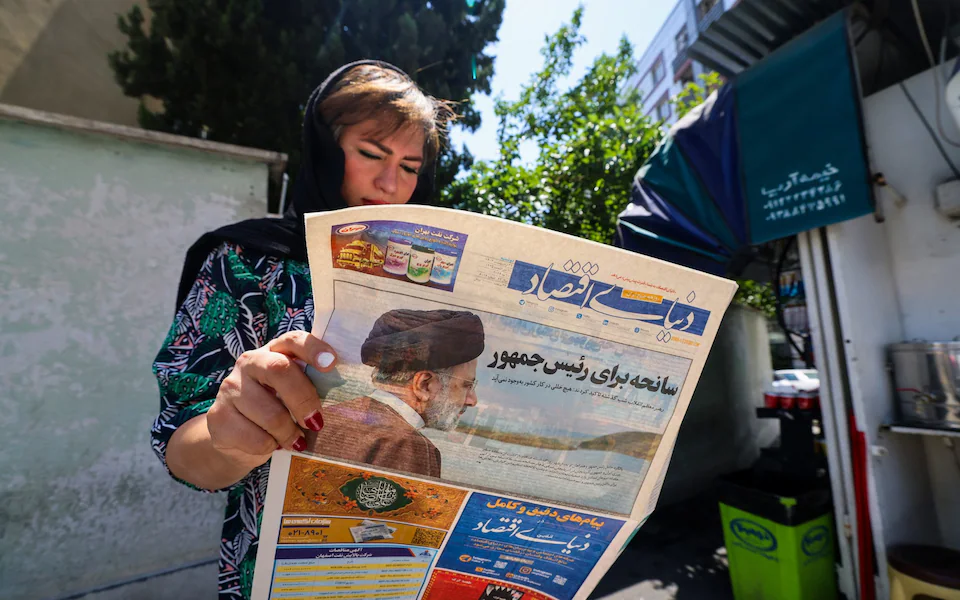
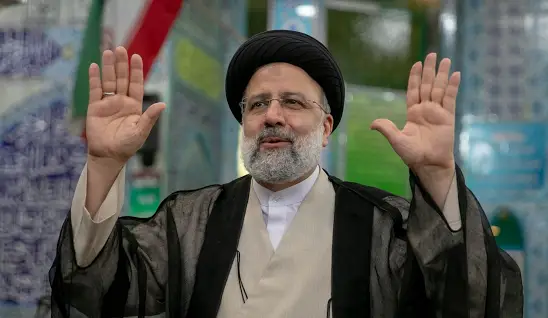
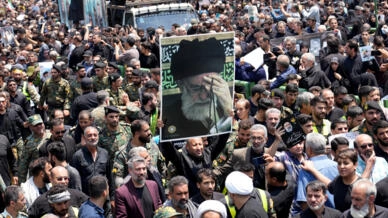
In recent events, the passing of Ebrahim Raisi, the former leader of Iran, has sparked contrasting emotions within the country. While some mourn his death, others openly celebrate it. Understanding the reasons behind this divide sheds light not only on Raisi’s reign but also on the expectations of future leaders in Iran.
Ebrahim Raisolsadati (14 December 1960 – 19 May 2024), commonly known as Ebrahim Raisi was an Iranian politician who served as the eighth president of Iran from 2021 until his death in 2024.Raisi served in several positions in Iran’s Judicial system, including as Prosecutor of Karaj, Hamadan and Deputy Prosecutor and Prosecutor of Tehran. He also held the positions of Deputy Chief Justice (2004–2014), Attorney General (2014–2016), and Chief Justice (2019–2021).
Raisi had run for presidency back in 2017 as the candidate of the conservative ‘Popular Front of Islamic Revolution Forces’, losing to his predecessor Hassan Rouhani although later Raisi successfully ran for presidency a second time in 2021 with 63% of the votes. Yet there are many controversies according to many observers, believing the 2021 election to be rigged in favor of Raisi, who was considered an ally of and a frontrunner to succeed Supreme Leader of Iran Ali Khamenei at the time.
During Raisi’s term, Iran had increased uranium enrichment, hindered international inspections, joined SCO and BRICS, as well as supported Russia in its Ukraine Invasion. Iran was also responsible in launching a missile and drone attack on Israel during the conflict with Gaza and had since continued arming proxy groups such as Houthi Movement or Hezbollah.
As a governor Raisi was widely considered to be a hardliner in Iranian politics. He had strongly supported sex segregation which refers to the act of physical; legal and/or cultural separation of people according to their biological sex.
He had once mentioned back in 2014 about planned segregation in Tehran Municipality
“I think this is a good move because the majority of women do a better job in a totally relaxed atmosphere and fit are required”
He was also an avid supporter of Islamization of universities, revision of the Internet and censorship of Western culturewhich contrasts the modernism the environment had demanded in recent years. Raisi had claimed that economic sanctions were an opportunity
His visons on appropriate punishment was also considered morally dubious as he had stated the amputation of thieves’ hands, which is based on a very strict interpretation of Shariais one of “our honours” and that such punishments will not be limited to now and will be continued in the future. He stated that he should be honoured and esteemed for his role in the 1988 executions as well.
Speaking of Raisi’s tenure his policies hold a fundamental value. He believed in the activation of a resistance economy and supported development of the agricultural sector over commercial retail, which “will eventually benefit foreign brands.
In 2017 Raisi had promised to triple the monthly state benefits in order to tackle corruption and create more professional opportunities. He believed sanctions to be that of advantageous for economic empowerment. Raisi said in regards to the issue of lifting sanctions:
“Every government that takes office (to be elected), should lift the oppressive sanctions, and it must be pursued seriously; and the neutralization of sanctions should be on the agenda and we should not condition the economy; neither the corona nor the flood nor the sanctions should have an impact.”
His take on women empowerment is largely positive…at least in state-led media where he had proclaimed that no one has the right to violate the freedom of rights of girls and women and had realized how fundamentally incomplete the culture and economy would be without the role of a woman. Yet in spite of these comments Raisi had also signed orders creating stricter hijab constraints for women in Iran which had ended in catastrophes. One of the best known example for such an occurrence would be when Mahsa Amini, a 22-year-old Iranian woman, died under suspicious circumstances on September 16, 2022, in Tehran, Iran.
She had been arrested by the Guidance Patrol for allegedly not wearing the hijab according to government standards. Iranian authorities claimed she had a heart attack at a police station and fell into a coma before dying in the hospital. However, eyewitnesses, including fellow detainees, alleged she was severely beaten by the police, leading to her death. This sparked widespread protests across Iran, with some demonstrators removing their hijabs or cutting their hair in protest. The protests were described as the largest since at least 2009. Amini’s death fueled the global Woman, Life, Freedom movement, demanding an end to compulsory hijab laws and other forms of discrimination against women in Iran.
Raisi had often made discriminatory remarks about homosexuality, calling same-sex relations “savagery”. The Center for Human Rights in Iran asserts that this type of rhetoric exacerbates prejudice and violence against LGBTQ+ individuals in the country. When visiting Uganda, after the country had recently passed a law instituting the death penalty for homosexuality, Raisi stated: “I believe that this issue, and these strong attacks by the West against the establishment of families and against the culture of the nations, is another area of cooperation for Iran and Uganda,” further adding: “The Western countries try to identify homosexuality as an index of civilization, while this is one of the dirtiest things which have been done in human history.”
Considering his foreign policy Raisi had expressed support for stabilizing Afghanistan after the Taliban’s takeover and called for inclusive governance. Raisi also made threats against Israel, praised Hamas attacks, and criticized Israel’s actions in Gaza. He sought to strengthen ties with Syria, criticized the Saudi-led blockade of Yemen, and pledged an alliance with Russia amid the Ukraine conflict. Raisi’s diplomatic efforts included visits to China and the restoration of ties with Saudi Arabia. Additionally when Raisi had met with accusations regarding his role in past human rights abuses, leading to the cancellation of a trip to Geneva.
That is not to take his credibility away as a governor because Raisi had made significant and progressive changes in the system such as taking active measures to support intellectualists and artists and having a comparatively higher female education rate – Traditional pious Iranians—who had kept their daughters out of school during the Shah’s era—had felt comfortable allowing their daughters to be schooled in an Islamic educational system. Enrollment of women in universities jumped from 3% in to 67%. Yet few good deeds doesn’t disassociate Raisi from the bad he had aided in nor are they mutually exclusive.
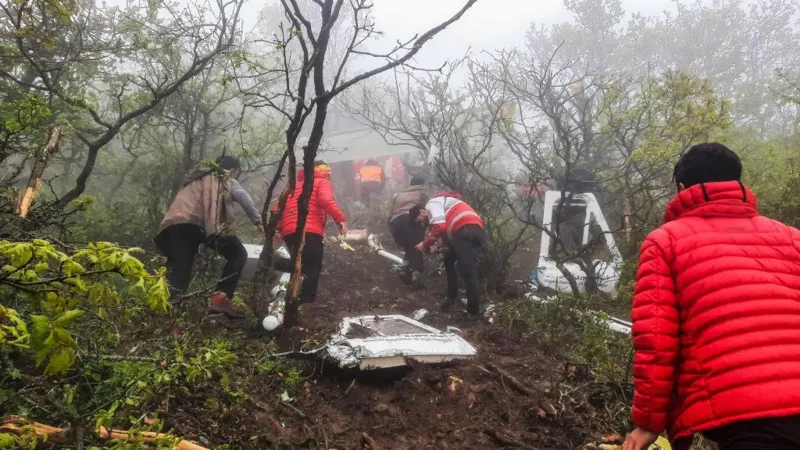
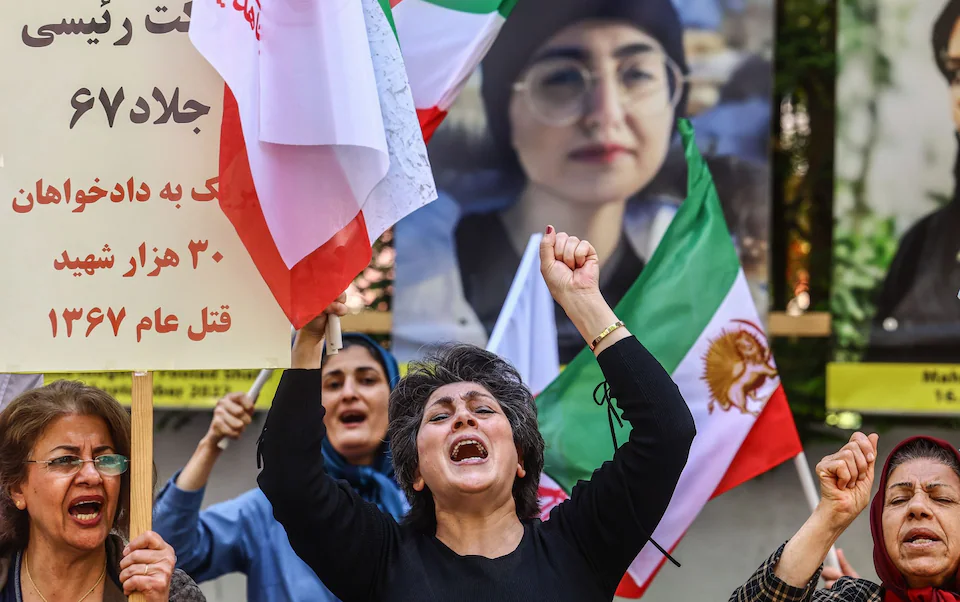
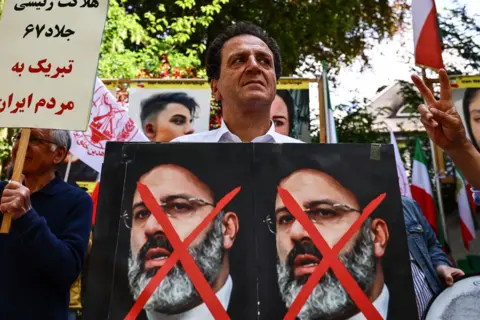
Raisi’s death on 19th May 2024 brought a large deal of controversy. Amongst the thousands who wept for the demise of their president having a considerable population celebrate it was perhaps the biggest of them all.
In the time of Raisi a series of protests in Iran sparked by the death of Amini and allegations of police brutality and misconduct were reported. Protests erupted in Sanandaj, Kurdistan province, with demonstrators defying official warnings and being fired upon when they shouted anti-regime slogans. The protests spread to other provinces, with internet and mobile phone services shut down, and the head of the Guidance Patrol allegedly suspended. Unconfirmed social media videos showed protests in at least 16 provinces, and state media reported three deaths in Kurdistan. In Zahedan, Sistan and Baluchestan province, forty civilians were killed and many wounded following Friday prayers, sparked by reports of a police chief raping a 15-year-old girl. The protests gained significant traction online with a Mahsa Amini hashtag garnering 52 million tweets. There were speculations about a review of the hijab law and the possible disbandment of the Guidance Patrol. The protests transcended previous ones in scale, reaching even Islamic Republic power bases and involving diverse demographics, including schoolgirls. The regime claimed to have arrested tens of thousands of protesters, and by mid-March 2023, protests had dwindled across most of the country, with the government claiming to have pardoned 22,000 arrested citizens.
The situation when Mahsa Amini, a 22-year-old Iranian woman, died was a statement that people would rather go ahead with death to get rid of it than live under pressure. While talking about women’s freedom, the strict laws on the hijab revoked the right of women to live a normal human life. It is abhorrent to consider being a second-class citizen just for being a woman in sex, not considering talent nor ability.
This hasn’t been the sole incident under Raisi’s regime. After such oppressing actions it comes as no surprise why some would be inclined to celebrate the death of the man who had taken their voice as such.
Such examples were seen throughout the country especially through social media flooding with celebratory fireworks. And the celebration had not been mutually exclusive to Iran. Few of the most notable of such incidents were when people were dancing outside the London’s Iranian Embassy at the news of the helicopter crash and daughters of an anti-regime activist named Minoo Majidi who had been shot back in 2022 toasting to the death. An Iranian-American Journalist Masih Alinejad had also seen it fit to share his happiness at the demise. What is important to remember is that all these people who’d dared to celebrate risked arrest and most probably death for acting against the state. Yet families of slain protesters and dissidents express relief and renewed determination to seek justice and freedom in Iran despite facing threats and intimidation from authorities. The relatives of victims sharing their joy over the news had also been a common sight. Exiled Iranians also rejoice, viewing Raisi’s death as a step towards justice. Survivors of anti-regime protests express mixed emotions, wishing for Raisi to face trial for his alleged crimes while feeling hopeful for a future of freedom in Iran.
Perhaps this untimely and perhaps uncouth celebrations demands a deeper observation to governance than what meets the eye. It teaches whoever that occupies the seat next that this is a changing world and the centuries old and unfit policies and the preferred forms of dissent require a second look as much as an insight to the operations carried under the name of the state emphasizing the importance of accountability and transparency in governance. This incident depicts that prioritizing the well-being and prosperity of the Iranian people over personal or political interests is what is ultimately expected out of a state leader or the president of the state. The government should be able to foster an environment of inclusivity and dialogue to address the concerns of diverse segments of society while upholding human rights and freedoms as fundamental pillars of governance. It is also fundamental to implement policies that promote economic growth, stability, and social justice.
In order to avoid a similar plight some suggestive actions that could be taken are building trust and credibility through genuine engagement with the public and actively listening to the grievances and aspirations of citizens and responding with empathy and action without the means of crushing or silencing them further. It could also do well to invest in education, healthcare, and infrastructure to improve the quality of life for the pubic and embrace the diversity and pluralism as strengths rather than sources of division.
The ideas of the young community, who want to move in parallel with the world, were fenced off. The rapper’s death is his own opinion. The right to protest against something of their choice being the death of a person is as animalistic as it could be.
It is not difficult for us to find facts from history at a time when the world is more open to whether the rigidity of a religion based on a religious face is a desire or a form of force. An artist like Hitler would later become one of the worst human killers in history because of this power struggle. Such killers and terrible leaders have worked to subdue the entire population to a limited system designed with the intention of instilling the powerful feelings within themselves and to destroy those who do not. Mussolini and Idi Amin also had not been exceptions.
Like everyone else, it is important for the leader to keep the leader’s cane out of the path of the other (citizen). It is not civilized to be happy for Raisi. But death should not be the solution to stop as the deaths seem to reflect a response to indecency. Since Iran is nearing an election, this situation cannot be missed by any newly appointed leader. More attention should be paid to the freedom of living and the trust that people demand. For the future of any government it is significant to learn from the mistakes and shortcomings of the predecessors to chart a more inclusive and prosperous future for the country.
Therefore in conclusion the celebration of Ebrahim Raisi’s death in Iran reflects a deep-seated dissatisfaction with his leadership and governance style. As the country transitions to a new era, future leaders must heed the lessons from Raisi’s tenure and strive to earn the trust and respect of the Iranian people. By embracing principles of accountability, transparency, and inclusivity, they can pave the way for a brighter future for Iran and its citizens while their citizens remain starry eyed with hope.
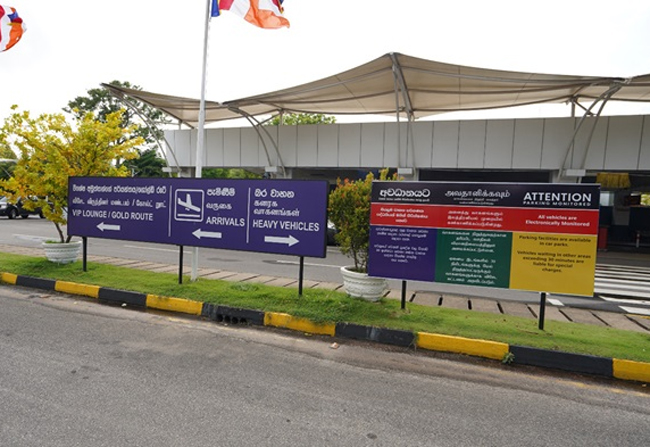
May 28, Colombo (LNW): To alleviate traffic congestion, the Katunayake Bandaranaike International Airport (BIA) has implemented a ban on parking driverless vehicles outside the Arrival Terminal.
This is part of a broader initiative to improve vehicle parking and handling procedures at the airport.
Under the new measures, vehicles arriving to collect incoming passengers must do so at specified times, departing from designated parking areas.
Additionally, drivers who linger on airport premises for over 30 minutes without valid reason, despite warnings from officials, will incur a special fee upon exiting the airport.
Athula Galketiya, Chairman of Airport and Aviation Services (Sri Lanka) Limited, said these regulations aim to streamline passenger transport services at BIA and curb the entry of unauthorised individuals and vehicles.
May 28, Colombo (LNW): Sri Lanka National Olympic Committee Marketing and Media Manager Gobinath Sivaraja has been arrested by airport immigration officials. It is reported that he was arrested while trying to flee the country despite the existing foreign travel ban, and it has been pointed out as a violation of the court’s decision.
This is disrespect and insult to the court, as well as violation of bail conditions, and may suffer serious consequences. Legal departments point out that it is an act.
So far, the court has remanded Gopinath until the coming fifth. Gobinath Sivaraja is a suspect in a case involving the Secretary of the National Olympic Committee, Maxwell de Silva, in connection with a fraud case that is currently being investigated, and it is also related to other people there. For this reason, he was arrested while trying to travel abroad with another person. The intake has been exhausted.
Investigations are also being carried out to show that games limited to pieces of green are established domestically with international support and that they have been involved in financial fraud, and some of them are also accused of raising funds despite the fact that certain games have been identified and banned by the Sports Development Department.
However, it has been confirmed that there is a sports association for winter sports (snow sports) in Sri Lanka. It is also reported that some responsibility has been assigned to Gobinath.
With the incident of Gopinath, it has been discussed that whether a salaried employee of the National Olympic Committee can hold positions in a number of sports associations, the Ministry of Sports should investigate.
It has been discussed with examples. However, the situation has not yet been resolved, so it should be considered whether a person involved in several groups can make an important intervention for the progress of a game.
We have also pointed out before that it is an unethical process to embrace the positions of several sports federations like oranges.
May 28, Colombo (LNW): The Health Ministry, in collaboration with the Sri Lanka Medical Nutrition Association (SLMNA), is set to enhance the quality and presentation of meals provided to in-patients at government hospitals.
Dr. Nalinda Herath, President of the SLMNA and a noted nutritionist, announced that under the new initiative, in-patient meals will be packaged in trays with rice and curries arranged separately.
These trays will be covered with a transparent wrapper and delivered directly to the patient’s bedside.
The new initiative will commence with a pilot project at Maharagama Apeksha Hospital in July, before being rolled out to all government hospitals nationwide.
Furthermore, Dr. Herath revealed that chefs from five-star hotels will offer specialised training to hospital kitchen staff.
These staff members will also receive special uniforms, ensuring high standards of food hygiene are maintained.
Additionally, the hospital employees responsible for food delivery will be provided with new uniforms, and the meals will be delivered directly to the patients’ bedsides.
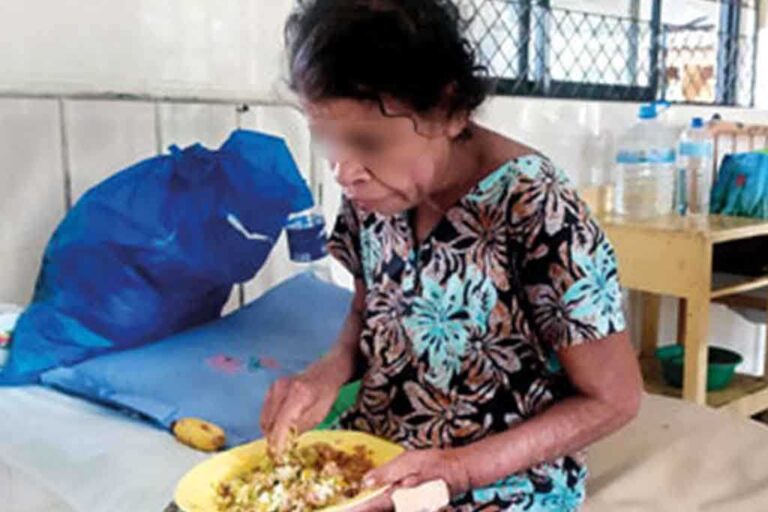
This marks a significant improvement over the current system, where patients must collect their meals from food trolleys.
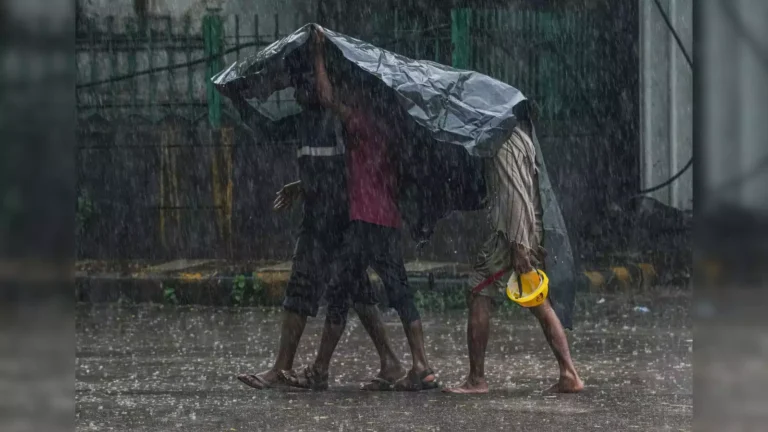
May 28, Colombo (LNW): With the heavy rains sweeping across Sri Lanka, health authorities are expressing serious concerns about a surge in seasonal illnesses such as dengue, leptospirosis, diarrheal diseases, and influenza.
The onset of the rainy season significantly elevates the risk of several serious health conditions, warned experts.
“Dengue fever poses a substantial threat during this period. Increased rainfall leads to more stagnant water, which provides breeding grounds for Aedes mosquitoes. It is imperative for the public to eliminate standing water around their homes and utilise mosquito repellents,” Dr. LakKumar Fernando told Daily Mirror.
He also noted an unprecedented rise in influenza cases over recent weeks.
Leptospirosis, or ‘rat fever,’ is another major concern. A senior health official explained that flooded areas can become contaminated with the urine of infected animals, facilitating the spread of leptospirosis.
Individuals working in waterlogged conditions should wear protective clothing and seek medical advice if they experience symptoms like fever, headache, and muscle pain, he explained.
Dr. Deepal Perera, consultant paediatrician at Lady Ridgeway Hospital (LRH), highlighted the risk of waterborne diseases.
“The incidence of diarrheal diseases tends to increase during the monsoon due to contaminated water sources. Ensuring access to clean drinking water and maintaining good hygiene practices are critical,” he noted.
Additionally, respiratory infections often rise with increased humidity and damp conditions.
“There is typically a spike in cases of the common cold, influenza, and asthma exacerbations during the rainy season. It is important to stay warm and dry, and to seek medical attention for persistent respiratory symptoms,” advised Dr. Perera.
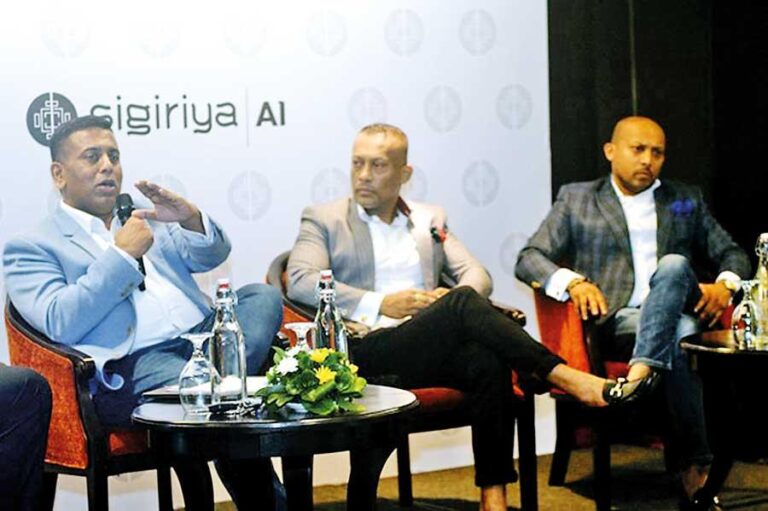
May 28, Colombo (LNW): LankaGPT Technologies is set to unveil Sri Lanka’s first Sinhala and Tamil AI Generative Pre-trained Transformer (GPT) by July 2024.
Named Sigiriya AI, this innovative text-based platform aims to produce human-like responses in the Sinhala and Tamil languages.
The company aims the creation of a Sri Lankan-centric AI platform that is accessible to Sri Lankans worldwide, with the promotion of Sri Lankan culture and preservation of Sinhala and Tamil languages, which are being seen reduced of usage, explained Co-Founder and Director of LankaGPT Lakshitha Karunaratne.
The AI tool has been developed using a comprehensive collection of 10 billion proprietary data sets for each language.
Karunaratne highlighted that this platform serves as a foundational GPT for Sri Lanka, distinct from OpenAI’s ChatGPT.
Developed in collaboration with Caladium Capitals USA, Sigiriya AI is designed to deliver responses with 95 percent accuracy based on factual and empirical data.
The development team spans Sri Lanka, India, the UK, USA, and Dubai, with a primary market focus on regions like the Middle East, Canada, and Australia, which have significant Sri Lankan populations.
LankaGPT Technologies also plans to offer the tool free of charge to several key sectors in Sri Lanka.
The subscription price for local users will be revealed following the full product launch in the second week of July.
Initially, a text-based platform, Sigiriya AI will eventually support voice, image, and audio inputs.
May 28, Colombo (LNW): The Ceylon Electricity Board (CEB) has partially settled its outstanding dues to West Coast Power (Pvt.) Ltd by divesting a 28 per cent shareholding in LTL Holdings (Pvt.) Ltd., reports claimed.
According to a recent disclosure to the Colombo Stock Exchange, the CEB transferred the shares on 7 February 2024, for a total consideration of over Rs. 26 billion (Rs. 26,081,160,000).
This transaction was carried out under Section 8.2 of the Listing Rules of the Colombo Stock Exchange.
As a result of this share transfer, the CEB’s stake in LTL Holdings (Pvt.) Ltd has now been reduced to 35 per cent.