Home Blog Page 1121

RSF calls on Prime Minister to reaffirm his government’s commitment to press freedom

0

In response to the new Deputy Prime Minister’s repeated verbal attacks on the media, Reporters Without Borders (RSF) calls on New Zealand’s Prime Minister Christopher Luxon to reaffirm his government’s support to press freedom.

Just after taking office, the newly-appointed Deputy Prime Minister and Minister of Foreign Affairs of New Zealand, Winston Peters, declared in an interview that he was “at war” with the media. A statement that he accompanied on several occasions with accusations of corruption among media professionals. 

He also portrayed a journalism support fund set up by the previous administration as a “55 million dollar bribe”. The politician also questioned the independence of the public broadcasters Television New Zealand (TVNZ) and Radio New Zealand (RNZ). These verbal attacks would be a cause of concern for the sector if used to support a policy of restricting the right to information.

“By making irresponsible comments about journalists in a context of growing mistrust of the New Zealand public towards the media, Deputy Prime Minister Peters is sending out a worrying signal about the newly-appointed government’s attitude towards the press. We call on Prime Minister Christopher Luxon to reaffirm his government’s support for press freedom and to ensure that all members of his cabinet follow the same line.”

Cédric Alviani
RSF Asia-Pacific Bureau Director


On several occasions during the general election campaign, Winston Peters, founder and leader of populist and nationalist New Zealand First party, attacked New Zealand journalists, regularly accusing them of lies. In October, a few days before the election day, he attacked TVNZ journalist Jack Tame whom he called a “dirt merchant” and “corrupt” person.

According to the Auckland-based Research Centre for Journalism, Media and Democracy, the public’s distrust of journalism has been growing in recent years, with 42% of New Zealanders saying they trust the news in 2023, down from 53% in 2020. 

In order to globally address the growing presence of false and manipulated information online, RSF together with several other civil society organisations initiated the Forum on Information and Democracy, which published in 2020 a set of 250 recommendations. RSF also launched the Journalism Trust Initiative (JTI) a mechanism to promote trustworthiness of news and information, which, to date, is used by more than 800 newsrooms worldwide to self-assess their internal processes.

New Zealand is ranked 13th out of 180 countries in RSF’s 2023 World Press Freedom Index.

— 

REPORTERS SANS FRONTIÈRES / REPORTERS WITHOUT BORDERS (RSF)

65-year-old Gampola resident’s death confirmed as Covid-19 related at Kandy National Hospital

0

Colombo (LNW): The demise of an individual who was admitted with breathing difficulties and a lung infection was confirmed to be of Covid-19, sources from Kandy National Hospital disclosed.

Subsequent to the individual’s passing, a post-mortem PCR test has revealed a COVID-19 infection.

The deceased, a 65-year-old resident of the Atgala area in Gampola, marks a notable event as one of the few reported deaths following the apparent conclusion of the COVID-19 pandemic.

Prof. Chandima Jeevandara, Head of the Department of Allergy, Immunology, and Cell Biology at the University of Sri Jayawardenepura, affirms the current spread of the Omicron JN.1 variant in the country.

Globally, the World Health Organisation reports a 52 per cent increase in Covid-19 cases over the last four weeks, with 850,000 new diagnoses and 3,000 reported deaths. The recorded death rate has risen by 8 per cent.

Veteran Actor Rex Kodippili passes away

0

Colombo (LNW): Renowned Actor Rex Kodippili has passed away, leaving behind a legacy that illuminated the golden age of the Sinhala silver screen.

At the age of 85, he bid farewell, having etched an immortal presence through his portrayal of iconic villains in almost 150 films.

Kodippili’s acting genius not only captivated audiences but also contributed significantly to the rich tapestry of Sinhala cinema.

His remarkable career stands as a testament to his dedication and artistry, forever leaving an indelible mark on the world of Sri Lankan film.

Banks say parate execution is the last resort to protect depositors’ funds

0

By: Staff Writer

Colombo (LNW): The Sri Lanka Banks Association (SLBA) yesterday banks exercised their legally-enshrined right to parate execution as a last resort, and the overarching objective is the protection of depositors’ funds that have been lent to borrowers.

Responding to what it termed as lobbying by a group of defaulting borrowers espousing the removal or weakening of the protection of depositors’ funds, the SLBA said the parate execution remedy is aimed at recovering mortgaged assets from wilful defaulters and businesses that are no longer viable.

The SLBA, which represents all the licensed banks in the country, emphasised that banks have extended moratoriums on debt repayment for a long period exceeding 48 months in some cases, and that in instances of wilful default by borrowers, the banks owe a duty to their depositors’ whose funds are at risk, to recover the debts overdue and minimise the losses on loans granted.

The Association pointed out that the funds used to grant loans are placed with the banks by their depositors and that depositors are paid interest out of the interest charged from loans granted to borrowers.

“Banks are responsible to manage this intermediary role in a very careful manner to avoid deterioration of depositor confidence which can lead to many negative economic consequences,” the SLBA statement said.

“When borrowers face difficulties in repayment, the lending banks review the causes for the inability to repay interest and/or capital, and assess how the situation needs to be remedied to restore the borrower to being able to repay loans and carry on business/economic activity,” the SLBA said.

“In such instances it is common for the banks to exercise empathy as a “partner” and assist the borrowers to come out of their challenging financial situation, and it is common for the banks to consider extension of loans, provide moratoriums, consider interest concessions and restructure the loans to suit the future cash flows of the employment or the business.

Banks take this course as the preferred alternative to liquidating the assets of the borrower under loan security arrangements.

It also stated, “This is because it is beneficial for the customer as well as the bank to revive a business to good financial health than to shut it down and take whatever residual value is left, which in majority of cases is less than the value of the amounts due to the bank and kills the economic activity that was being financed.

The banks therefore take the option of a win-win for all and support the borrowers when they face difficulties.”

“When assessing the condition of the overdue loans and their ability to be revived, banks have to accept that certain cases are beyond revival and/or that the default is wilful and in fraud of the lender.

In these limited circumstances banks as responsible financial intermediaries must necessarily invoke the remedies available under the law and this includes ‘parate execution’ which is a measure to protect the depositors’ funds from wilful defaulters.”

The Sri Lanka Banks Association (SLBA) yesterday banks exercise their legally-enshrined right to parate execution as a last resort, and the overarching objective is the protection of depositors’ funds that have been lent to borrowers.

Responding to what it termed as lobbying by a group of defaulting borrowers espousing the removal or weakening of the protection of depositors’ funds, the SLBA said the parate execution remedy is aimed at recovering mortgaged assets from wilful defaulters and businesses that are no longer viable.

The SLBA, which represents all the licensed banks in the country, emphasised that banks have extended moratoriums on debt repayment for a long period exceeding 48 months in some cases, and that in instances of wilful default by borrowers, the banks owe a duty to their depositors’ whose funds are at risk, to recover the debts overdue and minimise the losses on loans granted.

The Association pointed out that the funds used to grant loans are placed with the banks by their depositors and that depositors are paid interest out of the interest charged from loans granted to borrowers.

“Banks are responsible to manage this intermediary role in a very careful manner to avoid deterioration of depositor confidence which can lead to many negative economic consequences,” the SLBA statement said.

“When borrowers face difficulties in repayment, the lending banks review the causes for the inability to repay interest and/or capital, and assess how the situation needs to be remedied to restore the borrower to being able to repay loans and carry on business/economic activity,” the SLBA said.

“In such instances it is common for the banks to exercise empathy as a “partner” and assist the borrowers to come out of their challenging financial situation, and it is common for the banks to consider extension of loans, provide moratoriums, consider interest concessions and restructure the loans to suit the future cash flows of the employment or the business.

Banks take this course as the preferred alternative to liquidating the assets of the borrower under loan security arrangements.

It also stated, “This is because it is beneficial for the customer as well as the bank to revive a business to good financial health than to shut it down and take whatever residual value is left, which in majority of cases is less than the value of the amounts due to the bank and kills the economic activity that was being financed.

The banks therefore take the option of a win-win for all and support the borrowers when they face difficulties.”

“When assessing the condition of the overdue loans and their ability to be revived, banks have to accept that certain cases are beyond revival and/or that the default is wilful and in fraud of the lender.

In these limited circumstances banks as responsible financial intermediaries must necessarily invoke the remedies available under the law and this includes ‘parate execution’ which is a measure to protect the depositors’ funds from wilful defaulters.”

China continues supporting Water Technology Research in Sri Lanka

0

By: Staff Writer

Colombo (LNW): China will continue to provide firm support to the China-Sri Lanka Joint Water Technology Research and Demonstration Center, Chinese Ambassador Qi Zhenhong said.

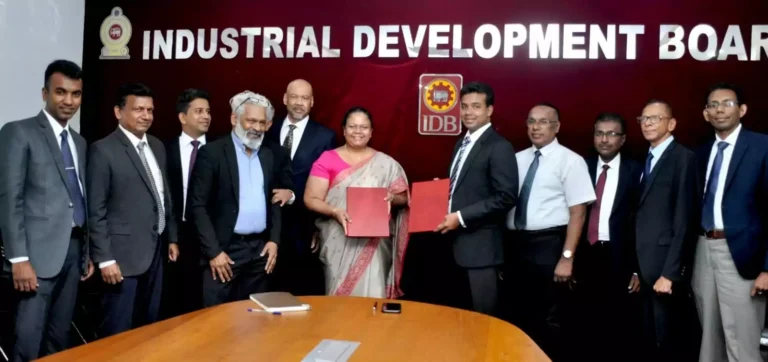
He made these remarks at the signing ceremony of the tripartite agreement among the Chinese Academy of Sciences, Ministry of Water Supply and Estate Infrastructure Development of Sri Lanka and the University of Peradeniya recently.

The ambassador said a lot of people in Sri Lanka are suffering from the chronic kidney disease of unknown origin (CKDu), and the Chinese government and people feel for them.

The project proposals related to the prevention and treatment of chronic kidney disease put forward by Sri Lanka have received positive responses and strong support from the Chinese government.

“So far, China has assisted in the construction of three projects to prevent, treat, and trace the cause of chronic kidney disease of unknown origin in Sri Lanka, including water supply pipeline network project, kidney disease hospital, and the China-Sri Lanka Joint Water Technology Research and Demonstration Center (JRDC).

And the total investment of these projects is more than 2 billion RMB. The Kandy North –Pathadumbara Integrated Water Supply Project ensures drinking water safety for nearly 500,000 people.

In Polonnaruwa, we have established the largest kidney disease hospital in South Asia, providing the most advanced kidney disease diagnosis and treatment facilities,” he said.

Prof. Wei Yuansong of Chinese Academy of Sciences said, “In August 2013, it was the first time for us to know the burning issue of Sri Lanka–Chronic kidney disease with unknown etiology (CKDu), and since then we have begun the road to cooperation between China and Sri Lanka.

Based on our cooperation with the Ministry of Water Supply and the University of Peradeniya, the China-Sri Lanka JRDC focuses on researches on causes studies of CKDu, improvement of drinking water and water environment, and joint research and talent cultivation.

The cooperation of the JRDC have been included in the joint statement of the China and Sri Lanka governments twice in 2016 and 2023, respectively.

The China-Sri Lanka JRDC is growing upunder China’s “One Belt, One Road” initiative and has achieved a breakthrough from 0 to 1.

Today the signing of the tripartite agreement is the best commemoration of the 10th anniversary of the “One Belt, One Road” initiative, and marks the new stage of the JRDC.

In the future, we will continue to actively promote China-Sri Lanka water science and technology cooperation with support from two countries to make the JRDC a leading center and benefit more people in two countries,” he said.

Adani’s wind energy project to offer lowest unit price in Sri Lanka

0

By: Staff Writer

Colombo (LNW): Indian businessman Gautam Adani’s wind energy project is to offer the lowest energy unit price in Sri Lanka.

Sri Lanka is grappling with rising electricity generation costs, lacking the benefits seen in neighbouring countries with Independent Power Producers (IPPs).

Inadequate transmission planning revealed by grid failures contrasts with advanced private setups in India, emphasizing technology-driven customer empowerment. To advance, Sri Lanka’s CEB-dominated sector requires reforms, inviting private players under robust oversight to balance growth and consumer needs.

Internal sources close to the project revealed, IPPs like Adanifor example could offer a substantial 30% cost reduction, dropping unit costs below $0.10 giving a much-required relief to the public at large.

The wind power project alone promises annual savings of USD 50 million to the Sri Lankan economy according to internal project contrary to the costs the country has to pay an extra Rs. 20 billion in non-renewable energy costs annually sources say.

However, utility-scale renewable projects are stalled due to opposition from certain CEB officials, causing a loss of 3,200 GWh annually coined as a ‘mafia’ within the CEB, posing a threat to both economic growth and renewable energy targetssources close to the project reveal. The recent grid failure emphasizes the urgency for change to encourage competition and enhance reliability in the power sector.

Companies have unveiled intentions to invest a total of $25 billion in the renewable energy sector in the country by 2030, as disclosed by the Board of Investment.

Over the next 3-4 years, potential private investments via Foreign Direct Investment (FDI) could reach up to $3 billion, earmarked for utility-scale wind, solar, and battery storage projects.

Sun Power is set to lead with a commitment of $1.5 billion, followed by Adani Green with $900 million, Orbital Energy with $200 million, WindForce PLC with $150 million, and the remaining portion covered by a consortium of private developers, according to recent news reports.

The government has already explored the offshore wind power potential in the country especially in the North and East, expediting two mega wind power projects of 286 MW in Mannar and 234 MW in Pooneryn undertaken by India’s Adani Green Energy Ltd for an investment of over US$ 500 million.

Adani has requested the government to include their claim for carbon credit in their project contract under Sri Lanka Carbon Crediting Scheme (SLCCS) established for supporting local clean projects to benefit from climate finance for the Greenhouse Gas emission (GHG) reduction, official sources said.

It has also demanded a government guarantee for their investment in the two projects or to keep shares of another state owned business enterprise as a surety for their money dumped in those projects.

 Power and Energy Minister Kanchana Wijesekera disclosed that Adani Green Energy has been given approval to implement the projects in August and it has expressed commitment to complete the projects by December 2024.

A cabinet paper on the same projects, dated August 14, 2023, noted that it should be considered as a government-to-government arrangement.

Foreign and local firms’ land grabbing for mega projects exploded

0

By: Staff Writer

Colombo (LNW): Land grabbing across Sri Lanka has exploded — villagers are evicted from their homes and land, as farms and forests are taken for tea, rubber, palm oil and banana plantations, and the development of tourist infrastructure such as all-inclusive hotels for mass tourism, all of which comes with huge environmental impacts.

These land grabs are a continuation of colonial practices, and they are necessitated by an export-oriented agricultural model. Global South countries are trapped in a vicious cycle.

High levels of foreign debt, mean they must produce vast amounts of ‘cash crops’ for export to international markets as this is the only way they can earn the foreign currency needed to service their loans.

Foreign and local companies are to be given state lands for mega agriculture projects with tax concessions in misconceived deals involving forest lands, especially forest reserves, official documents divulged.

The government is planning to hand over thousands of acres of forest lands to several local and foreign companies under a new cabinet decision misinterpreting its contents with the connivance of top officials. Several environmentalists and local community activists complained.

According to the circular, any allocation of forest lands for development activities requires the approval of a special review board which has not been followed since the circular is invalidated.

Cabinet of Ministers approved a proposal submitted by the ministry of wildlife and forest resources conservation on January 23, 2023 to resolve problems pertaining to forests coming under the purview of forest conservation department and wild life conservation department.

According to the cabinet approval, problems of villagers residing and cultivating land allotments in reserve forests for a long period will be solved subject to stipulated conditions.

Under the first phase of this initiative land allotments in Jaffna, Vavuniya, Mulaithivu Kilinochchi, Mannar, Trincomalee, Ampara, Anuradhapura, Polonnaruwa and Monaragala Districts are to be released to present occupants.

These community settlements were initiated by the then government after the end of North East war under its resettlement programme for displaced villagers.

Further the security forces have forcibly taken over forest lands in those areas to implement the national physical plan.

The ministry of wildlife and forest resources conservation making use of this situation is now releasing forest reserve lands for mega agri development projects of foreign and local companies, several leading environmentalists said. 

150 acres in Madu road Jaffna forest which was declared as a forest reserve on October10 2012 under the gazette notification No 1779/15 had been released for development activities by the ministry by issuing gazette notification No 2344 /16.

In addition 29000 acres of land in Mulaithivu forest reserve, 25,000 acres in Wattegama – Kebiliththa forest reserve in the Monaragala District and over 100 acres in Rajawake forest are to be released by the ministry to private investors.

Thailand based Sutech Engineering company has invested US$ 400 million for its subsidiary  Sutech Sugar Industries Pvt Ltd to implement green field sugar development project taking over 600 acres forest land for sugar factory in the Vavuniya District  belonging to forest conservation department with the approval of the cabinet on June 26 2023.   

This company has given 7000 acres of forest land in the area for sugar cultivation under the same cabinet approval. 

Plans are under way to hand over 62,500 forest land for the Bibila sugar cultivation project in Monaragala, Badulla and Ampara Districts to IMS Holdings Pvt Ltd in accordance with the cabinet approval of February14, 2017.  

Health crisis in Matara Prison: 08 more admitted to hospital amid fever outbreak, 01 fatality reported in ICU

0

Colombo (LNW): Following a significant increase in fever cases within Matara Prison, an additional eight inmates have been admitted to Matara Hospital for medical care.

The total number of inmates currently undergoing treatment at the hospital has reached 16, Prisons spokesman Gamini Dissanayake disclosed.

Unfortunately, one inmate receiving treatment in the intensive care unit (ICU) at Matara Hospital succumbed to the fever on Friday night.

The surge in fever cases has raised concerns about the health and well-being of inmates within the prison. Authorities are closely monitoring the situation and taking necessary measures to provide medical attention to affected individuals.

The spokesperson noted that two of the 16 inmates receiving treatment at the hospital are currently in the ICU, indicating the severity of the health issues faced by some of the prisoners.

The incident underscores the importance of implementing preventive measures within prison facilities to mitigate the risk of contagious diseases and ensure the health and safety of inmates.

Authorities are likely to conduct thorough investigations to identify the cause of the fever outbreak and take appropriate steps to contain and manage the situation.

The well-being of inmates, along with public health considerations, will remain a top priority for prison authorities and healthcare professionals working to address the health challenges faced by the incarcerated population.

Operation ‘Yukthiya’ temporarily paused for Christmas and Poya Day

0

Colombo (LNW): The ongoing special operation, Operation ‘Yukthiya’, aimed at combating narcotics distribution and organised crimes, will undergo a temporary suspension during the upcoming holidays.

Police Spokesman SSP Nihal Thalduwa announced that the island-wide operation will be briefly halted on December 24, 25, and 26.

This decision is driven by the need to deploy police officers to specific duties on Christmas Day (Dec. 25) and Poya Day (Dec. 26).

Thalduwa clarified that the temporary suspension is not an end to the special operation and assured that it will resume after the holiday period.

Sri Lanka Original Narrative Summary: 24/12

0

  1. Wind power project to be initiated by India’s Adani Group misses initial deadline of end-Dec’23 for the anticipated launch: delays have reportedly arisen due to the inability of Sri Lanka & India to finalise crucial agreements on the project’s initial steps.
  2. Private Bus Owners’ Assn Chairman Gemunu Wijeratne demands an increase in bus fares in the face of the impending VAT rise; says VAT is applicable to spare parts, lubricants & fuel.
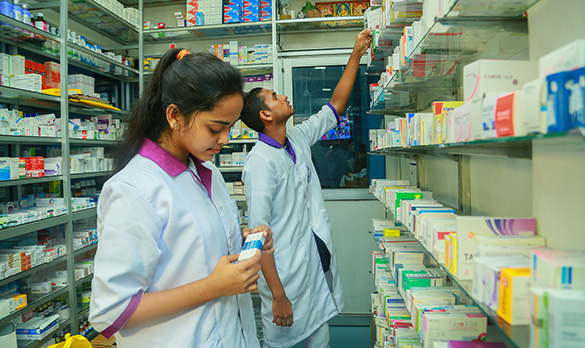
  3. Bangladesh gifts a stock of 24 essential drugs valued at USD 1 mn, covering 3 months SL’s requirements of such drugs: B’desh High Commissioner in SL Tareq Islam hands over the gift to Minister of Health Ramesh Pathirana.
  4. Bar Assn President Kaushalya Nawaratne raises concerns regarding the manner in which the “Yukthiya” (Justice) programme is carried out: says the manner in which the programme is currently operating would result in immediate seizures of property, and suspects being taken into custody: however, people support for the much-needed crackdown on narcotics & organized crime, reportedly increasing.
  5. Police SSP Nihal Thalduwa says the island-wide operation “Yukthiya” to crack down on narcotics distribution & organized crime, would be temporarily halted on Dec 24, 25 & 26, as Police officers have to be deployed to other specific duties on Christmas Day (25) and Poya Day (26).
  6. Former NPP MP Dr Nalinda Jayatissa claims a few officials of the Health Ministry could not have struck a deal of USD 2.5mn when importing substandard Immunoglobulin injections without any involvement of the subject Minister: reiterates former Health Minister Keheliya Rambukwella must be interrogated regarding the incident.
  7. Former Health Minister Keheliya Rambukwella says he was the first Complainant regarding the import of substandard Immunoglobulin injections and that there was no need to record another statement from him: asserts his initial statement included all details.
  8. With a 3% increase in VAT for coal starting from 1st Jan’23, Electricity Board is due to pay an additional Rs.70mn per shipment of coal as VAT to the Govt, according to statistics of the Lanka Coal Company.
  9. War-torn Israel to urgently fill 30,000 vacancies in its construction industry, after deporting thousands of Palestinian workers following the war that commenced on 7th Oct’23: Israel Builders’ Assn representatives due in SL next week to screen applicants for plastering, ceramic tiling, building work & iron bending jobs.
  10. Lanka Hotels & Residencies Chairman Gamini Gunaratne announces that the much-anticipated Sheraton Colombo Hotel will be opened on 30th Dec’23: says LHR invested nearly USD 100mn in the 320-room Hotel located in Colombo 3, complete with a Presidential Suite & other luxury suites, along with 4 restaurants: also says LHR has a 30-year management contract with Marriott International, to manage the property.