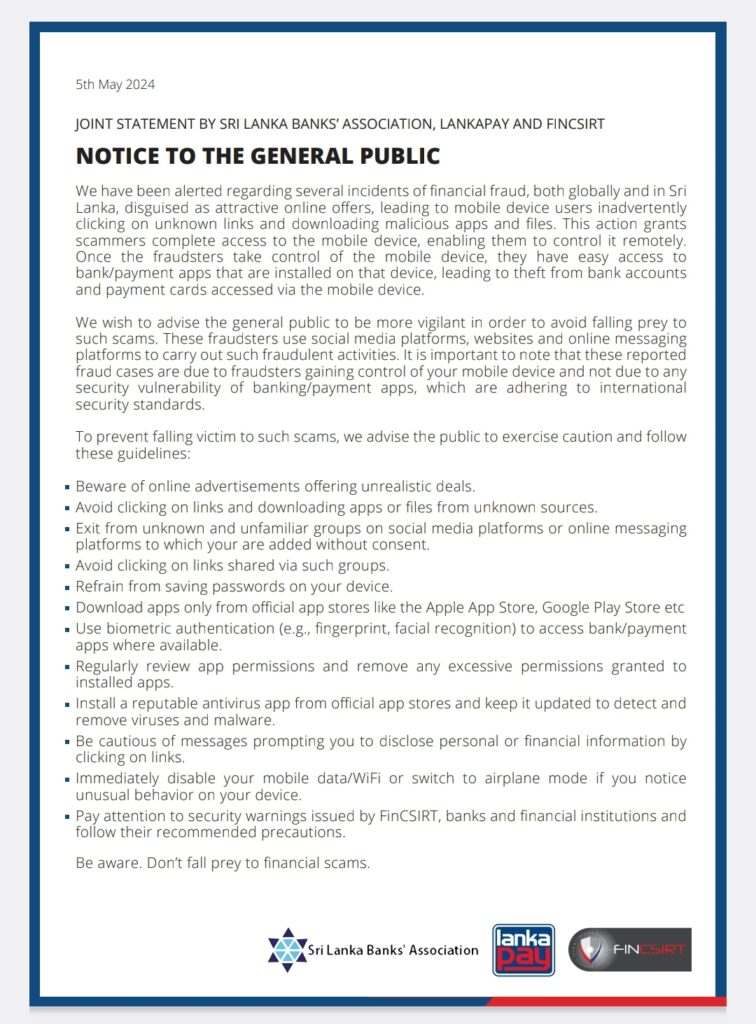
May 06, Colombo (LNW): Sri Lanka Banks’ Association, LankaPay, and FinCSIRT have issued a joint notice to the public concerning recent incidents of financial fraud, both domestically and globally.
These fraudulent activities often masquerade as enticing online offers, leading unsuspecting mobile device users to inadvertently click on unknown links and download malicious apps and files.
This action grants scammers complete access to the mobile device, enabling remote control.
Once control of the mobile device is seized, fraudsters gain access to bank/payment apps installed on the device, facilitating theft from bank accounts and payment cards accessed via the compromised device, the statement emphasised.
In light of these risks, the general public is urged to exercise increased vigilance to avoid falling victim to such scams.
Fraudsters typically utilise social media platforms, websites, and online messaging platforms to perpetrate these fraudulent activities.
It is essential to note that reported fraud cases result from fraudsters gaining control of mobile devices and not from any security vulnerability within banking/payment apps, which adhere to international security standards.
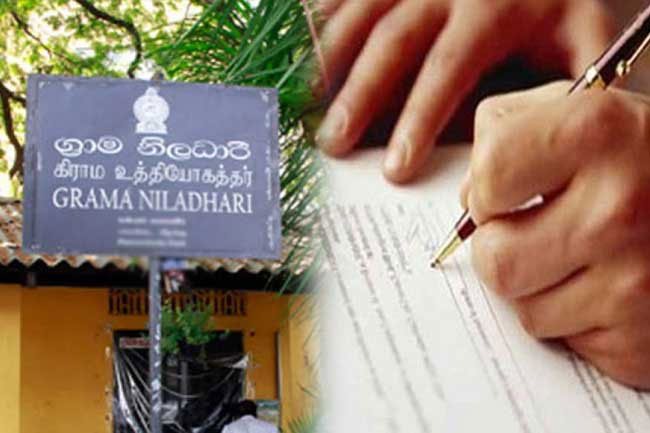
May 06, Colombo (LNW): Grama Niladhari officers have initiated trade union action by reporting sick leave today (06) and tomorrow (07) to press for various demands.
The All-Island Grama Niladhari Officers’ Association announced that the trade union action spans the entirety of the country, with officers abstaining from duties and taking sick leave.
In a statement, Jagath Chandralal, the General Secretary of the association, elaborated that all unions representing Grama Niladhari Officers have endorsed this action.
He further warned that if the government fails to address their concerns adequately during the Cabinet meeting, stringent measures will be considered.
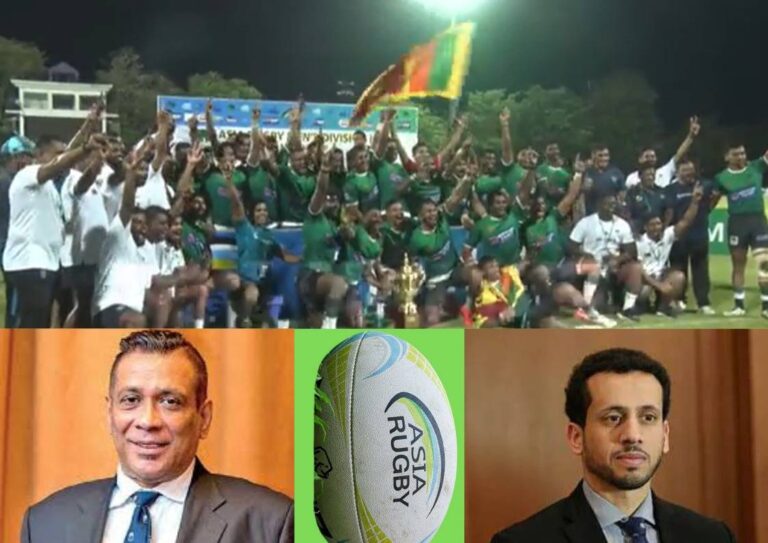
May 05, Colombo (LNW): The Asia President and the Sri Lankans who have been sleeping in his arms for years, with the blessings of politicians like Namal Rajapaksa and Roshan Ranasinghe, to manipulate the Sri Lanka Rugby administration under their own interests, depriving them of their independence, strategically, the Asia President was able to fulfill the need to place the rugby of his country, which has a history of 12 years, above the rugby of Sri Lanka, which has a history of about 145 years. The Sri Lanka Rugby team, which easily won the rugby championship in the Asia A division, was able to demonstrate not only to Asia but to the world, the injustice done to a team of players possessing such skill in the game of rugby, despite facing obstacles and influences on the field. We have decided to leave this note on the current situation until a separate note is made regarding this matter.
In the final game, the Sri Lankan rugby players, who responded strongly to the team that insulted Sri Lankan rugby, including the Asia President, The Sri Lanka rugby players defeated Kazakhstan of 45-7. On the other hand, it is being reported that a complaint is being sent to the Asia President from Sri Lanka to come to the International Court of Justice. Following the resignation of Rizly Illiyas, who is the basis of this note, with the desire to remove Sri Lanka Rugby from the pressure on his base, the team of Rugby officials under his leadership is currently gathering people who have left Sri Lanka Rugby due to the illegal incident, as per the wishes of the Asia President. If behaved, it does not seem that the fight against the independence of the country’s rugger will be carried forward.
In that way, regardless of the obstacles faced by Sri Lanka Rugby, while the leaders of the current administration, who do not know what they are doing under the leadership of their rugby ,who are pampering themselves with the Asian president, it is reported that Rizly Illyas is preparing to approach the International Court of Justice against the activities of the Asia President, his reputation and the damage he has done to Sri Lanka Rugby.
Also, while Namal Rajapakse and Roshan Ranasinghe of Sri Lanka are trying to make the sport their property, Harin Fernando has assigned the responsibility of all 73 registered sports to the Director General of the Sports Development Department, taking into consideration the long-standing allegations that the involvement of the political representative of the sport is unethical.
Thus, based on the activities done so far in the Sri Lanka Rugby, especially the people responsible for the £50,000 imposed by the World Rugby , the necessary facts to deal with the violation of the immigration law by the sports administration and the law so that the people who are responsible for the 50000 pounds imposed by the World Rugby can no longer interfere in the rugby in Sri Lanka. A group is also preparing to submit the statement to the court.
It is also reported that the Acting President, who currently appears as the Rugby President, behaves like this in front of the socity, but is slowly avoiding making decisions in legal and accounting matters. Also, accusations are being made through other legal matters regarding making decisions without considering the agreements, contracts and ethical issues that should be in dealings with commercial institutions. Meanwhile, Rizly has also tried to settle the credit status of Sri Lanka Rugby who were burdened with debt through several administrations to some extent. There is no clarity about its status, and that a group of rugby fans hope to implement a program to find out the facts under the sports law as well as under the law of the country and under the Freedom of Information Act.
Somehow, at the same moment Sri Lanka is getting answers to the influence and coercion done by the Asia President. LNW is grateful to the Sri Lanka team who brought the answer that showed a numerical value.
We congratulate the former president of Sri Lanka, who was unable to prove that he committed an offense under the sports law or under the general law of Sri Lanka. Sri Lanka and the Sri Lanka Rugby administration, who have been so ungrateful to forget the injustice done to them by the president who has led them and have collectively forgotten the injustice done to them by Asia, should give an answer to the Asia President, that justice be done.
The try (TRY) which nature and justice made to illegally place the Asia President with his allies against Sri Lanka is now approaching the time to become a PENALTY TRY. Winning wrongly destroys the ethics and fairness of the game. We think it is our responsibility to oppose it..
May 06, Colombo (LNW): The recent annulment of the Surgery Long and Short Cases components of the Examination to Register to Practice Medicine (ERPM) Part B Examination held at the Examinations Centre of Eastern University (Batticaloa) has triggered outrage and allegations of nepotism.
Allegations have surfaced against the President of the Sri Lanka Medical Council (SLMC), suggesting his involvement in the decision-making process regarding the annulment, in what the allegations propose his desirability for nepotism.
In a letter dated May 1, 2024, addressed to the Registrar of the SLMC, approximately 40 candidates who underwent the examination in April 2024 expressed their discontent over the sudden cancellation of the examination and the subsequent announcement of a fresh examination in May.
The decision appears arbitrary and discriminatory, adversely affecting their hard-earned marks and future career opportunities, the candidates argued.
According to the letter, the controversy arose following a complaint from a candidate regarding the absence of a translator during the examination.
Allegedly, the candidate in question is the daughter of a consultant with close ties to the President.
Instead of addressing the issue impartially, the President purportedly instructed to inflate marks for all candidates, including the consultant’s daughter, to ensure her passing.
Reportedly, when the examination coordinator and council members refused to comply with the President’s directive, he leveraged his position to nullify the examination for all candidates and mandated a re-examination for everyone, despite suggestions for a re-examination solely for affected candidates.
Furthermore, the letter accuses the President of appointing his associates to the investigation committee, potentially influencing the outcome of the inquiry.
In light of these concerns, the candidates urged the SLMC to reconsider the annulment decision and release their results, highlighting the significant and irreversible consequences they would face due to the decision.
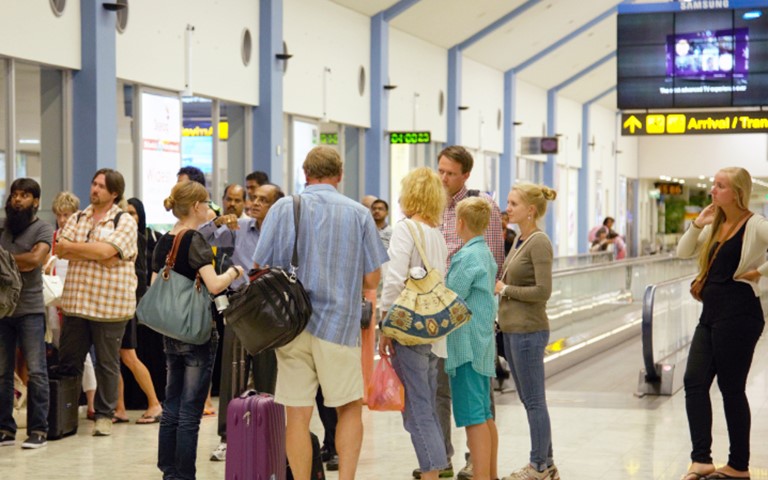
May 06, Colombo (LNW): In April, Sri Lanka’s tourism sector experienced a decline in momentum as the number of international visitors dropped below 200,000 for the first time this year, provisional data from the Sri Lanka Tourism Development Authority (SLTDA) revealed.
The total tourist arrivals for April amounted to 148,867, marking a 41 per cent increase compared to the corresponding month of the previous year.
However, this figure represents a significant decrease from the 209,181 tourist arrivals recorded in the previous month of March.
Since December 2023, Sri Lanka has consistently attracted over 200,000 tourists each month, marking the first time this milestone was achieved since the outbreak of the Covid pandemic.
This positive momentum persisted for four consecutive months before experiencing a contraction in April.
Such declines are not uncommon as April typically marks the beginning of a quieter period before a resurgence in July.
While a decline was anticipated, tourism authorities have attributed the steep drop in April to various factors, including the implementation of a new visa system introduced on 17th April.
This new system, which is perceived as more expensive and less convenient compared to the previous Electronic Travel Authorisation (ETA), has generated considerable discussion since its rollout.
In the latest tourist arrivals update, the SLTDA noted that arrival numbers have been “updated” to reflect the new visa categories introduced by the Department of Immigration and Emigration.
This update indicates an increase in arrival numbers. SLTDA Chairman Priantha Fernado emphasised that he would provide further clarity after seeking clarification from immigration authorities, according to Daily Mirror.
Fernado highlighted that immigration serves as the primary source for obtaining arrival data and noted changes in categorisation, including visitors for Friends and Relatives, Business, and MICE (Meetings, Incentives, Conferences, and Exhibitions).
India, the Russian Federation, and the UK emerged as the top three source markets for Sri Lanka tourism in April, contributing 18 per cent, 10 per cent, and 9 per cent of total tourist arrivals, respectively.
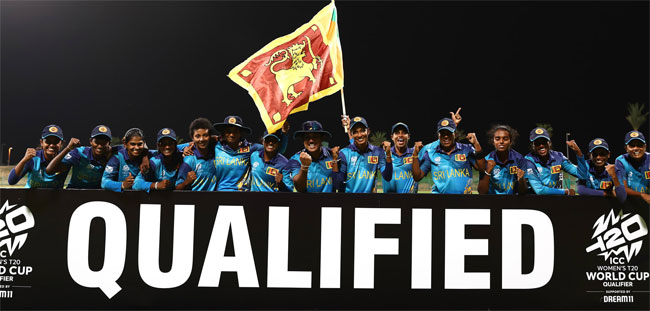
May 06, Colombo (LNW): Sri Lanka has secured its spot alongside Scotland as the second qualifier for this year’s ICC Women’s T20 World Cup, set to take place in Bangladesh from 3 to 20 October.
In a tense semi-final match against hosts United Arab Emirates (UAE) in Abu Dhabi on Sunday, Sri Lanka’s experienced team defended their 149-run total, ultimately emerging victorious.
The match saw Sri Lanka’s opening pair, Vishmi Gunaratne and captain Chamari Athapaththu, deliver a solid start with a 52-run partnership.
Despite Athapaththu’s contribution of 21 runs, including two consecutive sixes, she fell to UAE’s leg-spinner Vaishnave Mahesh (2/33), providing a breakthrough for the opposition.
Gunaratne continued her impressive form, accumulating 45 runs before being stumped off a wide ball by Esha Oza (2/27).
Sri Lanka’s middle-order, comprising Harshitha Madavi (24), Hasini Perera (15), Kavisha Dilhari (17), and Nilakshi De Silva (18), contributed crucial boundaries to set a competitive total of 149 runs.
In response, UAE’s Oza showcased exceptional batting prowess with a blazing 66 off 44 balls, supported by partnerships with Khushi Sharma (22) and Kavisha Egodage (16).
However, Sri Lanka’s bowlers, led by Athapaththu (2/28), restricted UAE to 134/7 by the end of their innings.
Despite Oza’s remarkable performance, Sri Lanka maintained control, clinching victory by 15 runs and securing their place in the ICC Women’s T20 World Cup Qualifier final against Scotland.
May 06, Colombo (LNW): The 2023 General Certificate of Education (G.C.E.) Ordinary Level examination is set to commence today (06), spanning 3,527 centres across the island.
With an anticipated 452,979 candidates scheduled to sit for the examination, the Commissioner General of Examinations urges candidates to arrive promptly at their designated examination centres, equipped with their admission cards and valid identification documents.
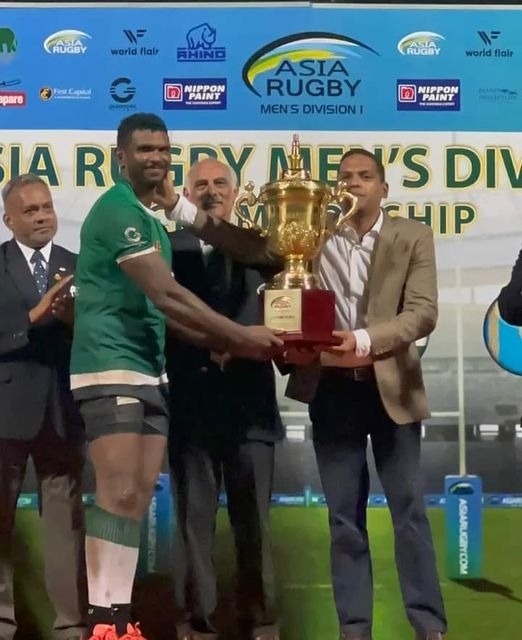
May 06, Colombo (LNW): Sri Lanka Cricket decided to recognise the achievement of the national rugby team, which won the Asia Rugby Division 1 Championship by beating Kazakhstan yesterday (04) in Colombo, with an award of US$30,000.
The decision to recognise the players and coaches who were involved in achieving this excellent win was taken by the President of Sri Lanka Cricket, Mr. Shammi Silva, and the Executive Committee, keeping in line with Sri Lanka Cricket’s continuous policy of recognising sporting excellence in the country.
Sri Lanka Cricket is extremely happy with this achievement, as it promotes the national rugby team into the top tier of the Asian Rugby circle, which augurs well for the country’s sports arena.
The Sri Lanka team defeated the Kazakhstan team in the final match with 45 – 7 points.
May 06, Colombo (LNW): Showers or thundershowers will occur at several places in Western, Sabaragamuwa and Central provinces and in Galle and Matara districts after 2.00 p.m., with showers or thundershowers being expected to occur at a few places in North-western and North-central provinces and in Mannar, Vavuniya and Mullaitivu districts during the afternoon or night, the Department of Meteorology said in its daily weather forecast today (06).
A few showers may occur over the coastal areas of Puttalam to Galle via Colombo during the morning to0, the statement added.
Misty conditions can be expected at some places in Central and Sabaragamuwa provinces during the morning.
General public is kindly requested to take adequate precautions to minimise damages caused by temporary localised strong winds and lightning during thundershowers.
Meanwhile, The swell waves (about 2.5 m – 3.0 m) height (This is not for land area) and wave period (about 12s-16s) may increase in the sea areas off the coast extending from Kalpitiya to Pottuvil via Colombo, Galle, and Hambantota.
There is a possibility that near shore sea areas off the coast extending from Colombo to Matara via Galle, may experience surges due to swell waves.
The sea areas off the coast extending from Kalpitiya to Pottuvil via Colombo, Galle and Hambantota can be rough at times.
The naval and fishing communities who are engaged in fishing and naval activities in the above sea areas, therefore, are requested to be vigilant in this regard.
The adverse weather conditions are also attributed to by heat index, the temperature felt on human body, which is expected to increase up to ‘Extreme Caution level’ at some places in Northern, North-central, North-western and Eastern provinces and in Monaragala district and that values, expected to increase up to ‘Caution level’ at some places in Western, Sabaragamuwa and Southern provinces and Matale district.
The public, therefore, is urged to stay hydrated and take breaks in the shade as often as possible, check up on the elderly and the sick, never leave children unattended, limit strenuous outdoor activities, find shade and stay hydrated, and wear lightweight and white or light-coloured clothing.
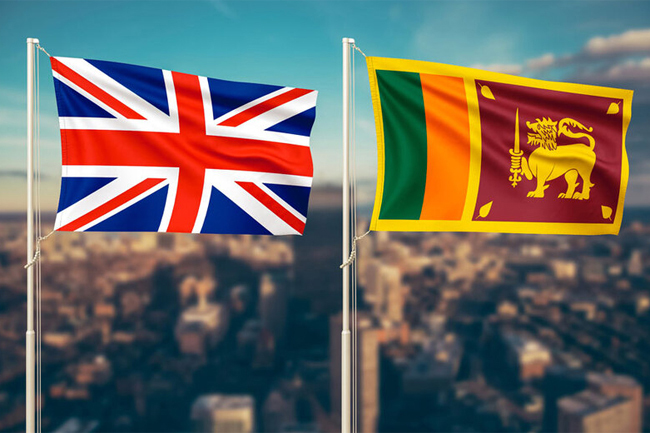
May 05, Colombo (LNW): The second meeting of the strategic dialogue between Sri Lanka and the United Kingdom is scheduled to be held in Colombo on 07 May 2024, at the senior officials’ level.
The meeting will review developments in foreign and security policies, as well as progress in the areas of bilateral engagement, including trade, investment, tourism, climate change, environment protection, migration, and maritime cooperation among others.
The meeting will also take stock of cooperation by the two countries at international fora, including at the United Nations and Commonwealth.
Sri Lanka and the United Kingdom celebrated 75 years of diplomatic relations in 2023. The visit of Her Royal Highness Princess Anne this year to commemorate this occasion underscored the importance of our enduring friendship.
At the second Strategic Dialogue, the Sri Lanka delegation will be led by Director General Europe and North America of the Ministry of Foreign Affairs Shobini Gunasekera. It includes bilateral talks with Foreign Secretary Aruni Wijewardane.
The UK side will be led by Director/India and Indian Ocean Directorate at Foreign Commonwealth and Development Office (FCDO) Ben Meller and will comprise High Commissioner Andrew Patrick, Head of Sri Lanka team in the FCDO Humairaa Haita and the High Commission officials along with officials of the Ministry of Foreign Affairs and other relevant government agencies.
Sri Lanka participated in the inaugural UK-Sri Lanka Strategic Dialogue at the Foreign Secretary level on April 18, 2023 at the Foreign Commonwealth and Development Office (FCDO) in London.
Foreign Secretary Aruni Wijewardane attended the Dialogue on behalf of Sri Lanka, the Ministry of Foreign Affairs said.
UK Minister of State in the FCDO Anne Marie Trevelyan opened the dialogue, an dit was conducted with the participation of Sir Philip Barton, Permanent Undersecretary of the FCDO.
The inaugural Strategic Dialogue has been convened at the invitation of the FCDO at the important juncture of the 75th anniversary of diplomatic relations between Sri Lanka and the United Kingdom this year.
The Strategic Dialogue has provided a forum for both sides to discuss the multifaceted relations between the two countries.
On the sidelines of the dialogue, Foreign Secretary Wijewardane had a bilateral meeting with Assistant Secretary General of the Commonwealth Prof. Luis G. Franceschi and interacted with members of the All-Party Parliamentary Group (APPG).