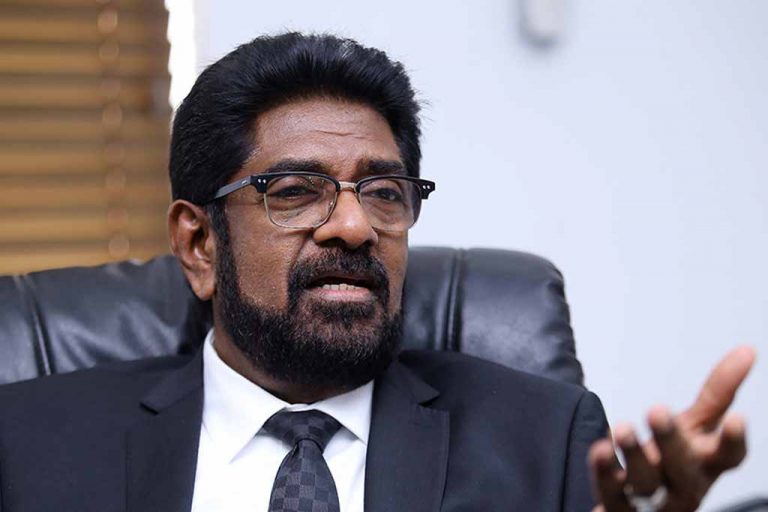
February 02, Colombo (LNW): Udayanga Rathna Diwakara, the General Secretary of Sri Lanka Insurance Corporation (SLIC), has initiated legal proceedings by filing a petition before the Court of Appeals on February 01, seeking a writ order to annul the Cabinet’s decision to bifurcate SLIC into two separate institutions.
A total of 56 individuals, including Prime Minister Dinesh Gunawardena, members of the Cabinet of Ministers, SLIC, and its Board of Directors, have been cited as respondents in the petition.
Such a decision, impacting the structure of SLIC, requires parliamentary approval and cannot be solely determined by the Cabinet, Diwakara argued.
He emphasised in the petition that SLIC, beyond being a profit-making institution, significantly contributes to public welfare.
He contended that the Cabinet’s decision lacks a legal foundation and raises concerns about the potential negative consequences on the public.
In addition to seeking an interim order against the Cabinet decision, Diwakara’s petition also requests the Court of Appeals to restrain SLIC’s Board of Directors from executing any actions leading to the division of the company’s assets and properties into two separate institutions.
The Cabinet of Ministers had approved the decision to operate the life and general insurance businesses of SLIC as distinct legal entities during its meeting on March 13, 2023.
This approval was granted in adherence to the provisions of the Regulation of Insurance Industry (Amendment) Act No. 3 of 2011 under the state-owned enterprises (SEOs) restructuring.
Subsequently, on December 18, the Cabinet endorsed a proposal by the President to segregate the life and general insurance businesses of SLIC into fully owned subsidiaries – Sri Lanka Insurance Corporation Life Limited and Sri Lanka Insurance Corporation General Limited.
February 02, Colombo (LNW): Prime Minister Dinesh Gunawardena has formally requested the assistance of the International Labour Organisation (ILO) in facilitating the government’s endeavour to establish a robust dispute prevention and resolution mechanism within the public service.
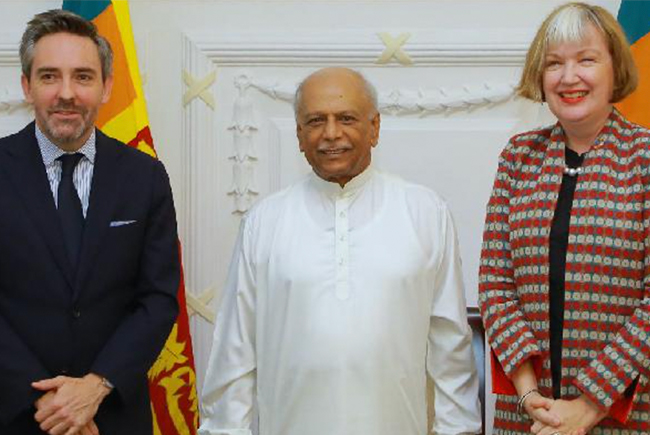
The request was made during a meeting at Temple Trees yesterday (01), where ILO Country Director Joni Simpson, accompanied by United Nations Resident Coordinator Marc-André Franche, paid a courtesy call on the Prime Minister.
Expressing gratitude for the Prime Minister’s initiative and the Cabinet of Ministers’ approval of the proposal, the delegation assured full support for the implementation of the envisaged mechanism.
Emphasising the significance of the mechanism, they highlighted its dual purpose of resolving existing disputes and preventing future conflicts through a tripartite dialogue system.
During the meeting, Prime Minister Gunawardena provided insights into the profound impact of the Covid-19 pandemic and the economic crisis on the labour workforce.
He outlined both short-term and long-term measures implemented by the government to foster economic recovery while addressing the needs of labourers, especially those in the low-income bracket.
Furthermore, Prime Minister Gunawardena underscored the government’s commitment to enhancing the upward mobility of the country’s labour workforce.
He detailed various training programmes initiated for skill development, emphasising that improving the quality and quantity of jobs is integral to lifting people out of poverty.
Highlighting Sri Lanka’s adherence to ILO regulations, the Prime Minister pointed out that the nation has created opportunities for both men and women to secure productive employment in conditions characterised by freedom, equity, security, and human dignity.
The discussion included Secretary to the Prime Minister Anura Dissanayake and UN Country Office Analyst Nethali Madawala.
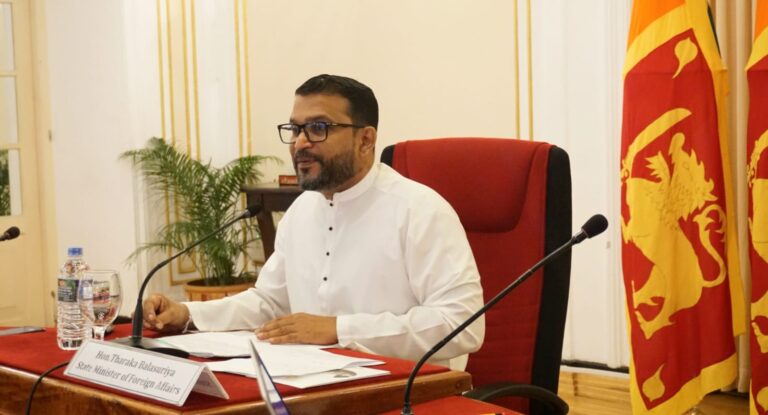
February 02, Colombo (LNW): In a press briefing titled ‘Collective Path to a Stable Country,’ held at the President Media Centre (PMC), State Minister of Foreign Affairs Tharaka Balasuriya addressed criticism of President Wickremesinghe’s recent foreign trips.
Balasuriya staunchly defended these engagements, dismissing claims of their unnecessary nature. He underscored the paramount importance of these diplomatic efforts in enhancing Sri Lanka’s foreign relations, attracting investments, and fostering international partnerships.
During the briefing, Balasuriya emphasised that Sri Lanka cannot afford isolation on the global stage, asserting that foreign relations are pivotal for the nation’s development.
He countered criticisms, deeming them baseless, and highlighted the vital role played by the President’s visits in Sri Lanka’s pursuit of progress.
The recent diplomatic endeavours were centred on economic recovery and international cooperation. President Wickremesinghe’s participation in the World Economic Forum in Davos aimed to engage the business community in discussions on rebuilding the nation and attracting investment.
The Non-Aligned Movement Summit in Kampala addressed broader geopolitical concerns, focusing on navigating global power dynamics and Sri Lanka’s long-term economic trajectory.
Participation in the G77 + China Summit allowed discussions on crucial issues such as climate change and epidemic threats, particularly their impact on developing nations like Sri Lanka. Balasuriya defended these foreign trips, emphasising their role in strengthening foreign relations and fostering development.
Balasuriya highlighted the direct engagement with private sector leaders during these international conferences, providing political leaders with opportunities to make development decisions tailored to specific needs and investments. He asserted that these interactions accelerate progress and foster collaboration.
The state minister clarified that the recent visits served a dual purpose, solidifying the “offline policy” and addressing regional spill-over concerns from conflicts in Ukraine and the Middle East. Balasuriya expressed confidence in containing these conflicts through collaboration with regional leaders and underscored the contribution of these interactions to global peace.
In conclusion, Balasuriya extended an invitation to foreign leaders to continue the dialogue on economic and social measures, emphasising Sri Lanka’s commitment to international cooperation and collective problem-solving.
Standard Chartered Bank expresses concern over the delay in wrapping up SL’s External Debt Restructuring: says an agreement with bilateral and commercial creditors in 2Q2024 is crucial, ahead of SL’s election period beginning 3Q2024.
Dept of Immigration and Emigration announces that the fees for normal passport services will be increased to Rs.10,000, representing an increase of Rs.5,000.
SJB Chairman Field Marshal Sarath Fonseka MP claims the SJB protest did not turn out to be successful: says if he had organised it, he would have done it more skillfully: asserts that it was neither a protest nor a rally, although some 8,000 people participated.
Speaker Mahinda Yapa Abeywardene endorses the Online Safety Bill: the new Act to come into effect from 1st February’24.
Fort Magistrate’s Court grants bail to the 10 persons who were arrested while engaging in a Satyagraha in front of the CID headquarters demanding that former Health Minister Keheliya Rambukwella be arrested: Maligakanda Magistrate’s Court orders former Health Minister Keheliya Rambukwella to appear before the CID & also imposes an overseas travel ban on him.
Maligakanda Magistrate’s Court further remands former Health Ministry Secretary Janaka Chandragupta & 5 others till 15th February’24, over the case of importing substandard Human Immunoglobulin.
Health sector workers decide to continue their strike today as there has been no favourable response from the Govt: Defence Ministry says steps being taken to deploy tri-forces personnel depending on the requirements in hospitals due to the ongoing strike by health sector workers.
State Foreign Minister Tharaka Balasuriya defends the President’s recent foreign trips: stresses SL can’t afford to be isolated on the global stage: emphasizes the importance of the trips in strengthening SL’s foreign relations & securing new partnerships: argues that the President’s visits are essential for building bridges.
Cathay Pacific Airlines resumes direct flights between Hong Kong and Colombo after 4 years: due to fly thrice a week.
New Test Cricket Captain Dhananjaya de Silva says SL needs more on-field aggression to re-establish its Test prowess: SL is currently last on the World Test Championship rankings.
February 02, Colombo (LNW): A few showers may occur in Northern, Eastern and Uva provinces and in Polonnaruwa districts, with showers or thundershowers being expected at a few places in Central, Sabaragamuwa and Southern provinces after 4.00 p.m., the Department of Meteorology said in its daily weather forecast today (02).
Misty conditions can be expected at some places in Central and Sabaragamuwa provinces and in Galle and Matara districts during the morning, the statement added.
The public is kindly requested to take adequate precautions to minimise damages caused by temporary localised strong winds and lightning during thundershowers.
Marine Weather:
Condition of Rain:
Showers or thundershowers may occur at few places in the sea areas off the coast extending from Kaluthara to Matara via Galle during the evening or night.
Winds:
Winds will be north-easterly to easterly and wind speed will be (20-30) kmph.
February 01, Colombo (LNW): Parliament Speaker Mahinda Yapa Abeywardena has formally endorsed the certificate pertaining to the Online Safety Bill, as confirmed by Parliament General Secretary Kushani Rohanadheera.
The Online Safety Bill, having undergone amendments, was successfully passed in parliament on January 23rd.
Subsequently, concerns were raised by opposition Members of Parliament who contended that the bill was approved without due consideration of the amendments proposed by the Supreme Court.
In response to these concerns, both opposition members and activists urged Speaker Abeywardena to withhold the endorsement of the certificate for the Online Safety Bill until it could be verified that the court’s suggested amendments were duly incorporated.
The Online Safety Bill’s primary objective is to regulate online content in Sri Lanka. However, critics caution that its implementation may result in censorship and the curtailment of free speech.
In ancient times, Sri Lanka (Ceylon) was known as the ‘Granary of the East’ as the traditional farming methods which were practiced and passed on from generation to generation helped the island nation produce enough grain not only to feed its people but to feed others in foreign lands. With the advancement of technology and the introduction of chemical fertilizers to Sri Lanka in the early 1960’s yields increased by as much as 60% and traditional farming methods were soon forgotten. Furthermore, chemical fertilizers were available in abundance and at subsidized rates, which resulted in farmers using more chemical fertilizer than what was recommended with the hope of boosting their yield. But sadly, they (the farmers) were not aware that the overuse of chemical fertilizers results in serious soil degradation, nitrogen leaching, soil compaction, reduction in soil organic matter, and loss of soil carbon or in other words stripping the soil of essential nutrients.
In April 2021, when the Sri Lankan government, in a bid to promote organic agriculture imposed a ban on the import of agrochemicals, yields dropped drastically and resulted in a severe food crisis. Plants were stunted as the soil in most farmlands had lost most of its nutrients which resulted in stunted plant growth. When the ban on the import of chemical fertilizers was lifted on 30th November 2021, the farming community was struggling to feed themselves let alone the nation. The withdrawal of subsidies on chemical fertilizers further aggravated the crisis.
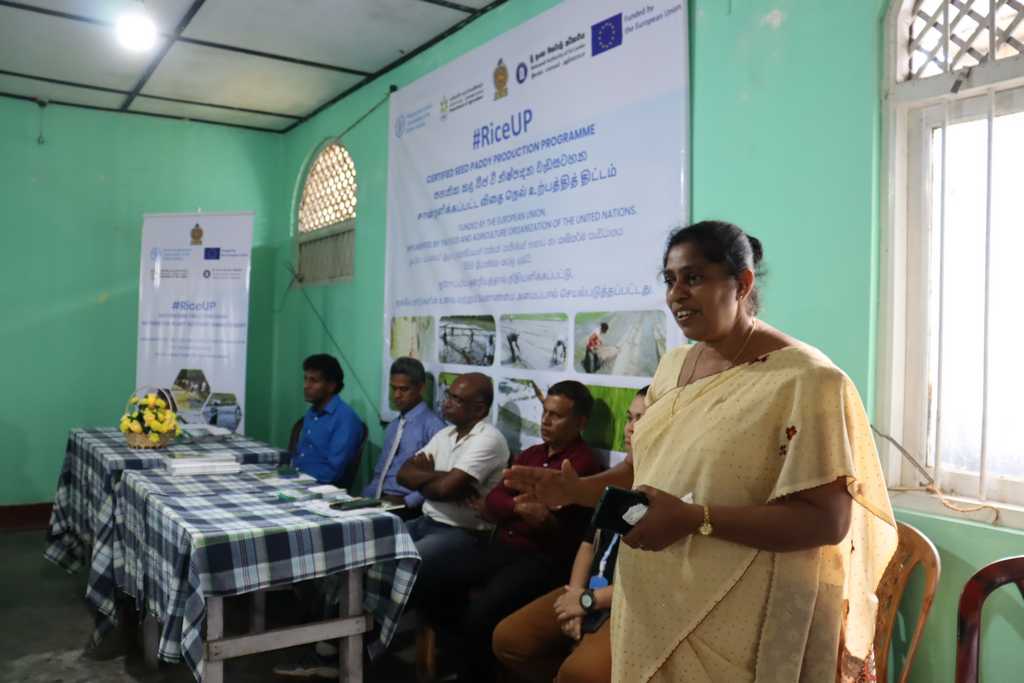
In December 2022, as a push towards more effective adaptations in paddy cultivation, the European Union (EU) provided a grant of 4 million Euros to the Food and Agriculture Organization of the United Nations (FAO) to join with the Department of Agriculture to support smallholder paddy farmers in Sri Lanka to adapt to better, sustainable and climate-smart agricultural practices to improve paddy cultivation which will enhance their income and strengthen their livelihoods.
“Responding to the Economic Crisis: Protecting smallholder farmer livelihoods with safe and efficient use of fertilizer and quality seed for better productivity in paddy farming” (GCP/SRL/080/EC) also known as the ’RiceUP’ project is being initially implemented in the districts of Ampara, Anuradhapura, Badulla, Hambantota, Matale, Polonnaruwa and Puttalam.
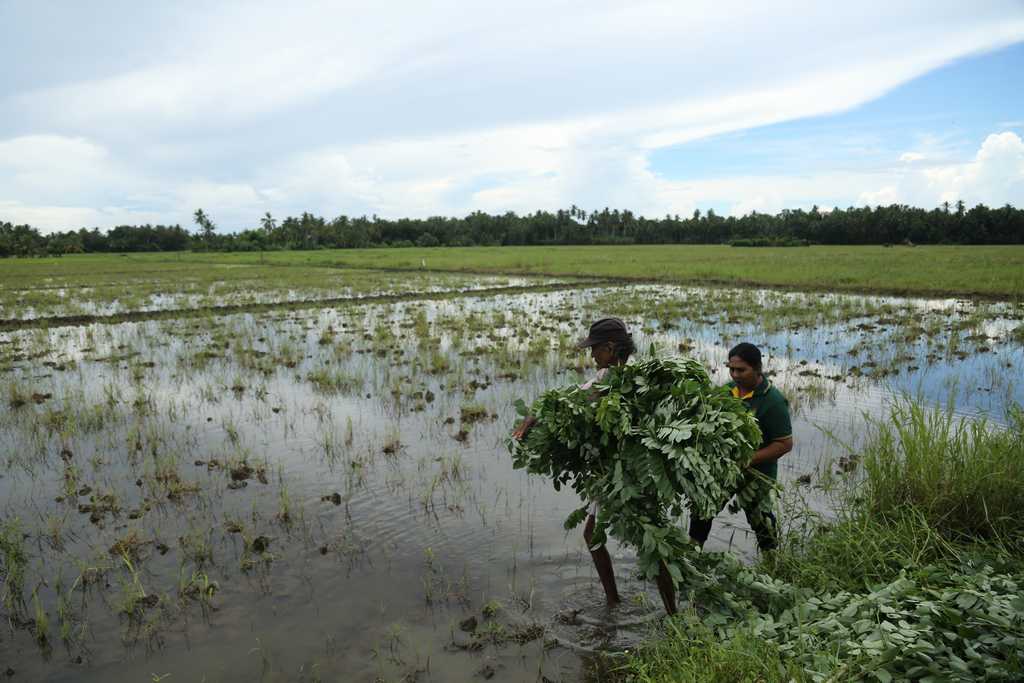
The project promotes the transition of Sri Lankan agriculture toward more sustainable farming practices, including the integration of organic fertilizer through Integrated Plant Nutrient Management (IPNM) and supporting the production of quality certified seed paddy in Sri Lanka.
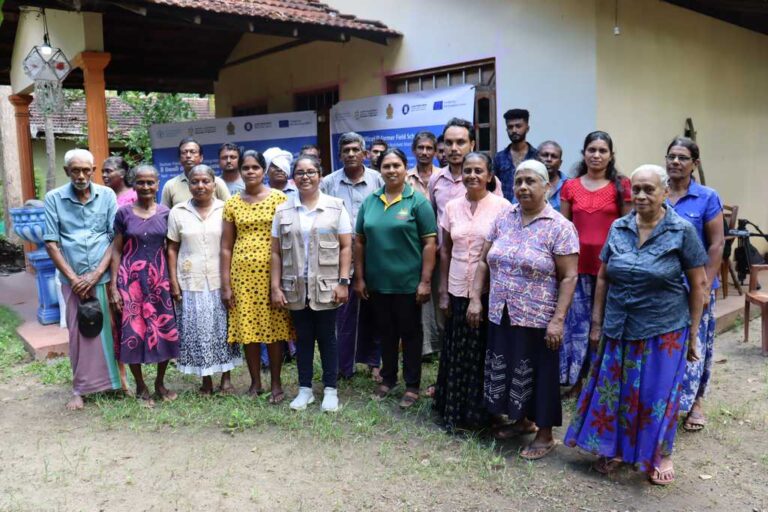
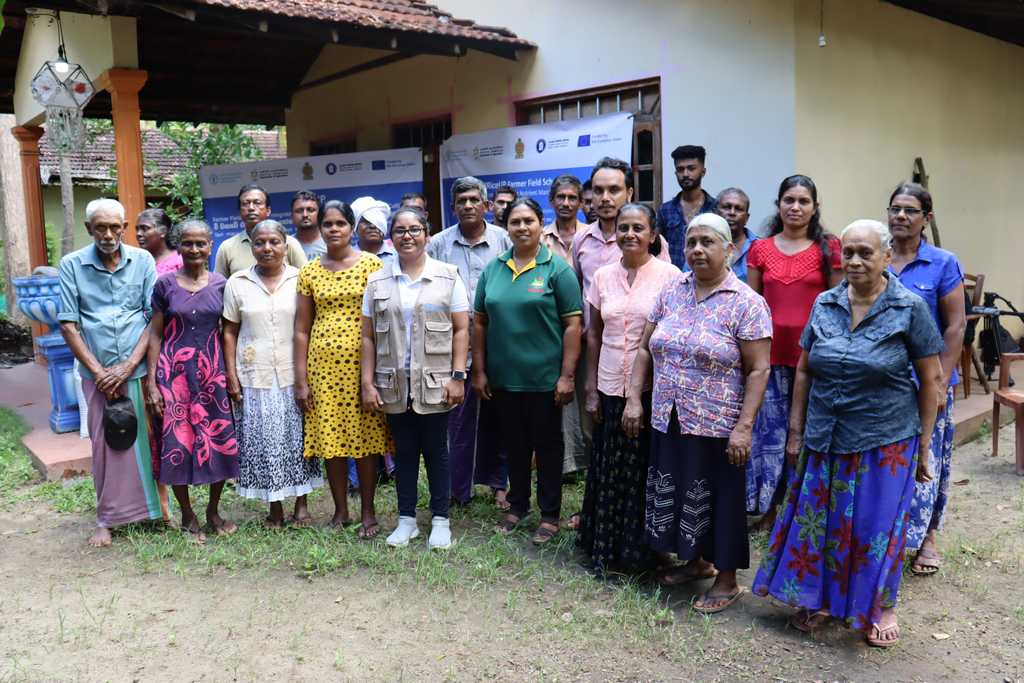
It commenced with the training of 289 Agriculture Extension Officers (AEO) in four key rice growing districts – Ampara, Badulla, on how the IPNM approach is implemented in paddy cultivation. The AEOs in turn have now trained 6,000 farmers from the four districts under the ‘Farmer Field School programme’ on how the IPNM approach could be applied in paddy cultivation to promote the efficient use of fertilizers, water and other inputs.
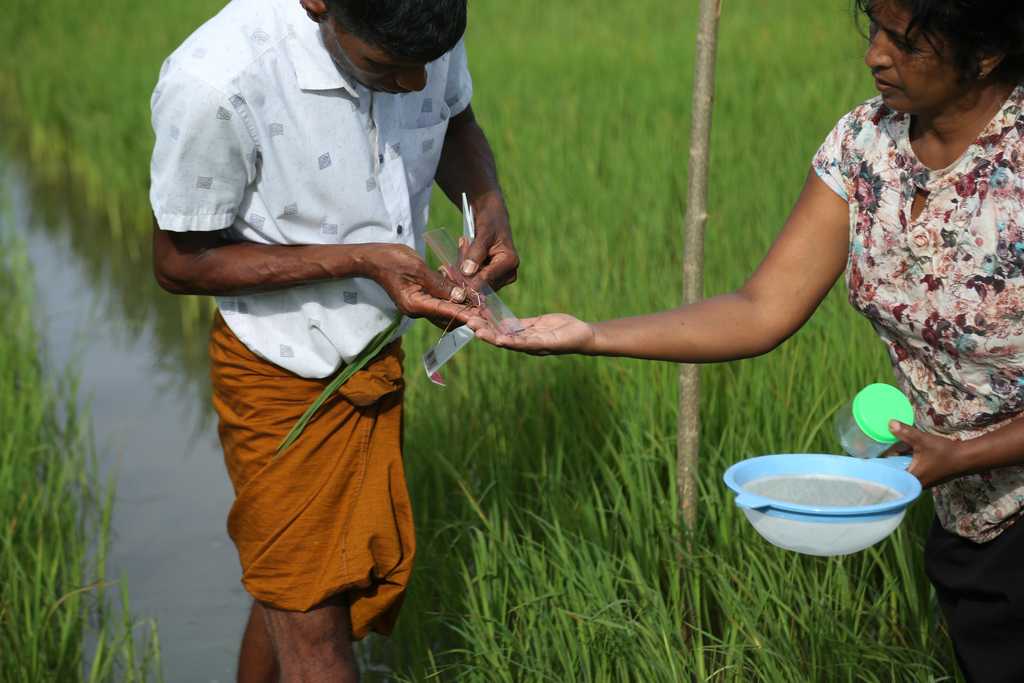
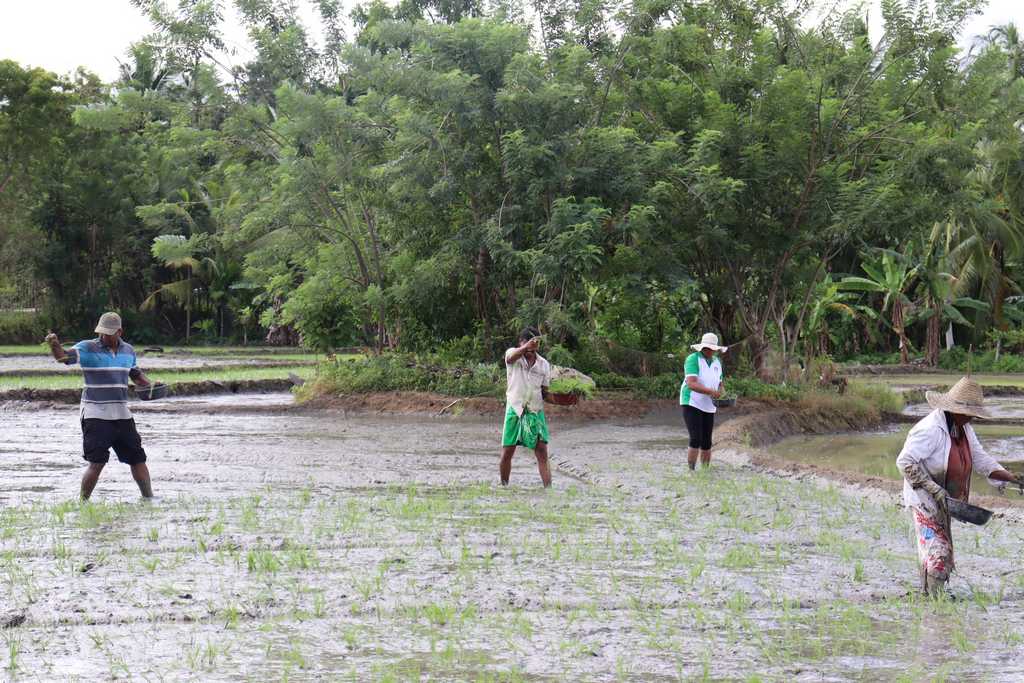
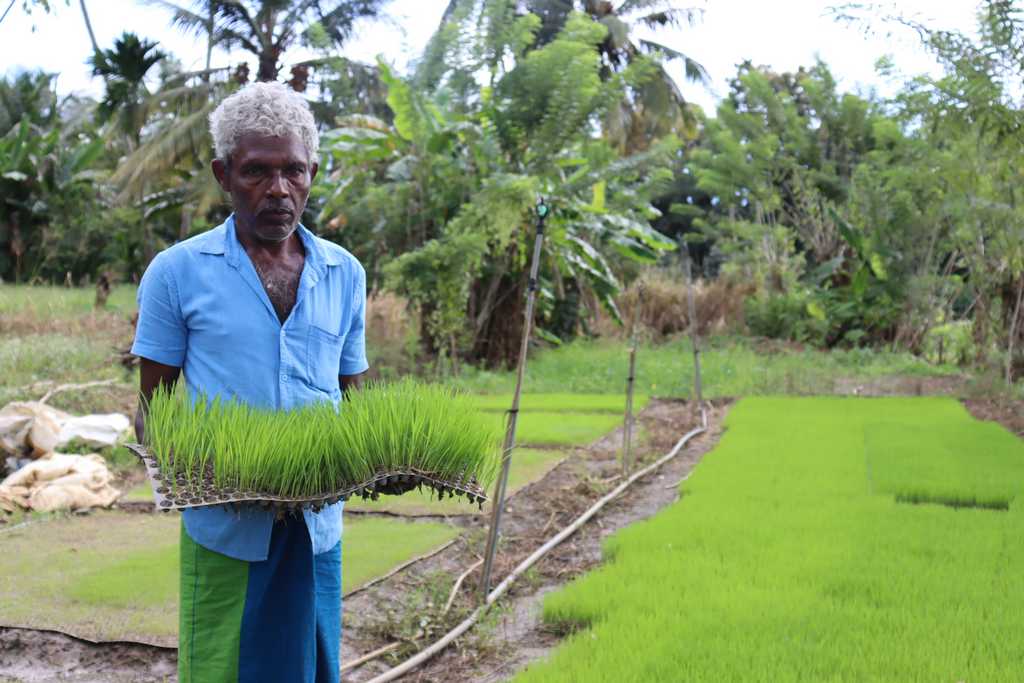
The ‘Farmer Field School programme’ facilitates soil testing and emphasizes soil management, compost, and bio-charcoal production, implementing good agronomic practices including using high-quality seed paddy, proper land preparation, the parachute method for seed broadcasting, efficient water management and effective weed, pest, and disease management, all integral components of IPNM practices.
1,200 selected farmers In Ampara, Anuradhapura, Hambantota, and Polonnaruwa districts were given 850 parachute trays each, along with fertilizer, seeds, and hands-on field training in seed paddy production.
Latha Hettiarachchi, a woman farmer who cultivates an acre of paddy land in Yodakandiya in Tissamaharama for over two decades admitted that she had been administering chemical fertilizer without proper knowledge of the amount of fertilizer her paddy field required. She said that it was only after the soil in her field was tested under the IPNM programme that she realized that she had been administering more chemical fertilizer than the soil required. She said that by attending the ‘Farmer Field School’ she had learnt of ways to increase her yield and profit.
Aduru Hewage Kusumawathy a resident of Goda Koggalla in Ambalanthota was excited to be selected for the project and will be producing seed paddy when she next cultivates her 2 acres of paddy land in Mayurapura.
The ‘RiceUP’ project targets paddy farmers with no prior experience in certified seed paddy production. Returns from successful seed paddy production initiated through the project are likely to encourage most farmers to continue practicing certified quality seed paddy production, thereby enhancing the availability and accessibility of certified seed paddy in the country. With the support of Agriculture Extension Officers, farmers in some areas are forming farmer societies to ensure the continuity of seed paddy farming through collaborative efforts.
According to the FAO the project’s broader objectives include meeting the country’s demand for quality seed paddy, strengthening government-owned seed farms, and enhancing seed production. Plans involve increasing seed paddy production by 16% – 20%, reaching an annual formal seed supply of 24,000 tons, up from 19,200 tons.
During a meeting in Embilipitiya, Provincial Director (Agriculture) Ms. Nalika Rubasingha, said “The ‘RiceUP’ project is the first step towards improving paddy cultivation in post crisis Sri Lanka. Management of fertilizer use, water management, pest management, use of quality certified seed paddy and weed management are the main areas of attention that when implemented, will increase productivity in paddy cultivation. The unpredictable weather patterns due to climate change, has impacted seed paddy production”. She added that it was important to create a market for the farmers who have undertaken to produce seed paddy under the ‘RiceUP’ project and suggested that the Bata-Atha seed paddy farm can become the main source of supplying quality certified seed paddy to other farmers in the Island.
She said with the implementation of the ’RiceUP’ project it was expected that the seed paddy produced in the Hambanthota District will increase to 7.5MT from the 4.5 MT produced at present.
‘RiceUP’ is a project funded by the European Union (EU) implemented by the Food and Agriculture Organization of the United Nations (FAO) in partnership with the Ministry of Agriculture, Department of Agriculture, Mahaweli Authority of Sri Lanka (MASL), the Department of Agrarian Development and the active participation of multiple stakeholders in the paddy sector including related government institutions and private sector agencies.
February 01, Colombo (LNW): Sri Lankan born Bollywood actress Jacqueline Fernandez, accused in a Rs 200 crore money laundering case, was knowingly involved in the possession and enjoyed the use of proceeds of crime of alleged conman Sukesh Chandrasekhar, Delhi High Court proceedings revealed.
The Enforcement Directorate (ED) informed the Delhi High Court that Jacqueline Fernandez knowingly participated in the possession and use of proceeds of crime related to Sukesh Chandrasekhar, who is facing charges in a ₹200-crore money laundering case, with Fernandez being named as an accused.
The ED stated to the HC, “She continues to withhold the truth even to this date. It is also a fact that Fernandez wiped out the entire data from her mobile phone after Chandrasekhar’s arrest, thereby tampering with the evidence.
She also instructed her colleagues to destroy the evidence. The evidence conclusively proves that she knowingly participated in the possession and use of the proceeds of the crime committed by Chandrasekhar.”
In August 2022, the ED had highlighted the same in its supplementary charge sheet. The ED asserted that Fernandez initially denied that Chandrasekar had purchased cars for her parents living in Bahrain, but when confronted with evidence, she “admitted” to it, indicating her collusion with accused Sukesh Chandrasekar to conceal the use of the proceeds of the crime.
Additionally, during her questioning, Fernandez attempted to “cover up” her conduct by repeatedly claiming to be a victim in the case. However, she “failed to provide any substantial material to establish victimization by Sukesh.”
Her lawyer, on the other hand, maintained that “Jacqueline is a victim of a larger conspiracy.”
The matter was listed before Justice Manoj Kumar Ohri and Jacqueline Fernandez’s counsel sought time to file a reply in response to the ED’s contention. The matter will be next heard by the High Court on April 15.
In its reply, the ED claimed that Jacqueline Fernandez “held back the truth till date” regarding the financial transactions with Sukesh Chandrasekhar and concealed facts until confronted with evidence, PTI reported.
It is also a fact that Fernandez wiped out the entire data from her mobile phone after the arrest of Sukesh Chandrasekhar, thereby tampering with the evidence.
She also asked her colleagues to destroy the evidence. Evidence proves beyond doubt that she had been enjoying, using and is in possession of the proceeds of crime,” the probe agency said.
Thus, it is proved that Fernandez was knowingly involved in the possession and use of proceeds of crime of accused Chandrasekhar,” it claimed.
The actress, the ED alleged, attempted to cover up her conduct by stating she was a victim of Sukesh Chandrasekhar, but was not able to furnish any substantial evidence to establish her claim.
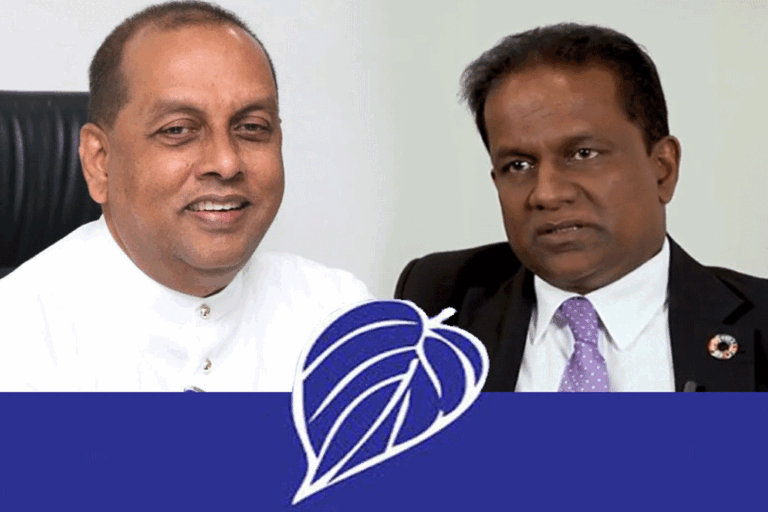
February 01, Colombo (LNW): Minister Mahinda Amaraweera and former MP Thilanga Sumathipala have reportedly resigned from their positions as Secretary General of the United Peoples Freedom Alliance (UPFA).
The decision to step down follows a request from Sri Lanka Freedom Party (SLFP) Leader, former President Maithripala Sirisena, who is in the process of establishing a new alliance.
In compliance with Sirisena’s request, both Amaraweera and Sumathipala have submitted their resignation letters to the former President.
This move comes in the context of the formation of a fresh alliance, and the individuals in question have acted in accordance with the party’s leadership directive.
Amaraweera had previously been removed from the post of Secretary General of the UPFA when he accepted a ministerial position within the government.
Subsequently, Sumathipala assumed the role. However, Amaraweera contested this decision through legal channels, and the Election Commission clarified that neither of them was officially recognised as the Party Secretary General.
Given these circumstances, Sirisena deemed it necessary to have both individuals step down from the Secretary General position.
The intention is to appoint a new figure to the role, facilitating the use of the betel leaf sign (Bulath Kolaya) for the emerging alliance, which is anticipated to be named the United Peoples Freedom Alliance.