Home Blog Page 127

Private Sector Pensions on the Table as EPF Faces Overhaul

0

Sri Lanka’s proposal to transform the Employees’ Provident Fund (EPF) from a lump-sum retirement payout into a monthly pension marks one of the most significant potential reforms in private sector social security. Announced in early 2026 and reiterated in Parliament by Deputy Minister of Labour Mahinda Jayasinghe, the initiative aims to provide long-term financial stability for millions of private sector workers who currently exit employment with a single payment and no guaranteed post-retirement income.

The rationale behind the proposal is clear. While the EPF was designed as a safety net for retirement, lump-sum payments often expose retirees to financial risk. Poor financial planning, inflation, rising healthcare costs, and longer life expectancy mean that many retirees exhaust their EPF savings within a few years. In contrast, a pension-style system would provide a steady monthly income, similar to what public sector employees receive, ensuring sustained income security throughout retirement.

Under the proposed framework, EPF and the Employees’ Trust Fund (ETF) may be restructured into a part-pension fund under the Treasury. Retiring members would have options: withdraw a portion as a lump sum while converting the balance into a monthly pension, or withdraw the full amount at retirement. Officials have noted that legislative amendments to the EPF Act would be required, as the current structure does not qualify as a pension scheme. Discussions on funding mechanisms and governance reforms are already underway, with amendments anticipated following policy groundwork laid in late 2025.

From a feasibility standpoint, the reform has several advantages. Sri Lanka’s ageing population and shrinking workforce make pension sustainability a national priority. Converting EPF into a pension-style system could reduce future elderly poverty and lessen reliance on state welfare. Pooling funds over longer periods may also allow more strategic, long-term investments, potentially improving returns for contributors.

However, viability depends heavily on governance, transparency, and trust. EPF funds have historically been managed by the Central Bank, and the proposal suggests moving oversight under the Treasury an idea that raises concerns about political interference. Past attempts, notably in 2011, collapsed amid public protests fueled by fears that workers’ savings would be used to finance government deficits.

There are also structural challenges. Pension liabilities are long-term commitments, requiring actuarial discipline, robust regulation, and insulation from short-term fiscal pressures. Without these safeguards, a pension scheme could become financially unsustainable or erode contributor confidence.

In essence, transforming the EPF into a pension fund is conceptually sound and socially beneficial, but its success hinges on design integrity. If implemented with strong legal protections, member choice, and transparent management, it could redefine retirement security for Sri Lanka’s private sector. Without them, it risks becoming another well-intentioned reform undermined by execution.

IMF Orthodoxy Risks Renewed Crisis for Sri Lanka

0

Sri Lanka’s continued reliance on the IMF-led debt restructuring framework may offer short-term stability, but critics warn it also carries serious long-term risks particularly if the country deviates from promised reforms or if the programme itself proves too rigid to absorb new shocks.

The ongoing restructuring rests on strict targets set by the IMF’s Debt Sustainability Analysis, which aims to restore market confidence and prevent a repeat of the 2022 default. Yet even the IMF has acknowledged that Sri Lanka’s recovery path is “knife-edged,” with a significant probability of renewed debt distress if growth falters or external shocks intensify.

Recent cyclone damage has exposed these vulnerabilities. Reconstruction is expected to cost between US$6–7 billion, far exceeding available foreign exchange reserves. At the same time, external debt servicing continues to absorb a large share of government revenue, leaving little room for emergency spending without breaching IMF targets.

Supporters of the programme argue that deviating from IMF conditions would jeopardise access to concessional financing and scare off investors. Any unilateral suspension of debt repayments, they warn, could undermine credibility and delay Sri Lanka’s return to international capital markets.

However, critics counter that rigid compliance carries its own dangers. Continuing repayments while borrowing more for recovery simply shifts the burden into the future, increasing the risk of another restructuring. Moreover, heavy dependence on external discipline limits the government’s ability to respond democratically to voter demands for social protection, climate resilience, and inclusive growth.

There is also the question of fairness. Private creditors, particularly holders of international sovereign bonds, benefited from high interest rates during boom years. If Sri Lanka is forced to maintain harsh fiscal adjustments to satisfy these creditors, public trust in both domestic institutions and the international financial system may erode further.

Deviating from the IMF programme is not without cost, but neither is blind adherence. Failure to adapt targets to new realities such as climate disasters or global downturns could lock Sri Lanka into a cycle of low growth, social strain, and repeated debt renegotiations.

The debate ultimately centres on sovereignty and risk-sharing. A more flexible approach, critics argue, would involve deeper debt relief, temporary suspension of repayments during crises, and greater recognition of climate-related losses. Without such adjustments, Sri Lanka may technically remain “on programme” while remaining economically fragile.

As restructuring talks continue, policymakers face a stark choice: prioritise credibility with creditors at all costs, or recalibrate the programme to ensure long-term sustainability and social stability before another crisis forces the issue.

Sri Lanka’s Recovery Tested by Politics, Policy, and Contradictions

0

Sri Lanka’s fragile recovery is being tested not only by external pressures but also by internal contradictions that continue to blur policy direction and weaken investor confidence. While the government projects stability and reform, inconsistencies in political messaging, economic management, and foreign policy are raising concerns about whether the country is fully prepared for the next phase of its recovery.

At the heart of the challenge is governance coherence. The ruling coalition brings together ideologically diverse forces, ranging from pragmatic reformists to hardline Marxists. This ideological tension often spills into public discourse, creating confusion among international partners and domestic stakeholders alike. Recent mixed signals on foreign policy, particularly regarding major global powers, highlight the risks of speaking in multiple voices in an interconnected world.

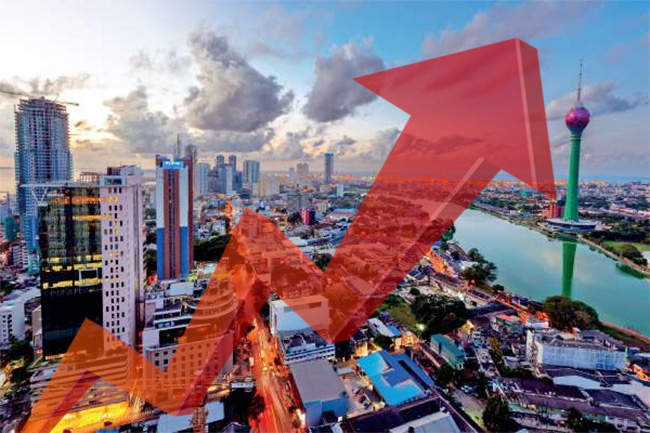
Economically, Sri Lanka has made measurable progress since its debt default, with growth hovering around 3.9% in 2024 and 2025. Manufacturing, construction, and services have shown resilience, and macroeconomic stability has improved. However, this recovery remains shallow and vulnerable. High exposure to external shocks such as shifting trade policies, energy price volatility, and weakening global demand continues to loom large.

The ongoing tariff dispute with the United States underscores these vulnerabilities. Although reciprocal tariffs have been reduced to 20%, they remain at historically high levels and disproportionately affect export-dependent sectors like apparel and rubber. Thousands of jobs are at risk, and export earnings are under pressure at a time when foreign exchange inflows are critical.

Beyond trade, structural weaknesses persist. Productivity growth remains sluggish, investment levels are below potential, and policy execution often lags behind rhetoric. Weather-related disruptions, especially floods and droughts, are increasingly affecting agriculture and infrastructure, while dependence on remittances from the Middle East exposes the economy to geopolitical and labor-market shifts beyond Colombo’s control.

Constructive criticism must also address political accountability. While the government emphasizes transparency and reform, public trust hinges on consistent decision-making, clear communication, and demonstrable outcomes. Investors and development partners look for predictability not ideological posturing or mixed signals that can undermine confidence.

Yet opportunities remain. Sri Lanka’s strategic location in the Indo-Pacific, its educated workforce, and improving tourism prospects provide a foundation for sustainable growth. Deepening trade partnerships, investing in climate resilience, and accelerating digital and technological adoption could help insulate the economy from external shocks.

Ultimately, Sri Lanka’s challenge is not merely economic but institutional. Recovery will depend on aligning political ideology with economic reality, ensuring foreign policy discipline, and translating reform promises into tangible results. Without that alignment, progress risks stalling just as the country begins to regain its footing.

UN Human Rights Office Condemns US Intervention in Venezuela

0

The global community must clearly state that the United States’ intervention in Venezuela constitutes a violation of international law and undermines global security, the Office of the United Nations High Commissioner for Human Rights (OHCHR) said on Tuesday.

US forces reportedly ousted Venezuelan leader Nicolás Maduro in a surprise operation over the weekend. Maduro now faces four criminal charges in the United States, including narco-terrorism, while Venezuela’s vice president has been sworn in as interim president.

The OHCHR stressed that the operation breached a core principle of international law, which prohibits states from threatening or using force against the territorial integrity or political independence of another state.

“This operation undermined a fundamental principle of international law,” OHCHR Chief Spokesperson Ravina Shamdasani told reporters. “The international community needs to come together with one voice to insist on that.”

She warned that the military intervention should not be viewed as a human rights victory, stating that it weakens the international security framework and makes all countries less safe.

“It sends a signal that the powerful can do whatever they like,” Shamdasani said.

Emphasising the right to self-determination, she noted that Venezuela’s future must be decided solely by its own people. She cautioned that increased instability and militarisation would only worsen the country’s already fragile human rights situation.

Special Awareness Programme on Proceeds of Crime Act Held at Defence Ministry

0

A special awareness programme on the Proceeds of Crime Act, No. 5 of 2025, was conducted yesterday (06) at the Ministry of Defence, with the objective of educating security and legal leadership on the complexities of illicit wealth recovery.

Held under the guidance of Defence Secretary Air Vice Marshal Sampath Thuyacontha (Retd), the programme focused on key statutory obligations relating to the disclosure of information and the legal consequences of failing to do so, in support of the national effort to dismantle organised financial crime, the Ministry of Defence said in a statement.

The keynote lecture was delivered by Additional Solicitor General Air Commodore Sudarshana De Silva, PC, who also serves as the Judge Advocate of the Sri Lanka Air Force. Addressing senior officers of the Tri-Forces, legal professionals and senior civil officials, Air Commodore De Silva provided a comprehensive analysis of the legislation, which has been in force since June 01, 2025.

During his presentation, he highlighted the stringent disclosure requirements under the Act, explaining that any individual or official who becomes aware of suspected proceeds of crime is legally required to report such information to the relevant authorities. He further emphasised that willful blindness or failure to disclose such information constitutes a serious offence under the law and could result in severe legal penalties.

The programme underscored the Ministry of Defence’s commitment to ensuring that senior leadership within the Tri-Forces and the civil administration are fully conversant with the latest legal frameworks. By strengthening high-level legal literacy, the Ministry aims to enhance transparency and reinforce efforts to identify and disrupt illicit financial networks.

The event concluded with an interactive discussion session, during which participants examined the practical application of the Act in maintaining the highest standards of integrity and discipline within the country’s security and administrative structures.

The Additional Secretary (Administration), senior Tri-Forces officers, legal professionals, and senior officials from the civil and legal services were present at the programme.

Eradicating Drug Menace a National Responsibility – President Dissanayake

0

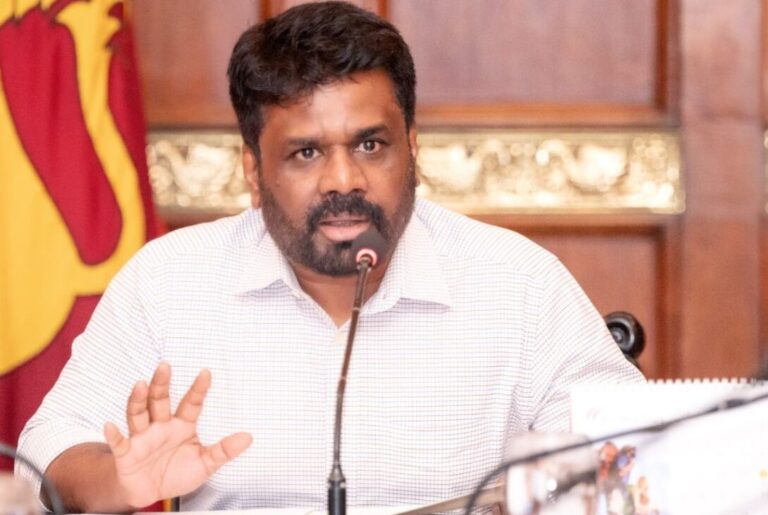
Emphasising that social wellbeing and stability are as important as physical development, President Anura Kumara Dissanayake has called on all citizens to fulfil their responsibility in eradicating the drug menace from Sri Lanka, warning that it has escalated into a national disaster threatening future generations.

The President made these remarks while participating in the third meeting of the “A Nation United” National Steering Council, established to eliminate drugs from the country. The meeting was held this morning (06) at the Presidential Secretariat with the participation of the Most Venerable members of the Maha Sangha of the three chapters, along with other religious leaders, according to a statement from the President’s Media Division (PMD).

With the objective of uprooting the widespread drug problem through a multi-pronged strategy, the national operation “Quit – A Nation United” is being implemented under the theme “A Drug-Free Nation – A Happier Tomorrow.” The programme focuses on disrupting drug supply islandwide, expanding raids, rehabilitating drug users, strengthening prevention programmes and empowering communities to resist drug abuse.

The PMD noted that this initiative is being carried out as a united national effort involving the Government, security forces, civil organisations and the general public, with the aim of creating strong social pressure against drug traffickers and distributors, while supporting the rehabilitation of those addicted to narcotics.

During the meeting, extensive discussions were held on the progress of ongoing raids, arrests and rehabilitation processes. The President expressed his appreciation to all institutions, officers and members of the public engaged in this effort.

It was revealed that between January 01, 2025 and January 05, 2026, the following quantities of drugs had been seized:

  • Heroin: 1,821.174 kg
  • Crystal meth (“Ice”): 3,865.710 kg
  • Cannabis: 17,189.377 kg
  • Cocaine: 38.958 kg
  • Narcotic tablets and capsules: 4,049,569

In line with decisions taken at previous meetings, attention was drawn to the progress of drafting new laws to ensure the speedy destruction of seized drug stocks. The President instructed relevant authorities to expedite this process, while progress relating to the destruction of drugs currently in custody was also reviewed.

The meeting also discussed the need to identify the social backgrounds of individuals addicted to drugs and to conduct a survey to gather relevant data. Further deliberations focused on establishing a strong mechanism involving educational institutions, government bodies, voluntary organisations and cultural organisations to expand the implementation of the national programme.

In addition, participants discussed conducting public awareness campaigns with the involvement of religious leaders, making use of the close ties between villages and places of worship.

The meeting was attended by the Maha Sangha, including the Most Venerable Niyangoda Vijithasiri Thera (Anunayake of the Malwathu Chapter), the Most Venerable Narampanawa Ananda Thera (Anunayake of the Asgiriya Chapter), the Most Venerable Waleboda Gunasiri Thera (Anunayake of the Ramanna Maha Nikaya) and the Most Venerable Kuppiyawatte Bodhananda Thera, along with religious dignitaries representing other faiths.

Also present were Minister of Public Security and Parliamentary Affairs Ananda Wijepala, Secretary to the President Dr. Nandika Sanath Kumanayake, Senior Additional Secretary to the President Roshan Gamage, Secretary to the Ministry of Defence Air Vice Marshal (Retd) Sampath Thuyacontha, and several other officials.

Authorities on Alert as Low-Pressure System May Intensify; Heavy Rain and Landslide Warnings Issued

0

Director of the Disaster Management Centre (DMC) Pradeep Kodippili said all necessary preparations have been made to face any potential disaster situations that may arise in the future.

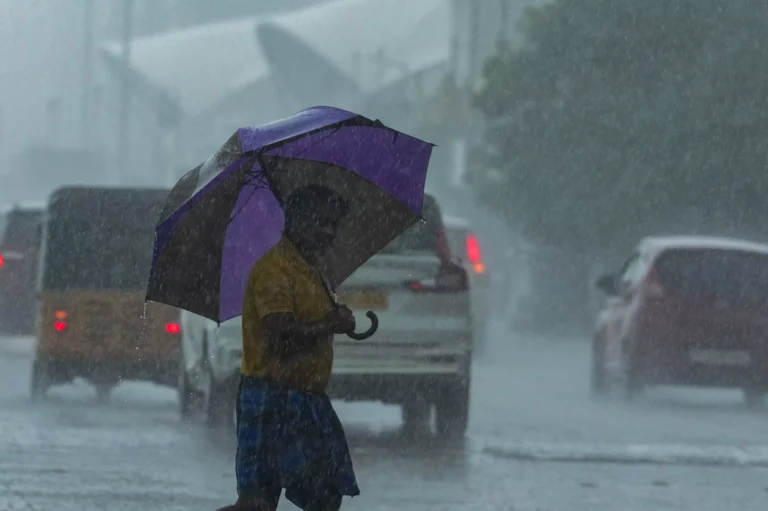
Meanwhile, the Department of Meteorology announced that a low-pressure area currently located in the southeastern Bay of Bengal is likely to intensify into a depression within the next 24 hours. The system is expected to move westwards and approach the eastern coast of the island.

As a result, rainfall is forecast to increase from Thursday (08) in the Northern, North Central, Eastern, Uva and Central Provinces. The Department warned that heavy rainfall exceeding 50 mm may occur in parts of the Uva Province and in the Batticaloa, Ampara, Polonnaruwa and Matale districts.

In addition, strong winds of up to around 50 km/h may be experienced at times in the eastern slopes of the central hills, as well as in the Northern, North Central, North Western and Eastern Provinces, and in the Hambantota, Gampaha, Colombo and Monaragala districts.

Meanwhile, the National Building Research Organisation (NBRO) has issued red landslide warnings for several areas in the Kandy and Nuwara Eliya districts. Landslide early warnings have also been issued for parts of the Badulla, Matale and Monaragala districts.

Authorities have urged the public to remain vigilant and follow instructions issued by relevant agencies.

ONLINE CRIME AND INVESTIGATIONS

0

Nalinda Indatissa, President’s Counsel.

Online criminals try to trick people and steal money. They pretend to be banks, delivery companies, government offices, shops, or even friends. They send emails, SMS or WhatsApp messages, and sometimes they call on the phone. Their real aim is to make you click a link, install an app, or share your OTP, password, PIN, or bank details.


Sometimes you get an email saying your account is blocked or a delivery is waiting. It asks you to click a link. The email looks real, but the link goes to a fake website made to steal your information.
Sometimes you get a message on SMS or WhatsApp saying your card is blocked, you won a prize, or you must pay a small fee. It asks you to click, install an app, or share your OTP. This is also a trick.
Sometimes someone phones and says they are from the bank, police, court, or a company. They talk fast and try to scare you. Then they ask for your OTP, password, or card number. This is a scam.
There is also another common type called a romance scam. A person pretends to love you, only to take your money. They usually meet you online. They say sweet things, send photos, and tell nice stories. After some time, they start asking for money, saying there is an emergency, a hospital bill, a parcel stuck, or a travel problem. They promise to pay back, but they never do. Sometimes they ask for personal details or private photos and later use them to threaten you.


A tech support scam usually starts with a message, pop-up, email, or phone call saying your computer or phone has a virus, is hacked, or will be blocked. The message looks frightening on purpose. It may show a red screen or ask you to call a number. The person pretends to be from Microsoft, Apple, or your internet company. They ask you to give remote access or install a fixing app. Once you allow them in, they can lock your device, steal files, or ask you to pay for fake repairs. Real companies do not suddenly call you about viruses. Stay calm, close the window, restart the device, and ask someone you trust. Never give remote access to a stranger and never pay for a problem you did not ask to check.


An investment scam is when someone promises big profits with very little risk. They may say the money is guaranteed and that you will get rich fast. They often show fake screenshots or fake stories of people earning huge amounts. First they let you see a small profit. Then they ask for more money. After you send more, they disappear or say you must pay extra fees to withdraw. They often use words like crypto, trading, gold, or shares, but the trick is the same. If it sounds too good to be true, it usually is. Real investments go up and down, and nobody can promise profit.


Online shopping scams happen when a fake website, ad, or seller pretends to sell good products for a cheap price. The pictures look nice, and the reviews may look good, but they are often fake. After you pay, the item never arrives, or you get something very cheap and different. Sometimes the site takes your card details and uses them later. Be careful with shops you have never heard of. Check if the website has a real address, real contact number, and clear return rules. Do not pay by bank transfer to a stranger. Use only trusted websites and safe payment methods.


Business email compromise is when criminals break into or copy company email accounts and send messages that look real. They may pretend to be the boss, a supplier, a lawyer, or an accountant. They ask someone in the office to pay a bill or change a bank account number. Everything looks normal, so people send the money to the wrong account. This is very dangerous for companies. If an email asks for urgent payment, always double-check by calling the person using a known number. Never trust payment changes sent only by email.


Lottery and prize scams start with a message saying you have won a big prize, car, lottery, or holiday — even though you never took part. They say you only need to pay a fee, tax, or processing charge first. Once you pay, they keep asking for more, or they disappear. Real lotteries do not ask winners to pay first. If someone says you won something you did not enter, it is almost always a scam. Do not pay. Do not share your details.


Fake job offers usually promise easy work and high pay. They may say work from home, no experience needed, or earn fast. After you show interest, they ask you to pay for training, uniforms, registration, or processing. Sometimes they ask for your ID, bank details, or private documents. Real employers do not ask you to pay to get a job. Always check the company website, call a real office number, and talk to people you trust before sending documents or money.


Today, scams have become more clever because criminals now use artificial intelligence. AI helps them copy voices, create fake photos and videos, and write messages that sound real and natural. A scammer can take a short recording from social media and make a fake phone call that sounds exactly like your child, spouse, boss, or friend. They may say there is an emergency and ask you to send money immediately. AI can also make fake videos of company leaders, famous people, or officials, so people believe they are real. Scammers use AI to write smart emails without spelling mistakes, and they look professional and polite. They can build fake websites, fake companies, and even fake people online, complete with nice photos and fake reviews. Some romance scammers now use AI chatbots to talk all day, send sweet messages, and sound loving and caring, until they slowly start asking for money. Because of AI, scams are harder to spot and move very fast. This is why it is more important than ever to slow down, check carefully, and not trust anything just because it looks real or sounds real.


Do not share OTPs, passwords, PINs, or bank details. Do not click strange or suspicious links. Do not install apps that strangers tell you to install. Do not send money to people you have never met in real life. If anyone rushes you, scares you, or tells you to keep secrets — stop and think. Real banks, government offices, and genuine companies will never ask for your password or OTP. If you are unsure, call your bank using the number on your card, or type the real website yourself. Ask a trusted person for help. If you already shared something or sent money, contact your bank at once and report it to the police or cybercrime unit. Scammers are very clever. Many good people get caught. Do not feel ashamed. The most important thing is to stop quickly and stay safe.


Even when a person manages to avoid losing money to a scam, there is still an important civic responsibility to report the attempt. Reporting helps authorities identify patterns, discover networks, and prevent others from falling victim. Many people who are elderly, less educated, or financially vulnerable are often targeted repeatedly, and each report strengthens the ability of law enforcement to act. Silence allows scammers to operate freely. In Sri Lanka, a complaint can be made at the nearest police station, where a formal statement will be recorded and a reference number issued. Cases that involve digital fraud or online communication can also be referred to the CID Cyber Crimes Division. In addition, Sri Lanka CERT — the national cyber-security response team — accepts reports relating to online incidents. If money has moved or accounts have been accessed, the affected bank or financial institution should be notified immediately so that suspicious transactions can be frozen wherever possible.


When a complaint is received, investigators first obtain a detailed statement and collect any available evidence such as screenshots, emails, text messages, bank slips, phone numbers, and website links. They then focus on preserving digital evidence from devices and records before attempting to trace both the money trail and the communication trail. Banks, telecom operators, and online platforms may be contacted so that suspicious accounts, SIM cards, or payment channels can be monitored or frozen. The objective is to connect the suspect, the devices involved, and the movement of funds. In many cases, scammers are not even in Sri Lanka. They may operate from call centres overseas, use foreign numbers and VPNs, or direct payments through international channels, cryptocurrencies, or “money mule” accounts. Funds are sometimes moved quickly from one country to another to make tracing more difficult.


Despite these tools, cybercrime investigation is complex. Scammers hide behind false identities, constantly change devices and accounts, rely on intermediaries, and exploit delays between countries. VPNs disguise locations, evidence disappears quickly, cryptocurrency requires specialised analysis, and different countries have different privacy and data rules. Because many scams are cross-border, effective investigation also requires specially trained officers with skills in digital forensics, financial tracking, and international legal processes, together with closer working relationships between agencies in different jurisdictions so that information can be shared quickly and action can be coordinated. As a result, not every case leads to recovery of funds, and quick reporting becomes critically important. Investigations can move more effectively when victims come forward immediately, banks are alerted in time, and evidence is preserved carefully — even though formal cross-border procedures can still create unavoidable delays.
In Sri Lanka, experience shows that investigations which extend beyond national borders are extremely complex and often painfully slow. In today’s global village, there is therefore a pressing need for well-coordinated investigative mechanisms, supported by genuine mutual legal assistance and cooperation among countries, if we are to effectively curb the rising wave of cybercrime.

WEATHER FORECAST FOR 07 JANUARY 2026

0

The low-pressure area in the Bay of Bengal, to the southeast of the Sri Lanka is likely intensify into a depression during next 24 hours. This system is expected to move west-northwestwards, towards the east coast of the island. Hence, showery condition over the island, particularly in the Northern, North-Central, Eastern, Uva and Central provinces is expected to enhance from January 8th.

Showers will occur at times in Uva province and in Batticaloa, Ampara, Polonnaruwa and Matale districts. Fairly Heavy falls above 50 mm are likely at some places in these areas.

Several spells of showers will occur in Northern province and in Anuradhapura and Trincomalee districts.

Showers or thundershowers may occur at several places elsewhere in the Island after 1.00 p.m.

Strong winds about 50 kmph can be expected at times over Eastern slopes of the central hills, Northern, North-central, North-western and Eastern provinces and in Hambantota, Gampaha Colombo and Monaragala districts.

The general public is kindly requested to take adequate precautions to minimize damages caused by temporary localized strong winds and lightning during thundershowers.

Mystery Surrounding ex President Ranil’s UK Visit

0


By Adolf

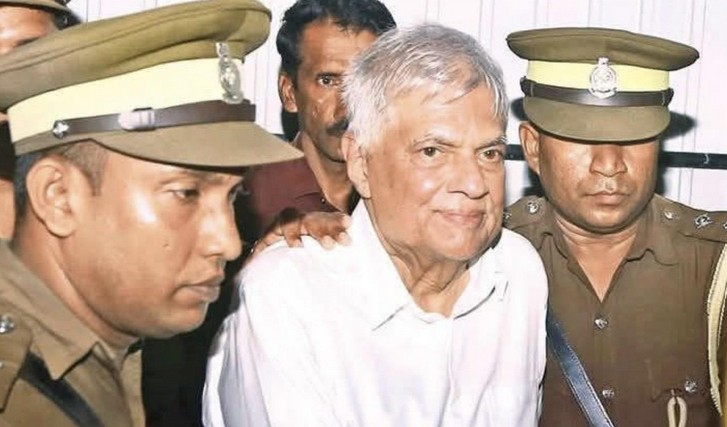
Serious questions have emerged regarding expenses and investigative procedures linked to former President Ranil Wickremesinghe’s visit to the United Kingdom, during which he attended his wife’s graduation ceremony. The case, involving allegations of misuse of Rs. 16.6 million in public funds, is scheduled to be recalled before the Fort Magistrate’s Court on January 28.

Bail
Mr. Wickremesinghe was granted bail on August 26 after being produced before court in connection with the matter. During proceedings, the court noted that certain documents related to the visit, including confirmation from the University of Wolverhampton, could be verified subsequently. The timing of the university confirmation became a point of discussion, as UK offices had reopened only on the Tuesday following a weekend and a public holiday. Court records indicate that a certified letter from the university was issued shortly after the offices reopened, although bail had already been granted.

Payments by Saroja Under Scrutiny
A key focus of the case involves payments made to the third-party company Sky Wings Limited in connection with the UK visit. Court filings show that expenses paid to the company included vehicle rentals, hotel accommodation, food and beverages, and guest terminal services. Reported figures include vehicle rentals exceeding £14,000 and hotel bookings of nearly £9,000. These expenditures have raised questions about their necessity and utilisation, especially given that official overseas visits by heads of state are typically managed through embassy protocol officers and administrative staff. Court proceedings also noted that the British government provided official transport and security for the former President and the First Lady.

Vehicle Usage Questions
Questions remain regarding who used the hired vehicles, particularly as only one Sri Lankan vehicle was available at the embassy and some officials reportedly shared transport. It has not been publicly clarified whether all paid-for services were fully utilised or if any payments were made for unused facilities. Further questions concern the status of individuals associated with the trip and whether any travel was later described as private, and if so, why funds were sought from the Ministry of Foreign Affairs in Colombo.

Attorney General Flags Procedural Issues
Beyond expenditure concerns, the Attorney General’s Department has raised questions about how aspects of the investigation were conducted. In court submissions, the Department noted that official information from the UK should have been obtained through Mutual Legal Assistance (MLA) procedures, which are required for formal cooperation with foreign authorities. Correspondence disclosed in court indicates that investigators were advised to coordinate with the Attorney General’s Department when preparing MLA requests. However, the Department stated that this coordination did not occur. It also emerged that officers from the Criminal Investigation Department (CID) travelled to the UK before formal MLA approval was obtained. While the Attorney General’s Department acknowledged the professionalism of CID officers, it stressed that established procedural safeguards must be followed, especially in investigations involving international cooperation.

Next Court Date
There have been unconfirmed reports of possible changes within the prosecution team, though no official confirmation has been issued. The case is set to be recalled before the Fort Magistrate’s Court on January 28, where further clarifications are expected on expenditure, documentation, and investigative procedures. The proceedings have drawn attention not only to questions of public finance but also to the importance of adhering to established legal processes in high-profile cases involving foreign jurisdictions. As the saying goes, what goes around comes around—often in double doses. Something President AKD should be mindful of if it turns out to be a political vendetta.