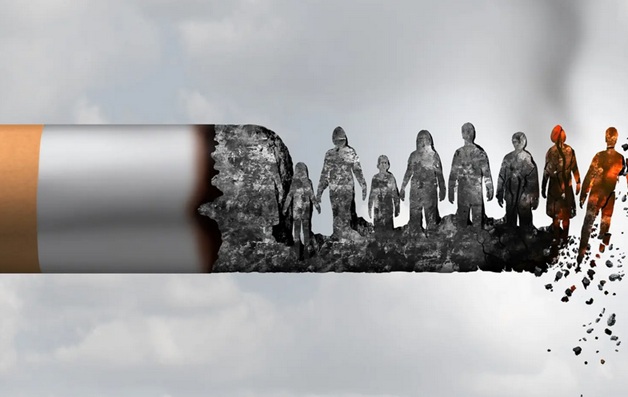
January 08, Colombo (LNW): Tobacco consumption remains a major public health concern in Sri Lanka, with close to 22,000 deaths recorded every year as a direct or indirect result of smoking, according to figures released by the Alcohol and Drug Information Centre.
Health advocates warn that non-communicable diseases account for more than four-fifths of all deaths nationwide, with tobacco identified as one of the leading contributors alongside poor diet, physical inactivity and harmful alcohol use.
The Centre estimates that around 1.5 million adults across the country continue to smoke regularly, placing a heavy burden on the healthcare system.
Speaking at a media briefing in Colombo, Chairman of the National Authority on Tobacco and Alcohol, Dr Ananda Rathnayake, stressed that tobacco-related deaths are not confined to Sri Lanka alone. He noted that globally, a life is lost to tobacco use roughly every six seconds, underscoring the scale of the crisis.
The briefing also drew attention to recent policy concerns. Medical professional Dr Sajeeva Ranavira pointed out that cigarette taxation has been reduced since 2021, a move he suggested could undermine efforts to discourage smoking and reverse gains made in tobacco control over previous years.
Health experts at the event urged stronger regulatory measures, public awareness campaigns and fiscal policies to curb tobacco use and reduce preventable deaths in the years ahead.
Tobacco Use Continues to Claim Thousands of Lives Each Year in Sri Lanka
Indian Army Chief Holds High-Level Talks in Colombo on Defence and Disaster Cooperation
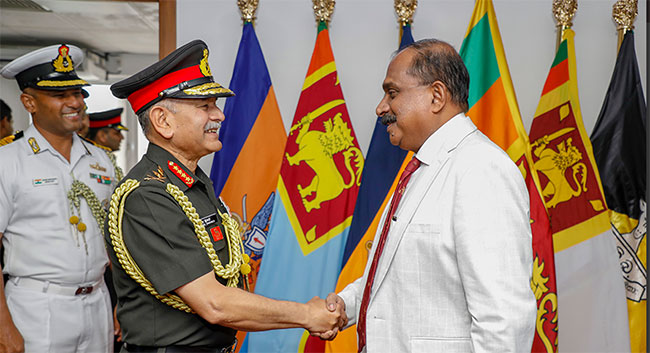
January 08, Colombo (LNW): India’s Chief of the Army Staff, General Upendra Dwivedi, met Sri Lanka’s Deputy Minister of Defence, retired Major General Aruna Jayasekara, during a courtesy visit to the Defence Ministry in Colombo as part of a short official tour of the island.
General Dwivedi arrived in Sri Lanka on Monday for a two-day visit aimed at strengthening military-to-military engagement and reviewing areas of mutual cooperation. He was received warmly by the Deputy Minister, with discussions described as constructive and forward-looking.
According to the Ministry of Defence, the talks highlighted the deep-rooted historical and cultural links between the two neighbouring countries, while also focusing on contemporary security challenges. On behalf of the President, the Deputy Minister conveyed Sri Lanka’s gratitude to India for its swift and wide-ranging assistance following the devastation caused by Cyclone Ditwah.
He noted that India’s rapid deployment of disaster response teams, along with humanitarian supplies and technical support, made a significant contribution to relief operations and early recovery efforts. Appreciation was also expressed for ongoing collaboration between the two defence forces in tackling maritime threats, including the interception of narcotics and other cross-border criminal activity.
The meeting also explored avenues for expanding defence cooperation, particularly in areas such as advanced technology, training, capacity development and the exchange of expertise. Both sides acknowledged the value of closer coordination to address evolving regional security needs.
General Dwivedi commended the resilience and unity demonstrated by Sri Lanka’s government and people in responding to recent natural disasters. He reaffirmed India’s commitment to deepening defence ties across all three services — the Army, Navy and Air Force — and underscored New Delhi’s readiness to continue supporting Sri Lanka in disaster management, humanitarian assistance and professional military training.
Emphasising the long-term nature of the partnership, the Indian Army Chief highlighted the importance of strengthening people-to-people connections at every level of leadership. He also stressed the need for regular joint exercises and exchange programmes to improve preparedness and coordination during emergencies.
The discussions, attended by senior Indian Army officials, the Defence Adviser and representatives of the Indian High Commission, were seen as a reaffirmation of the close friendship between Sri Lanka and India, with both sides reiterating their shared commitment to regional stability and security.
Speculation Grows On Premier’s Removal Amid Education Reform Backlash: House Leader to Step In?
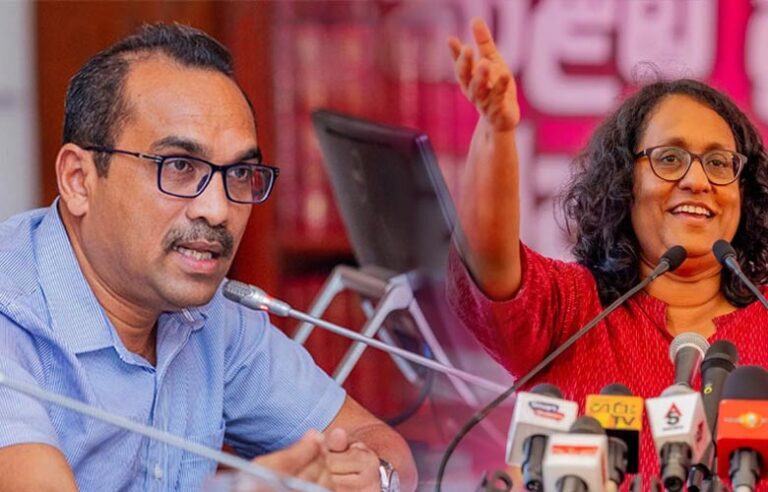
January 08, Colombo (LNW): Prime Minister Dr. Harini Amarasuriya is facing mounting political pressure as controversy intensifies around the education reforms she introduced during her tenure as Minister of Education.
The changes have sparked widespread criticism, drawing objections not only from opposition parties but also from influential trade unions within the education sector, who argue that the reforms have created uncertainty and operational difficulties.
Against this backdrop, political insiders suggest that discussions are under way within governing circles about a possible leadership change at the highest level. According to these sources, the sustained criticism is being viewed as an opportunity to appease sections of the JVP’s cadre by reshuffling the top leadership.
It is further claimed that plans are being floated to elevate Leader of the House Bimal Ratnayake to the position of Prime Minister should Amarasuriya be asked to step aside. Ratnayake has recently returned to the country after an overseas tour that included visits to China and Pakistan, a trip that has attracted attention within diplomatic and political circles.
Some internal sources have gone on to allege that Beijing may be quietly supportive of Mr Ratnayake’s potential appointment, citing his recent engagements and perceived rapport with regional partners.
High Court Fixes January Trial Date in CPC Funds Misuse Case
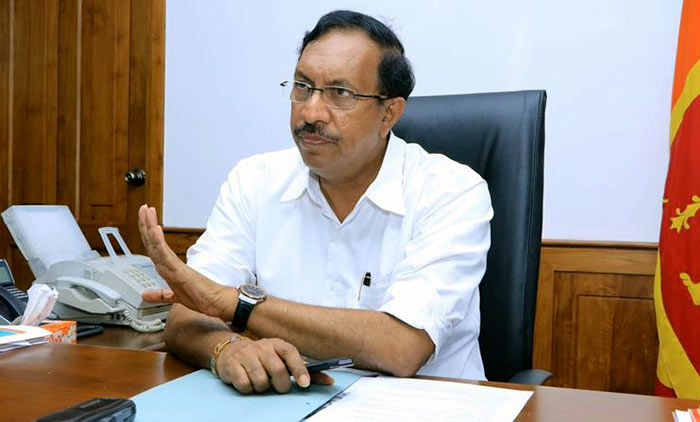
January 08, Colombo (LNW): The Colombo High Court has scheduled the long-pending case involving former Cabinet Minister Anura Priyadharshana Yapa and seven other defendants for trial later this month, with proceedings set to begin on January 27.
The case centres on allegations that more than Rs. 6.1 million belonging to the Ceylon Petroleum Corporation was improperly diverted during the latter part of 2014 and early 2015. Prosecutors claim the funds were released on the grounds of assisting families affected by flooding in the Bingiriya and Narammala areas, but were instead channelled towards activities linked to a presidential election campaign.
The matter was taken up before High Court Judge Udesh Ranatunga, who, after hearing submissions from both sides, issued orders to commence the trial on the specified date. The court also directed that summons be served on two witnesses, requiring their presence when the hearing begins.
According to the indictment presented by the Attorney General, the alleged misuse of public funds took place over a one-month period from late December 2014 to late January 2015. Five separate charges have been filed against Mr Yapa, who was serving as Minister of Petroleum Industries at the time, along with his wife and six others, all accused of unlawfully spending state resources under the guise of disaster relief.
Police Roll Out New Drive to Tackle Rising Online Fraud

January 08, Colombo (LNW): Law enforcement authorities have unveiled a fresh programme aimed at curbing cyber-related offences, amid growing concern over the surge in online scams.
The move comes as investigators record a steady increase in fraudulent activities carried out through websites, social media networks and other digital platforms.
Police say the initiative will focus on early detection, public awareness and closer monitoring of online spaces frequently exploited by fraudsters. Special attention will be given to cases involving financial deception, identity misuse and misleading online advertisements, which have become increasingly common in recent months.
According to Police Media Spokesman Assistant Superintendent of Police F. U. Wootler, the operation is being implemented under the direct oversight of the Criminal Investigation Department.
He added that specialised officers with expertise in cyber investigations will be deployed, while cooperation with technology service providers is also expected to be strengthened to improve enforcement and prevention efforts.
Sri Lanka’s Foreign Reserves Climb Sharply as Growth Outlook Brightens

January 08, Colombo (LNW): Sri Lanka closed 2025 with a notable strengthening of its external buffers, as official reserve assets rose to US$ 6.83 billion in December, marking a month-on-month increase of just over 13 per cent, data released by the Central Bank of Sri Lanka show.
The improvement reflects continued inflows and tighter macroeconomic management following a prolonged period of financial stress.
Foreign currency holdings accounted for the bulk of the reserves, reaching approximately US$ 6.73 billion by the end of December. Central bank figures also indicate that gross official currency reserves had been hovering just below the US$ 6 billion mark in the preceding month, underlining the steady upward trend seen towards the close of the year.
A significant portion of the reserve position includes funds obtained through a bilateral swap arrangement with the People’s Bank of China, valued at around US$ 1.4 billion.
However, the central bank has reiterated that access to these funds remains subject to specific conditions, limiting their immediate usability for general balance-of-payments support.
Commenting on the broader economic outlook, Central Bank Governor Dr. Nandalal Weerasinghe said the country is poised to maintain its recovery momentum. Building on gains achieved over the past two years, he noted that economic growth is projected to settle in the range of 4 to 5 per cent in 2026, supported by improved stability, gradual investment revival and strengthening external accounts.
Showery conditions likely to continue: Heavy falls above 100 mm expected (Jan 08)

January 08, Colombo (LNW): The depression over the Bay of Bengal, located to the southeast of Sri Lanka, was centered near latitude 5.3°N and longitude 86.0°E, about 490 km southeast of Pottuvil, at 11:30 p.m. yesterday (07).
It is expected to move west-northwestwards and towards the eastern coast of the island during next 24 hours, and this system is likely to intensify further into a deep depression during next 12 hours, the Department of Meteorology said in its daily weather forecast today (08).
Cloudy skies can be expected over most parts of the island.
Showers or thundershowers will occur at times in Northern, North-central, Eastern, Uva, Central and Southern provinces.
Showers or thundershowers may occur at several places elsewhere in the Island after 1.00 p.m.
Heavy falls above 100 mm are likely at some places in Eastern and Uva provinces. Fairly Heavy falls about (50 – 75) mm are likely at some places in the other areas of the island.
Strong winds about (50-60) kmph can be expected at times over Eastern slopes of the central hills, Northern, North-central, North-western and Eastern provinces and in Hambantota, Gampaha Colombo and Monaragala districts.
The general public is kindly requested to take adequate precautions to minimise damages caused by temporary localised strong winds and lightning during thundershowers.
Marine Weather:
Naval and fishing communities are warned not to venture to the deep and shallow sea areas around the island until further notice from today (08).
Navel and fishing communities are requested to be attentive to the forecasts and bulletins issued by the Department of Meteorology in this regards.
Condition of Rain:
Showers or thundershowers will occur at several places in the sea areas off the coast extending from Mannar to Galle via Kankasanthurai, Trincomalee and Pottuvil. Showers or thundershowers may occur at several places in the other sea areas around the island in the evening or night.
Winds:
Winds will be north-easterly and wind speed will be (35-45) kmph. Wind speed can increase up to (60-70) kmph at times in the sea areas around the island.
State of Sea:
The sea areas around the island will be rough to very rough at times.
The wave height may increase (about 2.5 – 3.5 m) in the sea areas off the coast extending from Kankasanthurai to Hambantota via Trincomalee and Pottuvil (this is not for land area).
Temporarily strong gusty winds and very rough seas can be expected during thundershowers.
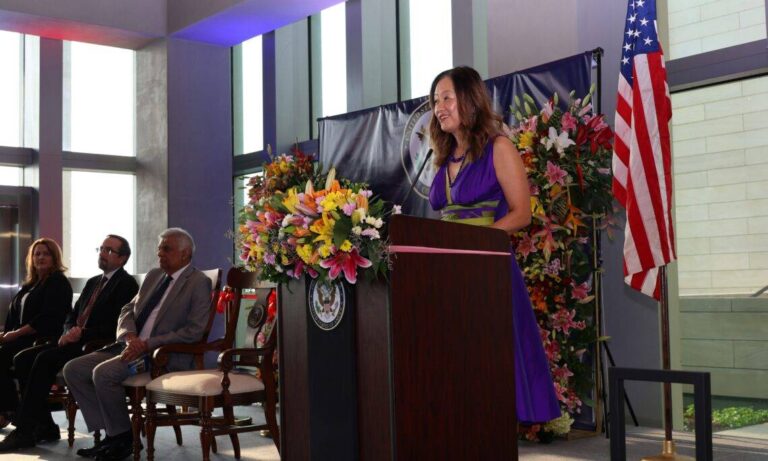
A Diplomatic Farewell: Julie Chung Prepares to Bid Adieu to Sri Lanka After Four Transformative Years
By: Isuru Parakrama
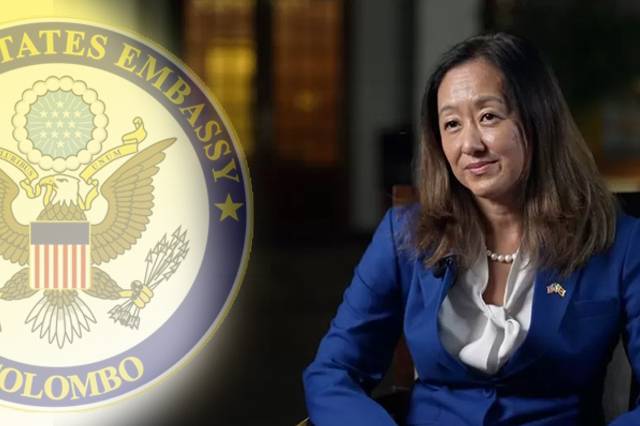
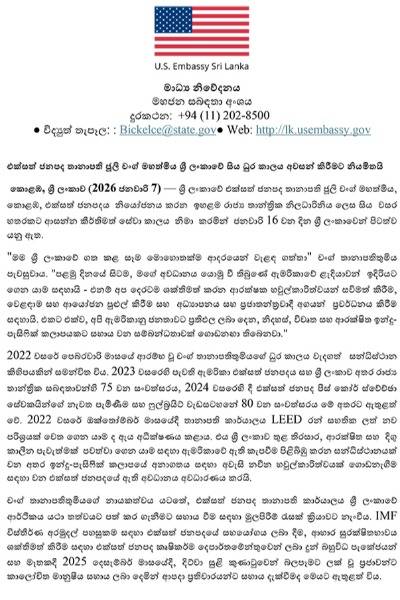
January 07, Colombo (LNW): The United States Embassy in Colombo has confirmed that Ambassador Julie Chung will leave Sri Lanka on January 16, bringing her assignment in the country to a close.
Her departure marks the end of a nearly four-year period as Washington’s senior diplomatic representative in Sri Lanka, a tenure widely regarded as both active and influential.
Since assuming office in February 2022, Ambassador Chung has been at the forefront of efforts to deepen relations between Sri Lanka and the United States, with particular emphasis on democratic governance, economic resilience and the protection of human rights.
In a statement issued by the Embassy, it was underscored that the United States remains firmly committed to its partnership with Sri Lanka. The Embassy noted that it would continue to engage closely with the Sri Lankan government and its people, building upon the strong platform established during Ambassador Chung’s time in Colombo.
Reflecting on her service, Ambassador Chung expressed warm sentiments about her posting, saying she had “cherished every moment” spent in Sri Lanka.
Before Joining Colombo
A seasoned diplomat, Ambassador Chung is a career member of the US Senior Foreign Service and holds the rank of Career Minister. Before arriving in Colombo, she served as Acting Assistant Secretary in the Bureau of Western Hemisphere Affairs at the US Department of State.
Her diplomatic career spans extensive experience across both the Indo-Pacific and Western Hemisphere regions. Within the Bureau of East Asian and Pacific Affairs, she previously held roles as Acting Deputy Assistant Secretary for Japan, Deputy Chief of Mission in Cambodia, and Economic Counsellor in Thailand. Her overseas assignments have also included postings at US embassies in Iraq, Colombia, Vietnam and Japan, as well as at the US Consulate General in Guangzhou, China.
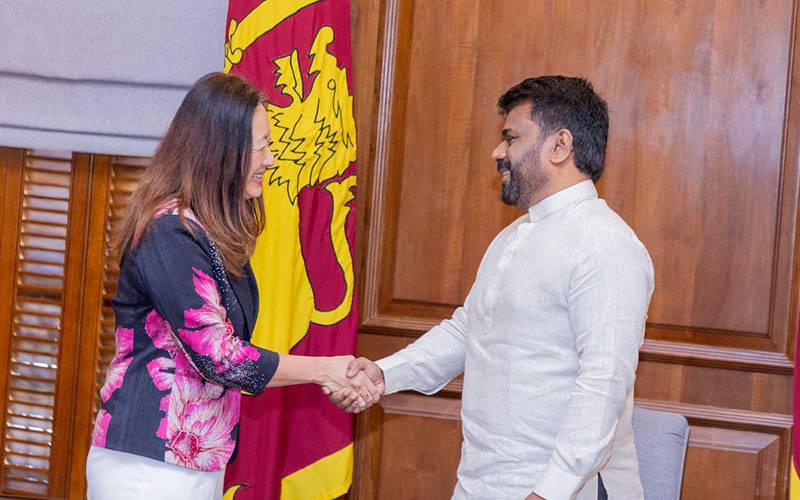
In Washington, she worked in the Office of Korean Affairs, where she served as an adviser on the Agreed Framework for Nonviolent Negotiations with North Korea.
Born in Korea, Ambassador Chung emigrated to the United States as a child and was raised in Huntington Beach, California. She holds a master’s degree in political science from the University of California, San Diego, and a master’s degree in international affairs from Columbia University. She joined the US Foreign Service in 1996.
Over the course of her career, Ambassador Chung has received numerous honours, including the Presidential Citation Award and the Secretary’s Distinguished Service Award. She is fluent in Korean, Japanese and Spanish.
As she prepares to depart Sri Lanka, the Embassy’s statement and her own reflections signal a closing chapter marked by sustained engagement and a lasting diplomatic imprint on US–Sri Lanka relations.
Spheres of Influence and the New World Order of 2026
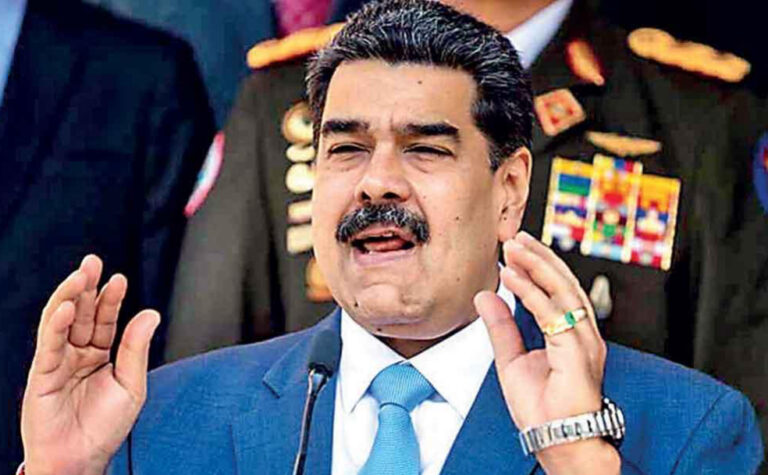
The arrest of Venezuelan President Nicolás Maduro by U.S. forces in early 2026 has done more than just decapitate a regime; it has acted as the definitive catalyst for a seismic shift in global geopolitics. As we move further into this decade, the post-World War II “liberal international order” defined by global institutions, universal rules, and American policing of every corner of the globe is visibly crumbling. In its place, a “New World Order” is emerging, defined not by international law, but by a return to 19th-century-style spheres of influence.
This transformation suggests that the 21st century will be multipolar, transactional, and divided among three dominant “hegemons”: the United States, Russia, and China.
The “Don-roe Doctrine” and the Venezuelan Pivot
The recent U.S. military operation in Caracas represents a “Major Pivot” in American foreign policy under the second Trump administration. Critics and supporters alike have dubbed this the “Donroe Doctrine” a modern, aggressive revival of the 1823 Monroe Doctrine. By forcibly removing Maduro and signaling an intent to “run” Venezuela to extract its vast oil reserves, the U.S. is sending a clear message: The Western Hemisphere is American territory.
This move is driven by two existential pressures:
Economic Survival: With China’s economy projected to surpass the U.S. in scale and technological self-sufficiency within this decade, Washington is desperate to secure tangible resources. Control over Venezuela’s oil, the largest proven reserves on Earth, provides a strategic hedge against China’s dominance in green energy and manufacturing.
Domestic Distraction: As noted by various political analysts, when domestic popularity wanes or economic collapses loom, leaders often seek “foreign adventures” to galvanize public support. The arrest of Maduro, framed as a strike against “narco-terrorism,” serves as a powerful narrative for a populist administration facing internal pressures.
The Silent Pact: A Tripartite Accommodation?
The most startling aspect of the 2026 Venezuela crisis is the lack of meaningful interference from Moscow or Beijing. While both nations issued formal condemnations at the UN, their actions or lack thereof suggest a deeper, more cynical understanding between the “Big Three.”
War experts argue that we are witnessing a grand bargain. In this “New World Order,” the superpowers have tacitly agreed to respect each other’s “backyards”:
 The Americas for the U.S.: Russia and China have essentially traded their support for Maduro in exchange for U.S. non-interference in their respective regional ambitions.
Ukraine and Eastern Europe for Russia: As the U.S. diverts military resources and political capital to the Caribbean and South America, its appetite for the Ukraine-Russia conflict has evaporated. This paves the way for a settlement where Russia maintains control over its captured territories and asserts a “security sphere” over Eastern Europe.
The South China Sea and Taiwan for China: With the U.S. focused on its own hemisphere, the “unbreakable intention” of Beijing to bring Taiwan under its control becomes a regional matter rather than a global flashpoint.
The Abandonment of Europe and the Death of Universalism
The biggest loser in this emerging order is the European Union. For decades, Europe relied on the U.S. security umbrella and a rules-based system. Now, Europe finds itself “on its own.” The U.S. shift toward unilateralism and regional dominance signals that it no longer views itself as the “guardian of democracy” in Europe.
This creates a vacuum. As the U.S. withdraws from the Ukraine conflict to secure Venezuelan oil, Europe is left with a massive security bill and a resurgent Russia on its doorstep. The era of “Global Britain” or a “United Europe” is being crushed between the tectonic plates of the U.S., Russia, and China.
A Multipolar Century
History teaches us that world orders change roughly every century. The 19th century was British; the 20th was American. The 21st century is shaping up to be a Multipolar Era where sovereignty is only for the strong.
The arrest of Maduro is not an isolated event; it is the “Nethniyahu Theory” applied on a global scale using regional conflict to maintain domestic power while carving out a piece of the world for one’s own. As the U.S. secures the West, China secures the East, and Russia secures the North, the “International Community” is being replaced by three distinct fortresses. This may prevent a World War III by keeping the giants from stepping on each other’s toes, but it does so at the cost of the freedom and sovereignty of smaller nations.
In a “New World Order” defined by the rigid spheres of influence discussed above, Sri Lanka’s unique geography, once its greatest asset, becomes a precarious liability. As the U.S., Russia, and China carve up the globe, Sri Lanka finds itself at the epicenter of the Indo-Pacific “seam,” where these spheres of influence overlap and collide.
1. Economic Impact: The Energy Pivot and Debt Diplomacy
The U.S. seizure of Venezuelan oil has immediate, localized consequences for Sri Lanka. While global prices might stabilize under U.S. control, the “petrodollar” becomes a tool of geopolitical compliance.
Energy Costs and the Dollar Peg: If the U.S. uses its new Venezuelan oil dominance to reward allies, Sri Lanka—already struggling with foreign exchange reserves—could face a “loyalty tax” on fuel imports. If Colombo drifts too close to the China sphere, it may find itself cut off from affordable U.S.-controlled crude, forcing a costly transition to Russian or Middle Eastern supplies.
Trade Fragmentation: As the WTO weakens, Sri Lanka’s garment and tea exports face a world of regional “fortress” tariffs. The U.S. and EU (moving toward protectionism) may restrict access unless Sri Lanka aligns with Western security goals. Conversely, China’s “Belt and Road” projects in the island will demand deeper integration into the yuan-based trade block.
2. Political Impact: The End of “Non-Alignment”
For decades, Sri Lanka practiced a policy of “friendship with all, enmity with none.” In this new century, that middle ground is disappearing.
Pressure to Choose: As Russia secures Eastern Europe and China dominates the South China Sea, both will demand that Sri Lanka provides “dual-use” facilities (ports that can serve both trade and military needs). The U.S., desperate to maintain its waning influence in Asia, will counter this with intense diplomatic pressure, potentially using IMF debt restructuring as a “carrot or stick.”
Democratic vs. Autocratic Influence: The “Netanyahu Theory” of domestic survival via foreign conflict may embolden local populist movements. If global hegemons prioritize “stability and spheres” over “human rights and democracy,” Sri Lanka’s domestic governance may shift toward a more authoritarian, security-first model, modeled after the very leaders currently reshaping the world.
3. Military Impact: A Permanent Maritime Frontier
Militarily, the island becomes a “stationary aircraft carrier” in the contest for the Indian Ocean.
Naval Encroachment: If the U.S. is “distracted” by its Western Hemisphere focus, India acting as a regional deputy will likely increase its military footprint in Sri Lanka to block Chinese naval expansion. This places the Sri Lankan military in a difficult position: conducting joint exercises with the U.S./India while hosting Chinese-built infrastructure at Hambantota.
Intelligence and Surveillance: The island’s strategic value for underwater cable monitoring and satellite tracking will make it a target for “hybrid warfare.” Cyber-interference and the installation of advanced radar systems by foreign powers will compromise Sri Lanka’s military sovereignty.
Conclusion: The Fortress or the Bridge?
Sri Lanka’s survival in this new world order depends on whether it can remain a “bridge” between these three fortresses or if it is swallowed by one of them. The 2026 Venezuela crisis proves that the U.S. is willing to act unilaterally when its interests are at stake; Sri Lanka must now prepare for a world where “might is right” and regional proximity to a hegemon is the only law.
(The writer is an Infantry Officer who served the Sri Lanka Army for over 36 years, dedicating 20 of those to active combat. In addition to his military service, Dr. Perera is a respected International Researcher and Writer, having authored more than 200 research articles and 16 books. He holds a PhD in economics and is an entrepreneur and International Analyst specialising in National Security, economics and politics. He can be reached at [email protected])
Gem Sri Lanka 2026 Set to Shine on Global Stage
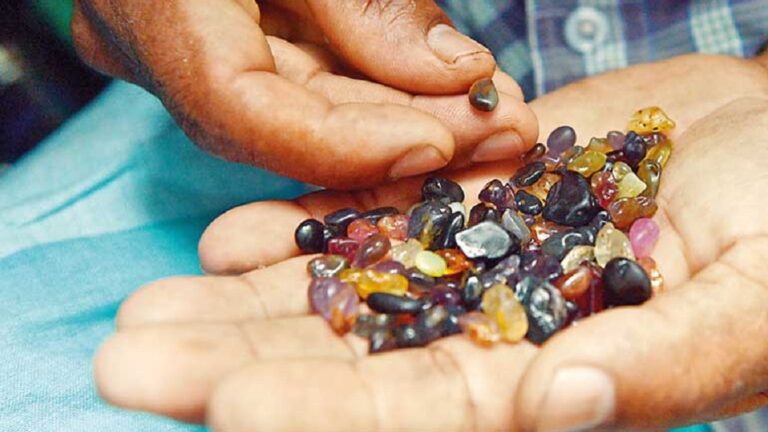
Building on the momentum of its first two highly successful editions, Gem Sri Lanka 2026 is set to become a landmark event for the country’s gem and jewellery industry when it unfolds on 7, 8 and 9 January 2026 at the prestigious Shangri-La Colombo.
Organised by the Ceylon Gem and Jewellery Traders Association (CGJTA) Sri Lanka’s largest industry body representing more than 2,000 members the exhibition has rapidly evolved from a focused trade showcase into an internationally recognised marketplace for coloured gemstones.
The shift to Shangri-La Colombo marks a significant milestone in the exhibition’s journey. What began as a niche industry initiative has grown into a major global event, reflecting the expanding scale and international relevance of Sri Lanka’s gem trade. With over 100 world-class exhibitors already confirmed, Gem Sri Lanka 2026 is expected to be the largest display of coloured gemstones ever held in the country.
Organisers anticipate double the number of foreign buyers and trade professionals compared to previous editions, alongside a wider international audience. This surge in participation reinforces Sri Lanka’s reputation as one of the world’s most trusted and admired sources of premium sapphires and coloured gemstones.
Adding to the event’s stature, Prime Minister Dr. Harini Amarasuriya will attend as Chief Guest at the official inauguration, underlining the national importance of the gem and jewellery sector as both a cultural legacy and a key contributor to the economy.
Visitors can expect an immersive industry experience, featuring an exceptional collection of sapphires and high-value coloured gemstones. A major social highlight will be “Gala 2026 – Brilliance and Beyond,” designed as a glamorous networking platform that brings together traders, international buyers and industry leaders.
Another defining moment will be the launch of a landmark publication titled “The Sapphire Legacy,” chronicling Sri Lanka’s centuries-old association with gemstones and its enduring global influence.
With its expanded scale, prestigious venue, high-level leadership presence and heritage-focused initiatives, Gem Sri Lanka 2026 represents far more than a trade exhibition. It is a powerful statement of confidence in Sri Lanka’s gem industry and its future direction.
As global attention turns to Colombo this January, Gem Sri Lanka 2026 is poised to reaffirm the island’s position at the pinnacle of the international gem and jewellery trade.
Sri Lanka’s gem and jewellery sector is entering a decisive phase, shaped by renewed global demand, growing foreign exchange needs and increased competition among gemstone-producing nations. Events such as Gem Sri Lanka 2026 highlight how the industry is repositioning itself not only as a heritage-driven trade, but as a modern, export-oriented sector aligned with global standards.
A key challenge today is market access and buyer confidence. International buyers increasingly seek transparency, traceability and streamlined trade processes. This is where FACET plays a crucial role. By supporting industry facilitation, structured engagement and trade connectivity, FACET helps bridge local traders with global markets, enabling smoother transactions and stronger international trust.
Platforms like Gem Sri Lanka, supported by facilitation mechanisms such as FACET, allow Sri Lanka to showcase scale, quality and credibility in one setting. This collective approach strengthens bargaining power, enhances value addition and positions the industry to contribute more effectively to export earnings at a time when non-debt foreign exchange inflows are critical.