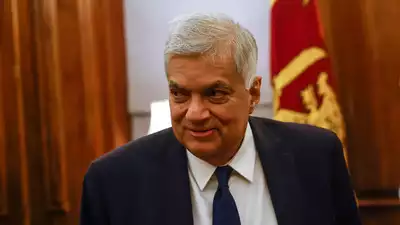
President Ranil Wickremesinghe prorogues Parliament: next session of the 9th Parliament to begin on 7th February’24.
President Ranil Wickremesinghe urges political parties to unite for discussions with IMF on potential “alternative proposals”: expresses readiness to extend invitation to IMF MD to visit SL: former CB Governor & State Minister Ajith Nivard Cabraal had repeatedly warned that it is highly risky to assume there’s no option other than IMF proposals: he had also urged the consideration of alternative policies to deal with the economic crisis.
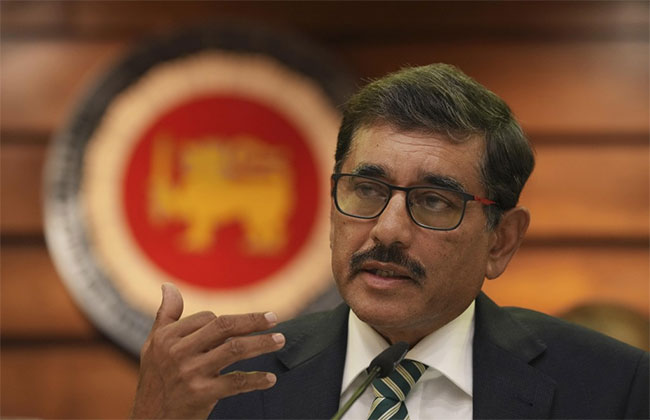
CB Governor Dr. Nandalal Weerasinghe gives evidence before the Parliamentary Select Committee investigating the Bankruptcy of the country: retracts Treasury Sectetary Sirwardene’s and his own previous statements that SL had become a bankrupt state: analysts contend that the previous announcements of the Governor and Treasury Secretary had prompted the President, Cabinet and entire country to believe SL is bankrupt.
Wayamba University Professor of Economics & Statistics Aminda Methsila Perera says it is very likely the inflation rate in January’24 will rise above 9% although CB Governor Nandalal Weerasinghe has claimed it will rise to 7% only.
Chief Executive Director of the Free Trade Zone Investors Federation Dhammika Fernando says the country’s garment exports have shrunk by 20-23% in 2023: laments many small & medium scale factories have closed: also says most large-scale garment industry investors have closed their factories and are investing in Vietnam, Bangladesh, Indonesia, Myanmar & India.
State Minister Shasheendra Rajapaksa says the Uma Oya project will add 120 MW to the national grid by 25th February’24 and boost SL’s energy security.
Secretary to the President Saman Ekanayake appoints a new Board of Directors to SL Telecom which is to be privatised shortly: Chairman – A K D D D Arandara: Board Members – Dr K A S Keeragala, Dinesh Vidanapathirana, Professor K M Liyanage, Dr D M I S Dassanayake & Chathura Mohottigedara.
President Ranil Wickremesinghe says the Govt is considering leasing state-owned plantations to SL companies or SL companies with foreign shareholders for the development of the food industry including confectionery: asks the confectionery industry to explore inter-cropping with cocoa; pledges Rs.8 bn for research & development.
Police in Thailand arrest woman Sawangjit Kosoongnern, whose pet lion was videoed going on a joy-ride in the streets of Pattaya: the viral video shows the chained lion cub seated in the back of a white, open-top Bentley driven by a SL man who has since left the country, and is believed to be a friend of the woman.
Colombo International School’s Reshan Algama, 15, recognised as the Most Outstanding Schools Golfer of 2023: accordingly, he will be chosen to be part of the Vision 2036 ‘Lion Warrior’ programme to develop SL athletes to take part in the 2036 Olympics.
January 27, Colombo (LNW): As the economy undergoes a monetary policy easing cycle, the credit cycle is expected to enter an expansionary phase, in which macroprudential concerns could build-up.
The Central Bank commits to monitoring these developments closely and implementing necessary policy actions to mitigate systemic risks and ensure financial stability through macroprudential interventions., CB Governor Nandalal Weerasnghe said.
The easing of domestic monetary policy since mid-2023, is anticipated to facilitate the recovery in financial intermediation, which was witnessed through the gradual recovery in banking sector credit during Q3 of 2023.
This is expected to lead to a rebound in domestic demand and economic activity as witnessed through the modest economic growth recorded in Q3 of 2023, improving income levels and alleviating pressure on the balance sheets of households and firms.
Moreover, targeted stabilisation of domestic inflation at 5 per cent in the medium term is expected to enhance the purchasing power of economic agents and improve their debt repayment capacities.
Efforts are underway to address the Sovereign-Bank Nexus4 through policy reforms, aiming to rectify financial intermediation imbalances in the medium to long run.
Recent positive developments, such as reaching an agreement in principle with the Official Creditor Committee (OCC) and the Exim Bank of China, contribute to the stability in the Government securities market.
The anticipated conclusion of External Debt Restructuring (EDR) is expected to further enhance stability.
Efforts are also required to improve sustainable foreign currency inflows to prevent external sector imbalances along with prudent measures towards risk mitigation by the financial sector.
Moreover, banks are expected to strengthen their capital buffers, considering the potential losses which may arise from debt restructuring, results of the bank diagnostic exercise, and realisation of forward-looking impact assessment.
Although it is expected that the existing macro-financial vulnerabilities would dissipate in the period ahead, with the envisaged improvements in the macroeconomic front, continued advancement along the policy reforms agenda envisaged in the IMF-EFF agreement is essential, particularly in the fiscal front to direct the economy and the financial system into stable grounds.
Any deviation from this path would bring detrimental and irreversible consequences to the financial system and the economy, though moving along this arduous and narrow path is challenging.
The instigation and operationalisation of strong and appropriate frameworks that proactively address vulnerabilities and implementation of timely, well sequenced, and consistent policies is also crucial to ensure the stability of the Sri Lankan financial system.
January 27, Colombo (LNW): The government has been compelled to simplify the procedure of obtaining taxpayer information number with the registration of inland revenue department to open a tax file as it has created confusion and unavoidable burden of all citizens of over 18.
Even though the government has made it mandatory to register with the Inland Revenue Department and obtain a tax payer information number for all individuals who are 18 years of age or more, it does not mean that all of them have to pay tax.
In this context ,State Minister of Finance Ranjith Siyambalapitiya has announced ongoing efforts to link a person’s National Identity Card (NIC) number to their Taxpayer Identification Number (TIN).
This initiative aims to streamline the registration process for nearly 15 million individuals aged 18 and above, utilising a bio database to assign TIN numbers based on the NIC number.
Siyambalapitiya stated that a program is in progress to provide TIN numbers in groups, with the active support of the Department of Registration of Persons.
This strategic decision, made during a recent discussion, aims to enhance accessibility for the general public, providing an easier avenue for obtaining TIN numbers alongside the ongoing regular system.
“This transition will contribute to the creation of a transparent data system related to State revenue,” he added.
With the upcoming introduction of digital identity cards, he said the Government envisions the establishment of a robust data system that seamlessly integrates various aspects.
The government has issued a gazette notification No 2334/21 dated 31 May 2023 In accordance with Section 102 of the Inland Revenue Act making the mandatory order relating to the registration with the IRD and obtain a TIN (Taxpayer Identification Number)”.
Accordingly, the Gazette Notification has been issued prescribing 14 categories of persons who should register with the IRD and obtain a TIN
These classes of persons listed included doctors, architects, bankers, lawyers of the Supreme Court, accountants, engineers Quantity Surveyors and persons with registered vehicles (except three-wheelers, motorbikes, and hand tractors)
The other categories are persons who registered their businesses in Divisional Secretariats, the persons who have vehicles registered (other than Three wheelers, Motor bicycles and Hand Tractors) in Department of Motor Traffic, the persons who have purchased or acquired by virtue of deeds transfer of any immovable property in Sri Lanka on or after 01 April 2018.
Employee whose monthly contribution from both employee and employer to any Provident Fund is more than LKR 20,000 ,any individual who obtains approval for a building plan from a Local Authority any other individual who receives payment of Rs I00,000 per month or Rs 1.2mn per annum will have to obtain TIN.
January 27, Colombo (LNW): President Ranil Wickremesinghe) underscored his commitment to guiding the country’s progress in the coming years, drawing inspiration from the success of Biyagama.
Reflecting on his early political career in the Biyagama Constituency, where the region experienced notable underdevelopment, the President emphasized the positive impact of strategic economic decisions, particularly the establishment of the Biyagama Investment Zone.
He noted that Biyagama’s rapid progress stands as a testament to those decisions.The Head of State underscored his vision for replicating such success nationwide by leveraging the advantages of an open economy.
He expressed plans to establish new investment zones across the country, with the aim of significantly boosting the national economy.
Recalling his recent visit to Switzerland, President Wickremesinghe said world leaders were amazed to hear how rapidly Sri Lanka has turned itself around and how its once-bankrupt economy has rebounded.
He said that although Sri Lanka has managed to achieve economic stability by engaging with the heads of the World Bank and the International Monetary Fund (IMF), its revenues remain insufficient. “To address this, we must enhance the country’s income, transitioning from a negative to a positive economic trajectory.”
In order to generate employment opportunities, President Wickremesinghe noted that it is imperative to establish new industries and investment prospects.
Efforts are underway to cultivate a conducive environment for this purpose, with plans to replicate successful models like the Biyagama Free Trade Zone throughout the country, aiming to amplify the nation’s economic growth tenfold, the Head of State continued.
He made these remarks during the inauguration of the newly constructed ancient Bodhi Prakaraya and Golden Fence at Sapugaskanda Abeysekararama
“Abeysekararama held a significant position in this area. He said that his first visit to this place was in my capacity as the Biyagama Constituency Organizer and the United National Party’s candidate for Biyagama. During that time, Biyagama was characterized by significant underdevelopment.
Some individuals suggested that only Agalawatta surpassed Biyagama in terms of underdevelopment. However, it was pointed out that Agalawatta had tea plantations, rubber plantations and tea factories, whereas Biyagama only had an oil refinery.
January 27, Colombo (LNW): In a comprehensive operation spanning the island nation, Sri Lanka Police have successfully apprehended 818 suspects within the past 24 hours. The operation, targeting various criminal activities, yielded substantial results, focusing on the capture of individuals involved in drug offenses, those with outstanding warrants, and wanted criminals.
The emphasis on combating drug trafficking proved highly effective, resulting in the arrest of 554 suspects connected to drug-related crimes. Notably, 10 high-priority targets on the watchlists of both the Police Narcotics Bureau and the Police Special Bureau were among those apprehended. Ongoing investigations, facilitated by detention orders, are in progress for one suspect, while eight identified drug addicts have been directed towards rehabilitation programs.
The crackdown also led to the confiscation of a significant quantity of illegal narcotics, including 159 grams of heroin, 112 grams of methamphetamine (ice), 8 kilograms of cannabis, 4,933 cannabis plants, 235 grams of Mawa, and 329 assorted pills.
Beyond drug-related offenses, the operation resulted in the apprehension of 264 individuals with outstanding warrants, including 25 specifically related to drug offenses and 231 pertaining to other criminal activities. Additionally, through fingerprint analysis, five suspects were identified and apprehended, and three wanted criminals were successfully captured during the operation.
As French President Emmanuel Macron is expected in India on 25 January for a two-day official visit, a French reporter who has been based in the country for more than 20 years is threatened with expulsion. Reporters Without Borders (RSF) urges the Indian authorities not to carry out their decision to expel her and to allow all foreign journalists in India to report without fear.
Based in India since 2001 reporting for such French-language media as the newsweekly Le Point and the newspapers Le Soir and La Croix, Vanessa Dougnac was notified by the Ministry of Home Affairs on 18 January of the imminent withdrawal of her status as an Overseas Citizen of India (OCI), a lifetime residency permit granted to foreigners who, like Dougnac, are the spouses of Indian citizens. She has until 2 February to challenge the decision, which – if confirmed – will force her to leave India.
The notice sent to Dougnac, which RSF has seen, accuses her of journalistic activities that are “malicious and critical in manner that they create biased negative perception about India” and are “inimical to the interested of the sovereignty and integrity of India, the security of India and to the interests of the general public.”
But RSF has learned that Dougnac has refrained from any reporting in India since September 2022, when she was told that her request for a work permit had been refused. Complying with this decision, Dougnac has since then only done reporting in neighbouring countries.
“How many foreign journalists will be able to continue working in India if a professional such as Vanessa Dougnac is expelled. None of the accusations leveled against her is supported. If the threat materializes while the French president is on an official visit, this would send a terrible signal for the future of journalism in India. We urge the authorities not to carry out this threat of expulsion and to allow all foreign media correspondents to work freely in India.
South Asia desk Reporters Without Borders
Overseas Citizen of India card holders were free to work as journalists until 2022, when the authorities made them apply for a special permit, which Dougnac was refused without any grounds being given. She was simply told: “Your application for OCI activity permission to undertake journalistic activity in India has been denied by the competent authority.”
Online smear campaign
Ever since it was first reported that Dougnac was facing probable expulsion, she has been the target of waves of attacks by trolls close to the ruling Bharatiya Janata Party (BJP), especially on X (the former Twitter). Dozens of them reacted to a post in support of Dougnac by John Reed, the New Delhi-based head of the Financial Times South Asia bureau.
The defamatory posts about Dougnac were also fuelled by a slanderous profile of her on the pro-BJP website OpIndia. Reaching as many as 45,000 persons at a time, or even more, the visibility of these online attacks is alarming.
Increasingly oppressive climate for journalists
The surreal accusations leveled against Dougnac are typical of the increasing authoritarianism displayed by Prime Minister Narendra Modi’s government, which seeks to bring journalists into line and discredit any independent media. Press freedom in the country that claims to be “the world’s biggest democracy” has declined steadily since Modi became prime minister in 2014. The government’s leading targets are independent media outlets and journalists in the northern Kashmir region, but India-based reporters for foreign media are not spared.
— REPORTERS SANS FRONTIÈRES/ REPORTERS WITHOUT BORDERS South Asia Desk [email protected] +33 144 838 470
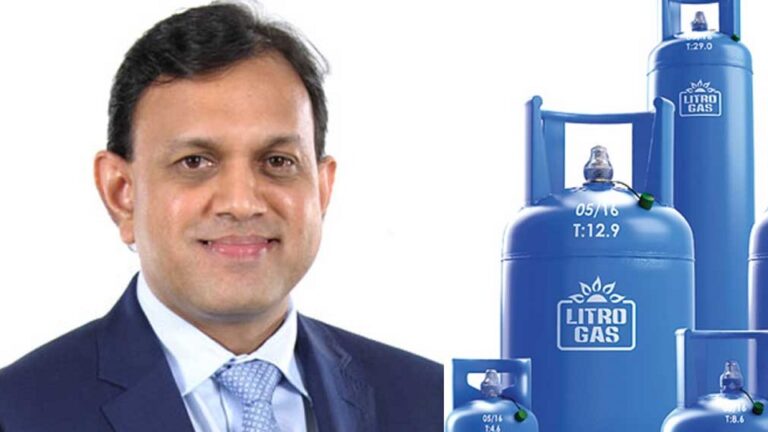
January 26, Colombo (LNW): Muditha Peiris, President of Litro Gas Company, announced today that the company has recorded a profit of 7 billion rupees. Speaking at a press conference, Peiris mentioned that dividends amounting to 1.5 billion rupees will be disbursed to the Treasury in 2023.
Highlighting the company’s financial performance, Peiris stated that in October 2023, dividends totaling 1.5 billion rupees were already provided to the treasury. He further noted that a total of 3 billion rupees in dividends for the year 2023 have already been contributed to the treasury as part of the company’s commitment to its financial obligations.
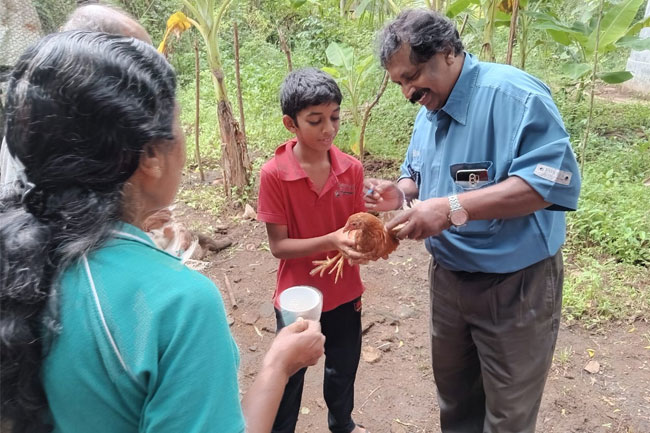
January 26, Colombo (LNW): The United Nations Development Programme (UNDP) has distributed 1,600 chicks to 80 beneficiaries in Kandamalawa Grama Niladhari Division in Gomarankadawala, as part of the UNDP’s Sri Lankan project with the technical and financial assistance of the Government of Japan.
Meanwhile, foul pox vaccinations have been administered by cluster leaders in Anuradhapura recently under the programme.
Additionally, a technical team has conducted a monitoring session of the mini incubators in Vavuniya, while a Black Soldier Fly unit and Azzolla farming has been conducted successfully in the Anuradhapura District with beneficiary commitment, the UNDP said.
In the meantime, the UNDP pledged its technical assistance for the future progress of the health service in Sri Lanka, when the UNDP’s Resident Representative in Sri Lanka Azusa Kubota met with Minister of Health Ramesh Pathirana on Wednesday (24).
During the discussion, the use of modern technology for the future progress of the country’s health service was taken up at length.
Ms. Azusa Kubota had further expressed during the meeting that they will work towards assisting in the development of Sri Lanka’s health sector in collaboration with organizations such as the World Health Organization (WHO),
Asian Development Bank (ADB), Global Fund to Fight AIDS, Tuberculosis and Malaria (GFATM) by engaging in an efficient and transparent procurement process.
Sri Lanka, an island known as the jewel of the Indian Ocean, is currently facing a serious economic crisis. This is the worst crisis that the country has faced since 1948.
Millions have been affected – with 5.7 million people in desperate need of humanitarian assistance and almost 6.3 million Sri Lankans not knowing where their next meal will come from.
As conditions continue to remain dire, at UNDP, among other efforts, we have created a crowdfunding campaign to support the Sri Lanka population.
The health and food sectors are two of the most heavily affected sectors by this crisis. Supply chains have been disrupted, certain essential and non-essential medicines have become scarce and difficult to purchase, and as a result, at certain instances, some routine surgeries have been delayed throughout the nation as well.
These distressing conditions are making communities increasingly vulnerable. Global support is needed to rebuild this island nation. That means we need your help to help Sri Lankans rebuild!
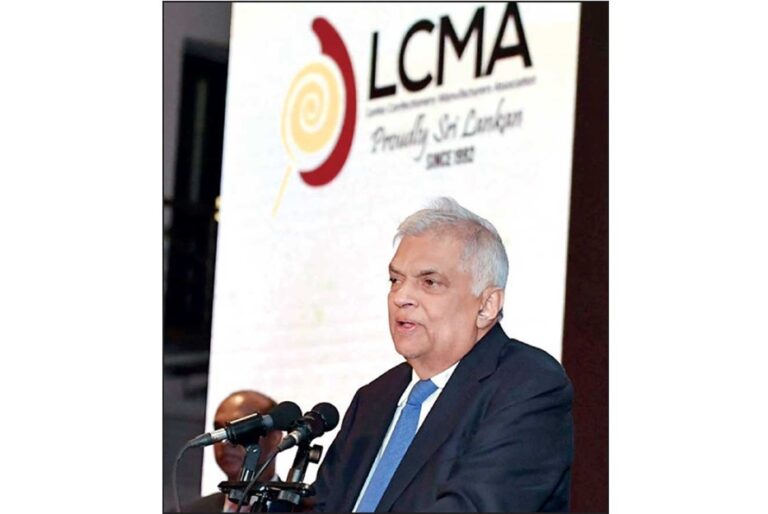
January 26, Colombo (LNW): Sri Lanka confectionery industry has been directed to expand their horizons and tap into international markets while developing coca plantations
President Ranil Wickremesinghe, issued this directive while addressing the 30th Annual General Meeting of the Lanka Confectionary Manufacturers Association (LCMA) yesterday (24) at Cinnamon Grand Hotel, Colombo,
He emphasized the potential for Sri Lanka to become a global player in the confectionery industry. He encouraged Sri Lankan confectioners to expand their horizons and tap into international markets.
The President disclosed the significance of positioning Sri Lankan chocolates as a world-class product, similar to the renowned reputation of the country’s tea and cinnamon.
His encouragement aimed to inspire the confectionery industry to embark on a journey towards global recognition and market presence.
He expressed optimism about the potential for Sri Lankan chocolates to become globally recognized. The President urged the confectioners to explore new markets and export their products.
He further noted the limitations for expansion within the country and suggested looking beyond borders, citing the success of the Kandos factory in Petaling Jaya, Malaysia in 1978.
He advocated for increased exports and identified the confectionery industry, particularly chocolates, as having the potential for international recognition.
President Wickremesinghe encouraged the confectionery industry to explore intercropping with developing citing state plantations in Matale, Kandy, Mawathagama, and Dodangaslanda for potential expansion. He mentioned plans to collaborate with smallholders and discussions with the governments of Ghana and Ivory Coast for access to cocoa.
The President outlined broader initiatives, including leasing state-owned plantations to Sri Lankan companies or Sri Lankan companies with foreign shareholders for the development of the food industry, encompassing confectionery.
Virtually all the lands owned by Chilaw and Kurunegala plantation plus Elkaduwa with JEDB and SPC. He disclosed plans for modernizing agriculture, enhancing competitiveness through the National Productivity Commission and upgrading trade agreements with India and Thailand.
President Wickremesinghe pledged government support, including Rs. 8 billion for research and development, to foster a thriving confectionery industry urging collaboration, innovation and expansion into various areas of the food industry positioning it as a “low hanging fruit” for economic growth.