Home Blog Page 1281

SL tourist arrivals expected to top 1.5 million in 2023

0

By Nethmi Rajawasam (Economy Next)

Sri Lanka’s tourist arrivals are expected to top 1.5 million in 2023, Chairman of Sri Lanka’s Tourism Development Authority Priyantha Fernando said.

Sri Lanka welcomed its millionth tourist for the year on September 26.

“Looking at the targets we had set for 2023, we are ahead of targets,” Fernando said at an event marking World Tourism Day.

“We have achieved one million tourists up to now.”

An initial target for 1,550,000 tourists set for 2023 will be exceeded, he said.

In April 2023, officials said they were planning to revise the arrival target to 2.0 million for 2023, based on strong first quarter arrivals.

The United Nations World Tourism Organization cited its own tourism barometer on the global tourism sector in May and said that international arrivals reached 80 percent of pre-pandemic levels in the first quarter of 2023.

In 2023, an estimated 235 million tourists across the world travelled internationally for the first three months.  

“International tourism is well on its way to returning to pre-pandemic levels, with twice as many people travelling during the first quarter of 2023 than in the same period of 2022,” the body said in a statement.

In the first 20 days of September Sri Lanka welcomed 75,222 tourists, according to official data.

Up to August 2023 Sri Lanka was estimated to have earned 1,304 million US dollars from tourism, up 56 percent from a year earlier according to tourism survey data.

Fernando said the sector hoped to the largest foreign exchange earner for the economy by 2027.

UNWTO Secretary-General Zurab Pololikashvili in a statement released in May said, “International tourism receipts grew back to hit the USD1 trillion mark in 2022, growing 50 percent in real terms compared to 2021, driven by the important rebound in international travel. International visitor spending reached 64 percent of pre-pandemic levels (-36 percent compared to 2019, measured in real terms).”

The UNWTO Panel of Experts claimed the economic situation to be the main wavering factor affecting international tourism in 2023, with high inflation and rising oil prices translating into higher transport and accommodation costs.

Economy Next

Met Department Warns of Continuing Showery Conditions in South-Western Region

0

The Meteorological Department of Sri Lanka has issued a warning indicating that the current showery weather pattern in the southwestern part of the island is expected to persist. Showers or thundershowers are forecasted in intervals in the Western, Sabaragamuwa, Southern, and North-western provinces, as well as in the Kandy and Nuwara-Eliya districts.

Certain areas in the Western and Sabaragamuwa provinces, as well as Galle, Matara, and Puttalam districts, may experience fairly heavy showers, with accumulations reaching around 75mm. In the Northern province and Anuradhapura district, a few showers are anticipated.

Additionally, fairly strong winds at speeds of about (40-45) kmph are expected intermittently in the western slopes of the central hills, Northern, North-central, and North-western provinces, as well as in Trincomalee and Hambantota districts.

Jaswar Umar re-elected President of Football Sri Lanka

0

Colombo (LNW): Former President of the Football Federation of Sri Lanka (FFSL), Jaswar Umar, has once again secured his position as the President of Football Sri Lanka.

This was when yesterday’s (29) election witnessed Umar winning with a decisive 45-20 vote.

Earlier this year, FIFA had suspended the FFSL starting from January 21, 2023, citing external interference in the Federation’s affairs and issues surrounding the Sri Lankan Football elections held in the same month.

However, FIFA lifted the suspension in August this year, attributing to the FFSL’s adherence to stipulated guidelines, which included the design and implementation of an electoral roadmap.

Following this roadmap, yesterday’s election took place, leading to the reinstatement of Umar as the President.

India and SL commit to more cooperation in education and skills training at ITEC Day Celebration

0
 To mark 59 years of capacity building partnership between India and Sri Lanka through Indian Technical and Economic Cooperation (ITEC), High Commission of India in Colombo celebrated ITEC Day 2023 on 27 September 2023.
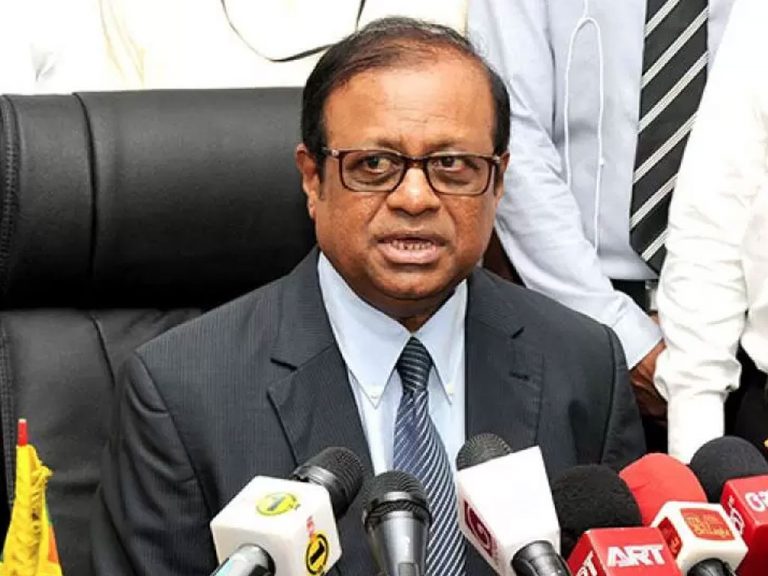
  1. Hon. Dr. Suren Raghavan, State Minister of Higher Education and Dr. Satyanjal Pandey, Deputy High Commissioner graced the occasion as the Chief Guest and the Guest of Honour respectively. The event was attended by over 100 participants, which included ITEC alumni from Sri Lanka, officials and professionals from diverse sectors who have participated in various training courses in India under different ITEC programmes.
  2. In his address, Hon. State Minister of Higher Education lauded the historically close relations between India and Sri Lanka. Dr. Raghavan congratulated India for the successful Chandrayaan-3 mission and especially praised Indian women scientists involved in the lunar mission. He appreciated India for offering ITEC slots and annual scholarships to Sri Lankan nationals, and thanked India for the financial support extended to Sri Lanka in recent months. Hon. Minister highlighted the scope for further cooperation between India and Sri Lanka in the field of higher education, skill development and capacity building, especially in STEM (Science, Technology, Engineering and Mathematics) and IT sectors. He encouraged the beneficiaries of ITEC programmes to contribute not only the development of Sri Lanka but also to take India – Sri Lanka relationship to the next level.
  3. Speaking on the occasion, the Deputy High Commissioner noted the enormous interest shown by Sri Lankan officials for the ITEC programme over the years. Deputy High Commissioner highlighted India’s endeavor to help Sri Lanka in the education sector, including in higher education through partnership between higher education institutes in India and Sri Lanka, besides the current 402 ITEC slots annually. Deputy High Commissioner reiterated that India is guided by the philosophy of ‘Vasudhaiva Kutumbakam’ which means ‘the world is one family’ and India would continue to be in the forefront of capacity building programmes for Sri Lanka.
  4. Senior officials reminisced and shared their experiences of ITEC training in India and appreciated the holistic content of the different ITEC programmes such as Gender Responsive Governance, Climate Change Policy Development and Financing for Effective Implementation of SDGs, Integrating Industry Four Dot Zero (4.0) Competency and Twenty First Century Skills in Educational Institutions, and Parliamentary Internship program.
  5. ITEC is a flagship programme of the Government of India launched in September 1964 for extending technical assistance and building capacities of developing countries. It has emerged as an important vehicle for India’s contribution to human resource development of partner countries with over 200,000 persons from 160 fellow developing countries having participated in the programme. Sri Lanka is currently allotted 402 training slots annually for the ITEC programme. ‘ITEC Day’ is celebrated every year by Indian diplomatic Missions all over the world to mark this unique pillar of South-South partnership.

Fitch Upgrades SL’s Long-Term Local-Currency IDR to ‘CCC-‘

0

Fitch Ratings – Hong Kong – 28 Sep 2023: FitchRatings has upgraded Sri Lanka’s Long-Term Local-Currency Issuer Default Rating (IDR) to ‘CCC-‘ from ‘RD’ (Restricted Default). Fitch typically does not assign Outlooks to sovereigns with a rating of ‘CCC+’ or below. The Long-Term Foreign-Currency IDR has been affirmed at ‘RD’ and the Country Ceiling at ‘B-‘.

The Short-Term Local-Currency IDR has been downgraded to ‘RD’ from ‘C’ following the exchange of treasury bills held by the central bank and subsequently upgraded to ‘C’ in line with the Sovereign Rating Criteria, as we believe the local-currency debt exchange has now been completed.

A full list of rating actions is at the end of this rating action commentary.

Key Rating Drivers

Local-Currency Debt Exchange Completed: The upgrade of Sri Lanka’s Long-Term Local-Currency IDR to ‘CCC-‘ reflects the completion of the local-currency portion of Sri Lanka’s domestic debt optimisation (DDO) plan, launched in July 2023, following the exchange of the Central Bank of Sri Lanka’s (CBSL) treasury bills and provisional advance into new treasury bonds and bills on 21 September 2023.

We assume the debt restructuring will lower Sri Lanka’s gross financing needs over the medium term, in line with the targets under the IMF’s Extended Fund Facility, and support an improvement in the country’s debt metrics over time. Local-currency restructuring could accelerate progress towards the restructuring of external debt.

Government Debt Remains High: General government debt and the interest costs faced by the government will remain high, despite the debt restructuring. Sri Lanka’s gross general government debt-to-GDP ratio is set to fall only gradually to just above 100% of GDP by 2028, from 128% of GDP in 2022, according to IMF programme forecasts published in March 2023, which incorporated a local- and foreign-currency debt restructuring scenario. The IMF scenario forecast the government interest-to- revenue ratio will decline to 42% by 2028, from over 70% in 2022.

Lower Financing Needs: The authorities expect the completion of the local-currency debt exchange to lower Sri Lanka’s gross government financing needs (GFN)/GDP by about 1.5pp over 2027-2032, according to documents published in July. External debt restructuring, which authorities expect to reduce GFN by an additional 2.6pp, remains critical to achieving the target of reducing GFN below 13% by 2027-2032, from 34% in 2022.

Reduction in Terms: The DDO on the local-currency debt entailed an extension of maturities on certain categories of domestic debt and offered several options, including nominal haircuts, currency redenomination and maturity extensions. Outstanding treasury bills purchased by the CBSL in the primary market were converted into 10 step-down fixed-coupon new treasury bonds and 12 existing treasury bills.

Stronger Revenue Generation Key: We believe IMF programme implementation, in particular fiscal measures, will be central to achieving debt sustainability. The risks remain significant, in our view, as a record of weak revenue generation presents challenges to achieving a faster reduction in the budget deficit and the general government debt-to-GDP ratio.

Authorities have taken several tax measures since May 2022 to improve revenue collection, including raising the corporate income tax rate to 30% from 24%, increasing the VAT rate to 15% from 8%, and raising fuel excise taxes. This resulted in revenue collection rising 43% yoy in 1H23. Additional measures in the pipeline include removing product-specific VAT exemptions before 2024 and introducing a property tax before 2025.

External Metrics Improving: Sri Lanka’sforeign-exchange (FX) reserves have been improving, with gross FX reserves rising to USD3.6 billion in August 2023, from USD1.9 billion at end-2022, partly the result of IMF disbursements and suspension of external debt servicing. However, without access to international capital markets, the sovereign remains dependent on official financing sources. We expect a gradual pick-up in exports in 2024-2025 after a contraction in 2023. Overseas worker remittance inflows are also rising. We therefore expect the current account deficit to stabilise at 1.6% of GDP over 2024-2025.

Slow Economic Recovery: GDP contracted by 2.7% yoy in 2Q23, slowing from the 12% contraction in 1Q23. Agriculture and services grew in 2Q23, but industry continued to shrink, although at a slower pace from 1Q23. We expect GDP to contract by 1.4% yoy in 2023 before growing by 3.3% and 3.5% in 2024 and 2025, respectively. Inflation, measured by the Colombo CPI, averaged around 30% yoy until August 2023 but continued the decline from end-2022. The CBSL has cut the standing deposit facility rate by a cumulative 350bp since January 2023. We expect another rate cut before end-2023.

Downside Risks to Banks Easing: The exclusion of banks’ holdings of treasury securities from the DDO has alleviated some of the pressure on their capital positions from weakening loan quality and rupee depreciation as well as any immediate funding and liquidity stresses. We believe any incremental risk to the banks’ capital from foreign-currency debt restructuring is likely to be manageable given their limited exposure to the defaulted sovereign bonds (3.6% of their combined total assets at end-1H23) and high provision coverage.

Foreign-Currency IDR in Default: The sovereign remains in default on foreign-currency obligations and has initiated a debt restructuring with official and private external creditors. The Ministry of Finance’s statement on 12 April 2022 said it had suspended normal debt servicing of several categories of external debt, including bonds issued in international capital markets, foreign currency-denominated loans and credit facilities with commercial banks and institutional lenders.

ESG – Governance: Sri Lanka has an ESG Relevance Score of ‘5’ for Political Stability and Rights as well as for the Rule of Law, Institutional and Regulatory Quality and Control of Corruption. These scores reflect the high weight that the World Bank Governance Indicators (WBGI) have in our proprietary Sovereign Rating Model (SRM). Sri Lanka has a medium WBGI ranking in the 45th percentile, reflecting a recent record of peaceful political transitions, a moderate level of rights for participation in the political process, moderate institutional capacity, established rule of law and a moderate level of corruption.

ESG – Creditor Rights: Sri Lanka has an ESG Relevance Score of ‘5’ for Creditor Rights, as willingness to service and repay debt is highly relevant to the rating and is a key rating driver with a high weight. The affirmation of Sri Lanka’s Long-Term Foreign-Currency IDR at ‘RD’ reflects a default event.

RATING SENSITIVITIES

Factors that Could, Individually or Collectively, Lead to Negative Rating Action/Downgrade

– The Local-Currency IDRs would be downgraded if further restructuring or a default on local-currency debt becomes probable due to an unsustainable debt burden or inability to raise revenue.

– The Long-Term Foreign-Currency IDRs are at the lowest level and cannot be downgraded further.

Factors that Could, Individually or Collectively, Lead to Positive Rating Action/Upgrade

– A sustained decline in the general government debt-to-GDP ratio that is underpinned by strong implementation of a medium-term fiscal consolidation strategy and improved growth performance.

– Completion of the foreign-currency commercial debt restructuring that Fitch judges to have normalised the relationship with private-sector creditors may result in an upgrade.

In accordance with the rating criteria for ratings in the ‘CCC’ range and below, Fitch’s sovereign rating committee has not used the SRM and QO to explain the ratings, which are instead guided by the agency’s rating definitions.

Fitch’s SRM is the agency’s proprietary multiple regression rating model that employs 18 variables based on three-year centred averages, including one year of forecasts, to produce a score equivalent to a LT FC IDR. Fitch’s QO is a forward-looking qualitative framework designed to allow for adjustment to the SRM output to assign the final rating, reflecting factors within our criteria that are not fully quantifiable and/or not fully reflected in the SRM.

Country Ceiling

The Country Ceiling for Sri Lanka is ‘B-‘. For sovereigns rated ‘CCC+’ or below, Fitch assumes a starting point of ‘CCC+’ for determining the Country Ceiling. Fitch’s Country Ceiling Model produced a starting point uplift of zero notches. Fitch’s rating committee applied a +1 notch qualitative adjustment to this, under the balance of payments restrictions pillar, reflecting that the private sector has not been prevented or significantly impeded from converting local currency into foreign currency and transferring the proceeds to non-resident creditors to service debt payments.

Fitch does not assign Country Ceilings below ‘CCC+’, and only assigns a Country Ceiling of ‘CCC+’ in the event that transfer and convertibility risk has materialised and is affecting the vast majority of economic sectors and asset classes.

REFERENCES FOR SUBSTANTIALLY MATERIAL SOURCE CITED AS KEY DRIVER OF RATING

The principal sources of information used in the analysis are described in the Applicable Criteria.

ESG Considerations

Sri Lanka has an ESG Relevance Score of ‘5’ for Political Stability and Rights as WBGI have the highest weight in Fitch’s SRM and are highly relevant to the rating and a key rating driver with a high weight. As Sri Lanka has a percentile rank below 50 for the respective governance indicator, this has a negative impact on the credit profile.

Sri Lanka has an ESG Relevance Score of ‘5’ for Rule of Law, Institutional & Regulatory Quality and Control of Corruption as WBGI have the highest weight in Fitch’s SRM and are therefore highly relevant to the rating and are a key rating driver with a high weight. As Sri Lanka has a percentile rank below 50 for the respective governance indicators, this has a negative impact on the credit profile.

Sri Lanka has an ESG Relevance Score of ‘4’ for Human Rights and Political Freedoms, as the Voice and Accountability pillar of the WBGI is relevant to the rating and a rating driver. As Sri Lanka has a percentile rank below 50 for the respective governance indicator, this has a negative impact on the credit profile.

Sri Lanka has an ESG Relevance Score of ‘5’ for Creditor Rights as willingness to service and repay debt is highly relevant to the rating and is a key rating driver with a high weight. Sri Lanka’s Long-Term Foreign-Currency IDR is ‘RD’ as the sovereign is in default on its foreign-currency debt obligations.

The highest level of ESG credit relevance is a score of ‘3’, unless otherwise disclosed in this section. A score of ‘3’ means ESG issues are credit-neutral or have only a minimal credit impact on the entity, either due to their nature or the way in which they are being managed by the entity. Fitch’s ESG Relevance Scores are not inputs in the rating process; they are an observation on the relevance and materiality of ESG factors in the rating decision. For more information on Fitch’s ESG Relevance Scores, visit www.fitchratings.com/topics/esg/products#esg-relevance-scores.

Source: Fitch Ratings

SL expects restructuring decisions from all creditors, says Minister Semasinghe

0

ECONOMYNEXT – Sri Lanka is engaging positively with all foreign creditors State Minister for Finance Shehan Semasinghe said this week as an International Monetary Fund review hangs in the balance on restructuring.

“All creditors are engaging positively with us,” Minister Semasinghe said. “We expect decisions from all our creditors. For us earlier the better.”

Sri Lanka is negotiating with Paris Club creditors and several non-Paris Club creditors like India and Saudi Arabia together and China separately. China is an observer in the Paris Club meeting.

The Paris Club held a meeting on Sri Lanka on September 22 with China as an observer.

Though Paris Club creditors have a well-oiled mechanism to give a quick decision on countries that default, the entry of China which had earlier not been willing to restructure debt, but was willing to give fresh loans to repay instalments, have complicated matters.

“Let me say again that we support Chinese financial institutions in actively working out the debt treatment with Sri Lanka,” China’s Foreign Ministry spokesman Wang Wenbin told reporters on September 26.

“We are ready to work with relevant countries and international financial institutions to jointly play a positive role in helping Sri Lanka navigate the situation, ease its debt burden and achieve sustainable development.”

There are expectations that Sri Lanka may be able to wrap up a preliminary deal with official creditors as early as October 2023 around the time IMF’s annual sessions take place in Morocco.

Sri Lanka President Ranil Wickremesinghe is to make an official visit to China October.

Sri Lanka is expected to finalize a refinery deal in Hambantota among other investments during the visit, according to reports.

Completing Sri Lanka’s external debt restricting is key to completing the first review of the island’s reform and stabilization program with the International Monetary Fund, which is expected in October or November.

Without completing a review Sri Lanka will not have formal IMF economic targets for December, and no disbursement of the second tranche.

World Bank and IMF with the G20 group, which include India and China has formed Global Sovereign Debt Roundtable has been trying to fine tune debt restructuring going beyond the Paris Club.

IMF’s Senior Mission Chief for Sri Lanka Peter Breuer said Sri Lanka’s debt is ‘spread around quite a bit’ to a question whether an IMF review could progress without China, possibly indicating that the lender would prefer to have the country on board.

“This is a process that we have that applies in the case of Sri Lanka to both official creditors, meaning other countries that have lent to Sri Lanka on a bilateral basis as well as commercial creditors, for example, bond holders,” Breuer told reporters in Colombo.

“And as you know, the government is in discussions with all of these groups. In Sri Lanka’s case, the debt is spread around quite a bit externally and domestically.”

Out of Sri Lanka’s 36.59 billion US dollars of central government debt, multilaterals held 29.8 percent or 10.9 billion US dollars which will not be restructured.

Bilaterals held another 29.9 percent of which Paris Club was 12.1 percent and China 12.7 percent.

Of the commercial debt which was 40.3 percent, China Development Bank held another 6 percent, relating to a monetary instability loan it has given as a bailout without asking for rate hikes to stop output gap targeting.

China without AIIB held 6,850 million US dollars or 18.7 percent of central government external debt.

Source: Economy Next

National Law Week aims reshaping of prevailing misconceptions surrounding SL’s Legal Sector

0

Colombo (LNW): The National Law Week kicked off with its inaugural ceremony at the Supreme Court complex on Thursday (28), under the patronage of Chief Justice Jayantha Jayasuriya and Justice Minister Wijeyadasa Rajapakshe.

This annual event, spearheaded by the Sri Lanka Bar Association (BASL), is dedicated to enlightening the public about legal matters.

Addressing the gathering, Minister Rajapakshe acknowledged that the idea of National Law Week was the brainchild of former Judge C.J. Weeramanthri in 2006. Its goal was to reshape prevailing misconceptions surrounding the legal sector in Sri Lanka, he noted.

Rajapakshe emphasised the importance of legal awareness in a democratic society and highlighted the Legal Aid Commission’s initiative to offer pro bono legal services for those with limited financial means, a program endorsed by the European Union, Asia Foundation, UNICEF, and UNDP.

Past economic adversities in Sri Lanka stemmed from a breakdown in the rule of law, the Minister went on, adding that given this context, the significance of initiatives like the National Law Week, especially for those affected by economic downturns must be addressed.

Rajapakshe ensured the government’s full backing to promote legal awareness among the masses.

Various dignitaries shared their insights during the ceremony, including the BASL President Kaushalya Navaratne, its Secretary Isuru Balapatabadi, and UNDP’s Sri Lanka Resident Representative, Azusa Kubota.

This year’s National Law Week, organised by the Ministry of Justice and the BASL with the backing of international organisations, encompasses legal clinics on September 29th and extends to a series of programs across all 25 districts from September 25th to October 1st.

Chamber of Young Lankan Entrepreneurs strengthens business ties with Indonesia

0

By: Staff Writer

Colombo (LNW): Between 19 and 24 September 2023, a proactive team of 16 entrepreneurs, affiliated with the Chamber of Young Lankan Entrepreneurs (COYLE), embarked on a pivotal trip to Jakarta, Indonesia.

Orchestrated by the Sri Lankan Embassy in Jakarta, their journey aimed at nurturing bilateral economic ties and scouting for collaborative ventures with Indonesian business magnates.

The group had the honor of touring the Permanent Trade Exhibition at Indonesia’s Ministry of Trade on 21 September 2023.

This tour was complemented by in-depth B2B deliberations with a leading pharmaceutical company in Indonesia, hinting at prospective alliances.

Meanwhile, on 22 September 2023, the Sri Lankan Embassy in Jakarta hosted a business conclave, which saw attendance from over 70 eager Indonesian business professionals. Representatives from influential associations like KADIN (Indonesia Chamber of Commerce and Industry), HIPMI (Indonesian Young Entrepreneurs Association), APINDO (Indonesian Entrepreneurs Association), and GAPMMI (Indonesian Food and Beverage Producers Association) were present.

During the conclave, Sri Lankan Ambassador to Indonesia and ASEAN Admiral Prof. Jayanath Colombage laid out vivid picture of the vast business prospects available in both nations.

The vast potential Indonesia offers, especially considering its expansive middle class and vast consumer market, consisting of approximately 229.9 million spenders, was explained by Colombage.

In turn, the COYLE delegation showcased a detailed portrayal of potential business ventures to their Indonesian peers. The initiative was met with overwhelming positivity from Indonesian business trailblazers, hinting at a promising path for collaborations.

This interactive event reaffirmed the promise of a prosperous economic partnership between the two nations.

Another electricity tariff hike next month?

0

Colombo (LNW): The Ceylon Electricity Board (CEB) has approached the Public Utilities Commission of Sri Lanka (PUCSL) for an upward revision in electricity rates, according to reports.

This proposed increase stems from the financial strain the board faced due to the dominance of thermal power generation, which became necessary because of the dry spells affecting the country.

Eng. Dr. Narendra De Silva, CEB’s General Manager, highlighted that while the tariff revision was initially slated for January, the board is now keen on having it implemented by October.

A shortfall in hydro-power generation is at the heart of this move, and the CEB had projected 4,500 GWh of hydropower for the year, but only 3,750 GWh was realised, Dr. De Silva pointed out.

This gap forced the CEB to rely on an additional 750 GWh of electricity from thermal sources, incurring more costs.

Manjula Fernando, the chairman of PUCSL, confirmed receiving the CEB’s request on Wednesday (Sept. 28) and emphasised that the commission would thoroughly review the proposal.

IMF 1st review – 10 highlights and 12 traits on how stabilization and recovery missing

0

The media is full of new reported on the IMF’s 1st review of the US$ 3 bn IMF programme held in September 14 to 27, 2023. All IMF friends and well wishers eagerly waited for the release of the 2nd tranche of US$ 330 mn immediately after this review. High expectations were based on significant national policy changes implemented by the authorities sitting at the IMF table in a short period of time from the receipt of the first tranche of US$ 333 mn immediately after the approval of the IMF programme on 20 March 2023. Under this 48-months long programme, US$ 663 mn is scheduled to receive in 2023.

Some media quoting the IMF press briefing held on 27 September reported that IMF did not reach a staff-level agreement with Sri Lanka due to a potential shortfall in government revenue generation and, therefore, 2nd tranche of about US$330m would only be released after the IMF reaches a staff-level agreement, and there was no fixed timeline for receiving it.

However, the Central Bank or Ministry of Finance was not interested in communicating any news on the outcome of the IMF review to the public although some spokesperson before commencing the review expressed positive attitudes towards receiving the second tranche.

The IMF press release dated 20 September provided some information regarding the outcome of the 1st review.

  • See the press release at the link below.

https://www.imf.org/en/News/Articles/2023/09/27/pr23326-imf-staff-concludes-visit-to-sri-lanka

  • View the press briefing at the link below.

https://www.imf.org/en/News/Articles/2023/09/27/tr092723-press-briefing-on-sri-lanka

Accordingly, the purpose of this short article is to provide 10 highlights of the IMF 1st review press release and 12 traits missing expectations of the IMF programme as revealed from the press release on the stabilization and recovery of Sri Lankan economy from its historic crisis.

The target group of this article is the professionals who are familiar with macroeconomic management policies and IMF programmes.

10 highlights of the IMF 1st review press release

  • 1. The remarkable resilience shown by people in the face of enormous challenges. 
  • 2. The commendable progress in implementing difficult but much-needed reforms and the economy showing tentative signs of stabilization.
  • 3. Inflation down from a peak of 70 percent in September 2022 to below 2 percent in September 2023, gross international reserves increased by $1.5 billion during March-June this year, and shortages of essentials eased. 
  • 4. Despite early signs of stabilization, full economic recovery is not yet assured. Growth momentum remains subdued, with real GDP in the second quarter contracting by 3.1 percent on a year-on-year basis and high-frequency economic indicators continuing to provide mixed signals. Reserve accumulation has slowed in recent months.
  • 5. Sustaining the reform momentum for lasting recovery and stable and inclusive economic growth.
  • 6. Government revenue mobilization to fall short of initial projections by nearly 15 percent by year end undermining the path to debt sustainability. 
  • Importance to strengthen tax administration, remove tax exemptions and actively eliminate tax evasion and to rebuild external buffers by strong reserves accumulation.
  • 7. The IMF Governance Diagnostic report to be published.
  • 8. Steps taken on conducting bank diagnostics, developing a roadmap for addressing banking system capital and liquidity shortfalls and improving the bank resolution framework to ensure financial stability.
  • 9. The headway made on regaining debt sustainability through the execution of the domestic debt restructuring and advancing discussions with external creditors. 
  • 10. IMF 1st review decision – financial assurances on completion of debt restructuring and a new staff level agreement to be reached
  • Executive Board approval of the 1st review requires the completion of financing assurances reviews as Sri Lanka is restructuring its public debt which is in arrears.
  • These financing assurances reviews will focus on whether adequate progress has been made with debt restructuring to give confidence that it will be concluded in a timely manner and in line with the program’s debt targets.
  • The team will continue its discussions in the context of the 1st review with the goal of reaching a staff-level agreement in the near term.

12 traits of missed expectations in the IMF prgramme

Contents in the IMF press release are reflective of bothered dreams of those who bankrupted and trapped the country in the IMF in pursuit of macroeconomic stabilization with debt sustainability through the IMF intensive care unit. 

It is now established that the country was pushed to the default of debt in order to resolve the so-called debt unsustainability through debt restructuring assisted and supervised by the IMF together with a supportive financial programme. 

However, it now turns out to be a false premise that has misled the national leaders and activists. 12 traits of the IMF press release are given below to highlight how the IMF programme dream has now been shattered.

1. Failed debt restructuring

The IMF never guided or supervised debt restructuring. Instead, it imposed conditions requiring the authorities to do it and provide the IMF with financial assurances to that effect. The IMF programme was delayed for one year to get the financial assurances in the form of consent of external creditors to debt restructuring process. Further, the decision of the IMF 1st review is to withhold the second tranche of US$ 330 mn because of the non-availability of financial assurances in the form of the completion of debt restructuring as per IMF conditions. Therefore, debt restructuring seems to a failing concept.

2. Another IMF staff level agreement on the table

The decision of the IMF 1st review is to go for another staff level agreement depending on the progress of actual debt restructuring. It appears that the problem is the deadlock in the external debt restructuring although the authorities chaotically attended to domestic debt restructuring options in September to please the IMF. 

Another level of staff agreement is a bizarre development in IMF programmes. The usual IMF procedure has been to decide the fate with the release or non-release of the tranches upon the periodical reviews of the progress of the fulfilments of the conditions laid-down in the initial staff level agreement approved by the IMF Board.

3. Tentative signs of stabilization and full economic recovery not yet assured

This is a strong blow at policymakers who frequently attempt to mislead the public by stating that the economy is now stabilized and recovered in a time of less than a year with the IMF programme and fiscal and monetary policies implemented within the IMF programme. However, the general economics knowledge is that it will take more than a decade to recover a country from an identified economic crisis.

4. Fiscal front lagging behind the IMF conditionalities

The progress of the reform on the fiscal front also falls short of the conditionalities although the authorities went pell-mell to raise tax despite lingering socio-economic consequences unfolding in front of their eyes. The failure of the IMF staff and their local agents to understand the inability to contract the government of a crisis-hit, significantly contracted economy by the monetary front is now established.

5. IMF Tax reforms not practical for Sri Lanka

IMF suggestions to strengthen tax administration, remove tax exemptions and actively eliminate tax evasion are the ones generally applicable even to developed countries including the US that annually runs deadlocks in debt ceiling and federal shutdowns. Therefore, such tax system reforms are only wastes of times to countries like Sri Lanka confronting and suffering contraction and bankruptcy in all corners.

6. External buffers lacking strong reserve accumulation

The reported increase in the foreign currency reserve at the central bank is not a strong reserve accumulation source. Therefore, the reserve built-up story of the policymakers is an insider deals-based manipulation of the macroeconomic figures. As the new central bank does not have a publicly accountable duty to build a florigen reserve, strong reserve accumulation has become a fiscal function. This requires stimulation of real economic activities to generate a foreign surplus, not on hot money pursued by the central bank on Treasury bills sales to speculative foreign investors.

7. Banking instabilities smoking

The conduct of bank diagnostics and developing a roadmap for addressing banking system capital and liquidity shortfalls and improving the bank resolution framework sound alarms for financial system instabilities possible on banking problems. It is not disputed the links of foreign currency and debt crises to banking crisis in the second round, given the significant exposures of banks to foreign currency and debt. 

Although central bank authorities affirm banking sector resilience and soundness indicators, the fact is the real banking vulnerabilities waiting to hit when the times comes. As the new central bank does not possess the conventional LOLR powers, crisis bank resolution has become a fiscal function.

8. Inflation control not credited to the super tight monetary bureaucracy

Although the IMF noted both historic inflation of 70% and historic disinflation to below 2%, it did not credit the tight monetary policy of nearly one and half years as the force behind the fall of inflation much below the monetary policy target. In contrast, the central bank governor received a high global rating for inflation control among other macroeconomic recovery aspects.

Despite the strong old monetarism followed by the IMF, its staff may have recognized market instabilities caused by the extreme political uncertainty towards hyper inflation and subsequently resumed political stability that was instrumental in regaining the market stability and fall of inflation at a faster rate of speed than expected by the central bank.

9. Debt restructuring towards IMF debt sustainability targets suspected

The IMF requires new financial assurances to ensure that the debt stock will decline to the sustainability level of below 95% of GDP by 2032 (from present 128%) and government gross financing needs falls to 13% of GDP (from present 24.5%) during 2027-32 period. Therefore, these are just numbers fixed outside real ground factors and, therefore, debt restructuring towards the achievement of such presumptuous debt sustainability numbers is highly suspected.

10. Resilience of people mis-interpreted

In fact, people confront living somehow or lingering death in the economy bankrupted by macroeconomic policymakers and controlled by security forces. Therefore, the IMF term “resilience” to show positive attitudes of people towards the economic crisis and recovery is inappropriate. That itself shows the insufficient knowledge of the IMF staff and its local agents on ground realities of Sri Lankan economy and people at present. Some people migrate with enormous difficulties while many have to live in increased poverty, not because of their resilience to the economic crisis and policies but because of the only option to live somehow as law abiding civilians.

11. IMF governance diagnostic report not ready and convincing

The governance diagnostic study is a geopolitical request of Sri Lankan authorities as a means to fight corruption alleged as the prime source to the country’s bankruptcy. The IMF does not have any professional background for such governance diagnoses for macroeconomic management, given its working background in old demand management concept and monetarism irrespective of the country circumstances and contemporary shocks. Therefore, even if this report is released, it will not provide any inputs to the recovery of the economy as corruption is not a macroeconomic variable recognized in the IMF demand management model or macroeconomic management models.

12. IMF financial programme failure looming

The IMF itself recognized exceptionally high risks to the program implementation at the beginning although Sri Lankan authorities did not pay any attentions to such risks. Instead, they treated the IMF programme as the God-given salvation of the country from the bankruptcy despite the contrasting evidence already available in many countries. 

Therefore, the 1st review deadlock is no doubt a firm early sign of implementation risks detected by the IMF at the beginning. The fact of the matter is the waste of time more than a year to understand real risks of the IMF programme.

Concluding Remarks

In this background, it is pathetic that our local creed of international economists have had to sit at the IMF table and do what ever few IMF staff members recommend without any regard to Sri Lankan ground realities or other country experiences. It is now clear that IMF programme is a part of geopolitics created akin to the foreign currency crisis. However, it has now gone beyond the limits of the country’s macroeconomic management that should be framed in national interest.

Meanwhile, some media reported the President saying that the IMF does not have a mechanism to help bankrupt countries where some IMF proposals will not ensure stability. He also is reported to have warned that there is a point beyond which people cannot be burdened and Sri Lanka is now going beyond that limit.

In addition, it is reported that the President at the Berlin Global Dialogue has expressed views akin to the IMF stated above. As reported the President has stated that the core of the global financial architecture today has been deigned almost eight years before whereas the world has seen many dramatic changes since then. However, international financial architecture has seen relatively mild reforms. The international financial architecture available makes the debt restructuring too complex.

Therefore, in view of the IMF 1st review press release and observations made above, it is necessary that relevant policymakers understand the failure of IMF’s demand control-based financial programmes in stabilizing and recovering the bankrupt economy of Sri Lanka and correct the macroeconomic policy mix to refix the economy without delay before hitting a full-scale banking/financial crisis sooner or later.

Here, the challenge is the choice over macroeconomic conceptual pack to suit the Sri Lankan circumstances. If policymakers continue to follow the conventional demand management concept deaf and blind without looking at root causes for the present bankruptcy, the failure is inevitable as already hinted by the President as above.

(This article is released in the interest of participating in the professional dialogue to find out solutions to present economic crisis confronted by the general public consequent to the global Corona pandemic, subsequent economic disruptions and shocks both local and global and policy failures.)

P Samarasiri

Former Deputy Governor, Central Bank of Sri Lanka

(Former Director of Bank Supervision, Assistant Governor, Secretary to the Monetary Board and Compliance Officer of the Central Bank, Former Chairman of the Sri Lanka Accounting and Auditing Standards Board and Credit Information Bureau, Former Chairman and Vice Chairman of the Institute of Bankers of Sri Lanka, Former Member of the Securities and Exchange Commission and Insurance Regulatory Commission and the Author of 12 Economics and Banking Books and a large number of articles published. 

The author holds BA Hons in Economics from University of Colombo, MA in Economics from University of Kansas, USA, and international training exposures in economic management and financial system regulation)

Source: Economy Forward