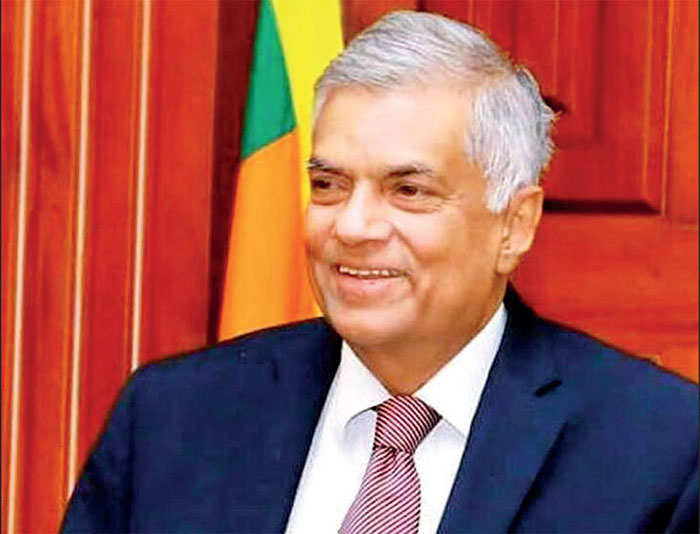
President Ranil Wickremesinghe, in his address at the 2023 Commercial Mediation Symposium at Colombo’s Hilton Hotel, emphasized the need for a cultural shift towards efficient dispute resolution in Sri Lanka. He acknowledged the long-standing reliance on trial courts and stressed the importance of embracing alternate dispute resolution methods.
Highlighting the government’s commitment, he mentioned the establishment of the Alternate Dispute Resolution Center in 2018 and expressed support for its continued growth. President Wickremesinghe urged the Ministry of Justice and Ministry of Investments to collaborate on supporting these initiatives.
“Alternate dispute resolution, arbitration, both have a long way to travel in Sri Lanka and that’s our problem. We have to first find ways of how we can adjust to this process. You need a change of culture. Change of culture where disputes can be resolved in the shortest possible time. Which means we are in a way wedded to the old concept of the trial court? Whether we have a domestic inquiry, we all want to follow the same procedure. I don’t know why. But nevertheless, this is one of the challenges that we have to face.”
He emphasized that success in dispute resolution was crucial for Sri Lanka’s aspirations to be an outward-looking economy. The President mentioned forthcoming legislation to transform the Port City as the Colombo financial zone and the transition from the BOI to the Economic Commission, both aimed at resolving disputes efficiently.
President Wickremesinghe also underscored the significance of international trade agreements and the need for Sri Lanka to become a center for alternate dispute resolution. He urged legal professionals to look beyond Sri Lanka’s borders and specialize in emerging fields like AI, Blockchain and green energy to secure the nation’s competitive future.
“Now we want Sri Lanka to be a center. One is the new legislation which will replace the port city to make it a Colombo financial zone with jurisdiction for offshore activity. The new law has been drafted. And we will see the light of day before the end of the year. Secondly, the BOI will be replaced with the Economic Commission. Which is also looking at the resolution of disputes. We will be entering a number of free trade agreements. We have got one with Singapore. We are about to finalize one with Thailand. We are discussing with India of upgrading agreement. Talking with Bangladesh. And more than that, we are moving to join the Regional Comprehensive Economic Partnership (RCEP).
That’s the largest trading community in the world. So this means that alternate dispute resolutions are going to be important.” In a final call to action, he offered government funding to support learning and expertise development in these new areas, inviting all stakeholders to join in the journey towards a more efficient and forward-looking legal landscape in Sri Lanka.
President Wickremesinghe emphasized that Sri Lanka must position itself as the central player in the region. When examining Singapore as a benchmark, Sri Lanka should strive to match or surpass Singapore in various aspects, except for cost, where it should maintain a competitive advantage. This approach is crucial because there exists a noticeable void in this region, which Sri Lanka can effectively fill if it acts swiftly.
“This is the key lesson to be derived. Furthermore, it is essential for all lawyers and individuals involved in legal services to broaden their perspectives and explore opportunities beyond their current scope,” the President added.
The event was organized by International Alternative Dispute Resolution Centre (IADRC) and the event was graced by the presence of the Minister of Justice, Prison Affairs and Constitutional Reforms Dr. Wijeyadasa Rajapaksha P.C., State Minister of Justice, Prison Affairs and Constitutional Reforms Mr. Anuradha Jayarathne, Judges of the Supreme Court, Attorney General, Former Attorney Generals, Retired Judges of the Supreme Court, Resident Representative of UNDP Ms. Azusa Kubota, Secretary to the Ministry of Justice, Prison Affairs and Constitutional Reforms, Chairman of IADRC Dr. K. Kanag-Isvaran P.C, Director & Secretary General of IADRC Ms. Dhara Wijayatilake, legal professionals and the representatives of reputed companies in Sri Lanka.
Accordingly, 10 new Treasury bonds and 12 existing Treasury bills have been issued to the NCB on 21 September 2023 as indicated below.
Accordingly, total debt so converted amounted to Rs. 2,713,144,352,006 consisting of Rs. 2,492,347,352,006 into Treasury bonds and Rs. 220,797,000,000 into Treasury bills. Treasury bonds are issuances of new series while Treasury bills are reissuances to existing series.
The maturity of 10 new Treasury bonds is annualized for 10 years ranging from 15 March 2029 to 15 June 2038. The maturity of 12 Treasury bills ranges from 5 months to 12 months in 2024 .
Therefore, it appears that the NCB has restructured nearly 94% of total outstanding credit granted (of around Rs. 2,900 bn, i.e., Rs. 344 bn of provisional advances and Rs. 2,556 bn of Treasury bills) to the government through provisional advances and direct purchase of Treasury bills.
However, 7 areas of misconduct can be traced on the conversion deal as revealed from the limited information disclosed in the NCB press notice. These could be seen as insider acts pursued to raise financial benefits unduly to the NCB at a disadvantage to the government against the very objective of DDO strategy approved by the Parliament.
The purpose of this short article is to highlight those 7 traces as given below. The target audience of the article is the group of professionals interested in the insight into the true outcome of the DDO process and relevant policy-makers.
1. Additional cost burden to debt service
Although the interest was not charged on provisional advances around Rs. 345 bn, the government now has to pay interest on converted bonds and bills. For example, converted bonds receive half-yearly coupons at 12.4%, 7.5% and 5% over the maturity. However, the additional interest cost to the government cannot be estimated as details of the conversion (i.e., underlying debt, interest rate and converted securities) are not disclosed.
2. Maturity restructuring not easing the debt unsustainability
Provisional advances did not practically have maturity dates where the total amount got accumulated with new advances granted each year consequent to new national budget (10% of the budgeted revenue). However, all converted bonds and bills now have maturity dates within next 10 years. New Treasury bills have maturity dates within next year. Therefore, the conversion has raised the burden of the debt unsustainability.
3. New bunching problem
The bunching is the problem of accumulating debt too much for repayment around a date or a week or a month or a year whare the government will find very difficult to raise funds of huge sums for repayment due to market limitations. The debt unsustainability is primarily connected with the bunching.
12 Treasury bills will add to the bunching problem already confronted as Treasury bills issued in the recent past also become due for repayment in almost every week, given the weekly routine of Treasury bill issuance.
Further, the maturity dates of all new Treasury bonds fall due in 2-4 months period from the maturity dates of new Treasury bonds (each face value of Rs. 267 bn) issued to the EPF on 14 September 2023 under the same DDO process. Meanwhile, there can be several other Treasury bonds and bills maturing around these months.
Therefore, raising such huge sums of funds to repay all those bonds and bill will be a daunting task to the government. In that context, the only option would be to rollover them at the maturity at contemporary market interest rates as the government will not have such amounts of budgetary surpluses to redeem debt.
4. Conversion into 12 existing Treasury bills not justified
Issuance of Treasury bills is only a delay of repayment of debt by few more months, i.e., 5-12 months in this case. Therefore, restructuring of any Treasury bills held by the NCB into these 12 Treasury bills is meaningless. If any amount of provisional advances is converted into these Treasury bills, the government will confront a new debt service problem in 2024.
Further, weighted average yield rates of these 12 Treasury bills have not been disclosed to assess whether these bills are financially favourable to the government on DDO. It appears that these are the Treasury bills recently issued at high weighted average yield rates around 28% to 15% which are costly to debt service.
5. Violation of the law
The conversion violates the DDO law and rules authorized by the Minister of Finance under sections 34 and 35 of the Registered Stocks and Securities Ordinance (RSSO) and several other legal provisions governing the government debt.
First, Minister’s DDO authorization does not cover the conversion of provisional advances into Treasury bonds issued under the RSSO. Accordingly, only debt that has been raised through securities (bonds, bills and other negotiable instruments) under any law can be converted into Treasury bonds. However, provisional advances are not securities or negotiable instruments.
Second, the conversion of debt into Treasury bills is not covered in the DDO authorization.
Third, the issuance of Treasury bills is governed by the Local Treasury Bill Ordinance (LTBO) whereas the conversion as provided for in the RSSO is not authorized in the LTBO. The present procedure is to issue Treasury bills with maturities of 91 days, 182 days and 364 days as approved by the Minister of Finance where there is no procedure for part-issuances to the remaining maturities of the existing Treasury bills in the market.
The Central Bank of Sri Lanka Act certified on 14 September 2023 does not carry any provisions for the issuance of government securities outside government debt laws although it provides for the conversion of exiting provisional advances and Treasury bills held by the NCB into negotiable debt instruments of the government. Therefore, these debt instruments should be issued in compliance with government debt laws.
Therefore, the NCB has violated the DDO authorization by the Minister and provisions of RSSO and LTBO. Policy actions taken in violation of relevant legislation and authorizations become subject to the review by the Auditor General and law enforcement authorities as such violations accrue undue benefits to those who acted in violation. Therefor, violation of laws and public procedures is a publicly punishable offence.
6. Incorrect clarification given in the press notice regarding the benefits of the conversion
It states as “This conversion contributes to alleviating the Government’s short-term liquidity pressure whilst preserving CBSL financial soundness and ensuring compliance with the reduction in Net Credit to the Government committed to in the context of the Government’s IMF-supported program.” Contents are grossly incorrect and deceptive as highlighted below.
First, the preservation of the NCB’s financial soundness by the conversion is baseless because financial soundness of central banks are not questioned or assessed, given their non-profit seeking based money printing business not being subject to bank runs as in the case of other banks and financials intermediaries.
Second, the alleviation of the government’s short-term liquidity pressure is a baseless claim. The government never confronted any liquidity problems to repay dues to the central bank as they have been rolled over without requiring new funds. In fact, converted bonds and bills are likely to cause short-term liquidity problems to the government to service them due to the aggravated bunching problem.
Third, the compliance with the reduction in net credit to the government under the IMF programme conditionalities is baseless as the total outstanding credit to the government by the NCB does not fall or change because the conversion ends up in the same outstanding amount of credit to different debt instruments. Further, as highlighted above, the conversion does not ease the debt unsustainability problem first raised and publicized by the IMF itself whereas the net credit subject of the IMF is not a part of the debt law relevant to the DDO in the country.
7. Undercover legalization of violations committed on making loans to the government amounting to Rs. 2,713 bn.
The DDO conversion deal has been implemented as unique opportunity for an undercover rectification of violations willfully committed by CB officials in lending to the government for their own interests. Both types of lending have been in violation of relevant provisions and principles of the Monetary Law Act (MLA) up to 14 September 2023 as follows.
The rule of recovery of each provisional advance within a period of 6 months violated. Instead, advances have been accumulated for outstanding up to 10% of the budgeted revenue annually.
Direct purchases of Treasury bills were routinely carried out to control or stabilize the yield curve/government securities yields on Treasury bills and bonds at auctions in order to drive market interest rates in line with the requirements of the monetary policy. The relevant practice was to cutoff auction bids at yield rates preferred for the monetary policy targets and to provide the balance funding through the CB’s direct purchase of Treasury bills at the auction weighted average yield rates. In some occasions, outstanding amount of provisional advances at the beginning of the year was converted to Treasury bills through a direct issuance by the CB to the CB in order for the government to receive a fresh provisional advance to fund the new budget deficit. This direct purchase practice has been violating the MLA rule that prohibited the CB from underwriting the issuances of government securities whereas the CB was permitted only to submit bids directly to auctions of Treasury bills.
Therefore, relevant senior management of the CB has quietly framed a specific provision in the new CB legislation to convert all such outstanding credit of the CB to the government into negotiable debt instruments over a period of one year from the appointed date.
The undercover objective was the rectification of the above stated MLA violations. Meanwhile, the DDO was found as the opportune conduit for the rectification job advocated for government debt sustainability.
Accordingly, total such violated credit accumulated as on 21 September 2023 was around Rs. 2,900 bn. i.e., Rs. 344 bn of provisional advances and Rs. 2,556 bn of Treasury bills and securities. This has been continuously criticized by economic and political activists as undue money printing to fund the government. Data show that the present CB Governor’s regime is responsible for the most share of such unlawful money printing.
Therefore, the DDO strategy aided the NCB to convert nearly 94% or Rs. 2,713 bn out of the outstanding into negotiable debt instruments. Accordingly, nearly Rs. 187 bn of credit granted through the purchase of government securities still remains as outstanding credit in the NCB books. This amount probably could be government securities purchased in the secondary market under monetary policy operations.
Accordingly, the DDO and new CB legislation have helped the NCB management to launder the CB’s unlawful money printing habitually carried throughout the past.
Concluding Remarks
The NCB management has willfully acted to accrue undue financial benefits to the NCB despite the fact that the NCB should have acted for the benefit of the government in order to improve the public finance from the present status of unsustainability and near-term default of domestic debt as alerted by both old CB and NCB being the official public debt manager and fiscal agent for the past 73 years.
The violation of the law of land as well as the sprit of the DDO process (envisaged to ease the financial bankruptcy of the government through domestic debt restructuring) is a punishable offence.
The very objective of a debt restructuring strategy is to ease the borrower’s immediate liquidity and financial condition in order to regain the borrower’s solvency at a fair cost to creditors. However, this DDO conversion brings undue benefits only to the creditor against the objective of the DDO.
Given the acute condition of public finance and its adversity on the socio-economic stability of the country and the central bank’s utter failure in debt management and fiscal agent for the past 73 years, the best strategy would have been the conversion of central bank credit to a long-term bond with a maturity at least 60 years at a nominal annual interest rate around 1% if the conversion had been designed for the country’s macroeconomic benefit and stabilization. This is the continuation of credit as a new book entry. Whatever said and done, the government will never be able to redeem this debt and, if redeemed, the monetary system/the NCB will be risker due to the conversion it to the private credit-based money printing. Therefore, this would be a fair option as even the present conversion doesn’t have criteria to justify the particular segmentation of bonds and bills, maturities and interest rates as the conversion is a pure private placement decided by the Superintendent of Public Debt outside his public duties to the proprietary trade account of his employer the NCB. Therefore, the conflict of interest is a serious issue in the governance behind this conversion deal. Further, ample evidence is available on significant irregularities involved in private bond placement system followed by the CB in debt management.
Overall, it is strange that the relevant Treasury authorities have blindly endorsed the said conversion deal for the NCB irrespective of fundamental concerns discernible over the deal’s impropriety as highlighted above.
(This article is released in the interest of participating in the professional dialogue to find out solutions to present economic crisis confronted by the general public consequent to the global Corona pandemic, subsequent economic disruptions and shocks both local and global and policy failures.)
P Samarasiri
Former Deputy Governor, Central Bank of Sri Lanka
(Former Director of Bank Supervision, Assistant Governor, Secretary to the Monetary Board and Compliance Officer of the Central Bank, Former Chairman of the Sri Lanka Accounting and Auditing Standards Board and Credit Information Bureau, Former Chairman and Vice Chairman of the Institute of Bankers of Sri Lanka, Former Member of the Securities and Exchange Commission and Insurance Regulatory Commission and the Author of 12 Economics and Banking Books and a large number of articles published.
The author holds BA Hons in Economics from University of Colombo, MA in Economics from University of Kansas, USA, and international training exposures in economic management and financial system regulation)
The ‘INFOTEL Information Technology Exhibition,’ orchestrated by the Federation of Information Technology Industry Sri Lanka (FITIS), is scheduled to take place at the Bandaranaike International Conference Hall in Colombo from November 3rd to 5th. This event aligns with President Ranil Wickremesinghe’s initiative to modernize Sri Lanka through digitization.
The exhibition, themed ‘Fuelling the Digital Economy,’ is being conducted under the guidance of the State Ministry of Technology. A media briefing was held (26) at the Presidential Media Centre, presided over by Minister of State for Technology, Mr. Kanaka Herath.
During his address, the Minister of State emphasized the exhibition’s significant role in advancing Sri Lanka’s information and communication technology industry.
Additionally, this exhibition offers a significant opportunity to engage with government policies regarding the digital economy. It aims to enhance and expand network connectivity, bolster digital infrastructure, fortify digital systems and solutions, promote cashless transactions and enhance the workforce necessary for advancing the digital economy, as highlighted by the Minister of State.
The Minister of State underscored that developed countries have already digitized their public services, resulting in increased efficiency. Therefore, the ‘INFOTEL Information Technology Exhibition’ is a crucial step towards achieving the government’s goal of establishing a digitized Sri Lanka by 2030. He also expressed gratitude to the Board of Industries for their support.
Mr. Indika De Soyza, Chairman of the Sri Lanka Information Technology Industry Board, shared the projection that the digital economy would contribute approximately 15 billion US dollars to the state revenue by 2030. He emphasized that this exhibition will play a pivotal role in fostering a digital innovation ecosystem, enhancing digital literacy and promoting the widespread use of digital technology in the country.
The event also featured the presentation of sponsorship checks. Notable attendees included M. P. N. M. Wickramasinghe, Additional Secretary (Development) of the State Ministry of Technology, Gnanam Sellathurai, Chairman of the Organizing Committee ‘INFOTEL,’ and other distinguished individuals.
Mr. Mahindananda Aluthgamage, Chair of the Sectoral Oversight Committee on National Economic and Physical Plans, emphasized the need to establish a dedicated unit for overseeing institutions responsible for generating tax revenue, including the Inland Revenue Department.
The former minister also stressed the importance of the government taking decisive measures concerning officials who are not actively contributing to the growth of the state’s tax revenue.
Mr. Mahindananda Aluthgamage made these statements during his participation in a press conference held yesterday (26) at the Presidential Media Centre, under the theme ‘Collective Path to a stable country.’
Expressing his views further, Mr. Aluthgamage said;
A pivotal meeting took place with President Ranil Wickremesinghe and representatives from the International Monetary Fund. These discussions yielded remarkable results. Today, they are scheduled to update the nation on the progress made in line with the government’s agreement with the International Monetary Fund.
The International Monetary Fund has emphasized three key points in their discussions. Accordingly, the government has committed to reducing inflation to single digits, bolstering foreign reserves and increasing government tax revenue.
Notably, food inflation, which previously stood at 95%, has now dipped to -5%. Overall inflation has decreased from 70% to a mere 2.6%, while foreign reserves have shrunk from 20 million to 4 billion. However, the primary focus of the International Monetary Fund remains on boosting government revenue, primarily due to the fact that 90% of government income is derived from taxes.
The government has set ambitious revenue targets, including Rs. 3101 billion from the Inland Revenue Department, Rs. 1217 billion from Sri Lanka Customs, and Rs. 217 billion from the Excise Department. Unfortunately, the current figures fall short of these expectations, with the Inland Revenue Department collecting Rs. 956 billion, Sri Lanka Customs contributing Rs. 578 billion and the Excise Department generating Rs. 109 billion, totalling only Rs. 1643 billion.
It is apparent that reaching the government’s revenue target is a challenging task. To address this, a committee has thoroughly examined the possibility of attaining the government’s revenue goal. The committee has invited the Inland Revenue Department, Customs and Excise Department, which are the primary contributors to government revenue, to discuss strategies for proper tax collection. Had these institutions implemented effective tax collection plans in 2022, they might have achieved the targeted income.
In 2022, the total number of personal tax files recorded stood at 292,000. Remarkably, in a country with a population of 22 million, this number represents just 290,000 tax files, meaning that only 10% of the eligible taxes have been paid through these files.
Furthermore, there are 105,000 registered companies, but only 15% of them are contributing to tax revenue. Astonishingly, a significant 86% of the government’s revenue is sourced from a mere 494 companies. To manage this critical task, the Inland Revenue Department employs 2,500 individuals, and these 494 institutions account for 86% of the country’s primary revenue.
Addressing irregularities within these institutions could potentially boost revenue by an impressive 500 billion. Notably, the Customs Department faces a daily loss of Rs.1 billion, totalling Rs. 180 billion in losses annually. Similarly, due to inefficiencies and irregularities, the Sri Lanka Customs incurs a yearly loss of Rs. 360 billion, while the Excise Department loses Rs. 60 million each year.
One notable example is the liquor industry, which produces 50 million bottles of liquor monthly, adding up to 540-600 million bottles annually. However, a substantial 40% of this production disappears off the books, with no state tax being collected on it.
In 2018, a sticker unit was introduced to enhance revenue collection. Initially, it led to an increase in government revenue, but it subsequently declined by 40% due to the proliferation of fake stickers. After the Excise Department was summoned before the committee, more than 40,000 counterfeit liquor bottles were seized.
The inefficiencies of these institutions are often attributed to politicians by the public. Therefore, it is crucial to monitor and implement effective programs to enhance government revenue.
The Inland Revenue Department faces the daunting task of collecting Rs. 904 billion in taxes alone. Sri Lanka is unique in allowing individuals to submit four appeals without paying taxes to the government. It takes 15 years to process these appeals, causing significant delays in revenue collection.
Therefore, there is a pressing need to establish a dedicated unit to oversee and regulate these institutions. The committee has submitted a report to President Ranil Wickremesinghe in this regard. Despite the announcement of opening 1 million new tax files after a tax increase, only 10,000 new files are expected to materialize.
Unfortunately, there hasn’t been a noticeable increase in government revenue. Several major institutions and businessmen in the country escape the scrutiny of the Inland Revenue Department and evade paying taxes. It is imperative for the department to develop a comprehensive program to address these issues.
Government revenue plays a vital role in providing subsidies, funding development activities and paying government employee salaries. The Inland Revenue Department should reconsider its approach to boosting tax revenue and it is high time for the government to take decisive action to rectify the tax collection system’s shortcomings
President Ranil Wickremesinghe commenced a four-day state visit to Germany in the early hours of Wednesday, September 27. During his visit, President Wickremesinghe is scheduled to participate in the Berlin Global Dialogue, a new international forum that brings together leaders from both business and policy sectors to collaboratively address global economic transition challenges.
The Berlin Global Dialogue, featuring visionary business and policy leaders, marks its inaugural summit, set to occur in Berlin from September 28 to September 29, 2023. The event is organized by ESMT, one of Europe’s prominent business schools, and will be hosted at its campus.
Furthermore, the Press and Information Office of the Federal Government of Germany announced that German Chancellor Olaf Scholz is expected to meet with President Wickremesinghe on the sidelines of the Berlin Global Dialogue, further enhancing diplomatic ties between the two nations.
Colombo (LNW): A new law is to be introduced to transform the Port City to “Colombo Financial Zone” while rebranding it as financial city.
This was disclosed by President Ranil Wickremesinghe, in his address at the 2023 Commercial Mediation Symposium at Colombo’s Hilton Hotel.
He emphasized the need for a cultural shift towards efficient dispute resolution in Sri Lanka while acknowledging the long-standing reliance on trial courts and stressed the importance of embracing alternate dispute resolution methods.
Highlighting the government’s commitment, he mentioned the establishment of the Alternate Dispute Resolution Center in 2018 and expressed support for its continued growth.
President Wickremesinghe urged the Ministry of Justice and Ministry of Investments to collaborate on supporting these initiatives.
“Alternate dispute resolution, arbitration, both have a long way to travel in Sri Lanka and that’s our problem. We have to first find ways of how we can adjust to this process. You need a change of culture. Change of culture where disputes can be resolved in the shortest possible time.
Which means we are in a way wedded to the old concept of the trial court? Whether we have a domestic inquiry, we all want to follow the same procedure. I don’t know why. But nevertheless, this is one of the challenges that we have to face.”
He emphasized that success in dispute resolution was crucial for Sri Lanka’s aspirations to be an outward-looking economy.
The President mentioned forthcoming legislation to transform the Port City as the Colombo financial zone and the transition from the BOI to the Economic Commission, both aimed at resolving disputes efficiently.
President Wickremesinghe also underscored the significance of international trade agreements and the need for Sri Lanka to become a center for alternate dispute resolution.
He urged legal professionals to look beyond Sri Lanka’s borders and specialize in emerging fields like AI, Blockchain and green energy to secure the nation’s competitive future.
“Now we want Sri Lanka to be a center. One is the new legislation which will replace the port city to make it a Colombo financial zone with jurisdiction for offshore activity.
The new law has been drafted. And we will see the light of day before the end of the year. Secondly, the BOI will be replaced with the Economic Commission. Which is also looking at the resolution of disputes.
Colombo (LNW): The Asian Development Bank (ADB) will provide US$ 200 million to implement 02 sub-programmes under the economic stabilization and reformation programme.
The Cabinet of Ministers has granted approval to enter into a loan agreement with the Asian Development Bank (ADB) to obtain $ 200 million, subject to an annual interest rate of 2% with a repaying period of 25 years inclusive of a grace period of 05 years.
Sri Lanka is a founding member of ADB. To date, ADB has committed 482 public sector loans, grants, and technical assistance totaling $11.2 billion to Sri Lanka. Cumulative loan and grant disbursements to Sri Lanka amount to $9.42 billion.
Initial discussions with the ADB have been held by the Sri Lankan Government to obtain 02 loan facilities worth USD 200 million each based on policies to implement 02 sub-programmes under the economic stabilization and reformation programme.
Furthermore, it has been proposed to implement accelerated reformations to enhance the conflict management framework and the stabilization in the finance sector under the first sub-programme while it has been proposed to develop an all-inclusive resistant finance system under the second sub-programme.
Accordingly, Cabinet approval has been granted for the proposal submitted by President Ranil Wickremesinghe in his office as the Minister of Finance, Economic Stabilization and National Policies to enter into the relevant loan agreement with the ADB.
The Asian Development Bank (ADB) has approved the eligibility of Sri Lanka to access concessional financing. The availability of concessional assistance, offered at low interest rates.
It is aimed at broadening Sri Lanka’s options to bridge its urgent development financing needs to restore economic stability and deliver essential services, particularly to the poor and vulnerable.
Eligibility for concessional resources among the developing member countries of ADB is based on gross national income per capita and creditworthiness.
ADB’s decision was considered based on a request from the Government of Sri Lanka in view of the severe and unprecedented economic crisis that has reversed hard-won development gains.
Sri Lanka is now eligible for ADB support including concessional and market-based financing, technical assistance, policy advice, and knowledge solutions that together comprise a comprehensive suite of options to address the crisis.
Access to concessional financing will also ease debt servicing pressures through more favorable lending terms.
ADB is committed to achieving a prosperous, inclusive, resilient, and sustainable Asia and the Pacific, while sustaining its efforts to eradicate extreme poverty. Established in 1966, it is owned by 68 members—49 from the region.
The Sri Lankan Rupee has shown a modest appreciation against the US Dollar at commercial banks in Sri Lanka on September 27, as compared to the rates observed on Tuesday.
At Peoples Bank, the buying rate for the US Dollar has decreased from Rs. 316.91 to Rs. 316.18, and the selling rate has dropped from Rs. 330.13 to Rs. 329.37.
Commercial Bank maintains a buying rate of Rs. 318.18 for the US Dollar, while the selling rate remains steady at Rs 328.50.
Meanwhile, at Sampath Bank, the buying rate for the US Dollar has decreased from Rs. 318 to Rs. 317, and the selling rate has dropped from Rs. 328 to Rs. 327.
Katunayake Airport Police have apprehended three individuals in possession of a cache of communication equipment that was illegally imported into Sri Lanka. The suspects, aged 22, 27, and 46, are residents of Colombo 10.
The discovery of the communication equipment occurred during an inspection of a motor vehicle that was preparing to depart from the Katunayake Airport premises. Among the seized items were nine laptops, 121 smartphones, 100 smaller mobile phones, as well as 240 chargers, phone batteries, and phone covers.
The Airport Police are currently conducting further investigations into the incident to determine the full extent of the illegal importation and potential legal implications for those involved.
Minister of Foreign Affairs, Ali Sabry, has responded to the diplomatic dispute between India and Canada, expressing concern that Canada is providing a safe haven for terrorists and accusing Prime Minister Justin Trudeau of making baseless allegations without evidence.
In an interview with India’s ANI, Sabry noted that he is not surprised by Trudeau’s comments, as the Canadian leader has a history of making “outrageous and unsubstantiated allegations.” Sabry referenced a previous instance when Canada accused Sri Lanka of genocide, which he deemed a “terrible, baseless lie.”
The recent dispute stems from Trudeau’s remarks on September 18, in which he suggested that India was involved in the shooting of Khalistan separatist Hardeep Singh Nijjar in Canada. India promptly rejected these allegations as “absurd and motivated.”
The ongoing diplomatic tensions underscore the importance of evidence-based claims and responsible diplomacy in international relations.