January 24, Colombo (LNW): The Asian Internet Coalition (AIC), representing major global Internet and technology companies, has strongly disputed statements made by Sri Lanka’s Minister of Public Security, Tiran Alles, regarding the Online Safety Bill. In a statement released on Tuesday (23rd), the AIC cautioned that the current form of the bill is deemed unworkable and could hinder the potential growth and foreign direct investment in Sri Lanka’s digital economy.
Jeff Paine, Managing Director of the Asia Internet Coalition, addressed the Minister’s statements, asserting that they do not accurately portray the substantial contributions the AIC has made throughout the legislative process. Paine highlighted the AIC’s efforts, including comprehensive submissions and engagements such as hosting representatives from the Ministry of Public Security at the AIC’s annual Online Safety Forum in Singapore.
Despite their commitment to constructive collaboration, the AIC expressed concern about not being informed about proposed amendments to the bill. The coalition unequivocally maintained its position that the current version of the Online Safety Bill is impractical and has the potential to undermine the growth and foreign direct investment in Sri Lanka’s digital economy. The AIC emphasized the need for extensive revisions to align the bill with global best practices.
The AIC, comprised of influential companies like Apple, Pinterest, Google, Amazon, and Meta, plays a crucial role in promoting understanding and resolution of Internet policy issues in the Asia Pacific region. The coalition’s statement reflects its dedication to fostering a regulatory environment that supports innovation and sustainable development in the digital landscape.
January 24, Colombo (LNW): There is a possibility of ground frost at some places in Nuwara-Eliya district during the early hours of the morning.
Misty conditions can be expected at some places in Sabaragamuwa, Central, Western and Uva provinces and in Galle and Matara districts during the morning.
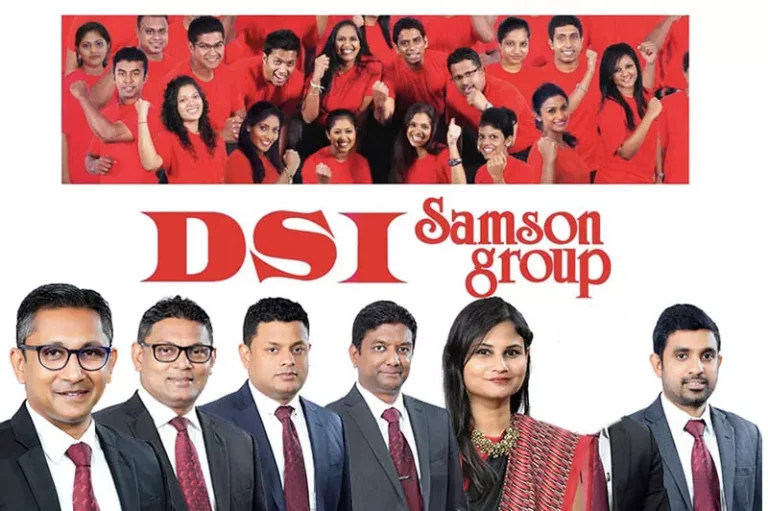
January 23, Colombo (LNW): The Colombo High Court on January 19 ordered that the declaration of the verdict on the lawsuit filed by Gihan Sajith Rajapaksha, one of the former directors of DSI Group, demanding an interim order barring him from being unlawfully dismissed from the positions of Managing Director and Director of several companies owned by the Group, be made on February 08, 2024.
This was when the case was taken up before High Court Judge Priyantha Fernando.
The Court also ordered that the petition be called in on February 02, 2024 for the statement of facts on behalf of the other directors of DSI Group, including Kasun Rajapaksha, Thusitha Rajapaksha, Bathiya Amarakoon, Nelani Rajapaksha, Anura De Silva, and Asanka Rajapaksha, who are cited as respondents to the petition.
Chandaka Jayasundara PC appearing for Sajith Rajapaksha argued that his client has been removed from the positions he had held uninformed, in clear violation of the Companies Act and in violation of fundamental justice.
The company navigated by Mr. Rajapaksha had archived over 60 per cent of net profit in comparison to the rest of the companies held by the Group, and the parties chairing other companies, the respondents, had acted in maliciousness to oust him in response to his brilliant performance, he told Court.
Jayasundara PC further informed Court that Kasun Rajapaksha, the current Managing Director of DSI Group, and Dilshan Rajapaksha had notoriously opened offshore shoe businesses and committed fraud, paving the way for money outflow, in violation of the parent group’s fiscal regulations. In the backdrop, the total loss incurred by the Group amounts to over Rs. 400 million, he emphasised.
Sajith Rajapaksha’s lawyers further elaborated that a staggering financial misappropriation of Rs. 104 million through Dubai-based Azamaq Novelties Trading LLC, of Rs. 120 million through Aussie-based Y Communications QLD PTY LTD, and of Rs. 70 million through UK-based Lakeland Footwear International Limited was committed by the respondents in the aforementioned manner.
Further, the respondents had invested in India via Samson Footwear Private Limited, incurring a loss, and over Rs. 1 billion of bonds had been retrieved from the parent group via Premier Synthetic Leather Manufacturing (Pvt) Ltd, lawyers appearing for Mr. Rajapaksha added.
In the backdrop, the most profit-making business owned by the Ranatunga Rajapaksha family, in which Sajith Rajapaksha is a member, was subjugated to arbitrary acquisition, whilst ousting Sajith from his rightful positions, they asserted before Court.
The chain of events may drive DSI Group, which shelters tens of thousands of breadwinners, into a serious crisis in the near future, facts unveiled before Court demonstrated.
The situation in the country, particularly with regard to the economy and politics, can be described as stable but stagnant. The economy is stable in that it has not experienced further economic collapse in comparison to the kind witnessed last year when international bankruptcy was admitted. But the economy still continues to contract, with a contraction of over 11 percent taking place in the beginning part of the year. The shortages of goods and power sources that brought the people on to the streets in angry protest have not recurred. The government’s ability to bring down the rate of inflation and eliminate shortages is recognized, though the shrinking demand due to price increases is continuing to debilitate living standards. The much hyped Domestic Debt Restructuring was a damp squib bordering on fraud. The Debt restructuring should have been extended for all to improve debt sustainability and equity. No educated business analyst can fathom why they left out even those outside the banking sector for they are going to make a killing. Overnight several bond kings have now been created . What was the crazy reason to raise 10 year bonds and issue them at 30 percent? People were jailed for doing it at doing 5 y bonds at 11% .The yields the buyers expected to be reprofiled but they have been left out ( unbelievable )- on what grounds is this justified? Someone must go to court . The sorry saga started with the CBSL default. That made Sri Lanka a bankrupt nation . To date no action has been taken against Nandalal Weerasinghe for this arbitrary decision . Further, the differential tax justification does not make any sense – epf being taxed at 14 percent hence they needed to be reprofiled makes no sense. Banks paying 50 percent is incorrect – corporate tax rate is 30 percent and financial vat is 18 percent. So banks are not excessively taxed as implied. As for moratoriums they did accommodate many borrowers but what other choice did they have – if they foreclosed the recovery value would be very low for liquidation yields lower recovery and if such a large number of businesses were to be foreclosed on the asset sales would have crashed the collateral market – land, cars and businesses.
Interest Rate
The CBSL in a crazy way doubled borrowing rates overnight one year ago . SMEs we’re forced borrow at over 30% . In addition penalties we’re charged . People were willing to stomach it because they expected a haircut on the coupon or deposit rates because of the crazy interest rate policy of CBSL. It was done Nandalal publicly said to control inflation . When we were effectively importing inflation . The inflation creation was not within the country. The DDO therefore very surprisingly did not touch the TBs or the Bonds. Now imagine the money a few people will make at the expense of the tax payers, SMEs and the public. CBSL interest policy has effectively destroyed the livelihoods of over 500000 people according to estimates and destroyed over 25% of the SMEs, all for nothing. The opposition was hanged publicly for unfair bond trading . What do you call this stupidity ? Who is behind this? They must be named and shamed. The crazy interest policy of the CBSL starting from the sovereign default last year to the crazy interest rates to DDR . These actions must be investigated by a commission. The 2022 interest rate policy of the CBSL was the craziest policy intervention in the history of the CBSL. populist . The domestic debt restructuring should have been part of a broader policy package that effectively addressed the underlying economic problems and debt vulnerabilities. At least now whilst the banks, primary dealers and individuals savor their windfalls ( First Capital Holdings PLC (the Group) announces its outstanding financial performance for the first quarter ended June 30, 2023. The Group reported an impressive Profit after Tax of Rs. 2.81 billion, marking a remarkable leap from Rs. 96 million recorded in the same period last year.7 days ago ) In the absence of any common sense at least the government should bring the borrowing rates to manageable levels given that the 1 year deposit rates are now 9-10% . Unfortunately the reluctance to take action to recoup the losses from he bond traders has resulted in a surge of tax and vat for the common man. What the CBSL does not understand is that the tax payers have to service the bond issued at the crazy in the name of controlling inflation.
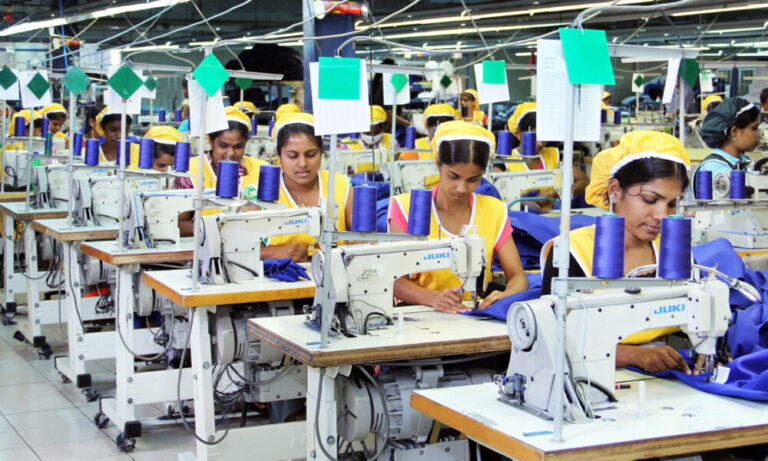
January 23, Colombo (LNW): The apparel sector in Sri Lanka is recovering following the decline in exports confronted with substantial obstacles, including multi-year lows in exports and an ongoing downward trajectory.
In April, exports plummeted by 24% to $318 million, exacerbating the year-on-year decline of 17% to $1.5 billion in the first four months of 2023. This decline affected all major markets.
Apparel exports now appear to be showing signs of rebound with December marking the highest ever performance in a year though the industry ended 2023 with negative growth.
Exports in December amounted to $ 415.6 million as per provisional data from the Joint Apparel Association (JAAF). The December 2023 figure is the highest since December 2022’s tally of $ 451 million.
In 2022, apparel exports averaged over $ 500 million between June and August, before slump began due to global factors such as reduced spending capacity associated with high inflation and recessionary concerns as well as high inventory in most of the major markets
Total exports in 2023 amounted to $ 4.5 billion, down 19% from the industry’s best year in 2022 when exports soared to $ 5.6 billion.
Several factors contribute to this challenging situation, including heightened market inventories and escalating costs in Sri Lanka.
Industry experts note that Sri Lanka’s apparel sourcing has become comparatively expensive, leading customers to seek lower-cost alternatives in countries like Bangladesh, Egypt, and African nations. The country’s loss of competitiveness is evident through higher prices and longer lead times, dissuading potential buyers.
“We would expect 2024 exports also to be $ 4.5 billion with the second half seeing some uptick,” a spokesman for JAAF said. “Cost competitiveness and ease of doing business are key along with macro-economic stability,” he added.
While overall exports to the USA decreased by 22.32% to $ 1.8 billion, exports to the EU (excluding exports to UK) were down 17.4% to $ 1.4 billion. Exports to the UK in 2023 dipped by 12.6% to $ 627 million and to other countries by 17.7% to $ 707 million.
In December exports to the USA were down by 4.97% to $ 175 million, to the EU (excluding UK) by 13% to $ 121 million. Exports to the UK market saw a welcome but marginal increase of 1.7% $ 54.4 million whilst to other markets exports were down by 13% to $ 65 million. In November too exports to the UK improved by 20% year on year to $ 48 million.
In the first 11 months of last year, imports of textiles and textile articles declined by 23.6% to $ 2.2 billion.
January 23, Colombo (LNW): A group of senior IT professionals has warned that the Online Safety Bill may be used to cripple opposition election campaigns, suppress journalists reporting on corruption and even severely impact the IT industry.
IT Professionals for the People (IT4P) has also launched an SMS “e-referendum”, which allows Sri Lankans to use an SMS message to voice their concerns on the Online Safety Bill and other key policies.
IT Professionals for the People (IT4P) has warned that the Online Safety Bill may cripple election campaigns, suppress journalists and negatively impact the IT industry.
They have therefore launched an SMS “e-referendum”, allowing Sri Lankans to use an SMS message to voice their concerns on key policies such as the Online Safety Bill.
The group pointed out that Sri Lanka already has seven laws that place restrictions on free speech and therefore the Online Safety Bill is not necessary.
Thus, citizens can participate in the SMS e-referendum by sending an SMS message to 0767 001 001 as OSB YES, if the bill should be passed in parliament, or as OSB NO, if the bill should not be.
The project is part of a broader Direct Democracy Initiative, which can one day lead to citizens being able to directly vote on government policies. This system is particularly useful when citizens believe that political representatives are no longer in alignment with their interests
“Under this law, any person aggrieved by something a citizen says online, may go to the police or magistrate court against them. Such a person may become a suspect in a criminal case, subject to investigations, have material/devices seized and may be liable to imprisonment or a fine.
In addition to this, many online services the IT industry relies on (e.g. Google Apps, Office 365, AWS), if interpreted as “internet intermediaries” according to this bill, may face potential legal liabilities and compliance costs that may force them to consider partially or fully exiting Sri Lanka,” the IT$P said in a statement yesterday.
“Finally, this bill criminalises defamation. Around the world, defamation is a civil matter between two parties (i.e. no imprisonment/fines, only compensation may be asked for).
Sri Lanka already has 7 other acts that place restrictions on free speech. Law enforcement is already ill-equipped to enforce these laws. Adding a new law creates opportunity for misuse, potentially floods the court system with frivolous petitions, not to mention the expense of establishing a new commission.”
Further elaborating the e-referendum, the IT4P stated that, ‘implemented through a leading telecom provider, the solution allows any Sri Lankan mobile subscriber to send an SMS to the number 0767 001 001 with a poll code followed by “yes” or “no”.
Ongoing polls will be published on social media and the organisation’s website, it4psrilanka.org.
SMS was chosen over a web/mobile solution mainly to curtail bots that is a common problem in online polling.
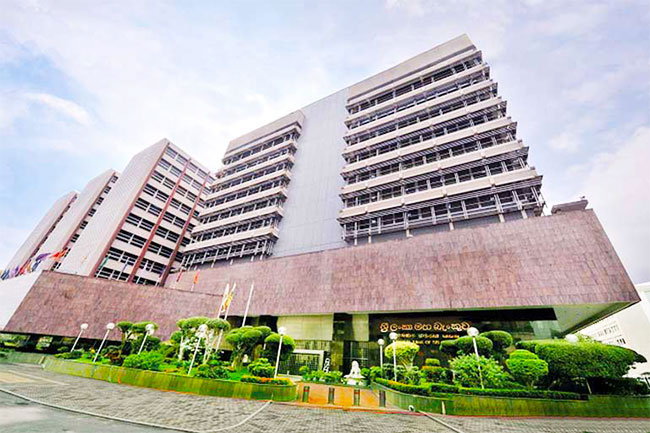
January 23, Colombo (LNW): The Monetary Policy Board of the Central Bank of Sri Lanka, at its meeting held on 22 January 2024, decided to maintain the Standing Deposit Facility Rate (SDFR) and the Standing Lending Facility Rate (SLFR) of the Central Bank at their current levels of 9.00 per cent and 10.00 per cent, respectively.
The Board arrived at this decision following a comprehensive assessment of domestic and international macroeconomic developments in order to maintain inflation at the targeted level of 5 per cent over the medium term, while enabling the economy to reach its potential.
The Board took note of the effects of the recent developments in taxation and supply-side factors that are likely to pose upside pressures on inflation in the near term.
However, the Board viewed that the impact of these developments would not materially change the medium-term inflation outlook.
Further, the Board noted the space created by past monetary policy easing measures and the decline in the risk premia attached to government securities for further downward adjustment in market lending interest rates.
The Board underscored that the envisaged benefit of further reduction in market lending interest rates needs to be adequately and swiftly passed on to the businesses and individuals by financial institutions.
Inflation is expected to stabilise at the desired levels as the effects of the recent tax adjustments and supply side disruptions are expected to dissipate in the near term.
Headline inflation, as measured by the year-on-year change in the Colombo Consumer Price Index (CCPI, 2021=100), was recorded at 4.0 per cent in December 2023, compared to 3.4 percent in November 2023.
Following five consecutive months of deflation, the food category recorded inflation (year-on-year) in December 2023 reflecting mainly the weather-related disruptions, while non-food inflation (year-on-year) moderated compared to the previous month.
Despite the recent acceleration, headline inflation remains closer to the inflation target of the Central Bank and is in line with the envisaged inflation projections of the Central Bank.
Meanwhile, core inflation (year-on-year) continued to moderate in December 2023, compared to the previous month, reflecting the subdued demand pressures in the economy.
Headline inflation is projected to record an upward movement in the near term, as expected, driven mainly by domestic price adjustments due to the increase in the Value Added Tax (VAT) and the elimination of certain VATexemptions effective 01 January 2024, disruptions to the domestic food supply, and the dissipation of the favourable statistical base effect.
However, this acceleration of inflation in the near term is expected to be short-lived, and the spillover effects of such one-off adjustments are likely to be muted due to subdued underlying demand conditions.
Therefore, over the medium term, headline inflation is expected to gradually stabilise around the targeted level of 5 per cent (year-on-year), supported by appropriate policy measures.
January 23, Colombo (LNW): Sri Lanka’s crucial 2024 elections, presidential or parliamentary will decide Sri Lanka’s future compelling voters to cast their votes very cautiously and intelligently as it will be their last chance to elect their leader and representatives in parliament to rule the country without fooling masses, several political analysts warned.
The focus is not only on the economy but also on the need for stronger institutions and governance mechanisms. Weaknesses in governance are largely faulted for triggering the economic crisis.
All these issues may make voter behaviour more unpredictable and tempt presidential or parliamentary election candidates to make impractical promises in their attempt of attracting votes, they said.
While the tax burden is deeply unpopular, Sri Lankans will have to live with higher taxes, a public spending squeeze and a drop in living standards regardless of the promises politicians make before the 2024 elections
In this context, the voters have been advised to think twice before leap as some political parties who have not been able to come to power with the ballot will be trying to fool the people by propagating corruption slogan with a promise punishing previous corrupt rulers and confiscating their wealth.
Therefore intelligent voters have the responsibility of demanding financial reports, Constitutions and manifestos of all the political parties contesting the upcoming elections.
Politics is one of the biggest businesses in the country. Party leaders talk eloquently about endemic bribery and corruption in the country, but political parties are the biggest bribe-takers.
Slush funds are maintained from milking businessmen at village and city levels whose favours have to be returned by doctoring tenders.
These unaccounted-for funds go into paying for party rallies, and buses to transport their supporters, while a part goes to the pockets of organisers. Separately, monies have to be spent to buy members at crucial votes.
Vajira Abeywardena, Member of Parliament, who commented further on this matter, said: There is no other country in the world that has about 75 political parties like Sri Lanka.
That is how the divisions of our country have been created. It has created disunity in the country. That situation also led to many destructions in the country after independence.
How do these parties get money? There is no system to track who is spending. Therefore, President Ranil Wickremesinghe has passed a bill in the Parliament that will enable him to find out how these parties spend money in elections.
On January 19, 2023, the Parliament of Sri Lanka passed the Regulation of Election Expenditure Bill, the first framework to regulate election campaign finance in the country.
The Leader of Mawbima Janatha Party Dilith Jayaweera said that all funds of political parties should be investigated and brought under income tax.
He noted that the JVP which is campaigning to catch thieves will have to publish the assets and liabilities of its leaders who are leading luxury lives.
Financial records of eight political parties released by the Elections Commissioner through a RTI request put forward by Transparency International Sri Lanka (TISL), several years ago has shown the Janatha Vimukthi Peramuna (JVP) to be the most financially secure and asset rich party among the main political parties.
TISL has released financial records for the parties; JHU, SLMC, JVP, SLFP, UNP, CWC, ITAK and UPFA some time ago.
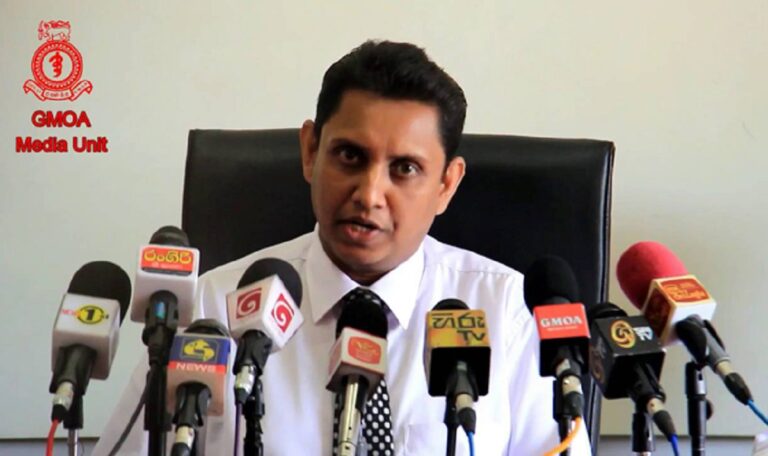
January 23, Colombo (LNW): The Government Medical Officers’ Association (GMOA) is set to launch a continuous strike from tomorrow (24), in response to the non-disbursement of the Disturbance, Availability and Transport (DAT) allowance, Union Secretary Dr. Haritha Aluthge disclosed during a briefing today.
Following the Cabinet’s approval on increasing the DAT allowance from Rs. 35,000 to Rs. 70,000, the government has failed to issue the allowance as promised, the GMOA pointed out.
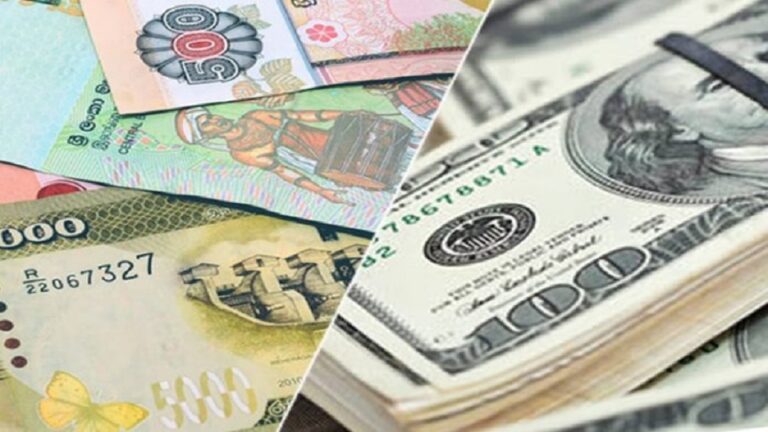
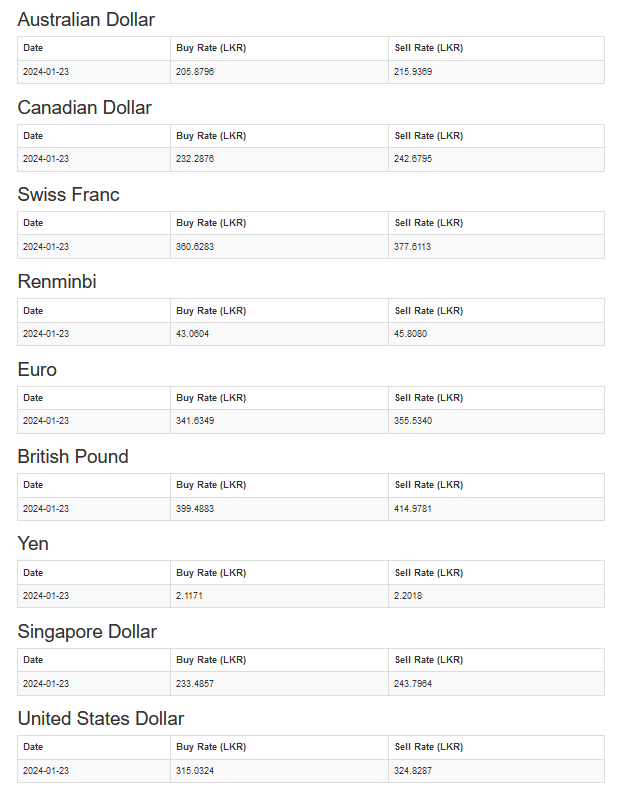
January 23, Colombo (LNW): The Sri Lankan Rupee (LKR) indicates further appreciation against the US Dollar today (23) in comparison to yesterday, as per the official exchange rates issued by the Central Bank of Sri Lanka (CBSL).
Accordingly, the buying price of the US Dollar has dropped to Rs. 315.03 from Rs. 315.50, and the selling price to Rs. 324.82 from Rs. 325.37.
The Sri Lankan Rupee, meanwhile, indicates appreciation against several other foreign currencies as well.