Colombo (LNW): The government is committed to accelerating the transition to renewable energy, and accordingly, Cabinet approval was granted to enter in to a Power Purchase Agreement with United Solar Group of Australia, disclosed Power and Energy Minister Kanchana Wijesekara.
The Minister underscored the ongoing effects to prioritise renewable energy solutions in Sri Lanka’s power and energy sector.
“The Solar power project will be installed on the surface of the Poonakary Tank in the Killinochi District, with a Foreign Direct Investment of USD 1,727 Million,” Wijesekara wrote on his X account.
“Cabinet approval was granted yesterday to enter in to a Power Purchase Agreement with United Solar Group of Australia to invest in a 700 MW Solar Power Project with a 1500 MWh of Battery Energy Storage System,” he added.
Cabinet approval was granted yesterday to enter in to a Power Purchase Agreement with United Solar Group of Australia to invest in a 700 MW Solar Power Project with a 1500 MWh of Battery Energy Storage System.
The Solar power project will be installed on the surface of the…
Young people, who are among those most at risk to the impacts of climate change, are not accessing the funds they need to tackle the challenges posed by global warming, according to a report published on 9 December.
The joint report by the Commonwealth Secretariat and YOUNGO, the children and youth constituency of the United Nations Framework Convention on Climate Change (UNFCCC), analysed 100 climate finance initiatives targeted at young people.
While it shows an increase in youth-focused climate finance, funds are mainly disbursed in small amounts, hindering large-scale youth-led climate action.
In addition, the audit information provided by funders lacked full transparency, especially about beneficiaries and what projects were funded.
In response, the report calls for a fit-for-purpose approach to deploying climate finance for youth-led actions to remove existing barriers and ensure young people receive a fair share of support.
The proposed solutions include targeted reporting, a streamlined process for accessing funds with a focus on clear eligibility criteria, increased private sector support and new innovative financing sources.
Climate finance, a core part of the Paris Agreement, is provided to help developing countries cut greenhouse gas emissions and adapt to the impacts of climate change.
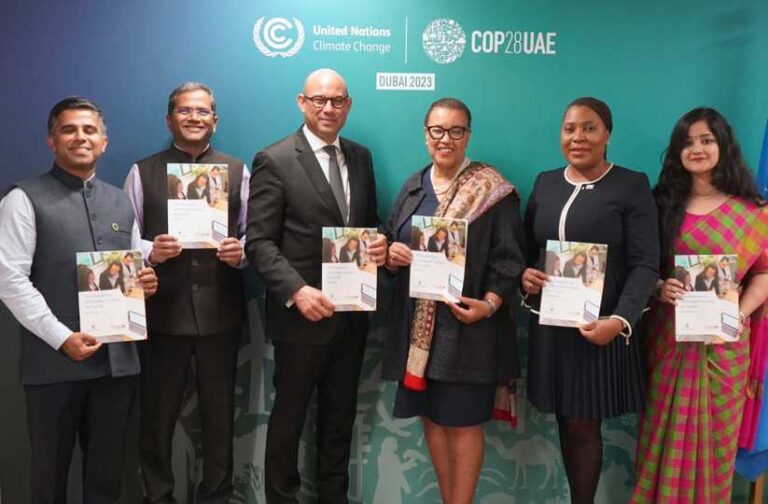
The report was launched at a side event, ‘Empowering Youth Leadership: Experiences from the Commonwealth in Access to Climate Finance, Capacity Building and Technology’ – hosted by the Commonwealth Secretariat in partnership with the governments of Fiji and Zambia on 9 December 2023 during the United Nations Climate Change Conference (COP28).
Speaking at the event, the Commonwealth Secretary-General, the Rt Hon Patricia Scotland KC, said:
“Young people, who make up 60 per cent of Commonwealth citizens, are on the frontline of the climate crisis, living mostly in areas prone to extreme weather events.
“As a result, many are facing job losses, displacement, health issues and educational setbacks. In the face of adversity, the resilience of young people shines through as they harness their drive and talent to lead on powerful climate solutions.”
She added: “This report reveals the dire need to scale up financial support for young people and prevent them from being stuck in the vicious cycle of chasing funds. We must work together with young people to address the barriers they face in accessing climate finance and support them in scaling contributions to meeting climate targets. This is essential to our belief that youth-led action is integral to our pursuit for a sustainable future for all.”
During the event, participants shared their experiences on accessing climate finance, upskilling and leveraging technology to empower youth-led efforts in tackling the challenges posed by climate change, while examining ways to maximise existing opportunities.
Collins Nzovu, Zambia’s Minister of Green Economy and Environment, said: “The future belongs to the children, and we should do everything possible to ensure we leave a liveable climate for them. We realise we need to pass the baton of leadership to the youth. We are increasing our support to the youth to take leadership which demonstrates our unwavering support for the Commonwealth Year of the Youth.”
The minister urged youth to use their energy, presence, connections and innovation to drive the change needed to save the planet.
In his remarks, Naipote Tako Katonitabua, Fiji’s Ambassador to the United Arab Emirates, said: “The world is facing unprecedented impacts of climate change the global stocktake has shown us how far behind we are in our climate ambitions.”
“We need dramatic actions to benefit our climate and we need them now,” he added. “Youth inclusion at all levels in climate action including at political level is necessary to ensure the sustainability of our efforts.”
Sheen Tyagi, Research Director at YOUNGO’s Finance and Markets Working Group, said: “The seeds of environmental resilience are sown in the passion and innovation of youth. Investing in youth-led climate projects is not just an investment in the future; it’s a commitment to safeguarding our planet.”
She continued: “Climate finance directed towards our projects is the imperative bridge between aspirations and actionable change. The currency of change lies in climate finance for the youth, and to ensure a sustainable tomorrow, we need the unwavering support of governments, institutions, the private sector, communities, and every individual.”
During the event, Dr Ruth Kattumuri, Senior Director at the Commonwealth Secretariat’s Economic Youth and Sustainable Development, announced this year’s winners of the Commonwealth Sustainable Energy Transition Award.
Bangladesh’s Areebah Armin Ahsan and Pakistan’s Sarah Shahbaz Khan received awards for their outstanding short stories: ‘Tragedy to Triumph: Biogas in Daria Nagar’ and ‘Mud-coated Walls and Sandy Dunes’, respectively.
In the category of the best technical solution, Uganda’s Michael Okao, Darius Ogwang and Joshua Elem were recognised for their solar concentrator that harnesses renewable energy for clean cooking.
Nigeria’s Michael Chiangi Gbagir won the best educators award for his initiative ‘EcoPower Adventure’, which engages different communities through interactive learning activities, such as energy scavenger hunts.
The ‘Availability of Climate Finance for Youth’ report will inform the Commonwealth Secretariat’s ongoing work, especially its Commonwealth Climate Finance Access Hub, which has supported small and vulnerable countries to access about $322 million of climate finance for projects to mitigate and adapt to the impacts of climate change.
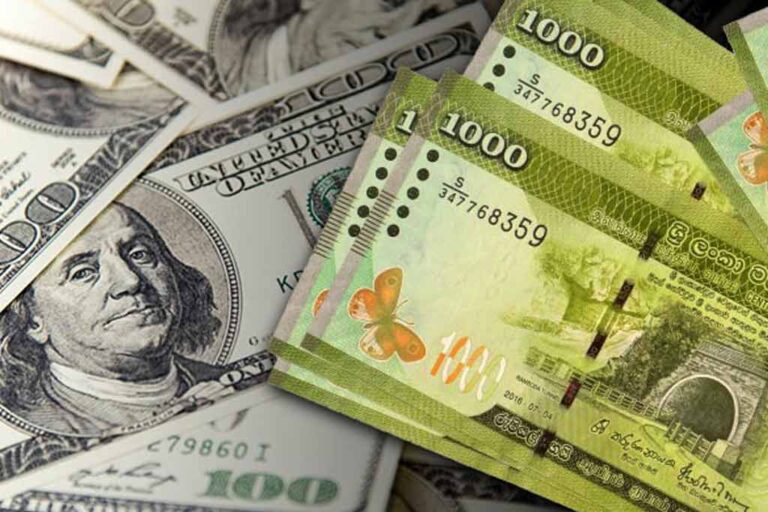
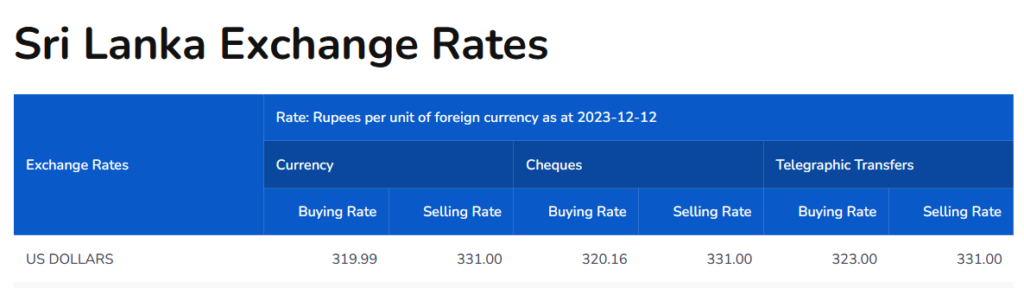
Colombo (LNW): The Sri Lankan Rupee (LKR) indicates steadiness against the US Dollar today (12) in comparison to yesterday at leading commercial banks of the country.
At Peoples Bank, the buying price of the US Dollar has dropped to Rs. 321.33 from Rs. 321.42, and the selling price has increased to Rs. 332.53 from Rs. 332.12.
At Commercial Bank, the buying price of the US Dollar has dropped to Rs. 319.99, and the selling price remains unchanged at Rs. 331.
At Sampath Bank, the buying and selling prices of the US Dollar remain unchanged at Rs. 323 and Rs. 332, respectively.
Global Tamil Forum (GTF) meeting the Sri Lankan Sangha for Better Sri Lanka (senior Buddhist monks from different Nikayas) has made shock waves to those organisations, which have been rigorously working towards establishing a permanent political solution to meet with the aspirations of Tamil people that they have been progressively losing for the past 75 years after Sri Lanka became independent from the British rule.
Since independence, Buddhist clergies’ dominance in the political history, has been the predominant cause for repealing every pact signed between the Tamil and Sinhalese political leaders for reaching a solution to Tamil peoples’ fundamental issues.
The historical cycles of violence and genocide inflicted against Tamil people in the island have concrete evidence that the Sri Lankan state, regardless of who came to power to prove that the Sinhala state’s aim is to make the country a mono-ethnic, mono-lingual, and mono-religious Sinhala-Buddhist country. The unprecedented declaration of the Buddhist clergies accepting the existence of a plural society at the meeting with the GTF has generated scepticism and dismay among the Tamil people whether this meeting was political motivated to deceive Tamil people and the international community. To add to fuel to Tamil peoples’ concern the whole process of this ‘declaration’ had been kept secretive without any consultation process. It is paramount that any declaration such as ‘Himalayan Declaration’ should have been consulted with the victims and brought to the public domain prior to the meeting. This did not occur.
The GTF on the other hand started a similar process in 2015 with the then President Maithiripala Sirisena when Ranil Wickremasinghe was the Prime Minister and that failed miserably as expected. It took over 5 years for GTF to realise the entire process was an illusion conveniently crafted by the Sri Lankan government led by Maithiripala and Ranil Wickremasinghe aiming to drag the UNHRC process and manage the increasing call to restructure the state to ensure nonrecurrence of past violence.
The failed policies of all consecutive Sri Lankan governments in the post-independence period led to repeating cycles of violence, death and destruction of properties, corruption at the highest level, impunity, economic regression, wastage of funds to continue the militarisation, debt trap, high degree of power centralisation, international isolation and default. Thus, without addressing the root causes of Tamil peoples’ issues in depth, treating them superficially as a trivial matter is not going to resolve Tamil peoples’ yearning aspirations constitutionally. The constitutional changes are not going to occur without gaining the majority parliamentary support, which is an operation of “getting blood out of stone” in Sinhala-Buddhist exclusionists dominated Sri Lankan parliament. Provoking racial slurs among Sinhala public has been the oxygen of Sinhala parliamentarians to win their seats to the parliament.
Knowing Ranil Wickremasinghe’s past of manipulating matters to his advantage, GTF’s meeting will provide Ranil an opportunity to hoodwink the international community to sweep Tamils’ outcries under the carpet in the guise of success in talking with Tamil diaspora organisations and to promote support for the proposed Truth and Reconciliation Commission (TRC) model for the resolution internally.
Several Tamil diaspora organisations have been actively working in founding a permanent political solution since the end of civil war in 2009 for Tamil people to live in peace and harmony with equal rights in the country. These organisations are also laboriously spending their time, money, and efforts to establish accountability for the war crimes, crimes against humanity and genocide committed on the Tamil people.
The rigorous UNHRC Resolutions 46/1 and 51/1 along with the Sri Lanka Accountability Project (SLAP) and continued persuasion of implementing “Magnitsky” Act and / or Global Human Rights Sanctions Act against the perpetrators by the member states are being continuously carried out those genuine Tamil diaspora organisations.
The consequences of the GTF’s action are going to have significant impact in the international community’s true perception of the plight, the Tamil people are undergoing for the past 75 years since Sri Lanka became independent. They are,
Jeopardise the Sri Lanka Accountability Project (SLAP) that is being carried out by the OHCHR.
Any process leading to an international criminal prosecution mechanism will be replaced entirely by an internal process such as the toothless Truth and Reconciliation mechanism proposed by the President Ranil Wickremasinghe.
The efforts are made to get the world leaders, like India, USA, UK and Europe, to directly intervene to establish a sustainable political solution for the Tamil people to live in peace and harmony addressing their legitimate aspirations in the island. Based on abrogation of several pacts in the past, Tamil people have lost hope in any of the internal process to find a meaningful political solution.
Consequently, the GTF’s effort will be futile and will sabotage the efforts the genuine Tamil organisations have been painstakingly formulating for the past 15 years.
The publicity made by the Sri Lankan government and the media about the GTF meeting with the Buddhist clergies is going to send a wrong message to the international community that Tamil people are going to see a dawn to their long-standing sufferings. This will play as a tool to Ranil Wickremasinghe government to convince the international community to take a non-intervention policy in Sri Lanka leaving Tamils solely at the mercy of Sinhala Buddhist exclusionists.
At this moment, it is pertinent to flag out whether the GTF represents the Tamil diaspora in any form or shape. Since GTF formed as an umbrella organisation in August 2009 in France, all except one of the 14 Tamil organisations have withdrawn their membership from the GTF. Thus, it is wrong to portray or construe as GTF representing the collective decisions of majority diaspora organisations of the Tami people. The diverse but strong Tamil diaspora is united in protecting the Tamil people in the island and finding justice and a lasting political solution with the necessary intervention of the international community, GTF’s action is weakening that synergy and allowing the Sri Lankan state to divide Tamil diaspora and hoodwink the international community.
The realistic way-forward is all Tamil organisations should engage the stake-holders and the international community and initiate a time-bounded consultation process for establishing a permanent solution for Tamil people for peaceful coexistence, stability and prosperity in the island of Sri Lanka.
Well-known Economist Professor Howard Nicholas says he is “worried” about some conditions IMF has imposed on SL: asserts there’s no theoretical or empirical substance for the reform of SL’s Monetary Law Act & it’s based on a discarded theory: laments SL seems to be the “experiment ground” for IMF: also says preventing CB from providing liquidity is irrational & if SL is hit by a global shock in the future, “money printing” can’t be used as a buffer.
Former Finance Minister Ravi Karunanayake says the Govt is likely to lift the ban on the cultivation of Palm oil imposed by former President Gotabaya Rajapaksa in 2021.
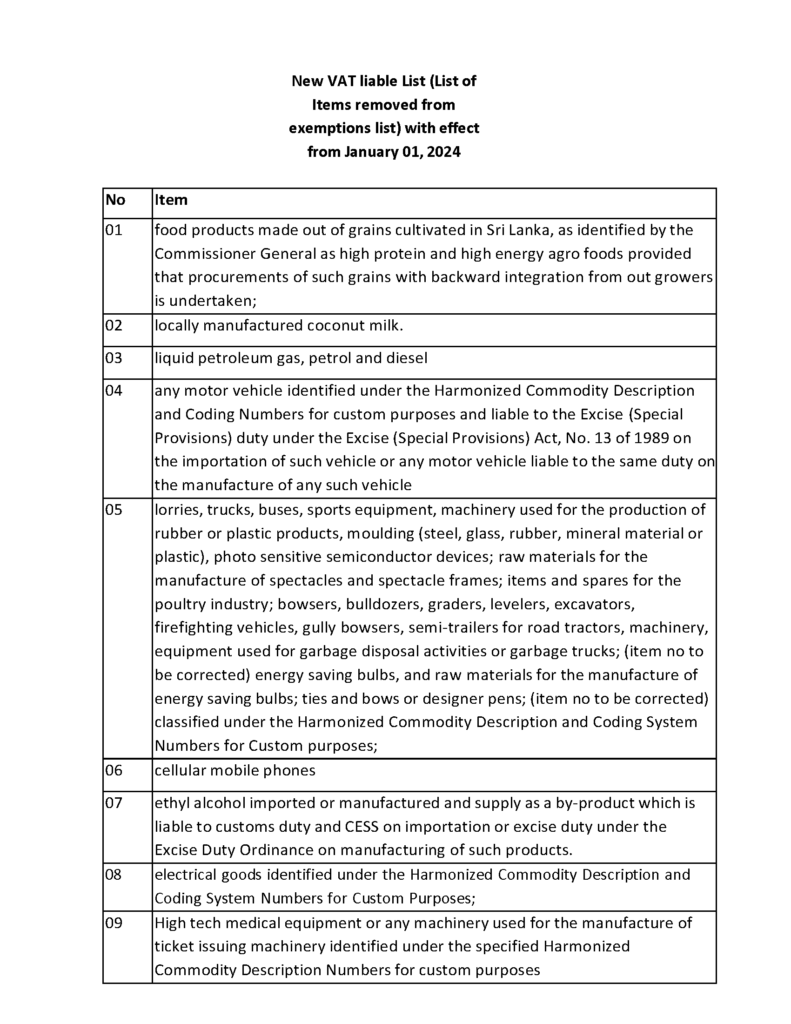
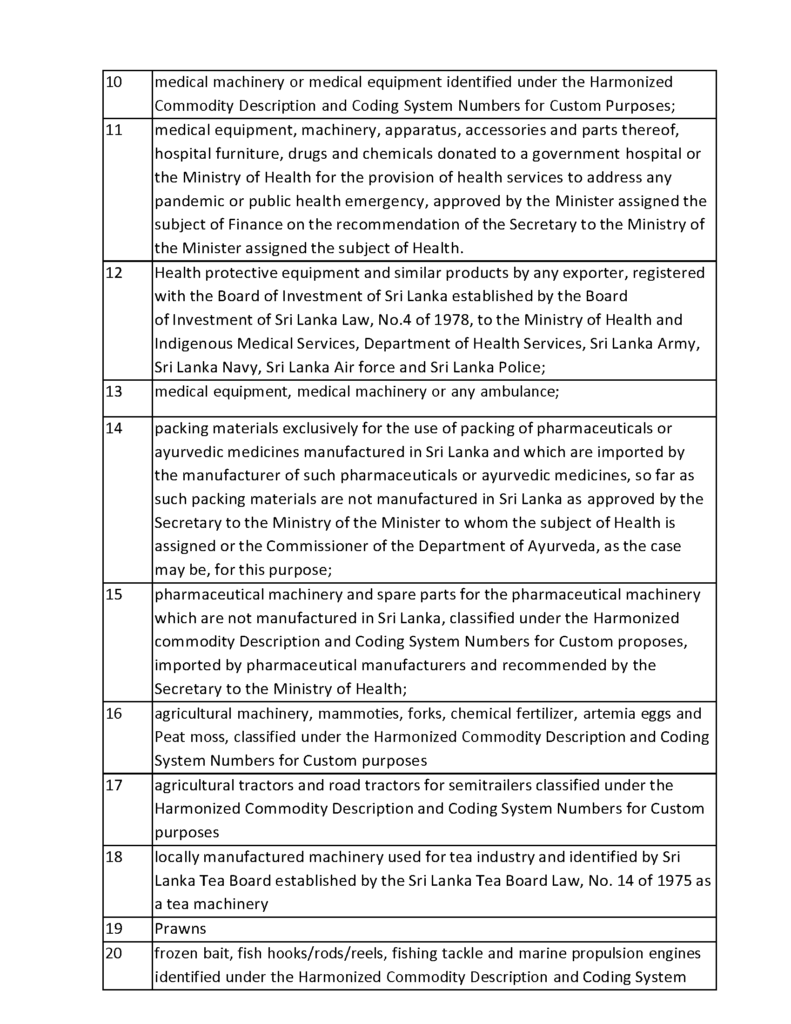
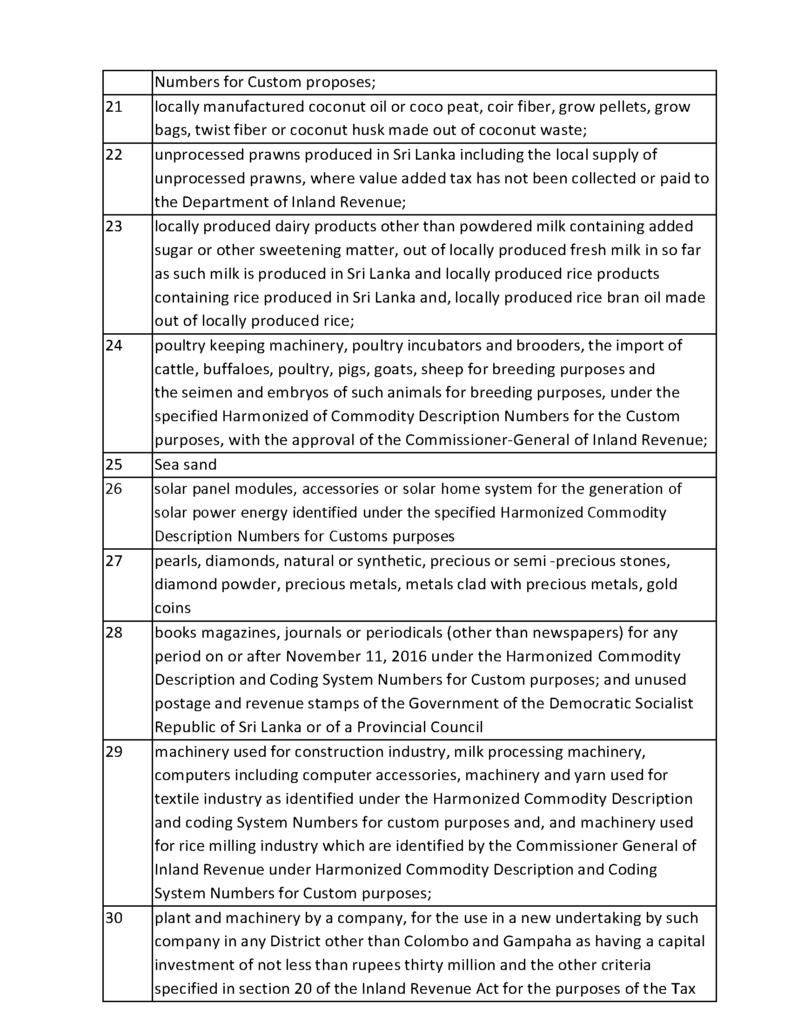
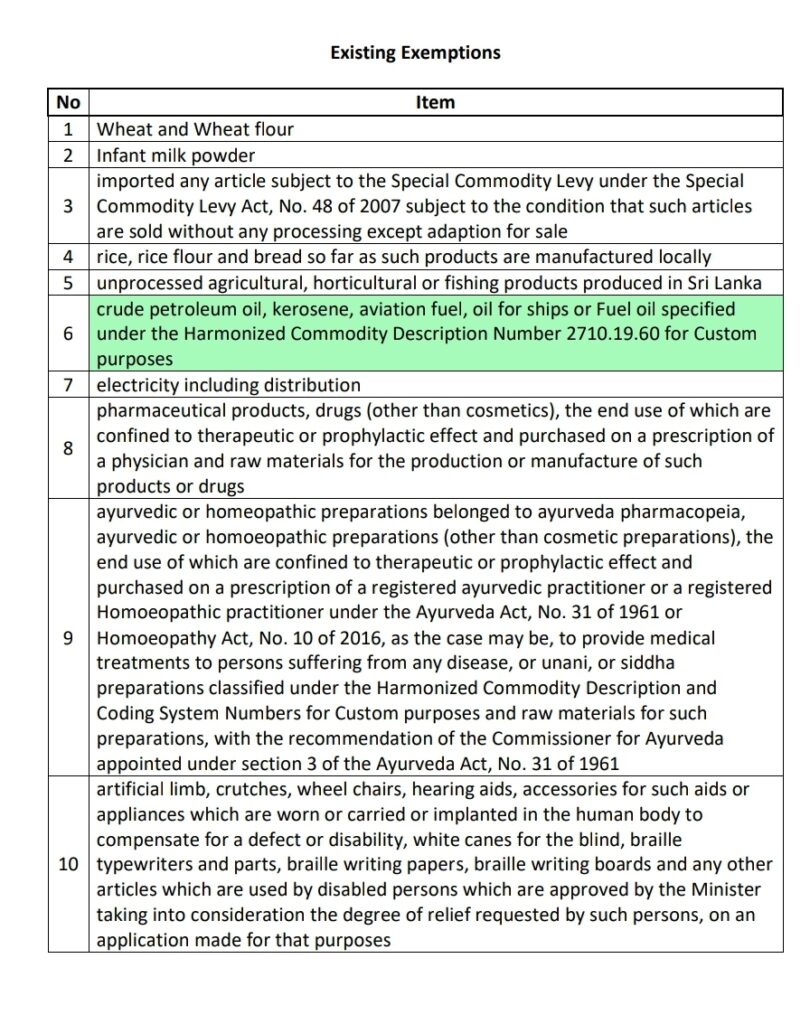
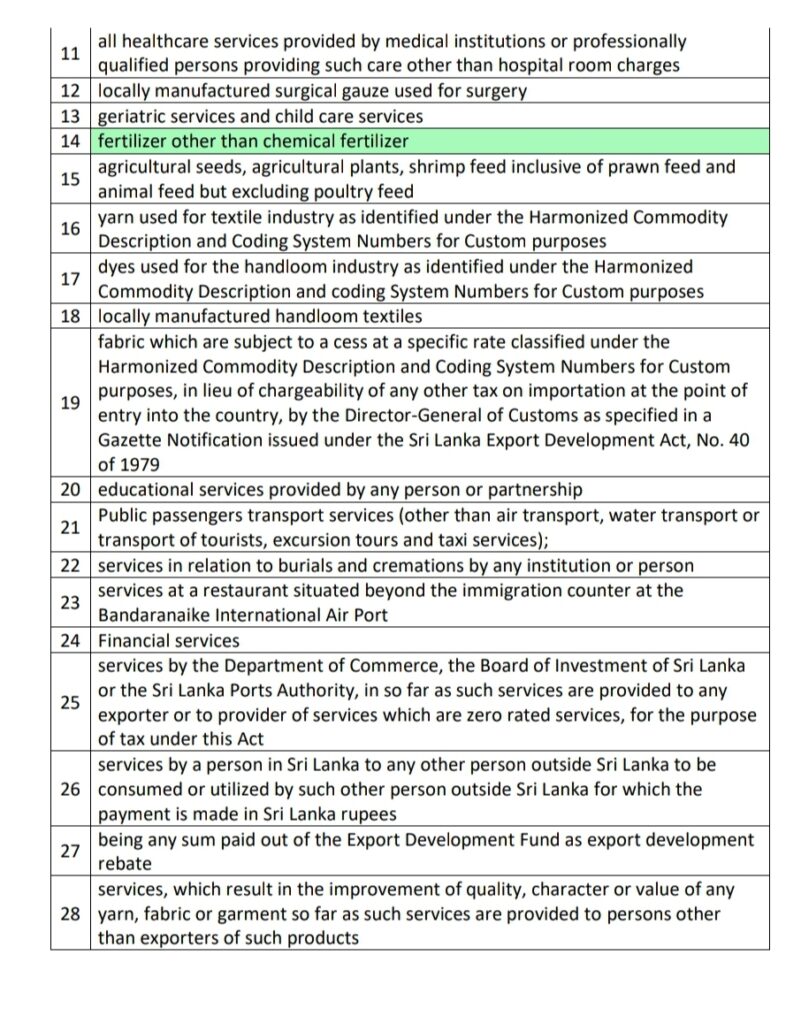
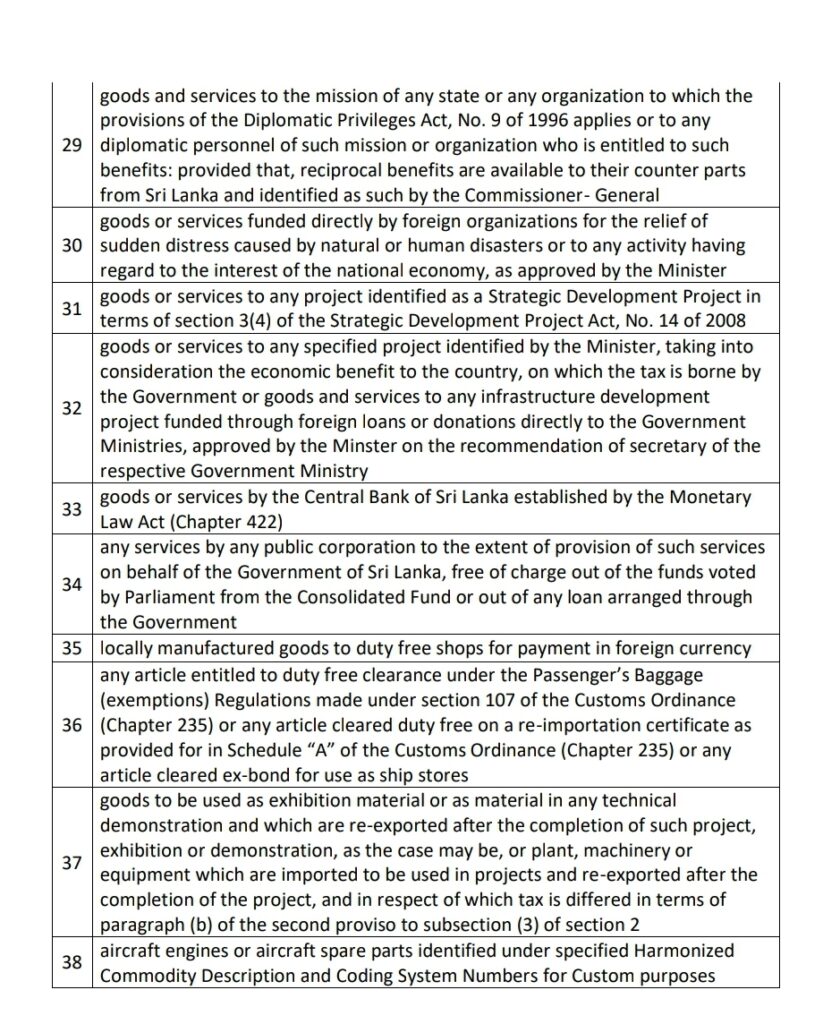
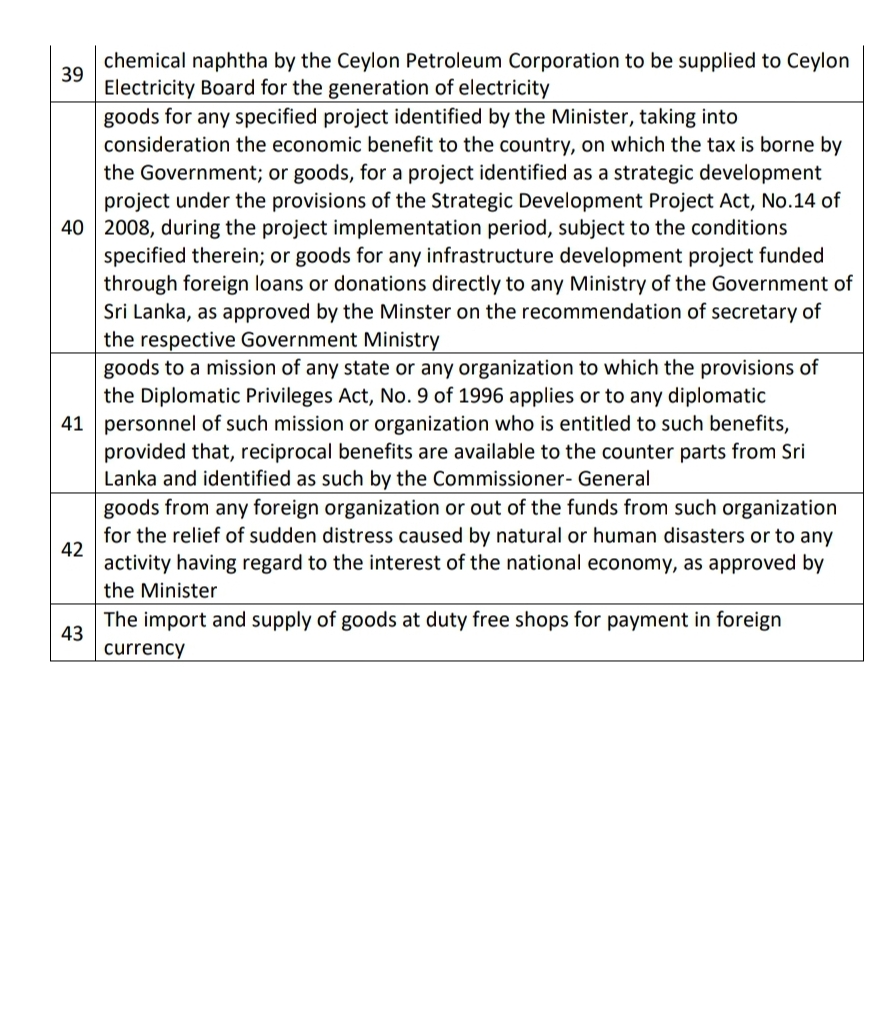
Parliament approves the VAT (Amendment) Bill in anticipation of the IMF’s review for the 2nd tranche of around USD 330 mn out of the USD 2.9 bn bailout: the move expected to raise VAT from the existing 15% to 18%, and add a large number of new items into the VAT bracket, effective 1st Jan’24: 100 MPs vote for, and 55 MPs vote against.
Spokesperson of the Defence Ministry Colonel Nalin Herath responds to reports that 3 SL ex-military personnel who fought for the Ukrainian Foreign Legion during the ongoing Russia-Ukraine conflict have been killed-in-action: says legal action can be taken only if individuals are identified, & that otherwise, no authority has any jurisdiction over such people.
Public sector employees including Development officers, Management service officers, Grama Niladharis, Samurdhi Officers, and Office Services personnel to be on a token strike today to pressure the Govt to implement the proposed Rs.10,000 salary increase from the next month itself.
Tourism Ministry officials inform the Sectoral Oversight Committee on National Economic and Physical Plans that plans have been made to bring wealthy tourists to SL in the coming year: Committee also directs its attention towards bringing 5 mn tourists to SL in 2024.
Director of the Kandakadu Rehabilitation Centre says over 140 inmates have escaped from the Centre & 104 have been apprehended so far.
SL Atomic Energy Authority gives the “green light” for nuclear power: Russia (which has already invested in nuclear power generation in Bangladesh) and India show a keen interest in putting up a plant in SL.
SL Under-19 Cricket team suffers a shock defeat against UAE as UAE beats SL by 2 wickets with 10 balls to spare, in the Asia Cup Championship held in Dubai.
Sports Minister Harin Fernando appoints a new Cricket Selection Committee consisting of Upul Tharanga (Chairman), Dilruwan Perera, Tharanga Paranavithana, Ajantha Mendis and Indika de Seram.
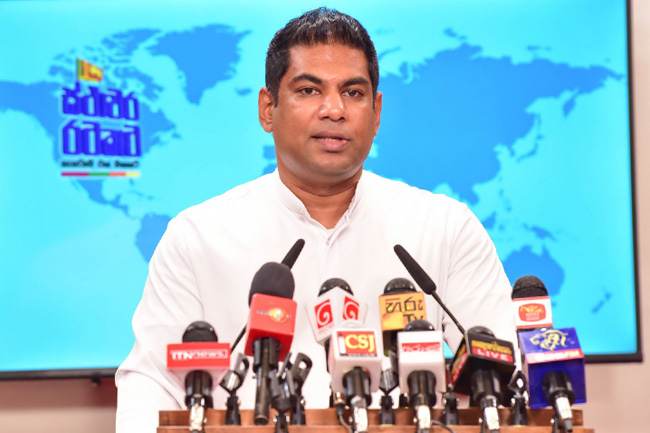
PMD: Minister of Agriculture and Plantation Industries, Mr. Mahinda Amaraweera, highlighted on-going initiatives aimed at attracting the youth community to agriculture. He emphasised that proactive measures are being implemented to modernise the agricultural sector, fostering a more appealing environment for the youth.
During a press conference at the Presidential Media Centre (PMD) on the theme Collective path to a stable country’ held today (11), Minister Amaraweera expressed appreciation for the swift compensation provided within two months after crop damage, a historic achievement facilitated by the President and the Ministry of Finance.
Expanding on the recent budget debate concerning the allocation of funds to the Ministry of Agriculture and Plantations, Minister Mahinda Amaraweera reflected on the commendable state of affairs within the ministry. Addressing concerns about the number of allegations presented compared to other ministries, Minister Amaraweera clarified that the issues raised were primarily historical in nature and that the ministry is making significant strides in various cooperative projects across all sectors.
Assuming duties at the ministry during a challenging period, Minister Amaraweera recounted his proactive approach to instil confidence in farmers. He cited an example where, following his encouragement, farmers cultivated 212,000 hectares of rice, demonstrating a positive response. Subsequently, with continued dedication, the rice cultivation area expanded to an impressive 512,000 hectares, marking a substantial increase and achieving the highest yield in recent times.
Addressing allegations regarding the quality of fertilisers and concerns about their weight, Minister Amaraweera emphasised the unwavering faith that farmers placed in the President and the government. Despite challenges, the farmers actively engaged in cultivation and the ministry took prompt measures to ensure timely provision of various types of fertilisers. Additionally, financial assistance and fuel subsidies were arranged, contributing to the overall success of cultivation efforts and resulting in a high yield.
Minister Amaraweera’s remarks shed light on the ministry’s commitment to overcoming challenges, ensuring the timely support of farmers and achieving notable progress in the agricultural sector. The focus on increasing yields and addressing concerns reflects a proactive and responsive approach to agricultural development under Minister Amaraweera’s leadership.
Minister Mahinda Amaraweera shared crucial insights into Sri Lanka’s rice production and outlined measures to address potential challenges in the agricultural sector. Notably, the annual rice requirement stands at 25,40,000 metric tons and this year’s harvest has exceeded expectations, reaching 27,50,000 metric tons. The Minister attributed this success to strategic measures, resulting in an additional yield of over 200,000 metric tons. However, despite the surplus, the need for rice imports persists due to market dynamics. Minister Amaraweera explained that although the paddy yield is high, mill owners’ reluctance to release the entire stock to the market necessitates imports. Similarly, despite a decrease in the harvest of ‘Keeri Samba’, there has not been a reduction in the variety of rice consumed by the general populace. Therefore, if rice is not imported during this festive season, the price of rice will rise rapidly. Consequently, the importation of rice from abroad becomes a necessity, whether willingly or not.
Looking ahead to 2024, the Minister outlined the government’s agricultural priorities, with a focus on four key crops. While paddy cultivation has achieved success, efforts are underway to encourage the cultivation of maize, chillies, and yams. An on-going program aims to foster domestic cultivation of these crops, with dedicated areas allocated for each type. The government envisions self-sufficiency in growing these crops, reducing reliance on imports.
Highlighting Sri Lanka’s status as a bird flu-free country, Minister Amaraweera emphasised the opportunity for expanding chicken exports. Current exports to the Maldives are poised for expansion to other countries, capitalising on Sri Lanka’s bird flu-free status.
Compensation is now provided for crop damage and we are actively working to expedite the program by resolving any arising issues. Remarkably, this marks the first time in history that compensation has been disbursed within a month or two of crop damage. I extend my commendation to the President and the Ministry of Finance for their prompt actions.
The cultivation of rubber in our country has faced challenges and plans are underway to revitalise it. Steps are being taken to enhance the quality and increase the yield of tea. Additionally, a dedicated department has been established for the development of cinnamon cultivation.
Special attention is also being directed towards coffee cultivation, with comprehensive improvement plans in progress. Recognising the decline in youth participation in agriculture, largely attributed to factors such as insufficient income, we are implementing necessary measures to attract the younger generation to agriculture. In this regard, efforts are being made to further strengthen agricultural modernisation activities.
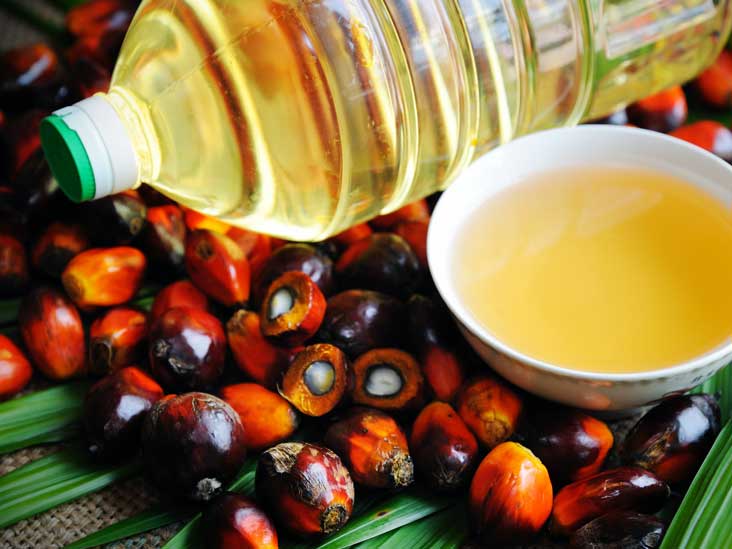
Colombo (LNW): Former Finance Minister Ravi Karunanayake has indicated a potential lift on the ban imposed by former President Gotabaya Rajapaksa in 2021 on the cultivation of palm oil.
The ban extended to both imports and local cultivation.
Following a meeting with the association of palm oil growers, Karunanayake acknowledged the adverse impact on livelihoods and suggested that the ban could be lifted after consulting experts in the field.
The growers argued that palm oil cultivation has significant economic potential, generating more foreign exchange revenue than tea and rubber combined.
Karunanayake pledged to discuss the matter with President Ranil Wickremesinghe, aiming for a ban lift in January.
Colombo (LNW): In light of international entities from nations like Russia, China, Denmark, and the United States expressing interest in investing in nuclear energy, the Sri Lanka Atomic Energy Authority (SLAEA) has granted approval for nuclear power, as stated by an official source.
Russia, having previously invested in nuclear power ventures in Bangladesh and India, is now demonstrating a heightened interest in establishing a nuclear plant in Sri Lanka.
A recent visit by a prominent Russian delegation to Sri Lanka involved discussions with local authorities, focusing on potential cooperation in the nuclear energy sector, among other matters.
According to Daily Mirror, SLAEA Chairman Prof. S.R.D. Rosa briefed the Russian delegation on the current status of the proposed nuclear power plant development in Sri Lanka, whether offshore or onshore. The SLAEA has given its preliminary approval for the project to enhance Sri Lanka’s energy diversity, pending approval from the Foreign Ministry, the Daily Mirror report said.
The successful implementation of the project depends on the signing of an Intergovernmental Agreement (IGA) between Sri Lanka and Russia, which is currently pending. Russia has offered support for capacity building and training for Sri Lankan professionals in the field.
The proposal suggests the installation of small modular reactors (SMRs), advanced nuclear reactors, pending a policy decision. However, discussions regarding the financing model for the project, estimated to exceed US $2 billion, are yet to take place.
Addressing safety concerns, Rosa emphasised the inherent safety of SMRs, stating that incorporating nuclear power into Sri Lanka’s energy mix is advisable. Regarding proposals from other countries, he mentioned that talks were held with a Chinese delegation, and proposals from companies in the United States and Denmark have also been received.