Home Blog Page 2399

Going for broke

0

Sri lanka has suffered multiple crises and nearly three decades of civil war since it won independence from Britain in 1948. But it had never failed to pay back its debts. That changed on April 12th, when the South Asian island nation’s finance ministry said in a statement that it would suspend payments on all foreign debt until it had come to an agreement with creditors on how to restructure the loans. The document stressed the country’s unblemished record of meeting its obligations. But continuing to do so, it said, “is no longer a tenable policy”. Recent developments, including the economic fallout from the pandemic and the war in Ukraine, meant paying up had become “impossible”.

Though wrenching, the decision to suspend debt payments may be the first serious step towards fixing the country’s deepening economic crisis. The government’s admission brings it in line with the view of the imf, which said last month that dwindling foreign reserves had made Sri Lanka’s foreign debt “unsustainable”. P. Nandalal Weerasinghe, who took over as governor of the country’s central bank on April 7th after his predecessor resigned amid protests, said that halting payments would allow Sri Lanka’s remaining foreign exchange to be used on imports of food and fuel while the country negotiates with the imf and other creditors.

The de facto default is the culmination of a crisis that has been brewing for several years in the country of 22m people. A slew of ill-conceived tax cuts in 2019, combined with a pandemic-induced collapse in tourism, prompted rating agencies to downgrade Sri Lanka’s bonds in early 2020, in effect locking it out of international credit markets. The agencies have since taken an even dimmer view. Yet the government denied that it needed help from the imf until last month, spending its rapidly diminishing foreign reserves propping up the rupee and making debt payments.

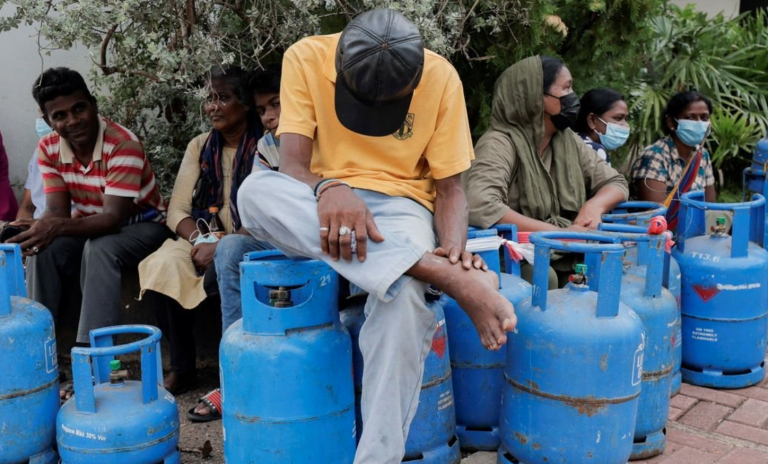
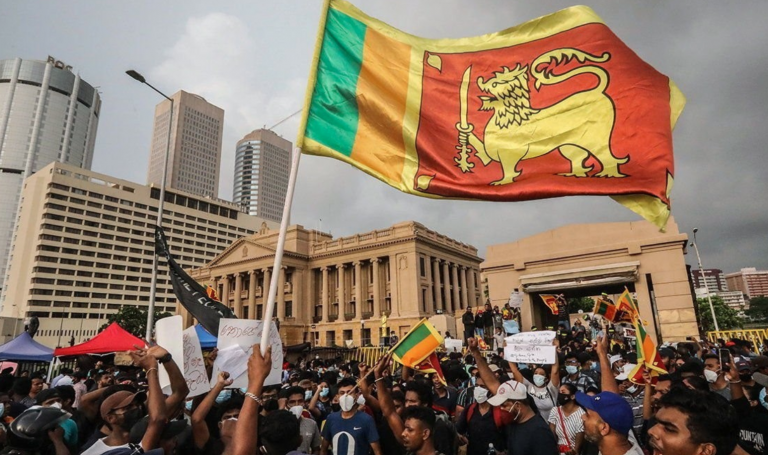
Matters came to a head in recent weeks as power cuts of up to 13 hours a day, long queues for petrol and cooking gas and spiking food prices drove angry Sri Lankans into the streets in ever greater numbers. They demanded the government step down. Gotabaya Rajapaksa, the president, tried to quell the protests, first by imposing a state of emergency, then by quickly lifting it and appointing new ministers.

Mr Rajapaksa’s slumping popularity and the failure of his attempt to intimidate the public have further eroded his authority to deal with the crisis. But at least his recent appointments have given Sri Lanka a new central-bank governor and a finance minister who appear clear-eyed about just how much trouble the country finds itself in. The suspension of payments follows a move by the central bank on April 8th to raise the interest rate by a staggering seven percentage points, to 14.5%, to curb runaway inflation. Both men apparently hope that the self-declared debt holiday will be only a temporary measure to gain breathing space as official talks with the imf begin on April 18th over the conditions for a bail-out, which may eventually help with regaining access to global bond markets.

Reaching a deal will involve a complex set of negotiations. Sri Lanka owes around half of its $35bn in external debt to private bondholders in international credit markets. China and Japan are the country’s biggest state creditors, accounting for about 10% of its total debt each. Restructuring that will probably involve writing off some of it. The imf is unlikely to offer a bail-out unless both countries agree to forgive at least some of the debt owed to them, to avoid any fresh assistance flowing straight back into China or Japan’s coffers.

Such agreement may not be forthcoming. China, which has lent large amounts of money to a host of other highly indebted emerging markets, may be particularly reluctant to set a precedent by starting to accept haircuts. It has yet to respond officially to a request for restructuring which Sri Lanka made back in January.

A bail-out from the imf will also require unpleasant economic reforms. Ali Sabry, who formally started as finance minister on April 8th after being appointed a few days earlier and immediately attempting to resign, said over the weekend that the government would raise taxes and fuel prices, reduce spending and begin to restructure unwieldy state-owned enterprises over the coming months.

These measures are also likely to form part of the imf’s stipulations. Designed to return the country to a sustainable fiscal state in the long term, they will probably make life even more painful for ordinary Sri Lankans in the short term. The government, which has lacked a parliamentary majority since its coalition partners abandoned it on April 5th, continues to be the subject of angry public protests. It may have a hard time convincing creditors that it has the popular support to see through unpopular reforms. Sri Lanka may at last be heading in the right direction, but it remains deep in the woods.
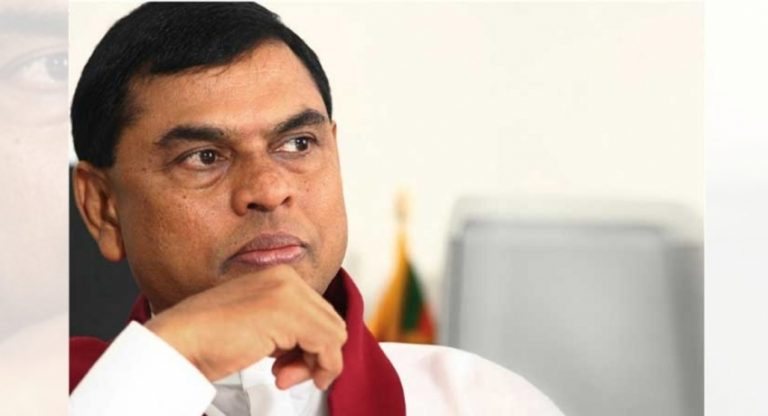
Basil Rajapaksa infected with the Covid-19

0

Former Finance Minister Basil Rajapaksa has been infected with the Covid-19 virus, reports say.

He is being treated at a private hospital in Colombo.

Sri Lanka’s default could be the first of many

0

The economic fallout from Russia’s invasion of Ukraine now includes a sovereign default. On April 12th Sri Lanka said that it would suspend payments on the $35bn its government owes foreign creditors. Surging food and energy prices, the result of wartime disruption to commodity markets, have dealt a heavy blow to an economy that was already mismanaged, and brought even erstwhile government supporters onto the streets in protest. Sri Lanka may not be the only country to run aground in the hazardous conditions prevailing in the global economy.

Rising inflation and higher interest rates are painful everywhere, but the stakes are particularly high in poor and middle-income countries. Food prices, which are up by nearly 20% this year, make up a greater share of consumer spending. Inflation is more likely to spiral out of control. And policymakers must also worry about capital flight and falling exchange-rates when the Federal Reserve raises interest rates—as it will over the next year.

As investors have priced in such tightening, the yields on ten-year Treasuries have risen by 1.2 percentage points in the past six months. That is roughly the same increase as during the “taper tantrum” of 2013, when emerging markets suffered capital flight because of a hawkish Fed. There is no sign of a repeat retrenchment on that scale, in part because many middle-income countries now have stronger balance-sheets, and also because many emerging-market central banks have been raising interest rates to get ahead of the inflation problem. (Brazil’s central bank has increased rates by nearly ten percentage points in little more than a year.) But investors have pulled some money out of emerging markets, and the Fed may yet have to raise rates further still.

Often higher rates in the rich world are associated with a stronger world economy, which boosts exports for emerging markets. This time, however, America is overheating, and may face a recession as it slams the monetary brakes. Europe is being squeezed by expensive energy. Though countries that pump oil or grow soyabeans will benefit from higher commodity prices, they must still fight inflation and cope with tighter financial conditions. Commodity importers like Sri Lanka face the sort of pressure that can unseat governments as well as disrupt the economy. Food and energy prices are fuelling unrest in Tunisia and Pakistan.

Several middle-income countries face idiosyncratic crises: China is locking down to battle a coronavirus outbreak, and Argentina continues to stagger under the weight of unsustainable debts. But the greatest vulnerability is found among the poorest economies, nearly 60% of which are in debt distress or at high risk of it, according to the World Bank. One worry is that almost a third of their total debt now carries a floating rate of interest, up from 15% in 2005, making them more exposed to monetary tightening.

It does not help that it is harder than ever to provide emergency support to struggling poor countries. In aggregate they owe more to China than to the “Paris Club” of rich governments who have typically co-operated to restructure debts. So far attempts to include China and other new lenders like Saudi Arabia and India in debt-restructuring efforts have flopped. The imf only lends to countries with sustainable debts, and the West does not want to see its aid being siphoned off by other creditors. Geopolitical conflict is making the poor world’s economic problems worse, and harder to resolve. 

THE ECONOMIST

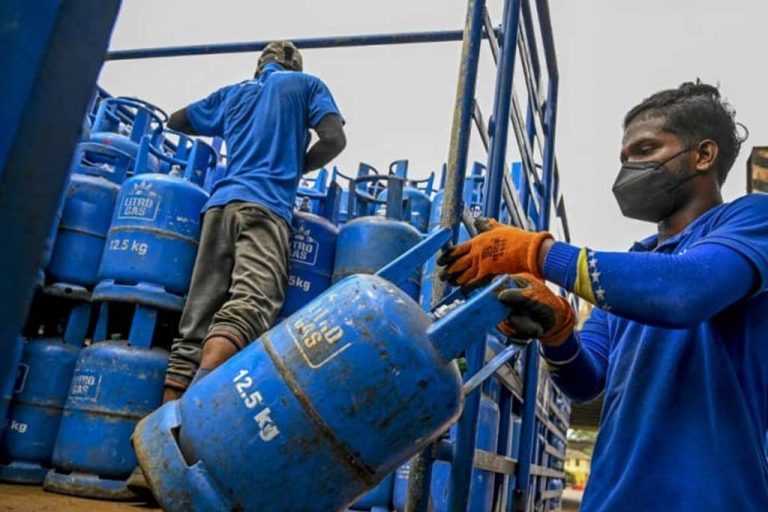
Litro chairman resigns

0

Thushara Jayasinghe, Chairman of Litro Gas Lanka has resigned from his post.

It is said that he has sent a letter to the President informing him of his resignation.

He has stated in his letter that he will resign from April 14 on the basis of policy decisions regarding the gas crisis and the current situation in the country.

Litro has also suspended gas distribution for five days until the 18th and has given all employees five days off.

Due to the crisis in foreign reserves, the government has not been able to import gas properly and has not been able to resolve the issue further.

SriLankan Airlines clarifies 2021 cargo flights to Uganda

0

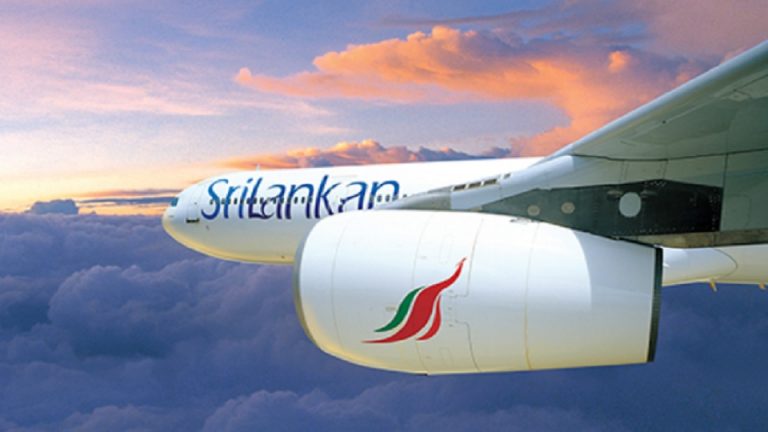
SriLankan Airlines has clarified the controversial 2021 SriLankan Airlines flight to Uganda.

They note that in 2021, a consignment of cargo was shipped to Entebbe International Airport in Uganda on a commercial basis only.

SriLankan Airlines has received an order for the shipment of 102 tons of Ugandan currency notes in February 2021.

They say it was a purely commercial process that has the potential to bring in foreign income to the country.

SriLankan Airlines has stated that it will not disclose the details of the cargo consignment in accordance with the standards and liabilities of the cargo industry.

Russia warns of nuclear deployment if Sweden, Finland join NATO

0

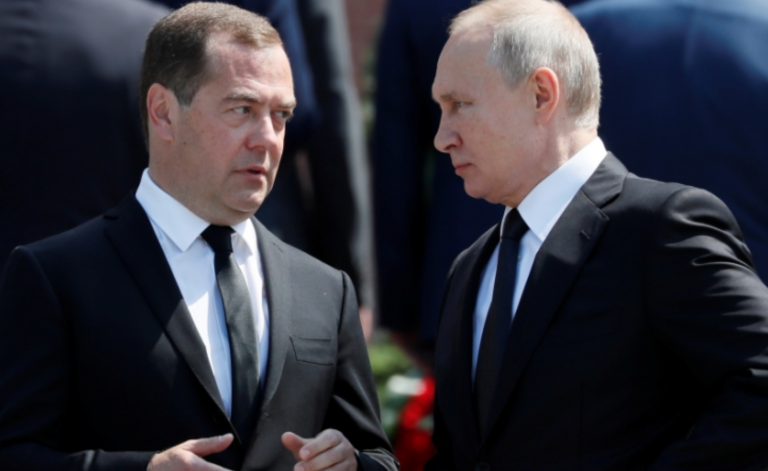
One of Russian President Vladimir Putin’s closest allies warned NATO on Thursday that if Sweden and Finland joined the US-led military alliance then Russia would deploy nuclear weapons and hypersonic missiles in an exclave in the heart of Europe.

Finland, which shares a 1,300km (810-mile) border with Russia, and Sweden are considering joining the NATO alliance.

Dmitry Medvedev, deputy chairman of Russia’s Security Council, said that, should Sweden and Finland join NATO, then Russia would have to strengthen its land, naval and air forces in the Baltic Sea.

Medvedev also explicitly raised the nuclear threat on Thursday by saying that there could be no more talk of a “nuclear-free” Baltic – where Russia has its Kaliningrad exclave sandwiched between Poland and Lithuania.

“There can be no more talk of any nuclear-free status for the Baltic – the balance must be restored,” said Medvedev, who was Russian president from 2008 to 2012.

Medvedev said he hoped Finland and Sweden would see sense. If not, he said, they would have to live with nuclear weapons and hypersonic missiles close to home.

Russia has the world’s biggest arsenal of nuclear warheads and, along with China and the United States, is one of the global leaders in hypersonic missile technology.

Kremlin spokesman Dmitry Peskov, asked about Medvedev’s comments by journalists, said that “this has been talked about many times” and President Vladimir Putin has issued an order on “reinforcing our western flank” due to NATO’s growing military potential.

Asked if this reinforcement would include nuclear weapons, Peskov said, “I can’t say … There will be a whole list of measures, necessary steps. This will be covered at a separate meeting by the president.”

Lithuania said Russia’s threats were nothing new and that Moscow had deployed nuclear weapons to Kaliningrad long before the war in Ukraine.

AL JAZEERA

WHO warns coronavirus is far from settling into endemic situation

0

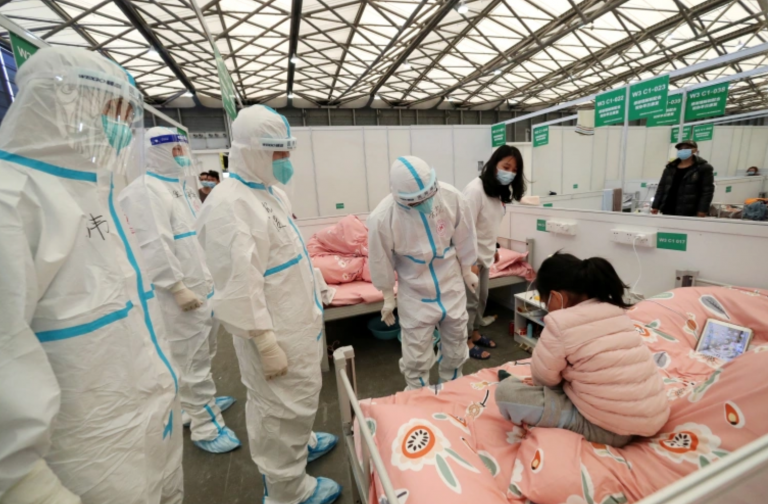
COVID-19 is far from becoming an endemic disease and could still trigger large outbreaks around the globe, the World Health Organization (WHO) said.

WHO Health Emergencies Programme Director Michael Ryan said on Thursday that it was wrong to think that if COVID-19 settles down and becomes endemic, it will mean the end of the problem.

“I certainly do not believe we’ve reached anything close to an endemic situation with this virus,” Ryan told a question-and-answer session on the WHO’s social media channels.

“That is not an endemic disease yet,” he said.

Ryan said the coronavirus has not yet settled into any seasonal or transmission pattern, and remained capable of causing huge epidemics.

“Don’t believe that endemic equals it’s over, it’s mild or not a problem. That’s not the case at all,” Ryan said, citing tuberculosis and malaria as endemic diseases that still killed millions of people per year.

WHO’s COVID-19 Technical Lead Maria Van Kerkhove, who herself has caught the disease and is isolating in the United States, said the virus continued to circulate at a high level, causing “huge amounts of death and devastation”.

“We’re still in the middle of this pandemic. We all wish that we weren’t. But we are not in an endemic stage,” she said.

Last week saw the lowest number of COVID-19 deaths recorded since the first days of the pandemic in early 2020.

However, more than 20,000 deaths were reported, which Ryan said was “still too many… we should be happy but we shouldn’t be satisfied”.

He explained that once epidemic diseases settle down into an endemic pattern, they can often become childhood diseases, such as measles and diphtheria, because “as new children are born, they are susceptible”.

But if vaccination levels drop, as has happened with measles, epidemics can break out again.

AL JAZEERA

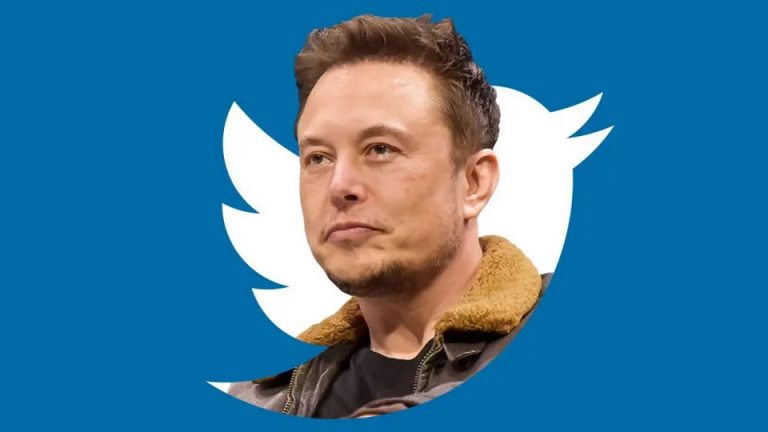
Elon Musk ‘not sure’ his takeover bid for Twitter will be successful

0

Tesla boss Elon Musk has said he is “not sure” his takeover bid for social media firm Twitter will be successful.

He made the comments at a conference just hours after revealing that he had offered to buy the company for $54.20 a share, or more than $40bn (£30.6bn).

Also on Thursday, Twitter’s chief executive told employees that the company was evaluating the approach.

Parag Agrawal also reportedly said at the staff meeting that the company was not being “held hostage” by the offer.

Speaking at the TED2022 conference in Vancouver, Mr Musk said: “I am not sure that I will actually be able to acquire it.”

He added that he had a Plan B if his bid for Twitter was rejected, but gave no further details of what that could mean.

Mr Musk also said at the event that Twitter should be more open and transparent.

“I think it’s very important for there to be an inclusive arena for free speech,” he said.

Earlier on Thursday, he revealed his offer to buy all the shares in Twitter that he does not already own.
In an official filing to US regulators, Mr Musk said he was the right person to “unlock” the company’s “extraordinary potential” and that if his offer was not accepted, “I would need to reconsider my position as a shareholder.”

He also said that if Twitter’s board of directors chose to reject the offer, it would be “utterly indefensible not to put this offer to a shareholder vote”.

Twitter confirmed that it had received the bid, but said its board must still review the “unsolicited, non-binding” offer, which values its shares at well below the level of more than $70 that they reached last summer.

Mr Musk already owns more than 9% of the social media platform, but he is no longer its biggest shareholder.

Asset management firm Vanguard Group disclosed on 8 April that its funds now own a 10.3% stake, bumping him off the top spot.

BBC

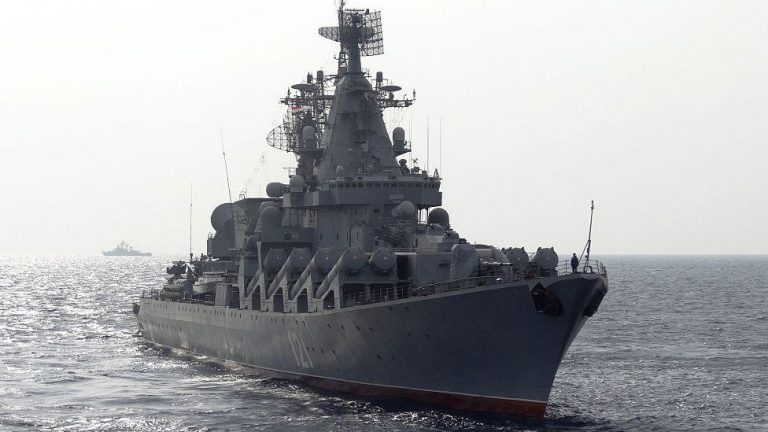
Russian warship Moskva has sunk

0

A Russian warship that was damaged by an explosion on Wednesday has sunk, Russia’s defence ministry has said.

Moskva, the flagship of Russia’s Black Sea Fleet, was being towed to port when “stormy seas” caused it to sink, according to a ministry message.

The 510-crew missile cruiser was a symbol of Russia’s military power, leading its naval assault on Ukraine.

Kyiv says its missiles hit the warship. Moscow has not reported any attack. It says the vessel sank after a fire.

The blaze caused the explosion of the warship’s ammunition, Russia says, adding that the entire crew were later evacuated to nearby Russian vessels in the Black Sea. It provided no further details.

“While being towed… towards the destined port, the vessel lost its balance due to damage sustained in the hull as fire broke out after ammunition exploded. Given the choppy seas, the vessel sank,” state news agency Tass quoted the Russian defence ministry as saying.

Ukrainian military officials said they struck the Moskva with Ukrainian-made Neptune missiles – a weapon designed after Russia’s annexation of Crimea in 2014, and the naval threat to Ukraine in the Black Sea grew.

A senior Ukrainian official said as many as 510 crew could have been on board the Moskva.

On the first day of Russia’s invasion of Ukraine on 24 February, the Moskva gained notoriety after calling on a small garrison of Ukrainian border troops defending Snake Island in the Black Sea to surrender – to which they memorably radioed an expletive-laden message of refusal

Originally built in the Soviet-era, the Moskva entered service in the early 1980s. The vessel was actually laid down in Ukraine’s southern city of Mykolaiv, which has been heavily bombed by Russia in recent days.

The guided missile cruiser was previously deployed by Moscow in the Syria conflict where it supplied Russian forces in the country with naval protection.

It reportedly had 16 Vulkan anti-ship missiles and an array of anti-submarine and mine-torpedo weapons.

If the Ukrainian attack is confirmed, the 12,490-tonne Moskva would be the biggest warship to be sunk by enemy action since World War Two. 

It is the second major vessel Russia has lost since the start of its invasion. In March, the Saratov landing ship was destroyed by a Ukrainian attack in the harbour of Berdyansk, a Sea of Azov Ukrainian port seized by Russia.

BBC

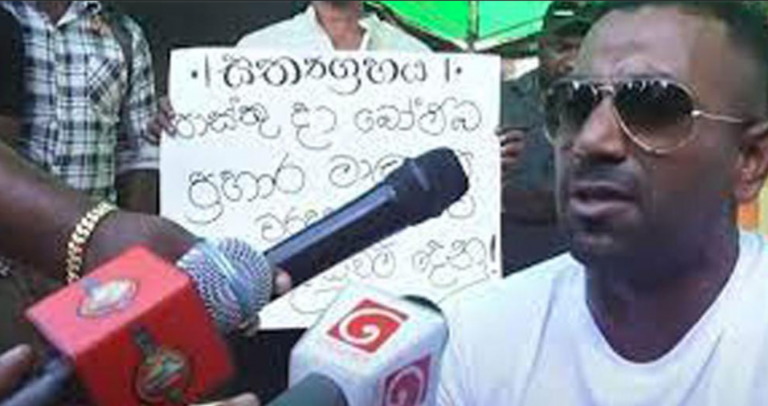
Dhammika Prasad launches satyagraha amidst the Galleface protests

0

Cricketer Dhammika Prasad has commenced a 24 hour satyagraha today (15) at the Galle Face Protest Center.

It has been three years since the Easter attack, and he has started a satyagraha demanding justice for the situation and the current situation in the country.

He emphasizes that the people are in a very miserable situation and justice should be done to them.

He also states that this was due to the fact that he too wants to support the ongoing struggle of the youth community at the Galle Face Green.