Home Blog Page 1354

Few showers will occur in Western and Sabaragamuwa provinces

0

A few showers will occur in Western and Sabaragamuwa provinces and in Galle and Matara districts.

Showers or thundershowers will occur at a few places in Central and Uva provinces and in Ampara, Batticaloa and Polonnaruwa districts during the evening or night.

Mainly fair weather will prevail elsewhere over the Island.

Remembering Former Minister Mangala Samaraweera: Two Years Since His Passing

0

Today marks the solemn remembrance of two years since the passing of the esteemed former Minister Mangala Samaraweera. On August 24, 2021, the nation mourned the loss of a remarkable statesman who succumbed to a battle with COVID-19 while undergoing treatment at a hospital.

Mangala Samaraweera’s legacy transcends time, etching enduring imprints on the political landscape of Sri Lanka, particularly within the realm of liberal politics. His steadfast commitment to principles even in the face of daunting challenges such as racism, religious tensions, and militarism resonates deeply with the citizens he served.

As we reflect on these two years without his physical presence, the memory of Mangala Samaraweera remains vibrant and alive in the hearts and minds of countless individuals. His unwavering dedication to his ideals continues to inspire us, ensuring that his contributions to Sri Lankan politics endure far into the future.

Several diplomatic appointments take place

0

The Government of the Federal Republic of Germany with the concurrence of the Government of Sri Lanka has appointed Dr. (Mr.) Felix Neumann as Ambassador Extraordinary and Plenipotentiary of the Federal Republic of Germany to Sri Lanka based in Colombo.

He has presented credentials to the President of Sri Lanka Ranil Wickremesinghe, on 23 August 2023 at 10.00 a.m. at the Presidential Secretariat, Colombo 01.

The Government of the United Kingdom of Great Britain and Northern Ireland with the concurrence of the Government of Sri Lanka has appointed Mr. Andrew Patrick as High Commissioner of the United Kingdom of Great Britain and Northern Ireland to Sri Lanka based in Colombo.

He has presented credentials to the President of Sri Lanka Ranil Wickremesinghe, on 23 August 2023 at 10.00 a.m. at the Presidential Secretariat, Colombo 01.

The Government of the Republic of Italy with the concurrence of the Government of Sri Lanka has appointed Mr. Damiano Francovigh as Ambassador Extraordinary and Plenipotentiary of the Republic of Italy to Sri Lanka based in Colombo. He has presented credentials to the President of Sri Lanka Ranil Wickremesinghe, on 23 August 2023 at 10.00 a.m. at the Presidential Secretariat, Colombo 01.

The Ves Ceremony and Pahim Path Mangalya held at the Embassy premises showcasing SL Traditional Dance

0

As an initiative to showcase Sri Lankan culture in the United States, the Embassy of Sri Lanka in Washington, D.C., in collaboration with Natamu School of Sri Lankan Traditional Dancein Maryland, held the Ves Mangalya, Ves Ceremony on 19 August 2023 at the Embassy premises.

Ves Mangalya is a vibrant celebration of Sri Lanka’s rich cultural heritage and a beautiful amalgamation of tradition, art, and spirituality. It is a momentous occasion that not only demonstrates the talent of the students but also serves as a testament to the enduring legacy of Sri Lanka’s traditional dance, which continues to thrive and enchant audiences worldwide. The ceremony is a blend of an art showcase and a graduation, symbolizing the completion of a significant chapter in the students’ journey as traditional dancers. 

On the day of the Ves Mangalya celebration, a boy and four girls, adorned in their exquisite traditional costumes, underwent a ritualistic blessing of Maha Sangha, represented by Washington Buddhist Vihara, Maryland Buddhist Vihara, and Sri Sambuddhaloka Vihara in Hagerstown. Subsequent to the traditional rituals, the event commenced with the lighting of the oil lamp amidst traditional drumming, followed by the first dance performance of the event, the Mangalam Dance.

Ambassador Mahinda Samarasinghe, during his welcoming remarks, commended the Natamu School of Sri Lankan Traditional Dance for organizing a successful event and continuing the traditional dance arts in the United States. The Ambassador also mentioned that his decision to offer the Embassy premises for the event was as an encouragement for the talented young Sri Lankans who have decided to learn and nurture our own traditions despite being far away from the motherland. He expressed the hope that this successful event would be a regular occurrence in years to come where the graduating Sri Lankan-origin students will become Sri Lankan cultural ambassadors in the United States and teach Sri Lankan traditional dance to the next generation. 

The ritual of worshipping parents and teachers was also performed, followed by the Bulath Padaya and Yak Anuma dance act, captivating the audience of more than 250 individuals gathered at the chancery. Veteran dancers and drummers flown from Sri Lanka and New York conducted the rituals of Kandyan dance. The traditional refreshments including freshly brewed Ceylon tea were offered to the spectators at the conclusion of the event.

The event was attended by the Sri Lankan community, many US nationals and members of the diplomatic corps. Natamu School of Sri Lankan Traditional Dance, established in 2012 under the leadership of Chathuri Wickramarachchi, who has been a beacon of cultural preservation, creating a community that fosters multicultural awareness, diversity, and inclusivity.

SL Embassy Promotes Tourism and Cuisines in Brazil

0

The Embassy of Sri Lanka in Brazil promoted Sri Lanka Tourism, Cuisines and Ceylon Tea at the Annual Bazaar of the Asian and Oceania countries held at the Museu de Arte de Brasilia on Saturday, 19 August 2023.

The Diplomatic Missions of Arab League, India, Indonesia, Myanmar, Nepal, Pakistan, Palestine, Singapore, Sri Lanka, Syria and Vietnam participated at the event.

Sri Lanka stall was colorfully decorated with traditional Sri Lankan items including scenic pictures, crafts, products, Ceylon Tea, and Sri Lankan cuisines.

Leaflets on Sri Lanka Tourism in Portuguese language were distributed among the 3000 visitors that attracted the bazaar. Visitors to the Sri Lanka stall lined up in a long queue to taste Sri Lankan cuisines. They also had the opportunity to taste a cup of Ceylon Tea.  

The crowd impressed to watch video clips on Sri Lanka as a Tourist destination and Kandyan dancing  screened on the large digital screen at the venue at regular intervals.

CB bans nine entities over pyramid schemes

0

By: Isuru Parakrama

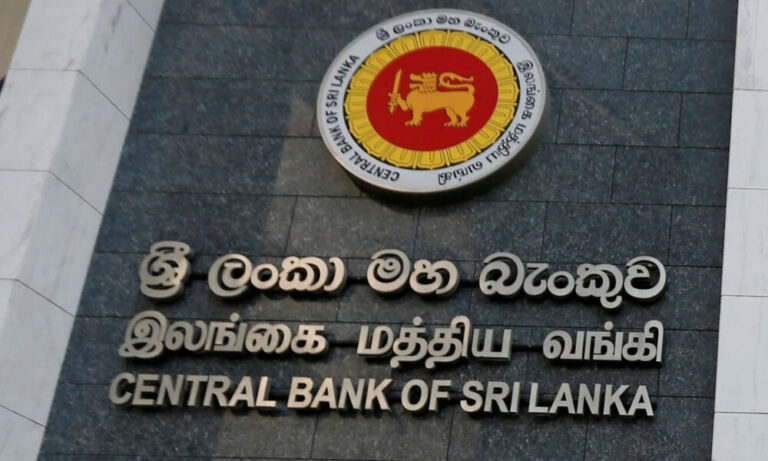
Colombo (LNW): The Central Bank of Sri Lanka (CBSL) has banned nine entities over the operation of prohibited monkey schemes known as ‘pyramid schemes’.

In a notice, the CBSL said it has determined the below entities conduct and / or have conducted these prohibited schemes:

  1. Tiens Lanka Health Care (Pvt) Ltd.
  2. Best Life International (Pvt) Ltd.
  3. Global Lifestyle Lanka (Pvt) Ltd.
  4. Mark-Wo International (Pvt) Ltd.
  5. V M L International (Pvt) Ltd.
  6. Fast 3Cycle International (Pvt) Ltd. (F3C)
  7. Sport Chain App, Sports Chain ZS Society Sri Lanka
  8. OnmaxDT
  9. MTFE App, MTFE Sl Group, MTFE Success Lanka (Pvt) Ltd and MTFE DSCC Group (Pvt) Ltd.

“Any person who directly or indirectly initiates, offers, promotes, advertises, conducts, finances, manages or directs a prohibited type pyramid schemes shall be guilty of a punishable offence,” the CBSL said in its notice.

Debt restructuring, austerity and the IMF: a panacea or an exacerbation? Part 5

0

Link to part 4

Dr. Lionel Bopage

The IMF program in Lanka and its implications

The IMF agreement with Sri Lanka emphasises fiscal consolidation, which requires the government to achieve a budget surplus within two years. It also conditions its funding on increases in energy tariffs and flexible exchange rates that will likely lead to currency devaluation and higher interest rates. In addition, the program projects unrealistically high revenues without imposing wealth taxes or restricting illicit financial flows.

Loan conditionality and austerity measures are regressive in nature and have a disproportionate impact on the most vulnerable members of society, and Sri Lanka is no exception. For example, the elimination of fuel subsidies will make transport for people in remote areas more costly, thereby reducing access to the services they receive. Similarly, increases in electricity tariffs will lead to higher healthcare costs, forcing those less well off to the Hobbesian choice between food, electricity, medicine and education for their children.

A better public sector

The rationale for a government to provide some services to the public is that profit-making or profit-maximising will not deliver those services to all who need them at an affordable price. A fundamental difference between a government and a business is that a government’s goods and services will be available to everyone who should get them. The wellbeing of an economy depends on certain resources being available to everyone who requires those resources in the population, irrespective of one’s ability to pay.

The efficiency of a government enterprise should not be assessed by whether it makes profits or not. For example, a public utility provider such as one delivering electricity, water or public transport can increase profits by raising the price of the good or service it delivers. But the result is that some people, usually the low-income consumers, will be deprived of their necessities.

Slashing the public service and making government smaller have been a repetitive mantra sold as a political panacea for addressing many economic challenges. In practice the results have been disastrous in numerous cases around the world. For example, in Australia, after several rounds of slashing the Federal Public Service and an increasing dependence on unaccountable, expensive private consultancies, the government has recently been forced (much to its ideological chagrin) to take tentative steps to reversing that trend. The reason is that instead of providing better services at lower cost, privatisation of public services often delivers massive profits for rich corporates while increasing overall costs to the government, providing lower quality-higher cost services to the public, and fostering political corruption.

It is true that the public sector often fails to meet basic service standards. What is needed then is to improve the quality of the services and the efficiency with which those services are delivered by undertaking investments in the sector that are needed to increase the  skills, understanding, and capacity for providing such services to the population.

Austerity and inequality

Austerity as demanded by the likes of the IMF will disadvantage the poor consumers, who already pay a large and unsustainable amount of their household income towards essential items, even further. The Governor of the Central Bank has rejected the assertion that almost the entire burden of debt restructuring will be borne by the working class. He states that it is a misrepresentation of reality[i]. However, the government is pushing ahead with the offensive by taking measures such as privatising public assets and targeting superannuation funds of working people. A hand-in-glove approach is used to provide more and more relief to the corporate sector, such as debt reprieves, tax holidays, and flexible labour laws. Finally, the government and IMF supported by their media outlets and think tanks have launched a ruthless assault on any alternative financial and fiscal routes.

There are alternatives which the next section explores, and which are being sidelined by supporters of the IMF package.

A non-austere path to addressing the crisis

As the Italian theoretician Antonio Gramsci remarked in the early part of the 20th century, when Italy was enduring one of its periodic economic and industrial crises:

The crisis creates situations which are dangerous in the short run, since the various strata of the population are not all capable of orienting themselves equally swiftly, or of reorganizing with the same rhythm. The traditional ruling class, which has numerous trained cadres, changes men and programmes and, with greater speed than is achieved by subordinate classes, reabsorbs the control that was slipping from its grasp. Perhaps it may make sacrifices and expose itself to an uncertain future by demagogic promises; but it retains power, reinforces it for the time being, and uses it to crush its adversary and disperse his leading cadres, who cannot be very numerous or highly trained.[ii]

IMF reforms focus on deregulating the economy and privatising resources available in the economy. For example, Sri Lanka has never been asked to industrialise by utilising its own natural resources. So, the country became dependent on exporting commodities of which prices vary, depending on global supply and demand based on the vagaries of the corporate world.

Securing vital sectors of economy

The sectors of the economy vital to Sri Lanka and its people are not secure. Like many developing countries have done, Sri Lanka has also bypassed strengthening of its manufacturing base. Instead, all those countries including Sri Lanka are relying on service sectors, built on a foundation of an unstable, vulnerable and manipulated economy based on speculation.

For example, almost all neo-liberal countries have secured food and energy sufficiency, while Sri Lanka is still overly dependent on food and energy imports[iii]. Ignoring the fact that Lanka can easily become self-reliant and secure in terms of food, energy and water has led to an ever-increasing foreign exchange deficit problem, forcing the country to borrow foreign exchange with no end in sight.

Developing countries like Sri Lanka are in structural dependency due to their external debt. Of course, almost all countries in the world carry some form of debt. However, the cost of borrowing depends on how economically advanced the country is. Developed countries can borrow at a much lower interest rate, as such loans are classified as “low” risk.

International experience with austerity

There is no historical evidence that austerity measures have worked in getting countries out of a debt crisis. Examples over many decades and spanning from Greece to Indonesia to Egypt and Tunisia show that austerity does not work. Reducing the fiscal deficit and servicing debt by squeezing the public sector have made the economic recession and crisis more severe by exacerbating inequalities. The need to have austerity measures in place has nothing to do with fixing a country’s long-term structural issues but ensures that its debt repayments will be prioritised to pay back international lenders and institutions.

Instead of repeatedly relying on measures that do not work and penalise the majority of the country’s citizenry, other financial steps ought to be put in place in indebted countries like Sri Lanka. Sri Lanka needs to assure the fiscal responsibility of the government by enforcing the laws against corruption, mismanagement, and wastage. In a country like Lanka, the ruling elite and its dependents eschew such fiscal responsibility by violating all transparency and accountability provisions. The country needs to find a fair economic pathway to live within its means. One way forward for this could be the electorate to hold politicians to account during election campaigns, by demanding them to provide concrete funding plans for their campaign promises in their election manifestos.

Fiscal transparency and accountability

The country needs to develop an Integrated Financial Management System (IFMS), so as to ensure each and every public transaction is fully captured allowing auditing agencies to trace back if and when necessary. At the moment, nobody knows what happens with the finances the government receives from lending institutions. This opaqueness has paved the way for many opportunities for collusion, corruption and money laundering. Limits should be placed on the government’s overall borrowing from domestic and international capital markets. Another significant measure the government can take is to reduce public expenditure. This will include cutting down the size of the government, in particular the large and untenable security apparatus.

The government needs to be transparent in its dealings with the IMF. All information between the IMF and the government needs to be fully disclosed to the populace, particularly the indebtedness of all state and semi-state agencies. Any measure that is implemented needs to be subjected to broader consultation within a wide national stakeholder forum on the economy. This should include all key representative groups including business and political entities, civil society, and trade unions, among others. Such consultative forums will generate valuable and innovative ideas for economic reforms. In turn, any reforms proposed would thereby enjoy better societal support.

To be continued

22 August 2023


[i] Discourse on Development (Devdiscourse) 7 July 2023, https://www.devdiscourse.com/article/headlines/2515211-sri-lanka-central-bank-governor-dismisses-concerns-over-projected-losses-for-epf-due-to-domestic-debt-restructuring

[ii] Antonio Gramsci, ‘State and Civil Society’, in Quintin Hoare and Geoffrey Nowell Smith, eds., Selections from the Prison Notebooks of Antonio Gramsci, Lawrence & Wishart, London, 1971, pp. 210-11.

[iii] For example, the Australia is demanding the European Union to offer significantly more generous concessions to Australian agricultural producers in order to ink a free trade agreement between like-minded partners at a time of mounting geopolitical uncertainty. Refer Australian Financial Review, 9 June 2023, https://www.afr.com/policy/economy/trade-deal-unlikely-unless-eu-lets-in-australian-farmers-20230709-p5dmv7

Heat index advisory continues on 08 districts

0

By: Isuru Parakrama

Colombo (LNW): The Natural Hazards Early Warning Centre of the Department of Meteorology today (23) issued another notice with heat index advisory being considered for eight districts amidst the ongoing arid weather affecting the island.

The heat index is expected increase up to ‘caution’ level at some places in North-Central and Eastern provinces and in Vavuniya, Mullativu, Moneragala districts, the Centre said in a statement.

The general public is urged to stay hydrated and take brakes in the shade as often as possible, check up on the elderly, the children and the sick, limit strenuous outdoor activities, and wear lightweight and white or light-coloured clothing.

G.C.E. A/L Exam results: State Minister gives update

0

Colombo (LNW): Education State Minister Aravind Kumar said the results of the 2022 G.C.E. Advanced Level examination will be released before September 10, 2023.

His comments come in the backdrop where the Commissioner General of Examinations had earlier stated that the A/L exam results will be released in August this year.

Meanwhile, the Education Ministry has announced that the 2023 G.C.E Advanced Level examination will be held from November 27 to December 21, 2023.

India prepares for Chandrayaan-3 attempt to land on the moon

0

Vikram lander scheduled to touch down at lunar south pole shortly after 6pm India time on Wednesday

India is preparing for its second attempted moon landing, a historic moment for the world’s most populous country.

Chandrayaan-3, which means “mooncraft” in Sanskrit, is scheduled to put down its Vikram lander shortly after 6pm (1230 GMT) near the little-explored lunar south pole in what would be a world first for any space programme.

A previous Indian effort failed in 2019, and the latest mission comes just days after Russia’s first moon mission in almost 50 years, destined for the same region, crashed on the lunar surface.

Former Indian space chief K Sivan said the latest photos transmitted back by the lander gave every indication the final leg of the voyage would succeed.

Students with painted faces surround a replica of the Chandrayaan-3 spacecraft in Chennai

Students with painted faces surround a replica of the Chandrayaan-3 spacecraft in Chennai. Photograph: R Satish Babu/AFP/Getty Images

“It is giving some encouragement that we will be able to achieve the landing mission without any problem,” he told AFP on Monday.

Sivan added that the Indian Space Research Organisation (ISRO) had made corrections after the failure of four years ago, when scientists lost contact with a lunar module moments before its slated landing.

“Chandrayaan-3 is going to go with more ruggedness,” he said. “We have confidence, and we expect that everything will go smoothly.”

The mission launched nearly six weeks ago in front of thousands of cheering spectators, taking much longer to reach the moon than those of the Apollo missions in the 1960s and 1970s, which arrived in a matter of days.

India is using rockets much less powerful than the US did back then. Instead, the probe orbited Earth several times to gain speed before embarking on its month-long lunar trajectory.

The spacecraft’s lander, Vikram, which means “valour” in Sanskrit, detached from its propulsion module last week and has been sending back images of the moon’s surface since entering lunar orbit on 5 August.

A day before the landing, the ISRO said on social media that it was proceeding on schedule and that its mission control complex was “buzzed with energy & excitement”.

“Smooth sailing is continuing,” the agency posted on X, formerly Twitter.

India has a comparatively low-budget aerospace programme, but one that has grown considerably in size and momentum since it first sent a probe to orbit the moon in 2008.

The latest mission comes with a price tag of $74.6m – far lower than those of other countries, in keeping with India’s frugal space engineering.

Experts say India can keep costs low by copying and adapting existing space technology, and thanks to an abundance of highly skilled engineers who earn a fraction of their foreign counterparts’ wages.

In 2014, India became the first Asian country to put a satellite into orbit around Mars and is slated to launch a crewed mission into Earth’s orbit in the next few years, starting with uncrewed test flights in 2024.

Sivan, the former ISRO chief, said India’s efforts to explore the relatively unmapped lunar south pole would make a “very, very important” contribution to scientific knowledge.

Only Russia, the US and China have previously achieved a controlled landing on the lunar surface.

Source: The Guardian