Inland Revenue Dept says income tax files have been opened for all MPs: warn MPs that failure to complete the Tax Returns for the year 2022/23 would result in the imposition of a fine of Rs.50,000.
Leader of the House tables proposal in Parliament to suspend State Minister Diana Gamage, and SJB MPs Sujith Sanjaya & Rohana Bandara from attending Parliament for a period of 1 month: 57 MPs vote for & 1 against to pass the Proposal: however, all 3 MPs can vote on the budget, despite their parliamentary suspension.
SL’s next IMF tranche set to be taken up by the IMF Executive Board on 12th Dec’23: item listed as – “First Review of the Extended Arrangement Under the EFF, Request for Waiver of Non-observance of Performance Criterion, Request for Modification of Performance Criteria, Financing Assurances Review, and Rephasing of Access”.
Madurai Bench of Madras High Court says that although half a century has lapsed since India signed the Indo-SL agreements (Sirima-Shastri Pact of 1964 and Sirima-Gandhi Pact of 1974) to resolve the status of Indian Origin Tamils (IOT) in SL, the Indian Govt has still not fulfilled its treaty obligations: notes that India was obliged to repatriate and grant citizenship to not less than six lakh IOTs from SL, but as of date only 461,639 IOTs have been conferred with Indian citizenship.
Tourism Development Authority defends the introduction of Minimum Room Rates: claims the decision is backed by sound evidence on the benefits to the economy: points out to the increased revenue by hoteliers after the MRR came into effect on 1st Oct’23.
Sectoral Oversight Committee on Environment, Natural Resources & Sustainable Development reveals that 938 MT of plastic is generated in SL every day: also reveals that only 32% of the generated amount is collected and only 4% of the collected plastic is mechanically recycled.
Irrigation Ministry Secretary U D C Jayalal confirms that the Ministry has received a proposal for a floating solar plant on Malwathu Oya and that it is currently under evaluation.
Agriculture Minister Mahinda Amaraweera says the Cabinet has approved the import of 100,000 MT of keeri samba rice for the upcoming festive season: also says the Govt has decided to import 50,000 MT of rice under the first phase and sell it only under the intervention of the state.
US Ambassador to SL Julie Chung raises concerns re. the continued use of the Prevention of Terrorism Act: highlights the importance of the need to protect certain fundamental freedoms.
Sources based in Jaffna say Mahendraraja Gopalswamy alias “Mahattaya”, the one-time deputy leader of the LTTE, has been left out of its “Heroes list” as displayed in Nallur, Jaffna, during the recent “Mahaveer Naal” celebrations: Mahattaya was executed on 28th Dec’94 on orders of LTTE leader Velupillai Prabhakaran.
Colombo (LNW): The Deep Depression over Southwest Bay of Bengal located near latitude 11.2°N and longitude 82.7°E, at 2330hrs of 02 December and about 330 km northeast of Jaffna will develop into a Cyclonic storm during next 12 hours, the Department of Meteorology warned in its daily weather forecast today (03).
The system is moving away from the island near the northern coast of Sri Lanka, towards North Tamil Nadu coast of India by December 04, 2023, the statement went on, adding that thereafter, it would move northwards as a Cyclonic Storm and cross South Andhra Pradesh coasts December 05, 2023.
Cloudy skies can be expected over Northern, North-central and Eastern provinces, it added.
Showers or thundershowers will occur at times in Northern and North-central provinces and in Trincomalee and Batticaloa districts. Fairly heavy showers above 75 mm are likely at some places.
Several spells of showers will occur in Sabaragamuwa province and in Kandy and Nuwara eliya districts.
Showers or thundershowers will occur at several places in Uva province and in Ampara and Hambantota districts after 01.00 p.m.
Showers may occur in Western province and in Galle and Matara districts during the morning.
Strong winds about (40-50) kmph can be expected at times over the Northern, North-central, North-western and Southern provinces and in Trincomalee and Batticaloa districts.
The general public is kindly requested to take adequate precautions to minimise damages caused by temporary localised strong winds and lightning during thundershowers.
Marine Weather:
The Deep Depression over Southwest Bay of Bengal located near latitude 11.2°N and longitude 82.7°E, at 2330hrs of 02 December and about 330 km northeast of Jaffna. It will develop into a Cyclonic storm during next 12 hours. The system is moving away from the island near the northern coast of Sri Lanka, towards North Tamil Nadu coast of India by December 04, 2023. Thereafter, it would move northwards as a Cyclonic Storm and cross South Andhra Pradesh coasts December 05, 2023. It is dangerous to engage in activities in the sea areas off the coast extending from Mannar to Pottuvil via Kankasanthurai, Trincomalee and Batticaloa. Therefore, Naval and fishing communities are advised not to venture into the above sea areas until further notice.Naval and fishing communities are engaged in activities in the sea areas off the coast extending from Galle to Pottuvil via Matara are request to be vigilant.Fishing and naval community are requested to be attentive to future forecasts issued by the Department of Meteorology in this regard.
Condition of Rain:
Showers or thundershowers will occur at times in the sea areas off the coast extending from Puttalam to Pottuvil via Mannar, Kankasanthurai and Trincomalee. Showers or thundershowers will occur at several places in the other sea areas around the island.
Winds:
Winds will be north-westerly or South- westerly and wind speed will be (30-40) kmph in the sea areas around the island. Wind speed may increase up to (60-70) kmph in the sea areas off the coast extending from Mannar to Pottuvil via Kankasanthurai, Trincomalee and Batticaloa and up to (50-60) kmph in the sea areas off the coast extending from Galle to Pottuvil via Hambantota.
State of Sea:
The sea areas off the coast extending from Mannar to Pottuvil via Kankasanthurai, Trincomalee and Batticaloa will be very rough at times. The sea areas off the coast extending from Galle to Pottuvil via Hambantota can be rough at times and the other sea areas around the Island can be fairly rough at times. Temporarily strong gusty winds and very rough seas can be expected during thundershowers.
Colombo (LNW): In November 2023, headline inflation, measured by the year-on-year change in the Colombo Consumer Price Index (CCPI, 2021=100), rose to 3.4%, marking a notable increase from October’s 1.5%.
This uptick aligns closely with the Central Bank of Sri Lanka’s (CBSL) November 2023 projections.
The Food deflation (Y-o-Y) extended for the fifth consecutive month, registering 3.6% in November 2023 compared to 5.2% in October 2023. Concurrently, Non-Food inflation (Y-o-Y) saw an uptick to 6.8% in November 2023, up from 4.9% in October 2023.
The monthly change in CCPI for November 2023 stood at 1.06%, attributed to price increases in both Food (0.12%) and Non-Food (0.95%) categories.
However, core inflation (Y-o-Y), reflecting the underlying inflation in the economy, decreased to 0.8% in November 2023 from 1.2% in October 2023.
The outlook suggests that inflation is expected to stabilise around the targeted level of 5% over the medium term, supported by appropriate policy measures and well-anchored inflation expectations.
However, the short-term horizon may witness a transitory increase in inflation due to anticipated tax hikes, potential second-round impacts, and potential upward adjustments to administratively determined prices.
Colombo (LNW): The Colombo Stock Exchange (CSE) experienced positive investor sentiment following the successful conclusion of external creditors’ bilateral agreement with the government on external debt restructuring, The Island reported.
This optimism led to a notable improvement in banking sector counters as market analysts anticipated a potential upgrade in Sri Lanka’s Rating Agencies status from Restricted Default to a positive rate category.
Both indices, the All Share Price Index and S&P SL20, witnessed upward movement, with gains of 146.07 points and 50.5 points, respectively. The day’s turnover amounted to Rs 962 million, featuring three notable crossings.
Expolanka Holdings, Sampath Bank, and Lion Brewery were involved in these crossings, contributing to the positive market trend.
In the retail market, the top seven companies driving turnover included Sampath Bank (Rs 131.9 million with 1.9 million shares traded), Capital Alliance (Rs 55 million with 834,000 shares traded), Expolanka Holdings (Rs 47.5 million with 361,000 shares traded), JKH (Rs 44.5 million with 231,000 shares traded), NDB (Rs 37.9 million with 553,000 shares traded), NTB (Rs 35.7 million with 337,000 shares traded), and HNB (Rs 33.5 million with 196,000 shares traded). The banking sector counters played a significant role in contributing to the day’s turnover.
In total, 38.7 million shares changed hands in 9,700 transactions. The rupee opened at Rs 327.70/328.00 to the US dollar, showing a marginal change from the previous day’s rate of Rs 328.00/15.
Colombo (LNW): The Executive Board of the International Monetary Fund (IMF) is scheduled to review the first assessment of Sri Lanka’s 48-month Extended Fund Facility (EFF) Arrangement on December 12, as outlined in the global lender’s Executive Board calendar.
The agenda for the meeting includes the first review of Sri Lanka’s extended arrangement under the EFF, a request for a waiver of nonobservance of performance criteria, a request for the modification of performance criteria, a financing assurances review, and the rephasing of access.
Facing its most severe financial crisis in seven decades last year due to dwindling foreign exchange reserves, Sri Lanka secured a USD 2.9 billion IMF bailout in March. Since then, the South Asian nation has made strides in stabilising its economy, curbing inflation, and rebuilding currency reserves.
An IMF mission conducted the first review of the EFF-supported economic adjustment program during a visit to Sri Lanka from September 14-27. In October, Sri Lanka and the IMF reached a staff-level agreement on economic policies, a crucial step towards concluding the first review.
Approval of the review by the IMF Management and Executive Board is expected to unlock the second tranche of approximately USD 330 million in financing, bringing the total IMF financial support disbursed under the arrangement to around USD 660 million.
Sri Lanka has also reached in-principle agreements with the Export-Import (Exim) Bank of China, its largest bilateral creditor, and the Official Creditor Committee (OCC) to restructure its debts.
On November 29, the Sri Lankan government and the OCC announced an in-principle agreement on the financial terms of debt treatment, covering about USD 5.9 billion of outstanding public debt.
This deal includes a combination of long-term maturity extension and a reduction in interest rates.
Established in May 2023, the OCC, co-chaired by India, Japan, and France (as the chair of the Paris Club), played a pivotal role in coordinating the restructuring of Sri Lanka’s debt.
The committee, comprising 17 countries, engaged extensively with Sri Lankan authorities, the IMF, the World Bank, China, and Sri Lanka’s private creditors.
The agreement with the OCC followed a similar deal with China’s Exim Bank, which covered approximately USD 4.2 billion of outstanding debt.
The IMF has indicated that these agreements pave the way for considering the clearance of the first review of the bailout.
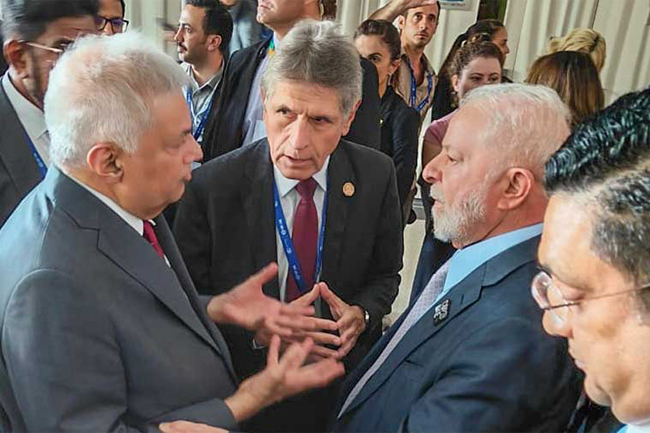
Colombo (LNW): President Ranil Wickremesinghe held a crucial meeting with his Brazilian counterpart Luiz Inácio Lula da Silva during the sidelines of the United Nations COP28 Climate Change Conference in Dubai on December 2.
The conversation brought attention to the common challenges presented by the Climate Change crisis in both nations.
Wickremesinghe extended an invitation to President Lula da Silva to participate in the Tropical Belt Initiative, stressing the significance of collaborative efforts within the initiative to address and alleviate the concerns affecting both Sri Lanka and Brazil.
The Sri Lankan leader also welcomed President Lula da Silva to visit the island nation.
Colombo (LNW): The Excise Department officials have reported a significant boost in monthly income amounting to Rs. 1 billion following intensified efforts to combat counterfeit stickers on liquor bottles.
This revelation came to light during a recent meeting of the Sectoral Oversight Committee on National Economic and Physical Plans held in Parliament under the chairmanship of MP Mahindananda Aluthgamage.
Summoning representatives from the Excise Department, Inland Revenue Department, and Sri Lanka Customs, the committee delved into issues highlighted in the report submitted to the President by the Sectoral Oversight Committee on National Economic and Physical Plans.
One key focus was the amendment of the Excise Ordinance Act. Emphasising the importance of sustaining the increased revenue of the Excise Department, the committee stressed that ongoing random raids would deter the proliferation of fake stickers on liquor bottles.
The Inland Revenue Department faced inquiries regarding the functionality of the RAMIS system, with the committee scrutinising its current status and the integration of this data system with other government institutions.
Officials assured the committee that existing deficiencies in the data system would be addressed, making it fully operational by January 2024. The Inland Revenue Department disclosed that the number of tax files presently stands at around 700,000, with expectations of reaching 1 million in the future.
In addition to these discussions, the committee recommended that officials concentrate on developing a system to assess parties accurately adhering to income tax payments.
Furthermore, the committee underscored the potential for customs to surpass anticipated tax revenue by amending relevant laws. Extensive deliberations took place on the customs’ strategies to ensure the collection of due taxes.
The committee’s comprehensive approach aims to strengthen fiscal measures and enhance revenue generation across various government departments.
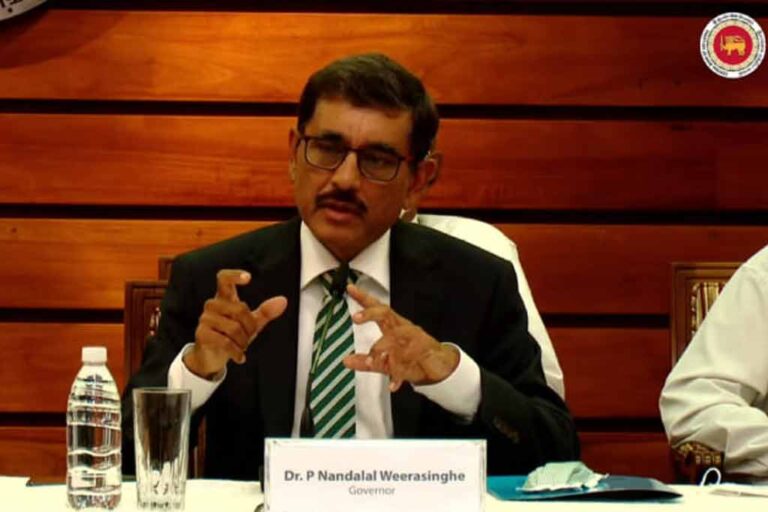
Colombo (LNW): Governor of the Central Bank of Sri Lanka (CBSL), Dr. Nandalal Weerasinghe, attended the Economic Dialogue Series in Berlin on 21 November 2023, under the theme “Inflation Kills Democracy: Fiscal Rationality as the Basis of Functioning Communities,” by invitation from the Federal Ministry of Finance, Germany.
During the event, Governor Weerasinghe presented Sri Lanka’s success story in controlling inflation following the record-high acceleration in 2022.
In his speech, he discussed the measures implemented by the Central Bank and the Government to curb inflation and shared insights into the disinflation strategy and the overall process.
Other speakers at the event included Mr. Christian Lindner, the Federal Minister of Finance of Germany; Ms. Christine Lagarde, the President of the European Central Bank (ECB); and Prof. Albrecht Ritschl from the London School of Economics.
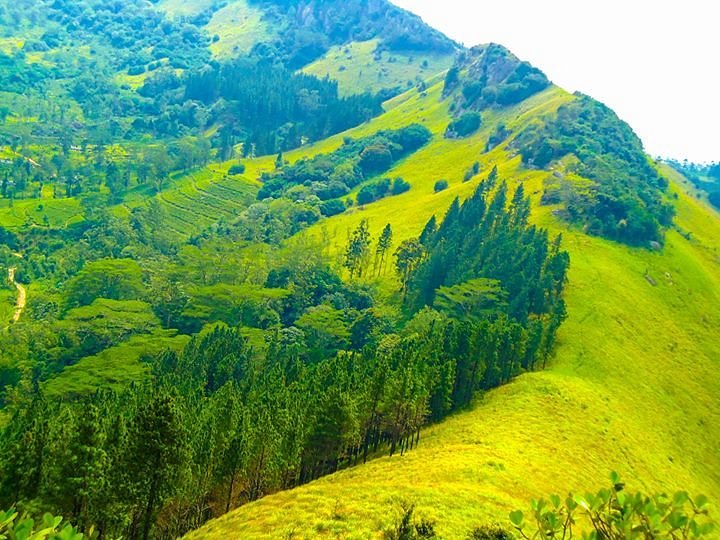
Colombo (LNW): A joint rescue operation by the army and police successfully rescued approximately 180 students from the Ragama Medical Faculty who were stranded during a hike in the Hanthana mountain range.
These students have safely been returned, according to reports.
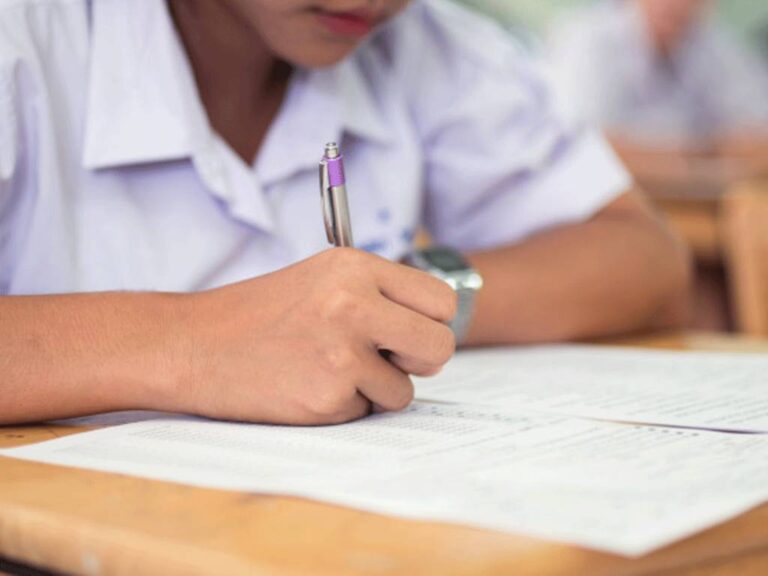
In response to the outcomes of this year’s G.C.E. Advanced Level Examination, President Ranil Wickremesinghe has directed the commencement of a scholarship program through the President’s Fund for students currently pursuing their G.C.E. Advanced Level studies.
Guided by President’s Secretary, Mr. Saman Ekanayake, the commencement of this scholarship program is effective from December (01).
To ensure comprehensive coverage, a meticulous plan has been devised to select 50 students from each of the 100 educational zones spanning the entirety of the island. This initiative aims to furnish scholarships amounting to Rs. 6000 per month for a total of 5000 deserving students.
Significantly, in the preceding year, the Presidential Fund successfully facilitated scholarships for 3000 students over 24 months.
In the year 2022 (2023), eligibility criteria for applying for these scholarships include being a first-time participant in the G.C.E O/L Examination, passing the examination, and qualifying for Advance Level studies. The applicant must be a student enrolled in a government school or a non-fee levying private school. The basic eligibility criteria for application include a monthly family income not exceeding Rs. 100,000.
Application forms and pertinent details for this scholarship opportunity are available for download on the official websites of the President’s Secretariat (presidentsoffice.gov.lk), the President’s Fund (presidentsfund.gov.lk) and the President’s Media Department (pmd.gov.lk).
Upon completion, applicants are requested to submit their applications to the Principal of the school where they undertook the GCE O/L examination.
The success of this program is contingent on the cooperation and support of students and principals alike, and the President’s Fund earnestly anticipates their active involvement in ensuring the success of this endeavour.