Home Blog Page 137

RTSL Leads Swift Flood Relief after Cyclone Ditwah

0

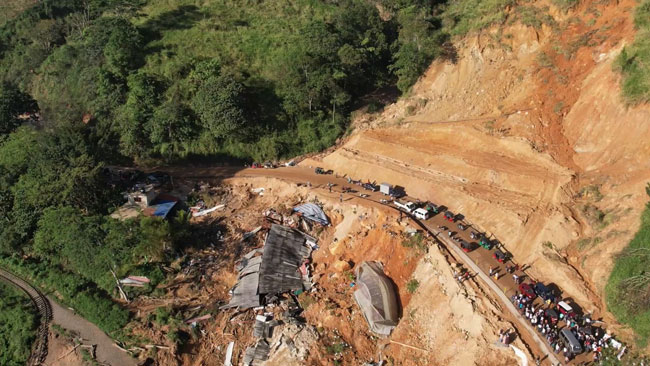
In the wake of devastating floods triggered by Cyclone Ditwah across Sri Lanka’s Western Province, Round Table Sri Lanka (RTSL) has taken a leading role in emergency humanitarian relief, earning recognition for one of the fastest response efforts seen during the crisis.

As floodwaters submerged entire neighbourhoods and cut off road access, RTSL launched its first large-scale relief mission in Welampitiya. Families stranded for several days received emergency food parcels, dry rations, medicines, and bedsheets, offering immediate relief amid worsening conditions. With waters continuing to rise, RTSL rapidly expanded its operations to reach flood-hit communities across multiple districts.

Despite submerged roads and hazardous terrain, volunteer teams manoeuvred through difficult conditions to ensure aid reached the most vulnerable. By 2 December 2025, RTSL had distributed over 10,000 food parcels and more than 1,000 dry ration packs. In addition, the organisation coordinated and assisted in over 100 rescue operations, helping evacuate residents trapped by floodwaters.

Recognising that many areas were entirely inaccessible by land, RTSL initiated airlift operations to deliver essential supplies. Working in partnership with Yahaguna Padanama and with logistical support from Expolanka, dry rations and food parcels were transported via Air Force helicopters to isolated communities, ensuring uninterrupted assistance where conventional relief routes had failed. Fundraising efforts remain ongoing to sustain food distribution, rescue logistics, and airlift operations.

RTSL attributes the success of its relief mission to the dedication of its volunteer force. Teams have worked extended hours in waterlogged and high-risk environments, maintaining safety while delivering life-saving assistance. Their commitment has reinforced RTSL’s reputation for speed, reliability, and compassion during national emergencies.

The relief initiative has been spearheaded by RTSL Chairman Avanka William, whose leadership played a decisive role in the rapid mobilisation. William coordinated frontline logistics, organised both local and international fundraising campaigns, and personally entered high-risk flood zones to oversee the delivery of food, medication, and essential supplies. His visible presence on the ground helped galvanise public support and donations nationwide.

Operational coordination has been led by Randhike Cooray, who managed dispatch operations, volunteer deployment, resource movement, and ground-level logistics. His oversight ensured relief operations were carried out efficiently and safely, even under constantly changing conditions.

RTSL also acknowledged the vital support extended by its partner organisations, including Ladies Circle Sri Lanka, 41er’s Club Sri Lanka, Tangent Sri Lanka, and the wider Round Table International family. Their contributions ranging from financial assistance to volunteer manpower significantly expanded the reach and impact of relief operations.

As Sri Lanka transitions from emergency response to recovery, RTSL confirmed that it will continue ration distributions, coordinate further airlift missions, assist displaced families, and remain engaged in long-term rehabilitation efforts.

Apparel Industry Caught in Policy Drift and Tariff Shock

0

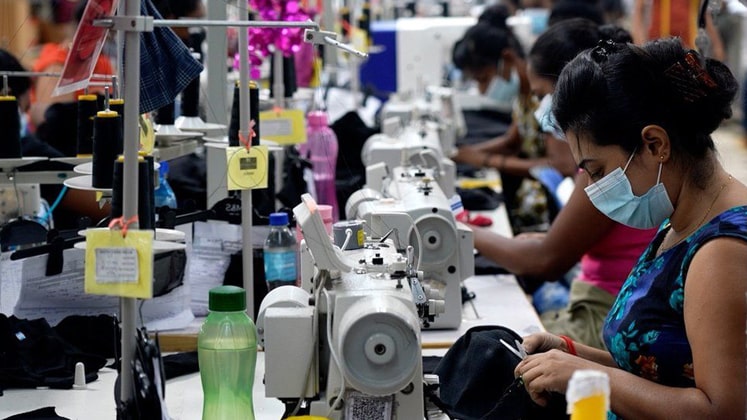
Sri Lanka’s apparel industry, the country’s largest export earner and private-sector employer  is facing its most serious sustainability crisis in decades, as policy inconsistency under the National People’s Power (NPP) government collides with renewed pressure from US tariffs and weak state intervention.

Employing over 350,000 workers directly, mostly women, and accounting for nearly 40 percent of total merchandise exports, apparel remains the backbone of Sri Lanka’s industrial economy. Yet manufacturers warn that contradictory signals from policymakers, combined with rising global protectionism, are eroding competitiveness at an alarming pace.

The industry is already operating under thin margins following years of economic instability, currency volatility, and rising energy and logistics costs. The re-emergence of higher effective US tariffs  Sri Lanka’s largest apparel export market — has further tightened conditions, making Sri Lankan products less competitive against rivals such as Vietnam and Bangladesh.

Industry stakeholders say the NPP government has failed to respond with urgency. While officials speak of value-addition, sustainability branding, and ethical manufacturing, exporters complain that policy clarity is absent, particularly on taxation, labour regulation, and trade negotiations.

Manufacturers point to sudden changes in import duties on raw materials, delays in VAT refunds, and uncertainty over labour reforms as evidence of a government still finding its footing. “We are planning production cycles six to twelve months ahead, but policy changes arrive without warning,” one senior exporter said.

Despite repeated appeals from industry associations, there has been no targeted rescue package, no temporary tariff relief strategy, and no accelerated diplomatic push to mitigate the impact of US trade barriers. Smaller and medium-scale factories, especially outside export processing zones, are the most vulnerable, with several already reducing shifts or freezing recruitment.

Workers ultimately bear the cost. Reduced orders translate into shorter workweeks, income instability, and rising job insecurity threatening the livelihoods of thousands of households.

 The apparel sector does not demand protectionism, but predictability. Without coherent industrial policy and swift engagement with key export markets, Sri Lanka risks losing hard-won global supply chain positions.

What is unfolding is not a sudden collapse, but a slow bleed one driven less by global forces alone, and more by domestic hesitation at a critical moment.

Digital EPF: Reform for Workers or System for Control?

0

Sri Lanka’s National People’s Power (NPP)–led government has launched the long-awaited digitalisation of Employees’ Provident Fund (EPF) services, claiming it as a breakthrough for efficiency, transparency, and worker convenience. But beneath the promises of online access and paperless processing lies a deeper policy debate: who ultimately benefits from this reform — private-sector employees or the State’s fiscal agenda shaped by IMF-backed restructuring?

The digital EPF programme, launched in late December 2025, enables online registration of employers and employees, electronic submission of contribution data, unified EPF-ETF payments, and member access to balances via web or SMS. For Sri Lanka’s over 2.9 million active EPF members, most of them private-sector workers, the reform promises faster service delivery and fewer administrative delays.

The EPF, managed by the Central Bank of Sri Lanka, is the country’s largest retirement fund, with assets exceeding Rs. 4.3 trillion by end-2024. Yet for decades, contributors have faced missing records, delayed settlements, and weak accountability. Digitalisation, in theory, directly addresses these failures.

However, the timing and structure of the reform raise legitimate questions. Sri Lanka’s IMF-supported Extended Fund Facility (EFF) programme strongly emphasises public sector digitalisation, fiscal transparency, and data integration. While IMF documents do not explicitly instruct Sri Lanka to digitise the EPF, they consistently call for stronger public financial management, better monitoring of large public funds, and reduction of administrative inefficiencies.

Government officials insist the reform is worker-centric. Labour Minister Dr. Anil Jayantha Fernando has described the initiative as part of a broader plan to integrate all state institutions into a real-time digital platform. Deputy Minister Mahinda Jayasinghe argues that digitalisation will reduce the thousands of EPF-related complaints received annually.

Yet critics point out that digital integration also gives the State unprecedented visibility and control over worker savings, at a time when pension funds have increasingly been drawn into government debt restructuring and domestic financing strategies.

Private-sector unions caution that transparency must be mutual. While workers can now see balances online, they still have limited insight into how EPF funds are invested, how risks are managed, or how policy decisions affect long-term returns.

Digital EPF is not inherently anti-worker. But without strong legal safeguards, independent oversight, and clear communication, a reform sold as “convenience” could quietly become a tool of centralised financial control.

For Sri Lanka’s private-sector workforce, the real test will not be logging in  but whether their lifelong savings remain secure, fairly managed, and truly protected.

Colombo Dockyard’s SGIP Shipbuilding Drive Reshapes Maritime Economy

0

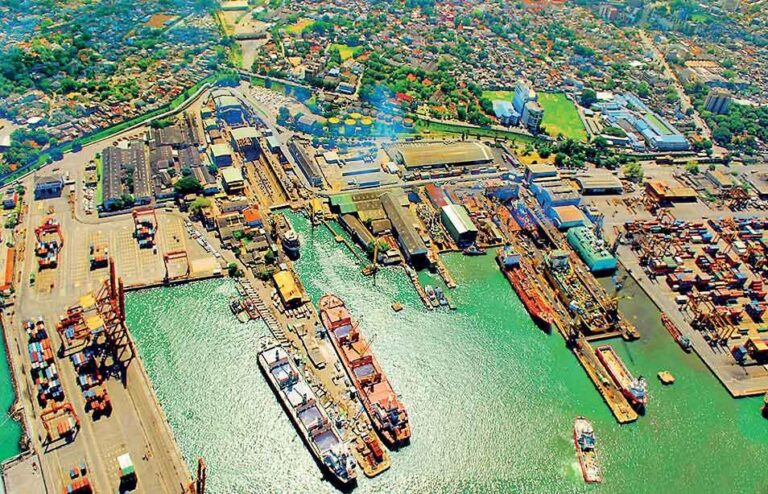
Colombo Dockyard PLC (CDPLC), one of Sri Lanka’s most established heavy engineering and shipbuilding enterprises, is quietly transforming the regional maritime economy through its Strategic Growth and Innovation Programme (SGIP).

With over five decades of experience, the state-linked dockyard has expanded well beyond conventional ship repair and construction, positioning itself as a niche engineering solutions provider with a growing international footprint particularly in the Maldives.

Traditionally known for shipbuilding and repair, CDPLC’s recent focus on specialized marine infrastructure reflects a strategic shift toward higher-value projects. Under SGIP, the dockyard has ventured into underwater structures, a technically demanding and capital-intensive segment rarely attempted in South Asia. This move has not only diversified revenue streams but also strengthened Sri Lanka’s reputation in advanced marine engineering.

A landmark project was completed in 2018 with the construction of an underwater restaurant structure for the “You and Me” resort in the Maldives. This breakthrough demonstrated CDPLC’s ability to deliver complex, customized structures under stringent environmental and safety standards.

The success was followed in 2022 by the completion of a 50-seat underwater restaurant for the OBLU Resort in Ailafushi the largest of its kind in the Maldives at the time.

In 2025, Colombo Dockyard further consolidated its dominance by delivering two additional underwater structures, including galleries and restaurants for high-end Maldivian resorts. Among them was the “Bubble Underwater Restaurant,” a 12-seater attraction opened in December 2025, adding to the Maldives’ growing portfolio of luxury tourism infrastructure.

The economic implications of this expansion are significant. Export-oriented engineering projects generate foreign exchange, sustain high-skilled employment, and reduce Sri Lanka’s reliance on traditional maritime services. Moreover, these projects create backward linkages across steel fabrication, logistics, design engineering, and marine installation services.

However, the SGIP-driven expansion also exposes structural challenges. Large-scale overseas projects demand substantial upfront capital, extended project timelines, and exposure to foreign market volatility. Any delays or cost overruns could strain the dockyard’s financial stability, especially given its public-sector ownership structure.

Despite these risks, CDPLC’s entry into underwater construction highlights a broader industrial opportunity for Sri Lanka: moving up the maritime value chain. If managed prudently, SGIP-led shipbuilding and engineering diversification could serve as a catalyst for long-term industrial growth, technological capability, and regional competitiveness in the global maritime economy.

Deadline Extended for Renewal of Firearms Licences for 2026

0

The Ministry of Defence has issued a statement regarding the renewal of firearms licences for individuals and institutions for the year 2026.

The Ministry noted that the period granted for renewing firearms licences for next year, which commenced on September 1, 2025, was originally scheduled to conclude on December 31, 2025. However, in view of the prevailing disaster situation in the country, the deadline has been extended.

Accordingly, the Ministry of Defence said the timeframe for renewing firearms licences for 2026 has now been extended until January 31, 2026.

Over 87% of Cyclone Ditwah Relief Payments Disbursed – Defence Ministry

0

More than 87 per cent of families affected by Cyclone Ditwah and eligible for the government’s compensation scheme have already received the Rs. 25,000 relief payment, the Ministry of Defence has announced.

The Ministry said the payments are being disbursed through District and Divisional Secretariats, adding that arrangements are in place to complete the remaining payments by tomorrow (31).

Under the compensation scheme introduced for those impacted by Cyclone Ditwah, relief payments have been completed for 87.4 per cent of the 450,225 families identified as eligible for the Rs. 25,000 allowance.

In addition, the Ministry confirmed that 8.63 per cent of the 153,593 families eligible for the Rs. 50,000 compensation payment have so far received the funds.

Regarding assistance for affected schoolchildren, the Ministry said 14.9 per cent of the 216,142 students eligible for the Rs. 15,000 educational assistance allowance have already been paid.

Special Traffic and Security Plan in Colombo for New Year 2026 Celebrations

0

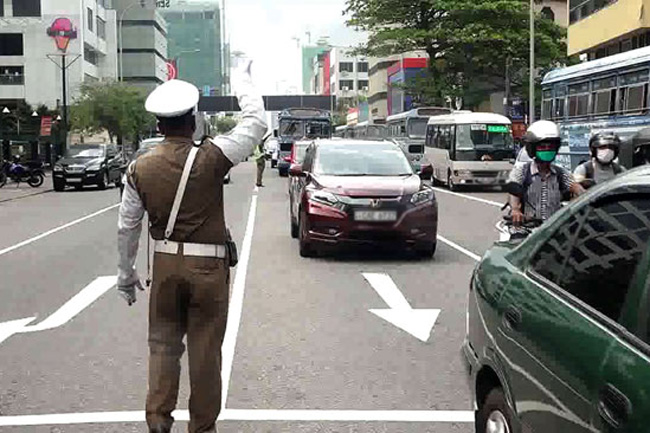
Sri Lanka Police have decided to implement a special traffic and security plan to minimise congestion in and around Colombo and ensure public safety, ahead of New Year 2026 celebrations.

In a statement, Police Headquarters said a large number of people and vehicles are expected to arrive in Colombo from various parts of the country, particularly around the Galle Face Green area.

Heavy traffic congestion is anticipated within Colombo city limits, especially in the Fort, Pettah, Slave Island, Maradana, Colpetty, Bambalapitiya and Cinnamon Gardens police divisions. While traffic will operate as usual in these areas, special traffic arrangements will be enforced if severe congestion occurs.

Under the proposed plan, vehicles exiting Colombo via Galle Middle Road will proceed through the NSA Roundabout, along Galle Face Road, turn left at the Baladaksha Mawatha (MOD Junction), pass the Aliya Nana Roundabout, continue via Mackan Marker Road and the Galle Face Roundabout towards Colpetty. Vehicles entering Colombo from Galle Face Road via the Galle Face Roundabout may proceed up to the Baladaksha Mawatha junction and continue onward.

Travel will not be permitted from the Galle Face Roundabout to the Aliya Nana Roundabout via Mackan Marker Road, or from the Aliya Nana Roundabout to Galle Face Road via Baladaksha Mawatha. Vehicles entering Galle Face Road from by-roads must turn right and proceed towards the NSA Roundabout, while vehicles from the by-roads of Baladaksha Mawatha may turn right and exit Colombo via the Aliya Nana Roundabout.

Police stressed that when these traffic measures are in effect, parking on sidewalks or in a manner that obstructs main roads within Colombo city limits will be strictly prohibited. Legal action will be taken against motorists who violate traffic regulations.

Approximately 1,200 police officers will be deployed for traffic control and security duties. Parking facilities have been arranged for about 5,900 vehicles at designated locations across the city.

Free parking areas (subject to traffic flow not being obstructed):

  • Baladaksha Mawatha, Fort Police Division, MOD Car Park (towards Beira Lake)
  • Marine Drive areas in Colpetty, Bambalapitiya and Wellawatte
  • D.R. Wijewardena Mawatha in Fort and Maradana Police Divisions
  • Parsons Road exit lane in the Company Street Police Division only
  • Designated parking bays along Galle Road from Savoy Cinema, Wellawatte to Bagatale Road junction
  • Ananda Coomaraswamy Mawatha (left lane) from Nelum Pokuna Roundabout to Library Roundabout – Cinnamon Gardens
  • F.R. Senanayake Mawatha – Cinnamon Gardens
  • Reid Avenue (right side) from Reid Duty Junction to Thurstan Junction – Cinnamon Gardens
  • Independence Avenue (right side) from Independence Roundabout to Independence Square – Cinnamon Gardens
  • Maitland Crescent – Cinnamon Gardens
  • Foundation Road – Cinnamon Gardens

Paid parking facilities:

  • Old Manning Market parking area, Bastion Mawatha – Pettah
  • Parking area near the Vimaladharmasuriya Clock Tower – Fort
  • Hemas Parking Area, R.A. De Mel Mawatha – Fort
  • Lake House parking area, D.R. Wijewardena Mawatha
  • Bastion Road – Fort
  • Bristol Street – Fort
  • Duke Street – Fort
  • Access Tower parking area, Union Place–Dawson Street junction – Kollupitiya
  • Gamini Roundabout (St. Clement’s) – Maradana

Police urged the public to cooperate with officers on duty and adhere to traffic regulations to ensure a safe and orderly New Year celebration.

Presidential Commission Appointed to Probe Alleged Corruption at Colombo Municipal Council

0

A Presidential Commission of Inquiry has been appointed to investigate, examine, and report on alleged corruption and irregularities at the Colombo Municipal Council (CMC).

Accordingly, President Anura Kumara Dissanayake has appointed former High Court Judge Piyasena Ranasinghe, Chartered Accountant E. R. M. S. H. Ekanayake, and former Senior Superintendent of Police D. S. Wickramasinghe as members of the Commission. The relevant Gazette Extraordinary has been issued under the signature of the Secretary to the President.

The Commission has been mandated to investigate alleged acts of corruption, fraud, criminal breach of trust, and criminal misappropriation of property that are said to have taken place at the Colombo Municipal Council during the period from 2010 to 2025.

WEATHER FORECAST FOR 31 DECEMBER 2025

0

Showers or thundershowers will occur at times in Northern, Eastern, Central, Northcentral, Northwestern and Uva provinces. Fairly heavy falls above 75 mm are likely at some places in central, Northwestern and Uva provinces.

Showers or thundershowers may occur at several places elsewhere after 2.00 p.m.

Misty conditions can be expected at some places in Sabaragamuwa and Central provinces and in Galle and Matara districts during the early hours of the morning.

The general public is kindly requested to take adequate precautions to minimize damages caused by temporary localized strong winds and lightning during thundershowers.

Thriving as a Lawyer in the AI Era

0

Nalinda Indatissa, President’s Counsel.

The legal profession is at a pivotal moment. Artificial intelligence, digital platforms, and global connectivity are transforming how lawyers work, how cases are handled, and how clients interact with the law. The question is no longer whether AI will reshape the profession, but how lawyers can thrive alongside it.

Insights from leaders like Marco Argenti, Chief Information Officer at Goldman Sachs, remind us that in the AI era, human judgment, purpose, and wisdom matter more than ever. AI can draft documents, summarize vast amounts of data, or analyze contracts, but it cannot replace strategic thinking, ethical reasoning, or nuanced advocacy. These require human judgment, experience, empathy, and a deep understanding of context.

Lawyers who embrace AI will gain a powerful assistant. Research tools, drafting systems, and contract-analysis platforms can save significant time and cost, allowing lawyers to shift their attention to legal strategy, negotiation, advocacy, and client counseling. AI becomes a force multiplier when used thoughtfully, enabling lawyers to do more — not to do less. At the same time, clients increasingly pay for insight rather than mere information. They expect foresight, discernment, and ethical reasoning. Navigating complex disputes, anticipating risk, and balancing competing interests demand qualities that no machine can truly replicate. Curiosity becomes essential as well, because technology, law, and regulation are evolving rapidly, and lawyers who continually learn about digital evidence, cybersecurity, emerging technologies, and regulatory change position themselves to remain relevant and effective.

Artificial intelligence is also forcing lawyers and courts to rethink the foundations of intellectual property law. Technical inventions created with the help of AI raise challenging questions about ownership. When AI systems assist in designing new technologies, medicines, chemical compounds, or engineering solutions, who owns the patent — the researcher, the institution, the company using the AI, or the developer of the AI tool? Creative work generated by AI brings similar uncertainty. Artworks, drawings, books, photographs, and music can now be generated or significantly shaped by machines. Who owns the copyright — the programmer, the user, the platform, or perhaps no one at all?

Even trade marks face pressure in an automated, digital, global economy. AI can generate brand names, logos, and slogans instantly — and it can also imitate or manipulate existing ones at scale. Protecting brand identity and resolving disputes across borders has become increasingly complicated. In many jurisdictions, existing laws only partially address these developments. Some countries attempt to stretch old concepts to new realities, while others are cautiously drafting new approaches. Much, however, remains unresolved, and this uncertainty creates opportunity. Lawyers who understand AI will be needed to draft contracts and licensing agreements, advise on authorship and ownership, design regulatory frameworks, counsel governments and companies, and litigate emerging disputes. Rather than reducing work, AI is opening entire new legal frontiers.

Beyond intellectual property, AI is rapidly transforming criminal justice and investigation. It is already being used to prevent and detect crime, identify criminal activity, and uncover fraud in public and private institutions, including banks and financial services. Investigations increasingly rely on AI-driven data collection, pattern recognition, and complex analytics. In some jurisdictions, AI tools are being used to help identify suspected perpetrators, through technologies such as facial recognition, behavioural analytics, and predictive monitoring. When these results eventually come before court, they fundamentally alter traditional identification methods, which historically relied on eyewitness testimony and manual investigative processes. Such technological change must be introduced carefully, protecting fairness, privacy, accuracy, due process, and the rights of the accused.

Even where AI uncovers more wrongdoing than human investigators could manage alone, the resulting material still has to be presented in a legally admissible and reliable form. As AI detects more incidents, more matters will inevitably reach the courts. Lawyers who understand AI will therefore be central in developing new evidentiary rules and ensuring that AI-generated material is transparent, verifiable, and trustworthy.

Similar developments are visible in financial crime. AI systems now monitor transactions, identify suspicious movement of funds, and help authorities uncover money laundering, fraud, and illicit flows. Banks and regulators are increasingly dependent on automated monitoring, yet courts still require rigorous standards of reliability, accuracy, and chain of custody. Because the legal framework must evolve alongside these technologies, opportunities are expanding for lawyers who can navigate both compliance and technology, advise institutions, draft regulations, litigate complex disputes, and protect the rights of individuals affected by automated decision-making.

AI is also moving deeply into medicine, robotics, transportation, and public safety. Robotic surgery, automated diagnostics, AI-based treatment recommendations, and self-driving vehicles all raise complex questions of liability and ethics. If surgery performed by an AI-assisted robotic system goes wrong, who is negligent — the doctor, the manufacturer, the hospital, or the developer? If AI gives medical advice that leads to harm, where does legal responsibility fall? And when autonomous vehicles cause accidents, how should responsibility be divided between drivers, software developers, and producers? In most legal systems, existing laws only partially address such questions, meaning much of the future framework still has to be built — and lawyers will play a leading role in building it.

To thrive in this rapidly changing world, lawyers must think systemically. They need to understand not only the law itself, but also how courts, technology companies, regulators, and governments interact. Resilience, curiosity, and adaptability are becoming as important as technical knowledge. Leadership grounded in integrity, accountability, and humane judgment will shape how societies integrate AI into everyday life. And although technology accelerates legal work, lawyers must remain human — protecting their own well-being, maintaining ethics, and cultivating trust in their communities and families.

AI does not diminish the importance of lawyers; it magnifies it. Those who harness AI wisely, cultivate judgment, remain curious, and think systemically will thrive. At the intersection of law and technology, it is still human qualities — discernment, empathy, leadership, and wisdom — that remain irreplaceable. The future belongs to lawyers prepared to grow with it.