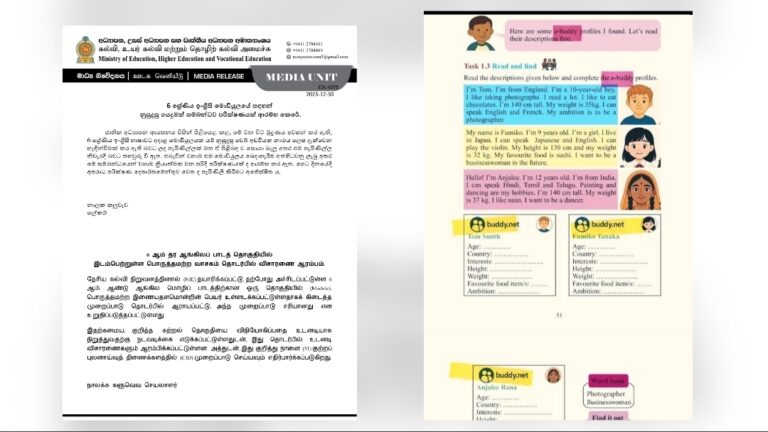
January 01, Colombo (LNW): Sri Lanka’s telecommunications authorities have moved to block access to a website mistakenly cited in a Grade 6 English language textbook, as the controversy surrounding the error escalated into a political dispute and prompted calls for ministerial accountability.
The Telecommunications Regulatory Commission of Sri Lanka instructed local internet service providers to restrict access to the site after widespread concern was raised over its appearance in printed learning material used in schools. The reference, included in a language lesson, was intended to direct students to an educational resource but instead led to an unrelated website, triggering public alarm.
Former minister Wimal Weerawansa has demanded the resignation of Prime Minister and Education Minister Harini Amarasuriya, arguing that the incident exposed children to unsuitable online material. He told reporters that even an indirect reference of this nature could spark curiosity among young students and potentially place them at risk, describing the lapse as a serious failure of oversight. He further warned of public demonstrations targeting the Education Ministry if firm action is not taken.
The Ministry of Education has since confirmed that a formal complaint has been lodged with the Criminal Investigation Department. Ministry Secretary Nalaka Kaluwewa said there is reason to suspect that the inclusion of the web reference may not have been accidental, noting that opposition to ongoing education reforms has intensified in recent months. He stated that investigators are examining whether external interference or deliberate manipulation played a role.
Officials explained that the Grade 6 English module, developed by the National Institute of Education, had already been printed when the error was discovered. Distribution was immediately halted, and an internal inquiry was launched to establish responsibility and prevent similar incidents in future curriculum updates.
The issue came to light after a social activist pointed out that a typing error repeated in several places within the new syllabus redirected users to an unintended website rather than the intended educational application. Subsequent checks by authorities confirmed the mismatch, leading to swift remedial action.
Education officials said corrective measures are already under way and stressed that further steps, including disciplinary or legal action, will depend on the findings of the CID investigation. They also assured parents that additional safeguards will be introduced to strengthen quality control in future textbook revisions.
Website Linked in School Textbook Blocked as Education Row Sparks Political Fallout
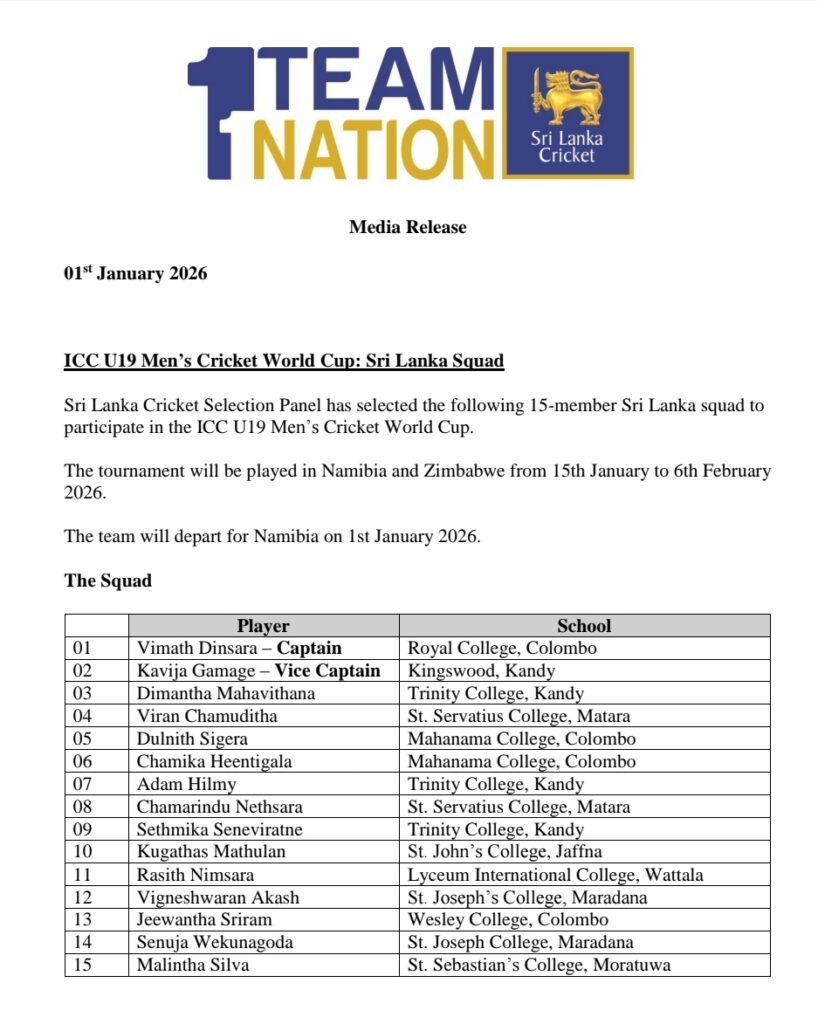
Sri Lanka Name Under-19 Squad for World Cup
January 01, Colombo (LNW): Sri Lanka Cricket has finalised a 15-member squad to represent the country at the ICC Under-19 Men’s Cricket World Cup, which will be staged in southern Africa early next year.
The youth tournament is scheduled to run from January 15 to February 06, 2026, with matches taking place across venues in Namibia and Zimbabwe.
The competition is expected to bring together the world’s leading emerging cricketers, offering a key platform for future international stars.
According to Sri Lanka Cricket, the selected players will leave the island on January 01, 2026 to allow time for acclimatisation and final preparations ahead of the opening fixtures. Team officials expressed confidence that the squad, drawn from schools across the country, has the talent and discipline to mount a strong challenge at the global event.
Army Races to Repair Damaged Sri Pada Pathway Ahead of Peak Pilgrimage Period
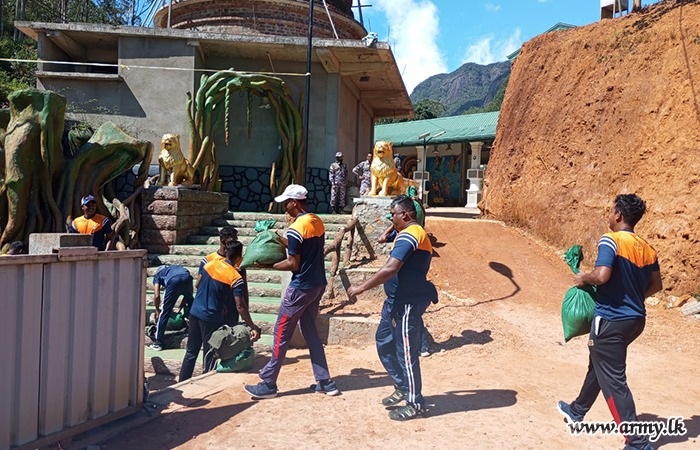
January 01, Colombo (LNW): The Sri Lanka Army has launched an extensive operation to restore damaged steps along the main approach to Sri Pada, after severe weather triggered landslides that left sections of the Mahagiridamba route unsafe for pilgrims.
Although this year’s pilgrimage season began on December 04, 2025, heavy rains and unstable ground conditions disrupted access, prompting urgent safety concerns for devotees travelling to the sacred site. In response, Army engineering teams were mobilised from December 11 to stabilise the pathway and carry out essential repairs.
Nearly 400 troops are currently working in challenging conditions, manually transporting construction materials across steep and slippery terrain where machinery cannot be used. Their efforts are focused on reinforcing the route to ensure uninterrupted and secure passage during the height of the pilgrimage.
According to the Army, construction of a 300-millimetre side wall has already been completed, while work on a 500-millimetre wall was almost finished by the end of December. Progress is also being made on the main retaining wall, which is now more than halfway complete, alongside the installation of new handrails to improve safety.
The Army expects all remaining work to be wrapped up by January 05, 2026, allowing pilgrims to continue their journey to Sri Pada with greater confidence and security.
Oil Prices Close 2025 Sharply Lower Amid Oversupply Fears and Market Turbulence

January 01, Colombo (LNW): Global oil prices slid on Wednesday, rounding off a volatile year with losses approaching 20 per cent, as mounting concerns over excess supply overshadowed a backdrop of conflict, sanctions and shifting production policies.
Brent crude ended the year nearly a fifth lower, marking its steepest annual fall since 2020 and extending a record run of three consecutive yearly declines. US benchmark West Texas Intermediate mirrored the trend, also shedding close to 20 per cent over the course of 2025.
On the final trading day of the year, Brent settled at $60.85 a barrel, down 48 cents, while WTI slipped 53 cents to $57.42. The late-year weakness reflected growing unease about the balance between supply and demand heading into 2026.
Analysts at BNP Paribas expect further pressure in the near term, forecasting Brent could slide to around $55 a barrel in the first quarter before stabilising near $60 later in the year as supply growth evens out and demand remains subdued. The bank noted that US shale producers, having locked in higher prices through hedging, are likely to maintain steady output regardless of short-term price swings.
Recent data from the US Energy Information Administration offered a mixed picture. While crude inventories fell by nearly two million barrels in the final week of December, stocks of petrol and distillates rose sharply, exceeding market expectations and pointing to softer seasonal demand after the holiday period. US oil production also reached a record high in October, reinforcing concerns about abundant supply.
The oil market’s trajectory in 2025 was shaped by a complex mix of geopolitical shocks and policy shifts. Prices surged early in the year following tougher sanctions imposed on Russia, which disrupted flows to major buyers such as China and India. Tensions were further inflamed by attacks on energy infrastructure linked to the Ukraine war and a brief but intense Iran–Israel conflict that threatened shipping through the Strait of Hormuz.
More recently, disputes involving key Middle Eastern producers, renewed pressure on Venezuelan exports and heightened rhetoric from Washington added to uncertainty. However, these risks were ultimately outweighed by the decision of OPEC+ to accelerate production increases, releasing millions of barrels a day into the market since April.
The producer group has since opted to pause further output hikes in the first quarter of 2026, with its next policy meeting scheduled for early January. Even so, most forecasts suggest supply will outstrip demand next year, with estimates of the surplus ranging from around two to nearly four million barrels per day.
Some analysts believe prices would need to fall into the low $50 range to prompt meaningful production cuts, while others caution that geopolitical flashpoints could still lend support to the market. Despite expectations of weaker fundamentals into 2026, many observers warn that political risk — particularly from an unpredictable global landscape — remains a factor investors cannot afford to ignore.
Colombo Inflation Holds Steady in December 2025
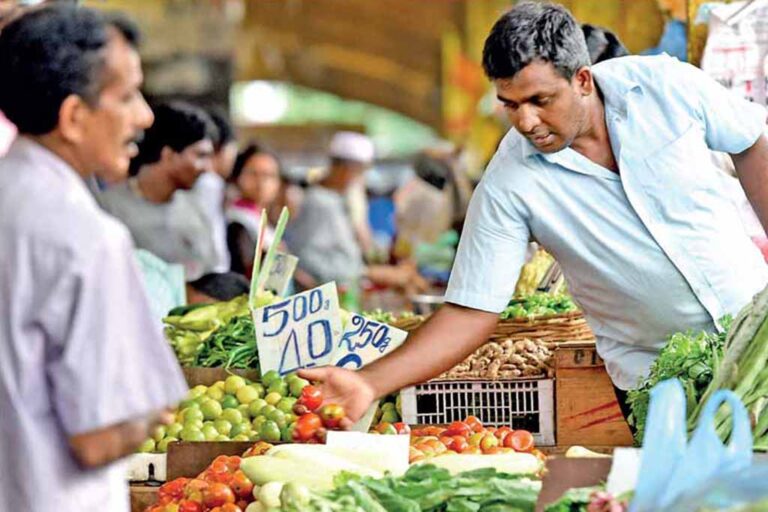
January 01, Colombo (LNW): Consumer inflation in Colombo showed little movement at the close of 2025, with the annual rate remaining unchanged at 2.1 per cent in December, according to the latest figures issued by the Department of Census and Statistics.
The Colombo Consumer Price Index for all items rose to 195.8 in December, up from 193.4 in November, reflecting a modest month-on-month increase despite the stable year-on-year trend.
Food prices continued to record an annual rise of 2.1 per cent, matching the rate seen a month earlier, indicating relative stability in essential items. Meanwhile, non-food inflation edged up slightly to 1.8 per cent, compared with 1.7 per cent recorded in October, suggesting mild upward pressure in areas such as services and household expenses.
In terms of overall impact, food items accounted for just under one percentage point of the annual inflation rate, contributing 0.97 per cent, while non-food categories made up a slightly larger share at 1.18 per cent.
Rupee Ends 2025 Weaker Against Dollar, CB Data Shows
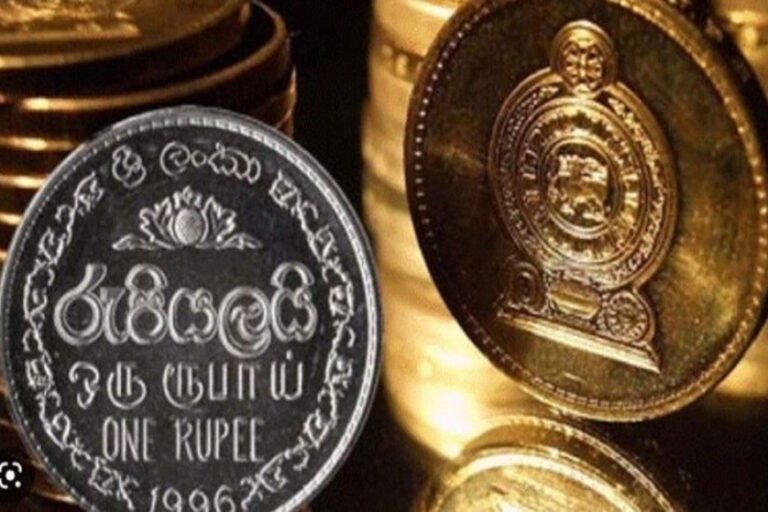
January 01, Colombo (LNW): Sri Lanka’s currency closed out 2025 on a softer footing, with the rupee losing 5.6 per cent of its value against the United States dollar over the course of the year, according to figures released by the Central Bank of Sri Lanka.
By the end of trading yesterday, the dollar was being bought at Rs. 306.29 and sold at Rs. 313.83, reflecting continued pressure on the local currency amid shifting market conditions.
In comparison, on the final trading day of 2024, the Central Bank recorded the dollar’s buying rate at Rs. 288.32, while the selling rate stood at Rs. 297.01. The year-on-year movement highlights a gradual depreciation, despite periods of relative stability during 2025.
Market analysts note that the rupee’s performance has been influenced by a combination of global dollar strength, domestic demand for foreign currency and ongoing adjustments within the broader economy, with the Central Bank continuing to monitor developments closely.
President Calls for Unity and Renewal as Sri Lanka Welcomes 2026
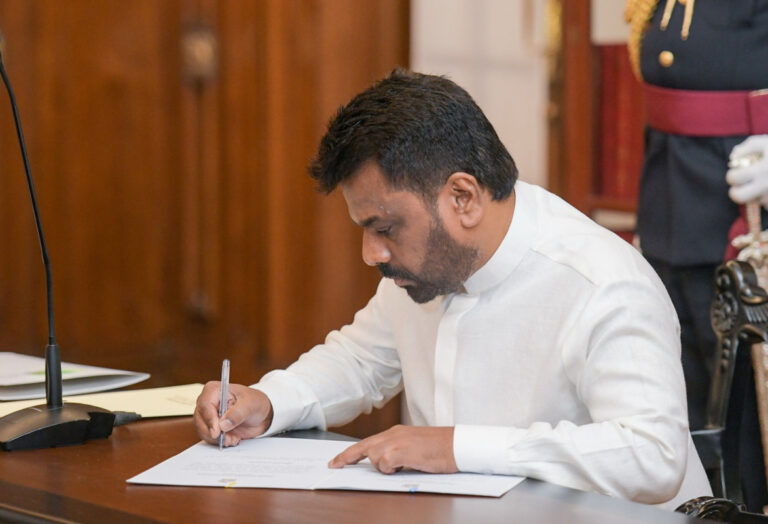
January 01, Colombo (LNW): Marking the arrival of the New Year, President Anura Kumara Dissanayake said Sri Lanka is entering 2026 after undertaking the most far-reaching programme of reform and national rebuilding in its recent history.
Reflecting on the year just ended, he noted that 2025, though marked by serious challenges, established firm ground for long-term growth aligned with the country’s own priorities. He highlighted a series of economic gains, including the smallest budget shortfall seen since the late 1970s, the strongest state revenue performance in nearly two decades, and the country’s first primary surplus. Export income from goods and services approached 17 billion US dollars, tourism reached record levels, and revenue targets were exceeded beyond any previous benchmark, making the year a notable chapter in Sri Lanka’s economic progress.
Beyond economic indicators, the President described 2025 as a decisive moment in the nation’s political and social evolution. Efforts to foster a transparent, citizen-focused political culture, dismantle entrenched corruption, and roll out the island-wide “A Nation United” campaign against illegal drugs were, he said, a clear response to the long-standing demands of the public.
The year was also scarred by one of the worst natural disasters in recent memory. In addressing this, the President praised the solidarity shown by communities across the island, saying the crisis revealed the depth of compassion and resilience among Sri Lankans. He expressed gratitude to overseas Sri Lankans, international partners, and to members of the Police, the armed forces and the public service, who he said worked tirelessly and often at personal risk during relief efforts. Acknowledging that recovery remains ongoing, he stressed that the path forward would be travelled together.
Drawing on lessons from history, the President said nations rise again through the courage and perseverance of their people. He voiced confidence that, with shared resolve, Sri Lanka can be rebuilt into a country stronger and fairer than before.
Concluding his message, he urged citizens to use the New Year as a moment to learn from past experiences and to move forward with confidence and unity. He extended his wishes for 2026 to be a year of success, hope and fulfilled aspirations for all.
President’s Full Message:
As we step into the New Year 2026, we do so as a nation that has shouldered the greatest reform programme and reconstruction effort in our modern history.
Despite numerous challenges, the year 2025 laid the foundation for sustainable development rooted in our national aspirations. Among the significant economic achievements of the past year were the recording of the lowest budget deficit since 1977, the highest government revenue since 2007, the first-ever primary account surplus in our history, an increase in export earnings from goods and services to nearly USD 17 billion, the achievement of government revenue targets at a level never before surpassed and it was a year that marked the highest tourist arrivals to the country. These milestones make 2025 a truly exceptional year in Sri Lanka’s economic journey.
Equally important, 2025 will be remembered as a turning point in the country’s political and social transformation. The implementation of programmes such as the creation of a clean and people-centred political culture, replacing long-entrenched corrupt practices and the countrywide “A Nation United” mission to protect our future generations from the scourge of narcotic drugs, reflected the long-held aspirations of the Sri Lankan people.
This year also saw us confronting one of the most severe natural disasters in our recent history. In the face of this adversity, our people across the country stood shoulder to shoulder with their fellow citizens, proving that the compassion and humanity of our nation cannot be snuffed by any calamity. I wish to place on record my deep gratitude to Sri Lankans living overseas, to all friendly nations that extended their support during this difficult time, and to the Police, the Tri-Forces and the entire state service who worked selflessly, often at great personal risk, in responding to the disaster. We still have a long journey ahead, but we will walk it together.
History teaches us that the greatest strength behind the rebuilding of every fallen nation has been the courage and determination of its people. I firmly believe that, with the unyielding resolve of our beloved citizens, we can collectively recreate a country far better than the one we inherited.
The dawn of a new year offers us an opportunity to reflect on the lessons of the past while planning afresh with optimism for the future. Understanding clearly the challenges that lie before us, I invite all of you to join hands in unity, determination and confidence in the task of rebuilding our nation.
May the New Year 2026 be a victorious year in which all your hopes and aspirations are fulfilled.
Showers, thundershowers may continue, Met Dept says in its debut weather report for 2026
January 01, Colombo (LNW): Showers or thundershowers will occur at times in Eastern, Central, North-central and Uva provinces, the Department of Meteorology said in its debut broadcast for the year 2026 this (01) morning.
Fairly heavy falls about 75 mm are likely at some places in Central and Uva provinces and in Batticaloa and Ampara districts.
Several spells of showers will occur at Northern and North-western provinces.
Showers or thundershowers may occur at several places elsewhere after 2.00 p.m.
Misty conditions can be expected at some places in Sabaragamuwa and Central provinces and in Galle and Matara districts during the early hours of the morning.
The general public is kindly requested to take adequate precautions to minimise damages caused by temporary localised strong winds and lightning during thundershowers.
Marine Weather:
Condition of Rain:
Showers may occur at several places in the sea areas off the coast extending from Mannar to Colombo via Puttalam and Trincomalee to Hambantota via Batticaloa.
Showers or thundershowers may occur at a few places in the other sea areas around the island.
Winds:
Winds will be northerly to north-easterly and wind speed will be (30-40) kmph.
Wind speed can increase up to 45 kmph at times in the sea areas off the coast extending from Beruwala to Matara via Galle and Batticaloa to Pottuvil.
State of Sea:
The sea areas off the coast extending from Beruwala to Matara via Galle and Batticaloa to Pottuvil will be fairly rough at times. The other sea areas around the island will be moderate.
Temporarily strong gusty winds and very rough seas can be expected during thundershowers.
Neglected Online Safety: The Need for an Active Online Safety Commission in Sri Lanka

By Nalinda Indatissa, President’s Counsel.
In the digital age, the internet has become a central platform for communication, information sharing, and public discourse. However, this convenience comes with risks—false statements, harmful content, and publications that undermine the authority of the judiciary can spread rapidly. To address these challenges, the Online Safety Act, No. 9 of 2024 created the Online Safety Commission, entrusting it with powers to regulate online content, protect citizens, and uphold the law.
The Commission is empowered to:
Direct individuals, internet service providers, and intermediaries to allow affected persons to respond to harmful statements.
Stop the communication of prohibited statements and disable access to online content that violates the law.
Refer online communications that are contemptuous of court or prejudicial to judicial authority to the courts.
Investigate online offenses, issue codes of practice, advise the government, and ensure compliance by service providers.
Despite these clear powers, the Commission has yet to be appointed. This non-appointment has serious consequences for law-abiding citizens and the judicial system:
Rights of Citizens Are Neglected
Without the Commission, individuals affected by false or harmful online statements have no statutory mechanism to respond or seek redress. Prohibited statements may continue to circulate unchecked, leaving citizens vulnerable to reputational and personal harm.
Contemptuous Online Publications Go Unchecked
Online content that undermines the authority or impartiality of the judiciary can remain unaddressed, weakening public confidence in the courts and potentially obstructing justice.
Accountability Gaps in Online Communication
Internet service providers and intermediaries may not feel obligated to remove harmful content, as there is no active regulatory body to oversee compliance.
The absence of the Online Safety Commission represents a critical gap in the enforcement of online law. Law-abiding citizens are left unprotected, and the judiciary’s authority may be compromised. It is imperative that the government appoints and activates the Commission without delay to ensure that online safety, accountability, and the rule of law are upheld in Sri Lanka
Why talk about a Director of Public Prosecutions (DPP) — and how this compares with the Attorney General (AG)?

By Nalinda Indatissa, President’s Counsel.
In every country, someone must decide who should be taken to court for a crime. These decisions must be fair, careful, and free from political influence.
In Sri Lanka, prosecutions have been handled for centuries by the Attorney General (AG). A common complaint against AG is that instructions take an unreasonably long time to come to court, prosecution quality is poor, witnesses and evidence is not available by the time some prosecutions are taken up for trial and time of court is wasted by flogging dead horses. Attorney General’s department blames it on Lack of staff and non availability of modern technology, facilities and systems. These delays keep people worried and unsure of what will happen.
Some people also believe the AG’s role does not “feel” fully independent. This is because the AG both advises the Government and also decides whom to prosecute. So there is a public feeling that politics may sometimes come into the picture, even if the AG acts honestly. Because of these concerns, many people have asked whether Sri Lanka should create a DPP or simply improve the AG’s office.
A DPP is meant to make prosecution work more independent, more efficient, and more transparent. The DPP uses written rules to decide when to charge someone, when not to charge, when to stop a case, and when a plea deal may be acceptable. This turns prosecution from a “black box” into a “rule-based system.” A “black box” means people outside cannot see what is happening or why decisions are made. A “rule-based system” means there are clear, public rules, and everyone can understand the reasons.
In the UK and other countries, prosecutors always ask two simple questions: first, whether there is enough evidence — meaning whether there is a real chance a court will convict — and second, whether it is in the public interest to prosecute — meaning whether taking the case to court helps society, or whether another fair solution is better. This is called the public interest test. It is written down clearly and is open to the public.
The Attorney General in Sri Lanka also uses judgment and discretion. Courts have said the AG’s power is not unlimited and must be fair and lawful. But our rules are not always clearly written, published, or easy for the public to read. A DPP system tries to make these rules clearer and more visible.
In many countries, the DPP must also give annual reports to Parliament. This allows Parliament to see how many cases were filed, how decisions were made, whether rules were followed, and how money was used. At the same time, the Attorney General often answers questions in Parliament about the work of the prosecution service. This does not create confusing double control. Instead, the DPP follows the rules, Parliament checks whether rules are being followed, and the Attorney General explains matters to Parliament but does not direct individual DPP cases. This creates openness without political interference.
In many countries, trying to interfere with prosecutors is taken very seriously, and in some places it can even be an offence. Including such a rule in Sri Lanka would help because it sends a strong message that prosecutors must decide cases by law, not by pressure. This can build public trust.
To protect independence further, many countries appoint the DPP through a transparent, merit-based process, give the DPP a fixed term, allow removal only for proven misconduct, and prohibit the DPP from taking another government job immediately after leaving office. These rules help prevent fear, favour, or reward from influencing decisions.
Independence also depends on money and resources.
Many countries give the DPP a separate budget approved by Parliament, power to manage staff, proper technology, and training. If the DPP has too little staff, weak systems, slow methods, or no technology, the same delays and problems found in the AG’s office could still happen. Independence without capacity does not work.
In some countries, AG offices also have financial protections, but sometimes they are closer to the Government budget, which may create pressure.
A very important question is whether the AG can simply be made more rule-guided instead of creating a DPP. The answer is yes. The AG can be guided by published prosecution guidelines, annual reporting, integrity systems, transparency rules, and judicial review for unreasonable decisions. Courts in Sri Lanka have already said that the AG’s power is not absolute and must be fair and based on evidence. So reform is possible even without a DPP.
Still, some countries create a DPP because they want one office focused only on prosecutions, clearer separation from government advice, public rules, and stronger public trust. In the UK, the DPP follows the Code for Crown Prosecutors and Charging Guidance, and people can read these documents online, so decisions do not feel mysterious. But many experts warn that if the DPP is weak, under-staffed, or poorly managed, the same problems return. So the issue is not the name of the office. What matters are rules, people, systems, training, technology, and culture.
Sri Lanka could also make interference with the AG’s prosecutorial work an offence. This would help protect independence in both systems. Reform does not depend only on creating a DPP.
The fair conclusion is simple. A DPP can help make prosecution clearer, more open, and more trusted. But a DPP alone is not magic. If there is not enough staff, poor systems, weak planning, or slow technology, delays and mistrust will continue. It is also fully possible to improve the Attorney General’s office with clearer rules, stronger reporting, ethical safeguards, technology, and protection from interference. So the real question is not simply “DPP or AG?” The real question is: how do we make prosecution fair, fast, honest, and independent — whichever model we choose?