Home Blog Page 1375

People’s Revolution Rally Draws Crowd to Colombo Municipal Council, Sarath Fonseka Joins Protest

0

A significant protest organized by the “Nirayuda Nirpakshika Aragalaya – People’s Revolution” took place today in front of the Colombo Municipal Council, attracting a considerable gathering of participants. The event marked a powerful expression of public sentiment on various issues.

Notably, former Army Commander and politician Sarath Fonseka was among the participants, adding prominence to the demonstration.

The protesters, representing diverse backgrounds and concerns, gathered to voice their demands and concerns regarding various matters affecting the nation.

Visit Readphotos.com to view all photos

Mounting Electricity Debt Threatens Services at Badulla Teaching Hospital

0

The Badulla Teaching Hospital is facing a critical situation as its outstanding electricity bill has surged to a staggering Rs. 70 million, according to hospital sources.

As a consequence of this significant arrearage, the Ceylon Electricity Board (CEB) took action on Wednesday by disconnecting power to specific sections within the hospital compound. Among the affected areas were the nurses training center, medical officer quarters, and the nursing dormitory, hospital sources confirmed.

Hospital authorities acknowledged the substantial debt owed to the CEB, highlighting the perilous situation. The outstanding amount of approximately Rs. 70 million poses a serious risk, potentially resulting in a complete loss of power across the hospital premises if the financial obligations are not promptly settled. Immediate attention and resolution are essential to ensure the uninterrupted provision of vital healthcare services at the Badulla Teaching Hospital.

Adorable Lion Cubs Set to Charm Visitors at Ridiyagama Safari Park on World Lion’s Day

0

Exciting news awaits wildlife enthusiasts as Ridiyagama Safari Park’s Curator, Hemantha Samarasekera, announced that two precious lion cubs, born to lioness ‘Sina,’ will be unveiled to the public starting August 10th. The park has arranged a special limited-time exhibition to coincide with World Lion’s Day, allowing visitors a rare opportunity to witness the young cubs in all their playful glory.

Sina, the nurturing lioness, has proven to be a dedicated mother, having given birth to a total of nine cubs over three separate occasions. This recent addition brings the total count of lion cubs born at Ridiyagama Safari Park to an impressive 18. Notably, the park’s first lion cub, affectionately named ‘Dora,’ captured the hearts of many with its endearing presence.

While these two adorable lion cubs are yet to receive their names, an exciting initiative has been launched. Children and animal enthusiasts alike can participate in naming the cubs by submitting their suggestions through Ridiyagama Safari Park’s official Facebook page. As an added incentive, the park plans to reward several individuals whose proposed names are selected with special gifts.

Prepare to be enchanted by the captivating allure of these young lion cubs as they make their debut at Ridiyagama Safari Park, a heartwarming celebration in honor of the majestic creatures on World Lion’s Day.

Need for decisive actions against govt officials who fail to back the govt’s development initiatives – Piyal Nishantha

0

Mr. Piyal Nishantha de Silva, the State Minister for Fisheries, highlighted that to materialize President Ranil Wickremesinghe’s vision for 2048, it’s imperative for all to collaborate cohesively.

He expressed these views Agust  (09) during a press conference themed ‘Collective Path to a Stable Country’ held at the Presidential Media Centre (PMC).

State Minister Piyal Nishantha further said;

President Ranil Wickremesinghe has formulated a targeted plan aiming for a transformative national change by 2048. The implementation of such a program entails the responsible ministry’s commitment to its duties. Consequently, numerous specialized initiatives have been enacted during this period to achieve the President’s objectives.

The ministry has actively engaged in addressing fishermen’s welfare and challenges, focusing on technology adoption for the fishing industry progress and enhancing international relations. Yearly programs in alignment with World Fisheries Days have been instituted, including initiatives like ‘Dola Rala Saviya’ and ‘Rala Pela Dinana Daruwo’. These programs extend services to benefit fishing communities, such as insurance, pensions, and savings schemes for children.

The Ministry of Fisheries has adopted a holistic approach to engage the public, partnering with affiliated institutions for comprehensive initiatives. Beyond its conventional role, the ministry has initiated broad-reaching programs to promote behavioral change within fishing families, notably the ‘Diriya Deewara Amma’ campaign, which addresses parental qualities and drug awareness.

A novel cooling system has been incorporated into a vessel, marking a pioneering effort to mitigate post-harvest losses within the fishing industry. This advanced vessel has been launched, effectively curbing post-harvest damages.

Consumers have experienced the brunt of escalating fish prices due to climatic influences and disruptions caused by religious festivities, leading to decreased fishing activity. These factors have hindered fish availability in the market.

While some officials dutifully fulfill their responsibilities, others lack comprehension of the ministry’s objectives, resulting in a regrettable situation. The success of President Ranil Wickremesinghe’s envisioned program necessitates a collaborative approach from politicians, government officials, and other stakeholders. Pointing fingers solely at politicians won’t suffice; a unified approach is essential.

It’s imperative for everyone within this sector, including government officials, to work cohesively, transcending individual agendas. By adopting such a unified stance, we can contribute to the advancement of our nation. Cabinet Minister Douglas Devananda and I, as the Minister of State, are committed to this cause, alongside numerous officials who share a dedication to our country and its fishing communities. As a united team, we are prepared to tackle forthcoming challenges, appreciating the collective support extended towards overcoming these obstacles.

Decisive actions must be taken concerning officials who don’t align with the government’s forward-moving agenda. Failure to make these determinations threatens the gradual collapse of the fishing industry. Should such a collapse occur, the recovery process will be arduous and time-consuming. 

PMD

Sri Lanka Aims for RCEP Membership and Free Trade Agreements with ASEAN: 

0

Emphasizes Closer Cooperation with ASEAN to Propel Sri Lanka’s Economic and Political Strategy

– President Wickremesinghe

President Ranil Wickremesinghe revealed that Sri Lanka’s intention to join the Regional Comprehensive Economic Partnership (RCEP) is poised to materialize following the conclusion of credit optimization initiatives. Additionally, the President announced plans to initiate negotiations for the establishment of free trade agreements with corresponding ASEAN member countries.

President Wickremesinghe’s statement underscores the country’s determination to bolster its economic connectivity within the broader Asian region. The President affirmed his alignment with the future vision of ASEAN for the Indo-Pacific area, pledging full support for the advancement of this strategic perspective.

These proposed collaborations highlight Sri Lanka’s commitment to fostering economic cooperation and trade linkages, which are poised to open new avenues for growth and development. The President’s statements reaffirm the nation’s readiness to engage actively in regional economic partnerships to realize its economic ambitions.

President Ranil Wickremesinghe made these remarks while addressing the 56th anniversary of the Association of South East Asian Nations (ASEAN), Tuesday (08) at the Embassy of the Republic of Indonesia, Colombo. 

The President reflected on Sri Lanka’s economic history and the decisions that had impacted the nation’s progress. He acknowledged the efforts of former President J. R. Jayawardena, his father and other influential figures who advocated for opening up the economy and joining ASEAN during its founding years as well as the Shenoy reforms for liberalization of the economy and to ensure the welfare program stayed within the needs. The President remarked that turning down the opportunity to join ASEAN led to a period of socialist economic policies and limited capital formations, hindering the country’s growth potential.

The President further explained the circumstance that converted a source of profound regret. He said subsequently, over a span of three years, Sri Lanka transitioned into a socialist economic model, leading to the fragmentation of the capital formations, and has continued to progress in this trajectory. “However, we find ourselves not entirely emancipated from the constraints imposed by that economic paradigm. At present, despite being positioned as one of the world’s major economies, poised to potentially ascend to the ranks of the fifth or fourth largest expanding economies, we now confront the disheartening reality of shaking on the brink of bankruptcy after 55 years of existence.” 

President Ranil Wickremesinghe praised the association’s remarkable growth and success as one of the world’s largest economic blocks. The President also expressed regret that Sri Lanka had declined an invitation to join ASEAN in its early years, citing missed opportunities for economic prosperity. However, he highlighted a new policy approach to collaborate closely with ASEAN to enhance Sri Lanka’s position in the global arena.

In light of Sri Lanka’s recent financial challenges and the need for rejuvenation, President Wickremesinghe expressed a renewed commitment to pursue closer ties with ASEAN. He acknowledged the strong cultural and historical connections between Southeast Asia and Sri Lanka, underscoring the importance of building on these relations to drive economic and political cooperation.

Amid the looming threat of bankruptcy, Sri Lanka has embraced the challenge head-on, aiming to move forward with inspiration drawn from proactive problem-solving approaches. This involves looking to the accomplishments of the ASEAN and enhancing collaboration with the organization. This strategic approach is firmly rooted in the government’s policies. This approach, championed by the current administration, is expected to resonate with other governments as well. The nation’s enduring connections with Southeast Asia stand as evidence of its strong regional ties, perhaps only second to its affiliations with India and Maldives. Cultural bonds are exemplified through shared practices like Mahavihara Buddhism in countries such as Myanmar, Thailand, Cambodia, and Laos, and historical links like that between the Srivijaya Empire and Sri Lanka and Anuradhapura further reinforce these ties.

Numerous historical interconnections further validate these relationships, including interactions with Malays and historical associations with the Srivijaya Empire. Even shared colonial history, notably during the Dutch Empire’s reign in places like Batavia (present-day Jakarta, Indonesia), adds another layer of commonality. This collective historical backdrop lays the groundwork for nurturing cultural, economic, and political relations.

Consequently, as Sri Lanka faces impending financial challenges, it is actively strengthening its bonds with ASEAN nations. These alliances are poised to facilitate the pursuit of shared interests and the fostering of regional cooperation. In the pursuit of progress, Sri Lanka seeks not only to capitalize on its robust ties with Southeast Asia but also to build upon them for a mutually prosperous future.

One of the key aspects of the new policy is the initiation of free trade agreements with ASEAN countries. President Wickremesinghe revealed that Sri Lanka has already forged a crucial trade agreement with Singapore and is actively negotiating with Thailand. The President also announced that Sri Lanka has applied to join the Regional Comprehensive Economic Partnership (RCEP), recognizing the potential of this vast trade block comprising major economies like China, Japan, and Korea. He emphasized that Sri Lanka’s economic focus should now turn towards the east, given the rapid development in that region.

President Wickremesinghe has urged the Minister of Foreign Affairs to facilitate regular ministerial-level meetings with ASEAN countries to address mutual concerns and discuss the way forward. He stressed the importance of upholding the ASEAN outlook on the Indo-Pacific and supporting Indonesia’s maritime fulcrum concept.

The President emphasized the need for unity and cooperation, especially in the face of challenges like climate change. Recognizing the urgency of the climate crisis, President Wickremesinghe called for joint efforts between ASEAN countries and Sri Lanka to combat climate change and explore the potential of the blue economy.

President Ranil Wickremesinghe expressed gratitude for the invitation to the ASEAN anniversary event and reaffirmed Sri Lanka’s commitment to fostering closer ties with ASEAN and reiterated that collaboration and friendship among nations would be the driving force for shared progress and prosperity in the region.

Meanwhile the Indonesian Ambassador, Dewi Gustina Tobing, highlighted the significance of the ASEAN viewing Sri Lanka as a vital partner for regional cooperation. With a collective population exceeding 670 million, roughly 8.8% of the global populace, ASEAN represents the world’s third-largest market. 

The Ambassador emphasized the importance of fostering stronger ties between ASEAN and Sri Lanka. The aim is to promote people-to-people connections and create a closer link between the two regions. 

Ambassador Tobing reiterated ASEAN’s aspiration for a peaceful, stable, and prosperous Indo-Pacific region. The organization seeks to establish an inclusive regional architecture that ensures the safety and security of all member nations.

The envoy expressed ASEAN’s openness to engaging with countries interested in strengthening their presence in the Indo-Pacific. The organization is committed to collaborating with Sri Lanka to ensure the nation benefits from ASEAN’s development. Dynamic and multifaceted partnerships are recognized as pivotal in this pursuit.

Ambassador Tobing emphasized that shared values, principles, and interests form the bedrock of ASEAN’s relations with countries worldwide. These include bolstering a rule-based international order to tackle common challenges spanning economic, security, health, environmental, cultural, and climate change aspects.

In light of the 57th year of ASEAN’s existence, the envoy reaffirmed solidarity among member nations to collectively address challenges and create more opportunities for growth. The partnership between ASEAN and Sri Lanka is poised to flourish, evolving positively over the years and decades to come.

Speaker Mahinda Yapa Abeywardena, Ministers Bandula Gunawardena, Keheliya Rambukwella, Vidura Wickramanayake, Nasir Ahmed, Jeevan Thondaman, Nalin Fernando, State Minister Taraka Balasuriya and other officials including Malaysian High Commissioner Badli Hisham Adam. , Ambassador of Thailand Poj Harnpol, Ambassador of Vietnam Ho Thi Thanh Truc, Ambassador of Myanmar Mr. U Han Thu, Mr. Sagala Ratnayake, Senior Adviser to the President on National Security and Chief of Presidential Staff and many dignitaries including the commanders of the three armed forces attended the event. 

 (PMD)

Aitken Spence resurrects two closed garment factories in Koggala EPZ

0

By: Staff Writer

Colombo (LNW): Aitken Spence PLC has successfully rejuvenated two apparel factories that had been forced to shut down amid challenging global market conditions.

The move comes as a beacon of hope for over 2,500 workers who had lost their livelihoods and adds momentum to Sri Lanka’s efforts to bolster its economy. Board of Investment in a statement described it as a remarkable initiative aimed at revitalizing Sri Lanka’s apparel industry.

These two garment factories, which were exclusively exporting to the American market, had ceased operations due to the economic turmoil in the United States and China.

The closure of these factories had resulted in the loss of thousands of jobs and significant economic disruption. The factories, located in the Koggala Investment Processing Zone, held machinery valued at hundreds of millions of US dollars.

Intervention from the BOI proved to be pivotal in this rejuvenation effort. Aitken Spence, a pioneering company with a strong presence in the country, stepped up to the challenge and collaborated to re-establish the factories.

Under the banner of Ace Apparels, plans were set in motion to breathe new life into these production facilities. The initial phase of this endeavour involves an investment exceeding $ 3.6 million.

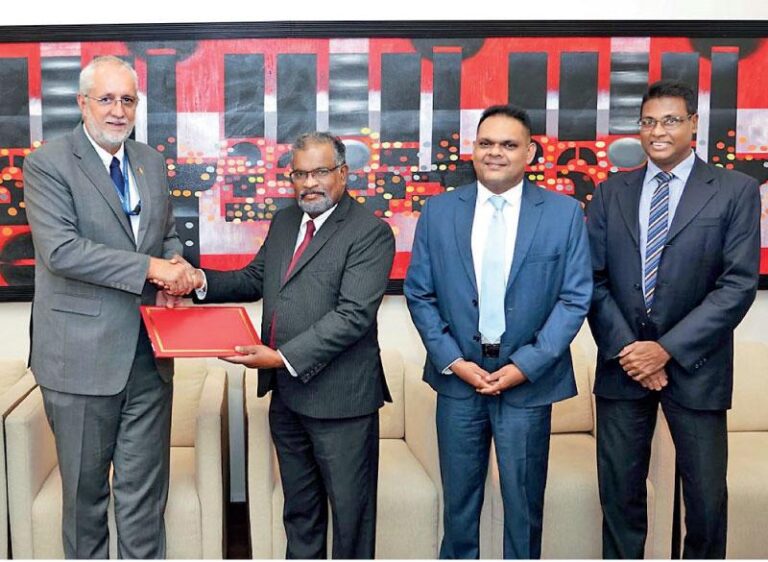
On 28 July an agreement sealing this groundbreaking initiative was signed by BOI Chairman Dinesh Weerakkoddy and Aitken Spence PLC Director Dr. Rohan Fernando.

Ace Apparels CEO Lushan Perera expressed optimism about the reinvigorated factory’s potential to create substantial employment opportunities and contribute to the region’s growth. He revealed plans to initiate the production process within a span of two months.

Given the ongoing challenges in the global economic landscape, Aitken Spence’s strategy revolves around the pursuit of competitive products and new markets. Perera emphasized the importance of expanding into emerging Asian countries such as India, China, Indonesia, and Japan.

BOI’s Koggala Investment Processing Zone Director Priyanka Ranatunga highlighted the positive impact of this revitalization effort. Currently, the Koggala region sustains a workforce of approximately 11,000 individuals engaged in foreign exchange activities. With the establishment of the new factories,

this figure is anticipated to rise to 13,500, ushering in a wave of direct and indirect employment opportunities. Furthermore, industry experts predict a resurgence in order volumes by the end of the year, with the factories poised to regain their competitive edge.

BOI said the revival of these once-closed factories stands as a testament to the resilience and collaborative spirit of Sri Lanka’s business community. Aitken Spence’s investment in this venture not only reinstates lost jobs but also rejuvenates the nation’s export potential, igniting optimism for a brighter economic future.

Sri Lanka forges ahead with FTAs with ASEAN countries – President

0

By: Staff Writer

Colombo (LNW):President Ranil Wickremesinghe revealed that Sri Lanka’s intention to join the Regional Comprehensive Economic Partnership (RCEP) is poised to materialize following the conclusion of credit optimization initiatives.

Additionally, the President announced plans to initiate negotiations for the establishment of free trade agreements with corresponding ASEAN member countries, the President’s Media Division (PMD) reported.

President Wickremesinghe’s statement underscores the country’s determination to bolster its economic connectivity within the broader Asian region.

The President affirmed his alignment with the future vision of ASEAN for the Indo-Pacific area, pledging full support for the advancement of this strategic perspective, it said.

President Ranil Wickremesinghe made these remarks while addressing the 56th anniversary of the Association of South East Asian Nations (ASEAN), Tuesday (08) at the Embassy of the Republic of Indonesia, Colombo, according to the PMD.

He acknowledged the efforts of former President J. R. Jayawardena, his father and other influential figures who advocated for opening up the economy and joining ASEAN during its founding years as well as the Shenoy reforms for liberalization of the economy and to ensure the welfare program stayed within the needs.

The President remarked that turning down the opportunity to join ASEAN led to a period of socialist economic policies and limited capital formations, hindering the country’s growth potential.

The President further explained the circumstance that converted a source of profound regret. He said subsequently, over a span of three years, Sri Lanka transitioned into a socialist economic model, leading to the fragmentation of the capital formations, and has continued to progress in this trajectory.

The President also expressed regret that Sri Lanka had declined an invitation to join ASEAN in its early years, citing missed opportunities for economic prosperity. However, he highlighted a new policy approach to collaborate closely with ASEAN to enhance Sri Lanka’s position in the global arena.

In light of Sri Lanka’s recent financial challenges and the need for rejuvenation, President Wickremesinghe expressed a renewed commitment to pursue closer ties with ASEAN.

Amid the looming threat of bankruptcy, Sri Lanka has embraced the challenge head-on, aiming to move forward with inspiration drawn from proactive problem-solving approaches.

This involves looking at the accomplishments of the ASEAN and enhancing collaboration with the organization.

This strategic approach is firmly rooted in the government’s policies. This approach, championed by the current administration, is expected to resonate with other governments as well.

Meanwhile, the Indonesian Ambassador, Dewi Gustina Tobing, highlighted the significance of the ASEAN viewing Sri Lanka as a vital partner for regional cooperation. With a collective population exceeding 670 million, roughly 8.8% of the global populace, ASEAN represents the world’s third-largest market.

The Ambassador emphasized the importance of fostering stronger ties between ASEAN and Sri Lanka. The aim is to promote people-to-people connections and create a closer link between the two regions, the PMD mentioned.

Supreme Court Disqualifies Lawyer Found Guilty of Forging Deed

0

In a significant legal decision, the Supreme Court has rendered a verdict disqualifying a lawyer who was found guilty of violating the Notaries Ordinance through the act of forging a deed.

The ruling was pronounced by a panel of judges from the Supreme Court, including Chief Justice Jayantha Jayasuriya, Justice S. Thurairaja, and Mahinda Samayawardena.

This judgment follows a hearing initiated by the Supreme Court in response to a complaint lodged by the Central Province High Court registrar regarding the lawyer’s actions.

The charges brought against the lawyer pertained to the creation of a fraudulent deed on February 5, 1999, which was considered an offense under the Notaries Ordinance.

After thorough proceedings, the Supreme Court bench reached a conclusive decision. Due to the substantial evidence presented, which proved the accusations against the lawyer beyond a reasonable doubt, the Court ordered the removal of the accused lawyer’s name from the lawyers directory.

This verdict underscores the commitment of the judiciary to uphold the principles of legality and integrity within the legal profession, reaffirming the importance of ethical conduct in the legal system.

Sri Lankan Rupee Holds Steady Against US Dollar Across Banks

0

In a reassuring development for currency markets, the Sri Lankan Rupee has maintained its stability against the US Dollar at various commercial banks in Sri Lanka today, August 11th, as compared to the previous day.

At Peoples Bank, the exchange rates for the US Dollar remain consistent, with buying and selling rates holding steady at Rs. 311.42 and Rs. 326.74, respectively.

Commercial Bank reports a similar trend, with the buying rate for the US Dollar remaining unchanged at Rs. 309.78. The selling rate also remains steady at Rs. 325.

However, at Sampath Bank, slight fluctuations are noted. The buying rate for the US Dollar has increased from Rs. 314 to Rs. 315, while the selling rate has risen from Rs. 326 to Rs. 327.

These steady or marginally adjusted exchange rates suggest a degree of stability in the currency markets, providing a sense of confidence to traders and investors alike.

Debt restructuring, austerity and the IMF: a panacea or an exacerbation? Part 2

0

Dr. Lionel Bopage

Neo-liberalism

Neo-liberalism is not a solution, but the principal cause of the problem. I would like to offer some personal insights here from my working life with regard to the manner a non performing entity can be made more efficient and responsive, without resorting to the sort of tactics the neo-liberals are obsessed with. Neo-liberal tactics of austerity make the working people more oppressed at the expense of tackling key structural issues the country is faced with, which are at their heart political and economic. One of the best early examples in this regard was the top down approach used in 1970, after the dictatorial coup in Chile, which rammed home an austerity program without the consent of the people and the disastrous consequences its citizenry had to endure as a result.

This article describes the ideological frameworks underpinning the IMF’s approach to a country’s debt crisis. Its economic statements about fiscal responsibility and debt repayment pay little attention to the socio-economic and political causes that this debt crisis allows to emerge from time to time in a country like Sri Lanka or Ghana.

Neo-liberalism is not the solution!

When neo-liberal economy was introduced in 1977, successive leaders of Lanka told people that their future was going to be free, successful and marvelous. However, the future that materialized did not accord with what they predicted. Instead, we have a society where social and economic inequality and bad governance prevail and people’s freedoms are being taken away. This is the same situation in other countries where neo-liberal economics have been imposed on.

Neoliberalism focuses on economic regulation rather than economic planning. It promotes competition and protects market orientation against any controls. Neo-liberals encourage people to embrace entrepreneurship with the belief that at the micro level it creates wealth for the individual and at the macro level they need to accept socioeconomic inequalities deriving from such behaviors.

Instead of human rights, rule of law, civil liberties, freedom from prejudice and prosperity, what we have is a system that promotes authoritarianism, which gradually erodes our rights and freedoms over the years and justified in the name of a strident mono-cultural nationalism. The language and logic we hear are about democracies, but in reality, what we have are economic dictatorships; under the rhetorical guise of growth and productivity. Meanwhile the economic fruits have increasingly flown into the hands of the top echelons of society.

Skewed economy a trap

If this untenable and unfair economic system is not modified, the economic and political elite will continue to pay less tax for the riches they have acquired from the productivity gains made through labour and other inputs. The political elite who benefits from this inequitable system have no desire to make them pay their fair share of tax; instead, the regime offers them tax cuts on the erroneous premise that it is good for generating more employment opportunities and humane working conditions.

Instead, people are trapped in working long hours just to put food on the table for themselves and their families. They do not have much time for socializing or relaxation, having forced many of them to endure poor working conditions with no security. So, they do not have the luxury to quit the job looking for alternatives.

The prevailing system and its supporters have blunted our ability to choose what our prosperity will look like, or how to live our lives. We have lost the right to pursue our freedoms in our own ways without depriving or impeding the freedom of others. Enjoying that right is restricted to those who can afford to purchase that freedom to love, leave, leisure, and creation. This is not only unfair but is also irrational.

Running a business and governing a country

Governing a country is not like running a business entity or managing a home, though there are situations where similar strategies can be used. Financially insolvent situations can be considered as one. Let me start with my own business experience so as to reinforce the point of a collaborative approach to addressing the crisis. In 1987 I took over several business units of the largest non-governmental organisation in Sri Lanka, that were running at a loss, with the responsibility of transforming those into viable, profitable units. I was able to show results within a year, but also expanded those units and the workforce, and paid them better wages. This transformation was achieved during an extremely tough socio-economic and political environment in Sri Lanka.

This was not a unique situation as many face similar daunting tasks of turning around failing business entities under the influence of many factors both internal and external, such as project or market failure, diminishing sales and market share, shrinking profit margins, lack of timely and correct information, a disheartened workforce, lack of financial control, and inept management. I believe that most of the time, such business failures are self-perpetrated.

Dealing with an insolvent situation

If a business is not solvent, its senior personnel in collaboration with their staff need to come up with a plan on how to improve their economic survival. The best way to do this, would be to openly discuss what has gone wrong so far and what everyone, including the leaders could suggest making the economic prospects better.

Leadership needs to seriously consider and analyse the existing circumstances, decide on certain lines of action that are fair by the owners, managers, and employees, both consultatively and inclusively. They may seek advice of professionals with demonstrated business experience. Then those decisions need to be implemented proactively with contingency plans in hand in case of failure.

This is tough, though not an impossible task. Otherwise, the alternative is to resort to immoral and illegal ways through political patronage, corruption and black money etc. By doing the right thing, many businesses bounce back, even performing better and stronger. For the success is dependent on the leadership of the organisation; whether they take advice on board, evaluate the advice, and make tough but necessary decisions. Thus, they successfully implement the turnaround plan, without creating bitter and hostile environments.

Addressing an insolvency

According to my experience, businesses can continue to focus on producing and selling what they have been selling well already. At the same time, they need to develop new products/services to compete and survive in the market place. Here the focus should be on what customers need and if what the entity provides can satisfy their needs.

To regain trust, existing products/services may need to be improved, or new products/services, less expensive and of better quality can be provided in the market place. Branding may also need to change and new marketing strategies followed. Pricing needs to be competitive, but needs to generate reasonable profits to ensure the financial viability of the entity.

Additionally, human resources need be allocated to appropriate positions, so that skills of each employee and their contributions are better utilised. The business should have an adequate cash-flow to settle its bills in a timely manner, including the payments on monies borrowed. The business must manage its finances well. Also, the business should be accountable and transparent, and its transactions should be traceable. Bad financial reporting practices can lead to bankruptcy and closure of the business. Such practices should be stopped immediately. Hence, maintaining better financial reporting becomes crucial.

The next part of this article will point out that the economic panacea in the form of austerity is not only unfair but also has a detrimental effect on the unity of state as it does not address the underlying structural causes of the crisis.

To be continued

Link to part 1 : https://lankanewsweb.net/archives/39435/debt-restructuring-austerity-and-the-imf-a-panacea-or-an-exacerbation-part-1/