Home Blog Page 1381

Sri Lankans compels to consume low-quality flour due to stock dumping of Africa 

0

In the wake of duty withdrawal and its increase to Rs 20 per kilo gram a marginal increase in wheat flour prices of approximately Rs. 10 or less, Turkish wheat flour producers have been dumping flour into Sri Lanka at extremely low prices hurting the local producers, industry sources said. 

The Government has taken steps by introducing a mechanism that makes it mandatory to obtain licenses for importing wheat flour.

Under this situation importers are reluctant to import wheat flour creating a shortage in the market and allowing Prima and Serendib companies to dominate the industry 

The issue was further exacerbated when the Consumer Affairs Authority (CAA) carried out an extensive raid on 4 August. 

The operation, believed to be the largest conducted by the Authority to date, uncovered wheat flour among other food items unfit for human consumption. Among these items, there were stocks of infested flour suspected to be of Turkish origin.

Sri Lankan consumers are fed with low-quality and rejected flour from Africa. Recently US Wheat Associates raised alarm bells over the dumping of cheap Turkish flour around the world to the tune of $ 100 to 500 per year.

It is a sad situation if Sri Lankan consumers are fed with low-quality and rejected flour from Africa. Flour importers urge the authorities to look into this immediately.

Sri Lanka’s flour market has long been a crucial component of its economy, with local suppliers always able to meet the demands of a growing population without the need for exports. 

The country’s flour industry, which provides livelihoods for many and contributes significantly to the national economy, is now grappling with the implications of unfair trade practices.

Based on Sri Lanka Customs statistics, since January 2022, over 190,000 MT of Turkish flour has entered Sri Lanka’s market, raising concerns among local suppliers and authorities. 

The influx has resulted in an outflow of approximately $ 100 million from the cash-strapped nation, a particularly alarming situation as the country grapples with the worst economic crisis in its history.

Additionally, allegations of dumping have sparked debates over the potential impacts on Sri Lanka’s flour industry.

These concerns span a wide range, from the losses faced by importers and exporters striving to remain competitive to the reduced production that could lead to job losses and decreased investment. 

Moreover, it is worth noting that these practices do not benefit anyone, including consumers.

 Recognising the implications, the Government has taken steps by introducing a mechanism that makes it mandatory to obtain licenses for importing wheat flour. 

The measure was implemented with the aim of controlling the rise in the price of wheat flour in the market and preventing the influx of lower-priced sub-standard products.

The situation also underscores the critical importance of ensuring that imported food products meet the highest standards of quality, safety, and ethical practices.

SriLankan Airlines Ground Handling is a disaster?

0

  • Not enough passenger coaches
  • Economy class coaches are overloaded with passengers
  • massive delays for passengers
  • Highest ground handling charges for airlines

Colombo (LNW): Sri Lankan airlines has been operating the ground handling at the BIA Airport from the inception. However the current status is at a crisis.

The coaches used for economy class passengers to be transported from aircraft to terminal is overloaded, compared to all other airports (note: majority of tourists are economy class passengers )the ground handling equipment such as APU’s (auxiliary power unit), all the ground handling vehicles in air side are obsolete.

Sri Lankan airlines ground handling agent (GHA) which handle the check in counters has Multiple issues. We have 51 check in counters in the airport. At peak times there is a huge lack of check in staff for the counters which create a massive queue in the airport resulting in delays for passengers / tourist.

The lack of trained staff on the SITA system which is a reservation system . This is a massive issue for the total operation of the airport. It is evident that the little staff that they have are inexperienced.

The final result of this “mishandling of the handling”, major international airlines such as Emirates , singapore & Qatar and others undergo delays from their schedules ,from 30 mins to up to 2 hours. Due to this issue airlines have an OTP ( on time performance ) which is affected drastically . This gives disrepute to Sri Lanka amongst the airline community . These delays are calculated to be over 20% of all departures ! This number is not acceptable . It is also stated that some passengers who have connecting flights ,miss their flights due to the delay in Sri Lanka . Many complaints have been already made by international passengers and airlines, proof can be provided if needed . This is one reason we are struggling to be known as a hub and a destination .

It is also prudent to note that Sri Lankan ground handling rates for airlines are the highest in the region . For an example an A320 aircraft is been charged usd 2200 plus for a turnaround flight whereas countries such as india is charging USD 800 per turnaround, singapore is around USD 1200 even Maldives is usd 1600 .Due to the above reasons the main airlines are not increasing their current schedules to the country, which will obviously affect our tourism targets.

We as a country have to work hard to earn the much needed dollars that we certainly lack . It is no secret that Sri Lankan airlines is in financial trouble. We as a country have always put the airline first, when we should be prioritizing tourism.

The airline can hardly sustain themselves never mind the ground handling. It is time to privatize or find some other solution that is realistic.

It is sad to note that the first impressions of Sri Lanka are the above issues and the issues of immigration . Still there are no business class or first class counters by the immigration and looks like there never will be.

We live in a country where they are still not able to start a tourism campaign for the season. Much more need not be said about state of affairs.

Nobody seems to be taking any action and we go aimlessly very much like the the Titanic.

The burning question is how can we achieve more tourism? The answer is increase the number of air seat capacity to the country . Currently we have 70 arrivals per day average .That’s about 12000 seat capacity per day arriving .This means we have a total seat capacity of roughly 4,000,000 seats per year . At present 3,000,000 of these seats are local passengers .This will be for all travelers not only tourists . Hence it is obvious that it is difficult to achieve the numbers that the industry is expecting . If our costs are higher than another route and our efficiently is poor why would an airline risk increasing their flights .

We are hopeful that someone will attend to these matters.

AHEAD Operation, Ministry of Education – Teaching and Learning in Higher Education Project Outcome Showcasing Conference

0

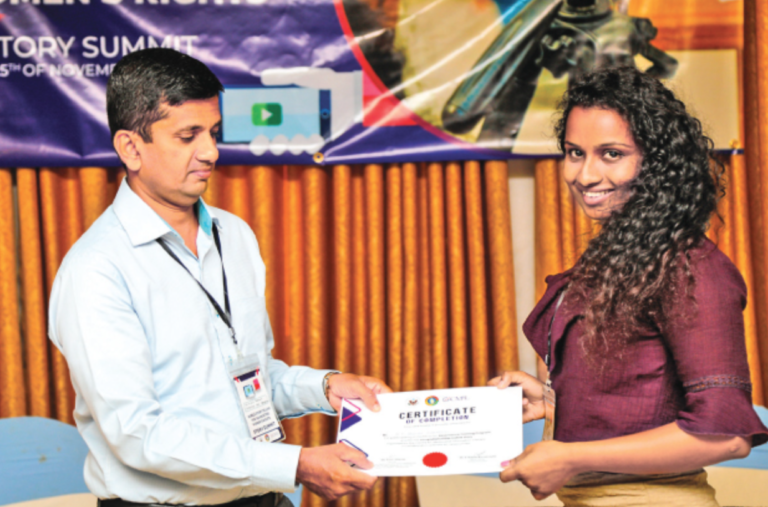
Enriching Teaching, Learning and Assessment and English Language Skills Enhancement (ELTA-ELSE) outcome showcasing conference titled To Be AHEAD: From Theory to Practice, and Beyond was held at the Lotus Hall, BMICH on 9th of August 2023. The chief guest of this conference’s closing ceremony was the Chairman of the University Grants Commission, Senior Professor Sampath Amaratunge.

Enriching Teaching, Learning and Assessment (ELTA) and English Language Skill Enhancement (ELSE) represent a main result area of the AHEAD operation, Accelerating Higher Education Expansion and Development Project which is a World Bank funded project under the Ministry of Education.

This conference successfully showcased its profound outcomes in towards transforming the teaching, learning and assessment process in the state universities in the country. It was emphasized that this results area of the AHEAD Project could reach all its originally designed targets, i.e., to develop academic excellence and socio-emotional skills of the undergraduates, and enhancement of English Language Skills during the last four challenging years. So that the graduate will be productively employed.

Addressing the closing ceremony, the chief guest, Prof. Sampath Amaratunge said that through this project, a step forward was taken to change the mindset of our undergraduates and that itself will have a long-lasting effect in the future attitude development in Sri Lanka.

Dr. Harsha Aturupane, Lead Economist – World Bank, the Guest Speaker addressing the gathering said that the future of higher education will be strongly influenced by developments such as the rise of AI (artificial intelligence) and related technology. We will witness AI make certain jobs disappear; new jobs emerge; and existing jobs implemented with new technology and new skills, and that it is necessary to prepare graduates to embrace the new world of the Fourth Industrial Revolution. He further mentioned that the World Bank is ready to support Sri Lanka higher education as it seeks to face future challenges.

The Project Director, AHEAD and the Vice Chairman of the University Grants Commission, Prof. Chandana P. Udawatte also addressed the gathering.

Commission Members of the University Grants Commission, Ministry Officials from the Ministry of Education, Several Vice Chancellors, Deans of Faculties, Heads of Departments and all the project winners joined this occasion.

The entire AHEAD team was always in support of the success of this conference.

Sri Lanka Stock Market: A Tale of Extremes – From Worst to Best Performer in One Year

0

Dilshan Wijesekera, Chairman of the Colombo Stock Exchange (CSE), revealed a remarkable turn of events at the Invest Sri Lanka Investors Forum in Chennai on Wednesday. Within the span of a single year, the Sri Lanka stock market underwent an unprecedented transformation, transitioning from the depths of underperformance to claiming the crown of the best-performing stock market. This astonishing feat was emblematic of the market’s resilience and adaptability, according to Wijesekera.

During his address, Wijesekera highlighted the inherent volatility within the market and stressed that such fluctuations present unique opportunities for investors. He attributed a significant portion of Sri Lanka’s economic recovery to India’s instrumental role. India’s timely provision of a USD 2.5 billion credit line and other crucial assistance played a pivotal part in steering Sri Lanka toward its current commendable position.

Wijesekera acknowledged that while Sri Lanka’s stock market may appear modest compared to India’s, its size generates favorable prospects for collaboration between the two nations. Chinthaka Mendis, Director General of the Securities and Exchange Commission (SEC), drew parallels between the achievements of Sri Lanka’s SEC and India’s SEBI, emphasizing their critical roles in fostering market growth.

Mendis noted that Sri Lanka’s financial markets often precede the broader economy, showcasing their ability to rebound resolutely. The dedication of the Sri Lankan government to a comprehensive reform agenda has contributed to recent signs of stability and growth, with the CSE playing an active role in this trajectory.

In unity with the government’s reform agenda, both the SEC and CSE remain committed to supporting and bolstering Sri Lanka’s economic resurgence. As confidence and stability are integral to a flourishing market, the securities market infrastructure has been fortified through proactive measures to prevent misconduct.

Mendis underscored the SEC’s vigilance through regular surveillance and supervision, aimed at swiftly identifying and eliminating any instances of misconduct. With the past behind them, the Sri Lanka stock market is poised to embrace a promising future, characterized by robust growth and enduring optimism.

Army Commander Donates Over 15,000 kg of Copra for Esala Perahera in Kandy

0

In a continued tradition of support, Army Commander Lt. General Vikum Liyanage extended a generous donation to the Sri Dalada Maligawa during the vibrant Esala Perahera festival in Kandy. On the 11th of August, Lt. General Vikum Liyanage symbolically handed over a substantial offering of copra, weighing over 15,000 kg, to Pradeep Nilanga Dela, the esteemed Diyawadana Nilame.

For nearly a decade, the Sri Lankan Army has played a pivotal role in ensuring the brilliance of the Perahera festival, an event deeply rooted in cultural significance. Since 2014, the Army has annually contributed the copra required to illuminate the traditional streets during the magnificent procession. The copra, meticulously prepared at the Vijayabahu Infantry Regiment situated in Boyagane, Kurunegala, has become an essential component of the festival’s splendor.

Following the copra presentation, Lt. General Vikum Liyanage and his entourage paid their respects at the revered Dalada Maligawa, seeking blessings for the nation. A gesture of mutual appreciation ensued, as Pradeep Nilanga Dela, the Diyawadana Nilame, presented a commemorative gift to the Army Commander in recognition of the unwavering decade-long commitment to this noble cause.

Notable attendees included Kandy District Secretary Chandana Tennakoon, who joined in commemorating this enduring partnership between the Sri Lankan Army and the sacred Esala Perahera festival. As the tradition continues, the annual contribution of copra by the Army remains a luminous example of the harmonious blending of culture and service.

CB’s strategic orientation towards financial inclusion – Is the CB top aware of what is financial inclusion?

0

According to the CB press release on 8 August, the CB has launched a dedicated web portal of its Regional Development Department (RDD) to signifies its strategic orientation towards financial inclusion initiatives whereas the web portal has been developed with financial assistance of the International Finance Corporation(IFC)  press_20230808_cbsl_launches_the_web_portal_of_regional_development_department_e_0.pdf.

The purpose of this article is to show that the CB senior management has no idea of financial inclusion of the standard version or financial services and literacy required for Sri Lanka at this juncture for the recovery of the bankrupted government and economy.

Highlights of the press release

  • IFC is a longstanding partner of the CB in promoting financial inclusion since 2018.
  • This web portal is part of the overall National Financial Inclusion Strategy (NFIS) for Sri Lanka in which the IFC played a significant role to make financial services more accessible, efficient, and affordable for all households and businesses in the country.
  • The CB under its new legislation is now vested with the responsibility of promoting financial inclusion. Therefore, the web portal is an important step towards promoting financial inclusiveness in the country.
  • This web is expected to facilitate all stakeholders of the country through dissemination of information on the financial inclusion efforts of the CB.
  • The web provides an interactive experience to its users with a user-friendly interface and equipped with financial literacy materials and tools such as publications, Training-of-Trainers (ToT) modules, quizzes and games to enhance financial knowledge, attitude, and behavior of users supporting to make informed and rational financial decisions.
  • The web also expected to act as a shared platform for all stakeholders to access information and collaborate in their financial literacy initiatives. This will complement the upcoming Financial Literacy Roadmap for Sri Lanka to be implemented from 2024.

Few comments on the contents of the press release

  • This press release starts by mentioning of financial inclusion role of the CB but ends by talking of its financial literacy work. Therefore, the CB has got mixed up between financial inclusion and financial literacy.
  • Therefore, the CB thinks that its work for financial inclusion is a few micro and SME credit schemes operated by the RDD and ad-hock financial literacy work carried out by the RDD and the CB’s 6 regional offices. The CB’s literacy programmes stated in the web are mostly about unlawful pyramid investments and deposit-taking. The CB officials have no skills to teach the public on how to open and run SMEs.
  • The web provides only some outdated financial literacy materials of bureaucratic nature prepared by the CB and IFC. None can understand how these materials promote financial inclusion in the country.

What is financial inclusion?

Financial inclusion generally means the spread of formal sector financial services across persons and households at affordable prices in order to improve their economic activities and living standards.

  • According to the Wikipedia Financial inclusion is defined as the availability and equality of opportunities to access financial services. It refers to a process by which individuals and businesses can access appropriate, affordable, and timely financial products and services. These include banking, loan, equity, and insurance products.”
  • According to Investopedia Financial inclusion refers to efforts to make financial products and services accessible and affordable to all individuals and businesses, regardless of their personal net worth or company size. Financial inclusion strives to remove the barriers that exclude people from participating in the financial sector and using these services to improve their lives. It is also called inclusive finance.”

However, according to the CB’s new web, financial inclusion is about the CB’s ad-hoc micro and SME credit schemes and financial awareness programmes. Therefore, the new initiative with the IFC as stated is only some bureaucratic work of the CB which has no use to the general public to have the access to modern formal sector finance and enjoy an inclusive growth in the country.

Can the CB offer financial inclusion functions under the new Central Bank Act?

Among powers, functions and duties of the CB, the new Act includes “promote financial inclusion in Sri Lanka.” However, neither a definition nor policy instruments are provided for in the Act. 

In fact, the CB is prevented from opening its branches and implementing refinance credit schemes on CB funds.

Further, powers to regulate bank interest rates and credit are not permitted in the new Act. However, the repealed Monetary Law Act contained immense powers to fulfill credit/monetary needs of the country and specific sectors where the CB used them extensively.

A central bank can promote financial inclusion only through the monetary policy and related regulatory powers. However, the monetary policy authorized in the new Act does not provide for financial inclusion related policy instruments. 

Therefore, the CB will have to close this inclusion web portal very soon as key activities presented therein such as refinance schemes and regional offices are unlawful under the new Act. 

Some concerning observations

  • The press release states that the IFC which financed the development of this web has been a longstanding partner of the CB since 2018 in promoting financial inclusion in the country. However, there is no record of any such financial inclusion work. Especially, restructuring and recovery of Sri Lankan economy bankrupted by the debt and foreign currency crisis require financial inclusion strategies that enable the government to sustain its debt stock and businesses and households to resume their economic activities. However, neither the CB nor the IFC has launched any such strategies so far despite their financial inclusion rhetoric.
  • It is difficult to understand why the IFC had to finance the development of this rudimentary web portal despite the CB’s IT capacity and financial health with CB’s net profit of Rs. 235 bn retained in the last year without transferring to the cash-strapped government whereas the CB printed Rs. 25 bn for just its operational expenses. The development of this type of basic web will not cost more than Rs. 200,000 to a local IT person if the CB’s IT Department is not technically competent.
  • Nobody is aware of NFIS referred in the press release and articulated in the web. It is a puzzle how such national strategies connected with foreign parties prevail unknown to the general public.
  • I do not understand how the CB teaches financial literacy on risky pyramids and investments to the general public while the CB itself looses billions of own funds by investing in dealers regulated by itself and prints money to cover such daylight losses including payment of exorbitant rates of returns around 29% to own employee retirement funds where the public provident funds receive 9%.
  • According to the CB Annual Report 2022, inclusive MSME credit schemes referred to in the web do not bear any significance. They all are 12 govt funded schemes and 7 CB funded schemes which disbursed only Rs. 16 bn catering to about 62,000 beneficiaries in 2022. Of those, nearly 93% was comprised of the two old, highly bureaucratic schemes, i.e., Comprehensive Rural Credit Scheme and Saubagya Loan Scheme. It is well known how the CB top management opposed refinance of Rs. 200 bn during Corona pandemic while all central banks printed money to protect supply chain finance. Therefore, I do not understand the role of such trivial credit schemes in the financial inclusion of the present bankrupted and debt-trapped economy.
  • I do not understand how will the CB’s new monetary policy of daily and short-term liquidity management support provided to banks, finance companies, leasing companies and private equity and bond investors based on policy interest rates will promote financial inclusion for the recovery of the bankrupted economy.
  • Therefore, it is the duty of the people’s governments to ensure that the country’s central bank operates to provide the public with the access to contemporary monetary needs in line with required improvements in living standards. This is the meaning of financial inclusion. Otherwise, the country’s independent central bank will be another bank of a few rich businessmen who run the social market economy of Sri Lanka lingering in the bankruptcy. The general public will soon question the purpose of the independent central bank with exclusive monetary policy carried out to provide the liquidity only to profit-frenzied money dealers in the country.

Overall, present CB management resorting to such media shows while defaulting on its core functions and pubic duties should be a matter of shame to those who are interested in central bank functions in the public interest. 

(This article is released in the interest of participating in the professional dialogue to find out solutions to present economic crisis confronted by the general public consequent to the global Corona pandemic, subsequent economic disruptions and shocks both local and global and policy failures.)

P Samarasiri

Former Deputy Governor, Central Bank of Sri Lanka

(Former Director of Bank Supervision, Assistant Governor, Secretary to the Monetary Board and Compliance Officer of the Central Bank, Former Chairman of the Sri Lanka Accounting and Auditing Standards Board and Credit Information Bureau, Former Chairman and Vice Chairman of the Institute of Bankers of Sri Lanka, Former Member of the Securities and Exchange Commission and Insurance Regulatory Commission and the Author of 12 Economics and Banking Books and a large number of articles published. 

The author holds BA Hons in Economics from University of Colombo, MA in Economics from University of Kansas, USA, and international training exposures in economic management and financial system regulation)

Source: Economy Forward

Sectoral Oversight Committee on An Open & Accountable Government obtains the ideas from the Venerable Theros

0

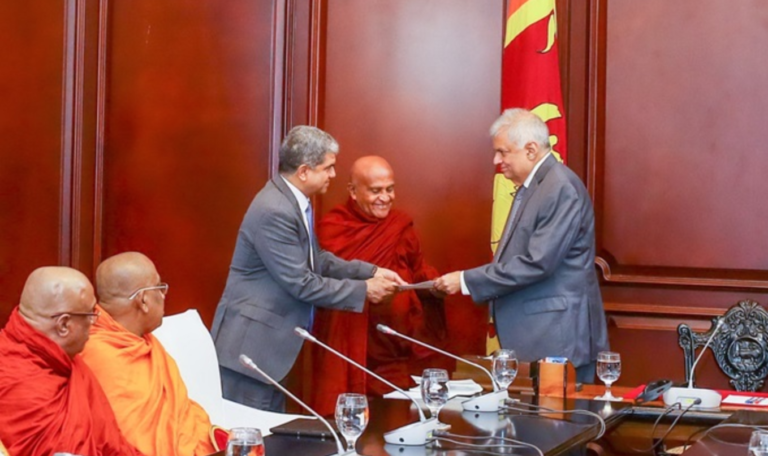
The Sectoral Oversight Committee on An Open & Accountable Government obtained the ideas from the Venerable Theros at the Committee meeting held.

Obtaining of such ideas took place at the Sectoral Oversight Committee on An Open & Accountable Government which was held in Parliament recently (03) under the Chairmanship of Hon. Jagath Kumara Sumithraarachchi.

The Venerable Theros who was present at the Committee meeting held, presented their views and suggestions pertaining to the legislations to be enacted and the legislations to be amended in order to construct an open and accountable government.

Moreover, the Venerable Theros pointed out the need to prepare a national policy for all sectors of the country. They pointed out that it is important for this country to have a national policy which is implemented continuously by every government without confusing political policy and national policy.

The Venerable Theros also pointed out the need to take legal measures to act on the hate speech that are brewing regarding the Venerable Theros to fulfill various needs of needs of non-religious organizations.

The Chair of the committee said that the committee is working on possible intervention regarding these issues. He also pointed out that a report related to this proposed proposal will be submitted to the Parliament.

The most Venerable Aanamaduwe Dhamma Dhassi Thero, Pahamune Sumangala Thero, Dr. Waleboda Gunasiri Thero, Senior Professor Kiwulegedara Narada Thero, Senior Professor Induragare Dhammarathana Thero, Professor Pinnawala Sanghasumana Thero, Professor Nambiriththankadawara gnanarathana Thero, Professor Madagoda Abhayatissa Thero, Dr. Kumbalgoda Dhammaloka Thero, Kandegama Deepawanshalankara Thero, Akuratiye Nanda Thero were present at the Committee meeting held.

Also, Members of Parliament Hon. Udayana Kirindigoda, Hon. Jayantha Weerasinghe, Hon. Madhura Withanage were present at the Committee meeting.

Sri Lanka’s Egg Prices and Import Impact: A Potential Shift at Rs. 35″

0

In recent news, the Sri Lanka Association of Animal Production has proposed that local egg prices could potentially be reduced to Rs. 35 per egg, provided the government allows the importation of maize. This suggestion comes in the wake of significant developments in the egg market following the removal of the maximum retail price (MRP) by the government.

Ajith Gunasekara, the President of the Association, highlighted the positive impact of lifting the MRP on egg sales, leading to increased consumption. He further disclosed that measures have been initiated to offer frozen chicken at a price of Rs. 1,250 per kilogram.

The Consumer Affairs Authority (CAA) had earlier set price limits for eggs, specifying Rs. 44 and Rs. 46 for white and brown eggs, respectively, per egg. Additionally, the maximum prices for 1 kilogram of white and brown eggs were set at Rs. 880 and Rs. 920, respectively. However, recognizing the ineffectiveness of these price controls and the persisting shortage of eggs in the market, the CAA lifted the price cap on eggs, effective from July 26.

In an interesting development, eggs imported from India, previously designated for bakery use, are now available to consumers at a rate of Rs. 35 per egg in Lanka Sathosa outlets and Rs. 40 per egg in supermarkets.

The Association’s proposal to lower local egg prices hinges on the government’s decision regarding maize importation. This crucial linkage underscores the intricate web of factors influencing the egg market in Sri Lanka and highlights the potential for a shift in affordability for consumers.

As discussions and decisions unfold, the dynamic interplay between imported eggs, local production, and feed imports remains at the forefront of considerations, shaping the trajectory of egg prices and availability in the country.

Sri Lankan Youth Apprehended with Forged Visa Attempting to Flee to France

0

In a recent development, a Sri Lankan youth’s attempt to escape to France using a counterfeit visa has been foiled at the Bandaranaike International Airport. Reports indicate that the individual, who had paid Rs. 3.5 million to a Ugandan woman, was apprehended as he sought to embark on his journey via Dubai.

Lankadeepa, a local news source, shed light on the intricate details of the case. The youth’s intentions to travel to France were facilitated by the acquisition of a forged visa, which he obtained with the assistance of a Ugandan woman. This partnership involved a significant financial transaction, whereby the youth paid a substantial sum to secure his illicit travel arrangements.

Authorities from the Department of Immigration and Emigration intercepted the suspect at the Katunayake Airport. The apprehended individual, a 24-year-old resident of Matara, was previously employed at a casino based in Colombo. His recent stint at a casino in Uganda two months prior played a pivotal role in the unfolding of this case.

It has come to light that the youth resorted to selling his parents’ land, jewelry, and even his own motorcycle to gather the required US $3000 for the forged visa. This desperate act illustrates the lengths to which he went to fulfill his illicit aspirations.

The collaboration between the Sri Lankan youth and the Ugandan woman highlights the cross-border nature of this incident, with individuals from different countries coming together for unlawful purposes. The successful apprehension underscores the vigilance and diligence of immigration officials in safeguarding the integrity of international travel and immigration procedures.

As this case continues to unfold, it serves as a reminder of the challenges posed by fraudulent activities in the realm of international travel and the critical role that border control and law enforcement agencies play in maintaining the security and legality of such processes.

Conclusion of Charges Reading in Naufer Mawlawi and 23 Others’ Case Linked to 2019 Easter Sunday Terror Attacks

0

The Colombo High Court marked a significant step on Friday, August 11th, as the reading of charges against Naufer Mawlawi and 23 co-defendants related to the 2019 Easter Sunday terror attacks came to an end.

In a session presided over by a three-judge panel, comprising Justices Damith Thotawatte, Amal Ranaraja, and Navaratne Marasinghe, the charges were solemnly read out in the presence of the accused individuals.

The case, filed by the Attorney General, encompasses a total of 24 defendants, including prominent names such as Naufer Mawlawi, Sajid Mawlawi, Mohammed Milhan, Sadiq Abdullah, Adam Lebbe, Mohammed Sanasdeen, and Mohammed Rizwan. These individuals collectively face a staggering 23,270 charges, encompassing accusations of aiding, abetting, and conspiring in connection with the harrowing 2019 terror attack.

Under the framework of the Prevention of Terrorism Act (PTA), the charges span a broad spectrum of allegations, ranging from conspiring to commit murder and aiding and abetting to the collection of arms and ammunition, and even attempted murder.

With this significant phase completed, the legal process now gears towards the next steps. The forthcoming hearing for this case is scheduled for October 10, where the continued proceedings will continue to unfold.

In a separate development, the court has issued summons to former CID Director, DIG P. Ampawila, requiring his presence before the court on the aforementioned October 10 date. This summons underscores the comprehensive nature of the investigation and the breadth of individuals involved in the legal process.

The culmination of the charges reading is a pivotal moment in the pursuit of justice and accountability following the tragic events of the 2019 Easter Sunday attacks. As the legal process unfolds, it serves as a reminder of the importance of a thorough and meticulous approach to address such profound incidents and their far-reaching implications.