Home Blog Page 1398

Sri Lanka Original Narrative Summary: 31/07

0

  1. Chairman of the PSC to study the practical problems and difficulties arisen in relation to enhancing the rank in the Ease of Doing Business Index in Sri Lanka and make its proposals and recommendations Madhura Withanage says President Wickremesinghe has provided guidance and support for the implementation of numerous programs aimed at creating a conducive environment for investment in the country.
  2. Sri Jayawardenapura Hospital Director, specialist Dr. Ratnasiri Hevage says safeguarding Sri Lanka’s free health sector, renowned for having one of the best health systems globally, is not solely the responsibility of the government, but also falls upon the healthcare staff, the public, and the mass media: asserts no country manufactures a category of drugs termed “inferior drugs,” and the importation of unregistered drugs is strictly prohibited.
  3. Education Minister Susil Premjayanth says new graduates will be recruited as teachers for the subject streams of Science, Technology, and English and foreign languages; adds the next steps regarding the recruitment of new graduates as teachers will be undertaken at the provincial level.
  4. Finance State Minister Ranjith Siyambalapitiya says the depreciation of the Sri Lanka Rupee in recent times is a temporary fluctuation caused by changes in demand and supply: asserts the government has allowed the value of the US Dollar and the Sri Lanka Rupee to be determined based on market conditions, and the situation was influenced by the need for banks to collect enough foreign currency to provide for depositors who invested in Sri Lanka Development Bonds.
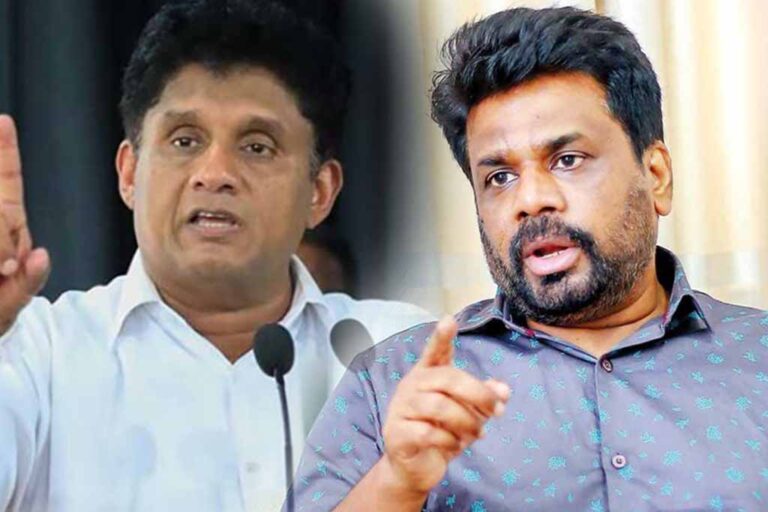
  5. JVP/NPP Leader MP Anura Kumara Dissanayake expresses gratitude for France’s willingness to support Sri Lanka’s debt restructuring programme; adds all creditors, however, should simultaneously probe into what happened to the debts they had given to Sri Lanka; The Auditor General reveals that external debt not properly allocated on projects for which they were granted: Out of Rs. 08 trillion of debt, only Rs. 02 trillion (25%) identified as assets.
  6. The GMOA urges the authorities to immediately launch an impartial probe into the recent death of a toddler during a kidney operation at the LRH Hospital: GMOA Spokesman Dr. Chamil Wijesinghe says it is essential to promptly launch a probe into the incident as to ascertain the cause of death; adds it is unfair for both parties, the victim’s party and the medical officers, to draw early conclusions on what exactly happened without a comprehensive analysis.
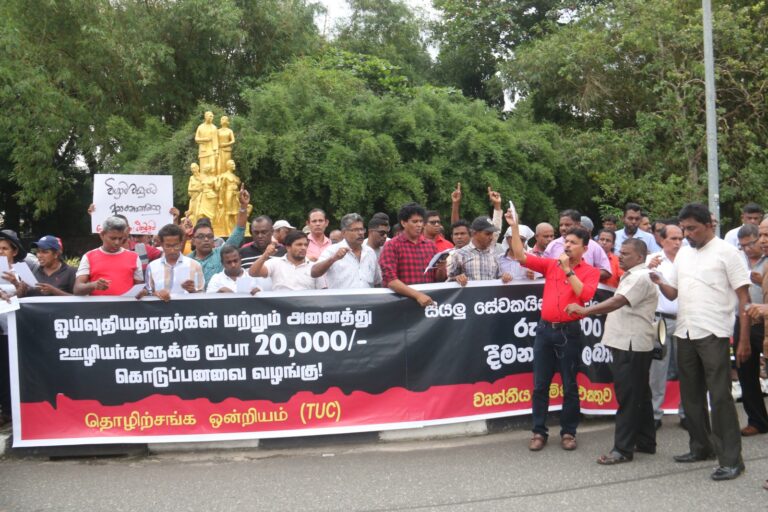
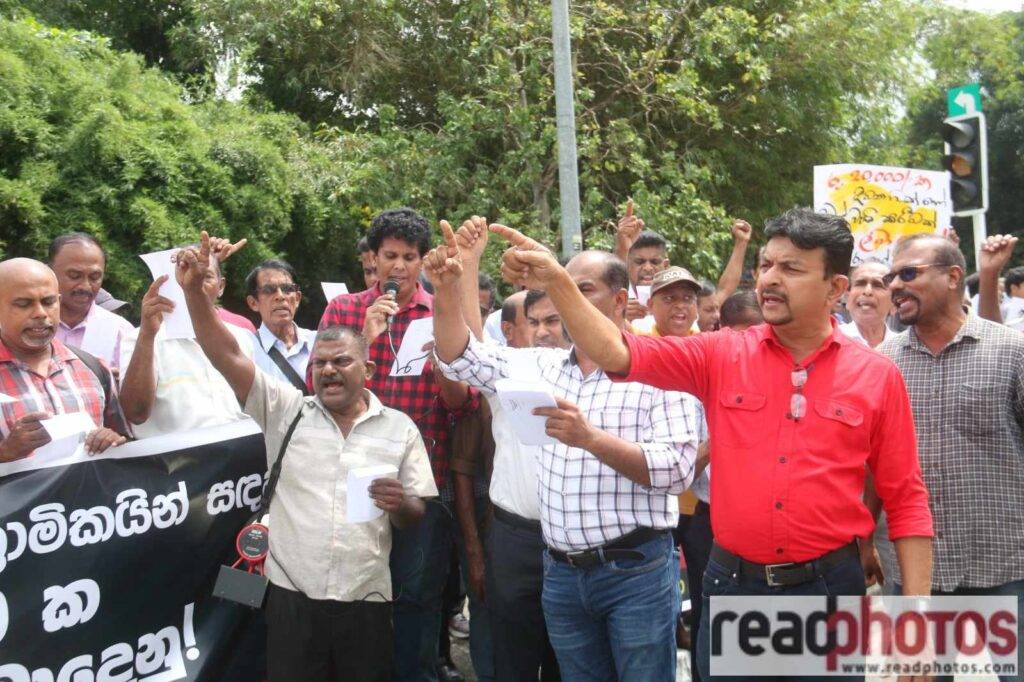
  7. The Human Rights Commission says it has looked into the reports claiming that journalist Tharindu Uduwararagedara was assaulted and arrested by Borella Police while covering a story on a protest held in Colombo: adds its Rapid Response Team visited Borella Police station and inquired about the condition of the journalist: asserts the Commission will call for reports from relevant parties alleged to have been connected to this incident and summon all the concerned individuals as well for an inquiry.
  8. Defence State Minister Premitha Bandara Tennakoon says Sri Lanka firmly stands against terrorism and will not tolerate any form of support or actions that aid terrorist activities: Turkey commends the GOSL and its security forces, including intelligence agencies, for their significant efforts in combatting the Fethullah Terrorist Organization (FETÖ) led by the Fethullah Gulen groups.
  9. Sri Lanka welcomes 748,377 tourists from January 1st to July 27th, 2023, exceeding the 2022 total of 719,978: July sees over 120,000 tourist arrivals, surpassing 100,000 arrivals for the sixth time in the first seven months of the year: India remains the top source market, contributing 17% of total arrivals with 20,770 tourists: China emerges as one of the top three markets, making up 7% of total arrivals in July with 8,446 tourists.
  10. Sri Lanka Netball Team led by Gayanjali Amarawansa defeated fighting to Wales by 56-68 in their World Cup Netball fixture played at Cape town, South Africa: Wales dominates the game with a gap of 12 points to win the match after good battle.

GMOA urges impartial inquiry into toddler’s death at LRH

0

Colombo (LNW): The Government Medical Officers’ Association (GMOA) has urged the authorities to immediately launch an impartial probe into the recent death of a three-year-old toddler at the Lady Ridgeway Children’s Hospital (LRH), during what reports claimed as a kidney operation.

Daily Mirror quoting GMOA Spokesperson Dr. Chamil Wijesinghe reported that the Union is of the view that it is essential to promptly launch a probe into the incident as to ascertain the cause of death.

Dr. Wijesinghe emphasised that it is unfair for both parties, namely the victim’s party and the medical officers, to draw early conclusions on what exactly happened without a comprehensive analysis, according to Daily Mirror report.

The GMOA’s stance on the death of the toddler appears in the backdrop where endless speculations are being made by a number of parties, including the victim’s parents, that this was due to the negligence of the doctors.

The three-year-old child was identified to have developed acute kidney disease and thus was referred to surgery for the removal of the left kidney, but the doctors later informed that the healthy right kidney was also removed during the procedure, according to the victim’s parents.

The child in the absence of both kidneys required haemodialysis until a suitable kidney could be transplanted, but passed away after contracting a harmful germ, reports claimed.

The three-year-old was a resident of Kotahena area and was receiving treatment in the Intensive Care Unit (ICU) of the LRH and was pronounced dead on July 28.

LKR depreciation a temporary fluctuation: State Minister

0

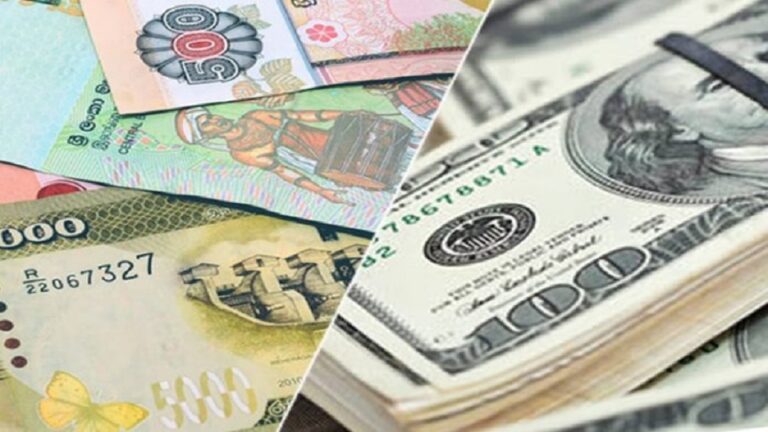
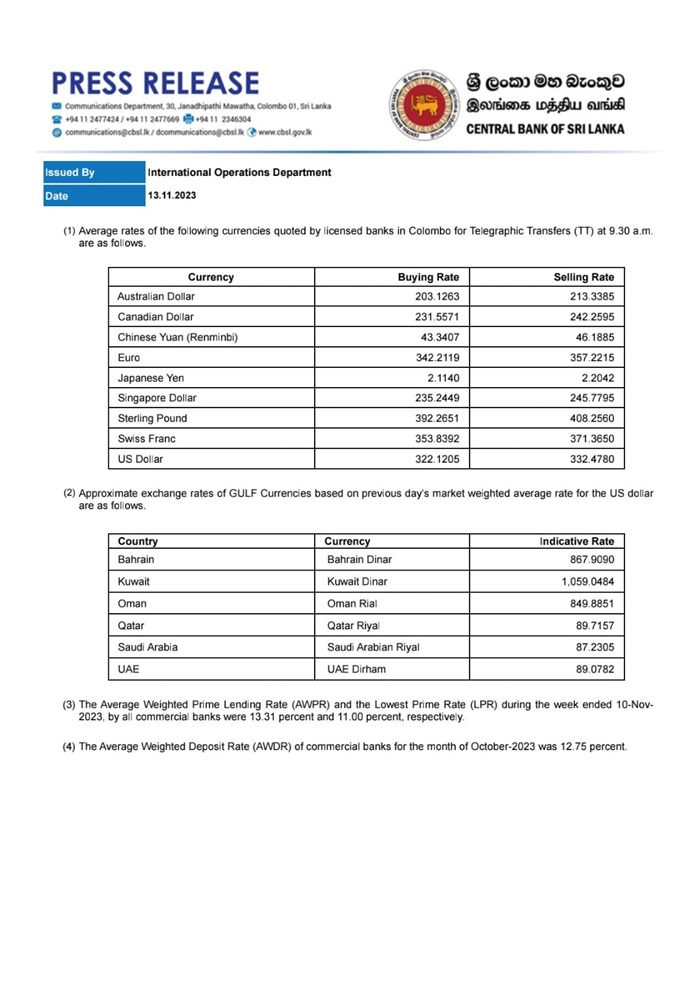
Colombo (LNW): The depreciation of the Sri Lanka Rupee in recent times is a temporary fluctuation caused by changes in demand and supply, said State Minister of Finance Ranjith Siyambalapitiya, speaking to a briefing yesterday (30).

Adding, the Minister emphasised that the government of Sri Lanka has allowed the value of the US Dollar and the Sri Lanka Rupee to be determined based on market conditions, and the situation was influenced by the need for banks to collect enough foreign currency to provide for depositors who invested in Sri Lanka Development Bonds.

The recent depreciation of the Sri Lanka Rupee, therefore, is a result of banks limiting the release of dollars to the market and will only be a temporary situation, he noted.

HRCSL calls for reports on arrest of Journalist Tharindu Uduwaragedera

0

By: Isuru Parakrama

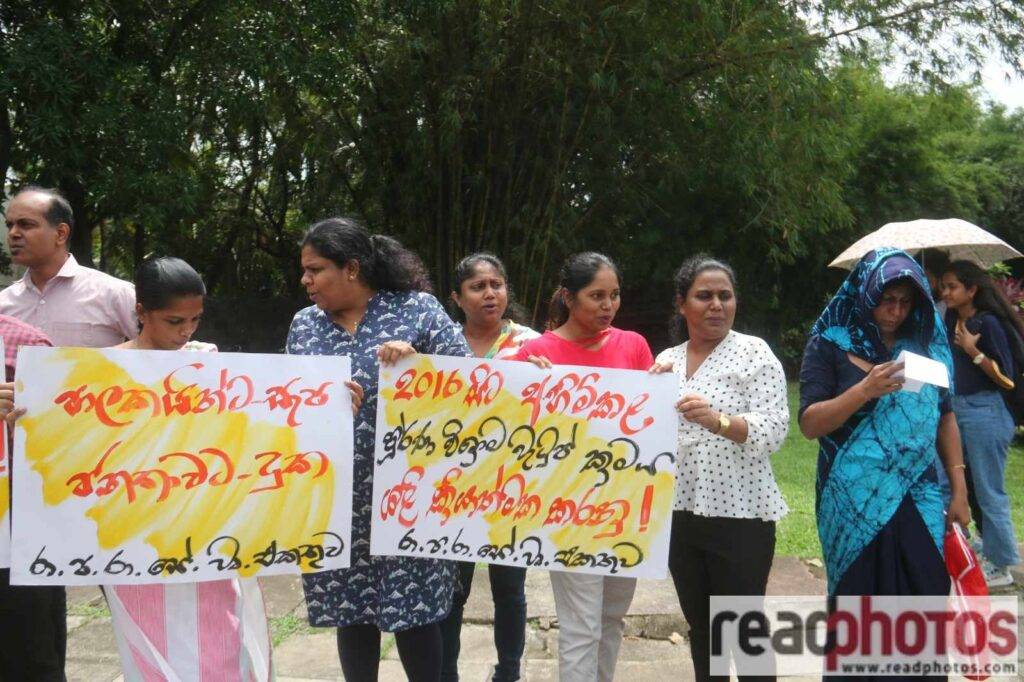
Colombo (LNW): The Human Rights Commission of Sri Lanka (HRCSL) has looked into the reports claiming that Sri Lankan journalist Tharindu Uduwararagedara was assaulted and arrested by Borella Police three days ago (28) while covering a story on a protest held in Colombo.

In a statement, the HRCSL said that the Rapid Response Team of the Commission visited Borella Police station and inquired about the condition of the journalist on the same day.

“The Rapid Response Team met the Officer in Charge of the Borella Police Station and recommended that Uduwaragedara be referred to a judicial medical officer. HRCSL will call for reports from relevant parties alleged to have been connected to this incident and summon all the concerned individuals as well for an inquiry,” it added.

No inferior drugs in circulation – Importation of unregistered drugs strictly prohibited: J’Pura Hospital Chief

0

PMD: Director of the Sri Jayawardenepura General Hospital, specialist Dr. Ratnasiri Hevage, emphasized that safeguarding Sri Lanka’s free health sector, renowned for having one of the best health systems globally, is not solely the responsibility of the government. It also falls upon the healthcare staff, the public, and the mass media to play their part effectively.

Dr. Hevage stated that the reputation of the health sector relies on preserving its excellence, which demands a responsible approach from health administrators.

He clarified that no country manufactures a category of drugs termed “inferior drugs,” and the Ministry of Health strictly imports drugs that are duly registered in their respective countries and authorized by the Drug Regulatory Authority.

Addressing concerns about complications or allergies arising from Western medicine, Dr. Hevage said they are not uncommon and he reassured that Sri Lanka has well-established effective methods for many years to manage such incidents.

Director of Sri the Jayawardenepura General Hospital, specialist Dr. Ratnasiri Hevage mentioned this while participating in the ‘1O1 Katha’ program produced by the President’s Media Division (PMD).

Speaking during the ‘1O1 Katha’ program, Dr. Hevage stressed the significance of patient cooperation and support in reducing drug-related complications. In cases of drug allergies, patients can report incidents promptly through the Pharmacovigilance page on the Drug Regulatory Authority’s website, allowing for immediate action.

Dr. Ratnasiri Hevage further pointed out;

“We have guidelines that include how to deal with a drug allergy. In addition to the management in the concerned hospital, immediate reporting of such incidents through the Pharmacovigilance page on the website of the Drug Regulatory Authority, an online system is already available. (https://www.nmra.gov.lk/index.php?option=com_contact&view=reporting&Itemid=191&lang=en) Accordingly, the Drug Regulatory Authority has the ability to act immediately.”

Dr. Ratnasiri Hevage underscored the importance of open communication between patients and doctors. Disclosing a history of allergies and the medications being taken is crucial for proper medical care. Failure to provide accurate information may lead to serious risks, as seen in an unfortunate example shared by the specialist.

“I recently learned that my friend’s father had died. Despite the fact that he needs medication on a regular basis for a medical issue, he has not applied for it. He didn’t mention anything when he went to the doctor unwell. He has informed the doctor that he is taking the prescribed medication in accordance with the dosage. As a result, the doctor increases the dose. He died as a result of an overdose of the medication. My friend explained that it was not the hospital’s or the doctor’s fault, but rather that his father did not take the drug properly and did not provide the correct information to the doctor. This is but one example. As a result, always provide accurate information to the doctor. Medical advice should also be followed in the same manner. If you are instructed not to get out of bed, you should do so”.

He emphasized the need for patients to adhere strictly to medical advice, particularly with regard to prescribed dosages. Misleading information or non-compliance with treatment can have severe consequences.

Dr. Hevage dispelled fears surrounding drug quality, asserting that no inferior drugs are imported, and he assured the public that the Ministry of Health imports medicines only from registered sources, even during emergency purchases. It should be mentioned that medicines are not produced separately for the government and the private sector.

He cautioned against creating unnecessary fear around drugs and medical care, urging everyone to work together in protecting the integrity of the country’s outstanding health system. The Sri Jayawardenepura Hospital, for example, can be described as a hospital with a high degree of management in all of these areas. Recently, our team successfully handled a severe allergy case following established guidelines, demonstrating our commitment to efficient management. It is essential to avoid spreading unnecessary fear regarding medications, as incidents like these have been reported not only this year but occur regularly. We must not exploit such occurrences to deter patients from seeking medical treatment or utilizing essential medications and hospital services. The focus should always be on ensuring patient safety and promoting confidence in our healthcare system.

Highlighting Sri Lanka’s reputation alongside Costa Rica as countries with exemplary health systems, he urged collective efforts from the government, media, healthcare workers, patients, and the public to uphold and preserve the free health sector. He implored health administrators not to compromise the sector’s excellence for short-term gains and to uphold their responsible role in maintaining its high standards.

Cautioning against using isolated incidents to deter patients from seeking medical care, Dr. Hevage encouraged collective efforts to protect the nation’s free health sector. Health administrators play a pivotal role in upholding the sector’s excellence and reputation, discouraging any actions that may compromise its long-term stability.

Numerous programmes launched to foster investment-friendly environment

0

PMD: The Chairman of the Select Committee of Parliament to study the practical problems and difficulties that have arisen in relation to enhancing the rank in the Ease of Doing Business Index in Sri Lanka and make its proposals and recommendations stated that President Ranil Wickremesinghe has provided guidance and support for the implementation of numerous programs aimed at creating a conducive environment for investment in the country.

Member of Parliament Madhura Withanage made these remarks during the Media Conference held at the Presidential Media Centre (PMD) on the theme ‘Collective path to a stable country’ July (30).

He highlighted the government’s plan to introduce a business facilitation law aimed at removing barriers for investors. Additionally, Mr. Withanage emphasized that the bureaucratic hurdles in promoting investment and business should be addressed by adopting a public service management policy rather than traditional administration methods.

He said that it is expected to bring a law to facilitate business in the country by removing the barriers for investors. Mr. Madhura Withanage, Member of Parliament, expressed his concern about Sri Lanka’s current position at the 99th place in the business facilities improvement index, which is considered a significant global indicator. He pointed out that specific recommendations, issues arising from the relationship between the public and private sectors, and outdated legal regulations are contributing factors to this situation.

Acknowledging the support of President Ranil Wickremesinghe, Mr. Withanage stated that they have been granted full freedom to address these challenges and provide necessary solutions. He also mentioned the active involvement of a presidential task force dedicated to this matter. The Parliament’s recommendations will be promptly implemented by the task force, both in the short term and with a focus on medium and long-term solutions.

The President has issued directives to promptly implement various programs aimed at streamlining business operations in the country. These programs entail the establishment of a unified system for registering companies, maintaining comprehensive data and information systems for each company, and ensuring that all relevant information is centralized in a single data system. This strategic approach seeks to enhance efficiency, transparency, and accessibility in the business environment, fostering a more conducive atmosphere for investment and economic growth.

Indeed, the implementation of a business facilitation law is crucial to achieving the desired goals and targets. Without such a legal framework, it becomes challenging to streamline and expedite business processes, hindering the overall progress.

Additionally, to attract investors and facilitate their decision-making, having a comprehensive and accessible data system is essential. Currently, Sri Lanka lacks a centralized land information bank that provides detailed insights into suitable investment opportunities in specific fields. For instance, in India, there is a land information bank that helps investors identify areas suitable for solar projects and industrial investments. Adopting a similar program in Sri Lanka would greatly benefit potential investors and enhance the country’s appeal as an investment destination. By establishing such a system, investors will have access to valuable information, enabling them to make well-informed decisions and contributing to the country’s economic growth.

The current situation where businesses and investments require approvals from multiple government agencies can lead to duplication of efforts and unnecessary delays. This bureaucratic complexity can be a significant deterrent for potential investors and hinder the ease of doing business in the country. To address this issue, it is essential to streamline and centralize the approval process, ensuring that relevant government agencies collaborate efficiently and avoid redundant procedures. Creating a unified and coordinated approach will not only expedite the approval process but also improve transparency and accountability.

The absence of an investor-friendly legal system in our country is a significant concern. While the establishment of Commercial High Courts by the previous government aimed to provide speedy solutions to commercial issues, it has not fully met the expected need, leaving investors facing challenges. Urgent measures are required to address this issue and promote a more conducive environment for investments.

The lack of conductors is a significant issue for small and medium-sized enterprises (SMEs). To address this concern, the Ministry of Finance, the Central Bank, and the Ministry of Industry are collaboratively working on a solution, as per the President’s instructions to take immediate action. Proposals have been submitted to categorize institutions with a turnover of Rs. 750 million to Rs.1 billion under small and medium-scale businesses, with approval expected in the future.

Additionally, the presence of a powerful bureaucracy is hindering the creation of a favorable investment environment. Many government officials possess an administrative mindset rather than a management mindset. To rectify this, there is a pressing need for public officials to be well-informed about entrepreneurship, and a shift towards a management-oriented public service is necessary.

A notable recent example in this context is the 2018 project from a world-renowned cable car company based in Europe. They conducted extensive studies and evaluated multiple locations in Sri Lanka before proposing the establishment of a 3.95 km cable car destination connecting Nanu Oya, Kikiliyamanna, and Gregory Lake.

In 2021, the Tourism Development Authority and the Urban Development Authority submitted a cabinet paper and obtained approval for the cable car project from 15 relevant institutions. Nepal and Dominica received this project simultaneously with Sri Lanka. Dominica received a $200 million project. Our country had received a project worth 65 million dollars. However, we have not yet granted approval for the project. In contrast, Nepal has already commenced work on the project, and Dominica approved it within six months.

During our committee’s discussion to inquire about the project, representatives from the Tourism Development Authority, Urban Development Authority, and Forest Conservation Department were present. When asked about the delay in the project, the Forest Conservation Department raised concerns about potential damage to the ecosystem. However, all other agencies present at the discussion had already granted their approval for the project.

Further investigation revealed that the construction of a pier for the cable car in case of an emergency would require 2.3 hectares of land in the Kikiliyamana area, which falls under the jurisdiction of the Forest Conservation Department. According to international standards, 0.8 hectares (220 perches) of this land are essential for construction. The remaining area would remain as common ground. However, the Forest Conservation Department proposed to provide only 58 perches and stated that the rest cannot be allocated due to technical reasons. The project officials argue that the entire 220 perches are necessary to address technical requirements adequately.

I would like to challenge the Forest Conservation Department today to provide scientific and well-founded reasons for all the concerns they have raised. It is crucial that all parties involved in this project work together to find solutions that not only ensure the preservation of our ecosystem but also allow for responsible and sustainable development. By engaging in a constructive dialogue and presenting evidence-based arguments, we can collectively arrive at an informed and balanced decision that benefits both our environment and the development of the cable car project.

Indeed, companies from Europe have set a high standard in implementing advanced technologies and maintaining their reputation for excellence. As a nation, it is crucial for us to learn from such examples and ensure that we do not lose valuable investments of 65 million dollars due to internal power struggles or bureaucratic obstacles. Collaboration and effective communication between government agencies are vital to provide a conducive environment for investors.

It is essential to streamline processes and create a unified approach in dealing with investment proposals. By promoting a cooperative and efficient system, we can attract more investments and foster economic growth while maintaining the highest standards of integrity and accountability. Let us work together to create a business-friendly environment that encourages investments, facilitates growth, and enhances our country’s reputation on the global stage.

It is commendable that the President is actively addressing these issues and taking steps to create a conducive environment for businesses in the country. The thorough study conducted by the Presidential Task Force indicates a commitment to understanding and resolving the challenges faced by investors. By providing comprehensive solutions to the identified problems, the government aims to improve the economic situation of the country and attract more investments. The timeline set for the implementation, with a target of next September or October, shows a dedication to timely action and progress.

We can look forward to a more business-friendly landscape that encourages investment, fosters economic growth, and ultimately contributes to the overall development of the nation.

Showers, thundershowers may occur in several areas – fair weather to prevail elsewhere

0

By: Isuru Parakrama

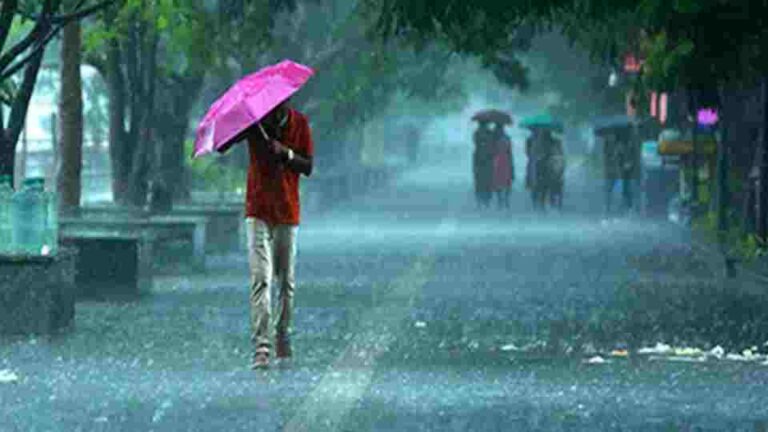
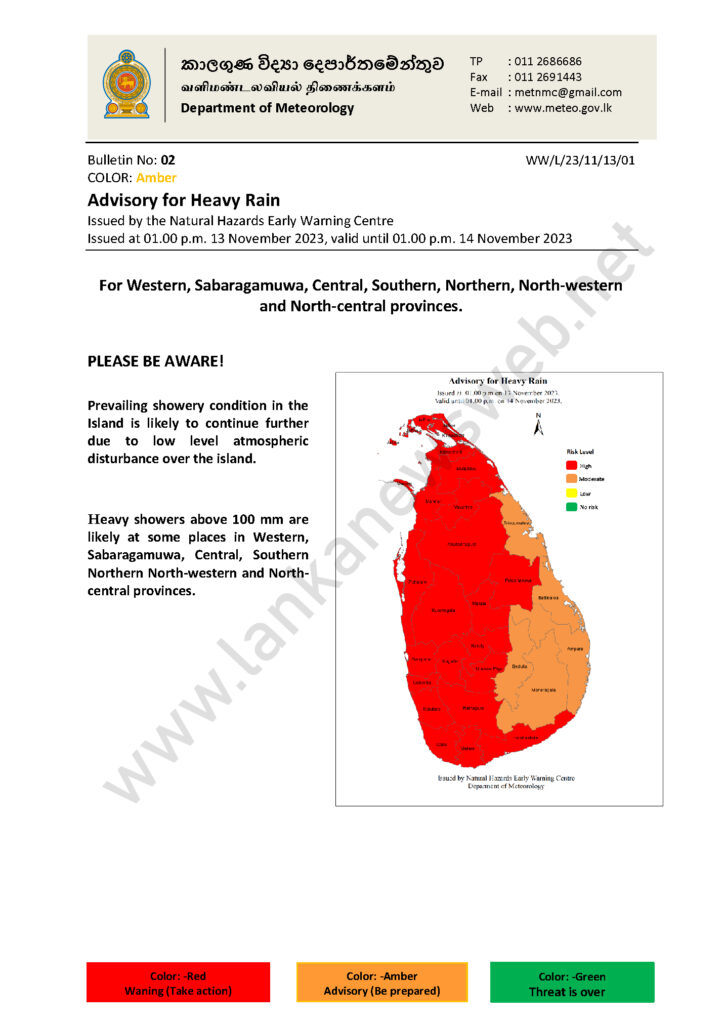
Colombo (LNW): Several spells of showers will occur in Western and Sabaragamuwa provinces and in Kandy, Nuwara-Eliya, Galle and Matara districts, and showers or thundershowers may occur at a few places in Ampara and Batticaloa districts during the evening or night, the Department of Meteorology said in its daily weather forecast today (31).

Mainly fair weather will prevail elsewhere over the Island, the statement added.

Fairly strong winds about 40 kmph can be expected at times in western slopes of the central hills, Northern and North-Central, Southern and North-western provinces, and in Trincomalee district.

Marine Weather:

Condition of Rain:
Showers or thundershowers may occur at a few places in the sea areas off the coast extending from Colombo to Matara via Galle.
Winds:
Winds will be south-westerly and speed will be (30-40) kmph. Wind speed may increase up to (55-65) kmph at times in the sea areas off the coast extending from Galle to Pottuvil via Hambantota and in the sea areas off the coast extending from Chilaw to Trincomalee via Mannar and Kankasanthurai.
State of Sea:
The sea areas off the coast extending from Galle to Pottuvil via Hambantota and in the sea areas off the coast extending from Chilaw to Trincomalee via Mannar and Kankasanthurai will be rough at times. The other sea areas around the island may be moderate.

Govt to take stern action against fuel station fail to place orders on time

0

By: Staff Writer

Colombo (LNW): More than 150 fuel station dealers have not maintained 50 per cent capacity stock and placed adequate orders to maintain stock requirements as of yesterday anticipating a fuel price revision next month.

Power and Energy Minister Kanchana Wijesekera said the Ceylon Petroleum Corporation (CPC) has informed that 101 fuel station dealers have not placed their orders for Octane 92 Petrol and 61 dealers for Lanka Auto diesel to maintain their stock requirements as of yesterday.

He said last month the CPC took over the management of several fuel stations that had not maintained minimum stocks & begun legal proceedings on several other dealers.

The Minister request all fuel station dealers to maintain adequate stocks and place orders accordingly.

Meanwhile, the Minister said CPC has adequate stocks for delivery. He said the Ceylon Petroleum Storage Terminals Limited (CPSTL) and CPC plants have 124,690 metric tons of diesel and 5,651 metric tons of super diesel as of 8.30 am today.

Also, they have 19,903 metric tons of Octane 92 and 4,537 metric tons of Octane 95 petrol.In addition, 26,539 metric tons of jet fuel are in stock.

The number of complaints received about the malpractices that are taking place at the petrol sheds is steadily increasing by the day, the Public Utilities Commission of Sri Lanka (PUCSL) said.

Nearly 200 complaints related to these irregularities were received by the department.In order to ensure that the fuel quality is properly maintained, 20 fuel samples have been collected from filling stations around the country and handed over to the Industrial Technology Institute (ITI) for testing.

“During the inspections conducted across the country, it was revealed that several filling stations were hiding fuel and several filling stations have been accused of dispensing less fuel,” the PUCSL said

– Sri Lanka’s Energy Minister Kanchana Wijesekera has suspended 40 fuel stations for breaching the government’s QR code rule while the latest technology will be implemented to ensure the fuel stocks several months ago.

Sri Lanka is recovering from one of its worst fuel crises in history. Motorists were forced to wait days in congested queues for pump fuel in mid last year soon after the island nation declared sovereign debt default, which deprived it of its external borrowing.

The QR code system was introduced in August last year to limit fuel to vehicles aiming to supply most vehicles with lesser quantity. However, some fuel stations have supplied fuel more than the weekly limited quantity and some have supplied even without QR code, officials say.

IRD to take over the RAMIS system from the Singapore Company

0

By: Staff Writer

Colombo (LNW): The government plans to take over the existing Rs10 billion RAMIS system from the Singapore Company to the Inland Revenue Department owing to its present operation inefficiencies.

This was discussed when the Committee on Ways and Means met in Parliament recently under the chairmanship. Patali Champika Ranawaka, Member of Parliament.

The Committee recently visited the Inland Revenue Department and discussed several issues including the RAMIS system.

Accordingly, the Committee met to inquire further into the matter. The Information and Communication Technology Agency (ICTA) was also called before the Committee for the same.

Thus, according to the agreement by the Singapore Company dealing with the RAMIS system, the Inland Revenue Department should take over the full responsibility of the RAMIS system from the coming month of January.

It was disclosed that the internal capacity including the human resources required for this has not been developed in the department.

In such context, the Chair of the Committee, Patali Champika Ranawaka Member of Parliament recommended to the Inland Revenue Department to submit a report in this regard.

The Chair also stated that the report should include a structured proposal for updating the system to adopt the RAMIS system.

It was also discussed that the RAMIS system, which was introduced 8 years ago, is still not fully operational and the Committee expressed their displeasure in this regard.

Another integrated information system to be built by merging 13 government institutions was also discussed at the Committee meeting held.

Several rounds of discussions were held with 13 concerned institutions in this regard and it was suggested that all these institutions should use the National Identity Number as a common code in their information systems.

The chairman of the committee advised to collect relevant information and take steps to prepare a proper data system connecting with the upcoming census by the Department of Census and Statistics.

The Chairman of the Committee advised to prepare a proper data system that the Department of Statistics should take steps in connection with the census to be conducted in the future.

The committee pointed out that related information technology experts can be procured from within the country and stressed the need to maintain such an accurate data system even under a public private partnership.

Also, instead of traditional methods such as sending letters to the taxpayers, the need to adapt to modern methods such as notifying via a SMS or introducing mobile applications (Mobile App) was emphasized.

The Committee Chair also advised to submit a report to the committee about the existing obstacles including the implementation of a fixed tax policy and the relevant legal changes that should take place.

National Credit Guarantee Institution to assist crisis hit SMEs

0

By: Staff Writer

Colombo (LNW): National Credit Guarantee Institution (NCGI) is ready to begin its operation with the signing of the Shareholder Agreement (SHA) Finance ministry announced recently.

The National Credit Guarantee Institution (NCGI) has been established as a public limited company under No. P B 00271461, and initial Board of Directors (BoD) members have been appointed to represent the Government of Sri Lanka.

Consequently, the signing ceremony of the Shareholder Agreement (SHA) was held on July 5, 2023 at the Randora Auditorium of the Ministry of Finance allowing the chosen 13 Participatory Financial Institutions to be the founding members of the NCGI and proceed the share issuance. R M P Rathnayake, Deputy Secretary to the Treasury is the signatory for the Government’s side.

The approval of the Cabinet of Ministers has been obtained to establish NCGI with the intention of supporting the Small and Medium Enterprise (SME) sector in the country by assisting SMEs in overcoming obstacles faced by an inability to adapt to rapidly changing market demands, changing technology, and limitations in capacity due to a low level of financial inclusion, limited access to finance and especially a lack of acceptable collateral.

In a bid to support the country’s small and medium-sized enterprises’ (SMEs) access to commercial loans, the government is moving towards operationalizing the Asian Development Bank (ADB)-backed National Credit Guarantee Institution (NCGI) initiative as a public-private partnership (PPP), with an initial capital infusion of around US $ 110 million.

As the next step, the government and participating financial institutions are set to infuse US $ 100 million and US $ 10 million in capital, to commence the operations of the NCGI, according to Finance Ministry Development Finance Department Additional Director General P.M.K. Hettiarachchi.

Hettiarachchi noted that the government expects to fund the required US $ 100 million through the ADB, to operationalise the NCGI. Ten banks and three non-banking financial institutions (NBFIs) have joined the initiative by committing to capital infusion requirements.

As the banks and NBFIs consider SMEs to be of high credit risks and lending continues to be largely based on collateral, rather than cash flows, the SMEs remain crowded out from the financial sector by larger corporates.

According to the IFC estimates, Sri Lanka has the highest share of SMEs that are either fully or partially credit constrained.

The NCGI is expected to build the financial institutions’ capacity for cash flow-based credit appraisals, which will lead to more cash flow-based lending over the time.

Hettiarachchi noted that the government is now in formal discussions with the ADB to secure the funds.

The SMEs account for 52 percent of the country’s gross domestic product (GDP) while employing 45 percent of the workforce.