Showers or thundershowers will occur at times in Western and Sabaragamuwa provinces and in Galle and Matara districts.
Several spells of showers will occur at North-western province and in the Kandy, Nuwara-Eliya and Hambanthota districts.
Showers or thundershowers may occur at several places elsewhere over the island during the evening or night.
Fairly heavy showers above 50mm can be expected at some places in Western, Sabaragamuwa and Uva provinces and in Galle, Matara, Ampara and Batticaloa districts.
General public is kindly requested to take adequate precautions to minimize damages caused by temporary localized strong winds and lightning during thundershowers.
Donors, Governments Shouldn’t Endorse Initiative Rejected by Victims
The Sri Lankan government’s ongoing abuses are undermining the purported goals of its newly proposed truth and reconciliation commission.
Civil society and victims’ groups say that a process to deliver truth and justice is urgently needed, but the current initiative lacks credibility and risks further harm to victims.
Other countries should not endorse the current efforts, and the government should take steps to gain credibility for a genuine truth and justice process that Sri Lanka desperately needs.
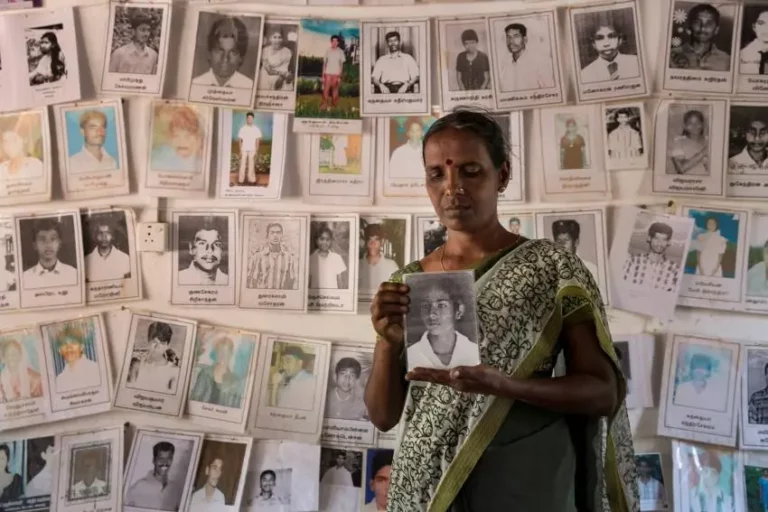
(Geneva, September 18, 2023) – The Sri Lankan government’s ongoing abuses are undermining the purported goals of its newly proposed truth and reconciliation commission, Human Rights Watch said in a report published today. Victims of past violations, their families, and human rights defenders have rejected the government’s initiative because the government has not consulted them, ignores evidence gathered by past commissions, and it exposes them to security force abuses and retraumatization if they participate.
The 39-page report, “‘If We Raise Our Voice They Arrest Us’: Sri Lanka’s Proposed Truth and Reconciliation Commission,” documents abusive security force surveillance and intimidation of activists and campaigners from minority Tamil families of those who “disappeared” during Sri Lanka’s civil war. The authorities are using draconian counterterrorism laws to silence dissenting voices, including those calling for truth and accountability, while government-backed land grabs target Tamil and Muslim communities and their places of worship.
“Sri Lanka profoundly needs truth and accountability, but a credible process requires the support of victims’ families and an end to government abuses against them and their communities,” said Meenakshi Ganguly, deputy Asia director at Human Rights Watch. “As the government’s own public statements suggest, this latest commission seems to be aimed at deflecting international pressure over continuing impunity, rather than revealing the fate of the disappeared or bringing those responsible to justice.”
The report is based on over 80 interviews in Sri Lanka in June 2023, with relatives of victims of enforced disappearance, other victims of abuses, human rights defenders, activists, and journalists in Sri Lanka’s predominantly Tamil north and east.
The government has not yet published details about the new commission, known as the National Unity and Reconciliation Commission. However, officials have sought the support of foreign governments, including South Africa, Switzerland, and Japan, as well as United Nations agencies. President Ranil Wickremesinghe’s office hopes the initiative will convince governments that there is no need for further scrutiny by the UN Human Rights Council in Geneva, which has established an expert team to collect evidence of international crimes committed in Sri Lanka for use in future prosecutions.
The government’s targeting of those campaigning for justice undermines the credibility of the latest initiative, Human Rights Watch said. “Since my husband was abducted, I lost my freedom to do routine activities,” said a Tamil woman whose husband was forcibly disappeared in 2000. “Even if I go to the market or temple, they [security officers] ask, ‘Where are you going?’”
Thousands of people “disappeared” in state custody during a left-wing insurgency in the late 1980s and a 26-year civil war between the government and successionist Liberation Tigers of Tamil Eelam, which ended in 2009. Government forces and rebel groups committed widespread atrocities including attacks on civilians, extrajudicial executions, torture, and the use of child soldiers.
Successive governments in Sri Lanka have appointed commissions that collected extensive testimony from victims and witnesses but none led to genuine accountability. Instead, the authorities blocked the few criminal investigations into grave abuses that had made some progress in identifying those responsible and initiating prosecutions.
Sri Lankan civil society and victims’ groups have issued several joint statements making it clear that while a process to deliver truth and justice is urgently needed, the current initiative lacks credibility and risks further harm to victims and their families. International law obligates governments to prosecute those responsible for war crimes and other serious international crimes by all sides. Failing to do so fuels further rights violations and undermines prospects for a durable peace, Human Rights Watch said.
The UN high commissioner for human rights, Volker Türk, said in a report on Sri Lanka to the Human Rights Council dated September 6, that for any transitional justice process to succeed, “[t]ruth-seeking alone will not suffice. It must also be accompanied by a clear commitment to accountability and the political will to implement far-reaching change.”
The government should make progress toward achieving credible justice by genuinely engaging with victims and affected communities. It should build on the evidence collected and recommendations made by past commissions. It should support a fair, credible investigation and prosecution of international crimes; immediately end ongoing abuses against past victims, their families, and human rights defenders and activists; and order state agencies to halt “land grabs” targeting minority communities.
Foreign governments, including South Africa, Switzerland, and Japan, should not finance or otherwise endorse a truth and reconciliation commission that victims reject and puts them at risk, Human Rights Watch said. International partners, including the European Union, should continue to press the government to meet its commitments to end violations committed using counterterrorism laws.
“President Wickremesinghe promotes ‘reconciliation’ while his government threatens the victims of past abuses and their families and minority communities,” Ganguly said. “Instead of creating yet another commission to give the appearance of progress, the government should take steps to gain credibility for a genuine truth and justice process that Sri Lanka desperately needs.”
September 17, 2023: The Australian Tamil Congress (ATC), British Tamils Forum (BTF), Irish Tamils Forum (ITF), Solidarity Group for Peace and Justice (SGPJ – South Africa), Swiss Tamil Action Group (STAG) and the US Tamil Action Group (USTAG) vehemently denounce the Sinhala mob attack on Selvarajah Kajendren, MP and others today during their peaceful memorial march in Trincomalee, remembering freedom fighter late Thileepan (Rasaiah Parthipan), who attained martyrdom in 1987 by taking the nonviolent path of a hunger strike to release political prisoners and to end the Sri Lankan military occupation and state- sponsored colonisation.
Late Thileepan’s remembrance is observed by Tamil people as his demands, in retrospect, are still tragically relevant:
All Tamils detained under the Prevention of Terrorism Act should be released.
The colonisation of Sinhalese in Tamil areas under the guise of rehabilitation should be stopped.
All such rehabilitation should be stopped until an interim [provincial] government is formed.
The Sri Lankan government should stop opening new police stations and camps in the North Eastern province.
The Sri Lankan army and police should withdraw from schools in Tamil villages and the weapons given by the Sri Lankan government to ‘home guards’ should be withdrawn under the supervision of the Indian army.
These mob assaults included not only hitting MP Kajendren and his entourage, but also tearing off memorial pictures of Thileepan and damaging the vehicles that were carrying those pictures. This incident occurred while the police were watching and in the vicinity of a military camp, showing th Sri Lanka state’s governance of unscrupulous kakistocracy.
This unruly act of violence on a peaceful march in the traditional Tamil homeland by Sinhala hooligans with the acquiescence of the Sri Lankan Police clearly contravenes International Humanitarian Law (IHL) on memorialisation of dead.
While we, the Tamil diaspora strongly condemn this attack, we are concerned at the ineffective actions of the international community which has allowed Sri Lanka to hoodwink them with empty promises and by not making the structural changes necessary to ensure non-recurrence.
Unless the international community wakes up and take strict measures against Sri Lanka, the human rights situation will continue to deteriorate in this island, and the country will continue plunge to failure.
Regardless, Tamil peoples’ endurance for fighting for their rights will never die.
Mr. Krish Illungko Chairperson, Australian Tamil Congress (ATC)
Solidarity Group for Peace and Justice (SGPJ – South Africa)
V. Ravi Kumar General Secretary, British Tamils Forum (BTF)
Swiss Tamil Action Group (STAG)
Irish Tamils Forum (ITF)
Anandaraj Ponnambalam President, United States Tamil Action Group (USTAG)
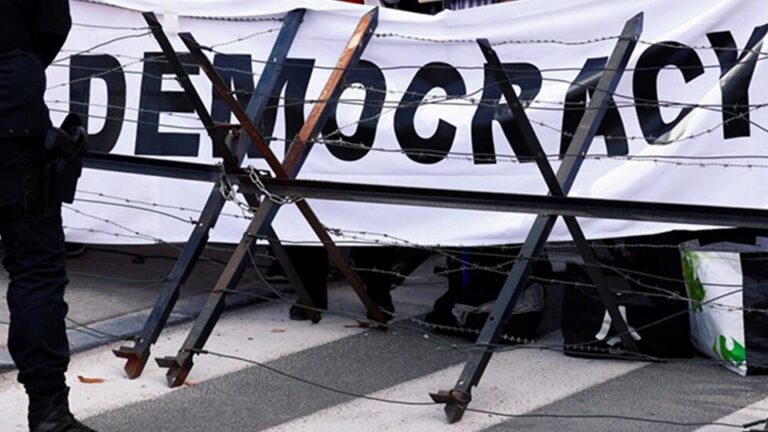
Text of the speech delivered by Prof. Jayadeva Uyangoda at the launch of the book, Democracy and Democratization in Sri Lanka: Paths, Trends and imaginations, September 09, 2023, at Kamatha Cultural Center Auditorium, BMICH. Prof. Uyangoda is the Editor of this two-volume publication.
I have no doubt at all that the Chairperson of the BCIS, the Board of Academic Affairs, the BCIS management, the chapter contributors, and the BCIS staff are delighted to see the two volumes of Democracy and Democratization in Sri Lanka: Paths, Trends and imaginations in print. This, as far as I know, is the first major academic publication undertaken by the BCIS. It is Madam Chandrika Kumaratunga’s vision, initiative, guidance and unwavering support that has made this notable achievement possible.
It is she who proposed this research project’s thematic focus. She trusted the Academic Board and the research team and gave them a free hand to develop and work on it. At the same time, I apologize to her on behalf of the team for giving her a few anxious moments.
There were some delays caused partly by the general crisis triggered by the Covid-19 pandemic. Besides, the missed deadlines set during normal times were unavoidable in a project of research and publication of this magnitude, carried out in a time of exceptional crises in our society, politics and the everyday life. For me as the lead researcher and the Editor, seeing these two volumes in print is a worthy reward for two and half years of hard labour.
Context
We at the BCIS began to conceptualize and plan this publication on the experience of democracy in our country, at a time when the Sri Lankan people were on the verge of losing their democratic heritage. When the year 2019 began, the threat of a hard authoritarian system replacing a weak and battered democratic order had indeed become alarmingly real.
We at the BCIS Board of Academic Affairs and its Chairperson felt that an analysis of why a promising democracy at the time of independence had failed so abysmally is a theme warranting critical scholarly inquiry and explanation.
Thus, we launched this research and publication project on democracy and democratization in Sri Lanka in mid -2020. As I have already mentioned, the Covid-19 Pandemic of 2021 came while we had just begun our work. It interfered with our project in a variety of ways, including halting most of the research.
More significantly, the Pandemic had led to a new political process in Sri Lanka. It can be termed as accelerated backsliding of democracy spearheaded by one faction of the ruling elites. It appeared almost like the last stage of Sri Lanka’s democracy.
But, Sri Lanka’s democracy, even in retreat, has shown that it has had some magical capacity for surprises. And that is exactly what we witnessed during the Spring and Summer of 2022. Sri Lankan citizens suddenly woke up demanding more democracy than what the political elites were willing to concede.
During the Aragalaya of 2022, the ordinary people, citizens without wealth or power, rose up demanding substantive democratic reforms. The ordinary citizens in their capacity as demos began to make claims to their ownership of democracy. They also highlighted that Sri Lanka’s democracy in general and representative democracy in particular, were in a deep crisis.
It was indeed an attempt by the people, demos, to re-generate as well as re-invent democracy in Sri Lanka. That is why the citizens’ protest in 2022 diserves to be acknowledged as a significant turning point in the somewhat twisted process of democratization in Sri Lanka.
In brief, the events of 2022 provided new perspectives and critical insights immensely useful to our own work on democracy and democratization in Sri Lanka. It showed us that the ordinary people play a powerful role as an agency for democratization. Their faith in democracy is far greater than that of the elites who exploit democracy for predatory ends. That is the spirit with which these two volumes evolved.
Organisation of the Book
The book has 22 chapters divided into two volumes. They are written by Sri Lankan scholars. The chapters are lined up under six themes which are as follows:
· Democracy in South Asia and Sri Lanka: Historical and Conceptual Contexts.
· Constitutional and Institutional Crises of Democracy in Sri Lanka.
· Democracy in the Social and Ethnic margins
· Alternative Forms of Democratic Thinking and Practice
· Democracy, Discontent and Resistance
· Protests as a Vector of Democratisation.
I want to share with you very briefly what I as the Editor see as unique about this book.
· This is the first book-length scholarly work exclusively devoted to the theme of democracy in Sri Lanka.
· All chapter contributors are Sri Lankan scholars who have been witnesses to the rise, decline and attempts at regeneration of democracy.
· The analysis developed in the chapters do not belong to a specific disciplinary area of the social sciences, such as political science or constitutional law. There is a plurality of approaches from the fields of social sciences and humanities.
· The book does not advocate or campaign for any particular version or variant of democracy. It argues for the plurality of democracy as a political concept and practice. Yet all chapter contributors stand for bringing the normative ethics of equality, freedom, justice and social emancipation back to the theory and practice of democracy.
Key Messages
What are the messages that these two volumes with chapters on diverse themes convey? Let me share with you a few of them that have a direct bearing on how we should view democracy and democratization anew.
· Democracy, as an organizing principle of political and social life, has strongly local social and popular roots in Sri Lanka as it has been the case elsewhere globally: It is a historical fact that modern democracy in Sri Lanka is an aspect of the European colonial legacy: However, people of Sri Lanka from various social classes have appropriated it and made use of it for their own social interests. In this process, there has been a double transformation. While the local society and its politics has been altered by liberal democracy, the local society has also changed the idea of democracy with a substantive, though subtle, critique of liberal democracy.
This has two theoretical implications. Firstly, the Sri Lankan people have not been passive recipients of a Western, European, or colonial, political idea. Secondly, they have played an active, agential role in appropriating and transforming that European idea. This book describes it as a creative process of ‘localizing democracy.’
· Ideas and practices of democracy have preceded the invention of the language of democracy
: Genealogies of the idea and practices of democracy predates its colonial origins in Sri Lanka and South Asia. The impulses and desires for democracy have always been there everywhere and whenever there were organized political power in the form of the state in pre-modern societies too. Historical and literary evidence in ancient and pre-colonial India and Sri Lanka show that the human desire for freedom from domination, independence, autonomy and justice have been integral to the social and political struggles within organized social formations.
It has been so in the processes of state formation in ancient Sri Lanka and South Asia, as elsewhere. This is the primary historical essence of ‘universalism’ of the idea of democracy. In other words, the idea and practices of democracy have been there in many forms in pre-colonial societies long before the language of modern democracy has been invented and the impulses for democracy rigidly formalized and frozen in meaning.
· The ordinary citizens are more faithful custodians of democracy than the elites:
Democratization is not a process confined to the activities of political elites as well as governments, as wrongly assumed in the mainstream democracy studies and assessments. The Sri Lankan case studies in the book show that democratization from below, at the level of the governed and the disempowered citizens, is most important in mapping paths of democratization in Sri Lanka. This thesis is valid to democracy’s liberal variant too.
The book shows that the dispossessed and the ordinary citizens, rather than the elites, have had a greater stake at defending and consolidating democracy. They have done it through the struggles of resistance against the elite-led de-democratization. The elites have domesticated, tamed, abandoned, and even became hostile to the liberal normative content of democracy.
People have also collaborated with backed the political elites in the latter’s projects of de-democratisation. However, in crucial moments of crisis the people, demos, have defended and deepened the idea and the normative content of even liberal democracy in Sri Lanka.
· Elite capture of liberal democracy has made democracy thin
: A lesson I have learned in the course of research for this book is that liberal democracy has the unintended consequence of dividing the population of Sri Lanka into two new classes in its own way: political elites and political non-elites. This has been a general pattern in other societies too.
Sri Lanka’s process of elite-led democratic backsliding has been paralleled with the introduction of representative government early last century. Elites who benefitted from the electoral, representative democracy have appropriated the liberal democracy and used it as an instrument for consolidating their social, economic, political and familial power.
Thus, the conception of democracy associated with Sri Lanka’s ruling elites has been a thin and truncated version of liberal democracy. Its role in democratization has now come to an effective end. Sri Lankan people await a strong democracy in terms of its social roots and normative commitments.
· Popular resistance to deprivations and unjust exercise of power has deepened the normative foundations of democracy in Sri Lanka
: The instrumentalist use of representative and parliamentary democracy by the elites is only one side of the story of democratization in Sri Lanka. In contrast, there is a subaltern story of democratization too.
The Left parties, working class, peasants, the working people, women’s groups, ethnic minorities, and student movements have contributed substantively to deepening the idea, the meaning, normative goals and the social relevance of Sri Lanka’s democracy. Through social practices of demands and direct political action for substantive equality and justice, they have shown how the limits of narrowly conceived and much abused representative democracy could be reformed. Thus, Sri Lanka’s democracy is not the monopolistic possession of the political elites. It is the inheritance of a plurality of non-elite social groups as well.
· Continuing conflict between democratic backsliding and popular demand for more democracy awaits a deep-democratic resolution:
Since independence, Sri Lanka’s democracy has evolved along two contradictory trajectories. The first is the path of democratic backsliding and de-democratization chosen by the elites. The second is the path of demanding and fighting for more democracy by the subordinate and non-elite social classes, trade unions and social movements, the civil society groups, and reformist elites.
The conflict between these two opposing paths is a major facet of the crisis of democratization in Sri Lanka. Its resolution presupposes a project of re-democratisation through radically substantive political and constitutional reforms.
What is Happening to Democracy
Let us briefly reflect on what is happening to democracy in Sri Lanka at present. Sri Lankan democracy seems to have entered a new phase of forced retreat engineered by the new ruling coalition. People of Sri Lanka who have yearend for the revival of democracy find themselves caught up in a new version of what our book calls the ‘de-democratization trap.
’ Its key feature has been the incorporation of ordinary citizens as disempowered voters to a deceitful social contract crafted by the political elites. As the citizen’s protests last year and this year have shown us, that deceitful social contract is now shattered. Citizens want to replace it with a deeply democratic and authentic social contract.
Meanwhile, there seems to be two processes of polarization of the Sri Lankan society into two hostile camps. The first is between the haves and have nots in the economic and social sense. The second is the growing enmity between the majority of the citizens who crave for more democracy and a minority of the elites who thrive on no democracy. The ways in which these polarities and contradictions will play themselves out are sure to shape the nature of politics of Sri Lanka in the months and years to come.
Returning to open democracy, more executive, legislative and judicial accountability, re-democratization of the constitution, the state, the government, and parliament, guaranteeing of economic and social justice to the poor, the working people and the middle classes are essential pre-conditions for resolving these contradictions peacefully with no recourse to violence by any side. That is also a message implicit in our book.
So, students of democracy in Sri Lanka will have a politically exciting time ahead. I and my collaborators sincerely hope that these two volumes will inspire a new interest in democracy studies among the young scholars in Sri Lanka. I am also hopeful that the readers will not fail to notice that the chapters have been written by a team of Sri Lankan scholars who have a deep passion for democracy.
Finally, let me thank a few people whose contribution to the success of this initiative warrants special acknowledgement. I have already referred to the inspiring and non-interventionist leadership provided by Madam Kumaratunga. Of course, it is our team of chapter contributors who have made these two volumes actually possible. They had the patience to tolerate the constant nagging by an impatient Editor and his support staff.
I must also mention the contribution made by our two copy-editors, Madara Rammunthugala and Nicola Perera, for refining the entire text. All reveiwers of the draft chapters also deserve my grateful acknowledgement for their contribution to ensuring the scholarly quality and standards of the publication. Suresh Amuhena designed the cover for us amidst many other commitments. Dr. Minna Taheer and Ms. Isuri Wickramaratna of the BCIS extended to me their assiatance throughout this project.
The BCIS staff Board of Academic Affairs and BMICH Board of Management ensured generous institutional support for the success of this entire intiative. Finally, Mr. Vijitha Yapa and his staff undertook the task of designing, printing and selling the book. All of them are partners of this worthy achievement. There are so many others who deserve my sincere thanks, and they are mentioned by name in the ‘Acknowledgements’ section book.
Finally, I am really happy that we have Professor Pratap Bhanu Mehta, an eminent scholar from India, as our keynote speaker. I will not take any more of your time to allow you to listen to his erudite presentation.
In the future, it will be possible to receive graduation one year earlier.
* There are many human resources that have bequeathed by Visakha, which brought pride to the nation.
– Prime Minister.
The Prime Minister Dinesh Gunawardena announced that exams should be conducted on time and results should be given on time. It will lead to receive graduation one year earlier. Moreover Visakha has bequeathed many human resources which brought pride to the nation. He expressed these views on 15.09.2023 while attending the prize giving ceremony of Visakha Vidyalaya.
Speaking on the occasion the Prime Minister stated that.
Vishakha Vidyalaya which has begun as the Buddhist Ladies’ College,added great exemplary gifts to the education sector of the country.This educational journey which was started by Mrs. Jeremias Diyas –Panadura, not only created a school, but it has become a central source of education that guides a generation of women who can transform the education sector. Being able to continue it under a systematic plan is a matter of satisfaction. This Ladies’ college has moved towards other special fields later.
Visakha began to shine nationally because of the knowledge and the task of creating a perfect citizen and its impact. This is why Visakha has a unique place in school education system of Sri Lanka.That is the message that is circulated all over the country and the world. It’s a great pride for our nation.
Even in the early fifties and sixties, we saw school halls thatched with coconut leaves.None of that could reverse Visakha. It is a matter of pride that Visakha has become a haven that has produced citizens who take responsibility in many fields. Visakha became the center of a great revolution in education.
The field of science was opened to women in this country. Through that, many other colleges were opened to women for science. Visakha Vidyalaya joined the task of building a country, while fulfilling social requirements.
After leaving a college, we enter the university, which is the center of access to universal knowledge, to join the knowledge of the world and add special values of education to a country. That is why there is a difference between a college and a university.
As students, you have had a tough time. Recently, the country faced a very difficult time. Currently we are recovering from the prevailed crisis.Strong commitment to expand the fields of imparting knowledge, new fields have emerged. Any individual can join the different fields and serve the country.
All of us, including parents and students wish for exams to be conducted,results to be received and open doors for higher education on time. The government is committed to implement this schedule with determination. It is essential.
Negotiations are underway to reduce the study period by one year. If it is possible, our children will graduate a year earlier. Moreover, it is possible to lead towards different fields. We must win that challenge.
Commissioner of Examination H.J.M.C. Jayasundara, Principal Manomi Seneviratne, teachers, current and old Visakhian daughters joined the occasion.
The 08th South China Sea Buddhist Shenzhen Roundtable is scheduled to take place in Sri Lanka from October 24 to 26th . This event will be hosted by the Hunupitiya Gangarama Temple in Colombo. The opening ceremony, chaired by President Ranil Wickremesinghe, will be held on October 24 at the Bandaranaike International Conference Hall in Colombo.
A preliminary discussion regarding the organizational aspects of this Buddhist roundtable was conducted at the President’s Office. Mr. Sagala Ratnayaka, Senior Advisor to the President on National Security and Chief of the Presidential Staff, presided over this session.
The Buddhist Shenzhen Round Table in the South China Sea region has been organized by the Hongfa Temple in Shenzhen, China, since 2016. It serves as an annual international platform for discourse, emphasizing the theme of “Walk Together in Harmony and Gather the Wisdom of the Silk Road.” Notably, this year’s event will be hosted in Sri Lanka, with the participation of representatives from 22 countries, focusing on the Silk Road theme.
During the discussion, the potential roles of relevant government institutions in ensuring the success of this conference were also deliberated upon. Participants included the Minister of Buddhasasana, Religious and Cultural Affairs Mr. Vidura Wickramanayake, President’s Secretary Mr. Saman Ekanayake, the Secretary of the Minister of Buddhasasana, Religious and Cultural Affairs, as well as officials from relevant government departments and organizations. PMD
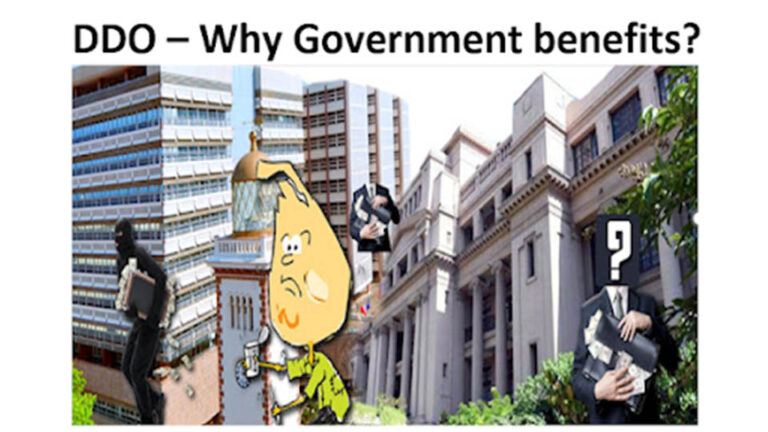
This article is to provide several issues of the DDO governance relating to the exchange of Treasury bonds with the EPF as revealed from the CB press notices and to highlight the financial loss to the EPF against the general notion of no loss spread by the authorities.
The press notice issued by the Public Debt Department on 14 September
The issuance is back-dated to six days from 15 January 2023 to 15 June. 2023.
Bonds are due to mature on 12 dates from March 2027 to February 2038.
Each bond carries two coupon rates, i.e., 12% up to 1st semi-annual coupon due in 2026 and 9% for the remaining maturity periods of bonds beginning the 2nd semi-annual coupon in 2026 to 2038.
The face value of each bond issued in exchange for the same face value of converted bonds is Rs. 267,038.5 mn. Therefore, the total DDO covered in the press notice is Rs. 3,204,462 mn worth total face value of 12 new bonds exchanged for the same face value of converted Treasury bonds.
The press notice did not reveal details of relevant bond investors. It appears that these are the DDO bonds issued to the EPF offer.
The press notice issued by the Communication Department on 14 September
This press notice clarifies the factors considered by the Monetary Board in making the decision on the participation in the DDO for the EPF. See the press notice.
Out of total Treasury bond portfolio of the face value Rs. 3,220 bn of the EPF, Rs. 2,667,512,169,237 face value of Treasury bonds were offered for the DDO (Rs. 149,890,740,000 in excess of the minimum participation requirement of 78%) and the government has accepted the same for exchange with new Treasury bonds.
Out of the two options offered in the DDO, the EPF is financially better off by having the option of the exchange of the Treasury bond portfolio with new bonds at the existing tax rate of 14% on taxable income applicable to the Treasury bond portfolio than the other option to continue with the existing Treasury bond portfolio at 30% tax rate.
This position was established with a statistical projection on the annual rate of return on the EPF Treasury bond portfolio under two DDO options as depicted in the following chart.
The assumptions used for the projection are as follows.
The Monetary Board has determined to accept the DDO exchange offer due to following reasons.
The government’s decision to guarantee a minimum 9% annual interest from 2023 to 2026 on balances of the EPF members.
Higher rate of return on the DDO Treasury bond portfolio as projected though prudent and realistic assumptions than the DDO option with 30% tax.
The sustainability of public finance restored with the ability to service its debt consequent to the proposed debt exchange and the other reforms being implemented by the Government.
A high risk of the Government not being able to fully service the obligations on the pre-exchange bonds held by the EPF leading to very serious adverse consequences to the EPF unless debt sustainability is restored without undue delay.
A Few Comments
The comparison of the two press notices reveals the deceptive nature of the DDO on the EPF as highlighted below.
The Communication press notice states the face value of Treasury bonds offered for the DDO as Rs. 2,667,512 mn (Rs. 2,667.5 bn). However, as per the press notice of the Public Debt, it has issued 12 new Treasury bonds for the face value of Rs. 3,204,462 mn (Rs. 3,204.4 bn). As the total EPF Treasury bond portfolio is Rs. 3,220 bn, it appears that the government has covered the latest face value of the EPF Treasury bonds portfolio in the DDO, not the face value of Rs. 2,667,512 mn offered by the EPF for the DDO. There cannot be other superannuation funds involved in this issuance so far.
The guarantee of 9% of annual interest to EPF members for the period 2023-2026 is not a big deal for the Monetary Board to consider because the new DDO bonds receive 12% coupon rate for the same period. As the EPF’s annual cost is less than 1% of the investment portfolio, the payment of 9% interest out of 12% return is easy in finance. However, it is difficult to state whether 12% of coupon payable on DDO bonds is higher without knowing the aggregate coupon received on existing bond portfolio before DDO.
Projections on the rate of return on the EPF Treasury bonds portfolio under two options are meaningless. As simple arithmetic can be used to compare the financial outcome of the two options, complicated projections as presented by EPF financial experts are not necessary.
The rate of return on the DDO portfolio after 14% tax would be around 10.32% for 12% bond period (2023-2026) and around 7.64% for 9% bond period (the rates of return net of 14% tax on coupon income).
Similarly, the EPF could easily calculate the rate of return on existing Treasury bonds portfolio for alternative option just by subtracting 30% tax from the actual bond coupon income (combined) each year.
The public cannot estimate it as the EPF has not disclosed the existing profile of Treasury bonds (i.e., bond-wise face value, coupon and maturity). However, the overall gross rate of return on EPF average investment portfolio in 2022 has been around 10.3% after 14% tax. If the 30% tax is applied, the rate of return would reduce to around 8.3%. Therefore, the DDO portion at 12% coupon for the period 2023-2026 is definitely profitable to the EPF as compared to the other option. However, it is not clear whether 9% DDO coupon period is profitable to the EPF. For example, DDO 30% tax is profitable to the EPF if the year 2022 is considered. If there is another tight monetary period with 30% yields in the future, the EPF will be better off with DDO option at 30% tax. The EPF fund managers could easily estimate the annual series of rates of return on the EPF existing Treasury bond portfolio at 30% tax without any assumptions on interest rates and reinvestments in the future for comparison purpose. Further, it is needless to state that the assumptions used for future interest rates and reinvestments in the EPF projections are unrealistic and unnecessary. Therefore, the Monetary Board’s determination that the assessment considered for the determination is based on prudent and realistic assumptions is grossly incorrect and deceptive.
The reference to the guarantee of 9% annual interest to EPF members for the period 2023-2026 through legislation is unwarranted and meaningless as 9% interest is not an issue as the EPF receives 12% coupon income on the total DDO Treasury bond portfolio for the same period whereas the interest rate paid in the recent past also has been around 9%-9.5%. Therefore, the distribution of a much lower return to members as compared to 12% coupon income is a serious governance concern. This seems to be purely EPF politics. If the EPF is managed professionally, the guarantee of return to members does not arise.
Both press notices do not reveal the present profile of the existing Treasury bond portfolio of the EPF (bond-wise coupon, face value and maturity). The EPF should be holding Treasury bonds of different maturities with coupons higher than 12% and 9% issued in the past. Therefore, DDO seems to have extended the maturities of the existing bonds in conversion to new bonds at new coupon rates of 12% and 9%. Further, the press notices do not mention whether the new DDO bonds are tradable for investment and liquidity purposes as provided for in the section 5(1)(e) of the EPF Act. Therefore, the EPF may have lost the opportunity of investment and liquidity management in a market environment during the DDO period.
The reference to the Monetary Board as the custodian of the EPF is false. As per the section 5(1)(c) of the EPF Act, the Monetary Board has the custody of only moneys of the EPF and not the EPF per se where the the Minister and Commissioner of Labour have wide powers on operating and projecting of the EPF. As such, the Monetary Board only has the financial management function for the EPF which is not the custodian function of the EPF.
Reference to the debt sustainability and high risk of fully servicing the obligations on the pre-exchange bonds held by the EPF are baseless. Debt unsustainability may be a concept applied for foreign debt due to the failure of the Monetary Board to maintain a foreign currency reserve sufficient for periodical debt services whereas governments do not have to default on debt in sovereign currency because they can rollover debt through the creation of money, given the government’s sovereign monetary powers and the private sector’s willingness to rollover government debt as the risk free part of its asset/savings portfolio. That is the reason why the government has offered to swap foreign debt with local currency debt as part of the foreign currency debt restructuring.
Concluding Remarks
The claim that there will not be a loss to the EPF from the DDO is baseless. As the purpose of the DDO is to restructure the government domestic debt stock in a manner financially beneficial to the government to ease the burden of the present debt stock, there cannot be any DDO or debt restructuring without a financial loss to the EPF or creditors. This principle is applicable to any debt restructuring exercises pursued by governments or businesses.
The proposed DDO targeting Treasury bonds held by superannuation sector alone cannot make the domestic debt sustainable as claimed in policy statements because Treasury bonds held by the superannuation sector constitute only 24.7% of domestic debt stock. Debt unsustainability concept is applicable to foreign debt as the CB/Monetary Board has failed to supply foreign currency to service foreign debt. The unsustainability or default of domestic debt is an unwarranted and baseless hypothesis because debt in sovereign currency always can be rolled over at contemporary interest rates.
As the DDO assessment considered by the Monetary Board is deceptive, financial loss to the EPF is clear from the lower coupon rate of 9% for the period 2027-2038 and the maturity extension of the face values of existing bonds through the new bonds.
The government should release the maturity-wise information on pre-converted Treasury bond portfolio of the EPF to enable the public to assess the comparison between the two DDO options with the present position. The set of information publicly available at present is not adequate to assess the exact nature of the financial loss to the EPF on the DDO. As such, rosy statements made by the authorities are baseless.
The misuse of the EPF for debt and monetary management outside the market mechanism has been the routine in the past. Therefore, the DDO is not a stranger, but another hidden device for same purpose.
The Monetary Board talking about the debt unsustainability and risks of default shows its unfitness and impropriety as the debt manager and fiscal agent and adviser for the past 73 years. Therefore, the Parliament must investigate how public finance/debt has had to confront the present havoc despite the 73-year long role of the Monetary Board. Therefore, the Parliament/government should find solutions for the debt management outside the proposals/recommendations made by the Monetary Board as such proposals always tend to hide its unfitness and impropriety.
Overall, the government must use liability management techniques to restructure debt stock to resolve any unsustainability issues in a market environment for long term benefits and, therefore, the use of such methods of default and abuse of state powers is unprofessional and undemocratic.
(This article is released in the interest of participating in the professional dialogue to find out solutions to present economic crisis confronted by the general public consequent to the global Corona pandemic, subsequent economic disruptions and shocks both local and global and policy failures.)
P Samarasiri
Former Deputy Governor, Central Bank of Sri Lanka
(Former Director of Bank Supervision, Assistant Governor, Secretary to the Monetary Board and Compliance Officer of the Central Bank, Former Chairman of the Sri Lanka Accounting and Auditing Standards Board and Credit Information Bureau, Former Chairman and Vice Chairman of the Institute of Bankers of Sri Lanka, Former Member of the Securities and Exchange Commission and Insurance Regulatory Commission and the Author of 12 Economics and Banking Books and a large number of articles published.
The author holds BA Hons in Economics from University of Colombo, MA in Economics from University of Kansas, USA, and international training exposures in economic management and financial system regulation)
Sagala Ratnayake, Senior Adviser to the President on National Security and Chief of the Presidential Staff, revealing a significant government decision said that the government has resolved to undertake a comprehensive restructuring of the government institutions entrusted with environmental responsibilities.
Furthermore, Mr. Ratnayaka highlighted that a committee will be established to bolster environmental protection laws and facilitate the restructuring efforts.
Mr. Sagala Ratnayaka, also disclosed that President Ranil Wickremesinghe intends to establish a dedicated task force focused on preventing environmental pollution and safeguarding the environment. This task force will be responsible for formulating, implementing and monitoring environmental protection initiatives.
Senior Adviser to the President on National Security and Chief of the Presidential Staff Mr Sagala Ratnayaka made these remarks during his participation in a beach cleaning program held at the Beach Plaza in the Port City on the occasion of the International Coastal Clean-up Day (ICCD) and the commencement of Marine Resources Conservation Week. These events will encompass cleanliness drives, awareness campaigns and seabed cleaning activities at 66 locations, targeting identified beaches and lagoon areas spanning all 14 coastal districts across the island. The program, initiated by the Marine Environment Protection Authority, commenced at the Beach Plaza in the Port City. Mr. Sagala Ratnayaka actively participated in the beach cleaning activities.
During his address at the subsequent ceremony, he shared the following remarks:
“This program has been initiated in commemoration of International Coastal Cleanliness Day and Marine Resources Conservation Week. The coastal, reservoir, canal and riverine environments hold immense significance for our nation. Being an island nation, we rely heavily on water resources. Simultaneously, as a country dependent on tourism, the preservation of a pristine environment is paramount to attract tourists consistently.
Such initiatives play a pivotal role in instigating proactive change in our citizens, heightening environmental awareness and especially educating our children about the importance of environmental preservation. I extend my gratitude to all those involved in organizing this program.
Historically, our discourse primarily revolved around these matters. Consequently, the implementation of such hands-on programs becomes increasingly vital.
Numerous institutions, including the Maritime Environment Protection Authority, Coastal Conservation Department and local government bodies, are actively involved in managing environmental concerns. Notably, the Navy, while not primarily responsible, provides valuable support in these efforts. Additionally, there are designated tourism zones governed by the Sri Lanka Tourism Board.
In recognition of the need for more effective environmental governance, we have made the decision to restructure these government agencies with environmental responsibilities. To oversee this restructuring, a dedicated committee will be appointed. Moreover, the aim is to fortify existing environmental laws following the reorganization process. In tandem with these initiatives, President Ranil Wickremesinghe intends to establish a task force. This task force’s mandate will encompass the development, execution and supervision of activities aimed at addressing environmental concerns.
Through these comprehensive programs, we aspire to enhance public awareness and implement sustainable measures to mitigate environmental pollution.
The environment holds immense significance for the present and future generations. Failing to safeguard it could result in dire consequences for the generations to come. Furthermore, the sustainability of Sri Lanka’s economy can be ensured only through the protection of our environment. It is crucial to acknowledge that the responsibility for environmental preservation cannot rest solely with the government.
Every individual also bears a significant responsibility in this endeavour and it is imperative to implement a comprehensive awareness program to inform the public about their role in safeguarding the environment. Therefore, we are committed to fulfilling this responsibility effectively.
It is essential to execute these activities meticulously, minimizing any shortcomings. The program undertaken today is of paramount importance and it is commendable to see the integration of art and technology into these efforts. “I extend my gratitude to all the agencies, departments and security forces involved in this initiative”.
The event was attended by notable figures including Navy Commander Vice Admiral Priyantha Perera, Chairman of the Maritime Environment Protection Authority Lawyer Asela B Rekawa, General Manager Jagath Gunasekara, other board members, as well as Port City Private Company’s environmental consultant Mr. W.A.D.D. Wijesuriya and other officials.
Sri Lanka is taking decisive steps to combat sexual harassment by introducing stringent legislation aimed at punishing individuals who share intimate photos and videos on social media without consent.
Minister of Public Security Tiran Alas has submitted a memorandum outlining the proposed bill and related laws to the Cabinet of Ministers.
These new laws are being formulated to prevent the unauthorized dissemination of intimate photos or video clips of former partners through social media platforms, with the explicit aim of intimidating and causing emotional distress and embarrassment.
Under the proposed legislation, first-time offenders could face imprisonment for a period of up to five years or a fine not exceeding Rs. 500,000.
For repeat or second-time offenders, the penalties become even more severe, with imprisonment of up to 10 years and fines reaching as high as Rs. 1 million.
Former President J.R. Jayawardena is a role model for contemporary political leaders -Former Speaker Karu Jayasuriya.
President Ranil Wickramasinghe in a message on the birth anniversary of the late President J,R. Jayawardena said if Sri Lanka had been able to sustain the socio-economic reforms initiated by Mr. Jayawardena in 1977, the nation would be a developed country today. President Wickremesinghe conveyed this sentiment on the occasion of Mr. Jayawardena’s 117th birth anniversary, while he is currently on an official visit to the United States of America to attend the 78th session of the United Nations General Assembly.
During the late President’s birth anniversary commemoration held today at the Jayawardene Center in Colombo 07, former speaker Mr. Karu Jayasuriya delivered the keynote address. The President’s message was presented by Mrs. Chamika Mummullage, Senior Assistant Secretary to the President, highlighting Mr. J. R. Jayawardene’s revolutionary impact on the nation’s socio-economic landscape. President Wickremesinghe emphasized that challenges such as riots, terrorism and a failure to fully grasp the philosophy hindered the complete success of these reforms. He also noted that neighbouring countries like India, China and Vietnam, which transitioned from closed and socialist economic practices, studied Mr. Jayawardene’s approach and prospered by adapting their policies to the changing times.
J. R. Jayawardena embarked on his political journey in 1938 as an active member of the Sri Lanka Congress Party. In 1946, he switched his allegiance to the United National Party and assumed the role of Finance Minister in Sri Lanka’s inaugural cabinet. Following the passing of Prime Minister Dudley Senanayake in 1973, J. R. Jayawardena assumed leadership of the United National Party.
In the 1977 elections, J. R. Jayawardena was elected as the Prime Minister of Sri Lanka. During his tenure, he introduced the executive presidential system through a national constitution. In 1978, he became the first Executive President and relocated to Jayawardenapura, the legislative capital of Colombo. He dedicated his life to advancing social justice, promoting culture, education and fostering economic development in Sri Lanka.
Furthermore, President Jayawardena’s political and economic reforms played a pivotal role in modernizing Sri Lanka’s social system, transforming it into a modern state. His significant contributions extended beyond national borders as he served as the sixth Secretary-General of the Non-Aligned Movement, leaving an indelible mark on the international stage.
On this 117th commemoration of Mr. Jayawardena, let us honour his noble social mission for the country. I extend my heartfelt gratitude to all those, including the Secretary-General of the Jayawardena Centre, who has been instrumental in preserving his legacy.
Former Speaker Karu Jayasuriya said;
As an impartial observer, I am delighted to partake in this occasion today.
J.R. firmly believed in the privatization of financially struggling public institutions, a vision championed by Mr. Jayawardena. He also advocated for the reevaluation of these institutions. Furthermore, he emphasized the importance of collaboration between government and private entities to create job opportunities for the nation’s youth, a model exemplified by China’s economic success through such joint ventures.
At certain junctures, the executive presidential system had the authority to appoint and dismiss leaders of the nation. Mr. Jayawardena was known for his resolute decision-making, rarely altering his choices unless compelled by populist pressures.
The Japanese people hold Mr. Jayawardena in high esteem, as he once represented Japan on the international stage. His leadership during his tenure fostered a cadre of talented young individuals, empowering them to contribute to the country’s progress.
Moreover, Mr. Jayawardena significantly advanced the education sector in Sri Lanka, showcasing exemplary leadership qualities that serve as a model for contemporary political leaders.
Despite his dedicated service to the people, JR remained humble, eschewing personal fame. He was also the architect of the Colombo Plan, a testament to his visionary leadership.
During his tenure, Sri Lanka achieved notable milestones in healthcare, transportation and infrastructure development, including the establishment of hydroelectric power plants.
His adept diplomacy with foreign nations greatly benefited the country, fostering stronger trade relations worldwide, particularly through the Colombo Plan.
JR is remembered as a prominent leader and we pay our respects to Mr. Jayawardena for his remarkable contributions to our nation.
The Governing Board Member of the JR Jayawardena Center, his senior grandson Mr. Pradeep Jayawardena;
This commemorative ceremony is taking place today during a challenging period in the country, as we actively seek solutions to the ongoing crisis.
Some segments of our society attribute the current situation to the executive presidential system. However, it’s worth noting that, with the exception of one administration, all previous governments successfully completed their terms due to the executive presidential system. This system played a pivotal role in bringing an end to the northern conflict and maintaining stability in the country.
The present government has demonstrated its commitment to addressing numerous challenges facing our nation. We commend President Ranil Wickremesinghe for his resolute decisions in this regard.
We wholeheartedly endorse President Ranil Wickremesinghe’s agenda for nation-building. As he holds executive authority, it is imperative that the President receives the support of all citizens to propel our country forward.
This event was attended by esteemed individuals including Speaker Mahinda Yapa Abeywardena, Minister Bandula Gunawardena,
Sabaragamuwa Provincial Governor Naveen Dissanayake, Member of Parliament Tissa Attanayake, Former Minister Ravi Karunanayake, UNP Policy and Research Committee Chairman Karunasena Kodithuvakku, JR Jayawardena’s grandson Rukshan Jayawardena, Amrik Jayawardena, Presidential Liaison Secretary A. P. Dayaratne, Senior Professor U. G. Puswewala and members of the Jayawardena Center, as well as family members and other distinguished attendees.