Showers or thundershowers will occur over most parts of the island after 2.00 p.m.
Fairly heavy showers above 75 mm can be expected at some places in Uva, Central, Sabaragamuwa and Easten provinces.
A few showers may occur in coastal areas of the western and southern provinces during the morning too.
Misty conditions can be expected at some places in Central, Sabaragamuwa and Uva provinces during the morning.
The general public is kindly requested to take adequate precautions to minimize damages caused by temporary localized strong winds and lightning during thundershowers.
Prasanna Vithanage’s film Paradise made history by clinching the Kim Jiseok Award for the Best Film at Busan International Film Festival 2023. Film is produced by Newton Cinema and presented by Mani Ratnam and Madras Talkies.
Paradise had its world premiere at Busan, featuring an all-star cast and crew, including Roshan Mathew, Darshana Rajendran, Shyam Fernando, and Mahendra Perera. The film boasts Rajeev Ravi as the cinematographer, Sreekar Prasad as the editor, Tapas Nayak as the sound designer, and K, the music director. Paradise will have its Indian premiere at the Jio MAMI Mumbai Film Festival from October 27th to November 5, 2023, in the Icon Section which showcases the films of iconic South Asian directors.
The Kim Jiseok Award, established in 2017, commemorates the late Kim Jiseok, who dedicated his life to discovering and supporting the growth of Asian cinema.
Paradise narrates the vacation of a tourist couple, exploring their struggles with societal, personal, and internal challenges. Through their experiences, they unveil an objective truth about human nature.
“After 28 years today, it is ironic to receive this award named after late Kim Jiseok. Kim was a dear friend to all Asian filmmakers. Kim, I am honored to take you to my home. I would like to thank you, my dear producer Anto Chittilappilly and Newton Cinema, our presenter Mr. Mani Ratnam, Madras Talkies, the cast, and crew of Paradise. This award belongs to you,” stated Prasanna Vithanage.
Mani Ratnam, of Madras Talkies, said, “When there is turmoil in paradise, both social and economic, when there is a re-evaluation of man-woman relationship, when an old epic gets reflected in today’s troubled times, we have Paradise, a film with a vision.”
“Our world premiere at Busan resulted in winning the Kim Jiseok Award for the Best Film. Everyone at Newton Cinema is on ‘Cloud Nine,’ and we believe this victory will propel the film to audiences worldwide. We are confident that audiences everywhere will enjoy the film as much as our sold-out audiences did in Busan,” remarked Anto Chittilappilly, CEO of Newton Cinema.
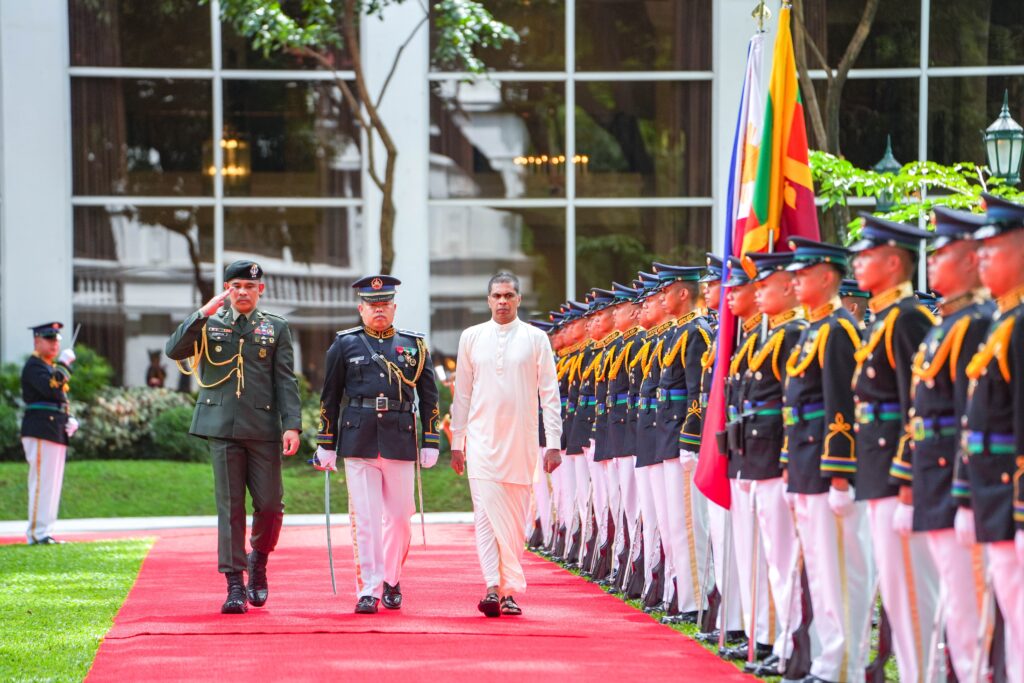
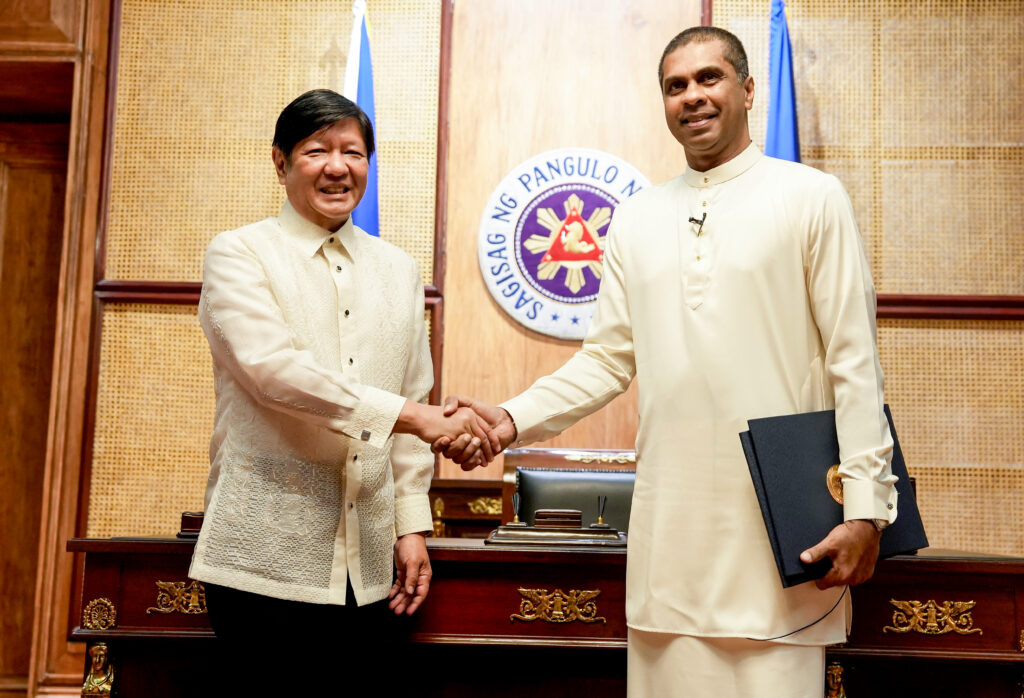
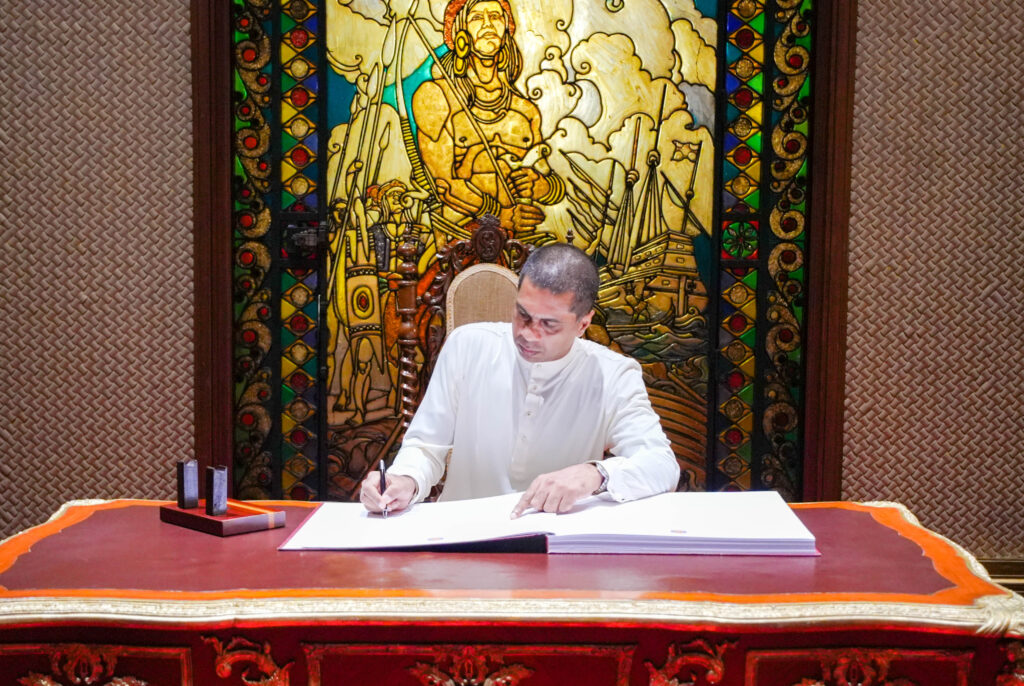
Ambassador of Sri Lanka to the Philippines Dr. Chanaka Harsha Talpahewa presented his credentials to President Ferdinand R. Marcos, Jr., of the Republic of the Philippines on 10 October 2023 at the Malacañan Palace in Manila. This was followed by the traditional wreath laying ceremony at the Rizal Monument in honour of Philippine national hero Dr. Jose Rizal.
Upon presentation of credentials, Ambassador Talpahewa had a tete-a-tete with President Marcos. He conveyed the best wishes and sincere greetings of President Ranil Wickremesinghe to President Marcos, the government and the people of the Philippines.
During the discussion, Ambassador Talpahewa stated that he looks forward to working towards further consolidating and strengthening the warm and friendly relations between Sri Lanka and the Philippines and taking it to the next level. He also mentioned that he will actively work towards bringing in investments from Sri Lankan companies in the Philippines. President Marcos Jr. welcomed this initiative and stated that countries like the Philippines and Sri Lanka should enhance bilateral cooperation not only in the political sphere but also in the economic sphere.
The Qatar Charity has initiated a program to offer financial assistance to 3,000 farmers engaged in the cultivation of vegetables and crops during the Maha Season in three districts. This endeavor was discussed on Tuesday (10) in the presence of Agriculture Minister Mahinda Amaraweera and Qatar Charity’s Project Manager, Tharick Mansoor. Agriculture Ministry Secretary Gunadasa Samarasinghe and other officials also participated in the meeting.
While farmers cultivating paddy in various cropping seasons have received necessary financial and material support, similar concessions have been limited for those engaged in growing vegetables and other crops. To address this gap, the Qatar Charity is extending assistance to 3,000 such farmers in Kurunegala, Moneragala, and Matale districts, providing each with a bulk of fertilizer valued at Rs. 20,000. The selection of beneficiaries is based on their association with Qatar Charity and the size of their land, which should be less than one hectare.
The scheme focuses on low-income farmers and aims to provide relief to those cultivating maize, chillies, and various vegetables. Minister Amaraweera underscored the importance of supporting non-paddy crops, as significant government relief has historically boosted rice production. He also addressed concerns about rising vegetable prices due to recent droughts and ongoing rains, emphasizing the need to ensure a stable supply of vegetables for the future.
The Health Ministry has taken swift action to suspend and cancel all orders from Isolez Bio-Tech Pharma Company due to ongoing issues related to drug supply in Sri Lanka. Health Minister Keheliya Rambukwella has instructed the Ministry Secretary and relevant institution heads to notify them in writing of this decision.
In addition, all payments to the company have been immediately halted pending the completion of investigations by the Criminal Investigation Department into alleged drug fraud. The Minister has ordered the suspension and cancellation of orders and supplies from the company in light of the recent problematic situation. Complaints regarding questionable supplies from the pharmaceutical company have been forwarded to the Criminal Investigation Department, which is now conducting an investigation.
Key officials, including the Health Ministry Secretary, Additional Secretary (Pharmaceuticals, Supply, and Regulation), Director General of Health Services, Deputy Director General (Medical Supplies), State Pharmaceutical Corporation Chairman, National Drug Regulatory Authority Chairman, and Chief Executive, have been notified about the situation.
The Health Minister has also sought legal advice from the Attorney General to expedite legal proceedings concerning this pharmaceutical company and the related incident.
SSP Nihal Talduwa, the Police Media Spokesman, stated that the Criminal Investigation Department has received five complaints related to the import of drugs into Sri Lanka using forged documents and signatures. These complaints were filed by an advisor to the Health Minister, a voluntary organization, the Chief Executive Officer of the National Drug Regulatory Commission, the Chief Executive Officer of the Drug Regulatory Authority, and another individual. Investigations into the matter are currently underway.
Colombo (LNW): The Global Sovereign Debt Round table(GSDR), has assured that the work continues toward reaching an agreement in principle with official creditors on specific restructuring terms, for Sri Lanka.
The objective of the Global Sovereign Debt Roundtable is to build greater common understanding among key stakeholders involved in debt restructurings.
GSDR works together on the current shortcomings in debt restructuring processes, both within and outside the Common Framework, and ways to address them.
It has reviewed progress in reaching common understanding on ways to address key impediments to efficient debt restructuring, on Thursday (12).
Meanwhile Sri Lanka’s private creditors have sent a proposal on how to restructure $12 billion of overseas debt, including a new type of bond designed to ease repayments in case of future economic pressure,
The overall proposal includes an option for creditors that combines Macro Linked Bonds (MLBs), with a regular bond and a second option of regular bonds with a Value Recovery Instrument (VRI), one of the sources said.
The MLBs were included to ensure the new instruments would be index-eligible, the sources said. Bonds included in an index generally have more liquidity
The IMF said that the GSDR discussed the priority areas for the work going forward.
According to the GSDR Co-chairs Progress Report released at the end of the meeting, significant progress has also been made in actual debt restructuring cases, including Sri Lanka.
However, the time period taken for the programs is still beyond the 2-3 months that were observed in the past.
“There has been a landmark agreement in June between Zambia and their official bilateral creditors, and continued progress in the discussion of other cases.
More broadly, the past 6 months have seen a positive momentum, with somewhat shorter timelines and somewhat smoother processes.
It The report added that for Sri Lanka, the financing assurances provided by an ad hoc committee of official creditors (comprising the Paris Club and India, and co-chaired by France, Japan and India) and China, enabled the approval of the Fund supported program in March 2023.
Since then, the work continues toward reaching an agreement in principle with official creditors on specific restructuring terms, it added.
In parallel, the authorities have concluded the restructuring of some of the domestic debt and are in active negotiations with Eurobond holders on a restructuring plan, said the report.
The GSDR progress report was released by the International Monetary Fund Managing Director Kristalina Georgieva, World Bank President Ajay Banga and Finance Minister of India, Nirmala Sitharaman, co-chairs of the GSDR.
Colombo (LNW): Sri Lanka, known for its ability to produce high-end niche apparel, is now focused on enhancing its capacity to produce eco-friendly clothing using organic textiles, where compliance remains a key component.
The island nation’s apparel sector plans to tap the half-a-billion USD global organic textile which is set to grow at a compound annual growth rate of 40% within the next five years.
With eco-consumption on the rise, it is evident that apparel companies too, are gearing for the shift in consumer patterns.
The Joint Apparel Association (JAAF) notes an increase in Sri Lankan companies obtaining the Global Organic Textile Standard (GOTS), indicating an increased awareness within the industry of the importance of adopting international best practices and sustainable manufacturing.
South Asian Representative of GOTS Ganesh Kasekar reveals a 78% increase in certified facilities compared to 2022 in Sri Lanka, with 136 factories currently holding certification.
Amongst these Sri Lankan companies, local apparel giants including Hirdaramani International Exports, MAS Intimates and Brandix have also obtained GOTS certification for the sustainable production of children’s wear, ladies’ wear, men’s wear, and baby wear.
GOTS is recognized as the world’s leading processing standard for textiles manufactured using organic fibres.
It defines high-level environmental criteria through the entire organic textiles supply chain and requires compliance with social criteria as well.
The successful completion of GOTS certification by an approved certifier provides companies with the right to participate in the GOTS programme, including using the standard and the GOTS logo on GOTS-approved goods.
With the standard being renewed annually, GOTS 7.0 was launched in March 2023, with full implementation required for all certified entities by March 2024.
Built on the three pillars of social responsibility, environmental sustainability and ethical business practices, GOTS covers the production process end to end.
GOTS has developed standards that cover the entire production process, based on the use of organic fibres, from textile processing and manufacturing up to licensing and labelling.
The certification process is rigorous and requires compliance with all criteria, but ultimately leads to an internationally recognized organic certification.”
The certification demonstrates a company’s commitment to providing sustainable, ethical and high-quality products to stakeholders, partners and consumers. Therefore to earn a GOTS certification, textile products must contain a minimum of 70% organic fibers, reflecting a commitment to environmentally friendly materials.
Additionally, stringent criteria govern the use of chemical inputs – ensuring that dyestuffs and auxiliaries meet strict environmental and toxicological standards.
Even the choice of accessories is guided by ecological considerations. Notably, a functional waste water treatment plant is mandatory for any wet-processing unit, underscoring the importance of responsible water management.
Galle Dialogue Highlights Cultural and Economic Significance, as Dr. Ram Madhav Urges Inclusive Development in the Indian Ocean Region.
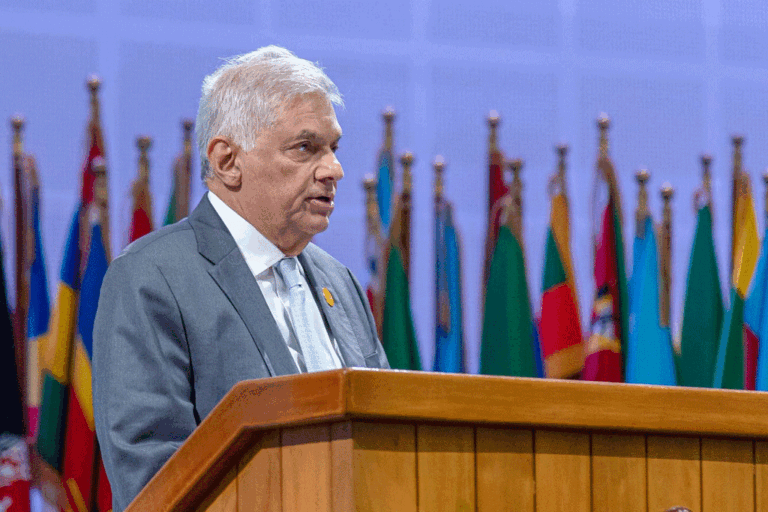
President Ranil Wickremesinghe delivered a significant keynote address at the 11th edition of the Galle Dialogue; International Maritime Conference, which aimed to strengthen regional maritime cooperation and formulate a global strategy to face common challenges in the maritime domain. The conference commenced at the Jetwing Lighthouse Hotel today (12) under the theme ‘Emerging New Order in the Indian Ocean.’
Delivering the keynote address, President Wickremesinghe began by commending the Navy for recommencing the Galle Dialogue after the COVID-19 break. He emphasized the importance of rethinking the focus of the Galle Dialogue in light of the changes brought about by the pandemic.
The President pointed out that the focus should primarily be on the Indian Ocean and the surrounding area. He acknowledged the role of Dr. Ram Madhav, a pioneer of the Indian Ocean Conference, in drawing attention to the region. President Wickremesinghe highlighted the uniqueness of the Indian Ocean as a civilization rather than a construct, emphasizing its rich history, diverse cultures and religious significance.
He then discussed various global constructs, such as the Asia Pacific, the Belt and Road Initiative (BRI) and the Indo-Pacific and how they differ from the Indian Ocean’s cultural and historical context. He stressed that the Indian Ocean represents a political entity, given its history and role in recognizing non-European sectors of the world as colonialism collapsed.
The President also discussed the economic significance of the Indian Ocean, predicting that development would shift from East Asia and the Asia Pacific to the Indian Ocean, India, Bangladesh, and Africa. He mentioned Africa’s potential for significant economic growth by 2050.
President Wickremesinghe underlined the importance of ports and their role in the evolving global trade landscape, emphasizing Sri Lanka’s strategic location and the development of key ports like Colombo, Trincomalee and Hambantota. He urged a long-term perspective on these developments and their global implications.
The President also discussed the changing dynamics in sports and noted that various nations from this region are expanding their influence in cricket and football. He emphasized the interconnectedness between the Indian Ocean and the Pacific Ocean.
In conclusion, President Wickremesinghe proposed that Sri Lanka should adopt the ASEAN outlook of the Indo-Pacific as two distinct oceans and prioritize freedom of navigation and undersea cables in the Indian Ocean. He acknowledged that the emerging order could rapidly change due to global events and emphasized the need for wise leadership and diplomacy in addressing evolving challenges.
President Wickremesinghe’s speech provided a comprehensive perspective on the Indian Ocean’s unique place in global politics, culture and economics and its role in shaping the emerging new order in the region.
Meanwhile, during his speech at the Galle Dialogue, Dr. Ram Madhav, President of India Foundation, addressed the current global transformation, noting the emergence of a new world order following the pandemic. He described this new order as multipolar and heteropolar, emphasizing that non-state actors, including tech giants, global agencies, NGOs, transnational terror groups and spiritual and religious movements, would have a significant influence on people and nations.
Dr. Madhav also expressed his condolences for those affected by the conflicts in Eastern Europe and West Asia. He recognized Sri Lanka’s role in hosting the 23rd meeting of the Indian Ocean Rim Association (IORA) Council of Ministers and congratulated President Ranil Wickremesinghe on assuming the Chairmanship of IORA, with India as the Vice Chair. Dr. Madhav emphasized the importance of developing IORA as a platform for promoting sustainable development, economic growth and stability in the region and he called for a commitment to creating a free, open and inclusive region guided by the rule of law, where sea lines are not used for piracy, overexploitation, or terrorism. He also expressed hope that the efforts by leaders like President Ranil Wikremesinghe would result in establishing the Indian Ocean’s distinct identity and role in the emerging world order.
Minister of Ports and Civil Aviation Nimal Siripala de Silva, Minister of State for Defence Pramita Bandara Tennakoon, Governor of the Southern Province Willy Gamage, Senior Adviser to the President on National Security and Chief of Staff to the President Sagala Ratnayaka, Defence Secretary General Kamal Gunaratne (Rtd), Chief of Defence Staff General Shavendra Silva, Navy Commander Vice Admiral Priyantha Perera, Army Commander Lt. Gen. Vikum Liyanage, former Navy Commanders and other senior officers of the Navy attended the event.
MP Sarath Weerasekara, Chairman of the Sectoral Monitoring Committee on National Security, said that the special report on the real state of affairs in Sri Lanka’s conflict will be handed over to President Ranil Wickremesinghe shortly.
The MP pointed out that the Sri Lankan forces are accused of committing war crimes at every human rights conference held in Geneva and the report was prepared rectify this notion and to show the true situation of the war.
MP Sarath Weerasekara, the Chairman of the National Security Sectoral Oversight Committee, stated this while attending the news conference held at the Presidential Media Center today (12) under the theme ‘Collective path to a stable country’.
MP Sarath Weerasekara further said;
National security holds immense significance for a nation. It is imperative to foster an environment where the citizens can lead their lives free from fear and uncertainty. Moreover, ensuring a robust national security framework is crucial to attracting investment opportunities. National security encompasses not only physical safety but also economic stability, food security, environmental protection and personal well-being. Shockingly, over the past decade, road accidents have claimed the lives of approximately 27,000 individuals, surpassing the toll of 29,000 casualties during the thirty-year war. Regrettably, road accidents have become distressingly common in our country.
In addition, the scourge of drugs poses a considerable threat to our national security. Energy and public health also fall within the purview of national security concerns. Terrorism, extremism, the drug epidemic and underworld activities are challenges faced by all nations. However, it is the government’s solemn duty to address these issues in a manner that does not disrupt the lives of its citizens.
As a committee, our dedicated efforts are focused on making the most substantial contributions to bolster our nation’s security. We categorize terrorism rooted in separatism and extremism stemming from terrorism as physical threats.
Furthermore, during every human rights session in Geneva, allegations of war crimes in our country have surfaced in various forms. We have taken these accusations seriously and acted accordingly. It is crucial to understand that Sri Lanka experienced a non-international armed conflict. Therefore, our committee has promptly compiled a report elucidating the nature of the conflict within our borders.
Our foremost objective is to present the Geneva Human Rights Council with an accurate depiction of our current situation. As a result, the special report meticulously prepared by the Sectoral Monitoring Committee on National Security will be submitted to President Ranil Wickremesinghe in the near future. This report comprehensively outlines the genuine circumstances surrounding the conflict in our nation.
Colombo (LNW):FitsAir, the trailblazing privately-owned airline in Sri Lanka known for its affordability and punctuality, celebrated its one-year anniversary recently.
This milestone marked a year filled with achievements, innovation, and a vibrant, youthful spirit. In just 12 short months, the airline said it has made a significant impact on Sri Lanka’s aviation industry, catering to a fun-loving, adventurous audience.
FitsAir emerged on the aviation industry with a bold vision: to make air travel accessible, affordable, and enjoyable for all Sri Lankans.
From its onset, the airline set out to revolutionize travel experience, offering lower airfares and enhancing services. FitsAir has successfully heightened the aviation industry, benefitting the passengers while continuing to boost industry growth with their commitment to ‘More Sky for Less’.
Speaking on this momentous occasion, FitsAir Executive Director Ammar Kassim said: “We are immensely proud to announce a significant milestone in our journey.
At the core of FitsAir’s mission lies a devotion to passenger satisfaction and making ‘Ahase Fun,’ as per our trending tagline.
As a private airline, FitsAir prioritises customer service, consistently striving to provide an unparalleled passenger experience. For us, it’s not merely about air transportation; it’s about creating memorable journeys.
FitsAir toasts to a year of achievement, extending its heartfelt gratitude to the passengers, partners, dedicated employees, pilots, and the flight crew who have been integral in this extraordinary journey.
This is merely the beginning; FitsAir promises more excitement, opportunities, and, above all, more fun in the sky for everyone.”
Beyond simply connecting travellers to destinations, FitsAir is a catalyst for change in the job market. In just one year, it has created numerous employment opportunities, demonstrating its dedication to fostering economic growth and prosperity within Sri Lanka.
FitsAir’s impact also extends to the business world. Through its cargo services, the airline plays a pivotal role in facilitating the seamless flow of goods, thereby boosting regional trade and commerce.
In a spirit of innovation, FitsAir actively forges partnerships and alliances with other carriers, extending route networks and providing travellers a broader range of choice. Looking to the future, the airline is delighted to announce that it would fly to exciting new locations in the coming months.
Committed to affordability, FitsAir offers a simplified fare structure. The base ticket price covers essential services such as seat, baggage, and basic amenities.
Passengers can customise their experience adding optional services such as, seat selection and meals for a nominal fee. This flexibility ensures travellers to avoid unnecessary costs, and tailor their journey according to preference
FitsAir, the trailblazing privately-owned airline in Sri Lanka known for its affordability and punctuality, celebrated its one-year anniversary recently.
This milestone marked a year filled with achievements, innovation, and a vibrant, youthful spirit. In just 12 short months, the airline said it has made a significant impact on Sri Lanka’s aviation industry, catering to a fun-loving, adventurous audience.
FitsAir emerged on the aviation industry with a bold vision: to make air travel accessible, affordable, and enjoyable for all Sri Lankans.
From its onset, the airline set out to revolutionise travel experience, offering lower airfares and enhancing services. FitsAir has successfully heightened the aviation industry, benefitting the passengers while continuing to boost industry growth with their commitment to ‘More Sky for Less’.
Speaking on this momentous occasion, FitsAir Executive Director Ammar Kassim said: “We are immensely proud to announce a significant milestone in our journey.
At the core of FitsAir’s mission lies a devotion to passenger satisfaction and making ‘Ahase Fun,’ as per our trending tagline.
As a private airline, FitsAir prioritises customer service, consistently striving to provide an unparalleled passenger experience. For us, it’s not merely about air transportation; it’s about creating memorable journeys.
FitsAir toasts to a year of achievement, extending its heartfelt gratitude to the passengers, partners, dedicated employees, pilots, and the flight crew who have been integral in this extraordinary journey.
This is merely the beginning; FitsAir promises more excitement, opportunities, and, above all, more fun in the sky for everyone.”
Beyond simply connecting travellers to destinations, FitsAir is a catalyst for change in the job market. In just one year, it has created numerous employment opportunities, demonstrating its dedication to fostering economic growth and prosperity within Sri Lanka.
FitsAir’s impact also extends to the business world. Through its cargo services, the airline plays a pivotal role in facilitating the seamless flow of goods, thereby boosting regional trade and commerce.
In a spirit of innovation, FitsAir actively forges partnerships and alliances with other carriers, extending route networks and providing travellers a broader range of choice. Looking to the future, the airline is delighted to announce that it would fly to exciting new locations in the coming months.
Committed to affordability, FitsAir offers a simplified fare structure. The base ticket price covers essential services such as seat, baggage, and basic amenities.
Passengers can customize their experience by adding optional services such as, seat selection and meals for a nominal fee. This flexibility ensures travellers to avoid unnecessary costs, and tailor their journey according to preference.