January 29, Colombo (LNW): Prime Minister and Minister of Education Dr Harini Amarasuriya today (29) presided over the national launch of sweeping education reforms for Grade One students, marking a significant milestone in the country’s education sector.
The official ceremony is taking place this morning at Gunasekara Vidyalaya in Athurugiriya, coinciding with the nationwide admission of children to Grade One for the 2026 academic year.
According to the Ministry of Education, the revised Grade One curriculum is being introduced from this year as part of the broader reform programme. The changes are aimed at strengthening early childhood education and laying a more robust foundation for learning.
Addressing the event, Dr Amarasuriya reiterates that the government’s central aim is to ensure access to high-quality education as a cornerstone of a prosperous and equitable nation.
Prime Minister Launches New Grade One Education Reforms as National School Admissions Take Place
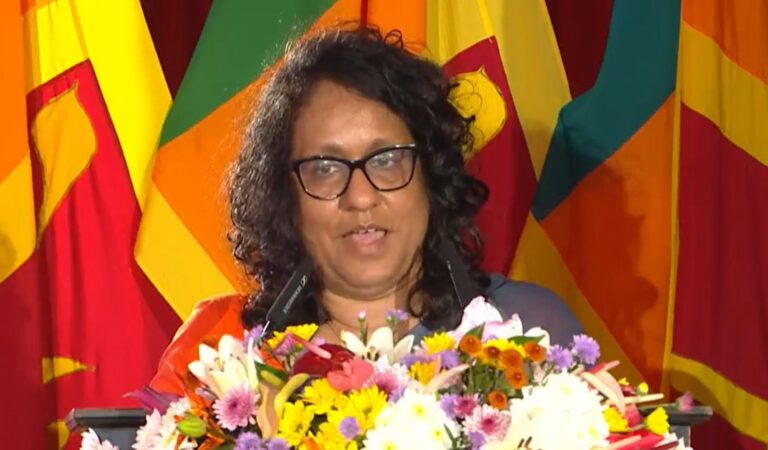
IDAG Marks Milestone in Democratic Capacity Building with Certificate Awarding Ceremony
Rashika Hennayake
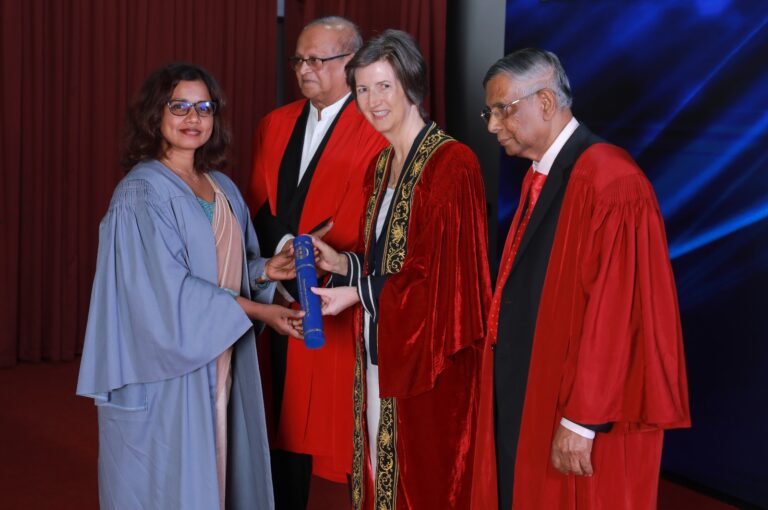
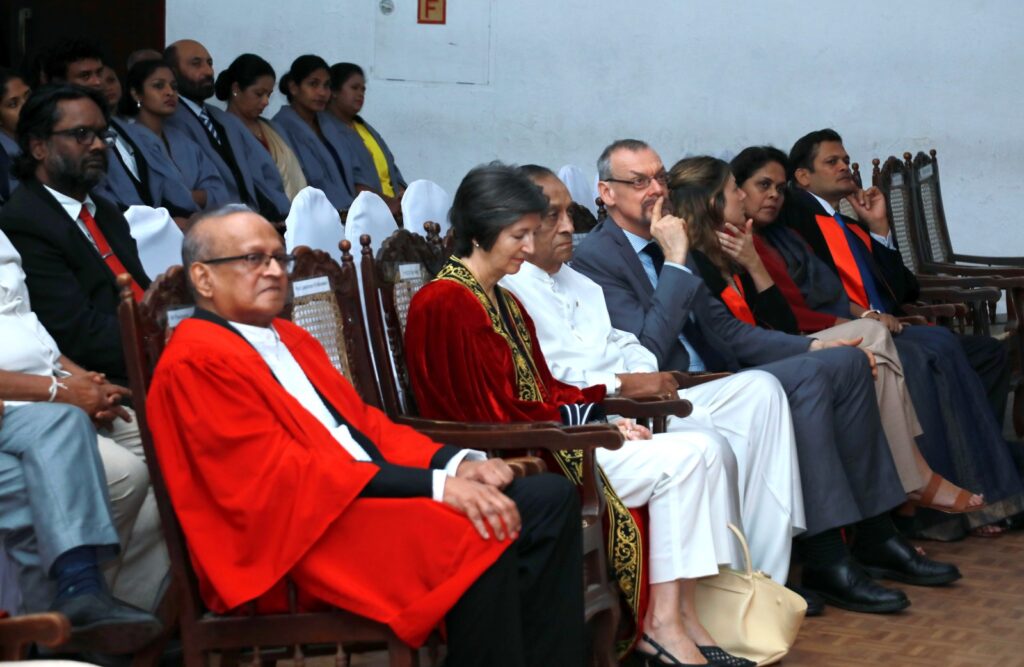
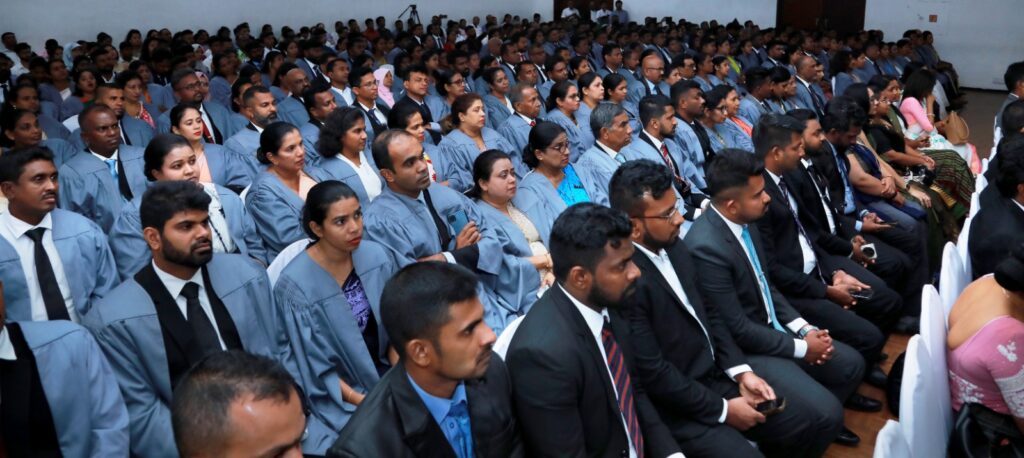
January 29, Colombo (LNW): The Institute of Democracy and Governance (IDAG) successfully held its Certificate Awarding Ceremony on 24 January 2026 at the Sri Lanka Foundation Institute, Colombo 07, marking the conclusion of two flagship executive education programs implemented under its Democracy in Practice initiative. The ceremony celebrated the successful completion of the Executive Certificate in Democracy and Local Governance and the Executive Certificate in Democracy and Parliamentary Governance, recognizing the commitment of public representatives and civic actors to strengthening democratic governance in Sri Lanka.
At a time when democracies across the world face complex and evolving challenges, IDAG continues to position civic education and capacity building as central pillars of democratic resilience. Established with the purpose of strengthening democracy through informed participation, ethical leadership, and accountable governance, IDAG works at the intersection of citizens, institutions, and public policy, translating democratic values into practical governance outcomes.
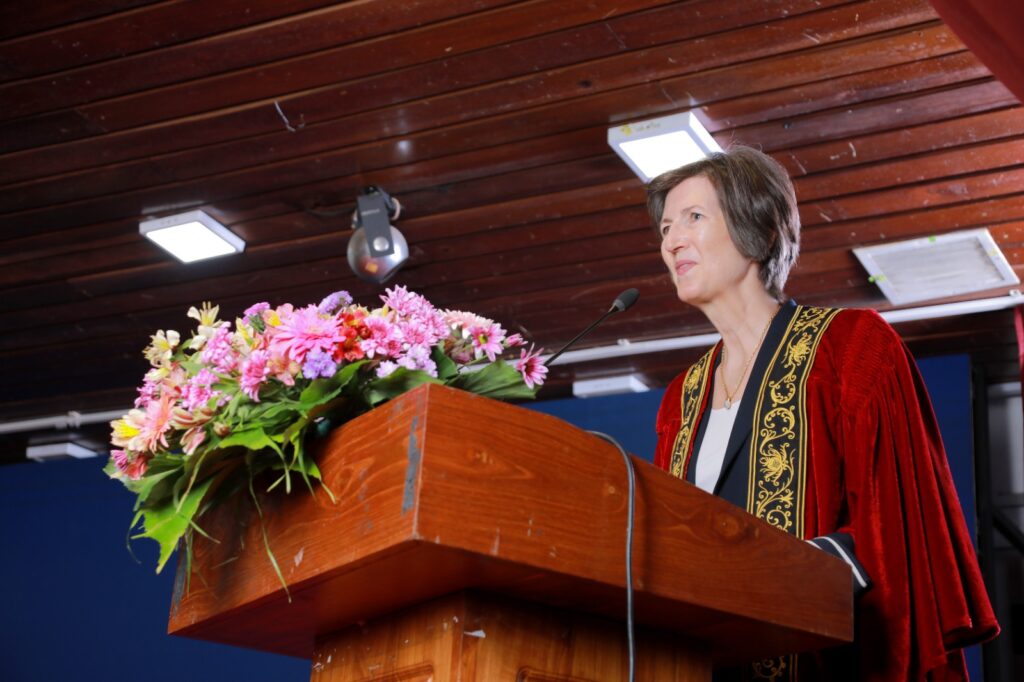
The event was graced by H.E. Dr. Siri Walt, Ambassador of Switzerland to Sri Lanka and Maldives, as Chief Guest. In her address, the Ambassador underscored the importance of inclusive governance, democratic institutions, and capacity building for public representatives, reaffirming Switzerland’s long-standing commitment to democratic development and civic education initiatives in Sri Lanka.
The ceremony was further honored by the presence of distinguished special guests, including H.E. Jean‑François Pactet, Ambassador of France to Sri Lanka and Maldives; Lilantha A. Kalukapuarachchi, Secretary to the Governor of the Western Province; and Hon. Chandima Hettiarachchi, Member of Parliament and Secretary of the Swiss–Sri Lanka Parliamentary Friendship Association. Their participation reflected strong diplomatic and institutional support for initiatives aimed at strengthening democratic governance and public accountability.
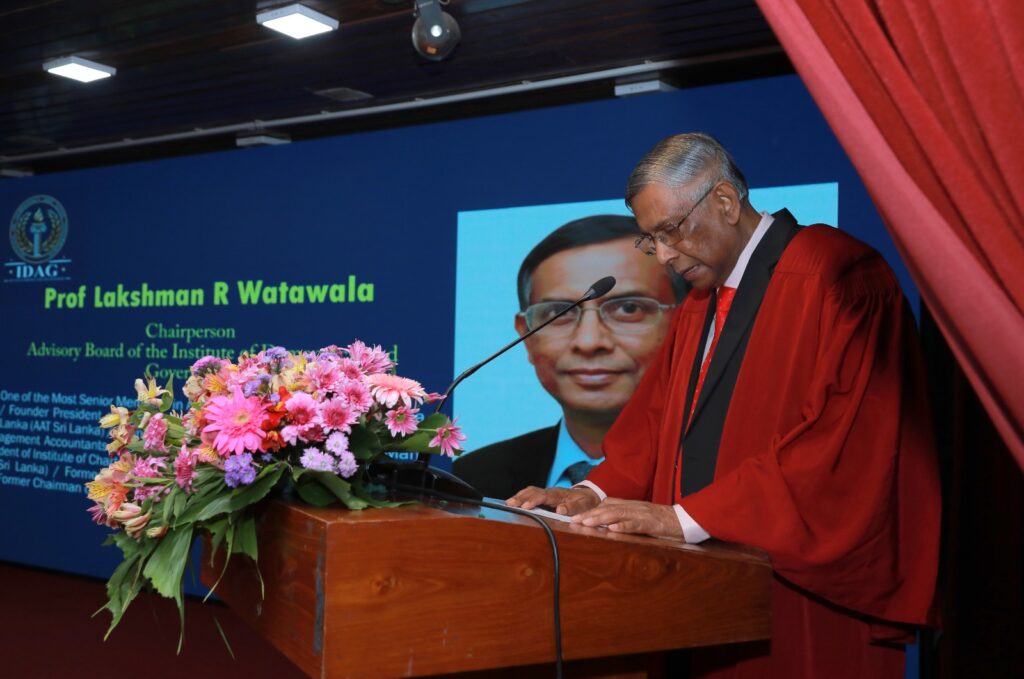
Delivering addresses at the ceremony were Prof. Lakshman R. Watawala, Chairman of the IDAG Advisory Board and Principal of the Sri Lanka Law College, President’s Counsel Prashantha Lal De Alwis, Honorary Advisor to the IDAG Advisory Board and Prof Samitha Hettige. All speakers emphasized the critical role of education, constitutional literacy, and ethical leadership in sustaining democratic systems, particularly at local and parliamentary levels.
Under the Democracy in Practice initiative, IDAG successfully concluded the Executive Certificate in Democracy and Local Governance in both Sinhala and Tamil mediums. A total of 207 participants qualified for certification in the Sinhala medium, while 57 participantssuccessfully completed the program in the Tamil medium. These programs were specifically designed for newly elected representatives of local government institutions, equipping them with a clear understanding of their constitutional mandates, institutional responsibilities, and the principles of democratic local governance.
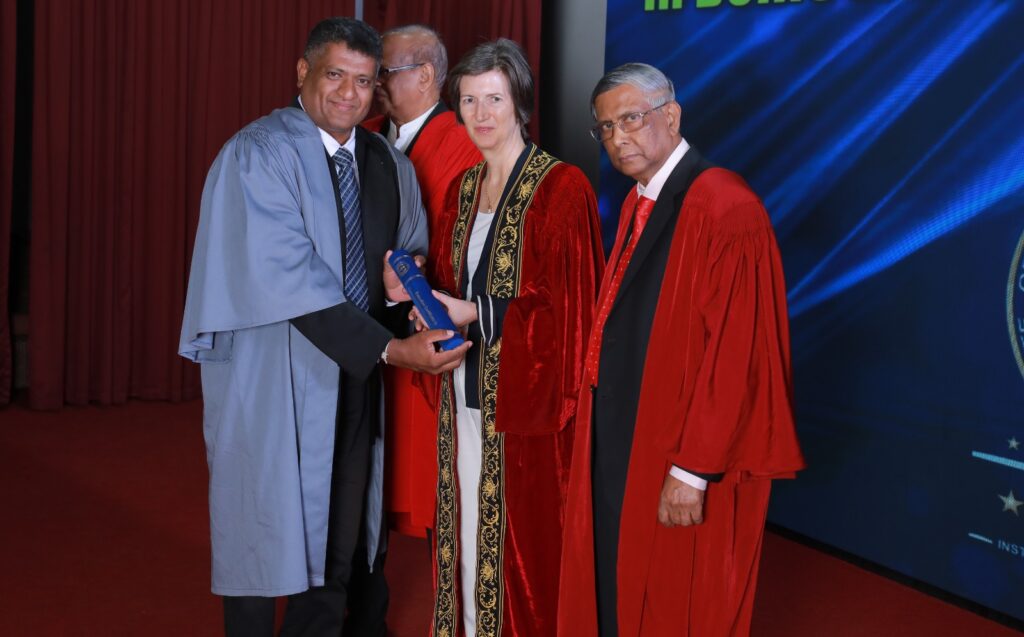
In addition, the Executive Certificate in Democracy and Parliamentary Governance which was conducted by IDAG in collaboration with BALPP) Bandaranaike Academy for Leadership and Public Policy saw 42 participants successfully qualify for certification. This program was tailored for Members of Parliament, government officials, civil and political society actors, and emerging leaders, with a focus on parliamentary procedures, democratic institutions, governance reform, and public accountability.
Across all programs, IDAG emphasized inclusive leadership, ethical decision-making, transparency, and citizen participation, values that form the foundation of a strong and resilient democracy. The courses were delivered by university academics, subject experts, and experienced professionals, ensuring a balance between theoretical grounding and practical application.
IDAG gratefully acknowledged the guidance and advice of Hon. Karu Jayasuriya, former Speaker of the Parliament of Sri Lanka, whose insights played a key role in shaping and strengthening these programs. Special acknowledgment was also extended to Prof. Chaminda Abeysinghe, Dr. Priyantha Mudalige, Mr. Dhamma Dissanayake, Dr. Indi Akurugoda, Dr. Dayani Panagoda, Mr. Indika Perera, Mr. Dharmasiri Nanayakkara, Dr. Viranjana Herath, Mr. Charuka Perera, Mr. Ruchira Perera, and Mrs. Gayani Premathilaka for their valuable contributions as lecturers and facilitators.
Looking ahead, IDAG announced its intention to expand and strengthen its capacity-building and training programs in the coming year, with a renewed focus on democratic governance, civic education, and good governance reforms. Through continued collaboration with public institutions, academia, civil society, and international partners, IDAG remains committed to building a democratic culture that is informed, participatory, and responsive to the needs of the people.
The Certificate Awarding Ceremony 2026 thus marked not only the conclusion of academic programs, but also a reaffirmation of IDAG’s mission to nurture democracy through knowledge, responsibility, and practice.
Colombo Hosts Vibrant Curtain-Raiser for 2026 Chinese New Year Celebrations
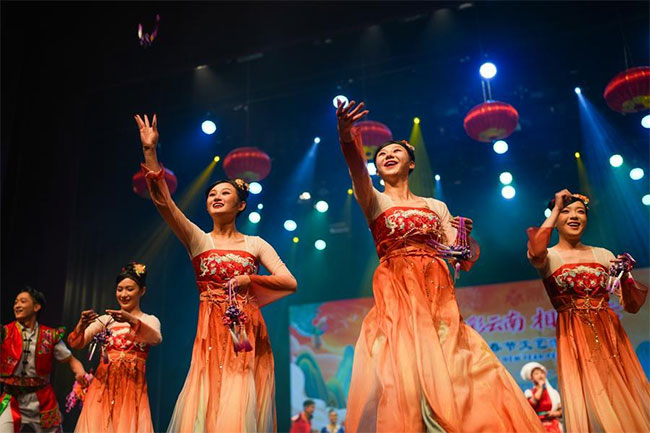
January 29, Colombo (LNW): Sri Lanka’s calendar of cultural festivities gained a colourful new chapter as the opening gala of the 2026 “Happy Chinese New Year” programme unfolded at the Nelum Pokuna Theatre in Colombo, setting an upbeat tone for a season of events leading up to the Lunar New Year.
The evening was jointly organised by the Chinese Embassy in Sri Lanka and China’s Ministry of Culture and Tourism, and placed a distinct spotlight on the rich heritage of Yunnan Province. Performers from the Dali Bai Autonomous Prefecture treated the audience to a lively showcase of Bai ethnic traditions, blending folk songs, graceful dance routines and music played on age-old instruments, all warmly received by the crowd.
Approximately 1,200 guests attended the gala, among them Speaker of Parliament Dr Jagath Wickramaratne, Chinese Ambassador to Sri Lanka Qi Zhenhong, senior government representatives, members of the Chinese community residing in Sri Lanka, and local culture enthusiasts.
Speaking at the event, Ambassador Qi reflected on 2026 as the Chinese Year of the Horse, an animal associated in Chinese tradition with perseverance, faithfulness and achievement. He remarked that these values resonate strongly with the industrious and forward-looking spirit of the Sri Lankan people, and expressed hopes for fresh progress and shared success for both nations in the year ahead.
Dr Wickramaratne, in his remarks, highlighted the centuries-old cultural links between Sri Lanka and China, noting that the evening’s performances vividly conveyed the festive spirit and deep symbolism of the Chinese New Year. He described the gala as a meaningful celebration of friendship expressed through art and tradition.
Organisers noted that the opening night is only the beginning, with further performances, parades and community activities planned at prominent locations including Colombo Port City, the Hambantota International Conference Centre and the historic precinct surrounding the Gangaramaya Temple, bringing the celebrations to audiences across the island.
Ground frost expected in Nuwara Eliya: Misty conditions expected elsewhere (Jan 29)

January 29, Colombo (LNW): There is a possibility of ground frost at some places in Nuwara-Eliya district in the early hours of the morning, the Department of Meteorology said today (29).
Misty conditions can be expected at some places in Western, Sabaragamuwa, Central and North-western provinces and in Badulla, Galle, Matara and Anuradhapura districts during the early hours of the morning.
Marine Weather:
Condition of Rain:
Mainly fair weather will prevail in the sea areas around the island.
Winds:
Winds will be north-easterly and wind speed will be (30-40) kmph. Wind speed can increase up to (45-50) kmph at times in the sea areas off the coast extending from Kalutara to Mannar via Colombo and Puttalam, and from Matara to Pottuvil via Hambantota.
State of Sea:
The sea areas off the coast extending from Kalutara to Mannar via Colombo and Puttalam, and from Matara to Pottuvil via Hambantota will be fairly rough at times.
Other sea areas around the island will be moderate.
Former Presidential Secretary Saman Ekanayake Remanded Until February 11
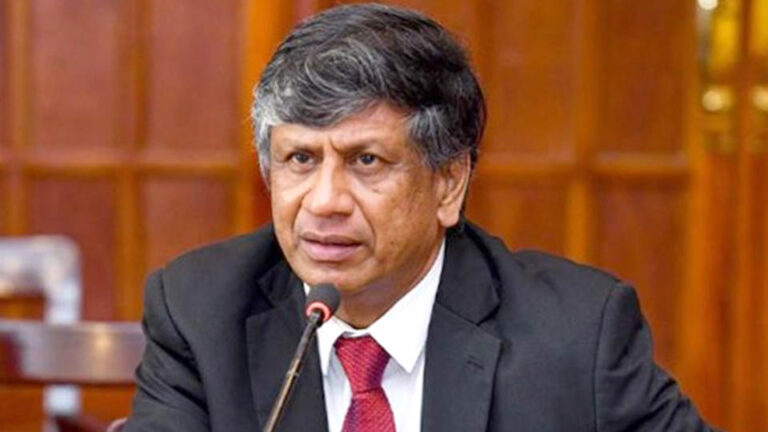
Former Secretary to the President Saman Ekanayake was remanded until February 11 by the Colombo Fort Magistrate’s Court today.
Ekanayake was remanded in connection with a case filed against former President Ranil Wickremesinghe over the alleged misuse of Rs. 16.6 million in public funds during a visit to the United Kingdom in 2023.
He appeared before the Colombo Fort Magistrate’s Court this afternoon, where the matter was taken up before Magistrate Isuru Netthikumara.
Former President Ranil Wickremesinghe also appeared before the court today in connection with the same case.
During the hearing, the Attorney General informed the court that investigations into the former President will be completed within one month, and that formal charges are expected to be filed in March.
The submission was made by Additional Solicitor General Dileepa Peiris, appearing on behalf of the Attorney General.
Further proceedings in the case are expected following the conclusion of investigations.
‘Was Willing To Leave BJP’: Mamata Banerjee Floats Political Conspiracy Theory On Ajit Pawar’s Death
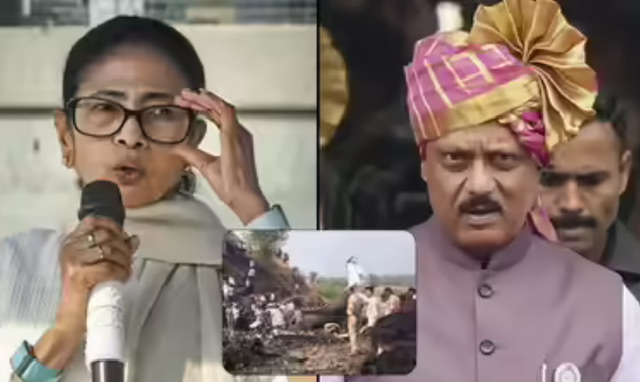
NEW DELHI: West Bengal chief minister Mamata Banerjee alleged a political conspiracy behind the death of Maharashtra deputy CM Ajit Pawar, who died in a plane crash on Wednesday morning. She demanded a Supreme Court-supervised probe, accusing all “other agencies” of being “compromised”.
The Trinamool Congress (TMC) chief said that there were reported talks that Pawar was “willing to leave BJP” only two days ago and then the crash happened.
I don’t know what is the fate of the opposition political parties but he was very much with the ruling party. But two days ago, I came to know that someone from another party had given a statement that Pawar was willing to leave the BJP, and now this has happened today,” she alleged
“I demand a proper investigation under the supervision of the Supreme Court. We have trust only in the Supreme Court and no other agency. All agencies have been completely compromised,” she added.
She further alleged that Pawar was preparing to rejoin the Nationalist Congress Party faction led by his uncle, Sharad Pawar (NCP-SP), citing recent reports that have suggested such a possibility.
VIDEO | Kolkata: On Maharashtra Deputy CM Ajit Pawar’s demise in a plane crash, West Bengal CM Mamata Banerjee (@MamataOfficial) said,
— Press Trust of India (@PTI_News) January 28, 2026
“I am deeply shocked to hear the news of Maharashtra Deputy Chief Minister Ajit Pawar’s death in a plane crash this morning. Even political… pic.twitter.com/NZjWPBrNgH
“It is truly a great loss. Today he is in the opposition, but tomorrow he was supposed to return to the original course of his party. My condolences to his family, the people of Maharashtra, and to Sharad Pawar,” she said.
BJP MP Kangana Ranaut termed it a “petty” statement and urged to “show a little restraint” at such a time.
We are all in mourning that such a major mishap occurred this morning. All of us are discussing in Parliament that many people travel by helicopter. So, instead of speaking such petty things at such a time, she should show a little restraint,” she said.
#WATCH | Delhi: On West Bengal CM Mamata Banerjee's reported statement on Maharashtra Deputy CM Ajit Pawar's death, BJP MP Kangana Ranaut says, "We are all in mourning that such a major mishap occurred this morning. All of us are discussing in Parliament that many people travel… pic.twitter.com/CWZeS7Rse7
— ANI (@ANI) January 28, 2026
Pawar died along with four others when the aircraft they were travelling in, crashed near Baramati in Pune district.
TIMES OF INDIA
Maharashtra Deputy CM Ajit Pawar Dies in Plane Crash Near Baramati
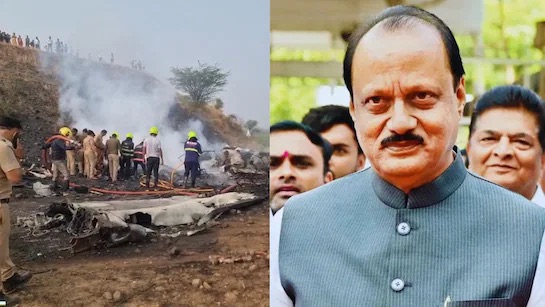
Ajit Pawar, Chief of the Nationalist Congress Party (NCP) and Deputy Chief Minister of Maharashtra, died in a tragic plane crash this morning while travelling from Mumbai to Baramati, according to official sources.
The small aircraft, which took off from Mumbai at around 8:00 a.m., crashed near Baramati airport during its landing attempt approximately 45 minutes later. Four others on board — including pilots and security personnel — were also killed in the accident.
Visuals from the crash site showed thick smoke, fire, and the mangled remains of the aircraft, while ambulances were seen rushing the injured to nearby hospitals. The Directorate General of Civil Aviation (DGCA) confirmed that all five passengers on board died in the crash.
According to reports, Pawar was scheduled to attend four public meetings in the region ahead of the upcoming local body elections.
The 66-year-old leader was the nephew of veteran politician and NCP founder Sharad Pawar, and the cousin of Lok Sabha MP Supriya Sule. Both Sharad Pawar and Sule were in Delhi attending the Parliament’s budget session and are expected to travel to Pune shortly.
In 2023, Ajit Pawar led a major political split within the NCP, forming a separate faction and later joining the NDA government as Deputy Chief Minister. In recent months, however, discussions regarding a possible reunion of the two factions had emerged, with both sides jointly contesting the Pimpri Chinchwad Municipal Corporation elections.
The aircraft involved in the crash was a Learjet 45, operated by a company identified as VSR. Notably, another aircraft of the same model had crashed in Mumbai in September 2023.
As of now, the NCP leadership, the Pawar family, and the Maharashtra government have not issued official statements regarding the incident. Further investigations into the cause of the crash are expected to be carried out by aviation authorities.
AG Informs Court Charges Against Ranil Wickremesinghe Expected in March
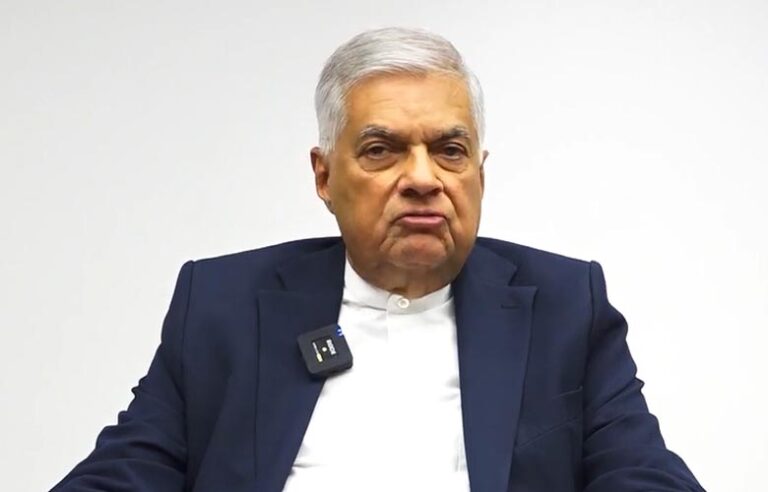
The Attorney General informed the Colombo Fort Magistrate’s Court today that investigations into former President Ranil Wickremesinghe will be concluded within the next month, with formal charges expected to be filed in March.
The submission was made by Additional Solicitor General Dileepa Peiris, appearing on behalf of the Attorney General, when the case was taken up before Colombo Fort Magistrate Isuru Netthikumara.
The case relates to allegations of misappropriation of public funds, currently under investigation by the relevant authorities. The court was informed that inquiries are progressing and nearing completion.
Further proceedings in the matter are expected following the conclusion of investigations and the filing of charges.
Former President Ranil Wickremesinghe Appears Before Colombo Fort Magistrate’s Court
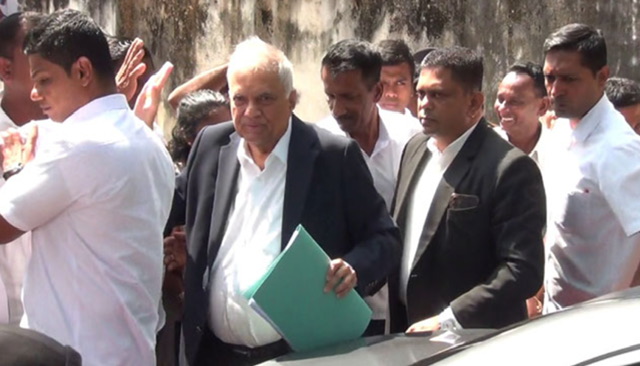
Former President Ranil Wickremesinghe appeared before the Colombo Fort Magistrate’s Court today in connection with a scheduled court proceeding concerning allegations of misappropriation of public funds.
The case stems from a complaint alleging that more than Rs. 16.6 million in state funds were unlawfully used for a private foreign visit undertaken by Wickremesinghe in 2023. According to the complaint, the funds were allegedly spent on travel related to attending his wife’s graduation ceremony in the United Kingdom.
The matter was taken up before the court as part of ongoing legal proceedings, with further action expected following submissions by the relevant parties.
No official comment has yet been issued by the former President regarding the allegations.
Supreme Court Orders Notices to Former President and Officials Over Compensation Payments Linked to Aragalaya
The Supreme Court today directed that notices be served on several former high-ranking officials, including former President Gotabaya Rajapaksa, in connection with a Fundamental Rights (FR) petition filed over alleged unlawful compensation payments made to former Ministers and Members of Parliament.
The petition challenges the compensation granted to individuals whose residences were damaged or destroyed during the Aragalaya protest movement in 2022.
The directive was issued to the legal representatives of the petitioner, instructing them to formally notify the relevant respondents.
According to the court order, notices are to be served on the following individuals:
- Former President Gotabaya Rajapaksa
- Former Defence Secretary Major General (Retd.) Kamal Gunaratne
- Former Inspector General of Police C.D. Wickramaratne
- Former Commander of the Sri Lanka Navy Nishantha Ulugetenne
- Former Minister of Public Security Prasanna Ranatunga
- Former Minister of Public Security Tiran Alles
- Former Secretary to the Ministry of Public Security Jagath Alwis
The Fundamental Rights petition was filed by environmental lawyer Dr. Ravindranath Dabare, challenging the legality of the compensation process and alleging misuse of public funds.
Further proceedings are expected once the respondents are formally notified.