Home Blog Page 152

High Court Upholds Construction Rights in Pentara Residences Dispute

0

Sri Lanka’s Civil Appellate High Court has decisively rejected legal attempts by nearby residents to halt construction of Home Lands Group’s Pentara Residences in Thummulla, Colombo, and reinforcing judicial support for projects that have secured regulatory clearance and progressed without undue delay.

By an order issued on 11 December 2025, the Court refused leave to appeal and interim orders sought by residents challenging the Colombo District Court’s earlier refusal to grant urgent enjoining relief. The appellate judges concluded that there was no basis to interfere with the District Court’s decision to hear both parties at the interim injunction stage rather than stopping construction immediately.

A key factor influencing the ruling was the timing of the applications. The Court observed that the petitioners approached the judiciary after construction had been ongoing for several months, weakening claims of immediate harm. The bench explicitly referenced the equitable doctrine that undue delay can bar relief, noting that the legal action appeared structured to avoid its application.

The residents had alleged that construction activities—particularly piling and excavation—generated excessive vibration, dust and noise, adversely affecting their living conditions and health. They argued that urgent judicial intervention was necessary to prevent further disruption until the matter was fully adjudicated.

However, the District Court was not persuaded that the situation warranted emergency relief. Instead, it held that the appropriate course was to proceed with notice and a structured hearing on interim injunctions, ensuring procedural fairness to both sides. This approach was fully endorsed by the Civil Appellate High Court.

Importantly, the appellate court noted that the residents themselves acknowledged that several competent government agencies had already investigated their complaints. These included the NBRO, the Central Environmental Authority and the Electro Technology Laboratory, each of which assessed the alleged impacts prior to litigation.

Despite the filing of 12 separate cases by residents living close to the site, the Court dismissed all applications and ordered costs against the petitioners, effectively closing the door on attempts to secure immediate court-ordered stoppages.

Pentara Residences is positioned as the largest single residential real estate investment undertaken by a Sri Lankan developer. The US$100–110 million project consists of twin 40-storey towers and is being developed on nearly an acre of land acquired for Rs. 4.5 billion—an unprecedented transaction in Colombo’s property market.

The development is a BOI-approved venture and is financed with the support of Hatton National Bank PLC. Construction commenced following the issuance of a development permit by the Urban Development Authority, alongside full environmental and technical approvals from statutory bodies.

Home Lands Group was represented by a senior legal team led by President’s Counsels Ali Sabry, Kushan De Alwis and Eraj De Silva, while President’s Counsel Kuvera de Zoysa appeared for the residents.


Imports Versus Assembly: A Test for Sri Lanka’s Industrial Policy

0

Sri Lanka’s automobile market is entering a decisive phase as the post-ban import boom gives way to a likely slowdown, exposing deeper questions about industrial policy and fiscal sustainability. In 2025, vehicle imports were a major revenue engine, accounting for the bulk of the unexpected surge in tax collections identified by the Public Finance Committee. But dependence on imports is proving to be a double-edged sword.

Local vehicle assembly expanded rapidly during the import ban years, attracting investors and building capabilities across passenger vehicles, SUVs and electric three-wheelers. Seventeen assembly plants now operate nationwide, with an equal number of prospective entrants signalling confidence in the market. Beyond output, the sector created skilled employment and stimulated upstream activities, from logistics to component manufacturing.

The reopening of imports, however, has shifted the competitive balance overnight. Imported vehicles arrive with price advantages rooted in scale and global sourcing, while domestic assemblers face higher per-unit costs. Industry representatives argue that, without targeted incentives such as differentiated excise structures or localisation-linked tax credits locally assembled vehicles will be crowded out, undermining sunk investments.

The policy tension is sharpened by Sri Lanka’s green transition goals. Electric vehicles remain central to near-term decarbonisation, but the global industry is also exploring hydrogen fuel cell vehicles. For Sri Lanka, hydrogen remains a long-term prospect due to high infrastructure and production costs. Maintaining a viable local industry is critical if the country is to participate meaningfully in future mobility technologies rather than remain a pure importer.

Meanwhile, the auto components segment stands out as a bright spot. Manufacturers are scaling exports and targeting integration into regional value chains, with ambitious plans to more than double export earnings within five years while adding tens of thousands of jobs. This momentum depends on consistent demand, skills retention and policy certainty.

Fiscal realities cannot be ignored. As import volumes normalise, the extraordinary tax gains of 2025 are unlikely to repeat, raising the prospect of revenue gaps. A policy mix that balances revenue needs with industrial development—by rewarding domestic value addition while managing imports—could smooth volatility and anchor long-term growth.

Sri Lanka’s auto sector is no longer just about cars; it is a test of whether short-term fiscal fixes can coexist with a coherent industrial strategy.

Rs.10 Billion 5G Auction Opens New Digital Chapter

0

Sri Lanka has taken a decisive step toward next-generation connectivity after the Government raised around Rs. 10 billion through its first commercial 5G spectrum auction, clearing the path for the launch of advanced mobile services. Dialog Axiata PLC and SLT-Mobitel, a subsidiary of Sri Lanka Telecom PLC, emerged as the sole bidders, securing long-term licences in a process officials describe as a milestone for the country’s digital economy.

The spectrum licences were formally awarded at a ceremony attended by Digital Economy Deputy Minister Eng. Eranga Weeraratne and Telecommunications Regulatory Commission of Sri Lanka (TRCSL) Director-General Air Vice Marshal (Retd.) Bandula Herath. 

The auction followed the issuance of the Final Notice of Assignment in October, concluding years of regulatory groundwork aimed at preparing the market for 5G deployment.

Spectrum was allocated in two globally significant frequency ranges: the 3.5 GHz band, widely regarded as the backbone for wide-area 5G mobile broadband, and the 27 GHz millimetre-wave band, designed for ultra-high-capacity, short-range use cases.

 Licences have been granted for a 10-year period under a clock-auction mechanism, which authorities say ensured transparency and market-based price discovery.

Addressing the event, Deputy Minister Weeraratne said the auction marked the largest spectrum sale by value in Sri Lanka’s history and demonstrated confidence in the country’s digital trajectory. He noted that operators are expected to move swiftly from spectrum assignment to network rollout, enabling commercial 5G services in the near term.

Beyond faster mobile internet, the Government views 5G as a platform technology with broad economic implications. Officials say it will support Industry 4.0 applications such as smart manufacturing, precision agriculture and intelligent logistics, while enabling low-latency services critical for telemedicine, connected transport and advanced enterprise solutions.

 The technology is also expected to accelerate adoption of artificial intelligence, the Internet of Things and cloud-based services across both public and private sectors.

The Government is also moving to finalise enforceable rules on active and passive infrastructure sharing, with technical assistance from the World Bank and the Asian Development Bank. Policymakers argue that shared access to towers, fibre and related assets is essential to reduce duplication, lower costs and speed up nationwide 4G and 5G coverage.

With satellite-based internet services expanding rapidly worldwide, authorities believe a robust 5G ecosystem will help local operators remain competitive by offering high speeds, low latency and large bandwidth at affordable prices. The auction, officials say, highlights what coordinated action between the Government, regulator and private sector can achieve as Sri Lanka pushes ahead with its digital economy agenda.

Small Firms Face Long Road Back After Cyclone Shock

0

Cyclone Ditwah has laid bare the fragility of Sri Lanka’s MSME sector, raising concerns that rebuilding may prove harder than the initial clean-up. Fresh data from the Industrial Disaster Support Centre show that tens of thousands of businesses have sought assistance, underscoring the breadth of the impact.

Micro and small enterprises dominate the affected pool, reflecting their exposure to flooding, power outages and transport disruptions. While some firms have resumed activity, many are operating below capacity, struggling with damaged equipment, depleted inventories and weakened demand.

The recovery challenge is not just financial. Delays in restoring utilities, supply-chain interruptions and labour displacement are slowing restarts, particularly for enterprises outside major urban centres. Medium-sized firms, though better capitalised, also face rising repair costs and uncertain cash flows.

Officials say relief schemes will be prioritised using IDSC data, but business groups argue that speed is critical. Without rapid disbursement of funds and flexible credit terms, the risk of closures and job losses will rise. 

The cyclone, they warn, could become a turning point for the MSME sector either accelerating reform and resilience, or deepening long-standing structural weaknesses.Sri Lanka’s MSME sector is grappling with heavy losses following Cyclone Ditwah, with official data showing nearly 9,630 enterprises directly affected.

 Micro and small businesses account for the majority of cases, reflecting their vulnerability to infrastructure damage and business interruptions.

While about 44% of affected firms have resumed operations, many others face weeks or months before reopening, largely due to damaged machinery, lost inventories and limited access to finance. Nearly 8% of enterprises expect recovery to take more than three months.

Authorities say the data will guide emergency relief, concessional loans and technical assistance. Industry groups stress that timely and targeted support is crucial to prevent permanent closures and job losses, particularly in regional economies heavily dependent on MSMEs.

From Disaster to Reform: Cyclone Ditwah Tests Capital Market Strategy

0

Cyclone Ditwah has done more than damage physical infrastructure it has exposed the limits of Sri Lanka’s public financing model. With reconstruction costs mounting and fiscal space severely constrained, policymakers are being pushed toward capital market solutions that have long been discussed but rarely executed at scale.

At the centre of the debate is the proposal to issue infrastructure bonds to fund rebuilding. Advocates argue that such bonds could channel long-term domestic savings into productive assets, easing pressure on the national budget. For investors, infrastructure-backed instruments promise predictable returns tied to essential services, offering an alternative to volatile equity markets.

Yet the cyclone recovery also reveals why Sri Lanka’s capital market remains underutilised. Despite more than 200,000 registered companies nationwide, fewer than 300 are listed on the CSE. Public participation is minimal, with only about 60,000 active trading accounts in a population of over 22 million. This narrow base limits the market’s capacity to absorb large bond issuances.

Regulators see the crisis as a catalyst for reform. Plans are underway to introduce new investment instruments, including digital asset-based products within a regulated framework, aimed at attracting younger and tech-savvy investors. While digital currencies remain under the Central Bank’s authority, digital securities could improve settlement speed and transparency if carefully implemented.

However, trust remains a fragile commodity. Recent warnings by regulators about unauthorised entities soliciting funds outside the regulated system underscore the risks facing retail investors. Any push to fund reconstruction through markets must be matched with strong enforcement and public education to prevent abuse.

Cyclone Ditwah may ultimately force Sri Lanka to confront long-standing weaknesses in its financial architecture. Infrastructure bonds can play a meaningful role—but only as part of a broader effort to deepen markets, strengthen governance and rebuild confidence alongside bridges and railways.

WEATHER FORECAST FOR 20 DECEMBER 2025

0

Several spells of showers will occur in Eastern, Uva and Central provinces and in Polonnaruwa and Hambantota districts. 

Showers or thundershowers may occur at a few places in Western and Sabaragamuwa provinces and in Galle and Matara districts after 1.00 p.m. 

Fairly strong winds of about 40 kmph can be expected at times over Eastern slopes of the central hills, Northern, North-central and North-western provinces and in Trincomalee, Hambantota and Monaragala districts. 

Misty conditions can be expected at some places in Sabaragamuwa, Western and Central provinces and in Galle and Matara districts during the early hours of the morning.

The general public is kindly requested to take adequate precautions to minimize damages caused by temporary localized strong winds and lightning during thundershowers.

Ceylon Tea Enters Biotechnology 4.0 Era with New Botanical Extraction Facility

0

Sri Lanka’s globally renowned Ceylon Tea industry is poised to enter a new phase of value-added, knowledge-based exports with the introduction of Biotechnology 4.0 to the country’s botanical sector.

A major step in this science-driven transformation was marked this week when the Board of Investment (BOI) approved the establishment of a state-of-the-art botanical extraction facility by Natex Extracts (Pvt) Limited.

The project, supported by foreign direct investment (FDI) of USD 1.5 million (over LKR 450 million), will be set up at the Pallekele Export Processing Zone in Kandy, strategically located in Sri Lanka’s central tea-growing region. The facility aims to harness advanced biotechnological processes to enhance the global competitiveness of Sri Lanka’s botanical and tea-based exports.

Technological leadership for the initiative will be provided by Dr. Samuel Perm Mathi Maran, a distinguished scientist with expertise in phytopharmaceutical innovation, botanical drug research, and green biotechnology. His involvement is expected to position the facility at the forefront of sustainable, high-value botanical extraction.

The project is seen as a key milestone in Sri Lanka’s shift toward science-led industrialisation, strengthening the country’s presence in the global botanical and nutraceutical markets while adding greater value to its iconic Ceylon Tea brand.

Sri Lanka Begins Stakeholder Consultations to Ratify UN Convention Against Cybercrime

0

Sri Lanka has taken a major step toward strengthening its national cybersecurity framework, as the Sri Lanka Computer Emergency Readiness Team (SLCERT) convened its first stakeholder consultation under the Ministry of Digital Economy to discuss the ratification of the United Nations Convention against Cybercrime.

The consultation was chaired by Acting Secretary to the Ministry of Digital Economy, Varuna Sri Danapala, and brought together officials from key institutions including the Ministries of Foreign Affairs, Justice, Public Security and Defence, the Attorney General’s Department, Sri Lanka Police, the National Child Protection Authority and the Bribery Commission.

SLCERT stated that the meeting marked an important milestone in advancing Sri Lanka’s cybersecurity agenda through inclusive and informed dialogue among relevant stakeholders.

Senior Counsel Jayantha Fernando presented key technological and legal perspectives, outlining the evolution of international cybercrime frameworks and their implications for Sri Lanka. Senior State Counsel Sehan Soysa of the Attorney General’s Department provided an overview of the UN Convention against Cybercrime and explained how it could be integrated into the country’s existing legal and regulatory structures.

The signing of the Convention by Sri Lanka was highlighted as a landmark achievement reflecting the country’s commitment to building a secure, trusted and resilient digital environment. The move aligns Sri Lanka with internationally recognized standards for preventing, investigating and prosecuting cybercrime.

Acting CEO of SLCERT, Kanishka Karunasena, emphasized that the decision to sign the Convention is firmly grounded in national policy and aligns with the Cabinet-approved Information and Cyber Security Strategy for 2025–2029. He noted that these measures are aimed at enabling the growth of the digital economy while safeguarding citizens, institutions and critical infrastructure.

The consultation also outlined broader government initiatives to strengthen cybersecurity readiness, ensuring that Sri Lanka’s digital ecosystem remains resilient and future-ready amid evolving cyber threats.

SLCERT reaffirmed its commitment to working closely with government agencies, the private sector, civil society and international partners as Sri Lanka moves toward the ratification and implementation of the UN Convention against Cybercrime.

CDC Issues Level 2 Travel Health Notice for Sri Lanka Over Chikungunya Surge

0

The U.S. Centers for Disease Control and Prevention (CDC) has issued a Level 2 Travel Health Notice for Sri Lanka, advising travelers to “practice enhanced precautions” due to an increase in cases of the mosquito-borne chikungunya virus.

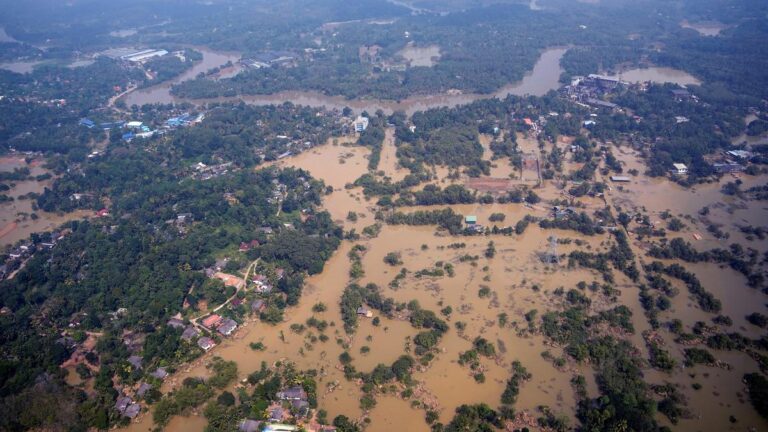
The notice, released in December 2025, comes as Sri Lanka continues to grapple with the aftermath of Cyclone Ditwah, which caused widespread damage to infrastructure and placed additional strain on the country’s health services.

The CDC cautioned that conditions following heavy rainfall and flooding can increase mosquito breeding, heightening the risk of transmission. Travelers are advised to take preventive measures such as using insect repellent, wearing long-sleeved clothing, and staying in accommodations with proper mosquito control.

Chikungunya is spread by infected mosquitoes and typically causes fever and severe joint pain, though symptoms can vary. The CDC urged travelers to monitor their health closely during and after travel and to seek medical attention if symptoms develop.

Transport Minister Announces Reforms to Improve Services at Werahera Motor Traffic Department

0

Minister of Transport, Highways and Urban Development Bimal Rathnayake on Thursday (18) announced a series of administrative and policy reforms following an inspection visit to the Department of Motor Traffic (DMT) office in Werahera, aimed at improving service efficiency, easing congestion and modernising operations.

Among the key decisions, the Minister directed that a queue management system be introduced at the Werahera office without delay. Trilingual name boards in Sinhala, Tamil and English will also be installed near the main entrance as a matter of urgency to improve accessibility for the public.

The Minister further announced that a new DMT system will be mandatorily implemented by 30 April 2026. Following prior public notice, services without prior appointments will be suspended from 28 February 2026, as part of efforts to streamline operations.

Steps will also be taken to provide the required facilities and resources for volunteer staff, while measures are to be introduced to expedite the printing of the existing backlog of driving licences. In addition, special facilities will be arranged at the Werahera office for individuals who face difficulties obtaining driving licences under the standard procedures of the National Transport Medical Institute.

Legal action will be initiated to extend the initial validity period for driving licence renewal up to the age of 35, alongside an assessment of the potential revenue implications of this change.

Officials from the Ministry of Digital Economy, the Ministry of Transport, and the Department of Motor Traffic, including the Commissioner General of Motor Traffic, were present during the inspection.