In a morning incident today, at least 17 individuals sustained injuries when a tree toppled onto a bus in Colombo, with two passengers still trapped inside.
A joint rescue operation involving the police and air force personnel is underway to free the trapped passengers.
The bus, en route to Deniyaya from Pettah, was struck by the falling tree near Liberty Junction in Kollupitiya.
Injured passengers have been swiftly transported to the hospital for immediate medical care. Consequently, Duplication Road has been temporarily closed for traffic, and motorists have been advised to seek alternative routes.
The Central Bank expects a significant reduction in market lending interest rates as part of monetary easing measures, while potential inflation concerns may arise due to Budget 2024 and global petroleum price increases. Central Bank Governor addresses key points, including inflation trends, decreasing policy interest rates, state bank restructuring, the status of the Employees’ Provident Fund management, and disputed growth projections compared to the World Bank and IMF during the briefing.
Fitch Ratings affirms its ratings on fifteen (15) Sri Lankan banks, while 14 of them have been removed from ‘Rating Watch Negative’ (RWN) and assigned stable outlooks. Affirms that Bank of Ceylon’s (BOC) Long-Term Local-Currency Issue Default Rating (IDR) at ‘CCC-‘ and removed it from RWN while adding that the Outlook is Stable.
Saliya Wickramasuriya has been appointed as the Chairman of the Ceylon Petroleum Corporation (CPC) and the Ceylon Petroleum Storage Terminals Ltd (CPSTL). The Managing Director of the CPC, Darshana Rathnayake has been appointed as the Managing Director of the CPSTL.
The President of the All Island Canteen and Restaurant Owners’ Association, announces that the prices of three food items have been increased in line with the recent gas price hike: Plain tea has been increased by Rs. 10, Koththu Rotti by Rs. 20, and Rice packets by Rs. 50.
Sri Lanka’s official reserves stand at approximately US $3.5 billion, including a US $1.4 billion agreement with China’s People’s Bank subject to certain conditions as of September’ 23 During the first eight months of 2023, Sri Lanka’s reduced spending on imports contributed to a smaller trade deficit, and despite some declines in merchandise exports, the impact was not as significant as the import reductions.
The Socialist Youth Union (SYU) files a petition in the Supreme Court seeking an order declaring that the Online Safety Bill tabled in the parliament by the government is in violation of the constitution. Alleges that the relevant bill is in violation of the fundamental rights of freedom of speech and expression guaranteed by the Constitution.
The G.C.E. Advanced Level Examination will be held from January 04, 2024 to January 31, 2024, announced the Commissioner General of Exams.
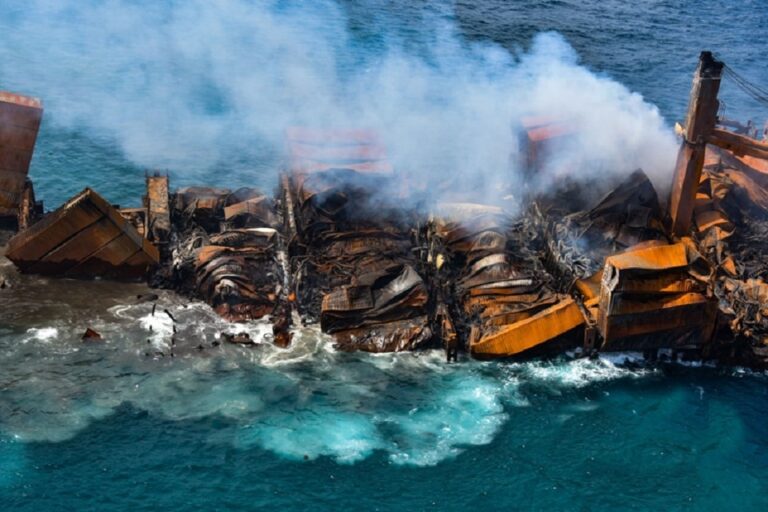
The Supreme Court, with a bench of Justices Murdu Fernando, Yasantha Kodagoda, Shiran Gunaratne, Achala Wengappuli, and Priyantha Fernando, instructed the Attorney General to provide a report on the compensation granted to the families of fishermen impacted by the MV X-Press Pearl disaster.
Minister of Agriculture Mahinda Amaraweera informs that there is significant international demand for Sri Lankan toque macaque monkeys, with numerous foreign nations expressing interest in obtaining them for their zoos, following a high-profile request from a Chinese firm that led to a court case.
England makes ODI history in World Cup opener with unusual record. All 11 England batters reached double figures in England’s total of 282/9, meaning that Jos Buttler’s team became the first ever to do so in the history of the international format across both the men’s and women’s games.
Mullaitivu District Judge R. Saravanaraja has announced that he is forced to resign due to life threat and continuous pressure from the Government of Sri Lanka. The judge, who has been the target of continuous threats ever since he issued the order in the Mullaitivu Kurundurmalai, and Kokkuthoduvai mass graves cases. He has announced his resignation through a letter dated 2023-09-23 and has as fled the island fearing for his life.
In addition, judges often have restrictions on their political activities, public statements, and financial interests to maintain their impartiality and the appearance of impartiality. These restrictions may vary by jurisdiction and level of the judiciary. Saravanarajah is a very neutral and honest person.
Politicians should not influence the legal system, but in Sri Lanka Tamil judges experience a lot of pressure from Buddhist monks and Sinhalese politicians. Sinhala politician and former military chief Sarath Veerasekara castigated Judge Saravanarajah as a crazy person for his judicial rulings.
Judges are entitled to protection from harassment, threats, or violence, and appropriate measures should be taken to ensure their safety and security. The Sinhalese government and Sinhalese nationalists have never accepted the rulings of the Tamil judges in Sri Lanka. This reflects the reality that there are two separate rules of law in Sri Lanka, and actions by Sinhala Buddhist monks and thugs against Tamils are above the law.
Justice Saravanaraja has announced his resignation in a court letter addressed to the Secretary of the Judicial Service Commission, stating that he is resigning due to threats to his life and constant pressure.
International norms guarantee the independence of the judiciary, ensuring the safety of judges against threats, pressure, or political interference in their work. Governments have an obligation to protect the independence of the judiciary and ensure the safety of judges. The rule of law and the integrity of the judicial system depend on the ability of judges to make decisions based on the law and evidence, free from external influence and intimidation.
Judge Saravanarajah’s plight is emblematic of a failed State, with the independence of the judiciary in shambles. It further proves that Tamils cannot get equal justice in Sri Lanka. Those who are trying to prop up the failed state through billions in economic aid should take serious note of the ground reality.
International Council of Eelam Tamils (ICET) strongly condemns the threat to life of Judge Saravanarajah and urges the countries bailing out Sri Lanka to take serious note.
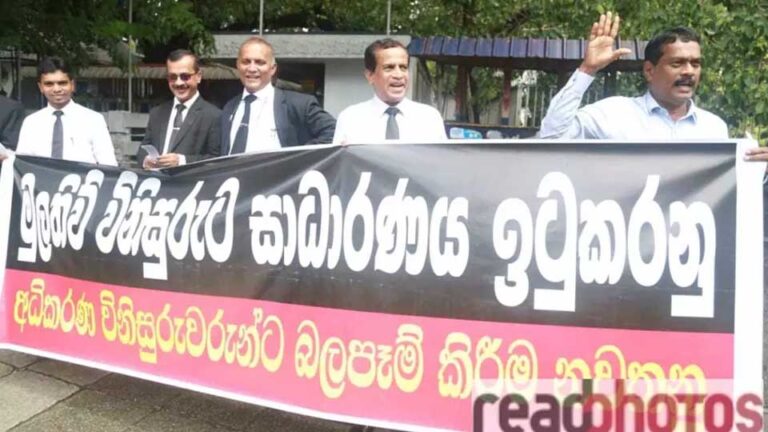
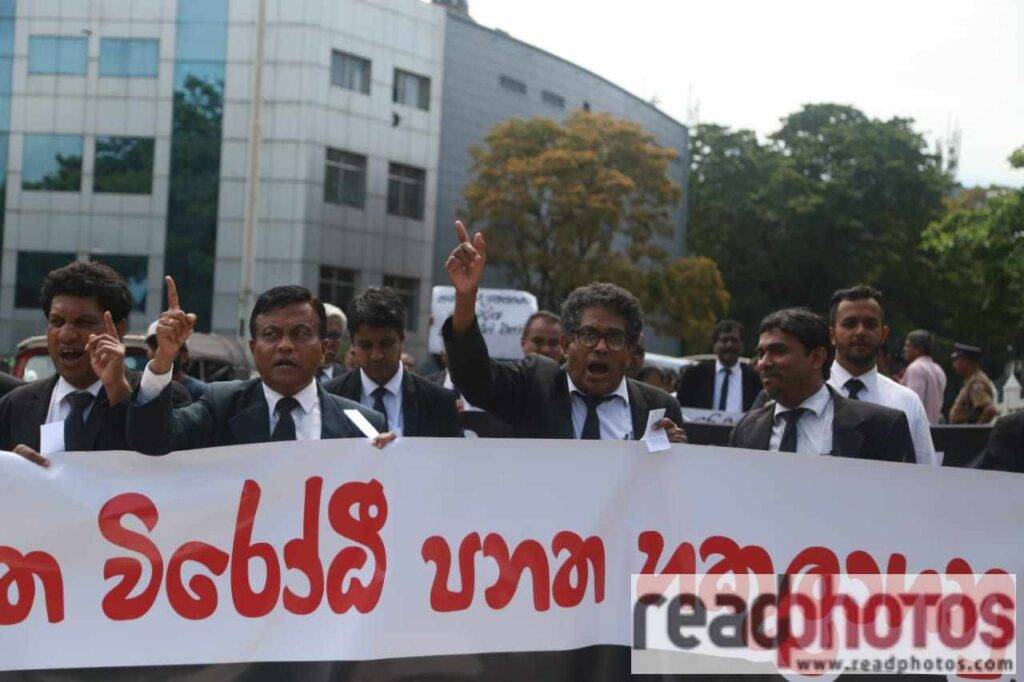
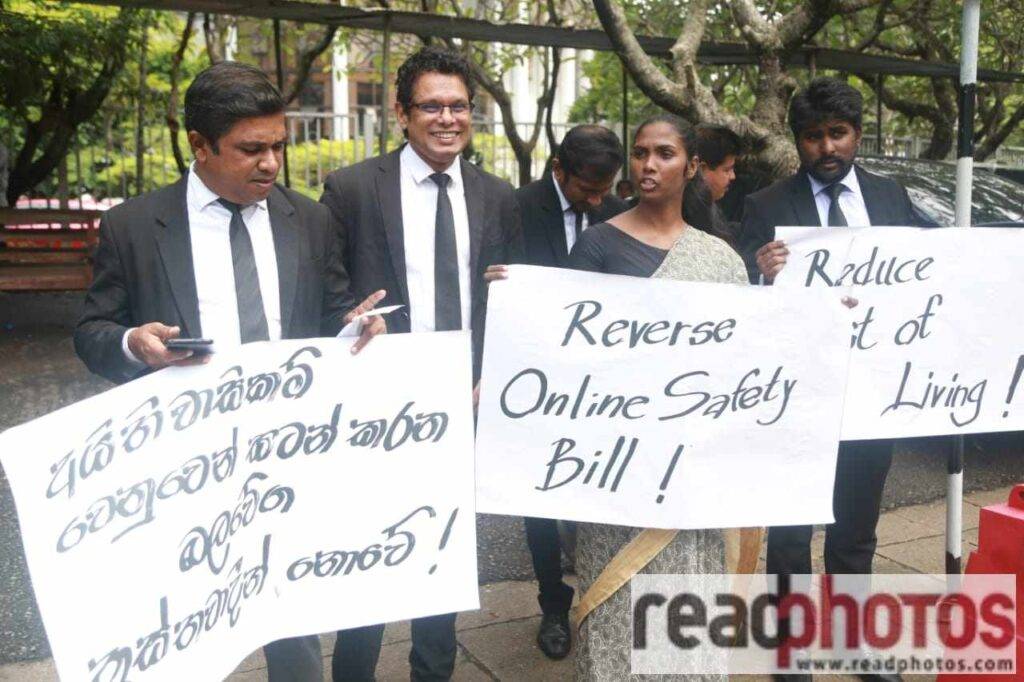
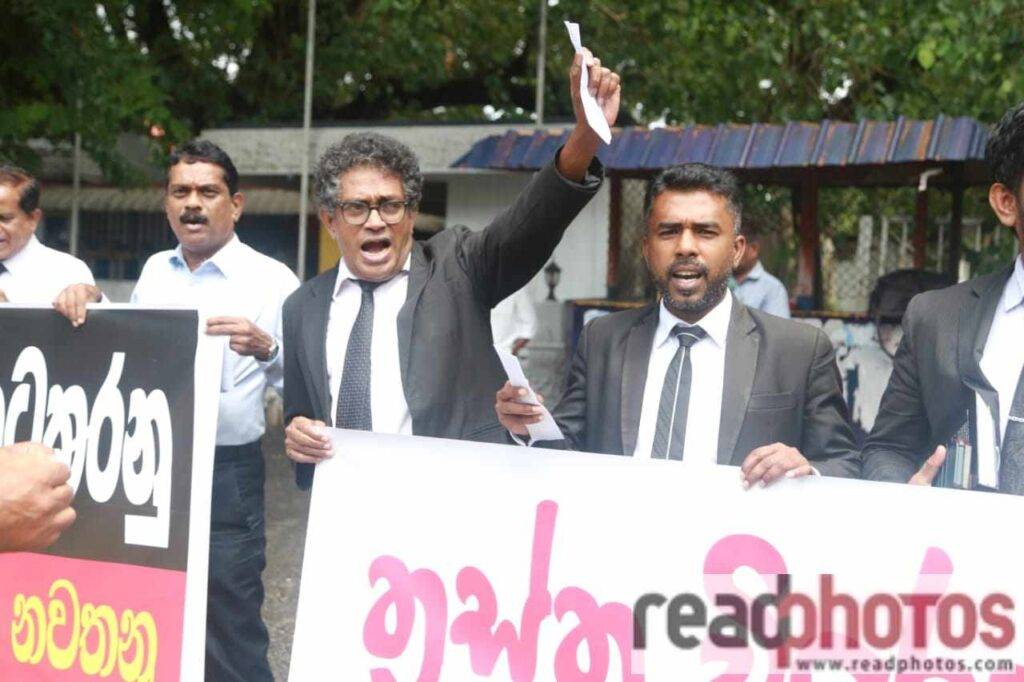
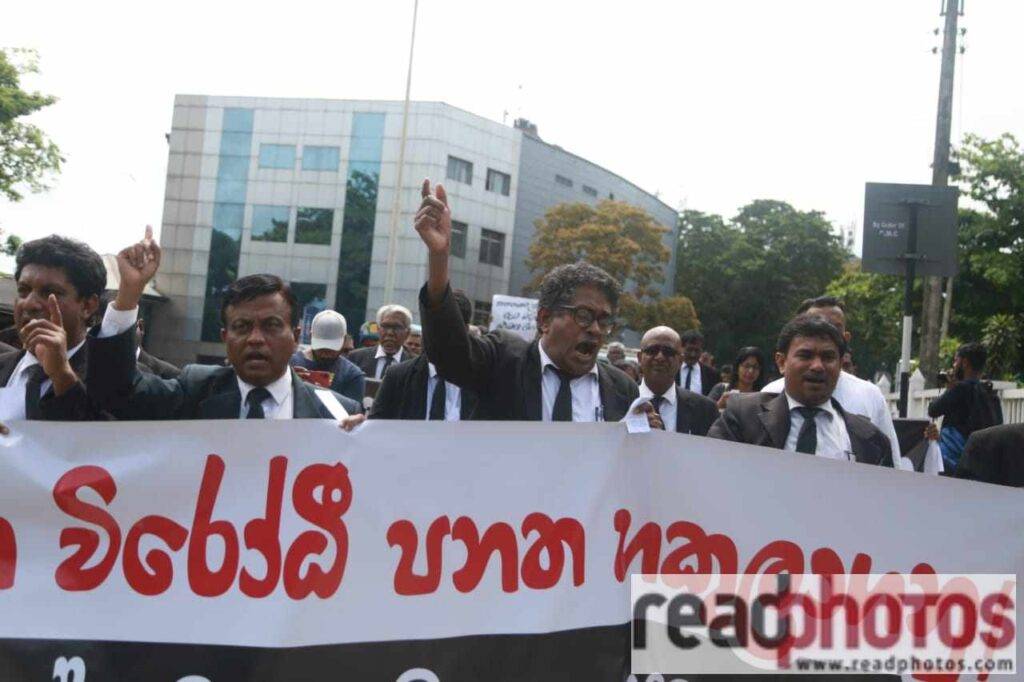
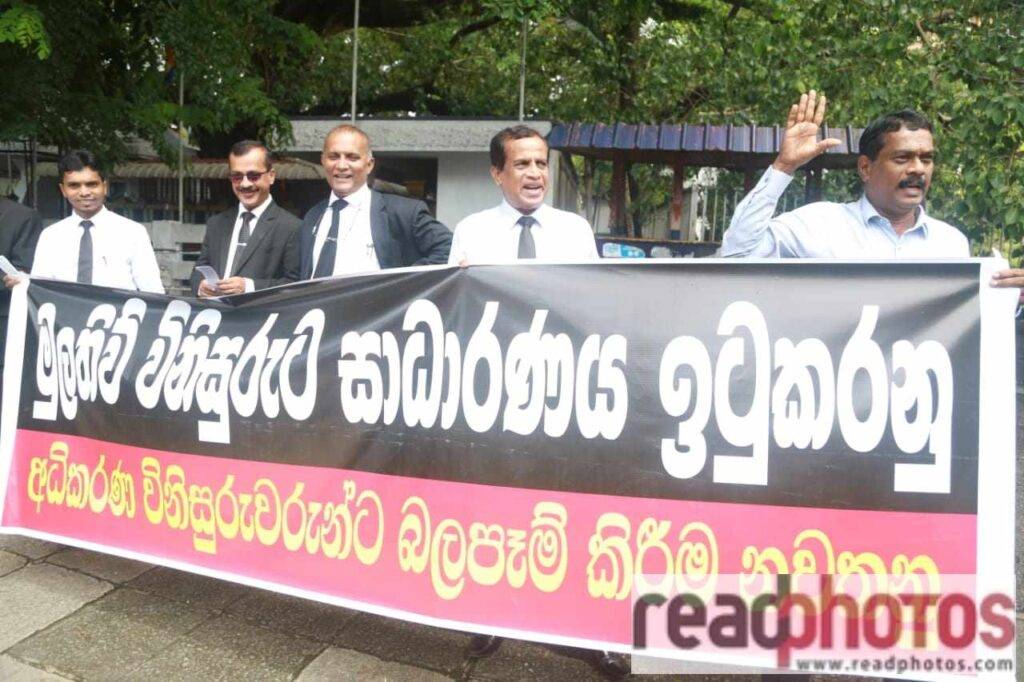
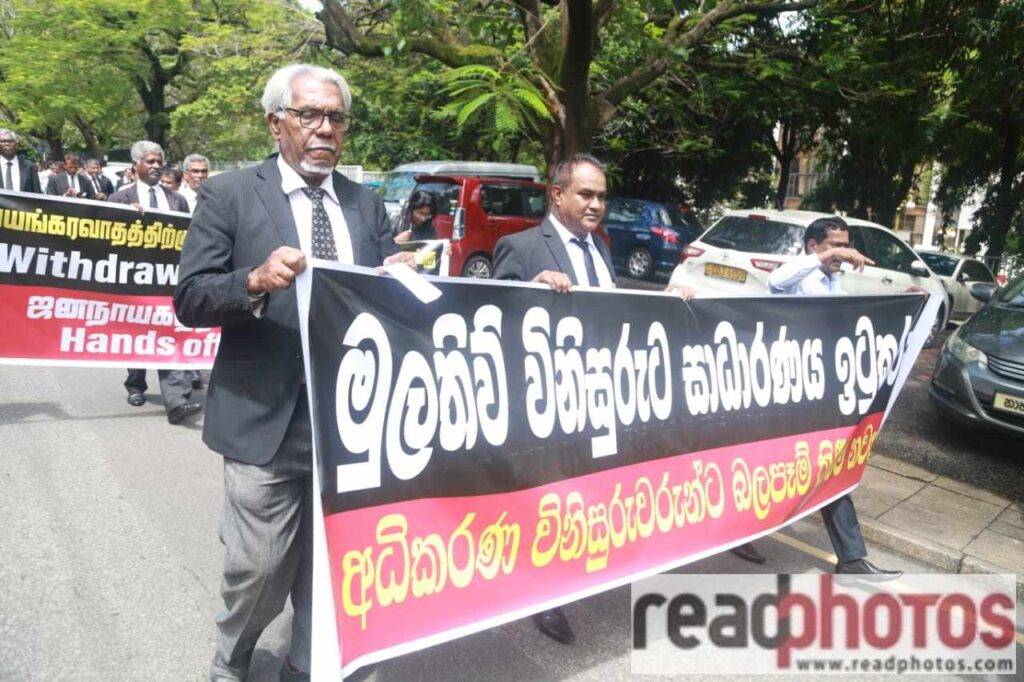
Colombo (LNW): Attorneys today (05) staged a protest outside the Aluth Kade Magistrate Court demanding an end to repressive laws.
Under the slogan “Withdraw Anti Terrorism Bill – Hands Off Democracy” the lawyers demanded the withdrawal of the Anti-Terrorism Bill and the Online Safety Bill and called for justice for the Mullaitivu Judge, who had resigned due to what he described as ‘death threats’.
The protesters urged that the democratic rights of the citizens of Sri Lanka be safeguarded.
Colombo (LNW): The Supreme Court today (05) directed the Attorney General to produce a report on the compensation given to the fishermen’s families affected by the MV X-Press Pearl disaster.
This was when the case was heard by the Supreme Court Bench comprised of Justices Murdu Fernando, Yasantha Kodagoda, Shiran Gunaratne, Achala Wengappuli, and Priyantha Fernando.
Justice Murdu Fernando inquired from Additional Solicitor General Nerin Pulle about the compensation amounts distributed to the affected fishermen, and in response, Pulle replied that he could not provide a specific answer without further investigation.
Consequently, the Supreme Court instructed the AG to provide a detailed report on the compensation distributed to the affected fishermen due to the maritime disaster.
New Video Illustrates Impact of Flawed Approach on Rights
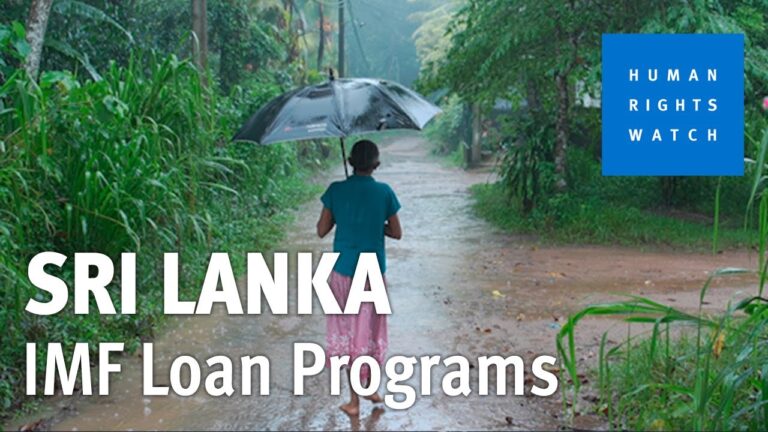
(Marrakesh, October 5, 2023) – Discussions at the International Monetary Fund (IMF) and World Bank Annual Meetings that open in Marrakesh, Morocco, on October 9, 2023, should prioritize systemic reforms to align policies with human rights, Human Rights Watch said today in releasing a video to illustrate the concerns. The changes are needed because current policies are compounding poverty and inequality.
The five-minute video features Shanthi, a woman living in Sri Lanka who is struggling to cope with both the economic crisis in the country and the loan conditions attached to a $3 billion bailout from the IMF that increased the cost of fuel and electricity and doubled value-added taxes. Sri Lanka, which defaulted on its debt in 2022, is the canary in the coal mine as dozens of governments are in or near debt distress, the IMF has said.
“Millions upon millions of people around the world have stories like Shanthi,” said Sarah Saadoun, senior economic justice researcher and advocate at Human Rights Watch. “IMF bailout conditions make lives already upended by global inflation and other economic challenges even harder.”
Shanthi’s electricity was cut when she was no longer able to pay her bill and she now relies entirely on others for food and other basic necessities. She lost critical income from a government social protection program that had been providing benefits since 1994 after the government overhauled it in line with a requirement in the IMF program, with World Bank support. She has yet to receive a response to her application for a new program that she submitted in July.
Shanthi’s story is an example of how IMF loans to dozens of countries, affecting over one billion people, frequently push governments to cut spending and raise regressive taxes in ways that harm rights, as a new Human Rights Watch report has documented. Human Rights Watch also found that the IMF’s efforts to address these impacts are largely ineffective.
To ensure economic recovery that best advances rights in the short and long term, the IMF and governments should halt austerity policies that threaten rights. They should ensure that spending on health, education, and social security meet, at a minimum, international benchmarks as a percentage of GDP and national budgets.
The video also demonstrates the shortcomings of the World Bank’s approach to social security, which in many cases, including Sri Lanka, works in tandem with IMF programs with the intention of cushioning their impact. Despite a commitment to promote universal social protection, the World Bank often funds programs that are means-tested, for which eligibility hinges on income, assets, or narrow poverty indicators. Research shows that these programs suffer from high error rates, corruption, and social mistrust, while missing the chance to build social cohesion and new social contracts anchored in solidarity and rights.
On October 4, forty-three human rights and economic justice organizations began an initiative, under the hashtags #RightToSocialSecurity and #UniversalSocialSecurity, urging governments and international financial institutions to commit to universal social security, which provides benefits to everyone at various times in their life course as part of a human rights approach to the economy, and end policies that have been failing hundreds of millions of people.
“The IMF and World Bank recognize that people need support, but then they promote narrow means-tested programs that—both by design and due to chronically high error rates—exclude many people who are struggling,” Saadoun said. “The IMF and World Bank need to revise their policies to support universal social security.”
Colombo (LNW): The 2023 G.C.E. Advanced Level Examination is set to take place from January 04 to 30, 2024 based on student requests and directives from the President, and accordingly, the timetable for the holding of the examination will be made available tomorrow, Examination Commissioner General Amith Jayasundara told media today (05).
Starting tomorrow (06), an online system will be open for four days for exam applications, and students already registered for the exam will have a dedicated period to make adjustments if needed, he noted.
Jayasundara went on saying that the G.C.E Ordinary Level Examination has been rescheduled to May, 2024.
Meanwhile, preparations for the Grade 05 Scholarship Examination, scheduled for the 15th of this month, are in progress, he added.
“In the event of a disaster situation, such as power interruptions and transport, all arrangements have been made. We are working together with the Tri-Forces, Police Disaster Unit and other relevant bodies. A programme under the Ministry of Health has been implemented to transform examination centres into health-safe zones concerning dengue,” Jayasundara told media.
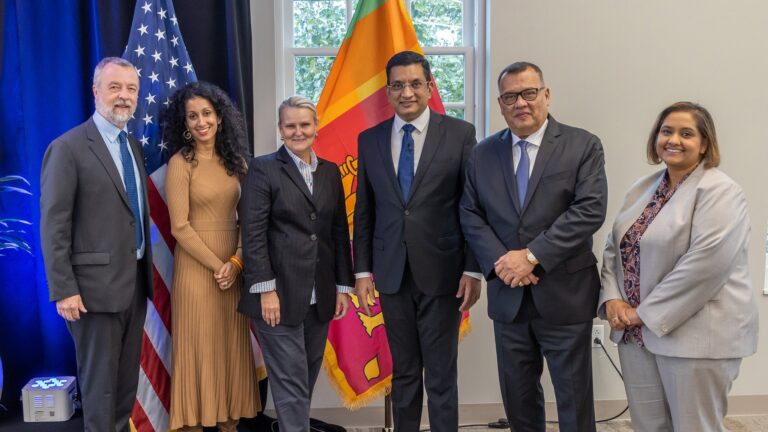
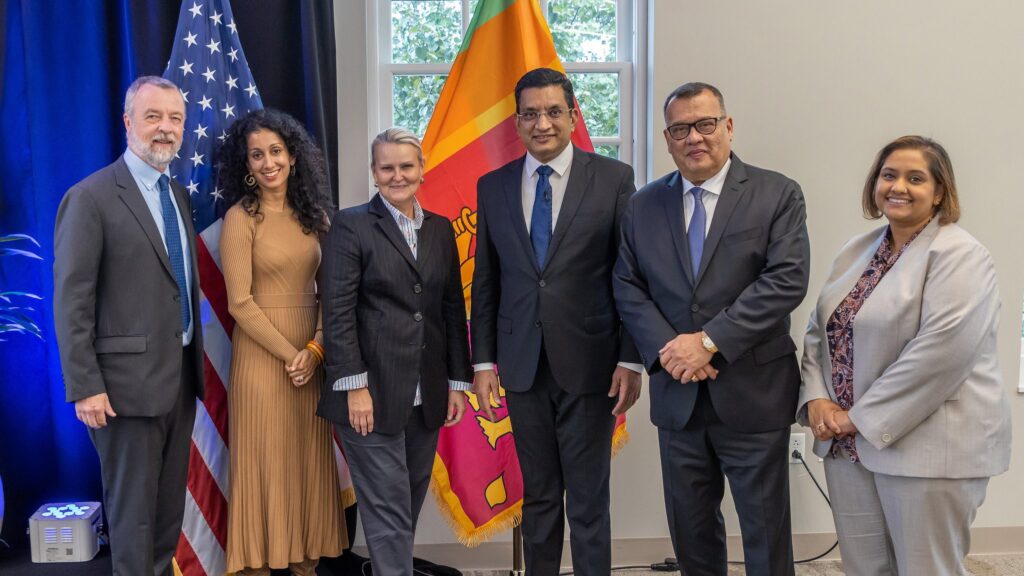
Colombo (LNW): On September 30, Sri Lankan Foreign Minister Ali Sabry engaged in a thoughtful discussion with the United States Institute of Peace (USIP) at its main office in Washington DC.
The event was organised by Sri Lankan Ambassador to Washington DC Mahinda Samarasinghe.
Lisa Grande, Chief Executive of the USIP, greeted the Minister upon his arrival, and the discussion was facilitated by Taman Gali, Director of South Asia Programmes.
Afrin Akhtar, Deputy Assistant Secretary for South Asia and Office of Defence and International Affairs, spoke about the 75-year-long relationship between the two nations.
Minister Sabry provided insights into Sri Lanka’s present socio-political and economic landscape, as well as its future aspirations. He also addressed queries from the attendees, and underscored Sri Lanka’s keen interest in strengthening ties with the US.
“A pleasure to be hosted by USIP for a discussion commemorating 75 years of U.S.-Sri Lanka bilateral ties in Washington DC. The discussion touched on a range of key topics which was followed by a interactive session with the audience,” Sabry wrote on X.
The United States Institute of Peace (USIP) is an American federal institution tasked with promoting conflict resolution and prevention worldwide. It provides research, analysis, and training to individuals in diplomacy, mediation, and other peace-building measures.
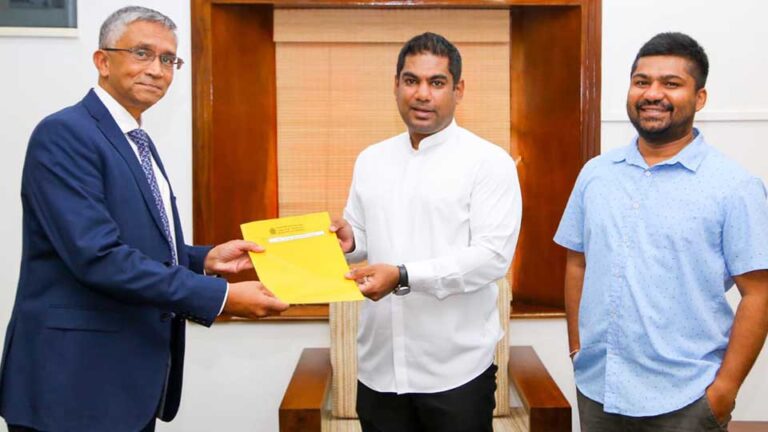
Colombo (LNW): Saliya Wickramasuriya has been appointed as the new Chairman of the Ceylon Petroleum Corporation (CEYPETCO) and the Ceylon Petroleum Storage Terminals Ltd. (CPSTL), Power and Energy Minister Kanchana Wijesekara revealed.
Managing Director of the CEYPETCO Darshana Rathnayake has also been appointed as the Managing Director of the CPSTL.
These appointments are effective from today (05) as announced by the Subject Minister on his official X account.
Wickramasuriya replaces Mohammed Uvais Mohamed who tendered his resignation yesterday (04).
He also serves as the Chairman of the Board of the Petroleum Development Authority and is also part of the Colombo Port City Economic Commission.
Saliya Wickramasuriya was appointed as the Chairman of Ceylon Petroleum Corporation (CPC) & Ceylon Petroleum Storage Terminals Ltd (CPSTL) from today.
Managing Director of CPC Darshana Rathnayake was also appointed as the Managing Director of CPSTL. pic.twitter.com/TGQLhbytHk
BTF: The Mullaitivu District Judge Saravanarajah resigned from all his judicial posts and fled Sri Lanka on 23 September 2023, facing a threat to his life and pressure to change the judicial decisions he passed.
Judicial positions Judge Saravanarajah resigned are the Mullaitivu District Judge, the magistrate court judge, the family court Judge, the primary court Judge, the small claims court Judge, and the Juvenile court Judge.
Following Judge Saravanarajah’s steadfast judicial uprightness and refusal to give in to the unlawful demands of a higher-up, the police protection he was legally entitled to was scaled down, and the Sri Lankan military intelligence service began keeping him under surveillance.
The Attorney General called him to his office on 21 September 2023 and pressured him to change the judgements he had already given in the Kurunthurmalai case where an ancient Hindu temple was destroyed and in its place a Buddhist temple was built under the false pretext of archaeological discovery, in a way contradictory to truth.
Two legal actions appear to have been filed against Judge Saravanarajah by the Sri Lankan State under his name on the Kurunthurmalai Vihara Decision in the court of appeal.
These developments are evidence of impunity, lack of judicial independence, and undermining the security for judges in the North-East.