Home Blog Page 16

Government Takes Temporary Control of Three National Sports Bodies Amid Governance Reforms

0

June 02, Colombo (LNW): The Ministry of Youth Affairs and Sports has moved to place three national sporting organisations under temporary suspension as part of a broader effort to strengthen governance standards and introduce structural reforms within the sector.

In an Extraordinary Gazette issued by Minister of Youth Affairs and Sports Sunil Kumara Gamage, the registrations of the Sri Lanka Handball Federation, the Sri Lanka Carrom Federation and the Sri Lanka Hockey Federation have been suspended with immediate effect.

Administrative responsibility for all three bodies has been transferred to the Secretary to the Ministry, who has been appointed as the Competent Authority.

The decision, enacted under provisions of the Sports Law No. 25 of 1973 and its subsequent amendments, was formalised through Gazette Extraordinary No. 2489/48. The measure is deemed effective from 19 May 2026.

According to the notification, the intervention is intended to facilitate amendments to the constitutions governing the respective federations and to create a framework for conducting elections in a transparent and accountable manner.

Until the constitutional revisions are completed and fresh elections are held, the Ministry Secretary will exercise full authority over the management, operations and administrative affairs of the three federations. This includes overseeing day-to-day functions, ensuring regulatory compliance and preparing the organisations for the transition to newly elected leadership.

Once the revised constitutions are adopted and Annual General Meetings are convened, members of the respective federations will be able to elect new office-bearers, paving the way for the restoration of independent administration.

The Gazette, bearing the signature of Minister Sunil Kumara Gamage, was officially issued on May 19 and marks one of the most significant recent interventions in the governance of national sports federations.

Sri Lanka’s Latest IMF Funding Comes at a Price as Era of Cheap Global Lending Fades

0

June 02, Colombo (LNW): The recent release of USD 695 million to Sri Lanka by the International Monetary Fund (IMF) has been widely welcomed as a positive development for the country’s economic recovery. However, economists caution that the attention given to the size of the disbursement has largely overlooked a crucial question: how much is the country actually paying to borrow the money?

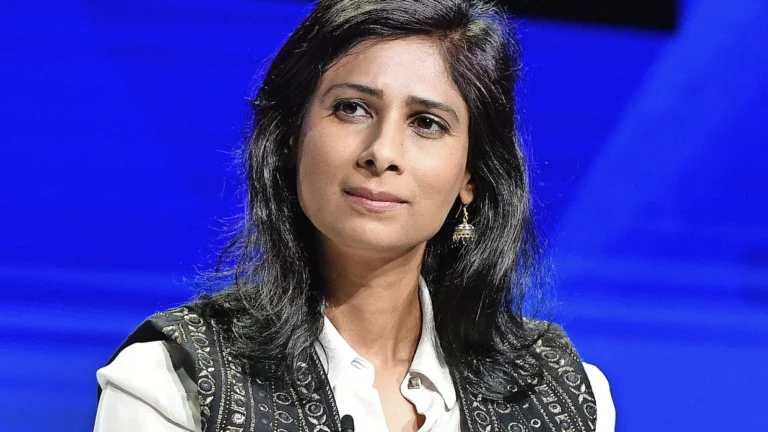
The debate has gained renewed relevance following remarks made by economist Dr Gita Gopinath, who served as the IMF’s First Deputy Managing Director between 2022 and 2025 and currently teaches at Harvard University. Speaking during a Bloomberg podcast interview on 29 May, Gopinath argued that the global financial environment has undergone a fundamental transformation, bringing an end to the prolonged period of exceptionally low borrowing costs that prevailed before the COVID-19 pandemic.

According to Gopinath, the economic conditions that enabled governments and international institutions to lend at historically low rates for nearly two decades have shifted significantly. As a result, borrowers worldwide must adapt to a future in which higher interest rates are likely to remain a long-term reality rather than a temporary phase.

Commenting on her observations, an independent financial analyst said the implications for Sri Lanka are substantial, particularly given the country’s continued reliance on multilateral lenders such as the IMF and the Asian Development Bank (ADB) while remaining largely excluded from international capital markets following its sovereign debt default.

The analyst noted that many people continue to assume that financing from institutions such as the IMF and ADB is inexpensive by default. While these loans remain cheaper than most commercial borrowing options, he argued that they are considerably more expensive than they were just a few years ago.

He explained that IMF lending rates are directly linked to global short-term interest rates, particularly those associated with the United States dollar. Consequently, when the US Federal Reserve increases rates, the cost of IMF borrowing rises automatically. Similarly, the ADB finances its lending activities by issuing bonds in international markets, meaning that higher global interest rates increase its own funding costs, which are ultimately passed on to borrowing countries.

In his view, the significance of Gopinath’s remarks lies in the fact that the shift appears structural rather than cyclical. In other words, policymakers should not expect a return to the low-interest-rate environment that characterised much of the pre-pandemic period.

During the Bloomberg interview, Gopinath attributed the new global rate environment to three major factors. These included persistent fiscal deficits in advanced economies, rising demand for investment capital driven by the rapid expansion of artificial intelligence technologies, and changing patterns in the ownership and financing of government debt. She suggested that these trends are unlikely to reverse in the foreseeable future.

For Sri Lanka, the analyst identified three immediate consequences.

Firstly, future IMF and ADB financing is likely to become progressively more expensive. Secondly, Sri Lanka’s existing IMF surcharge burden has become more significant because it is now applied on top of a higher base rate. Thirdly, any eventual return to international capital markets will probably involve borrowing costs far above those seen before the country’s financial crisis.

According to his estimates, if Sri Lanka were to seek private financing in global markets in the near future, interest rates could range between eight and ten per cent, depending on market conditions and investor confidence.

While stressing that the situation does not warrant alarm, he argued that it demands greater realism in public discussions about external financing. The country’s long-term objective, he said, should be to reduce dependence on borrowing through stronger exports, higher productivity and sustainable economic growth.

The analyst also drew attention to what he described as a notable omission in public announcements surrounding the IMF’s latest disbursement.

Following the successful completion of the fifth and sixth reviews under Sri Lanka’s IMF-supported programme, the country received a combined tranche of USD 695 million on 29 May. The development was highlighted by the Central Bank, the Ministry of Finance and business organisations, including the Ceylon Chamber of Commerce. However, he noted that none of the official statements publicly specified the interest rate attached to the financing.

He then outlined how the borrowing cost can be calculated.

The IMF’s basic lending charge is linked to the Special Drawing Rights (SDR) interest rate, which stood at 2.729 per cent in mid-May 2026. The IMF adds a fixed margin to this figure, and the institution’s Executive Board confirmed in May that the margin would remain at 60 basis points, or 0.60 percentage points, during the upcoming financial year.

This results in a base lending rate of approximately 3.33 per cent.

However, Sri Lanka faces an additional charge because its outstanding IMF borrowing exceeds 300 per cent of its allocated quota. Under IMF rules, this triggers a level-based surcharge of 200 basis points, equivalent to two percentage points.

Adding the SDR rate of 2.73 per cent, the IMF margin of 0.60 per cent and the surcharge of 2.00 per cent produces an estimated annual borrowing cost of roughly 5.33 per cent.

In addition to the annual interest-related charges, the IMF levies a one-time service fee of 0.50 per cent on each disbursement. Applied to the latest USD 695 million tranche, this would amount to approximately USD 3.5 million.

The analyst pointed out that before the pandemic, the IMF’s basic rate of charge frequently remained below two per cent, illustrating how dramatically the global lending environment has changed.

Sri Lanka’s total borrowing under the IMF’s Extended Fund Facility programme has now reached approximately USD 2.4 billion. Given repayment periods ranging from five to ten years through semi-annual instalments, he estimated that cumulative interest payments and related charges over the life of the programme would amount to hundreds of millions of dollars.

He emphasised that these figures are publicly available rather than hidden. The IMF openly publishes its lending formulas, while information relating to Sri Lanka’s future repayment obligations can also be accessed through IMF documentation.

As an example, he noted that Sri Lanka’s scheduled payments to the IMF during May 2026 exceeded USD 47 million. This total comprised approximately USD 29.7 million in principal repayments and a further USD 17.3 million in interest and associated charges.

Despite the transparency of the information, he questioned why the cost of borrowing rarely receives attention when new funding is announced.

According to the analyst, public discussion tends to focus on the headline figure of a disbursement rather than the financial obligations attached to it. Yet understanding both sides of the equation is essential, particularly at a time when international borrowing is becoming increasingly expensive.

He concluded by arguing that Gopinath’s warning about the end of the low-interest-rate era is already visible in Sri Lanka’s latest IMF financing package.

“The headline figure may be USD 695 million, but the interest burden tells the other half of the story,” he observed, adding that citizens deserve a clear understanding not only of how much money is being borrowed, but also of the long-term costs associated with that borrowing.

In an era of higher global rates, he said, the true challenge for Sri Lanka is not simply securing financing, but ensuring that every dollar borrowed contributes to building an economy capable of standing on its own in the future.

Sri Lanka Targets Rabies Elimination by 2030 Amid Multi-Billion Rupee Prevention Drive

0

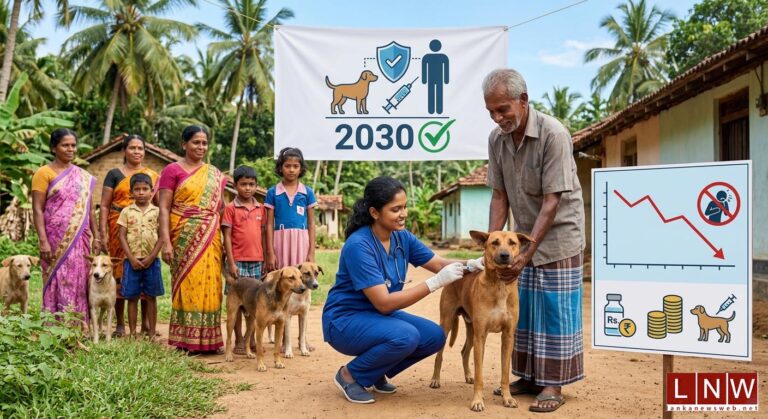
June 02, Colombo (LNW): Sri Lanka is intensifying its campaign to eradicate rabies, with health authorities setting an ambitious goal of eliminating all rabies-related fatalities by the end of the decade.

Officials from the National Rabies Control Programme revealed that the government currently invests more than Rs. 5 billion each year in prevention, treatment and animal vaccination initiatives aimed at curbing the disease across the country.

Speaking at a media briefing in Ratnapura, Director of the Programme, Dr. Niroshan Gamage, highlighted the significant progress achieved over recent decades. He noted that rabies deaths have fallen dramatically compared with levels recorded several decades ago, reflecting the impact of sustained public health interventions and vaccination programmes.

According to official figures, 14 people lost their lives to rabies in 2025, down from 20 fatalities reported the previous year. While the downward trend is encouraging, health authorities remain focused on eliminating the disease entirely. Dr. Gamage disclosed that three rabies-related deaths have already been recorded during the first few months of this year, underscoring the need for continued vigilance.

He explained that government expenditure on rabies management extends across several sectors. Approximately Rs. 800 million is spent annually on treatment and preventive care for people exposed to the virus, while a further Rs. 2.5 billion is allocated towards vaccination campaigns targeting dogs and other animals that can transmit the disease.

Health officials emphasise that preventing rabies at its source remains the most effective long-term strategy. As a result, large-scale animal vaccination programmes continue to form a central pillar of the national response.

Dr. Gamage also noted that Sri Lanka’s dog population is estimated at around 2.7 million. Current assessments suggest there is roughly one dog for every eight residents, although the ratio varies between urban and rural areas.

Dogs remain the primary source of rabies transmission in the country, accounting for an estimated 99 per cent of reported human infections. Authorities believe that expanding vaccination coverage among both owned and stray dogs, alongside greater public awareness, will be critical to achieving the country’s target of zero rabies deaths by 2030.

Public health officials have urged communities to seek immediate medical attention following animal bites and to support local vaccination campaigns, warning that rabies remains almost always fatal once symptoms develop, despite being entirely preventable through timely treatment.

Government to appoint new BOI Chairman after five-month vacancy

0

June 02, Colombo (LNW): The government is set to appoint a new Chairman for the Board of Investment of Sri Lanka, ending a five-month vacancy that has hampered administrative and strategic decisions at the country’s premier investment promotion agency.

The previous Chairman, Arjuna Herath, resigned abruptly in December 2025. Since then, the BOI has operated without a permanent head, a delay that inside sources say has impacted the institution’s ability to function effectively.

Foreign direct investment has become a key political flashpoint. The BOI has not publicly disclosed its performance over the past five months, despite repeated opposition allegations that Sri Lanka has failed to attract any substantial FDI during this period.

Opposition critics have seized on the lack of transparency, questioning whether the government is deliberately withholding poor investment figures.

According to inside sources close to the Presidential Secretariat, President Anura Kumara Dissanayake is likely to appoint a new Chairman within this month. The appointment is expected to bring much-needed leadership stability to the BOI as the government seeks to revive investor confidence.

Showers expected to increase in Southwestern Parts of SL: Fairly heavy falls above 75 mm may occur (June 02)

0

June 02, Colombo (LNW): Rainy conditions are expected to increase in the southwestern parts of the island from this evening (02), the Department of Meteorology said today.

Showers will occur at times in Western, Sabaragamuwa and North-western provinces and in Galle, Matara, Kandy and Nuwara-Eliya districts. Fairly heavy falls above 75 mm are likely at some places in these areas.

Showers or thundershowers may occur at a few places in Uva province and in Ampara and Batticaloa districts after 1.00 pm.

Fairly strong winds about (30-40) kmph can be expected at times over Western slopes of the central hills, Northern, North-central, North-western and Southern provinces and in Trincomalee district.

The general public is kindly requested to take adequate precautions to minimise damage caused by temporary localised strong winds and lightning during thundershowers.

Marine Weather:

Condition of Rain: Showers or thundershowers will occur at several places in the sea areas off the coast extending from Puttalam to Hambantota via Colombo and Galle.

Winds: Winds will be southwesterly.

Wind speed will be (30-40) kmph.

Wind speed can increase up to (55-60) kmph at times in the sea areas off the coast extending from Kankasanthurai to Chilaw via Mannar and, from Galle to Pottuvil via Hambantota.

Wind speed can increase up to 50 kmph at times in the other sea areas around the island.

State of Sea: The sea areas off the coasts extending from Kankasanthurai to Chilaw via Mannar and, from Galle to Pottuvil via Hambantota will be rough at times.

The other sea areas around the island will be fairly rough at times.

The wave height may increase about (2.0 – 2.5) meters in the sea areas off the coast extending from Kalpitiya to Pottuvil via Colombo, Galle and Hambantota. (this is not for land area).

Temporarily strong gusty winds and very rough seas can be expected during thundershowers.

Shavendra Silva Dismisses Political Ambitions, Reaffirms Commitment to Veterans

0

June 02, Colombo (LNW): Former Army Commander General Shavendra Silva has stated that he has no plans to pursue a career in active politics, stressing that his focus remains firmly on national service and the welfare of military personnel affected by the country’s long conflict.

Speaking exclusively to LNW from China, where he is attending an international security forum, Silva said he has no interest in joining any political party or engaging in partisan political activity. However, he noted that he would be willing to serve the nation in any capacity if called upon to do so.

Silva emphasised that one of his foremost priorities is supporting former servicemen and women, particularly those who sustained life-altering injuries during the conflict. He said their welfare and recognition continue to be matters close to his heart.

Reflecting on Sri Lanka’s military campaign against the LTTE, Silva reiterated that the armed forces fought against terrorism rather than any ethnic community. He maintained that this distinction has often been overlooked internationally, arguing that some Western nations continue to treat Sri Lankan military personnel unfairly despite what he described as the absence of objective evidence against them.

According to Silva, the military’s actions were directed solely at defeating terrorism and safeguarding the country, not targeting the Tamil population. He repeated his long-held position that the conflict should be understood within that context and called for a more balanced international assessment of those who served during the war.

Japan Reopens Funding Pipeline as Sri Lanka Eyes Reserve Boost

0

By: Staff Writer

June 01, Colombo (LNW): Japan’s latest USD 1.33 million grant for cyclone-affected freshwater fishermen may appear modest in size, but analysts say it signals a broader resurgence of Japanese financial engagement with Sri Lanka at a crucial stage of the country’s economic recovery.

The funding, announced on Saturday, will establish 200 fish cages across 30 reservoirs in the Eastern Province while providing technical training, fish fingerlings and feed support to affected fishing communities. The project targets livelihoods devastated by Cyclone Ditwah, which inflicted significant economic losses across several districts.

However, the grant arrives amid a much larger financial story unfolding between Colombo and Tokyo.

Following the completion of bilateral debt restructuring agreements earlier this year, Japan resumed the disbursement of long-suspended yen-funded projects that had been frozen after Sri Lanka’s sovereign default in 2022. The resumption reopened access to billions of rupees in previously committed financing, including strategic infrastructure projects viewed as critical for economic growth.

 Among the largest projects expected to accelerate during 2026 is the Bandaranaike International Airport expansion programme financed through the Japan International Cooperation Agency (JICA). Treasury officials have indicated that several transport, water supply and urban development schemes backed by Japanese concessional loans are also moving back into implementation stages after nearly three years of uncertainty.

Economic analysts note that Japan has historically been one of Sri Lanka’s largest bilateral development partners, providing low-interest, long-maturity financing that places less pressure on public finances than commercial borrowing.

In addition to project financing, officials are reportedly exploring new external financing facilities from development partners to strengthen Treasury liquidity and support budget execution during 2026. While exact figures remain under negotiation, economists believe Japanese-backed facilities could help reduce the government’s reliance on expensive domestic borrowing.

The timing is significant.

Sri Lanka’s gross official reserves have faced renewed pressure in recent months due to rising fuel import costs, debt-service commitments and external shocks linked to Cyclone Ditwah and global geopolitical tensions. IMF data shows reserves stood at approximately USD 6.7 billion in April, down from previous levels despite continuing international support.

Financial inflows from Japan therefore serve a dual purpose. While project-linked funds cannot always be directly counted as freely usable reserves, they reduce pressure on foreign exchange by financing imports, equipment purchases and infrastructure spending externally. This lowers the demand for scarce dollar resources from domestic markets.

Since March, Japan has also announced several additional assistance packages, including climate resilience programmes, transport sector grants and emergency communication systems for disaster management.

Government officials expect further Japanese commitments before the end of 2026 as implementation resumes across suspended projects. Economists argue that sustained inflows from Tokyo could strengthen investor confidence, improve foreign exchange liquidity and support Sri Lanka’s broader effort to rebuild external buffers following its worst economic crisis in decades.

For a country still navigating the aftermath of default, Japan’s renewed financial engagement is increasingly emerging as one of the most important pillars of recovery.

Sri Lanka Unveils ‘Ready-to-Invest’ Platform to Court Global Capital

0

By: Staff Writer

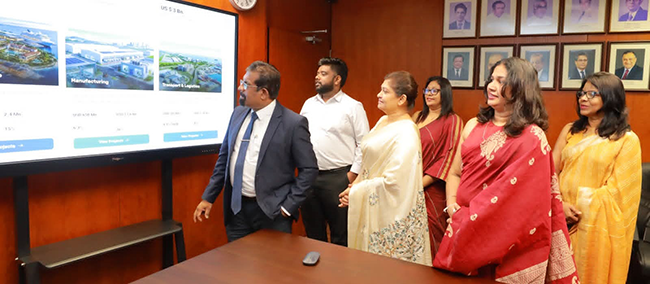
June 01, Colombo (LNW): The Board of Investment (BOI) of Sri Lanka has launched a new digital initiative aimed at transforming how foreign investors access opportunities in the country, introducing a “Ready-to-Invest” platform that offers immediate entry into pre-structured projects across several high-growth sectors.

The online portal provides access to 30 investment opportunities that have already undergone preliminary assessments and feasibility studies, significantly reducing the time investors typically spend navigating administrative procedures. According to senior BOI officials, the platform has been designed to eliminate common bureaucratic obstacles by presenting projects with predefined scopes, financial viability assessments, and land allocations already identified for development.

Officials say the initiative represents a shift from the traditional investment promotion model, where investors were often required to independently conduct feasibility studies and secure land before moving forward. Instead, the new system aims to accelerate project implementation by providing investors with comprehensive project data from the outset.

The move comes as Sri Lanka seeks to strengthen investor confidence following years of economic turbulence. The country’s foreign direct investment (FDI) inflows have shown signs of recovery amid macroeconomic stabilisation measures, policy reforms, and improving international perceptions of the economy.

Although the BOI has yet to release a consolidated mid-year report detailing approved investment projects for 2026, preliminary estimates indicate that Sri Lanka secured approximately US$226 million in committed investments during the first quarter of the year. This represents a 16 percent increase compared to the corresponding period in 2025.

Authorities are now focusing on achieving an ambitious annual FDI target of US$1.5 billion. To bridge the gap between current inflows and that target, the BOI is accelerating several major investment pipelines and promoting strategic sectors through digital channels.

The investment agency’s operations are also being reshaped through the ongoing implementation and review of the Economic Transformation Act. The legislation seeks to modernise the BOI’s mandate, streamline corporate approval procedures, and improve the overall investor facilitation framework.

Supporting this transformation is an expanding digital ecosystem. Investors can now access local market intelligence, sector guides, economic updates, and regulatory information through the BOI’s online portal. A newly developed digital application system allows foreign companies to submit documentation, upload compliance certificates, and monitor approval processes remotely.

The agency has additionally digitised customs-related approvals and introduced automated payment and verification systems. As competition for global investment intensifies across Asia, Sri Lanka is betting that speed, transparency, and digital accessibility will become key advantages in attracting international capital.

Whether the platform succeeds in delivering the country’s investment ambitions will ultimately depend on the conversion of online interest into tangible projects on the ground. However, officials believe the initiative marks a significant step toward repositioning Sri Lanka as a more efficient and investor-friendly destination.

Fuel Price Shock Triggers Fresh Cost-Of-Living Fears Nationwide

0

By: Staff Writer

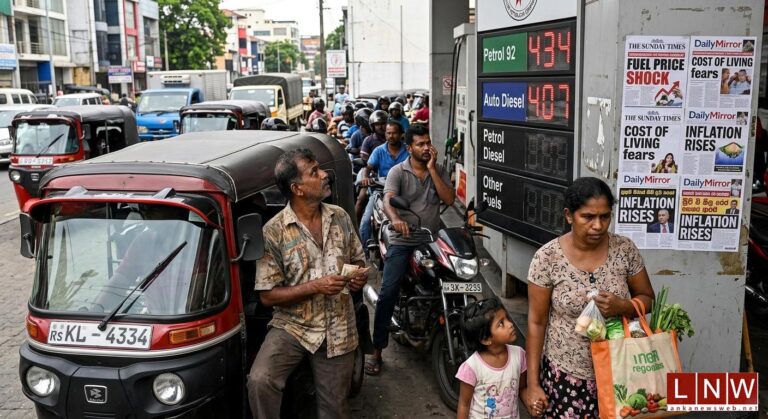
June 01, Colombo (LNW): Sri Lanka’s latest fuel price hike has triggered renewed concerns over the rising cost of living, inflationary pressure and the broader economic burden facing households already struggling with high expenses.

The Ceylon Petroleum Corporation (CPC) announced that fuel prices would increase from midnight on May 30, with Petrol 92 rising by Rs. 24 per litre to Rs. 434, Petrol 95 increasing by Rs. 25 to Rs. 495, Auto Diesel climbing by Rs. 15 to Rs. 407, Super Diesel by Rs. 20 to Rs. 478 and kerosene by Rs. 20 to Rs. 285.

The increase comes at a time when fuel remains one of the most sensitive commodities in Sri Lanka’s economy, directly influencing transport costs, food prices, manufacturing expenses and household budgets.

Economists note that fuel price revisions are expected under Sri Lanka’s fuel pricing mechanism, which was introduced to prevent politically motivated subsidies and ensure that retail prices reflect international market conditions, exchange rate fluctuations, taxes and import costs.

However, questions are being raised about whether the latest increase accurately reflects current global fuel market trends.

Public finance analysts have previously observed occasions where local fuel prices exceeded the formula-based benchmark prices despite declining international fuel costs. Several fuel pricing assessments conducted during previous revisions found diesel prices remaining significantly above calculated formula prices even after reductions were announced. This has led to renewed demands for greater transparency regarding the exact calculations used by authorities when determining monthly revisions.

Economic analysts argue that while global crude oil prices experienced volatility due to geopolitical tensions and supply uncertainties in recent months, international benchmark prices have not returned to the extreme levels witnessed during the 2022 economic crisis. As a result, critics argue that the Government and CPC should publicly disclose whether the latest increases stem from actual import costs, accumulated losses, taxation requirements or obligations linked to economic reforms.

The social impact is expected to be immediate.

Public transport operators are likely to seek fare revisions, increasing daily travel expenses for workers and students. Freight charges may also rise, leading to higher prices for vegetables, fish, consumer goods and other essentials transported across the country.

The kerosene increase is particularly significant for low-income families and fishing communities who continue to rely on the fuel for domestic and economic activities.

Economists warn that although fuel price adjustments may strengthen fiscal discipline and reduce the burden of state subsidies, they can simultaneously fuel inflationary pressures and weaken consumer spending power.

Several analysts believe the Government faces a difficult balancing act between maintaining financial stability and protecting vulnerable groups from escalating living costs.

For many Sri Lankans, the latest fuel revision represents more than a change at the pump. It is expected to ripple through nearly every sector of the economy, raising concerns that another round of price increases may soon follow across essential goods and services.

Treasury Dollar Policy Sparks Fresh Debate Over Reserves

0

By: Staff Writer

June 01, Colombo (LNW): Sri Lanka’s approach to foreign reserve accumulation has come under renewed scrutiny following remarks by International Monetary Fund (IMF) Mission Chief Evan Papageorgiou, who defended the longstanding practice of relying on the Central Bank rather than the Treasury to purchase foreign currency reserves.

Speaking to reporters after the IMF approved the latest reviews of Sri Lanka’s reform program, Papageorgiou dismissed concerns over the Treasury’s limited role in managing foreign exchange. He explained that central banks traditionally act as intermediaries in financial markets and are therefore better positioned to handle reserve accumulation and foreign currency transactions.

“The Treasury does not typically deal with foreign exchange operations,” Papageorgiou said, noting that similar arrangements exist in many countries and should not be viewed as unusual.

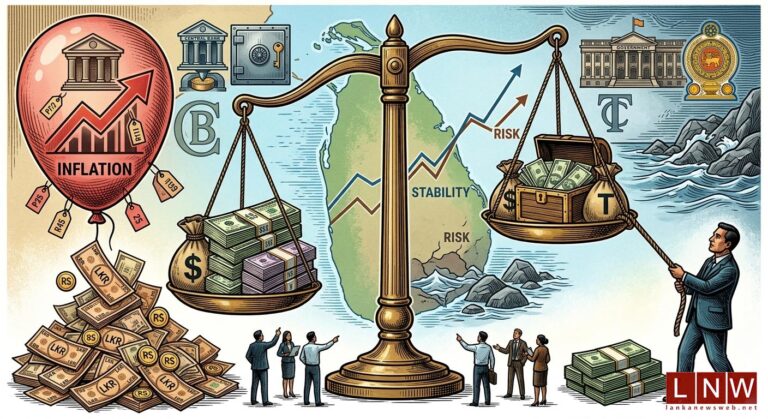
However, the issue has sparked debate among economists and monetary policy analysts who argue that Sri Lanka’s reserve-building model may carry significant risks. Critics point out that when the Central Bank purchases dollars from the market, it often injects newly created money into the financial system. This process effectively monetizes balance-of-payments inflows, increases reserve money, and can generate excess liquidity within the banking sector.

Calls have emerged for the Treasury to be allowed to purchase and hold its own foreign reserves independently, thereby reducing pressure on monetary policy. Supporters of this approach argue that Treasury-led dollar purchases could be structured in a way that remains neutral to reserve money growth and avoids inflationary side effects.

Former Deputy Governor W.A. Wijewardene recently highlighted concerns over the Central Bank’s inflation-targeting framework. He argued that policy rate reductions, expansion of private-sector credit, and sustained foreign exchange purchases have contributed to rapid growth in reserve money. According to Wijewardene, these policies are linked to efforts to maintain a 5 percent inflation target while simultaneously building reserves.

Sri Lanka’s history of monetary instability continues to influence the debate. Since the establishment of the Central Bank in 1950, the country has experienced repeated currency crises, including several episodes during IMF-supported programs. Analysts have attributed these crises to a range of factors over the decades, from external shocks and capital outflows to policy inconsistencies and reserve management challenges.

Warnings also surfaced in early 2025 that reserve accumulation could become increasingly difficult as private-sector credit growth accelerated. Some analysts argued that interest rates were not sufficiently restrictive to support reserve targets, while liquidity injections through foreign exchange swaps further complicated the Central Bank’s efforts.

Although the current IMF program includes reserve accumulation targets and limits on domestic asset expansion, concerns remain about whether those goals can be achieved without triggering new imbalances. Analysts caution that excessive dependence on Central Bank dollar purchases could undermine reserve objectives, weaken currency stability, and expose the economy to future financial stress.

As Sri Lanka seeks to maintain fiscal discipline and rebuild economic confidence, the debate over who should manage foreign reserve accumulation the Treasury or the Central Bank—appears far from settled.