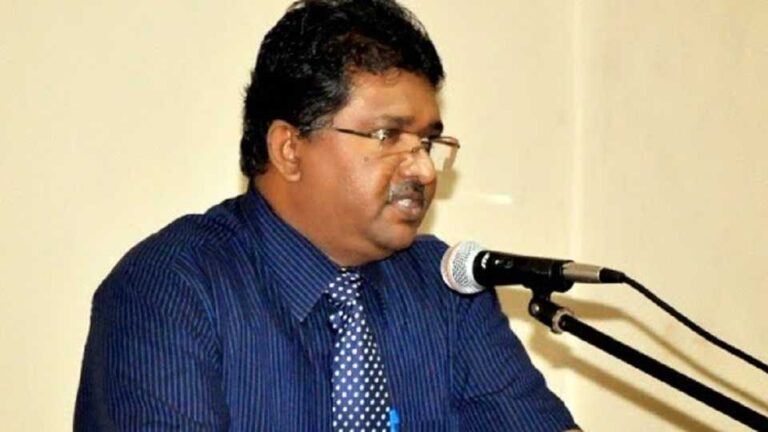
Colombo (LNW): Director General of the Department of Archaeology Prof. Anura Manatunga has reportedly tendered his letter of resignation to the Ministry Secretary.
A copy of the letter has also been forwarded to Minister of Buddhist, Religious and Cultural Affairs Vidura Wickramanayake.
No reason has been provided from Prof. Manatunga’s end for the decision.
People’s Leasing & Finance PLC (PLC) has announced the proposed acquisition of a 33% stake in First Capital Holdings PLC(FCH), signaling the beginning of a new chapter of business growth through horizontal integration and diversification as a powerhouse of growth in the financial sector.
With the proposed acquisition which is subject to the approval of Central Bank of Sri Lanka and all other regulatory authorities applicable, PLC will be expanding their product and service offerings, resulting in enhanced revenue and profits streams that will benefit from FCHs’ expertise in areas such as Investment Banking, Wealth Management, and Securities Trading which are likely to be new areas of growth for PLC. The move will also enhance PLC’s competitive edge and consolidate its position in the financial services sector.
“As one of Sri Lanka’s largest non-banking financial institutions, Peoples Leasing & Finance PLC has the distinction of being a leader in leasing and related financial services. The acquisition will strengthen the Company’s offering in diversified financial services, enhancing the potential to reaffirm a firm foothold in the financial sector through a unique Public Private Partnership”, says Shamindra Marcelline, CEO/ GM – People’s Leasing & Finance PLC. “This move will strengthen combined synergies and enable PLC to access expertise in Investment Banking, Capital Markets and Wealth Management.
Recognized as a leading full-fledged Investment Banking Institution, FCH has achieved a unique position in the market for a comprehensive portfolio of service offerings including Primary dealing in Government Securities, Unit Trust Funds, Private Wealth Management, Corporate Debt, Corporate Advisory and Stock Brokering. FCH’s expertise is expected to complement and reinforce the financial competencies of PLC.
Managing Director/ Chief Executive Officer of First Capital Holdings PLC, Dilshan Wirasekara expressed his thoughts on this strategic investment stating,“ People’s Leasing & Finance PLC and First Capital Holdings PLC have set the path for strategic partnership and believe that the synergies of both organisations will bring core competencies together for accelerated growth of the financial services sector. PLC’s strong retail footprint will give us access to reach a wider audience and thereby fuel our vision of “improving the lives of all Sri Lankans through financial solutions”.
Commenting on the Corporate Finance arm of FCH he added that, “Through the Corporate Finance arm of FCH, funds can be better managed to maximize returns to our clients while minimizing risk exposure through the expertise stemming from FCH’s Asset Management business. This will enable PLC to optimize funding and asset-liability management, thereby expand the footprint in the monetary market and consolidate financial stability.”
In addition, FCH’s Asset Management business will support investing excess funds in a range of asset classes designed to provide attractive returns whilst managing risk. Furthermore, PLC’s collaboration with Lanka Alliance Finance Ltd in Bangladesh is likely to open doors to FCH to initiate a footprint in that country in the area of investment banking and capital markets, opening doors to new frontiers of expansion outside Sri Lanka. FCH will also benefit from being associated with a State Owned Enterprise (SOE) with a vibrant market presence, which gives them access to unique resources and strengths.
People’s Leasing & Finance PLC and First Capital Holdings PLC are committed to enhancing client experience while continuing to drive the economy and expand the potential of the financial services sector in Sri Lanka.
Colombo (LNW):Industrial production recorded week ending on Friday despite other economic indicators gradually are becoming negative, central bank announced.
Index of Industrial Production (IIP) in April 2023 decreased by 8.2 per cent to 80.1 compared to April 2022, mainly contributed by the decreases reported in the manufacture of Wearing apparel (-30.5 per cent), Other non-metallic mineral products (-27.8 per cent) and Rubber and plastic products (-40.0 per cent) During the period under review (03.06.2023 to 09.06.2023), crude oil prices showed a mixed performance. At the beginning of the week prices increased mainly owing to the supply cut announcement by Saudi Arabia as well as the OPEC+ decision to extend current supply cut plans till end 2024. However, prices remained volatile during the week due to uncertainty about the next decision of the Federal Reserve, before declining towards the end of the week with demand concerns over weak Chinese export data. Overall, Brent and WTI prices decreased by US dollars 1.36 per barrel and US dollars 1.63 per barrel, respectively, during the review period.
Weekly Average Weighted Prime Lending Rate (AWPR) for the week ending 09th June 2023 increased by 44 bps to 20.73 per cent compared to the previous week. The reserve money decreased compared to the previous week mainly due to the decrease in the deposits held by the commercial banks with the Central Bank. The total outstanding market liquidity was a deficit of Rs. 78.847 bn by 09th June 2023, compared to a deficit of Rs. 6.831 bn by the end of last week. By 09th June 2023, the All Share Price Index (ASPI) increased by 0.74 per cent to 8,818.39 points and the S&P SL 20 Index increased by 0.30 per cent to 2,494.68 points, compared to the index values of last week.
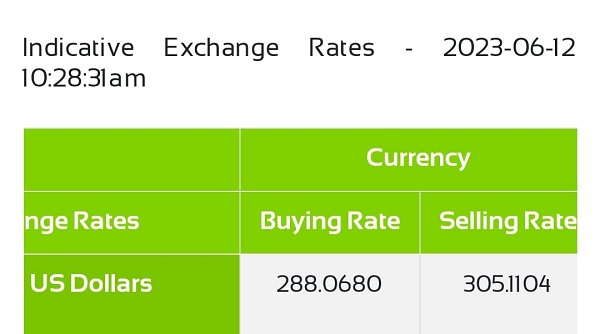
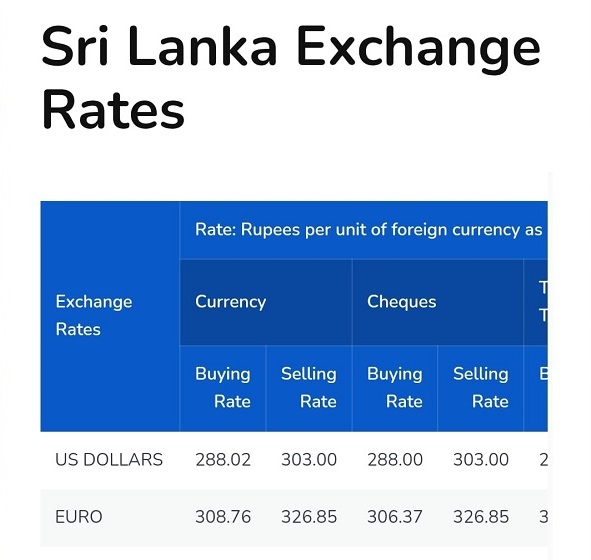
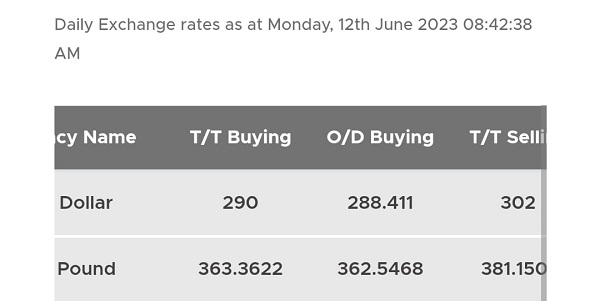
During the year up to 09th June 2023, the Sri Lankan rupee appreciated against the US dollar by 23.8 per cent. Given the cross currency exchange rate movements, the Sri Lankan rupee appreciated against the Japanese yen by 30.1 per cent, the pound sterling by 18.8 per cent, the Euro by 22.4 per cent and the Indian rupee by 23.4 per cent during this period.
The gross official reserves were provisionally estimated at US dollars 3,483 mn as at end May 2023 including the People’s Bank of China (PBOC) swap equivalent to around US dollars 1.4 bn, which is subject to conditionalities on usability.
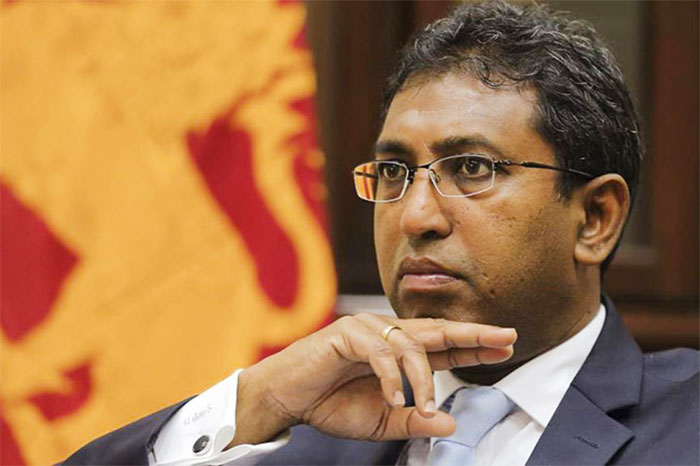
Colombo (LNW): In his address to Parliament yesterday, MP Harsha de Silva shed light on the alarming state of poverty in Sri Lanka. Drawing upon the latest findings by LirneAsia, the MP revealed that a staggering 7 million Sri Lankans currently live in poverty, with approximately 4 million individuals, accounting for around 17% of the population, having fallen into poverty since 2019 thanks to misguided policies of Gotabaya Rajapaksha Government.
During his speech, MP Harsha highlighted the profound impact of this dire situation on the daily lives of families. He recounted the poignant words of a distressed mother who shared her struggle, saying, “I used to buy all the food she [referring to her 4-year-old baby] needed, but now I can’t even buy half of what I used to. Even a bun… She used to eat baby rusks, which used to cost Rs. 30.00, but now it’s around Rs. 140.” It is deeply concerning that 47% of households have been compelled to reduce their food consumption in order to make ends meet.
The consequences of poverty extend far beyond hunger. MP Harsha de Silva emphasized that in 27% of households, parents have been forced to sacrifice their own meals to ensure that their children are fed. Equally troubling is the fact that 6% of households with children aged 5-18 have been unable to send their kids to school. Quoting a survey participant, the MP revealed, “About half the boys in the nearby estate have dropped out of school. They take on odd jobs in the area and can earn about Rs. 200 if someone calls them.”
These distressing statistics underscore the urgent need to address poverty in Sri Lanka. MP Harsha de Silva called for a united effort among Members of Parliament to raise awareness and support initiatives aimed at alleviating this crisis. He emphasized that no child should go hungry or be deprived of an education. It is imperative that policymakers work diligently to make a meaningful difference in the lives of fellow citizens.
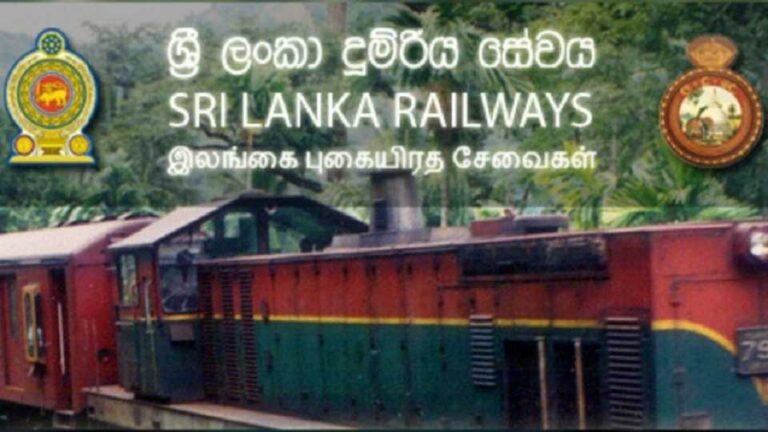
Colombo (LNW): In a move to curb railway accidents, the Sri Lanka Railways (SLR) is set to establish an E-Gate System at about 400 unprotected level crossings in the railway system around the country, revealed Transport Minister Bandula Gunawardena.
The decision comes in based on a concept by the Minister, after giving attention on the fatal railway accidents that take away nearly 200 lives on an annual basis and maim about 400 people.
The project has been developed by ‘CodeGen International’ on the instructions of the SLR, and in association with the State Development and Construction Corporation (SD&CC).
As a pilot project, a similar e-gate has been established near the Godagama Railway Station and is working smoothly, Gunawardena revealed.
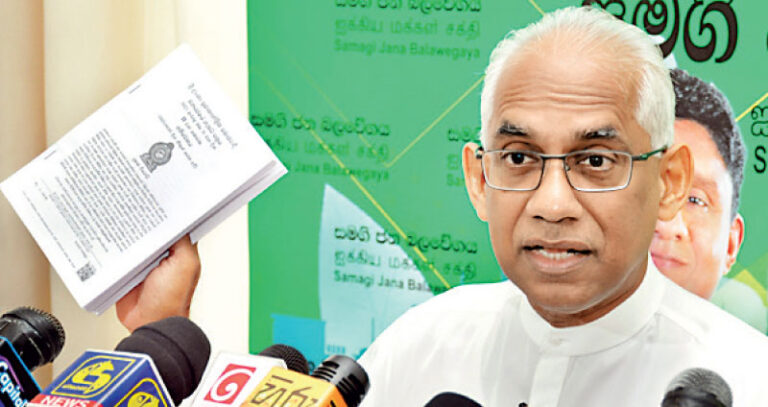
Colombo (LNW): If those accused of large-scale corruption such as bond scam, construction of expressways, construction of a bungalow in Malwana are guilty, Krish deal etc they should be punished or if they are not guilty of such dealings government should declare that they are not guilty without tarnishing the images of such people said SJB M.P. Eran Wickramarathne.
Addressing the press at the Office of the Leader of Opposition Sunday he further said that during the last general elections, the SLPP led by Rajapaksas made accusation against the present President Ranil Wckremesinghe on bond scam as the government at that time was led by UNP led Ranil Wickremesinghe
The main promise of the Rajapaksa government during the last general election was to bring to the book, the central bank bond scammers. Rajapaksas went around the country and said that the country lost billions of rupees due to the bond scam by a United National National Party led government.
“The government should prosecute such accused or else the government should declare that they are innocent of such accusations without adding black marks to them.”said Eran
The J.V.P. has filed corruption cases againts SLPP Parliamentarian on the Krish project deal which is being built in Colombo Fort. Another corruption deal called Hello-Coast was also announced. Also, there was a case with a big hullabaloo about a bungalow in Malwana by a member of Rajapaksa family.
A lot of corruption allegations were made on the awarding of the contract for the construction of Expressways. Allowing time to pass these as mere accusations lead to loss of people’s trust in the government. If those who have been accused of corruption and theft are not found guilty of those crimes, they should be exonerated and set free without further damaging their image.
With regard to the anti -Corruption Bill presented to Parliament, when the bill was questioned by the Supreme Court, it was declared that 24 sections of it should be amended. It has to be asked whether this piece of legislation was drafted by the officials of the Legal Draftsmen dept who usually prepare the bills. Marine pollution was heavily caused bt the Express Pearl disaster. The Minister of Justice stated that 250 million dollars was paid to a person to suppress the Express Pearl case. The government has not taken any action regarding such accusations, even if the new Anti-Corruption act is passed, there will be reasonable doubt whether the government will take measures to combat corruption in the country. Government brings this act to fulfill the promises given to IMF when it entered in to an agreement to obtain EFF loan from them. Declared Eran Wickramaratne.
The arrest of Jaffna parliamentarian and leader of the Tamil National People’s Front Gajendrakumar Ponnambalam is another incident that feeds into the sense of unequal treatment of individuals and communities in the country. The parliamentarian was accused of obstructing police officers from performing their duties. The incident arose when MP Ponnambalam challenged two persons in civvies who came in unannounced at a meeting he was having with his constituents in a public park who declined to divulge their identity. This incident has revived sentiments within the Tamil community that they are treated differently and less favourably than others.
The surveillance of political and civil society activities in the north and east of the country is a common practice which the people in those parts find offensive and intimidating. There is a sense of helplessness of people in the face of a large presence of uniformed personnel armed with guns, cameras and legal authority even fourteen years after the end of the war which is indicative of the need win their hearts and minds to ensure national security, if that is the government’s concern. The National Peace Council calls on the government to treat the people of the north and east no differently from those in the rest of the country as equal citizens entitled to the same human rights.
The fact that a political leader from the minority Tamil community was arrested when his counterparts in parliament have been treated with deference despite their misbehaviours brings in the ethnic dimension which has been a long term and fatal flaw in the Sri Lankan body politic. The arrest of parliamentarian Ponnambalam is indicative of the unequal application of the law and begs the question, one country one law or one country two laws. This is a phenomenon that is seen increasingly in the government’s use and misuse of the ICCPR Act (meant to give effect to the world’s foremost human rights instrument—the International Covenant on Civil and Political Rights) to prosecute those who offend the sensibilities of the majority community, and ruling politicians, but not the reverse.
We urge the government to establish an equality and pluralism commission in keeping with the 21st Amendment to ensure that there is equal treatment and non-discrimination in all walks of life. We also urge the holding of the long postponed provincial council elections and full implementation of the 13th Amendment so that police and land powers may be assigned as per the constitution and to train government officials including the police in the values of pluralism and inclusive service delivery to minimize the possibility of high-handed behavior of state officials based on ethnicity and religion. Such an institutional arrangement can increase the trust between the state and the people and also represent the values of the country beyond our shores.
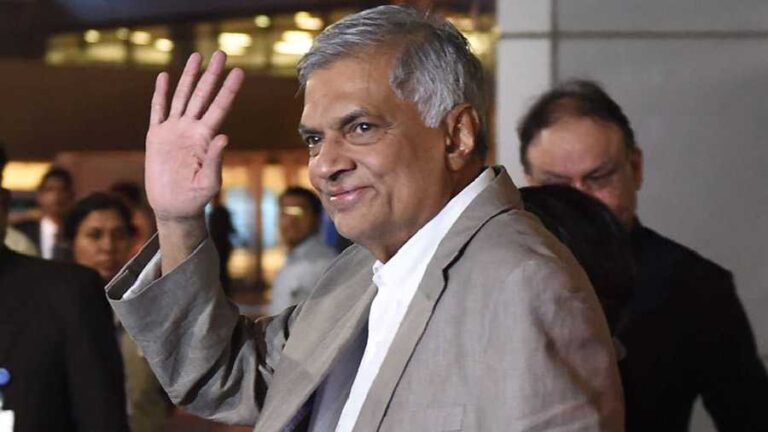
PMD: President Ranil Wickremesinghe emphasized that the standards of the Sri Lankan universities were high on the list of Asian universities. The standard and reputation of the universities should be restored and improved once again in the country’s university system to attract students overseas. This would also help to improve the development of the country’s economy.
The president stressed that he is satisfied with the education received during his era compared to the present day. For many of the people during his time, the United Kingdom was a second choice, if not the first, after the University of Ceylon. However, when asked by the young generation today about the satisfaction of today’s education system, the answer would be negative. Even if they are selected for a university, they are trying to go abroad.
The President highlighted the need for fixing the issues with the educational system in this nation and added that conditions should be put in place so that everyone can complete their education at the appropriate age and move on.
President Wickremesinghe stressed the importance of being attentive to the South Asian population. In 2050, India will have about another 3–400 million, rising to 1.7 billion. The poverty level will decrease, while the better income number will increase. He anticipated that this change may occur in Bangladesh, Pakistan, Myanmar, and the East African nations.
They alone can’t be building universities. India will have nothing else to do if they are going to provide education for all of them, so they will either use other techniques. Therefore, Sri Lanka must be vigilant in these areas. If Sri Lanka has a sufficient number of universities, it would help to cater to some of them from those areas.
These remarks were revealed by President Ranil Wickremesinghe while addressing the “CVCD Excellence Awards” held at the Bandaranaike Memorial International Conference Hall in Colombo on Friday (9).
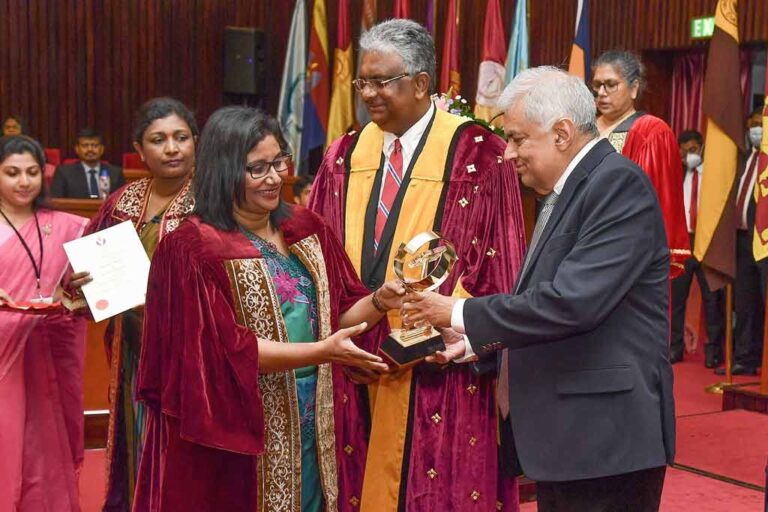
President Ranil Wickremesinghe attended the “CVCD Excellence Awards” ceremony as the Chief Guest and was welcomed by the Chairman of the Committee of Vice-Chancellors and Directors Sri Lanka (CVCD), Professor Sujeeva Amarasena, the Vice Chancellor of Ruhunu University.
Prof. Nilanthi De Silva, Vice-Chancellor of the University of Kelaniya, introduced the award ceremony in detail.
President Ranil Wickremesinghe was appreciated by the Committee of Vice-Chancellors and Directors (CVCD), Sri Lanka, for his excellent leadership and commitment in establishing an innovative research culture within the university system.
Organized biennially by the Committee of Vice-Chancellors and Directors Sri Lanka (CVCD), the “CVCD Excellence Awards” recognize and honor outstanding contributions and achievements in research, innovation, and invention by scholars in the Sri Lankan university system. The awards are presented in three categories: Most Outstanding Senior Researcher, Most Outstanding Young Researcher, and Most Outstanding Inventor.
In this year’s awards ceremony, the Most Outstanding Senior Researcher and Most Outstanding Young Researcher Awards for the year 2022, Allied Health Sciences and Indigenous Medicine, Engineering, Architecture, and Technology, Humanities, Life Sciences, Management Studies, Medicine, and Dentistry, were awarded for eight fields of study: natural sciences, social sciences, and legal studies.
Accordingly, Professor B. it. K. S. Perera (University of Moratuwa), Professor D. M. Deepti Yakandawala (University of Peradeniya), Prof. Arosha Sarangi Adikaram (University of Colombo), Prof. Shaman Rajindrajith (University of Colombo), L. B. D. R. P. Wijesundara (University of Kelaniya), and Professor S. Mr. P. Karunanayake (Open University) received the Most Outstanding Senior Researcher Award.
Dr. A. N. Madushanka (University of Peradeniya), Dr. K. K. Asanka Sanjeeva (Sri Jayawardenepura University), Dr. W. H. M. Sanjeeva Samaratunga (Rajarata University), Dr. M. B. Kavinda Chandimal Dayasiri (University of Kelaniya), and Professor A. Mr. Sandaruwan Ratnayake (University of Uva Wellassa) received the Most Outstanding Young Researcher Award.
University of Moratuwa Professor Rangika Umesh Halwathura won the Most Outstanding Inventor Award.
Vavuniya University Vice Chancellor Professor T. Mr. Mangaleswaran delivered the speech of thanks, and members of the committee of Sri Lanka Vice Chancellors and Directors, family members of award-winning scholars, and others attended this event.
Following is the full speech made by Hon. President Ranil Wickremesinghe:
Seated here, I was thinking back to the time that I had finished A-levels and sat for the exam. My father also insisted that I take the London A-level, which was held in Madras. So I flew to Madras and sat for the London A-Level. But at the same time, I received the results of the Sri Lankan, as you called it, Ceylon A-levels, and I found that I had gotten into the university and had been selected.
It was a simple system then. In none of these marking systems, all those who got four subject passes went in first, followed by those who got three subjects. I also got my A-level results from London A-level. I applied through UCCA, and there was one university that was prepared to take me based on Sri Lankan A-level results.
And others certainly considered me based on my London A-level results. So I had to make a decision whether I was going to stay here or go to the UK. I really thought of staying in Sri Lanka. My mother was insisting I go to the University of Ceylon, Peradeniya, because of my grandfather’s connections, but I had made up my mind. I felt that if I am to do law, it has to be in Colombo. Otherwise, I have to go on to another subject, like economics or history. So I am telling you, I never studied economics.
When I look back, I think that at that time, a lot of people told me this was a good degree. This is well accepted. The dean of that time, the professor of law, Professor Nadarajah, was the leading exponent of Roman Dutch law after Professor Lee died. We had a number of lecturers, the youngest, of course, being a young temporary assistant lecturer called G.L. Peiris.
I passed out, and I’m quite happy with my education here. But when I speak to young people today, I ask them, “Would you like to stay in Sri Lanka? The answer to many of them is no. Even if selected by a university. For many of us in the UK, it was a second choice if you were not selected for the University of Ceylon.
But it is not, so today, having spoken to them and listened to their views, I don’t know what I would do if I came to making a selection today. So, this is a crisis in the university system. It’s a part of the larger crisis in Sri Lanka itself and how we face the future. So we have to look at the university system and what the role of education is first, then look at the local issues.
As I asked the chairman, we have about 170,000 qualifying for the A-levels; of that, 40,000 get into universities here, and another 30, 000 to 40,000 go to universities abroad.
So that’s the difference. What’s the difference? So that another 40,000, of which I would say 25000 to 30000, would be prepared to enter Sri Lankan universities. We don’t have the resources, so that’s the first one. Are we going to have a system of universities coming under the UGC and universities outside the UGC, some for profit and others not for profit?
Three systems are functioning, or should we gradually look at building up one system of universities? So that’s the first one.
Secondly, the government makes money available to fund students’ higher education. But then we find that another group of students equal to the number in the universities is going outside and paying money. So, is this the best way we have? We must preserve one right, which is in the Universal Declaration of Human Rights: universal access to education. But different countries have different ways of doing it. Some give student loans; some help students who have economic issues but allow the others to go ahead. So, are we to study? I think we have to study all these systems and then ensure the government makes the funding available.
Look at the best system available for the maximum number to get their education. That’s the first item I think we have to go into if we can’t run away from the issue, because we will need a large number of engineers, a large number of doctors, and a large number of scientists. If we are to develop and go ahead, where are we going to get them? Who is going to educate them? That’s, I would say, the main issue we have.
Secondly, one of the standards is: where are we now? When I went to university, our universities were high up on the list of Asian universities. I am not talking about the world’s list of Asian universities. We are not so today; let’s be frank about it. How are you going to improve our performance? How are we going to ensure that these universities have a good reputation and standing?
Then you’ll attract students from other parts of the world, making your funding that much easier. How do the state universities function with disruptions and vice chancellors getting assaulted? That cannot happen. I think at some point we have to face these issues and resolve them. There’s no other way to do it. We must ensure that everyone studies so they can get ahead.
We have a big problem in the education system; people don’t sit for A-levels until they are about 20, and you’re about 24 when you pass out. I was 21 when I sat for my degree, 22 when I got the results, and we were not awarded degrees because they were from 1971, and 23 when I became an advocate of the Supreme Court.
I don’t think anyone I know now has touched that. That means the best part of your life You spend time at the university, then go to find a job. So these issues had to be resolved. Then you will find the non-UGC universities coming up, and then they get students because the job market is there.
Now, this is a problem not only for the UGC universities here but also for many universities abroad. But we had to find our own solution and not wait to see what others were going to do with regard to the universities. Then comes the issue of remuneration. Your main issue has been the present taxation, but another one that has been raised in universities is how you would pay your academic staff. In Western universities, each one is judged to be worth something in the market, and given that, are we to do that? Or are we going to carry on with this same system? As far as the non-UGC universities are concerned, I have no doubt that they will decide what the pay should be for each individual.
These are the issues that we have to face. And then the research that is being done: how are the peer reviews? What are the standards? There are allegations regarding some of the research items that have been made, and all that has to be cleared. I mentioned to the chairman and some of the VCs that we don’t have sufficient postgraduate studies in this country.
What are the postgraduate studies you have done?
The single University of Ceylon changed the culture of Ceylon with two plays “Maname” and “Sinhabaahu”. With that came the change. They produced the University of Ceylon History in four volumes. Some are maybe out of date, nevertheless, look at all the rest of it that they produced at the University of Ceylon. Have we all together in any way equalled that? I’m not asking about overtaking equalled that; that’s a question mark.
So, these are serious issues that we have to think about. If you don’t tackle these issues, you are going to face serious problems with the university education provided by the UGC University. Outside of that, there is the question that every university has to face today. What is a university? How do you educate? You had social media; you had it online.
You have AI, and you have chat GBT, which people use for exams and some for their postgraduate research. So, can these brick-and-mortar institutes suffice? Or are we to use the technology? This is another issue that we have to take up. So, my effort is to ensure that you are focused on this and come up with solutions.
If you look at the population of South Asia in 2050, India will have about another 3–400 million, maybe going up to 1.7 billion. And that poverty level will decrease, and better income numbers will increase. This will happen in Bangladesh, Pakistan, Myanmar, and the East African nations. Now all of them can’t build universities. India will have nothing else to do if they are going to provide education for all of them, so they will either use other techniques. So, we have to be sure of that. But if we have a sufficient number of universities, we can cater to some of them from those areas. Now they are catering to our needs. But there may come a time when we have to cater to their needs.
So, these are the issues we have to think of because the structure of the universities will no longer be the same. There was a big debate originally about the first university in Ceylon, whether it was to be residential or not. They took the Oxford and Cambridge Model, and that’s the structure of Peradeniya University. But if you look at the newer universities, all the residents are no longer there.
Now, the question is not whether they are going to be halls of residence. Will there be halls for lectures?
So, we have to address these issues and find solutions because we have appointed a Cabinet Committee on Education, which is going into all the issues. So I thought I’d mention to you all: what are the questions that we will be posing to you? So I don’t want to take any more of your time, but I must congratulate all those who got the awards here.
What you have done is to raise the reputation of Sri Lankan universities for research, and taking that into account, we will make more money available for research. But how are we going to do it? We haven’t determined yet. I thought I would put about a billion aside for a year. I don’t know if you can use it for the other subjects as well.
And by then, we’ll have the Institute of History for History and Archaeology to carry on. So thank you again for inviting me, and all the best to the award winners.