Home Blog Page 1732

Christmas Message by Methodist Church, Sri Lanka

0

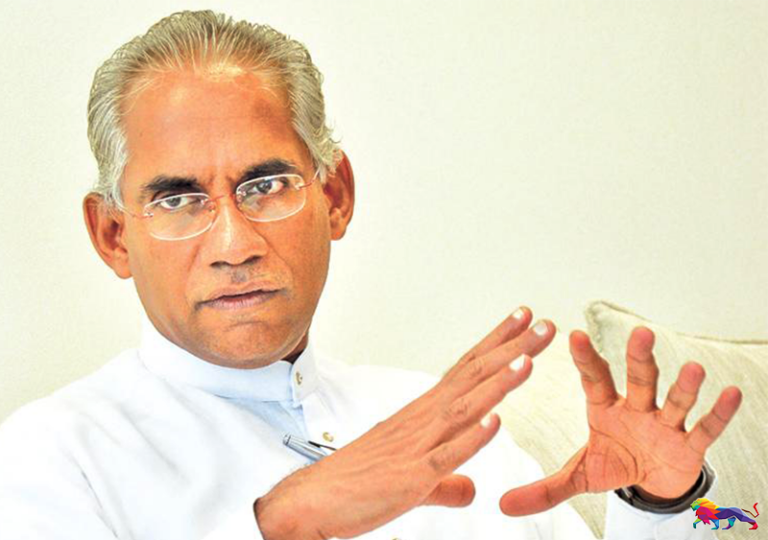
May the celebration of Christmas enable us to join hands as one Sri Lankan family and restore the moral and ethical foundations of our society, where all live with dignity and specially our children, Women and the poor are freed from all evil menaces in society, the Methodist Church of Sri Lanka said in its message for this year’s Christmas.

Full statement:

We are celebrating Christmas during a time of unprecedented economic and political crisis faced in the history of our country. Therefore, it is imperative that we understand the true meaning of the celebration of the birth of Christ and the responsibility that it entails as well.

Christ was born amidst many uncertainties that prevailed in Palestine at that time. Ordinary farmers and fishermen were pauperized. A confusing political configuration was prevalent, where the power and authority of the Roman Caesar, was manifested through henchmen like King Herod and the Roman soldiers walking the streets of Palestine, The religious and religious institutions embarked on tacit collaboration with the powers that be, not only for their survival but also to benefit from the oppressive economic and social evils of that day. The ordinary people lived in fear and anxiety with a sense of hopelessness not knowing what the future holds for them.

It was very similar social climate to what we experience in our country today. Therefore, the Good News of peace on earth and goodwill among all humankind proclaimed by the angels, and the hope that God’s intervention in our social reality will change the future destiny of doom and despair as proclaimed by prophet Isaiah, has to be appropriated in our contemporary social reality.

The Christmas hope dawned through a Child, who had no room in the inn and was born in a vulnerable manger amidst the cattle. True celebration of Christmas entails in our responsibility to search diligently for all the Children who have no room nor even safe space in our contemporary reality today. The increasing malnutrition among children and evil clutches of the drug menace that deliberately ruins the innocent Children should be our Concern and worry this Christmas. Concrete steps taken to safe-guard our Children is authentic celebration of Christmas.

The Christmas hope dawned because of a sacrifice of a young virgin, Mother Mary, who could not grasp the mystery of the Child she bore, yet fulfilling her responsibility in obedience to the will of God. We need to pay special attention to the plight of many women who are losing their dignity due the present crisis. We need to understand the sad plight of women who are forced to sell their bodies due to poverty through prostitution, abuse and exploitation. We also need to seek the welfare and dignity of all women who work as domestics whose hard labor in vulnerable conditions brings valuable foreign exchange to our country. Restoring the dignity and security of our women makes Christmas celebration meaningful.

The Christmas hope dawned because of the righteousness, morality and goodness that ruled the heart of a pauperized carpenter called Joseph. We need to be concerned of the untold misery experienced by the vulnerable and poor sections of the people, who struggle to feed the hungry stomachs and meet their medicinal needs due to the prevailing economic conditions.

At the same time Christmas entails the re-ordering of the moral fabric of our society and being rooted in a secure ethical foundation of the nations. At Christmas Grace and truth embraced each other, Justice and peace kissed each other. Therefore, we need to be alert, conscious and appropriately respond as to the ethical and moral norms on which we are trying build the future of our nation. We need to revisit the attempts to replenish the much-needed foreign exchange reserves by resorting to unethical measures like promoting high ended Casinos, growing ganja, turning a blind eye towards increasing prostitution in the country and the loss of dignity of our women working overseas as domestics etc. Such actions will only destroy the social fabric our nation and make our women and children more vulnerable. Recapturing and revitalizing a secure and firm moral foundation make Christmas vibrant and meaningful.

Amidst all uncertainties, the celebration of Christmas is a celebration of hope. The hope that the future will be bright, where the people living in darkness will see light, and where all social conditions will be transformed affirming human dignity, ensuring good will among all humans, where all live without anger and hunger ensuring lasting peace. The celebration of this hope entails that we change our lifestyle and life priorities to correspond to the new era we visualize and be living symbols of that hope. Embracing living out that transformation is the true meaning of Christmas.

May the celebration of Christmas enable us to join hands as one Sri Lankan family and restore the moral and ethical foundations of our society, where all live with dignity and specially our children, Women and the poor are freed from all evil menaces in society.

Rev. W.P. Ebenezer Joseph

President of Conference

METHODIST CHURCH SRI LANKA

New Central Banking Act – Will it destroy or upgrade the country’s money and monetary system?

0

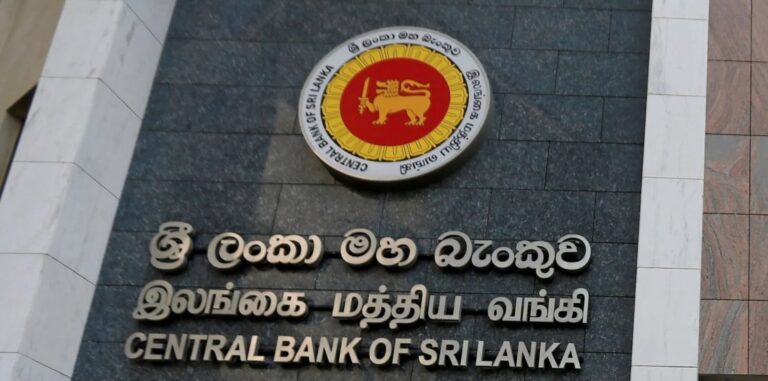
The media reported that the Cabinet, subject to further discussion of the views, approved a new Act as an improved version of the present Monetary Law Act (MLA) to facilitate operations of the Central Bank (CB) more effectively and efficiently in line with present requirements. The CB Governor repeatedly stated that new legal provisions would be introduced to grant the autonomy to the CB as a part of new macroeconomic management policy framework agreed with the IMF

As the proposed Act is not available for public information, it is not possible to comment on the efficacy of the new Act as compared to the MLA that has been tested for 72 years with several amendments introduced from time to time to the MLA without hurting the its policy framework. The architect of the MLA is John Exter, an Economist of the US central bank, the Federal Reserve System established in 1913.

Therefore, this short article, hoping that legal officers of the CB are smarter macroeconomists than John Exter to draft a new Act to replace the MLA, is released to highlight the macroeconomic management framework introduced through the MLA to drive the post-independent Sri Lanka for economic development through an independent monetary system in place of the Currency Board System.

Salient Features of the MLA

The salient features of the macroeconomic framework laid down in the MLA for independent Sri Lanka are as follows.

  • The MLA was enacted to establish the monetary system of Sri Lanka and the Central Bank as the authority to administer and regulate the system and to conform and impose upon the Monetary Board of the powers, functions, and responsibilities necessary for the purposes of such administration and regulation and to provide for connected matters.
  • Accordingly, the Monetary Board is the corporate body and is authorized to determine several policies or measures in the MLA in addition to vesting it with the powers and functions of the Central Bank where the Monetary Board is generally responsible for the management, operations, and administration of the Bank. Therefore, the Monetary Board is the monetary authority in the country.
  • Therefore, the MLA first established the monetary unit for the country and entrusted it with the Monetary Board for administration and regulation in terms of policy actions authorized in the Act. Accordingly, the standard unit of monetary value in the country is rupee, represented by the signs “Re.” and “Rs” and divided into one hundred units, each of which is called a “cent”. Then, provisions have been made to determine the par value and parities of the rupee.
  • Accordingly, the MLA creates means of payments within the monetary unit where currency notes and coins are created as the legal tender for payments. Currency is the financial liability of the Central Bank and issued on behalf of the government.
  • The national monetary policy is stipulated with principles and rules to ensure that the monetary system is used for macroeconomic objectives stipulated in the MLA. In the monetary policy, the Monetary Board is empowered to regulate the supply, availability and cost of money by having regard to the monetary needs of particular sectors of the economy as well as of the economy as a whole and to maintain the par value of the Ceylon rupee and so to regulate its exchange with other currencies as to assure its free use for current international transactions. These have been stipulated under domestic monetary stabilization and international monetary stabilization. The most part of the MLA relates to actions authorized on the national monetary policy as the MLA governs the monetary system of the country.
  • The Economic Research Department and Director of Economic Research were created in the Central Bank as independent authorities to research on money and banking and other economic subject of general interest to guide the Monetary Board in policymaking and for information of the public.
  • As the monetary system runs on the banking system, Bank Supervision Department and Director of Bank Supervision were created in the Central Bank to supervise banks to promote their prudence and stability. The Monetary Board also was given wide powers to regulate banks and resolve problems banks including emergency credit facilities (or lender of last resort). This was necessary as there was no bank supervision framework in 1950. However, since 1988 the Banking Act has been in place, but MLA bank supervisions and regulation powers have been in prime use.
  • The Monetary Board was empowered to establish any other Departments and branches, agencies and correspondents in other places in the country or abroad for the proper conduct of the business of the Central Bank.
  • Initial four objects of the Central Bank in the MLA were as follows.
  1. The stabilization of domestic monetary values
  2. The preservation of the par value of the Ceylon rupee and the free use of the rupee for current international transactions
  3. The promotion and maintenance of a high level of production, employment and real income in Ceylon
  4. The encouragement and promotion of the full development of the productive resources of Ceylon.

Amendments introduced in 2002 resulted the following two objects of highly conceptual context.

  1. Economic and price stability; and
  2. Financial system stability, with a view to encouraging and promoting the development of the productive resources of Sri Lanka.

The Central Bank is charged with the duty of securing the objectives so far as possible by action authorized by the MLA.

It is seen that analysts in the Central Bank as well as outside lightly talk about the objectives of the Central Bank as economic and price stability and financial system stability in their win interpretations without making any reference to the text “with a view to encouraging and promoting the development of the productive resources of Sri Lanka” which is the condition imposed on the objectives.

  • Several fiscal functions were assigned to the Central Bank to ensure that the fiscal policy evolves in harmony with the monetary system. Fiscal agent, public debt management, financial advisor, banker of the government and limitation of advances to the government are some of them. Certain powers are assigned to the Monetary Board to issue directions to state institutions on fiscal operations and approve foreign loans of the government. All these are to ensure that their operations are not impacting the monetary conditions of the economy regulated in the monetary policy.
  • Annual Report, financial statements, profit and loss calculation, distribution of net profit and capital have been stipulated in the MLA. As the capital is fully owned by the government, it is a state institution.
  • The Minister of Finance is authorized to issue directions to the Monetary Board as to the monetary policy of greatest possible advantage of the people of the country in view of the opinion of government while the government taking its responsibility.

Overall Comment

In view of above highlights, it is necessary that the lawmakers fully understand the provisions of the MLA and its macroeconomic management framework legally implemented in Sri Lanka within the Constitution.

Some may comment that the current economic crisis is a result of lapses in the MLA to resolve new problems. It is not correct if the provisions relating to the macroeconomic management framework in the MLA are understood literally.

In fact, the economic crisis is a result of the failure of the Central Bank/Monetary Board to implement the monetary system in compliance with the MLA. The government debt and foreign currency problems are results of mismanagement of the monetary policy and fiscal functions in violations of the MLA.

Therefore, if the Monetary Board finds the MLA as the scapegoat and proposes a new Act to replace the MLA under the cover of the IMF, it is highly likely that the major provisions relating to the monetary unit, monetary system, banking stability, prudence of monetary policy instruments including their risks and diversity will be wiped out without any notice. 

If the macroeconomic management framework set out in the MLA is lost, the monetary system including the banking system will confront havoc in due course and operations of the Central Bank will encounter conflicts on daily basis. This will delay the recovery of the economy for decades. In that instance, the present Minister of Finance who submits the new Act to the Cabinet and Parliament will be encrypted in the economic history of Sri Lanka.

I hope that at least one expert who is knowledgeable in the MLA and global central banking literature will read the new Act carefully to ensure that the monetary system advances without major disturbances and crises. I know that it does not happen in the Central Bank as officials are only concerned about drafting sections allocated to them in micro manner in office hours. 

Since we do not have an expert like John Exter taking the responsibility of the new Act, somebody must be responsible for such a national task as lawmakers will not understand the technical meaning of any provisions in the Act, given their technicalities. Further, the relevant authorities must submit the Act to the Parliament with a report similar to the Exter Report carrying explanations for each provision.

It is highly advisable that if the new Act along with the Report is made available to the general public for information and comment because the proposed new Central Bank is not an institution belong to the new Monetary Board, but an apex public institution funded by the public to be responsible for securing the public confidence in Sri Lankan monetary unit and the monetary system behind it. This is because it is the elected government that should accept the responsibility of all policies of the state institutions.

 (This article is released in the interest of participating in the professional dialogue to find out solutions to present economic crisis confronted by the general public consequent to the global Corona pandemic, subsequent economic disruptions and shocks both local and global and policy failures.)

P Samarasiri

Former Deputy Governor, Central Bank of Sri Lanka

(Former Director of Bank Supervision, Assistant Governor, Secretary to the Monetary Board and Compliance Officer of the Central Bank, Former Chairman of the Sri Lanka Accounting and Auditing Standards Board and Credit Information Bureau, Former Chairman and Vice Chairman of the Institute of Bankers of Sri Lanka, Former Member of the Securities and Exchange Commission and Insurance Regulatory Commission and the Author of 10 Economics and Banking Books and a large number of articles publish. 

The author holds BA Hons in Economics from University of Colombo, MA in Economics from University of Kansas, USA, and international training exposures in economic management and financial system regulation)

SRI LANKA ORIGINAL NARRATIVE SUMMARY: 26/12

0
  1. Disaster Management Centre calls for 2 minutes of silence across the country today from 9.25am to 9.27am, in memory of those who lost their lives during the 2004 Tsunami.
  2. Treasury Secretary Mahinda Siriwardena says there is a huge gap between the
    state’s revenue and expenditure: explains average monthly income is Rs.145 bn while monthly expenditure is Rs.157 bn: of which, the salary bill is Rs.93 bn and pensions Rs.27 bn: asserts the new tax proposals will only affect 10% of the population.
  3. Atmospheric depression over the Southwest Bay of Bengal enters through the East Coast and moves across the country over the weekend: likely to move to the Western sea area today: heavy showers above 100mm likely.
  4. Cardinal Ranjith says the present situation in the country could have been averted if the country continued the practice of producing everything that can be made locally: laments people have got used to importing everything that can easily be produced within the country.
  5. Wildlife and Forest Resources Conservation Minister Mahinda Amaraweera says 4 Government institutions under the Ministry of Wild-life & Forest Resources Conservation have earned a record income of Rs.6,693 mn during this year.
  6. President Ranil Wickremasinghe grants a special Presidential amnesty to 309 prisoners for Christmas, under Article 34 of the Constitution.
  7. SJB Deputy National Organiser MP S M Marikkar says that in the 1st month
    in 2023, people’s earnings will dwindle due to the Govt’s “blood-sucking tax policy”: also says the Ministry of Power will further burden the people by increasing electricity tariffs and 10-hr power cuts.
  8. National Building Research Organisation issues landslide early warnings in 5 districts of Kandy, Kegalle, Kurunegala, Matale and Nuwara Eliya: also request people of those areas to be alert to landslides, slope failures, rock falls, cutting failures, and ground subsidence.
  9. Police say statements from more than 75 persons including almost all the family members of murdered businessman Dinesh Schaffter have been recorded so far: also say suspects involved in the murder have not been identified so far.
  10. Jaffna Kings win the Lanka Premier League Cricket Tournament 2022 beating Colombo Stars by 2 wickets: this is the 3rd consecutive occasion that Jaffna Kings have won this tournament: Colombo Stars – 163/5 (20): Jaffna Kings – 164/8 (19.2).

30,000 government employees set to retire at the end of the year

0

30,000 government employees are set to retire at the end of this year.

Last year and this year, a group of government employees who completed their 60 years of age are retiring in this way.

A committee headed by the Prime Minister’s Secretary has also been appointed to balance the public servants due to the retirement of a significant number of them.

People to observe two-minutes silence to remember tsunami victims

0

Today (26) 18 years have passed since the 2004 Tsunami disaster that caused huge loss of life and property to many countries including Sri Lanka.

The Disaster Management Center has informed the people to observe two minutes of silence from 09.25 to 09.27 am today to remember those who died in the disaster.

On December 26, 2004, 14 coastal districts of Sri Lanka were affected by the tsunami caused by an earthquake off the coast of Indonesia.

About 5,000 more people went missing and 502,456 people were affected, including house and property damage.

WEATHER FORECAST FOR 26 DECEMBER 2022

0

The depression has weakened into a low-pressure area and likely to move to the western coast of Sri Lanka by today (26) morning. As this system moves away from the island, it is expected that its impact on the island’s weather will lessen from this evening.

Accordingly, showers or thunder showers will occur at times over Western, Sabaragamuwa, Central, North-Western and Northern provinces and in Galle and Matara districts. Fairly heavy showers above 75mm can be expected at some places in the above areas.

Strong gusty winds of about (40-50) kmph can be expected at times over country.

General public is kindly requested to take adequate precautions to minimize damages caused by temporary localized strong winds and lightning during thundershowers.

Christmas cake: the traditional Sri Lankan treat uniting an island and its diaspora

0

The nation has been rattled by economic crisis, political upheaval and corruption, but many believe the dessert-making custom could spark joy in these bleak times

Yusra Farzan

As a child in Colombo, Sri Lanka, Oryan Cumaraiah-Misso remembers excitedly readying himself in front of a handheld meat grinder to crush cashews. It was his part in his family’s annual tradition of preparing a 60-year-old recipe for Christmas cake that had been passed down for generations. Christmas cake – a moist, decadent treat filled with nuts and fruit – usually kicks off the holiday season on the island nation, and for immigrants in the US, has become a way to preserve traditions from back home.

Sri Lanka’s Christmas cake is similar to the fruit cake, a quintessentially British dish, but has since evolved from its colonial roots. Like the British version, Christmas cake includes raisins and cherries, but also preserved ginger, the green vegetable chayote (or chow chow, as Sri Lankans call it) in sugar syrup, preserved melon (known as puhul dosi), candied peel, sultanas and aromatics like nutmeg.

“It definitely has been adapted to the Sri Lankan palate,” says Cumaraiah-Misso, 34, now a medical student living in Fort Worth, Texas. He still remembers being a child and the earthy aromas of cinnamon and cardamom intermingling with the sweet smell of rose essence while being elbow-deep in a 25-gallon bucket, mixing finely chopped fruit semolina with butter.

Marie Shirlene Fernando, 58, a caterer and mother of three living in Cerritos, California, remembers watching her aunt make the cake as a little girl. As a teenager, she took over the responsibility of making the stodgy treat, first for her ailing grandmother and later for her extended family to give as wedding favors. Now, she makes it with her 10-year-old granddaughter for customers across the United States. She carefully wraps the final product in parchment paper and brightly colored cellophane.

This year, one of the packages will be shipped to her family in Sri Lanka.

Indrika Arnold’s family prepares a Christmas cake at home. Photograph: Indrika Arnold

Given the country’s recent economic and political woes, she hopes the beloved dessert will help evoke unity and remind her mother, sister and extended family, of simpler times of gathering around the table to prepare the cake ingredients.

In Sri Lanka, as the country’s hotels gear up for the holiday season, some host cake-mixing parties, where people get a view of culinary staff combining the fruit and nut mixture with the wet ingredients in a custom-built, 9ft-deep barrel. The mix weighs more than 4,000lb. This year, one even took place aboard a naval ship. Fernando said she was watching the Galle Face Hotel’s recent Christmas cake mixing ceremony and thought to herself, “Oh, I’m so glad in spite of all that’s going on, they are still doing it.”

These traditions were in jeopardy this year as the nation battled its worst economic crisis since independence in 1948. Government corruption, financial mismanagement, sluggish economic growth since the pandemic, the depletion of foreign reserves and the war in Ukraine led to widespread blackouts, shortages of essential goods and school closures earlier this year. Islandwide protests ultimately led to the ouster of President Gotabaya Rajapaksa and the resignation of his brother Mahinda Rajapaksa as prime minister.

Inflation hit an all-time high of 69.8% in October before dropping slightly to 61% in November.

While Fernando is hopeful that the nostalgia of Christmas cake-making will provide some joy to celebrations, Cumaraiah-Misso worries about how the increased prices of ingredients will affect this longstanding tradition. On local Facebook groups, bakers lament the rising cost of ingredients, with some commenting that they haveve chosen not to make the treat this year and are readying themselves for an “austere Christmas”.

In a country ravaged by a 30-year civil war fought on ethnic lines and where, in 2019, at least 290 people died as bombs ripped through three churches on Easter Sunday, Christmas cake can unite across religions. It’s not just the 8% of the country’s Christian population that enjoy it.

“There are so many Buddhists, Muslims, friends who I have who are non-Christians. They love the Christmas cake, and they wait for a piece of Christmas cake,” Fernando said. She recalls them asking, “Where is my share? Did you keep me a piece?”

Indrika Arnold, a wealth adviser in Lebanon, New Hampshire, has found another set of fans for her Christmas cake: her American co-workers.

“I have some colleagues at work with whom I shared a piece, and they loved it. Now, they always ask, ‘When are you making your spice cake?’” she said. “I even mail it to some of my friends who no longer work with me.”

Indrika Arnold’s daughter, mother and a friend prepare a Christmas cake. Photograph: Indrika Arnold

She only made a half recipe when she started making Christmas cake five years ago. Now she’s doubled it.

Arnold moved to the US 22 years ago but only started making the rich cake – as it’s known at other times of year – to share the tradition with her 12-year-old daughter. She has core memories of sitting around the kitchen table with her siblings and parents, cutting the preserved fruit into small pieces, and sneaking bits of raisins and cashews into her mouth when no one was looking.

“A week or two before Thanksgiving, I get all the ingredients, and we actually get together as a family and cut it and we all take turns mixing the booze and the honey,” she said about how she continues this tradition with her daughter and husband in the US. She then leaves the fruits to stew in the alcohol mixture for at least two weeks, kick starting the holidays in their home.

Like Arnold, Fernando also plans to gather around the table with her granddaughter to finely chop the fruit, which will then be soaked in a brandy mixture for one day.

“By making it every Christmas, it has become a part of celebrating Christmas as Sri Lankans overseas,” Fernando said.

The Guardian

Chinese-Funded Projects aggravates Sri Lanka’s Economic Distresses

0

During the past decade, China funded the construction of massive infrastructure projects in Sri Lanka meant to boost the island nation’s economy.

However, after the economic collapse of the tiny Indian Ocean country earlier this year, there were questions whether these projects had contributed to the worst crisis it has ever faced.

A port city that dominates Colombo’s seafront was built on a 269-hectare patch of land reclaimed from the sea. It was to become a thriving business and financial hub, but it is virtually deserted.

An international airport commissioned nearly a decade ago at Mattala city is called the “emptiest airport in the world.” Both the Chinese-funded projects are seen as “white elephants” that have added to Sri Lanka’s debt.

“The airport is not functioning. The Colombo port city was supposed to attract international investors, but there is not a single investor right now,” said Asanga Abeyagoonasekera, a Sri Lankan security and geopolitics analyst.

“There is a question over the revenue model of all these projects because they are not financially viable. They were built with unsustainable large amounts of borrowings with high interest rates.”

The focus zeroed in on the Chinese projects when Sri Lanka ran out of foreign exchange to import food, fuel and medicines earlier this year.

The catastrophic economic downturn has pushed many in the nation of 22 million people into poverty.

In what was once a middle-income country, living standards have plummeted as inflation rages. The World Food Program estimates that nearly 6 million people need food assistance.

The country’s crisis is blamed on economic mismanagement by the previous government led by former president Mahinda Rajapaksa and the COVID-19 pandemic that led to a loss of vital tourism earnings in the scenic Indian Ocean country.

Analysts say the billions of dollars spent on Chinese-funded projects deepened Sri Lanka’s woes. Estimates are that the share of Chinese loans in Sri Lanka’s $40 billion debt range from 10 to 20 percent.

“China is known for working out arrangements that often turn out much costlier than just looking at the paper would tell you,” said Harsh Pant, vice president for studies and foreign policy at the Observer Research Foundation in New Delhi.

“The inability of the Sri Lankan political class to understand the long-term consequences of the kind of short-term gains that they were making from China has allowed this to happen.”

Sri Lanka was one of the countries to sign onto China’s Belt and Road initiative under which Beijing extends loans to developing countries to build roads, airports, seaports and other infrastructure.

Several SL firms indirectly cause marine pollution: survey report

0

Several Sri Lanka’s consumer goods firms have been alleged of dumping packaging waste contributing to marine pollution, a conservation organization survey revealed.

Packaging of a dozen Sri Lanka firms producing 18 consumer goods brands made up over 53 percent of marine waste washing on the island’s shores, the survey findings highlighted.

Around 15 percent of the waste in the survey could not be identified by name and some of it could be from abroad. About 3 percent of the waste was identified as being transboundary material coming from South Asia and East Asia.

Pearl protectors, a marine conservation organisation, had conducted the survey on three days of September at 16 locations in the Western, Southern and Eastern shores of Sri Lanka.

“The analysis highlights the top 18 product names (brands) responsible for the largest percentage of marine waste in Sri Lanka,” a Marine Pollution Brand Audit by the group said.

“53 percent of all marine waste has been credited to one of the top 18 product names.”The branded waste was where labels were visible.

“13 percent of all surveyed marine waste was categorized as ‘unbranded’ due to lack of visible label to identify the Product name or the company name,” the report disclosed.

“Based on visual characteristics, many polyethylene terephthalate (PET) bottles had a distinct linkage to few of the top PET bottle manufacturing companies mentioned in the analysis.”

The surveyors had collected 8,057 items from the 16 beaches of which 6,865 could be traced to known brands. Another 1,038 did not have clear labels and 154 were from abroad (transboundary).

Among the branded waste, around 80 percent had come from 20 firms.Unilever (14%), The Coca-Cola company (10%), Ceylon Biscuits Limited (9%), Nestle (7%), Cargills Ceylon PLC (7%), Maliban Biscuit Manufacturers Pvt Ltd (6%), Perfetti Van Melle (6%), Ceylon Cold Stores PLC (5%) and Hemas Holdings PLC (4%) accounted for the to 10.

The balance came from Prima Ceylon Pvt Ltd (4%), Fonterra Cooperative Group Ltd (3%), PepsiCo, Inc. (3%), Lanka Milk Foods (CWE) PLC (2%), Milco Pvt Ltd (2%).

At least one company had collected its branded bottles from a beach included in the survey the day before.

“This may have had an impact on the analyzed data depending on the amount of waste owning to the company which was removed,” the report said.

“While we believe it is important to be responsible for the waste generated by each of the companies, we hope the companies will sustain the collection back or removal of waste rather than being a one-time removal.”

People celebrate Christmas amidst cake price goes up to Rs 1500 per kg

0

Due to a shortage of eggs and the high price of ,margarine and wheat flour in the local market, the price of a kilo of cake has been increased up to Rs. 1,500 during this Christmas season, All Ceylon Bakery Owners’ Association (ACBOA) President N.K. Jayawardena disclosed

The price of an egg has increased to around Rs.70 in the market he said adding that despite the prices of eggs have gone up substantially, they cannot find eggs in the market. “A mafia has formed in the market to create an artificial shortage,”

Therefore, with the price increase, people do not visit shops to buy cakes .”Even the bakeries cannot use butter for cakes. If we use butter, the price of a kilo of cake would be more than Rs.3,000,” he said.

The government should take action to control the price of egg in the market immediately to relieve the consumers, he added.

The All Ceylon Bakery Owners Association on Tuesday (4) said that the two main wheat flour companies in Sri Lanka have reportedly increased the price of a kilogram of wheat flour by Rs. 13/-.

Chairman of the All Ceylon Bakery Owners Association N. K. Jayawardena pointed out that no decision has been reached with regard to increasing the prices of bread and related bakery products.

“A kilogram of wheat flour sold by these companies will now increase to around Rs. 285/-,” he said adding that given the shortage the black market price for a kilogram of wheat flour sold to bakery owners is Rs. 400/-.

He said that over 2,000 small-time bakeries, mainly in rural Sri Lanka, have been closed down due to the shortage of wheat flour directly impacting the loss of 4,000 jobs.

Prices of bakery products have increased due to the rising production costs, The failure of the budget to address the issues faced by the industry has paved the way for a price hike, he revealed.

“Our proposal to remove the tax on wheat flour has fallen to deaf ears,” Mr. Jayawardena said while explaining that the prices of bakery products will be increased to unbearable proportions if the cost of wheat flour keeps increasing.

He added that the proposal to revise taxes on margarine, yeast, palm oil, and butter – which are key ingredients used to produce bakery items have also not been addressed in the budget.

The ACBOA President pointed out that the Value Added Tax (VAT) and Nation Building Tax (NBT) continue to be imposed on all bakery products except for bread which is exempt from NBT. This has resulted in a higher production cost.

Accordingly, he said that steps would be taken to increase the prices of products although the exact figure of the price hike cannot be predicted at present.