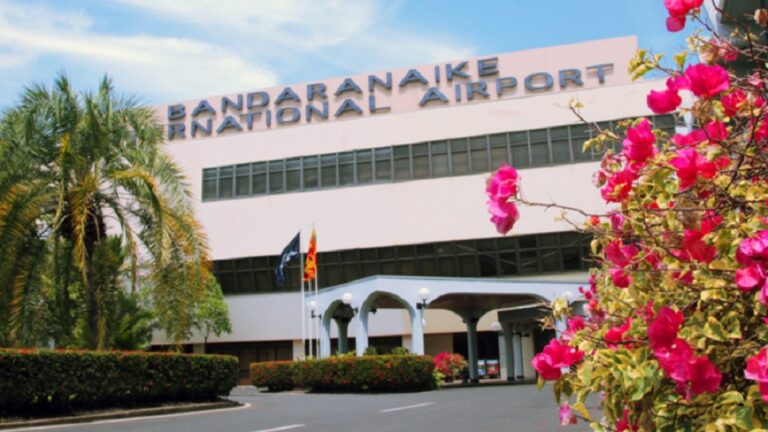
Colombo (LNW): The Bandaranaike International Airport (BIA) recorded a growth of 20% in the first quarter of 2023 compared with 2022 and facilitate over 18,000 passenger movements and 120 aircraft movements daily, in a bid to boost the confidence among the international airlines and Sri Lanka’s aviation industry for the better prospects, announced the Airport and Aviation Services Sri Lanka (Pvt) Ltd. (AASL).
A statement by the AASL said that passenger movements rose by approximately 20 per cent at the BIA and flight movements recorded by 7 per cent in the first quarter of this year compared to the corresponding predecessor.
Accordingly, the passenger movements indicates a growth from 1,374,130 to 1,651,039, and flight movements, from 9,357 to 10,018.
The AASL, as the civil airport operator and the aviation services provider, has been able to meet the International Civil Aviation Organisation’s (ICAO) requirements for the aviation security systems at the BIA and other airports, reassuring that Sri Lanka’s airports and skies are safe.
“BIA had facilitated 9.95 million passengers in 2019 and 62,195 aircraft movements before the global pandemic. BIA continues to create a happy journey for its travellers, elevating the passenger experience to new heights,” the statement added.
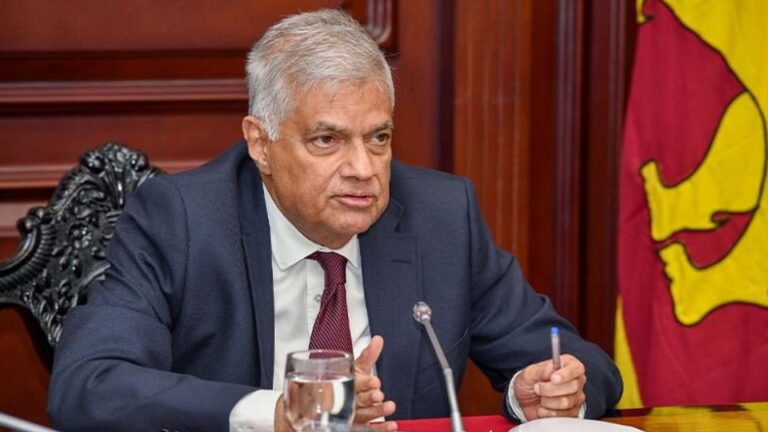
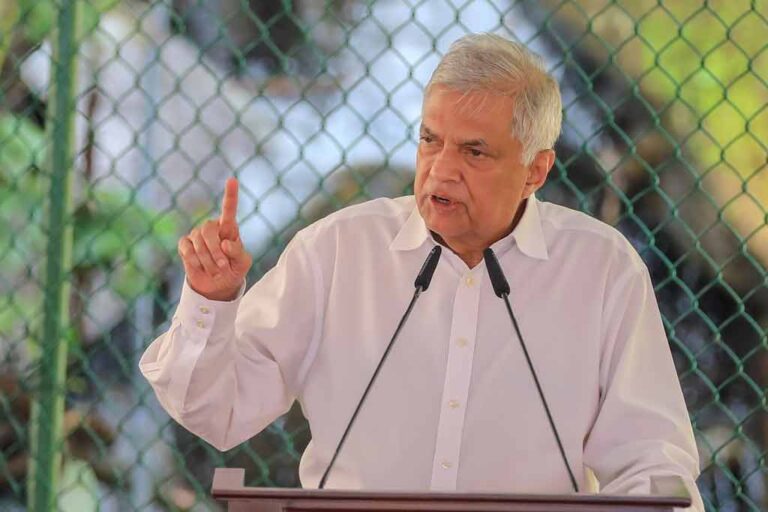
Colombo (LNW): President Ranil Wickremesinghe is set to visit Singapore and Japan this week with the aim of further making attempts to continue strengthening the country’s foreign relations. He is scheduled to leave the country today Monday 22.
During the visits, the President is expected to meet the Prime Ministers of Singapore and Japan, along with other relevant ministers in Japan.
According to foreign ministry sources Japan, which played an integral role in securing International Monetary Fund (IMF) support for Sri Lanka, will be personally paying a tribute to Japanese administration by the President while extending an invitation for the Japanese Government to once again re-engage with the country’s economy through new investments.
Several projects, including the Light Rail Transit (LRT) project – which faced much controversy following the Gotabaya Rajapaksa (GR) administration unilaterally cancelling it – are expected to be on the agenda of discussions.
President Wickremesinghe will be addressing the Nikkei Forum, where he will be outlining his visions for the future of Asia in the changing landscape of global geopolitics.
Meanwhile, the Government is moving forward with work related to the debt restructuring programme while the IMF has stated that it expects Sri Lanka to complete the process by the first review of the IMF’s US $ 3 billion Extended Fund Facility (EFF) programme, which is scheduled for September-October.
India, Japan and France have announced a common platform for discussion among creditors to address the debt restructuring programme of Sri Lanka, which is grappling with one of its worst economic crisis.
The representatives of the three creditor countries, including finance minister Nirmala Sitharaman, held a press briefing on the margins of the annual spring meetings of the World Bank and the International Monetary Fund (IMF) in Washington recently.
They discussed the debt situation of Sri Lanka, Ghana, Zambia and Ethiopia. Resolutions should happen on time as it’s a time-consuming affair, even after IMF assurances,” Sitharaman said after the meeting of G20 Finance Ministers and Central Bank Governors Meeting at Washington.
She emphasised that collaboration among creditors was important to ensure transparency and equality in the debt restructuring discussions.
Japanese Finance Minister Shunichi Suzuki described the launch as a historical development. “To be able to launch this negotiation process gathering, such a broad-based group of creditors, is a historical outcome,” he told reporters at the news conference.
At present, about 80 enterprises with Japanese investment are in operation under the purview of the BOI (section 17 and Section 16 of the BOI Law).
They have made their investment in the fields such as manufacturing semiconductors, printed circuit boards, safety sensors, ceramic items, cement, apparel, building and repairing ships, fabrication and installation of integrated buildings, power sector, tourism sector, infrastructure and logistics.
Currently, they have invested about US$ 399 million (Cumulative 2020), providing about 12,000 employment opportunities for the Sri Lankan community.
Colombo (LNW): Sri Lanka’s governance system needs only 15 ministries to look after all public affairs, despite President Ranil Wickremesinghe’s proposal to continue with 30 ministries, Verité Research observed.
The analysis by the Research Agency found that the present approach to setting up cabinet portfolios impedes the ability of the government to be efficient and effective.
“On May 17, President Ranil Wickremesinghe said, ‘at present, we have around 30 ministries. Let us maintain this number and avoid further expansion’.
This affirms the current constitutional limit on the size of the Cabinet of Ministers, which is 30. This is double the number of 15 ministries recommended by Verité Research in a white paper setting out the design of a rational structure of government,” they said.
The Verité Research white paper titled “A Rational Method for Cabinet Formation in Sri Lanka’, issued in 2020, set out the following 15 ministries as providing an optimal rational structure for government.
1. Finance & Planning, 2. Justice , 3. Defence, 4. Education & Research, 5. Health, 6. Agriculture, 7. Labour, 8. Public Utilities, 9. Ports, Shipping, & Civil Aviation, 10. Economic Affairs, 11. Home Affairs & Public Administration, 12. Foreign Affairs, 13. Family & Community Development, 14. Society and Culture 15. Environment.
Verité Research arrived at the total of 15 ministries by applying the best principles of designing an efficient and effective structure of government. It said the irrationality in the construction of government arises from two critical problems:
(1) Fragmentation – where related subjects are split across different ministries and (2) misalignment – where unrelated subjects are grouped together under a single ministry.
“In the past, these two problems created delays in decision-making and implementation, reduced government accountability and ability to function, and increased costs.
Therefore, the White Paper notes that fixing these problems with not only an optimally designed number of ministries, but also with the proper assignment of subjects, functions, and institutions to each of the ministries is the key to having a government that functions effectively and efficiently.
To solve this problem, Verité Research has developed a complete mapping of all the Sri Lankan government functions, laws, and institutions that are required to be in a gazette forming a new cabinet, to fit within the optimally designed structure of 15 ministries listed above,” it said.
Colombo (LNW): The European Union (EU) has welcomed Sri Lanka’s intentions to present next month a plan for the lifting of the import restrictions on around less than 1000 items from 3000 items (HS codes).
The matter had come up for discussion at the recently concluded Sri Lanka-EU Joint Commission sessions in Colombo. The Joint Commission took stock of the conclusions of the Working Group on Trade and Economic Cooperation held virtually.
The EU and Sri Lanka noted the significance of bilateral trade relations. “In this regard, the EU urged Sri Lanka to lift the import restrictions preventing many European products from entering its market.
The EU welcomed Sri Lanka’s intention to present a plan for the lifting of the import restrictions by June 2023. Sri Lanka expressed its intention towards a gradual phasing out of these restrictions, factoring in the current economic situation,” according to the joint statement following the discussion.
The government has restricted imports of 3000 items (HS codes) ranging from motor vehicles and air conditioners, to beer, clothing items, cosmetics and even spices such as turmeric — an essential cooking ingredient for many local households.
But the controls failed to either stop imports, or maintain foreign reserves as money was printed. Now the country is running balance of payments surpluses despite the import controls being brought down, he disclosed.
However the Sri Lanka‘s tile and sanitary ware importers have expressed concerns on the procedure of relaxation as they were waiting for around four years under the ban of imports while the government has lifted restrictions for several other non-essential items ignoring their business.
Sri Lanka‘s tile and sanitary ware business is heading for possible collapse following the repeated delay in the lifting of import restrictions for almost four years since mid-March 2019,several leading importers and traders said.
Although the present regime and the previous government had considered the appeals of other commodity importers by lifting the import ban on several items necessary for local industry survival, but official authorities kept on postponing the pleas of tile and sanitary ware importers, several leading importers and traders complained.
A considerable number of businesses are fighting for survival. Small business enterprises have already shut down, affecting direct and indirect employment of hundreds and thousands of people and their livelihoods.
A report containing this comprehensive plan will be submitted to the International Monetary Fund in June regarding the relaxation of import restrictions that are currently in effect.
Under this set up the Finance Ministry has devised a comprehensive plan with necessary guidelines to relax import restrictions in a manner that it would not be harmful to the government policy framework.
State Minister Semasinghe categorically stated that the government has not identified the relevant items which would be under relaxation of import control.
Sri Lanka’s imports in the first quarter of 2023 declined by 31.7% year on year to $ 3.85 billion. Last year imports declined by 11.4% to 18.3 billion. The EU and Sri Lanka also agreed that the EU-Sri Lanka Investor Dialogue may take place at an early date, in Sri Lanka.
The EU presented the new EU GSP Regulation, which is expected to enter into force on 1 January 2024, for the next 10-year cycle. The EU informed that the report of the last EU GSP+ monitoring cycle 2020-2022 is expected to be released in the coming months.
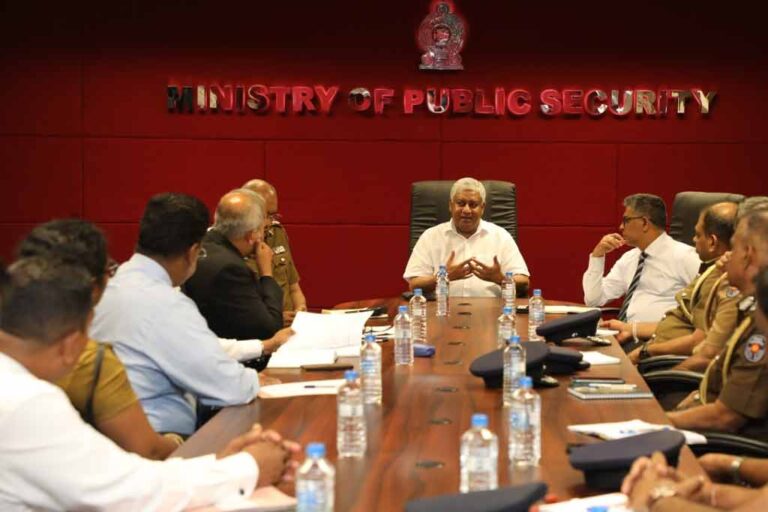
Colombo (LNW): Public Security Minister Tiran Alles instructed IGP C.D. Wickramaratne to tighten security and increase night patrolling near the Universities of Colombo, Sri Jayawardenapura and Kelaniya, following requests by their Vice Chancellors due to increased thefts in the premises.
These instructions were given following a series of meetings held with the university Vice Chancellors on May 16, 17 and 18.
Inquired about the current security situation of the students of the universities, Vice Chancellor of the Colombo University, Senior Lecturer H.D. Karunaratne requested the Minister to strengthen security near the students’ hostels. He revealed that there has been a rise of thefts in the premises.
Accordingly, Minister Alles instructed the IGP to increase night patrolling near the University, and assured on the measures to be taken to tighten security in the premises.
Vice Chancellor of Sri Jayawardenapura University Upul Subhasinghe told the Minister that the security near the University’s female students’ hostels should be tightened. Accordingly, the Subject Minister instructed the Police to fulfill the need.
During the meeting with Vice Chancellor of Kelaniya University Nilanthi De Silva, attention was drawn to the necessity of tightening security near the female students’ due to the rise in the number of thefts within the premises. The Minister, accordingly, assured that security will be tightened as requested.
Inquired about the usage of drugs among the students, Prof. Silva responded that the use of ICE narcotics has been eradicated from the University.
Western Provincial Senior DIG Deshabandhu Thennakoon also attended these meetings.
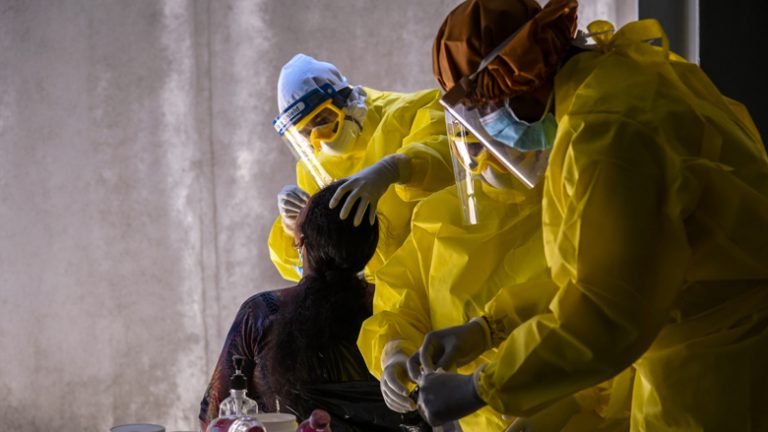
Colombo (LNW): Sri Lanka has reported its highest daily account of Covid-19 cases and infection-related fatalities of 2023 on Saturday (20), with 15 confirmed new infections and 03 deaths registered.
With the new account, the active cases of Covid have risen up to 61, surging the total number of confirmed cases up to 672,357, with 16,864 confirmed Covid-related fatalities total, according to the Epidemiology Unit’s daily situation report.
Meanwhile, the World Health Organisation reported that Sri Lanka is currently at 80 positions out of 231 countries in terms of the number of cases reported since the pandemic’s inception.
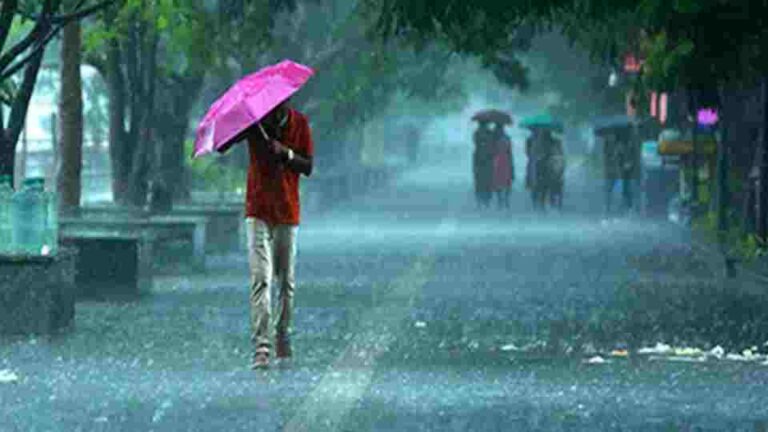
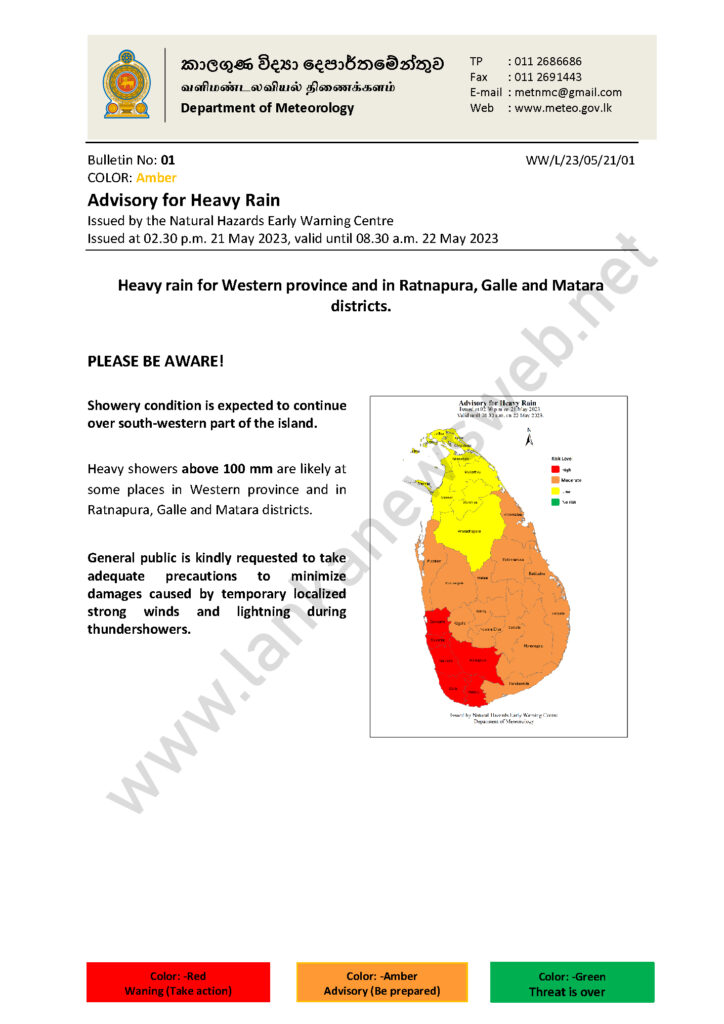
Colombo (LNW): Showery condition is expected to continue over south-western part of the island, and heavy showers above 100mm are likely at some places in Western Province and in Ratnapura, Galle and Matara districts, announced the Natural Hazards Early Warning Centre of the Department of Meteorology.
Meanwhile, showers or thundershowers will occur at several places in Western, Sabaragamuwa, Central, Eastern and Uva provinces and in Galle, Matara and Polonnaruwa districts during the evening or night, and showers will occur in Western coastal areas and in Galle and Matara districts during the morning too, the Dept said in its daily weather forecast today (22).
Strong winds about 40 kmph can be expected at times over Northern province and in Anuradhapura and Puttalam districts, it added.
General public is kindly requested to take adequate precautions to minimise damages caused by temporary localised strong winds and lightning during thundershowers.
Marine Weather:
Condition of Rain: Several spells of showers will occur in the sea areas off the coast extending from Colombo to Matara via Galle.
Winds: Winds will be south-westerly over sea area around the island and speed will be (20-30) kmph. Wind speed may increase up to (40-50) kmph at times in the sea areasoff the coast extending from Puttalam to Kankasanthurai via Mannar and in the sea areas off the coast extending from Hambantota to Pottuvil.
State of Sea: The sea areasoff the coast extending from Puttalam to Kankasanthurai via Mannar and in the sea areas off the coast extending from Hambantota to Pottuvil will be rough at times. The sea areas off the coast extending from Puttalam to Hambantota via Colombo and Galle will be fairly rough.
Temporarily strong gusty winds and very rough seas can be expected during thundershowers.
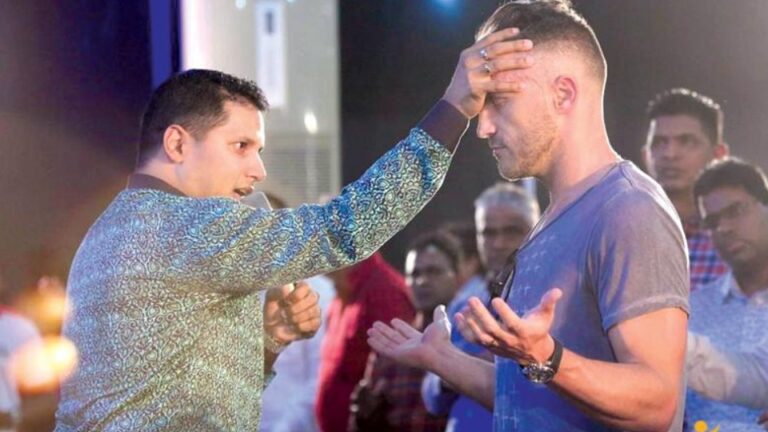
Colombo (LNW): Self-proclaimed ‘Prophet of God’ and a leading advocate for the Glorious Church of Colombo, Sri Lanka, prophet Jerome Fernando apologised to all the Buddhist clergy and Buddhist, Hindus and Muslims over his remarks, against which the pastor is currently facing a travel ban by the Court.
In a livestream, Fernando said he has done nothing wrong, adding that he wants to yet apologise to his Buddhist brothers, Hindu brothers, Muslim brothers and sisters, if his words by any means have hurt them emotionally.
Fernando is currently abroad and is yet to return to Sri Lanka.
The pastor has driven himself into hot water over a comment he had allegedly made during a congregation instigating religious disharmony.
PMD: President Ranil Wickremesinghe called on every Sri Lankan to contribute to creating a glorious & prosperous country free of bankruptcy.
He mentioned this two days ago (20) while declaring open the Kegalle, Aranayaka ‘Asupini Ella water scheme’; the largest water project in the Sabaragamuwa Province.
This water scheme was implemented under the financial allocation of Rs. 3,847 million from the Government of Sri Lanka and the loan support of Rs. 18,650 million from the Government of the Netherlands, providing solutions to the drinking water problem in 135 Grama Seva Divisions belonging to Aranayaka, Mawanella and Rambukkana Divisional secretariats in Kegalle district.
The construction work of the water scheme commenced in 2018 and the work was done under the supervision of the National Water Supply and Drainage Board under the guidance of the Ministry of Water Supply and Estate Infrastructure Development.
A water treatment plant with a capacity of 21,000 cubic meters per day, 07 service reservoirs, a transmission pipe system of 37 km and a distribution pipe system of 120 km have been constructed under this scheme.
Under this project, around 169,000 people covering 52,300 families will have clean and safe drinking water facilities, under which 25,200 new water connections will be provided and 27,100 existing water connections will be improved.
Unveiling the plaque and declaring open the water scheme to the people, the President also declared opened the water system. He then joined an observation tour of the water scheme premises.
Mr. Ranil Wickremesinghe, who further commented, said:
In 2018, I came to lay the foundation stone of this water scheme as the Prime Minister. Today, as the President, I consider it a great privilege to come to declare open that water scheme. At that time I came to lay the foundation stone for this water scheme on the request of Mr. Kabir Hashim. I am happy to be able to finish this project.
The program started by Minister Kabir Hashim has been carried forward by the next Government and has been completed during the tenure of Minister Jeevan Thondaman. The drinking water requirement of about 200,000 people will be fulfilled by this water scheme which will be started today. I express my thanks to all the employees who have contributed for this water scheme.
In the past, after Sri Lanka was declared a bankrupt country, no investors came to the country. Former investors left the country. In such an environment, foreign investors are not interested in providing aid to Sri Lanka. In such a situation, I have taken charge of the country and gone to the IMF to bring the country’s economy to a stable state.
Because whether they are Sinhalese or Tamil, people do not wish to live as beggars. They wish to live with dignity.
The IMF had imposed tough conditions on us. But we had no other options. Similar conditions were presented earlier in the negotiations with the IMF. There, one previous Government withdrew from transactions with the IMF. But we have gone to the IMF and are taking the program forward with proper management.
By the coming month of September, it is possible to successfully complete the debt restructuring program and bring the economy to a stable level. We have submitted the agreement with the IMF to the Parliament and passed it.
Today, members of the SLPP have expressed their will and given the necessary support to the economic policy of the United National Party. That support is very important if this country is to recover from the economic crisis. We should all work together and work hard to build a prosperous country out of bankruptcy.
Minister of Water Supply and Estate Infrastructure Development Jeevan Thondaman
I would like to thank you all for coming here. And I am grateful to the Dutch Government and also the Turkish Government to seeing this through. I am thankful to the contractors who had actually stayed on just like a few of the contractors of the Water Board and completed this project. So I am grateful to them for that. And moreover, I would like to reiterate the Water Board’s commitment on keeping up with SDG 6, where we would want to provide clean and safe sanitation for everyone.
I would also like to say that Honorable MP Kabir Hashim was instrumental in setting up this project, and we’re glad he’s here. But I would also like to remind him that the President who is on this side is the one who has created the atmosphere to build all of these projects. We have taken the country out of bankruptcy and we have taken this country to a situation where abandoned projects are being restarted.
State Minister of Water Supply Sanath Nishantha
The current President laid the foundation stone for this water scheme in the year 2018 as the Prime Minister. We are happy that he came today to declare open this water scheme.
Although Kegalle district is self-sufficient in water, drinking water has been provided to only 45% of the district. But today, I would like to say that the drinking water needs of about 60% of the people will be fulfilled with the opening of this water project.
Drinking water supply in Trincomalee district is as high as 70% as well as in Ampara. I believe that although the protestors work to demolish Government property, they should struggle to gain such big projects.
State Minister of Foreign Affairs Tharaka Balasuriya
This water scheme will benefit a large number of people. This project started by the previous Government was continuously brought forward by our Government. When such important projects are brought forward, various conspiracies are carried out. Last night, some group set fire to a stock of pipes related to this scheme. It’s worth more than 50 million rupees.
At a time when the country was unstable, the President took charge of the country and directed the country towards a correct economic policy. Your economic reform program is very important. Also, I suggest to the President that a political reform program is also very necessary. I believe that this country will take a new leap through your new economic and political program.
State Minister of Technology Kanaka Herath,
This is the first time that the President visited Kegalle district after taking office. It is to nationalize this huge water scheme. This huge water scheme was started when we were in opposition. But it has been continued and the people have got the opportunity to reap its benefits today. There are several tourist attractions in Kegalle district. It is possible to promote the tourist attraction with tourist attractions such as the Elephant Orphanage, Zoo and Kitulgala Rafting.
It should be remembered that with the green economy and the digital economy that the President is constantly talking about, there is the potential to take the economy of this country to a new dimension.
Bonnie Horbach Ambassador of the Netherlands to Sri Lanka
This project came about by pure sense of co-creation and cooperation and between Sri Lankan expertize, Dutch expertize and Turkish expertize.
And it was the Sri Lankan knowledge of the locals’ situation and the local possibilities that allowed Ballast Nedam to put their engineering qualities in and build this amazing project which will allow a large number of people to get uninterrupted water access. A project that costs 81 million Euros.
This project was very much also about sharing knowledge and allowing others to benefit from the project as well.
And I think co-creation is all about allowing access to equal opportunities. And that is what I think the president is doing at the moment with the reform program, allowing equal opportunities for businesses to come and invest, co-create opportunities to get to co-create solutions for problems that arise in this country. And I’m very proud to see Dutch companies and Dutch investors coming in and to work together with Sri Lankan companies; Sri Lankan expertize and to watch a better future and knowledge exchange and allowing the Sri Lankan people to benefit and prosper and in return.
State Minister Ranjith Siyambalapitiya, Members of Parliament Kabir Hashim, Rajika Wickramasinghe, Sujith Sanjaya Perera, Udayakantha Gunathilaka, public representatives of Kegalle district and The Ambassador of Turkey to Sri Lanka, Demet Sekercioglu were also present on this occasion.
SEOUL, May 21 (Yonhap) — With Sri Lanka mired in a severe food crisis, support from South Korea is “crucial,” the South Asian country’s representative for the U.N. World Food Program (WFP) has said.
In an interview at WFP’s Seoul office Thursday, Abdur Rahim Siddiqui thanked South Korea and noted WFP’s “meaningful partnership” with the country through the Korea International Cooperation Agency (KOICA).
“Sri Lanka has been the recipient of considerable investment from Korea, with US$81 million provided in 2022-2023 to date,” Siddiqui said. “WFP, too, has engaged in a meaningful partnership with Korea since 2019, and has received US$11 million, through KOICA, towards its programs to enhance smallholder farmers’ resilience to climate change. This support has been instrumental in promoting self-reliance among climate-vulnerable farming communities while shielding them from the full effects of the country’s economic crisis.”
Siddiqui said nearly 3 in 10 households were noted as food insecure at the height of Sri Lanka’s economic crisis in 2022. The food crisis has come on the heels of an already vulnerable economy in light of the COVID-19 pandemic. Global food and energy price increases also led to inflation in Sri Lanka, Siddiqui added.
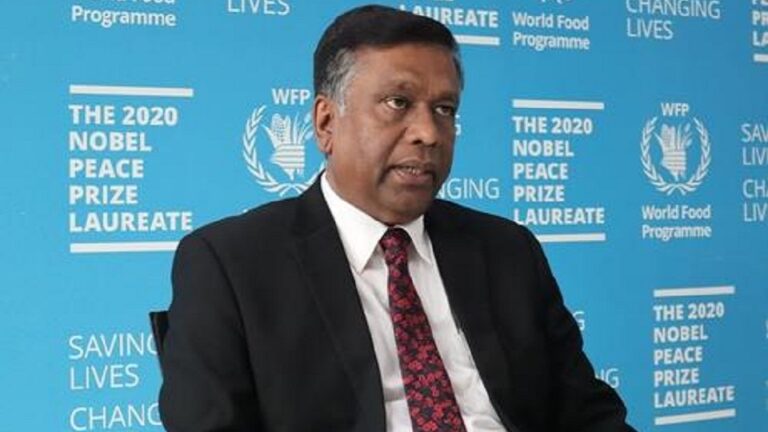
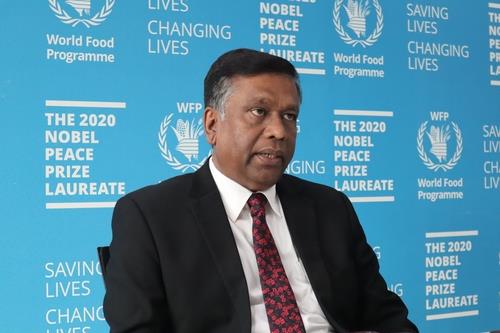
This photo provided by the World Food Programme’s Seoul office on May 21, 2023, shows Abdur Rahim Siddiqui, Sri Lankan representative for WFP. (PHOTO NOT FOR SALE) (Yonhap)
He also said significant increases in food and fuel prices over the past year are forcing more than half of Sri Lankan households to adopt negative coping strategies, such as buying cheaper food to deal with reduced incomes.
“The support of partners like Korea is crucial to Sri Lanka’s recovery,” Siddiqui said. “By providing humanitarian actors with adequate resources, Korea can be instrumental in building sustainable solutions, strengthen food systems and help lift people out of the vicious cycle of poverty, food insecurity and malnutrition.”
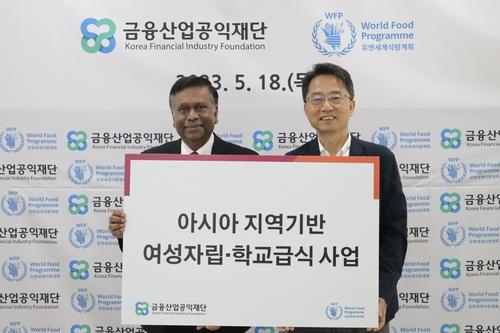
This photo provided by the World Food Programme’s Seoul office on May 21, 2023, shows Abdur Rahim Siddiqui (L), Sri Lankan representative for WFP, after reaching an agreement with the Korea Financial Industry Foundation on a contribution to the WFP Sri Lanka Home Grown School Feeding project. (PHOTO NOT FOR SALE) (Yonhap)
Siddiqui was in South Korea to sign an agreement with the Korea Financial Industry Foundation, which will contribute 1 billion won (US$754,600) over the next 30 months to the WFP Sri Lanka Home Grown School Feeding project.
“Through this, WFP supports school meal caterers to grow, produce and rear poultry for eggs in their own home gardens,” Siddiqui said. “This helps caterers overcome the challenge of rising food prices, while ensuring that children receive fresh, nutritious and diverse meals in school.”
The project began in March 2020 in two vulnerable regions, Monaragala in southern Sri Lanka and Matale in central Sri Lanka. It has since expanded to six other districts.