Home Blog Page 1770

Sri Lanka crisis: Central bank lays out extent of economic problems

0

Sri Lanka’s central bank has laid out the extent of the country’s worst economic crisis in more than 70 years.

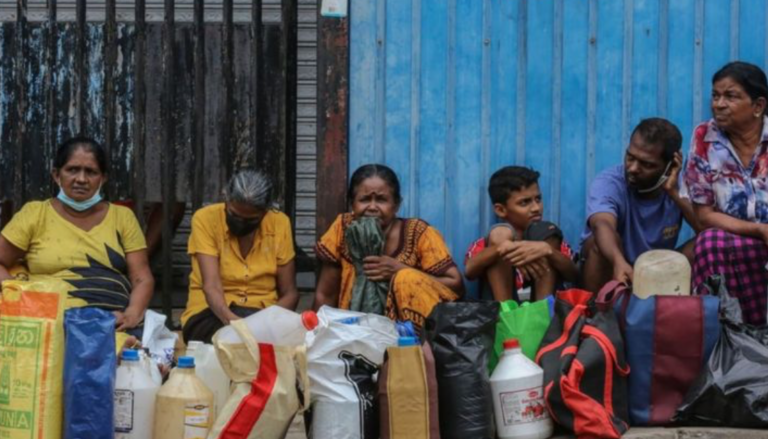
In its annual report, the bank outlined how last year wages failed to keep up with the soaring cost of everything from food to fuel.

“Several inherent weaknesses” and “policy lapses” helped to trigger the severe economic problems that engulfed the South Asian nation, the bank says.

The bank now expects the economy to return to growth next year.

The Central Bank of Sri Lanka forecast the economy will shrink by 2% this year, but expand by 3.3% in 2024.

The prediction is more optimistic than the International Monetary Fund (IMF), which forecast a contraction in 2023 of around 3% and growth of 1.5% next year.

The central bank’s report also outlined how headline inflation reached almost 70% in September as prices of fresh fruit, wheat and eggs more than doubled.

At the same time the cost of transportation and essential utilities such as electricity and water rose even faster.

Last year, the economy shrank by 7.8% and the country defaulted on its foreign debt for the first time since independence from the UK in 1948.

Defaults happen when governments are unable to meet some or all of their debt payments to creditors.

This damaged its reputation with lenders, making it even harder to borrow money on the international markets.

“The Sri Lankan economy faced its most onerous year in its post-independence history,” the report said.

An “unsustainable” economic model “steered the country towards a multifaceted disaster,” it added.

Sri Lanka owes about $7bn (£5.7bn) to China and around $1bn to India. In February, both countries agreed to restructure their loans, giving Sri Lanka more time to repay them.

Last month, the IMF agreed to lend Sri Lanka $3bn. That was on top of a $600m loan from the World Bank last year.

Sri Lanka’s government is currently negotiating its debt repayments with bondholders and creditors before the IMF reviews the situation in September.
BBC

Sri Lanka trying to reduce overall debt by $17 billion, president says

0

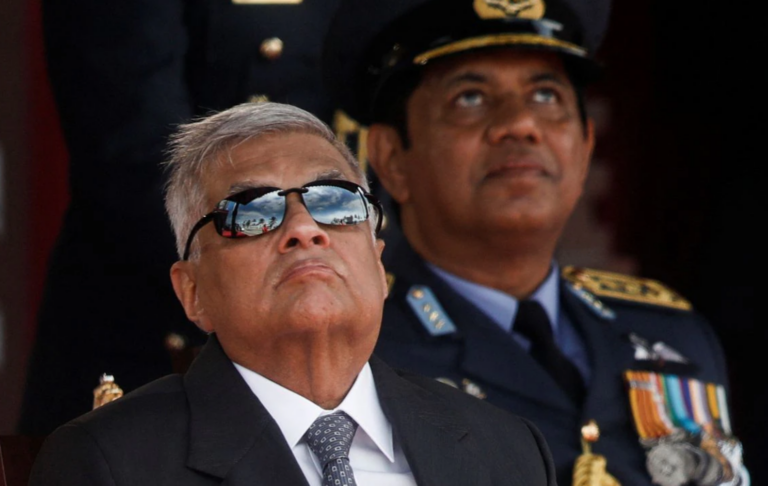
COLOMBO, April 26 (Reuters) – Sri Lanka is trying to reduce its overall debt by $17 billion through restructuring, its president told the parliament on Wednesday as he sought support of opposition parties for a nearly $3 billion International Monetary Fund (IMF) programme.

President Ranil Wickremesinghe also said the country would discuss debt restructuring with India and the Paris Club of creditors on one platform and with China separately.

Caught in its worst financial crisis since independence from Britain in 1948, the island nation of 22 million people secured an IMF loan last month.

Sri Lanka owes $7.1 billion to bilateral creditors, according to official government data, with $3 billion owed to China, $2.4 billion to the Paris Club and $1.6 billion to India.

Wickremesinghe said no final decision had been taken yet on domestic debt restructuring.

He added that the country needs to accelerate growth to 6% or higher by 2028 or 2029 to repay debt and develop.

Sri Lanka is yet to finalise the debt restructuring plan which was expected to be handed over to the IMF, creditors and bondholders by the end of April, a senior finance Ministry source said, adding that the government is in touch with the IMF regarding the matter.

“We are still finalising the plan, it requires a lot of serious discussions. The (restructuring) programme may get delayed a few days or a week,” the source said, declining to be named as they were not authorised to speak to media.

Bloomberg News reported on Wednesday that Sri Lanka had pushed back release of debt restructuring plan to middle of May.

Sri Lanka will likely have another year of economic contraction in 2023, ratings agency S&P said on Wednesday but noted that conditions in the country were beginning to stabilise.

It affirmed Sri Lanka’s long-term and short-term foreign currency sovereign credit ratings as ‘SD/SD’, meaning selective default, and retained outlook on the long-term local currency rating as negative.

Reporting by Asiri Fernando; Writing by Shivam Patel; Editing by Himani Sarkar

IMF Extended Fund Facility Resolution Passes in Parliament

0

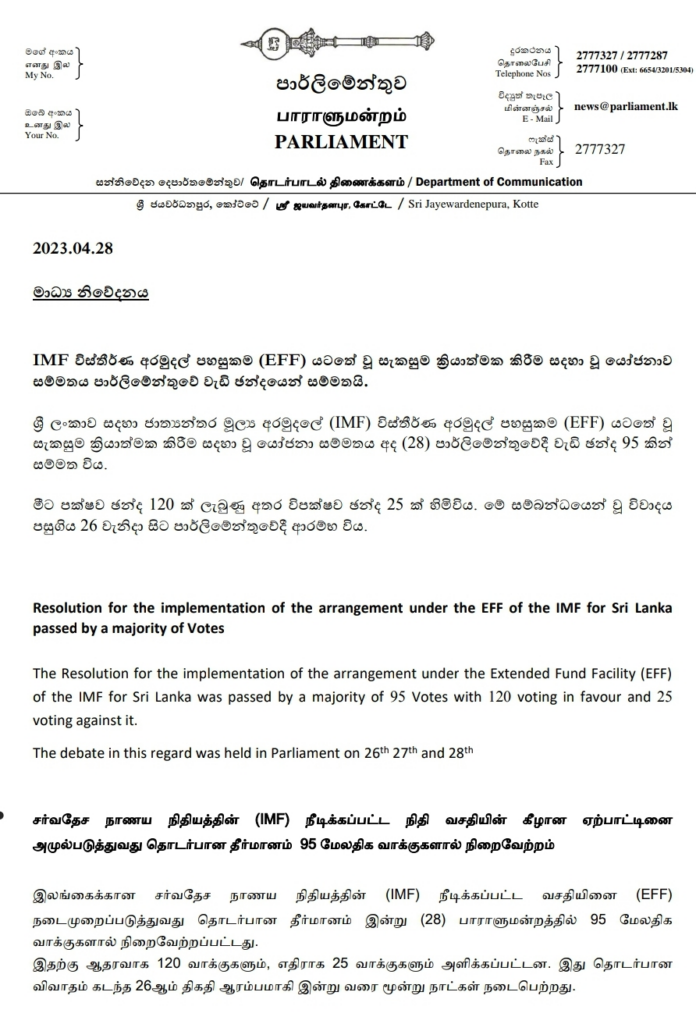
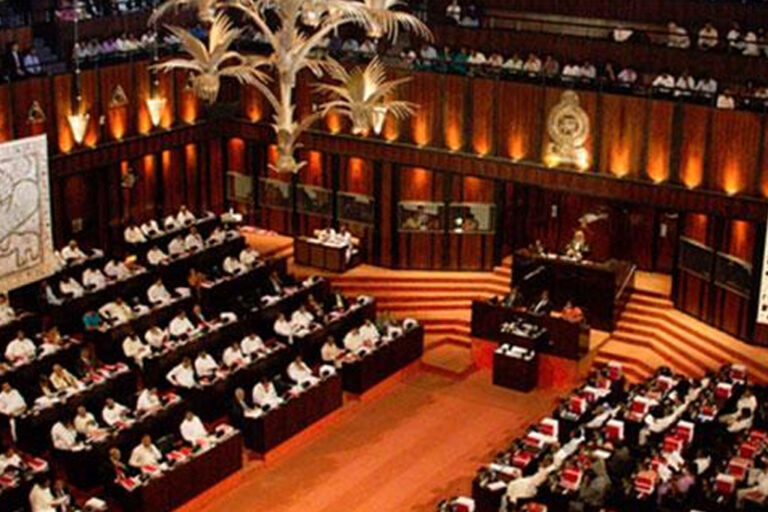
In a significant development, the Sri Lankan parliament has passed the resolution for the implementation of the arrangement under the Extended Fund Facility (EFF) of the International Monetary Fund (IMF).

The resolution, which received 120 votes in favor and 25 against, is a crucial step towards strengthening Sri Lanka’s economic stability and achieving sustainable growth.

The IMF’s EFF program aims to support countries that are facing balance of payment difficulties and require financial assistance to address their macroeconomic imbalances. Sri Lanka had requested the IMF’s assistance in May 2020 to address the economic fallout from the COVID-19 pandemic and the structural challenges facing the country’s economy.

The EFF program for Sri Lanka is worth approximately $1.5 billion and will be disbursed in six tranches over the next three years. The program’s main objectives are to support Sri Lanka’s macroeconomic stability, improve public finances, and promote structural reforms to enhance the country’s economic resilience.

Sri Lanka Original Narrative Summary: 29/04

0
  1. Russian Ambassador in SL – Levan Dzhagaryan says sanctions imposed by the US on SL’s former Navy Commander Wasantha Karannagoda are totally unacceptable: previously, US State Dept announced that Karannagoda, the current Governor of North Western Province, and his family are banned from entering the US over “violation of human rights”: SL Govt has also expressed grave concerns about the US action.
  2. Justice Minister Wijeyadasa Rajapakshe says the Govt will delay the tabling of the Anti-Terrorism Act in Parliament until broader consensus is reached.
  3. NPP Leader Anura Kumara Dissanayake claims there’s a connection between the IMF loan and the CB Governor Nandalal Weerasinghe’s decision to default on foreign debt: also says the decision to default had been taken
    even though money had been allocated from the budget: labels decision as “conspiratorial”: similar allegations against Governor Weerasinghe have been made by several MPs: reports show pipeline of inflows at the time of the sudden default announcement was a massive USD 10.7 billion.
  4. Shares at the CSE fall further: investors await more clarity on local debt restructuring: ASPI falls below 9000 to 8983.
  5. Dept of Census & Statistics says the Overall Rate of Inflation, as measured by CCPI dropped to 35.3% in Apr’23, compared to 50.3% in Mar’23: analysts allege the Census Dept arbitrarily changed it’s base for the calculation of the CCPI from Feb’23 onwards to reflect and report a lower CCPI.
  6. CB Annual Report 2022 states “stunting” and “wasting” among children under 5 years had increased to 9.2% and 10.1% in 2022, from 7.4% and 8.2% in 202
  7. SriLankan Airlines Chairman Ashok Pathirage says “privatization” of the airline would help as long as the right partner is found: Airline’s CEO Richard Nuttall says there is a need to reactivate the fleet and replace the aircraft with expiring leases.
  8. Committee on Parliamentary Business decide to take the Sri Lanka Central Bank Bill for debate (second reading) on 11th May.
  9. Parliament approves Sri Lanka’s Agreement with the IMF with 120 voting for and 25 against: 80 MPs abstain: strong IMF & Default proponent Harsha de Silva, and SJB MPs walk out at voting time: former President Mahinda Rajapaksa votes for: MPs G L Pieris, Wimal Weerawansa, Vasudeva Nanayakkara vote against: Namal Rajapaksa not present.
  10. SL win 2nd Cricket Test against Ireland by an innings & 10 runs: SL – 704/3d (Kusal Mendis 245, Nishan Madushka 205, Dimuth Karunaratne 115, Angelo Mathews 100*) IRE – 492 & 202: SL win series 2-0: Prabath Jayasuriya becomes fastest in the world to take 50 Test wickets as a spinner and fastest SL bowler to take 50 Test wickets.

A new integrated labor law to facilitate foreign investment

0

By: Staff Writer

Colombo (LNW): Minister of Labor and Foreign Employment Manusha Nanayakkara stated that steps will be taken to prepare the new integrated labor law to avoid the complexities of the existing labor law.

Accordingly, at the Ministerial Consultative Committee on Labor and Foreign Employment affairs held in Parliament recently, the Minister also said that taking opinions and suggestions of all relevant parties including the public will be started from May 2 to formulate this integrated labor law.

The minister further pointed out that the country’s industrial law, which is currently scattered and complex, is expected to be converted into an integrated labor law, and it is an essential step to encourage local and foreign investors.

Thus, the new consolidated law will facilitate the settlement of disputes between employers and employees. The Minister also said that these new laws will facilitate the convenient start and running of business activities, especially for investors coming to Sri Lanka.

The attention of the committee was also paid to businesses that are not registered in the Employees’ Provident Fund (EPF).

The Minister pointed out that only 80,000 business companies are registered in the Employees Provident Fund. The MPs stressed that immediate action should be taken against unregistered companies.

Accordingly, it was decided to inform all divisional secretaries and local government commissioners in writing to send information about businesses registered in different parts of the island to the Ministry of Labor.

Also, the Minister instructed the Department of Labor and the Employees’ Provident Fund to submit a plan of possible future actions against such companies within a month.

The Minister instructed the Foreign Employment Bureau to implement a program to educate people about foreign employment. He also mentioned that no special quota has been given to the Members of Parliament regarding the sending of workers to the foreign employments.

The head of the Foreign Employment Bureau said that nearly 90,000 people, including 26,000 unskilled workers and over 60,000 skilled workers, have been sent for foreign jobs recently.

Meanwhile, MP Yadamini Gunawardena expressed his gratitude on behalf of the Sri Lanka-Romania Parliamentary Friendship Association for the step taken to establish a Sri Lanka Embassy in Romania to solve the problems of Sri Lankans in Romania.

USAID, ADB join hands to assist Sri Lankan women in energy sector

0

By: Staff Writer

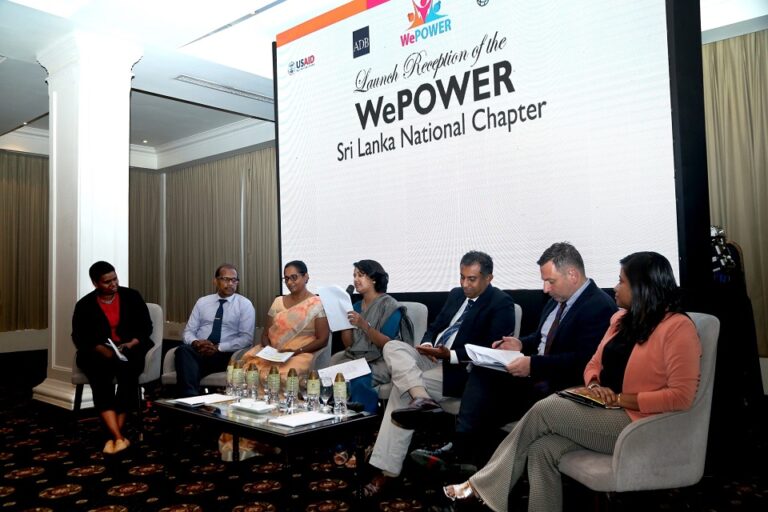
Colombo (LNW):The USAID’s Sri Lanka Energy Project and the Asia Development Bank (ADB) have collaborated to launch the Sri Lanka National Chapter WePOWER to promote the advancement of women working in the country’s local energy sector.

The national chapter is affiliated with the regional South Asia WePOWER Network.In addition to promoting women in energy, this World Bank initiative also increases women’s participation in Science, Technology, Engineering, and Mathematics (STEM) education, the US Embassy in Colombo said in a statement.

The launch featured a panel discussion and engaged power sector stakeholders including utilities, academia, and professional networks to raise awareness about the national chapter WePOWER and to encourage high-level officials’ support to ensure its sustainability and success.

Recent World Bank statistics show women represent only about 13 percent of Sri Lanka’s power sector employment, the embassy said further.

“The power sector in Sri Lanka will greatly benefit from workplace diversity and increased participation by women, including in leadership positions,” said Christopher Powers, Director of the USAID’s (US Agency for International Development) Economic Growth Office.

“The launch of the WePOWER national chapter in Sri Lanka is a timely and exciting development for the country, as well as for its energy sector,” said ADB Country Director Chen Chen.

He noted that Sri Lanka may capitalize on the trend in its economic recovery course. With more women joining the energy sector, we will create a more diverse and better equipped workforce to address the global and local challenges.”

Among its first efforts, Sri Lanka WePOWER plans to conduct training in gender equality and social inclusion and a workshop in May to develop an action plan to create and monitor gender activities with targets and goals under its five pillars: STEM education, recruitment, development, retention, and policy and institutional change.

USAID’s Sri Lanka Energy Program is helping Sri Lanka transform its power sector into a market-based, secure, reliable, and sustainable system by mobilizing investment to deploy advanced technologies, increase flexibility, and enhance competitiveness.

The U.S. commitment to help build a power sector for tomorrow is one of many elements of America’s long, strong, and enduring partnership in Sri Lanka, a partnership that has been the foundation of 75 years of close relations and effective work together.

COPA instructs Sri Lanka Police to Provide Proposed IT Program Within a Month

0

Hon. Lasantha Alagiyawanna, Chair of the Committee on Public Accounts (COPA), has instructed the Department of Police to provide a proposed information technology (IT) program within a month. The directive came during a meeting held on April 26, where the Sri Lanka Police was summoned to examine the Auditor General’s report and current performance for the years 2019, 2020, and 2021.

The meeting, attended by senior police officials, also addressed other issues such as the lack of female police officers, expired tear gas, language skills of police officers, police promotions, and crime control.

During the meeting, it was highlighted that a recommendation made in 2016 to establish an IT system for the Sri Lanka Police has not been implemented. The Inspector General of Police stated that a new pilot project is being implemented in Hatton and Nuwara Eliya Police Stations, and steps will be taken to introduce IT systems in segments due to the difficulty of setting up a single system.

The Committee Chair emphasized the importance of integrating the motor transport department and other institutions to obtain relevant information immediately and instructed the Sri Lanka Police to submit a report on the current and proposed IT program within a month.

The meeting also revealed that there are 2419 female police constable vacancies, and efforts are being made to complete them by 2023. The Inspector General of Police stated that reforms have been initiated to provide opportunities for women in higher positions, including the post of Inspector General of Police.

The Committee also instructed the disposal of expired tear gas across all police stations in Sri Lanka and called for a report on measures taken to control public riots, including tear gas. The need to improve the language skills of police officers was also emphasized.

CBSL Annual Report (2022) handed over to the President

0

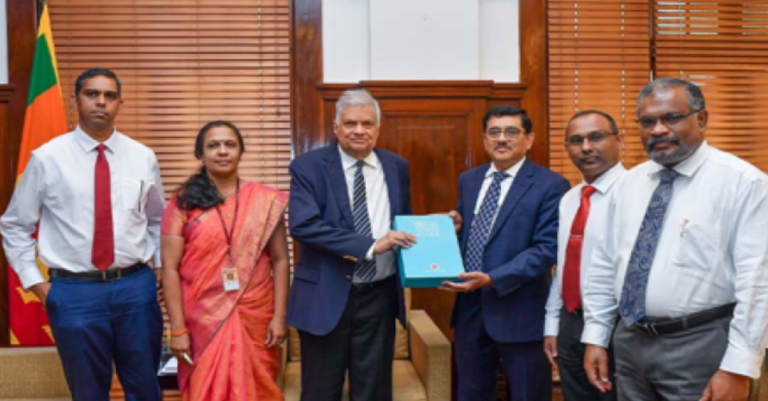
The Annual Report of the Central Bank of Sri Lanka (CBSL) 2022 was presented by Central Bank Governor Dr. Nandalal Weerasinghe to the Minister of Finance Economic Stabilization and National Policies, President Ranil Wickremesinghe at the Ministry of Finance today (27).Presented as the 73rd Annual Report of the CBSL, this report consists of four main parts.

Accordingly, the first part consists of 08 chapters and 30 sub-chapters explaining the state of the economic affairs of the year, while the second part consists of a collection of gazettes and circulars related to various policy measures taken by the Government and the CBSL. The third part of this report explains the departments of the CBSL and their related roles and the fourth part includes a list of laws and ordinances related to the banking system connected to the Government and the CBSL.

In accordance with Section 35 of the Monetary Law Act, the Monetary Board of the CBSL is required to produce an annual report on the economic conditions and the policies taken for that year and submit it to the Minister of Finance within four months after the end of the relevant year.

Secretary of the Ministry of Finance Mr Mahinda Siriwardana, Director of the Economic Research Department of the Central Bank of Sri Lanka Dr. P.K.G.Harishchandra, Additional Directors of Economic Research Dr. Mrs. S. Jegajeevan and Dr. L. R. C. Pathberiya participated in this event.

The official announcement issued by the CBSL in this regard is shown in Annexure 01 below.

The 2022 annual report of the Central Bank of Sri Lanka can be accessed through the link below. https://www.cbsl.gov.lk/en/publications/economic-and-financial-reports/annual-reports

Duty-free allowance for expatriate workers rises with remittance increase

0

By: Staff Writer

Colombo (LNW): Sri Lanka is targeting $1 billion monthly foreign inflow from worker remittance by end-2023 with more people leaving the island nation for offshore jobs amid an unprecedented economic crisis, Foreign Employment and Labour Minister Manusha Nanayakkara said.

Sri Lankan migrant workers’ foreign remittances amounted to a total of US$ 1.41 billion in the first three months of 2023 exceeding the $1 billion target forect for this year, Central Bank data shows

Foreign remittance of US$ 568.3 million has been recorded in March 2023 in comparison to the US$ 318.4 million reported in March 2022.

The Minister further stated that this was a 78.5% (US$ 249.9 million) increase compared to the inflows recorded in March 2022.

The central bank’s figures have shown that the foreign remittances earned by Sri Lankan migrant workers’ were at $437.5 million and $ 407.4 million in January and February 2023, respectively an it was increased significantly to $.568.3 million in March 2023.

Minister Manusha Nanayakkara, noted that 300,000 Sri Lankans have left the island for foreign employment in 2022.

The government has offered moe concesstions for srilankan migrant workers such as high duty-free allowance, pension benefits, and vehicle imports to boost foreign remittances.

The duty-free allowance given to expatriate workers at the airport will be increased from May 01, Minister of Labour & Foreign Employment Manusha Nanayakkara says.

Addressing a media at the Government Information Department, Nanayakkara said a circular in this regard has already been issued.

Earlier, a memorandum presented by Nanayakkara to the cabinet of ministers seeking their approval to increase the duty-free allowance given to expatriate workers at the airport had been green-lighted.

Accordingly, the Ministry of Labour and Foreign Employment took measures to issue the relevant circular.

As per this circular, expatriate workers who legally send money to Sri Lanka through the banking system are eligible to receive an increased duty-free allowance, he explained.

The amount of money sent through the banking system from May 01, 2022, will be taken into account and this concession will be given under five categories.

Migrant workers who have sent between US$ 2,400 – $ 4,799 will get an additional duty-free allowance of $600 and workers who have remitted between$ 4,800 -$ 7,199 will get an additional allowance of $ 960.

Meanwhile, the expatriate workers who have sent between $7,200 – $11,999 will receive an additional duty-free allowance of $ 1,440, while those who have remitted between $ 12,000 – $ 23,999 can get $ 2,400.

The migrant workers who have sent $24,000 or more can get an additional $ 4,800 duty-free allowance.

Nanayakkara said the facility is available through a mobile application operated by the Central Bank, adding that by registering through this app, it is possible to get an additional duty-free allowance based on the amount of dollars they have sent to the country.

Water Board Calls for Water Tariff Hike Amid Rise in Electricity Charges

0

The National Water Supply and Drainage Board has announced that it is necessary to increase water tariffs to cover additional costs incurred by the recent hike in electricity charges.

According to Deputy General Manager N.K. Ranatunga, while water tariffs were increased after a decade, they were not revised in line with the January 2023 electricity tariff increase.

Ranatunga highlighted that the Water Board had to bear an extra cost of Rs 4 billion due to the electricity tariff hike and warned that the board cannot continue to bear additional expenses for long.

The announcement comes amid growing concerns over the impact of rising utility prices on households in the country.