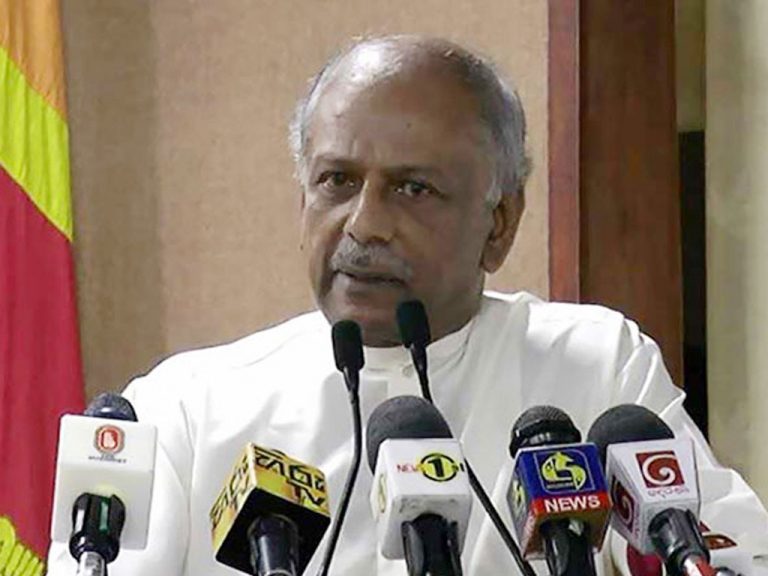
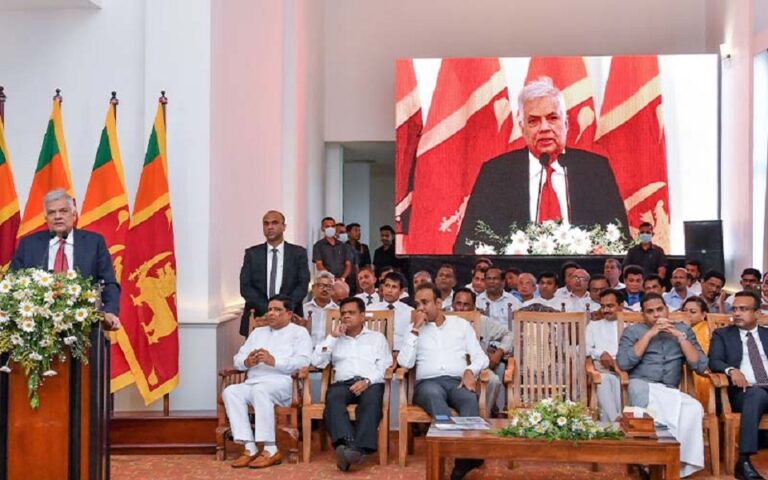
Colombo (LNW): The Prime Minister’s Office has categorically denied the reports claiming that Dinesh Gunawardena is preparing to resign from his post as the Prime Minister of Sri Lanka.
“There is no truth behind the rumours that being spread claiming that Prime Minister Dinesh Gunawardena is going to resign,” the PM’s Office said in a statement.
The PM’s Office added that no such requests have been made by any political party to date.
Earlier, SLPP rebel MP Channa Jayasumana claimed that there is an ongoing attempt to restore ex President Mahinda Rajapaksa as the Prime Minister replacing Gunawardena.
As and when a country confronts a crisis, the habit of the bureaucracy across the world is to find scapegoats to coverup their lethargy, negligence and inefficiency in respective public duties. The frequent scapegoat is the lapses in relevant laws.
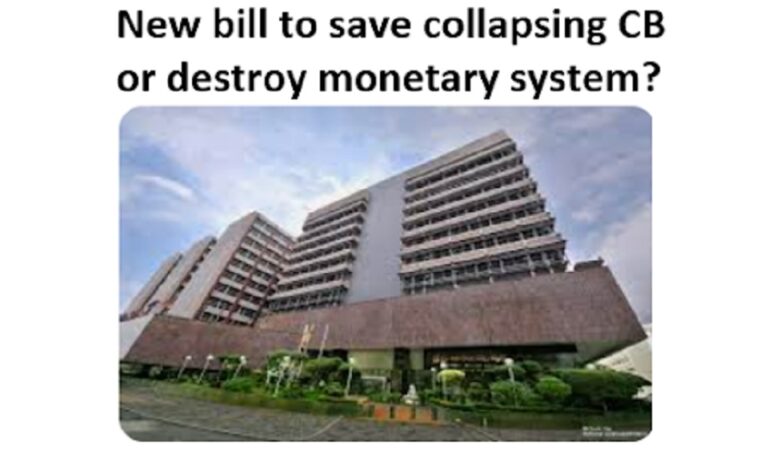
Everybody knows that the present Sri Lankan economic crisis is the failure of the Central Bank bureaucracy which mismanaged the public debt and foreign currency markets. However, the Central Bank bureaucracy has got the support of the IMF and political leaders to blame the Monetary Law (MLA) for the crisis by not giving the privacy or autonomy to Central Bank officials to run the monetary system and the central bank on the public funds as they wish.
As a result, a new bill to reestablish the Central Bank of Sri Lanka as proposed by the Minister of Finance with the approval of the Cabinet of Ministers has been published in the gazette on 23 February 2023. This is known as one condition for the approval of the IMF loan of US$ 2.9 bn for four years whereas the Parliament has to approve the bill for the disbursement of the loan.
By going through the provisions of the bill, I felt that nobody who got involved in the bill has any idea of what the monetary system is, what its role is for the economy and the duty of the central bank to administer the monetary system deliver its economic role as required from time to time. Further, none of them appears to have read the full text of the bill at least for checking the consistency and accuracy of contents. I plan to write a series of articles to express my views on the contents of the bill.
This article only focuses on the danger of the bill for disruption of the present monetary system of the country that has run for 72 years under the MLA framework without major problems.
Monetary System created by the MLA
A few highlights of the present monetary system are given below.
The MLA has been enacted to establish the monetary system with a domestic monetary unit first and then to provide for the Central Bank to administer and regulate the system through the Monetary Board.
The foundation of the monetary system in modern economies is the establishment of the standard unit of monetary value. This is to provide for the general public to use the monetary unit to serve the functions of money in the country and outside the country. Those are a means of payment, a unit of account, a means of deferred payment and a liquid store of wealth. In Europe and USA before state money was introduced, governments prescribed the monetary unit such as US Dollar and Sterling Pound to prevent multiple monetary units. Accordingly, banks produced different currencies in officially prescribed monetary units for own banking business undertaken in respective monetary units.
Under the MLA, the Sri Lanka rupee represented by the signs of Re. and Rs. and divided into one hundred units where each unit is called a cent is the standard unit of monetary value. Accordingly, provisions have been made for determination of the par value and legal parities of the rupee. The par value is the value of the rupee against a reference asset such as gold or silver or other asset. Legal parities are the exchange rates for foreign monetary units.
Accordingly, every obligations, transactions, liabilities, dealings, payments, etc., relating to use of money should be undertaken in the rupee. in the case of obligations stated in any other monetary units other than the rupee, they should be effected with the use of legal parities.
Then, means of payments have been created, that is to create instruments for the medium of exchange function of the money. Accordingly, means of payments so created within the standard monetary unit are the currency (notes and coins) and demand deposits. The currency is the legal tender and the Central Bank has the sole right and authority to issue issue the currency in rupee (being the monetary unit in the country) on behalf of the government. The currency carries the general public trust or acceptance as they are issued on behalf of the government.
Demand deposits are created by commercial banks in rupee, subject to withdrawal in legal tender upon demand, where acceptance or creation of demand deposits are subject to the control by the Monetary Board. Accordingly, demand deposits also are officially the legal tender.
Then, the supply of money is defined to distinguish the total supply of standard monetary unit from the means of payment for the purpose of control of money and credit under the monetary policy. The subsequent inclusion of time and saving deposits and such other liabilities of banks and financial institutions in money supply without requirement to withdraw in legal tender is a weak definition of money supply but it is within the standard monetary unit.
How the new bill destroys the monetary system
The new bill has repealed above provisions except the issuance of the currency in Sri Lanka rupee as the legal tender. Therefore, the architects of the bill have not understood the difference between the monetary unit and the legal tender in the country. Accordingly, following observations are made.
Hereafter, Sri Lanka has neither a standard unit of monetary value and nor an official monetary system to serve standard functions of money and monetary policy.
Sri Lanka will have only the legal tender in physical form or currency notes and coins only to use for making payments where the means of payment in the country will be only the currency.
As there is no Sri Lankan standard monetary unit and there are no official parities, no contracts or obligations relating to transactions denominated in rupees or foreign monetary units can be undertaken. Therefore, people can use monetary units of other countries such US Dollar and Euro to undertake such contracts or even own monetary united agreed by the parties.
Accounting profession will not have a domestic unit of account. Therefore, accountants and auditors have to use foreign monetary units for their professions or create their own monetary unit for the purpose.
The existing assets and liabilities in rupees prevailing in book entries with banks and financial institutions including the Central Bank will be unlawful as they are in the present unit of monetary value prescribed under the MLA.
All banking and financial transactions should be 100% backed by the legal tender. Even the Central Bank has to print currency when it lends or buys assets.
Electronic payments and fund transfers that take place in denomination of the rupee without currency will cease to operate as there is no standard unit of monetary value in Sri Lanka.
Credit and deposit operations will cease to operate as all transactions should be in currency as there is no legal provision for contracts or obligations denominated in domestic unit of monetary values in books.
People have to collect or stock currency as the liquid store of wealth unless banks provide the currency warehouse services backup by 100% currency.
People should accept currency in the trust of the members of the Governing Board and officials of the Central Bank as issuance of the currency is a private business of the Central Bank.
The Central Bank will undertake ad-hoc business operations as another type of state bank operating on state capital as provided for in the bill without a legally defined monetary unit and system to facilitate the economy.
Final Remarks
As law makers in the country do not understand such technical elements of the monetary systems, they will approve any bill coming to their hands, especially when it relates to the IMF conditions treated as divine-given for Sri Lanka.
However, as soon as the new bill is approved, the monetary system will legally collapse and, therefore, economy cannot function without a legally prescribed domestic monetary unit.
As there is no prohibition of foreign monetary units or private monetary units in the bill, people can adopt multiple monetary units to serve the functions of money outside the Central Bank purview. As the Central Bank is not established to administer a domestic monetary unit or a monetary system other than the domestic legal tender, it will not have a purview to regulate such private monetary units.
Therefore, a wide spread financial and business panic can be expected as soon as the new bill is approved and implemented. Therefore, the new bill is not a solution to the present economic crisis, but it will definitely aggravate the present economic crisis.
Further, there are so many fundamental lapses and inconsistencies in the new bill in relation to the functions of the macroeconomic management and governance in the country read with the rights given to the public by the Constitution and in relation to conflicts of the autonomy. I will write a series of articles to educate the public on such issues.
Legal provisions relating to monetary matters in the new bill should be crystal clear as conflicts and interpretations can cause banking and financial panics in the present context of the economic and financial bankruptcy.
(This article is released in the interest of participating in the professional dialogue to find out solutions to present economic crisis confronted by the general public consequent to the global Corona pandemic, subsequent economic disruptions and shocks both local and global and policy failures.)
P Samarasiri
Former Deputy Governor, Central Bank of Sri Lanka
(Former Director of Bank Supervision, Assistant Governor, Secretary to the Monetary Board and Compliance Officer of the Central Bank, Former Chairman of the Sri Lanka Accounting and Auditing Standards Board and Credit Information Bureau, Former Chairman and Vice Chairman of the Institute of Bankers of Sri Lanka, Former Member of the Securities and Exchange Commission and Insurance Regulatory Commission and the Author of 10 Economics and Banking Books and a large number of articles publish.
The author holds BA Hons in Economics from University of Colombo, MA in Economics from University of Kansas, USA, and international training exposures in economic management and financial system regulation)
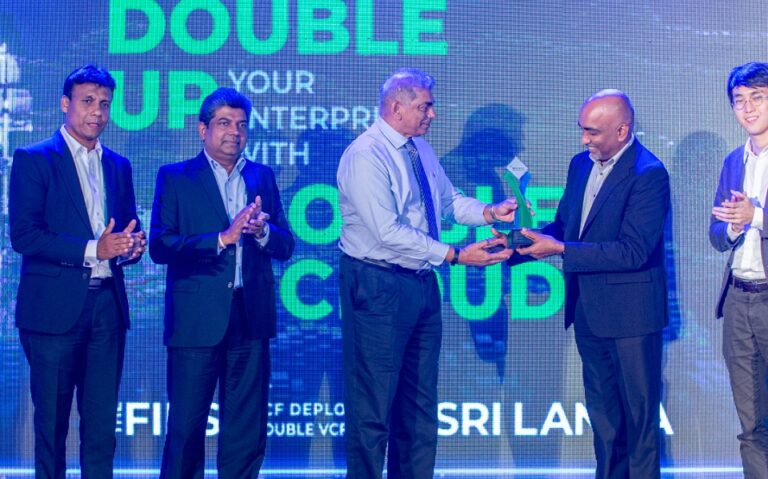
As a testament to SLT-MOBITEL Enterprise’s commitment to providing customers the highest level of technical expertise, reliability, and security and to accelerating Sri Lanka’s digital infrastructure, the company partnered with VMware Inc. to launch the country’s first VCF Cloud Deployment and double VCF Cloud.
VMware Inc. regional team comprising Surendra Kumar, Regional Head, Cloud Solution Architecture, Cloud Providers, South East Asia & Korea, and Barry Ng, Business Development Manager, VMware Cloud Providers graced the occasion.
VMware is a leading provider of multi-cloud services for all apps, enabling digital innovation with enterprise control.
As a trusted foundation to accelerate innovation, VMware software gives businesses the flexibility and choice they need to build the future. SLT-MOBITEL Enterprise’s VCF deployment was executed directly by the VMware Professional Service team ensuring the highest quality implementation.
In engaging VMware through a strategic partnership, SLT-MOBITEL aims to spur future-forward innovation among local enterprises and drive cloud adoption. VMware will provide the technical expertise and business insights required to support SLT-MOBITEL to drive informed decisions regarding VCF solutions and ensure its successful deployment and adoption.
SLT-MOBITEL Enterprise understands customers’ evolving needs and through the introduction of innovative technologies, deep expertise, and end-to-end capabilities, is able to ensure businesses are competitive, adaptable, and secure.
Deploying VMware’s multi-cloud approach, SLT-MOBITEL sets customers apart, delivering advanced services to help move their business forward.
SLT-MOBITEL is also recognized for its leadership as the national groundbreaker, and true digital enabler, in the forefront as the only service provider in the country offering a range of new differentiated services.
These services include automated infrastructure and application delivery with self-service capabilities to help organizations plan, manage and scale their data center operations especially in dramatically reducing provisioning times and cutting operational costs.
The VCF deployment ensures customers transition to the industry’s most advanced cloud platform with a complete set of software-defined services for compute, storage, networking, security and cloud management to run enterprise apps in private or public environments.
Powered by VMware, SLT-MOBITEL’s Akaza Enterprise Premium Cloud launched in 2019, provides a streamlined digital infrastructure for seamless operations with disaster recovery, and a smooth production environment for enterprises. Importantly,
SLT-MOBITEL is the first local organization to partner with VMware as a Business Continuity Certified Planner (BCCP) and initiate VMware Cloud Foundation in Sri Lanka.
Empowering businesses, SLT-MOBITEL is geared to offer enterprises a Software-defined Data Center (SDDC), a VMware Validated Design.
Additionally, SLT-MOBITEL Enterprise has deployed Sri Lanka’s first VMware Cloud Foundation deployment along with the first double VCF cloud, running in two data centers.
It couples with a range of other support services such as Disaster avoidance and recovery ensuring continuity, backup services, and cloud to cloud disaster recovery, together with a container environment for infrastructure automation.
Taking the next step towards providing seamless cloud solutions, SLT-MOBITEL Enterprise has engaged Sri Lanka’s first VMware Cloud Foundation deployment along with the first double VCF cloud.
The VMware Cloud Foundation enables the implementation of an integrated software-defined data center.
Benefits include automating deployment and lifecycle management in reducing cost, time, and complexity while managing compliances.
The unique VCF deployment also minimizes the complexity of your deployment lifecycle by reducing Building, Provisioning, Scaling, and Upgrading times, providing enterprises an experience no other environment can offer.
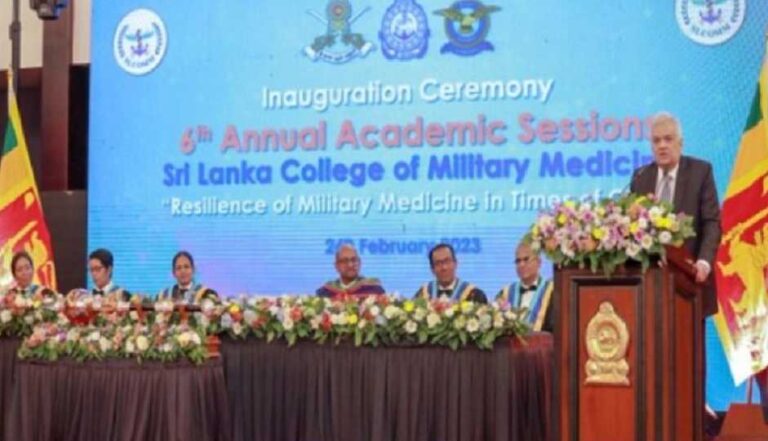
Colombo (LNW): Commencing a new chapter in military medicine, a separate unit would be established to send military personnel overseas to help out at the times of health disasters, said President Ranil Wickremesinghe on Friday evening (24).
He said further that it is established in addition to the group that is sent at the times of natural disasters. He also said that plans are afoot to send a group of military personnel to Turkey to assist at this time of health disaster.
He made these observation addressing at the inauguration ceremony of the 6th annual academic sessions of the Sri Lanka College of Military Medicine (SLCOMM) under the theme of ‘Resilience of Military Medicine In the Times of Crisis’ held at the Eagles Lagoon in Katunayake.
He also said that the government had sent a group of military personnel to Nepal. They were sent at the times of natural disasters. ‘But I’m looking at the possibility of using our military medical personnel to send abroad when the people are faced with health disasters’ the President said. ‘Health disasters take place more often than natural disasters and I would discuss this matter with the military to establish a unit in this regard. So that’s a new chapter for military medicine.’
The President also said that under the Indian credit line the government is to get more medicine to address the shortage of medicine during this crisis situation. He added by now, the government is working on making more foreign exchange available to the medical sector.
He said further that discussions are in progress with the Ministry of Health to upgrade the Medical Research Institute (MRI) into one of the best medical research laboratories in the region. He said it is discussed to introduce a health insurance scheme where the government can assist those in the lower income category, when they need to get the service of growing private hospitals.
President Ranil Wickremesinghe said that the government is seeking the possibility of introducing paying wards in Government hospitals and to introduce non-paying wards in private hospitals where the government is taking the tab for the treatments made in those non-paying wards.
He said further the medical corps of the Army, Navy and Air Force are really experienced in military medicine in a military crisis situation that is during the war in the North and East. While facing the war they also rendered a service during the Tsunami Catastrophe in 2004, during floods and during COVID 19. Hence they have the experience in both military and civilian fields.
He said further that he appreciate the commendable service that has been rendered in the field of the Military Medicine in the country. He added that the SLCMM which commenced in 2016 is now blossomed to a full medical organisation. He also commended the contribution of the past presidents and the present president of the SLCMM made in recognition of military medicine in the country.
Guest of Honour Prof. Selvanayagam Nirthanan, Sri Lanka College of Military Medicine President Air Commodore Mrs. Niluka Abeysekara, secretary of Sri Lanka College of Military Medicine Wing Commander Ms. Himali Mendis also addressed at the occasion.
Senior Advisor to the President on National Security and Chief of the Presidential Staff Sagala Ratnayake, Commander of the Army Lieutenant General Vikum Liyanage, Commander of the Navy Vice Admiral Priyantha Perera, Air Vice Marshal Udeni Rajapaksa representing Commander of the Air Force, Vice Chancellor of the General Sir John Kotalawala Defence University Major General Milinda Peiris also graced the occasion.
The Sunday Times: The appointment of an ‘Independent Panel of Governance Experts’ by Sports Minister Roshan Ranasingha this week to draft a new constitution for Sri Lanka Cricket (SLC) has been labeled as direct political interference in the governance of the country’s richest sports body.
Sports Law expert Panduka Keerthinanda
These appointments come pursuant to a writ application (No. 460/2020) in the Court of Appeal that sought to amend or draft a new constitution for SLC. The case came up for arguments on Friday and the judge had reserved the decision.
“Minister can and should regulate sports bodies but he should not manipulate them,” pointed out sports law expert Panduka Keerthinanda, calling the Minister’s action as ‘politically motivated’.
Keerthinanda, who had been involved with the Ministry of Sports as a legal consultant, said that amending the constitution of an independent sport governing body was solely the task of its own membership, not the Ministry.
The Minister’s failure to abide by Section 16 of the country’s sports policy, which emphasises the independence of sports organisations, and the violation of international sports laws could lead to SLC being handed a ban by the International Cricket Council (ICC) due to political interference, he warned.
If SLC receives a ban, it will be the third sports body in Sri Lanka to be sanctioned by its global or regional body, following Sri Lanka Rugby and the Football Federation of Sri Lanka under Minister Ranasingha. Interestingly the sports bodies governing cricket, football, and rugby are the three richest out of all Ministry of Sports affiliations.
“SLC and all other sports bodies have their own constitution adopted at Special General Meetings by the memberships. I don’t know how the minister is going to force them to adopt a constitution in which they have no involvement”.
“If there are issues with the constitution, the minister can issue directives to SLC or any other sports body to rectify them. In the event of corruption, there are laws to deal with it but what we see here is a blindside move,” he added.
The committee headed by Supreme Court Judge Justice KT Chitrasiri includes Dr. Duminda Hulangamuwa, Dr. Ariththa Wickramanayake, President’s Counsel Harsha Amarasekera, Major General (Retd) Renuka Rowell, Deepthika Kulasena, Gayal Kalatuwawa, Hariguptha Rohanadeera and former cricketers Charith Senanayake and Farveez Maharoof as members.
Issuing a media release on Thursday, Minister said the panel would conduct ‘necessary stakeholders inquiries and deliberations, impartially and objectively, with the assistance, guidance, and advice of the Technical Committee of the International Cricket Council (ICC)’.
The minister also said that he expected the committee to draft the proposed new constitution within two months. SLC earned its income largely through ICC funding and sale of television and team sponsorship rights. The government does not provide them with any financial assistance.
Hours before the appointment of the committee SLC said they had recorded a profit of Rs. 6.3billion last year. However, this was largely due to the exchange rate gain.
“If the sports body gets banned who is going to take the responsibility?”, Keerthinanda asked.
“FIFA has banned Sri Lanka Football and no one is taking responsibility. The entire football system is in a crisis now: no competitions, no payments to players and staff. I hope the minister will realise the gravity of his action and take necessary steps to safeguard the independence of sports associations”.
President Ranil Wickremesinghe has outlined plans to attract over two million tourists to Sri Lanka, including those willing to spend $500 per day although tourist numbers had dropped following the protests in May and June of last year.
He announced plans to make Sri Lanka a year-round tourist destination, with measures to be taken to promote the tourism sector.
The President made these comments during a meeting with businessmen from the tourism industry in the Galle District, which was organized under the theme “Survival and Overcoming Challenges in the Tourism Industry.”
During the meeting, President Wickremesinghe acknowledged the challenges faced by those in the tourism sector due to the recent economic downturn. However, he reassured the attendees that a planned program is being implemented to revitalize the sector.
The President outlined a program to attract over two million tourists to Sri Lanka, including those willing to spend $500 per day. To achieve this goal, a committee has been appointed to implement the plan as soon as possible.
In addition, President Wickremesinghe stressed the importance of better publicity for Sri Lanka to the world. He highlighted the recent Independence Day celebrations, which were held with pride to demonstrate that law and order have been stabilized in the country.
The President also noted that tourist numbers had dropped following the protests in May and June of last year. To attract tourists back to Sri Lanka, he emphasized the need to demonstrate that law and order has been restored in the country.
Overall, the meeting was seen as a positive step towards promoting tourism in Sri Lanka. The President’s commitment to the industry and his plans to revitalize the sector were welcomed by the attendees, who hope that this will lead to increased investment and growth in the sector.
Year-to-date tourist arrivals crossed the 150,000 mark with 54,685 visitors during the first 14 days of February.
As per provisional data released by the Sri Lanka Tourism Development Authority (SLTDA) yesterday, a total of 157,230 visitors arrived in the country so far.
Sri Lanka welcomed 26,506 in the first week and 28,179 in the second week of February, the provisional data released by the Sri Lanka Tourism Development Authority showed.
It also showed that the daily average arrivals have picked up to 3,906 in February so far ─ a significant improvement compared to last year.
During the first two weeks of February Russia topped the tourist inflow reflecting 26% or 14,145, followed by India with 12% or 6,825 tourists, the UK with 9% or 4,721 tourists, Germany with 7% or 3,881 tourists, and France with 6% or 3,510 tourists.
Tourists from Australia, Canada, the US, Israel and Switzerland were also welcomed in Sri Lanka.
Russia continues the head-start over India as the top source market year-to-date whilst furthering the lead of over 18,815 tourists.
The top tourist source market for Sri Lanka YTD is Russia with a cumulative number of arrivals at 39,399, followed by India with 20,584, the UK with 13,204, Germany with 12,098 and France with 8,350.
With January arrivals breaking the 100,000 mark for the first time in nine months, Sri Lanka’s tourism industry started 2023 on a positive note.
Colombo (LNW): The Fort Magistrate Court today (26) issued an order barring the protest marches organised by the National People’s Power (NPP) against the RW-led regime’s actions to postpone the upcoming LG Polls from entering several buildings located in Colombo.
Accordingly, the order was issued against 26 persons including Party Leader MP Anura Kumara Dissanayake barring them from entering several buildings including the Ministry of Finance, the President’s House and the Presidential Secretariat, and holding protest marches in a manner that disrupts the roads belonging to the Colombo Police Division.
The Court order is in effect from 1 pm to 8 pm today.
The NPP yesterday (25) pledged that the people will be assembled in Colombo against President Ranil Wickremesinghe and his government for unconstitutionally and unlawfully postponing the LG Polls and violating the rights of the people.
Colombo (LNW): The Officer in Charge, a sergeant and two constables of Police attached to the Katunayake Bandaranaike International Airport were arrested for failing to contain a suspect wanted for producing counterfeit documents in his departure to Dubai during apprehension.
According to the Police Spokesman, the suspect is believed to be connected to a number of crimes including murder and is under an overseas travel ban, and the said Police officers were arrested by the Police for failing to contain him during apprehension at the Airport.
Nations Trust Bank PLC (NTB) continued its steady performance to close the financial year ending December 2022 with an Operating Income of LKR 38.8Bn, reflecting a solid growth of 67% year-on-year (YoY).
Carefully navigating the challenging socio-economic environment, the Bank posted a Profit Before Tax of LKR 13.4Bn, a notable growth of 29% and Profit After Tax of LKR 7.2Bn, an increase of 8%, YoY, thereby reporting a record year for the Bank.
Commenting on the results, Hemantha Gunetilleke, Director & Chief Executive Officer of Nations Trust Bank said “We have delivered a strong full year result, building on the trend demonstrated through 2022 with a PBT of LKR 13.4Bn and a PAT of LKR 7.2Bn.
These results underpin the fundamental strengths of the Bank’s Liquidity, Capital Adequacy and Risk Management Framework.
These strengths along with a focus on digital innovation, teamwork and adherence to prudent banking practices, ensured that we were able to consistently provide banking service excellence to our customers despite the challenging external environment”.
Interest rate movement and margin expansion during the year resulted in strong Revenue growth of 67%. Operating Expenses were carefully managed throughout the year resulting in Total Operating Expenses increasing by only 27% YoY despite the high inflationary environment.
Gains in Operating Income were negated to some extent by the sharp rise in Impairments. The Bank’s impairment provisions relating to loans, advances and sovereign bonds, rose 270% YoY.
Provisions were impacted by negative flows from moratorium loans and the overall deterioration in credit quality across most loan portfolios due to the weak economic environment.
The Bank’s exposure to foreign currency denominated security instruments issued by the Government of Sri Lanka were relatively low at 2.6% of the total assets.
Appropriate impairment provisions were made by the Bank on these instruments in line with the industry, considering current economic conditions.
The Bank’s overall tax expense grew by 68% during the reporting period due to higher profits, increased corporate tax rates, VAT on Financial Services and the effect of tax reversals recorded in 2021.
Nations Trust Bank PLC serves a diverse range of customers across Consumer, Commercial and Corporate segments through an island wide network of 96 branches.
The bank is focused on digital empowerment through cutting-edge digital banking technologies, and pioneered FriMi, Sri Lanka’s leading digital banking experience.
Nations Trust Bank PLC is an issuer and sole acquirer of American Express Cards in Sri Lanka with market leadership in the premium segments.
Sri Lanka is likely to fall into darkness soon after the lifting of power cuts after increasing electricity tariff by 66 percent recently not because of shortage of coal or fuel to run power plants by due to the dearth of qualified and experienced in engineers owing to brain drain, energy ministry sources said.
At least 72 engineers of the Ceylon Electricity Board (CEB) and 22 of them were attached to Norochcholai power plant have left the board for greener pastures overseas owing to high taxation and sky rocketing of cost of living in the country a senior official of the ministry said.
This has led to a threat of shutting down the coal power plant causing loss of 540 mega watts to the national grid, he said adding that this situation will prompt the CEB to resume power cuts in the island once again, co; secretary of the CEB engineers union Isuru Kathuriratne said.
Services of 123 engineers are needed to maintain the daily operation of the Norochcholai power plant but only 100 of them are engaged power plant operation at present , he disclosed.
If this situation is continued the CEB has no option other than the shut down of the powerplant paralyzing the power supply he pointed out. .
After a year of load-shedding, Sri Lankans l get continuous power supply recently with a hike in tariff in line with the conditions set by the IMF.
The Sri Lankan government’s move comes as the debt-hit country aims to secure a much-needed US$ 2.9 billion bailout loan from the Washington-based global lender.
President Ranil Wickremesinghe has directed officials to ensure an uninterrupted power supply to customers after the tariff revision is implemented, a statement from the President’s Media Division said.
Without increasing tariffs, the engineers have proposed several policy changes including utilizing the extra hydropower which saved hydropower reservoirs for drinking and farming during the dry season by changing the current minimum level.
Since during monsoons, the majority of these reservoirs reach spill level or spilled over without the saved water being utilized for any purpose.
Further, the Government can introduce a tax concession for solar power users as a concession for solar batteries to save solar power to use during the night-time.
“There are over 30,000 rooftop solar panels that are without batteries due to the high cost given the taxes. If the Government can introduce a tax concession, many would shift to solar, which would contribute to the national grid as well,” he said.
The CEB anticipated a loss of Rs. 152 billion by the end of this year, despite electricity tariff reforms that were implemented in August.
According to the ministry statistics, the CEB has incurred a loss of Rs. 108.6 billion in the first eight months of this year. The CEB expects an additional income of Rs. 15 billion following August’s tariff revisions last year.