While tea and rubber have put Sri Lanka on the map, it is an opportune time for Sri Lanka’s plantation sector to diversify its product offerings to the world. Planters’ Association of Ceylon Chairman, Senaka Alawattegama emphasized.
It is absolutely critical for Sri Lanka to harness its resources and assets in the most optimum level possible, however to do this Regional Plantation Corporations RPCs need to be given a free hand to determine its own land use policies should it be beneficial for the economy.
In instances where the land has become unsuitable for crops like tea or rubber, plantations should be looking to instead produce other valuable crops like coffee and spices which most of the RPCs have been successful in doing so.
Companies are already experimenting with crops like avocado and berries which have yielded successful results, and valuable new export opportunities.
In that regard, another crop with strong export earning potential is Oil Palm. We cannot overlook the economic benefits this golden crop could offer Sri Lanka, especially at a time when the country requires dollars to purchase essentials like fuel, medicines and gas, Senaka Alawattegama disclosed.
At present Sri Lanka produces approximately 25,000 MT, where Sri Lanka imports 200,000 MT of palm oil for domestic usage. The value of those imports is now over Rs. 24Bn.
Like the 100% organic strategy before it, the campaign against oil palm cultivation has long been proven to be completely lacking scientific facts, and PA has since the beginning provided evidence as to how this crop can be grown in an ethical and sustainable manner without causing harm to the environment, he added.
Today the Sri Lankan tea industry has set a target of US$ 1.5 billion in precious export revenue.
Coincidentally, Sri Lanka’s export earnings from tea at that time stood at approximately US$ 1.5 billion, meaning that the current target is simply to do as well as we did in 2017, he claimed.
However, despite having regained the same favourable prices that the plantation sector enjoyed in 2017, in 2022, the island nation was only able to produce approximately 250 million kg of tea, where in 2017, it had produced 307 million kgs.
The result is that we only generated just under US$ 1.1 billion in tea exports last year, as compared with US$ 1.5 billion in 2017. The shortfall was worth approximately US$ 466 million – funds that could have been utilized for the purchase of fuel, gas, and medicines and other essential items.
SL plantation sector to diversify its product offerings to the world

UK to support SL to secure extended financial facility with IMF
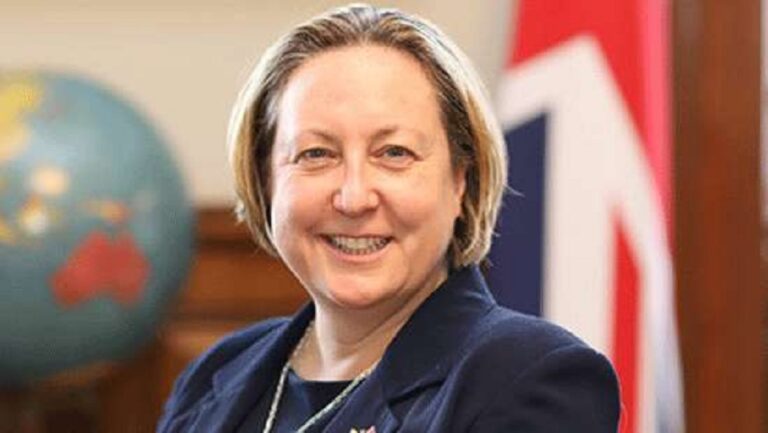
The United Kingdom stands ready to give its assurance as a member of Paris Club to the International Monetary Fund (IMF) for Sri Lanka debt restructuring paving the way for the unlocking of the US $ 2.9 billion extended fund facility.
The UK is fully supportive of the proposed Coordination Platform between Sri Lanka’s Paris Club and non-Paris Club creditors, which we believe represents the most efficient way to restore debt sustainability in Sri Lanka,” Minister of State (Foreign, Commonwealth and Development Office) Anne-Marie Trevelyan informed UK Parliament on Tuesday.
The Paris Club is still waiting for China to commit to Sri Lanka’s debt overhaul before notifying their assurance that is needed to get IMF executive board approval EFF.
India has also extended financing assurances to the IMF to “clear the way for Sri Lanka to move forward.
Sri Lanka is confident of reaching a deal with all its international creditors and securing financial support from the International Monetary Fund (IMF).
State Minister of Finance Shehan Semasinghe said that the public have placed their trust on support from the IMF as it would create a foundation in finding solutions for the economic crisis in the country.
Semasinghe expressed these views at a discussion held today with a delegation led by the British High Commissioner to Sri Lanka Sarah Hulton.
The U.K has reiterated that as a member of the Paris Club, it stands ready to consider the necessary Financing Assurances to secure an Extended Financing Facility with the International Monetary Fund (IMF) in a timely manner to Sri Lanka.
“.Constructive engagement across creditors is vital to secure a prompt and comprehensive International Monetary Fund programme for Sri Lanka and ensure a sustainable economic recovery, UK Minister of State (Foreign, Commonwealth and Development Office) Anne-Marie Trevelyan added..
In the meeting with British High Commissioner to Sri Lanka Sarah Hulton. State Minister Semasinghe asserted that the entire government, including the President, was working to restore the economy.
The Paris Club major members of the informal group — comprising mostly rich, western bilateral creditors — favor giving financial assurances, but are waiting for Beijing to be on board to move ahead.
Since Sri Lanka defaulted in May, creditors have been going back and forth on the size of losses they are willing to accept and whether local debt should be included in the restructuring. A breakthrough came when India gave its debt assurances on Monday.
When reached for comment Thursday, a Paris Club spokesman referenced a September statement that said the group is willing to work with other creditors to provide the necessary financing assurances in a timely manner and ensure fair burden sharing.
“We felt strongly that Sri Lanka’s creditors must take proactive steps to facilitate its recovery,” Indian Foreign Minister Subhrahmanyam Jaishankar said in Colombo recently. “India decided not to wait on others but to do what we believe is right,” he said.
Bankrupt Pakistan going the Sri Lanka way as mass starvation looms
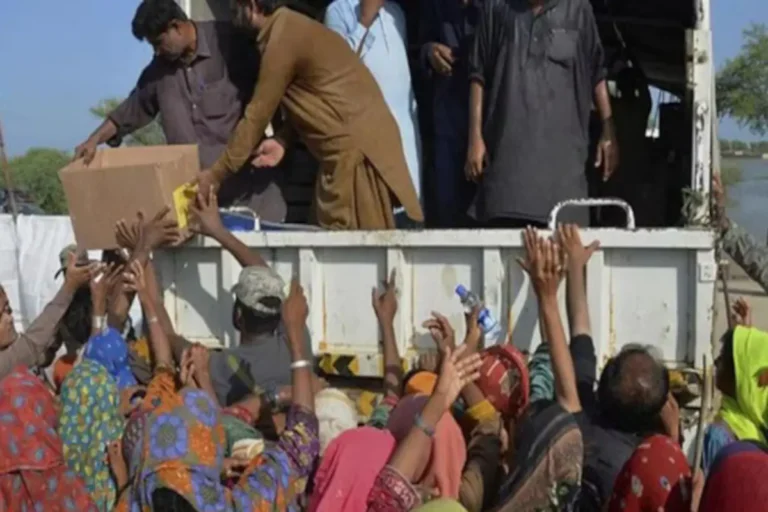
Islamabad: With a mere $4.5 billion in its kitty – $3 billion of which belongs to Saudi Arabia – Pakistan is struggling to keep its economy going.
The spiraling economic crisis and shortage of foreign currency reserves had led to an acute shortage of food, medicines and other essential items in Pakistan.
To make matters worse, large parts of Pakistan have been suffering due to chronic shortage of electricity, resulting in huge losses to industries and subsequent loss of jobs for millions of people.
While several economists have claimed that Pakistan has already become a bankrupt nation, a mere few days or weeks at the most are left for an imminent disaster and an official declaration of the same unless some sort of miracle takes place.
The Pakistan economic crisis is going from bad to worse. The forex reserves at the State Bank of Pakistan (SBP) has touched its lowest ever level of $4.343 billion, which is just enough to keep the Pakistan economy afloat for two weeks.
The alarmingly low level of forex reserves has led to severe inflation in the food prices all over Pakistan which has left millions of people struggling to survive without the required food and energy resources.
According to a report by the ‘Financial Post’, this dip in Pakistan’s forex reserves came after a loan of $1 billion was repaid by the South Asian country to a couple of banks based in the United Arab Emirates (UAE).
The foreign remittances to Pakistan have also declined from $15.8 billion to $14.1 billion.
However, the International Monetary Fund (IMF) has rolled out a portion of a six-billion-dollar loan, after which Pakistan is hoping to receive further financial support and aid from international financial organisations and friendly countries such as Saudi Arabia, China, and the UAE.
A couple of weeks ago, several global financial institutions and countries had pledged to give a total of $10 billion dollars at a donor conference in Geneva on January 10 for the victims of the floods that had ravaged Pakistan from June to October last year.
However, over $9 billion of that amount were actually project based loans that will be given to Pakistan over a period of three years. As a result, the promised funds will not help Pakistan tide over its current financial problems.
According to an ANI report, the much talked about hybrid system foundation of which had been established by the Pakistan military establishment to decimate two main political irritants – Pakistan Muslim League Nawaz (PML N) and Pakistan People’s Party (PPP) – is responsible for the current Pakistan economic crisis.
This system had been introduced through the then Inter-Services Intelligence (ISI) Director General Shujaah Pasha in the year 2010.
Noted Pakistani economist Khurram Hussain has opined that Pakistan can recover from the current economic quagmire only if it accepts by accepting the stringent term and conditions laid down by the International Monetary Fund. But that will mean that the political and military establishment in Pakistan will have to pay a huge political price domestically due to subsequent economic hardships faced by the people.
He also pointed out that current prime minister Shehbaz Sharif had held several meetings with former finance minister Miftah Ismail before coming into power and discussed the economic challenges confronting Pakistan.
The latter had warned Shehbaz Sharif that his government will have to increase prices to exorbitant levels in order to combat the Pakistan economic crisis.
However, when the Pakistan government started to implement the IMF conditions, several members of the ruling party started protesting against the price hike. With Shehbaz Sharif not succumbing to their pressure, they started contacting his elder brother Nawaz Sharif, who is currently in London.
Current finance minister Ishaq Dar, who was then staying in London due to cases pending against him in Pakistan, told Nawaz Sharif that Miftah Ismail is unable to handle the situation. Nawaz Sharif convened a meeting in London which was attended by both Dar and Ismail in which all sides agreed on a change of finance minister.
Dar then returned to Pakistan and started to implement his outdated ideas without understanding that the global economic scenario has undergone a sea change.
According to Khurram, Dar wasted the next four months and stalled the IMF program, which further aggravated the economic situation in Pakistan.
Economist Yousaf Nazar, who has been a vocal critic of Dar’s policies, has opined that Miftah Ismail’s policies and his stance before the IMF was correct.
“Both the Sharifs were wrong to replace him with Dar. It is not too late. He should be brought back as the Finance Minister,” he was quoted as saying by ANI.
Other Pakistani economists have said that tough decisions will have to be taken in order to battle the current economic crisis facing Pakistan which may cause some setbacks in terms of domestic politics to the PML (N), but the damage will not be so much that the party gets totally finished.
Even 2024 has not brought too much good news for Pakistan. The country’s policymakers have proved incapable of pulling out the country out of the ongoing economic mess.
The rulers and institutions of Pakistan have lied so much to Saudi Arabia, United Arab Emirates (UAE), China, and the United States (US) that these countries as well as global institutions such as the IMF and the World Bank are not ready to trust the country.
ANI quoted a section of Pakistan observers said that the country’s government should avoid putting the entire financial burden of the conditionality of the IMF program on the people alone and urged the ruling elite to share some of the load.
Analysts known for their proximity with Islamist groups have warned that Pakistan is moving fast towards a situation similar to the one faced by Sri Lanka a few months ago when the country had gone bankrupt and people took to the streets and attacked the palaces of top political leaders.
Sri Lanka was forced to take a slew of drastic decisions when the IMF refused to help out. These included a reduction in the strength of the Sri Lanka Army. Sri Lanka’s situation is a big warning for Pakistan. Just like Sri Lanka, Pakistan is also close to China and has differences with India.
Pakistan will have to overcome its economic crisis and in case the situation aggravates, the IMF is very likely to place various kinds of demands including a reduction in the size of the Pakistan Army, an end to the country’s much touted nuclear program, and turning the Line of Control (LoC) in Jammu and Kashmir into a permanent border with India.
Former Pakistan PM Imran Khan in his interview with BBC on January 18 held the Shehbaz Sharif government for the ongoing storm of poverty, inflation and unemployment ignoring the facts that, it is he himself who for undying lust for power has been constantly pushing Pakistan towards political and economic collapse.
At a time when the international community was pledging aid of USD 11 billion for Pakistan at the Climate Resilient Pakistan conference in Geneva, the chairman of the Pakistan Tehreek-e-Insaf (PTI) party was aggravating politics by making moves to the dissolution of the assemblies in the provinces of Punjab and Khyber Pakhtunkhwa (KP).
Firstpost
“Sri Lanka In Focus 2023” Art Culture and Wildlife Exhibition- University of California in Los Angeles

“Sri Lanka In Focus 2023” Art Culture and Wildlife Exhibition is scheduled to be held at the University of California in Los Angeles – UCLA on 22 and 23 April to mark the Earth Day.
This photographic exhibition will not only focus on just art and culture but also tourist attractions, wildlife, and the natural beauty of Sri Lanka. It is organized by the America Sri Lanka Photographic and Art Society- Los Angeles and supported by the Sri Lanka Consulate General in Los Angeles.
Italy willing to supply helicopters to SL to combat human trafficking

The Republic of Italy has expressed its willingness to help Sri Lanka by supplying helicopters for anti-human trafficking measures taken by the Government of Sri Lanka.
Her Excellency the Italian Ambassador Rita Giuliana Mannella revealed this during a meeting with Hon. President Ranil Wickremesinghe January (25) at the Presidential Secretariat.
The duo discussed the strengthening of the partnership between Italy and Sri Lanka and special attention was paid to cultural exchanges, tourism enhancement, possible investments, defence aspects, and on how Italy can help Sri Lanka during these challenging times.
President’s Media Division
An announcement from the Election Commission about resignations
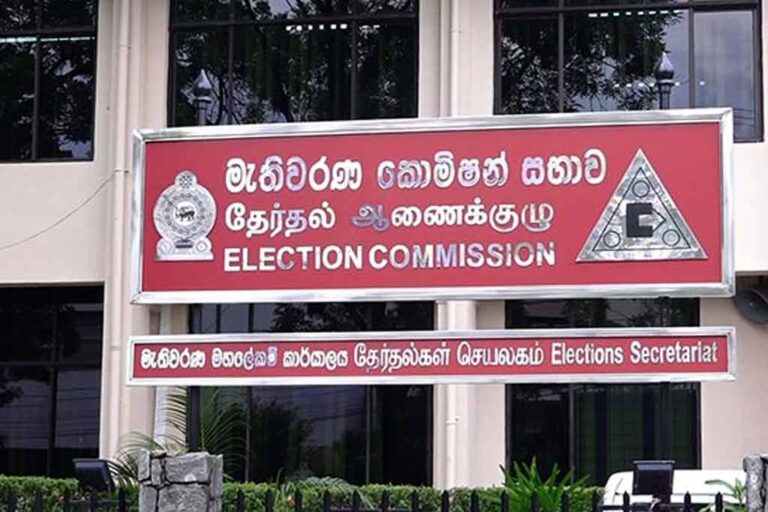
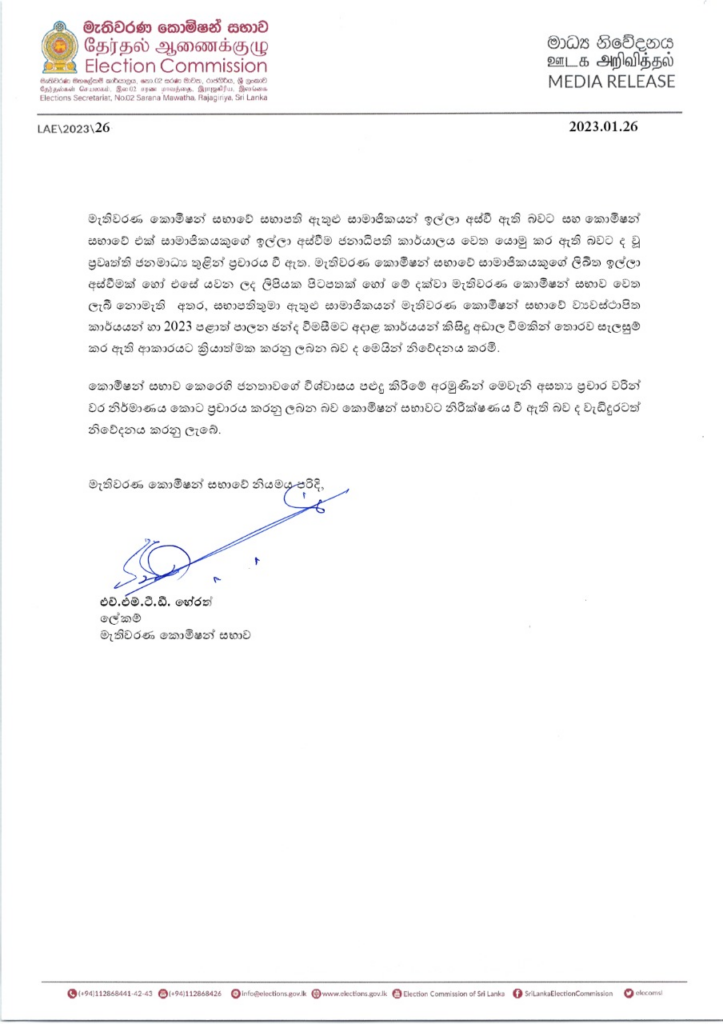
In a statement, the Election Commission says that the news published in the media that a member of the Election Commission has resigned and that the members including the Chairman of the Commission have resigned are false.
The Commission states that the Election Commission, including the Chairman, will carry out its constitutional functions and the functions related to the 2023 local government election without any interruption, as planned.
The commission has further announced that it has been observed that false news is being created and propagated from time to time with the aim of undermining people’s trust in the Election Commission.
Sri Lanka Original Narrative Summary: 27/01

- Constitutional Council decides to call applications from interested and qualified persons to be appointed as Members of the Independent Commissions.
- State Minister of Finance Ranjith Siyambalapitiya says discussion with Dr Krishnamurthy Subramanian, IMF Executive Director for India, Sri Lanka, Bangladesh and Bhutan, was successful: adds Sri Lanka will receive the 1st tranche of the IMF’s Extended Fund Facility soon.
- Japanese Vice Finance Minister for International Affairs says Japan is coordinating with Paris Club and IMF to ensure participation of non-Paris Club members such as China & India to address SL’s debt crisis: UK also reiterates it is ready to consider financing assurances for SL to secure the facility from the IMF.
- Colombo High Court acquits MP Dr Nalaka Godahewa and 2 others over a public property case.
- Human Rights Commission says Ministry of Power, PUC, CEB & CPC agreed to provide uninterrupted power supply during the GCE A/L exam period: PUC says it has not given approval to the CEB to implement power cuts from 26Jan to 17Feb: CEB says it is struggling to find funds for that purpose.
- Police Computer Crimes Division says an activist of the struggle (Aragalaya) was arrested for posting a comment on Facebook that would create public unrest.
- US investor Hindenburg Research alleges Indian billionaire Gautam Adani (worth USD 125 bn) who has his businesses in several countries including investments in Sri Lanka’s wind and renewable energy sector, controls a web of offshore shell accounts to carry out corruption, money laundering and taxpayer theft: Adani Group denies the claims and expresses shock.
- Finance State Minister Ranjith Siambalapitiya says USD 2,500 mn has been saved after imports of certain goods were restricted: also says there is now no shortage of essentials such as fuel, medicines and fertilizer, as a result.
- Japanese Ambassador to Sri Lanka, Mizukoshi Hideaki says the Sri Lankan govt should implement reforms to curb corruption: also says major creditors to Sri Lanka, such as China, India, & Japan have spelt out positive sentiments towards debt re-structuring: asserts Sri Lanka should speed up program to reform SOEs.
- Convenor of the Federation of National Organisations, Dr Gunadasa Amarasekara asks US Ambassador Julie Chung not to create an anti-China frenzy by claiming that China is behind the delay in Sri Lanka’s debt structuring process: says Chung is trying to mislead people and create animosity between Sri Lanka and China: also says the US has meddled in Sri Lanka’s internal affairs in the past.
A house fire kills a mother and two children

A mother and two children of the same family have died in a house fire in Alayapattu area of Anuradhapura.
The fire took place last night (26).
The police said that the father of the family, who was injured in the fire, has been admitted to the Anuradhapura Teaching Hospital.
Alayapattuwa police are conducting further investigations.
WEATHER FORECAST FOR 27 JANUARY 2023

Showers at times will occur in Eastern and Uva provinces and in Matale district.
Several spells of showers are likely in Hambantota and Polonnaruwa districts.
Showers or thundershowers will occur at several places in Western and Sabaragamuwa provinces and in Kandy, Nuwara-Eliya, Galle and Matara districts during the afternoon or night.
Fairly heavy showers about 50mm are likely at some places in Sabaragamuwa and Central provinces and in Batticaloa, Ampara and Badulla districts.
General public is kindly requested to take adequate precautions to minimize damages caused by temporary localized strong winds and lightning during thundershowers.
Ambassador-designate to the Hashemite Kingdom of Jordan, J.A.D.S. Priyangika Wijegunasekara Assumes Duties
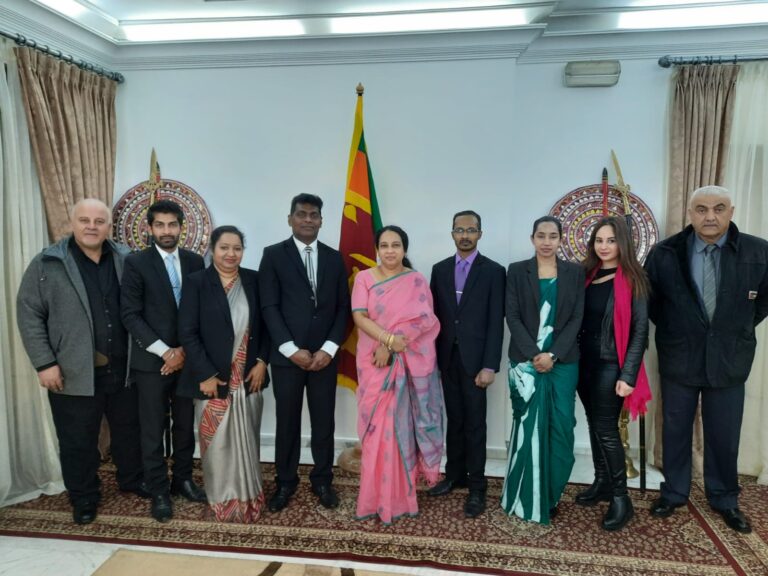
Ambassador-designate of Sri Lanka to the Hashemite Kingdom of Jordan, J.A.D.S.Priyangika Wijegunasekera assumed duties at the Embassy of Sri Lanka in Jordan on 23 January 2023.
Upon arrival at the Embassy in Jordan, Ambassador-designate Priyangika Wijegunasekera was welcomed and greeted by the staff. Her assumption of duties was marked by a simple ceremony which commenced with the lighting of the ceremonial lamp by the Ambassador and other staff and traditional Sri Lankan cuisine were served on the occasion.
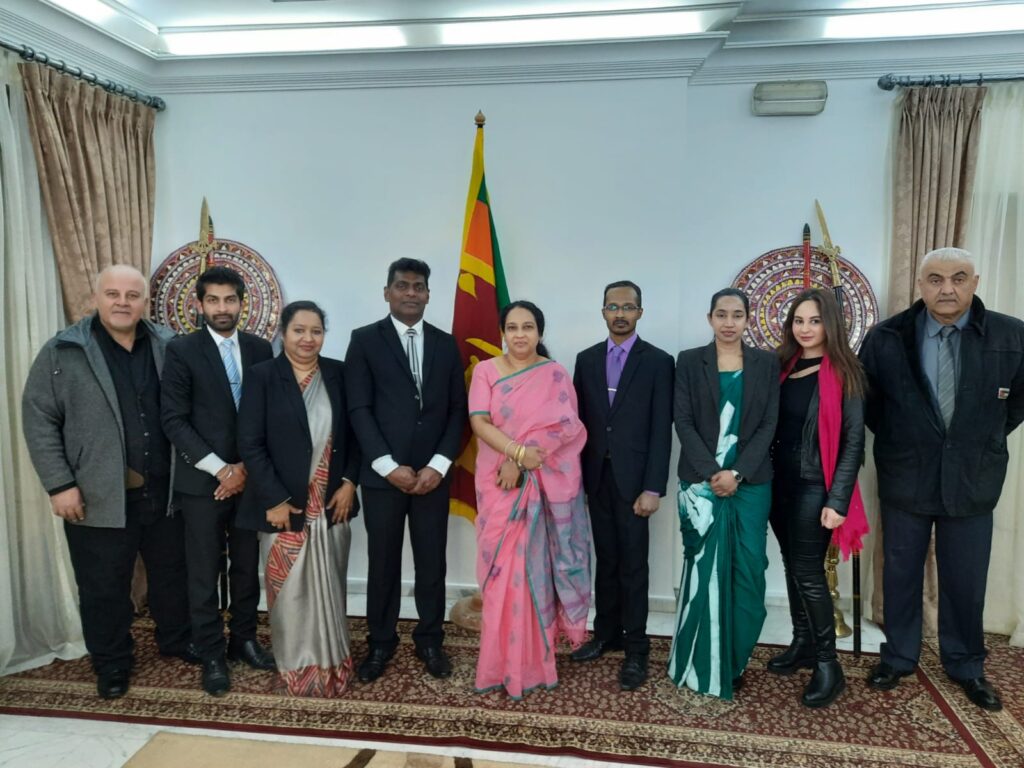
Addressing the staff, Ambassador-designate Priyangika Wijegunasekera thanked the staff for the warm welcome and expressed her optimism that the relations between Sri Lanka and the Jordan would be further strengthened and expanded into new vistas of cooperation during her tenure. The Ambassador-designate also highlighted the importance of engage with the Sri Lankan community always with a view to promoting Sri Lanka’s image and interests in Jordan.
Ambassador-designate Priyangika Wijegunasekera counts 20 years in the Sri Lanka Foreign Service, having served in Sri Lanka Missions in Kenya, Lebanon and Consulate General in Toronto, Canada and was attached to the Consular Affairs, Overseas Administration, South Asia & SAARC Divisions in the Ministry of Foreign Affairs.
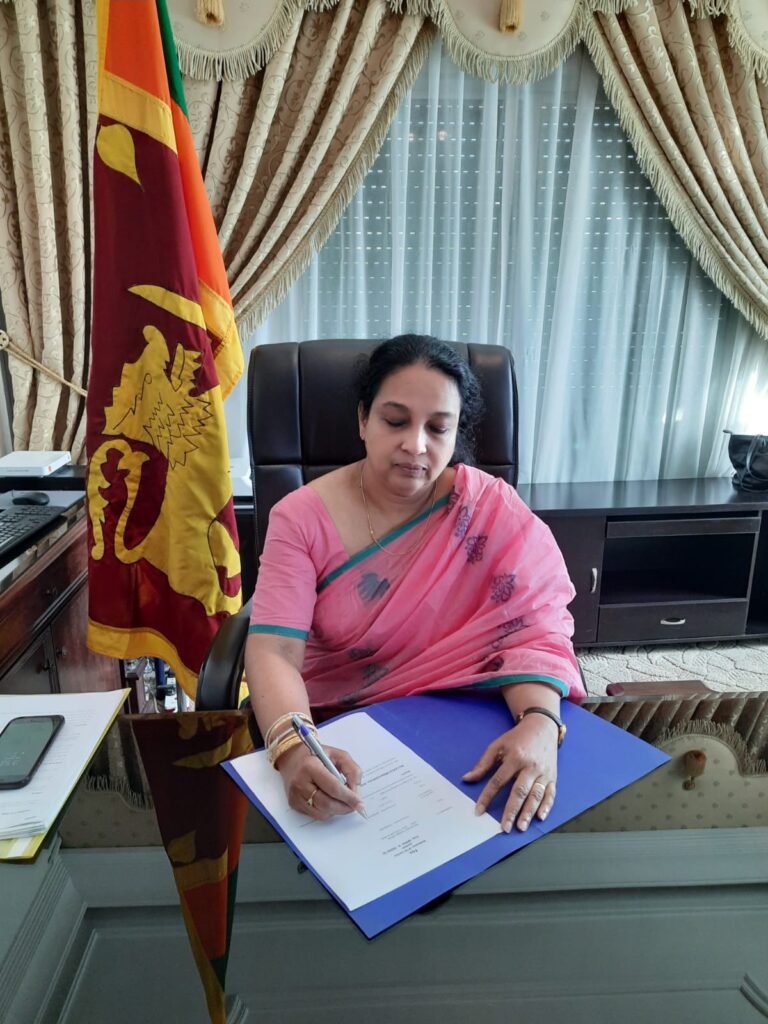
She is a graduate of the University of Peradeniya and has Masters in International Relations, Human Rights and Democratization from the University of Colombo and Political Science from the University of Kelaniya, Sri Lanka.
Embassy of Sri Lanka
Jordan
25 January 2023