In a move of a friendly country in need for Sri Lanka , China has extended assurance for the island nation’s debt restructuring with the submission of the relevant letter to the International Monetary Fund to unlock a US4 2.9 billion bailout loan, Chinese diplomatic sources confirmed.
China has taken this action several weeks after India has given its assurance for debt restructuring and now Japan is ready to follow suit.
China’s Export-Import Bank of China (EXIM) has provided Sri Lanka with a debt extension, China’s Foreign Ministry said.
EXIM offered Sri Lanka a two-year moratorium on its debt and said it would support the country’s efforts to secure a $2.9 billion loan from the International Monetary Fund, according to a letter reviewed by Reuters news agency.
China and India are the biggest bilateral lenders to Sri Lanka, a country of 22 million people that is facing its worst economic crisis in seven decades.
“China feels for Sri Lanka as it faces difficulties and challenges and has been helping with Sri Lanka’s socio-economic development as best as we can,” the Foreign Ministry said in comments to Reuters.
In the wake of China’s gesture, Japan’s top finance diplomat, Masato Kanda said that crisis-hit Sri Lanka was a key issue when it came to helping countries in debt but he was not sure when creditors aiming to extend it loans would meet.
He said that middle-income countries have been left without an international arrangement to address the debt crisis.
“Japan is closely coordinating with international organs such as the Paris club or IMF in order to ensure participation of non-Paris Club members such as China and India,” Kanda said.
There is no doubt that International Monetary Fund (IMF) loans often come with a set of conditions that most countries find unfavorable to implement. With its ongoing economic crisis and complex multilateral debt negotiations between creditor nations, Sri Lanka is no exception.
On the request of Sri Lankan President Ranil Wickremesinghe, Japan took the lead the debt restructuring talks with creditor nations.
Japanese Finance Minister Shunichi Suzuki emphasized the role that bilateral creditors like India and China should play in dragging Colombo out of its worst economic crisis since gaining independence in 1948.
The restructuring of Sri Lanka’s debt held by India and China provides Sri Lanka with a certain amount of leverage in the IMF negotiations. Interestingly, this also reflects the changing regional dynamics of the last few years.
Sri Lanka is of strategic interest to China for its trade and infrastructure connectivity in the Indian Ocean region as part of the Belt and Road Initiative (BRI). It became more crucial after India announced its non-participation in the BRI.
China holds olive branch for Sri Lanka ensuring support for debt restructuring
Prompt response from the Minister of Justice, following the intervention of the Parliamentary Caucus for Children
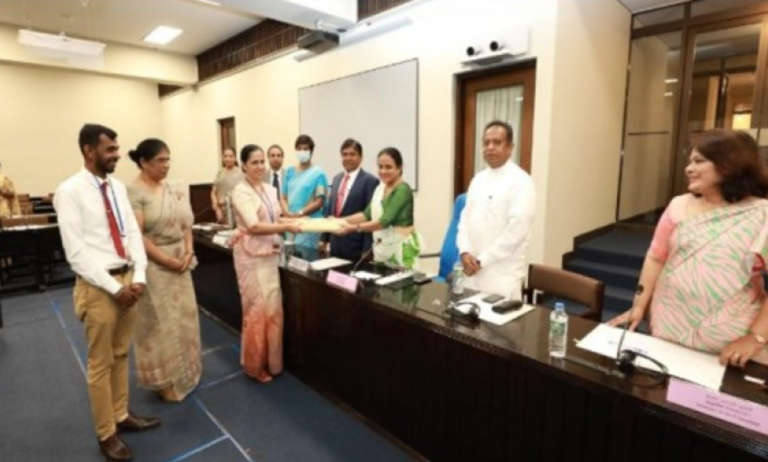
Justice Minister Hon. Dr. Wijedasa Rajapaksa and Member of Parliament Hon. (Mrs.) Rohini Kumari Wijeratne, the Chairperson of the Parliamentary Caucus for Children, recently handed over the applications of justice of peace for the probation officers to avoid the inconvenience of obtaining affidavits required in legal proceedings for children who become
victims.
Accordingly, the applications required for the appointment of justice of the peace for 325 probation officers working all over the island under the Department of Probation and Child Care Services were symbolically handed over to the Secretary to the Ministry of Women, Child Affairs and Social Empowerment Ms. Yamuna Perera.
The Provincial Commissioners including the Commissioner of Probation and Child Care Services joined the meeting of the Parliamentary Caucus for Children held on December 2 under the chairmanship of Hon. (Mrs.) Rohini Kumari Wijeratne, where they had the opportunity to present their problems and suggestions to the caucus. They pointed out that during the judicial process, the child victims who are on probation are inconvenient when referring to a third party to obtain affidavits. Thus, the Parliamentary Caucus for Children
brought this proposal to the attention of the Minister of Justice.
Hon. Dr. Wijedasa Rajapaksa, Minister of Justice, who attended the event, pointed out that the intervention of the Parliamentary Caucus for Children to solve a current issue is
commendable. He said that every possible step will be taken for such positive steps in the future as well.
Hon. (Mrs.) Rohini Kumari Wijeratne, the Chairperson of the Parliamentary Caucus for Children, said that being able to provide solutions to this long-standing problem is a victory for the children in Sri Lanka. She also said that the Parliamentary Caucus for Children would like to thank the Minister of Justice Hon. (Dr.) Wijedasa Rajapaksa for his prompt response to the request made through the intervention of this caucus.
Also, the chairperson pointed out that this occasion is an example of the Parliamentary committees’ intervention in a more positive way to solve the existing problems. Furthermore, Mrs. Rohini Kumari Wijeratne, discussed the current issues regarding children at the provincial level with the ministry officials. There, instructions were given to promptly forward to the ministry the information including the issues and suggestions referred at the provincial level regarding “Child Protection” and to take every possible step to avoid those problems.
It was also further advised to inform the caucus about its progress every 06 months. State Minister Hon. Diana Gamage, Members of Parliament, Deputy Co-Chairperson of the Parliamentary Caucus for Children Hon. (Mrs.) Dr. Sudarshanee Fernandopulle and Hon. Chandima Weerakkodi were also present at this occasion.
Also, the Secretary of the Parliamentary Caucus for Children, Chief of Staff and Deputy Secretary General of Parliament Mrs. Kushani Rohanadira, Secretary to the Ministry of Women, Child Affairs and Social Empowerment, Ms. Yamuna Perera, Additional Secretary Ms. Nilmini Herath, the Commissioner of the Probation and Child Care Services Department, Mr. Namal Liyanage and a group of officials from the Ministry of Child Affairs and Social Empowerment also participated in this event.
Sri Lanka Original Narrative Summary: 28/01

- President Ranil Wickremasinghe prorogues Parliament: the 3rd session of the 9th Parliament ends: 4th session to commence on 8th February: President to make a policy statement based on the decisions taken after the 75th Independence Anniversary, on that day.
- President Ranil Wickremesinghe informs All Party Leaders Conference on Reconciliation that the Cabinet was agreeable to fully implement the 13th Amendment until the Party Leaders decide whether or not to abolish the Amendment.
- US State Department says US Under Secretary of State for Political Affairs Victoria Nuland will be in Sri Lanka next week to mark the 75th anniversary of US-Sri Lanka relations and to offer continued support to Sri Lanka.
- Public Utilities Commission informs CEB it will not approve any request for scheduled power cuts from 26th January to 17th February, to “safeguard the human rights of GCE A/L candidates”: asks CEB to refrain from submitting requests for power cuts until 17th February.
- Energy Minister Kanchana Wijesekara says the officials who took part in discussions with HRC had informed they were pressurized to sign 2 documents under threat of being sent to jail, if they refused.
- State Finance Minister Shehan Semasinghe says IMF emphasized the need for Sri Lanka to complete all prior actions to qualify for financial assistance however tough they would be for people.
- Colombo Fort Magistrate Thilina Gamage orders former President Sirisena to stand in the dock during the magisterial inquiry where Sirisena is an accused in a private plaint filed by Rev. Fr. Cyril Gamini Fernando and Jesuraj Ganeshan, in connection with the Easter Sunday attacks.
- Sri Lanka Shippers’ Council expresses alarm at the moves to re-enable service providers to “arbitrarily” impose cost recovery Terminal Handling Charges on imports and exports: says the move would make Sri Lanka’s exports uncompetitive and lead to further increases in inflation.
- Jaffna Magistrate Court summons 3 persons who participated in a demonstration against President Ranil Wickremesinghe when he visited Jaffna on Thai Pongal Day: the persons summoned are – a representative of the Jaffna University Students Association, the President of the Association on Missing Persons, and a representative of a Civil Society Organization.
- France deports 38 Sri Lankans: Navy says those deported are among 64 Sri Lankans who reached the French territory, Reunion Island in the Indian Ocean, on January 14, via a trawler: the trawler is supposed to have left Puttalam on 14th Dec’22.
Instructions from the President celebrate the 75th Independence celebration with pride, at minimal cost
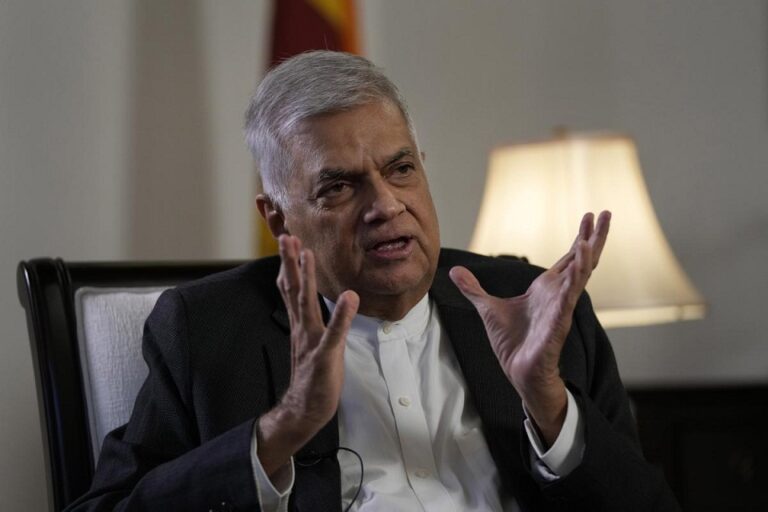
While estimating the required expenditure attention should be paid to the current financial position of the country
A pre-discussion was held this morning (26) at the Presidential Secretariat under the patronage of President Ranil Wickremesinghe regarding the Independence Day celebration being held in a grand and proud manner, but maintaining minimum cost.
Accordingly, in conjunction with the 75th Independence Day celebration, many special programs are scheduled to be implemented from February 2nd to the 19th. The special Dalada Pooja and Pirith chanting, religious ceremonies of all faiths, cultural show held at the Independence Square, the traditional Independence celebration main event held at Galle Face Green, the national parks and Zoo will be open to the public free of charge, the opening of the Jaffna Cultural Centre, the Kandy republic parade, the cycle race from Dondra Point to Point Pedro etc. have also been planned.
The President advised the officials that it is their responsibility as well as that of the political authority, to pay attention to the current financial situation of the country while estimating the expenses required for these activities and in spending in a practical manner and reducing expenses.
While pointing out that there is huge opposition among the people regarding the allocation of funds for the 75th Independence Day celebration, the President emphasized that efforts should be made to minimize the related expenses.
Expressing his views further, President Ranil Wickremesinghe said,
“We must celebrate the 75th Independence Anniversary, otherwise, the world will say that we are not capable of celebrating even our independence. Similarly, we need to attract tourists and investors to our country. We need to build a positive image of our country. Therefore, let us minimize our expenditure and celebrate our Day of Independence.
It has been planned to initiate a project to create urban forests in conjunction with the Independence Day celebrations. We expect to start the activities prior to attending the Climate Summit (COP28) in Dubai. In addition, we also expect to initiate several new institutions.
By the time the relevant laws would be passed and work could commence, it could be around August. Further, we have planned to establish the University on Climate Change, which will bring long-term benefits to the country.
However, the Treasury does not have enough funds to bear the full cost of these activities. Therefore, we will have to focus on other acivities only afer allocating funds for the main activities.
Prime Minister Dinesh Gunawardena, Chief of Staff and Senior Advisor to the President on National Security Sagala Ratnayake, Secretary to the President Saman Ekanayake, Secretary to the Prime Minister Anura Dissanayake, Secretaries of Ministry of Public Administration, Home Affairs, Provincial Councils and Local Government, Defence, Foreign Affairs, Education, Cultural and Buddhist Affairs, Media, Finance and the officials of the Treasury and the line Ministries participated at this discussion.
President’s Media Division
CARAT – 2023 concludes, strengthening maritime cooperation
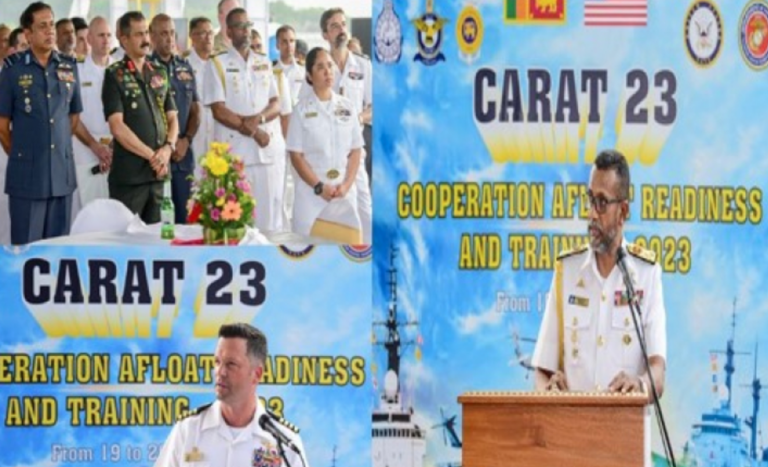
The Cooperation Afloat Readiness and Training (CARAT) – 2023 bilateral exercise successfully concluded in Sri Lanka on 26th January 2023. Hosted by the U.S. Pacific Fleet in partnership with the Sri Lanka Navy, CARAT – 2023 Exercise was held in Colombo, Trincomalee and Mullikulam from 19th to 25th January.
The closing ceremony of CARAT – 2023 was held on board ‘USS Anchorage’ at the pier side of Colombo harbour under the auspices of U.S. Ambassador to Sri Lanka H.E. Julie Chung, Commander of the Navy, Vice Admiral Priyantha Perera and U.S. Seventh Fleet Vice Commander, Rear Admiral Joaquin J. Martinez de Pinillo. Meanwhile, the ceremony at the Naval Dockyard, Trincomalee was presided by Commander Eastern Naval Area and Commandant Volunteer Naval Force, Rear Admiral Dammika Kumara and Lieutenant Max Cutchen of the U.S. Navy on 26th January. Similarly, Commander Northwestern Naval Area, Rear Admiral Nishantha Peiris and Captain Shan Mandrayar of the 4th Marines of U.S. Marine Corps drew the curtain on the proceedings of CARAT – 2023 at Mullikulam on 25th January. Symbolizing cooperation and goodwill, mementoes were also exchanged on these occasions.
CARAT Sri Lanka is a bilateral exercise between Sri Lanka and the United States designed to promote regional security cooperation, maintain and strengthen maritime partnerships, enhance maritime interoperability and preserve a free and open Indo-Pacific region. The bilateral exercise was augmented by Sri Lanka Navy, Sri Lanka Coast Guard and Sri Lanka Air Force. In addition, the Japan Maritime Self-Defense Force and Maldives National Defence Force also attended as observing partners.
The exercise consisted of both land and sea phases where SLNS Gajabahu and SLNS Samudura of Sri Lanka Navy conducted naval exercises with ‘USS Anchorage’ of the U.S. Navy. The exercises conducted in the sea phase mainly focused on Divisional Tactics (DIVTACs), Visit Board Search & Seizure (VBSS) Operations, Replenishment at Sea (RAS), Overhead Reconnaissance Exercises, Gunnery Exercises (GUNEX), Photo Exercises (PHOTOEX) and Steam Past Exercises.
The Marine Exercises of the land phase of CARAT – 2023 got underway in the beach and sea areas of Mullikulam. Chief among the exercises were; Tactical Combat Casualty Care – TCCC), Jungle Warfare, Military Operation in Urban Terrain (MOUT) and Rescue Operation, Humanitarian Assistance & Disaster Relief (HADR) Exercises, Day and Night Patrols and Ambush, Firing and Combat Lifesaving Exercises. The exercises were carried out by personnel of Sri Lanka Navy Marines, Special Boat Squadron, Rapid Action Boat Squadron, Naval Infantrymen, and U.S. Marine Corps.
In the Naval Dockyard Trincomalee, the CARAT -2023 partners successfully conducted Special Boat Squadron Exercises, Diving and Salvage Exercises, Explosive Ordnance Disposal Exercises, Rivering Exercise, Mine Exercises as well as Small Unmanned Aircraft System (SUAS) Exercises.
On the sidelines of CARAT – 2023, seminars on law and order, enforcement of maritime law and the role of women as well as programmes to strengthen relationships through sports, cultural, and information exchanges were held with the contribution the U.S. and Sri Lanka Navies.
Taking part in exercises of this nature would permit Sri Lanka Navy to gain valuable experience and training by working alongside a more experienced and well-equipped navy like U.S. Navy. This can be particularly valuable in situations where multiple navies are required to work together, when responding to nontraditional maritime threats as well as common maritime challenges.
Official from the U.S. Embassy in Colombo, diplomatic corps, President’s Chief of Staff and Senior Advisor to the President on National Security Mr Sagala Ratnayaka, ministers, officials, Commander of the Army, Lieutenant General Vikum Liyanage, Commander of the Air Force, Air Marshal Sudarshana Pathirana and a group of senior officers from the tri-services were also present on this occasion.
SL Parliament prorogued until February 08
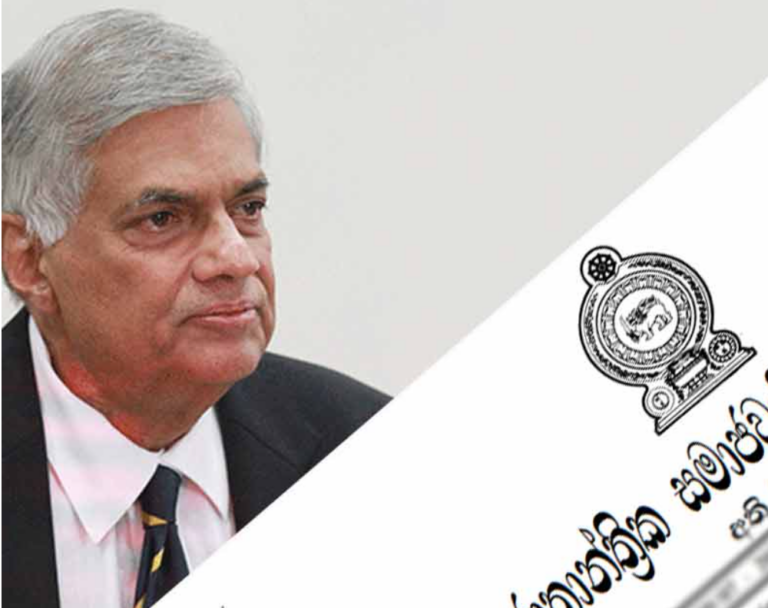
President Ranil Wickremesinghe has issued an extraordinary gazette notice proroguing the parliament with effect from midnight yesterday (27).
Accordingly, the new session of the Parliament has been set to begin on February 8, 2023, at 10:00 am in the same gazette announcement.
India’s 74th Republic Day celebrations
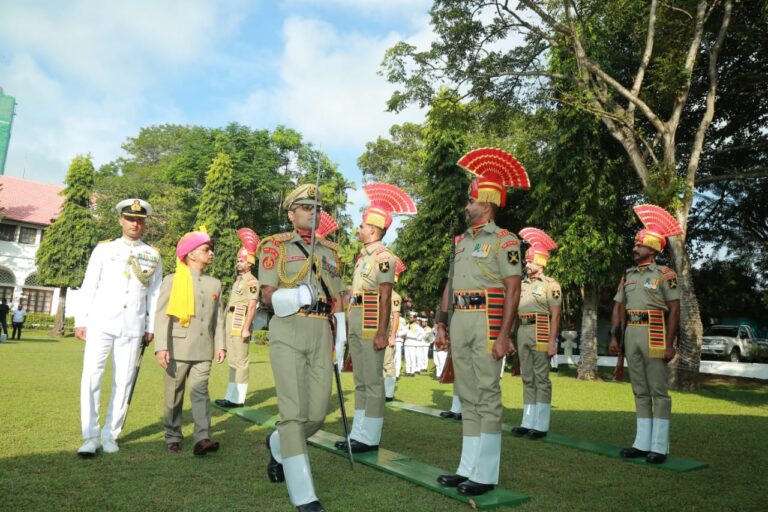
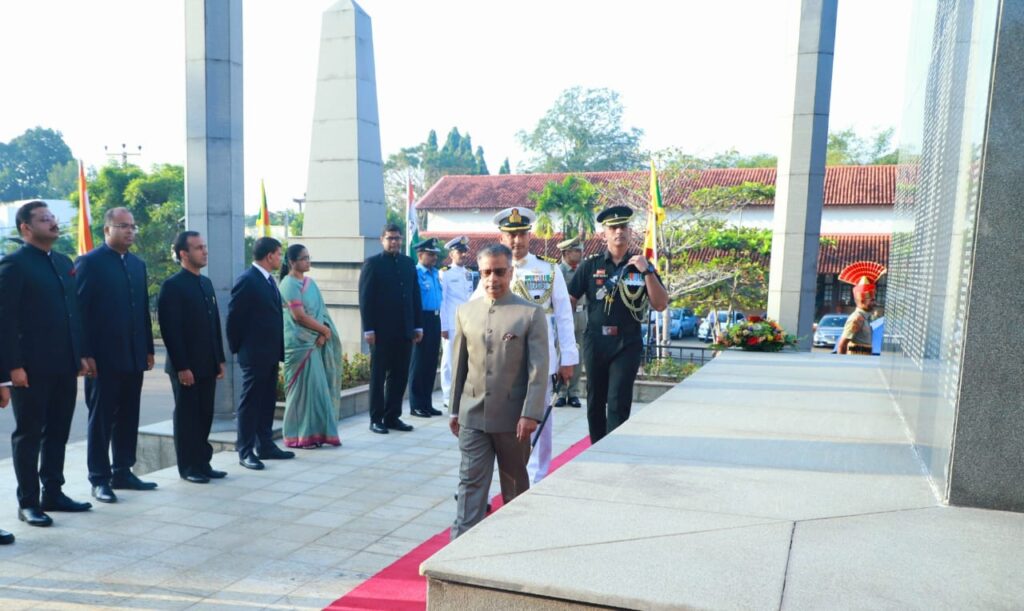
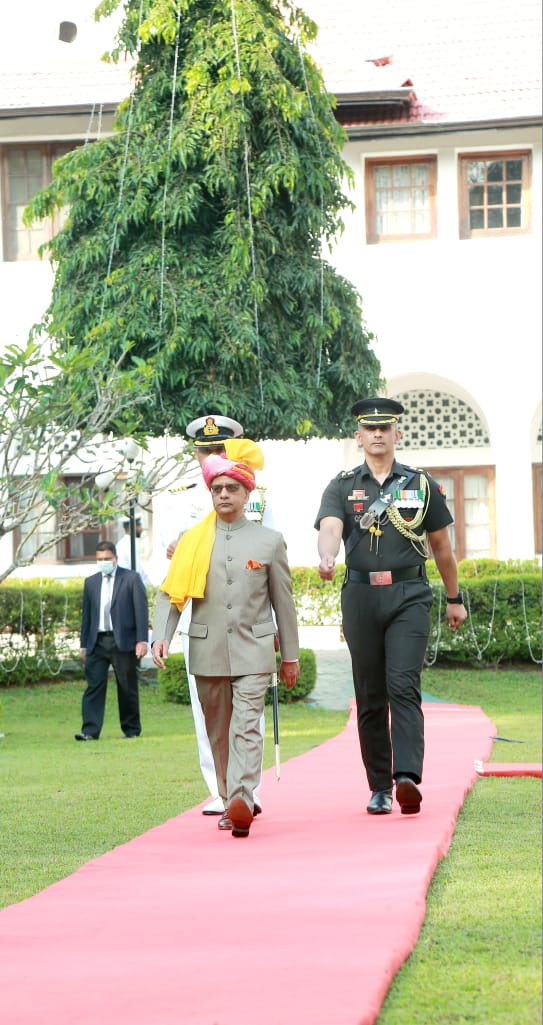
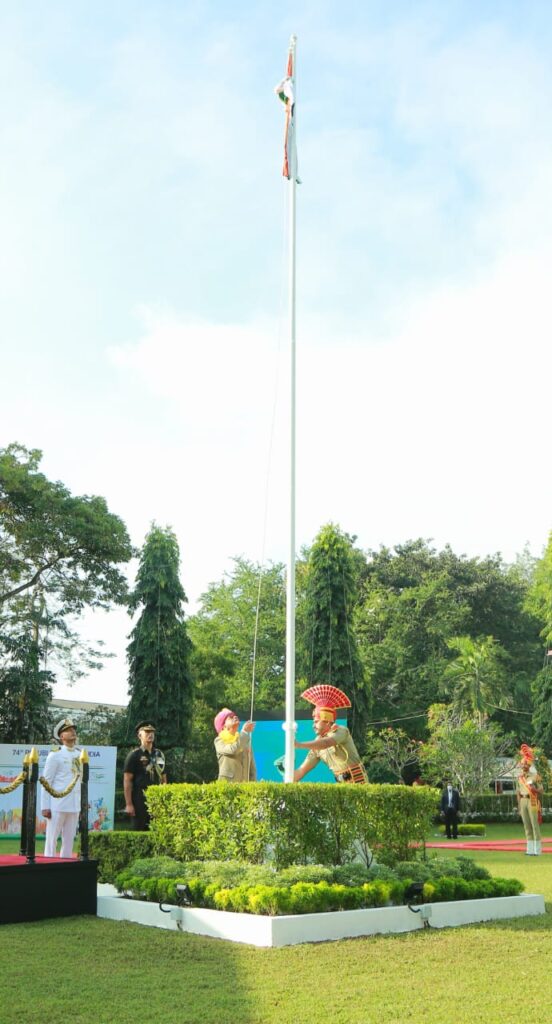
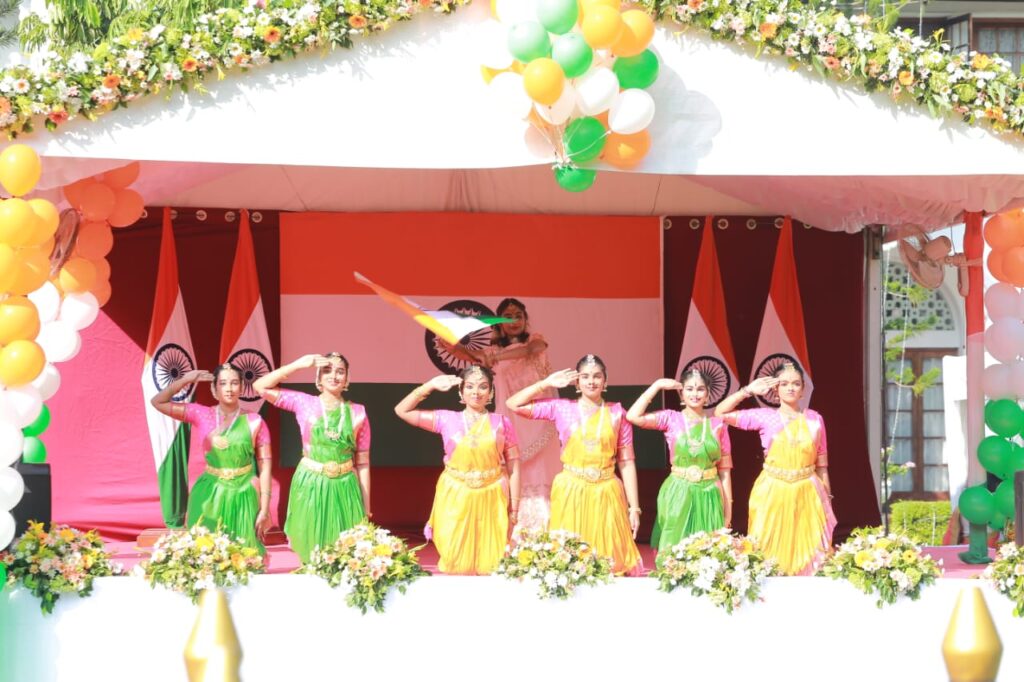
High Commission of India, Colombo celebrated India’s 74th Republic Day in Colombo on 26 January 2023. It may be recalled that it was on 26 January 1950 that the Indian Constitution-the world’s largest written Constitution-entered into force. The Preamble to the Constitution declares India to be a Sovereign, Socialist, Secular, Democratic, Republic. This is the first Republic Day celebrations after India became the fifth largest economy in the world in September 2022.
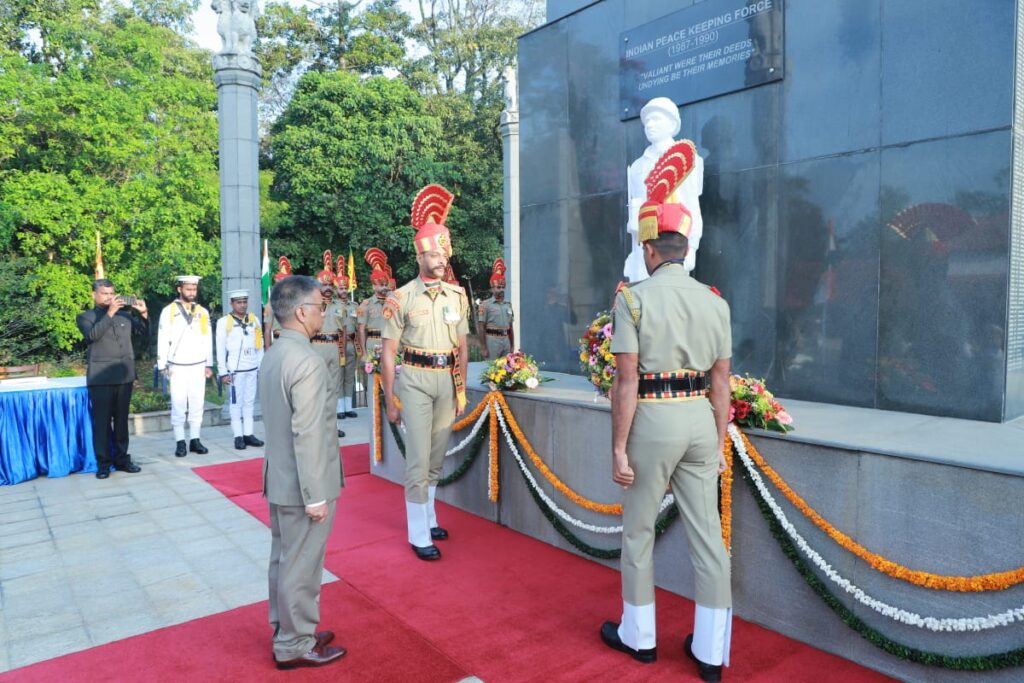
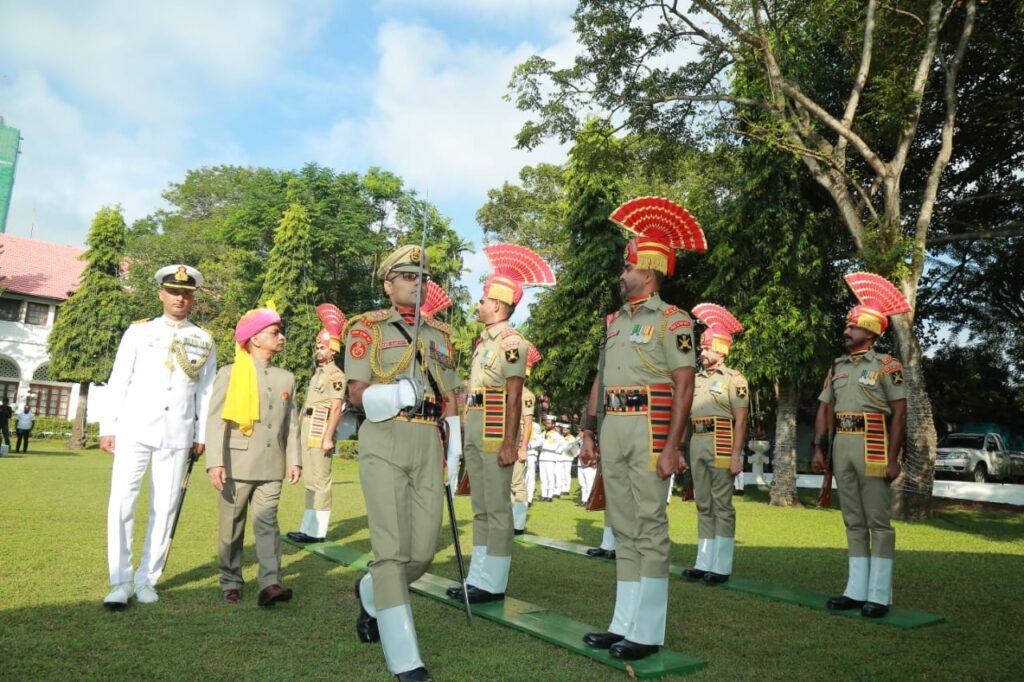
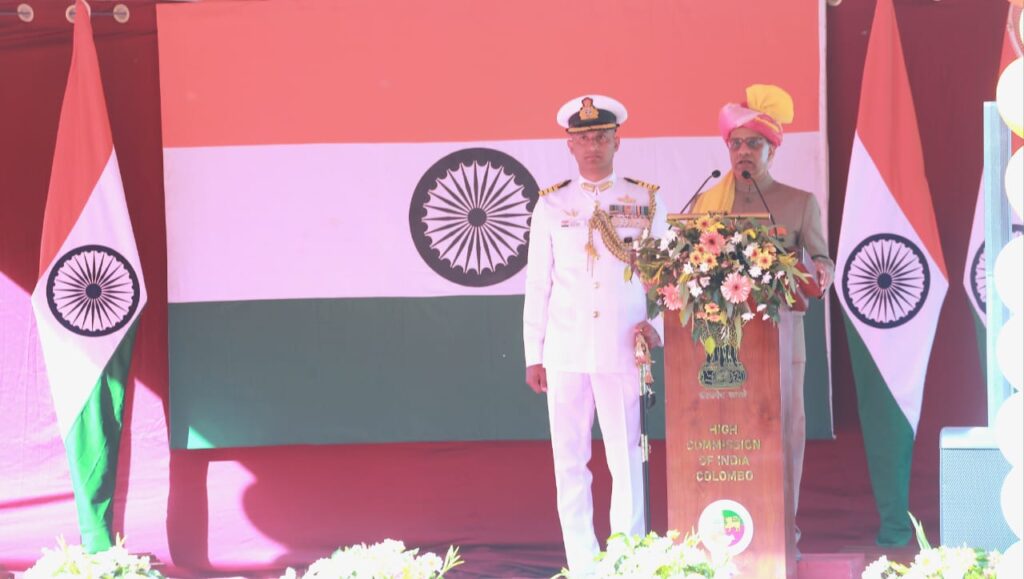
2. After paying tributes to the fallen heroes of Indian Peace Keeping Force(IPKF) at the IPKF memorial, High Commissioner Gopal Baglay unfurled India’s national flag at India House – residence of High Commissioner of India – and inspected the Guard of Honour. High Commissioner also read out excerpts of President of India’s Republic Day address. A special video message by Hon. Mahinda Yapa Abeywardana, Speaker of the Parliament of Sri Lanka was also played on the occasion.
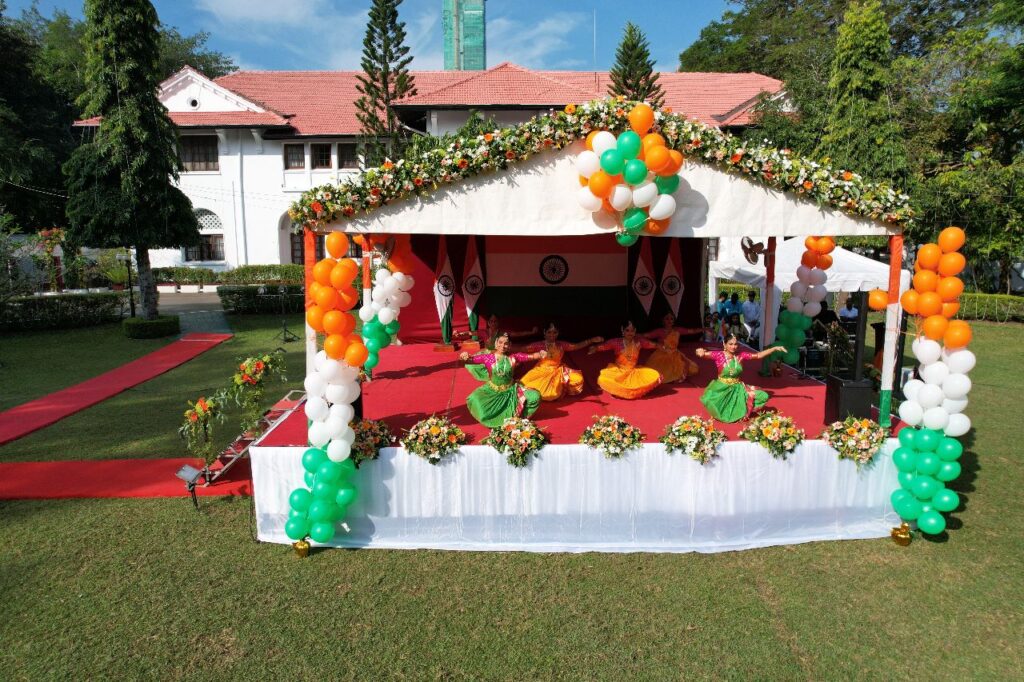
3. The event featured songs by the Sri Lanka Navy band and a cultural programme organized by High Commission’s cultural arm, Swami Vivekananda Cultural Center. Members of the Indian community attended the ceremony in several hundreds.
4. A ceremonial reception would be organized in the evening at India House. Several dignitaries from all walks of life in Sri Lanka are expected to attend this event.
5. This year’s Republic Day celebrations take place less than two weeks after India became the first bilateral creditor of Sri Lanka to give written financing assurances to the IMF for an Extended Fund Facility programme. This support which is in line with Prime Minister Narendra Modi’s ‘Neighbourhood First’ Policy is a continuation of the unprecedented USD 4 billion of economic, financial and humanitarian support given to the people of Sri Lanka in 2022.
6. Further, this year’s Republic Day celebrations coincide with the commemoration of 75 years of Independence by both India and Sri Lanka. Also, the two friendly neighbours shall celebrate the establishment of 75 years of diplomatic ties this year.
7. Consulates General of India in Hambantota and Jaffna and the Assistant High Commission in Kandy also observed the 74th Republic Day of India by organizing special events.
***
Colombo
26 January 2023
CDS signs up with Lanka IOC PLC to act as Registrar
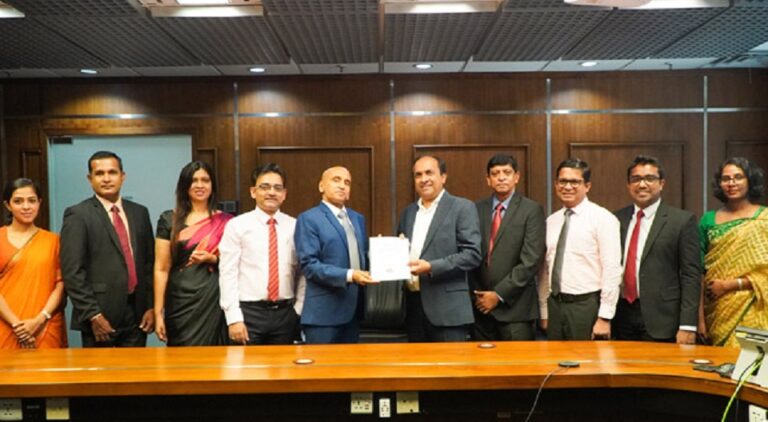
The Central Depository Systems (CDS), a fully owned subsidiary of the Colombo Stock Exchange (CSE), recently signed a service agreement with Lanka IOC PLC as the registrar for Lanka IOC PLC, with effect from 01st of January 2023.
Lanka IOC PLC, with a corporate history spanning 20 years, is the only private sector auto fuel retailer in Sri Lanka. Over the years, the company has made a significant impact on the socio-economic landscape by enabling mobility, economic activity, and development. With an island-wide footprint of 213 retail outlets, the company services 12% of the country’s retail fuel demand.
Reasoning on appointing CDS, as the Registrar for Lanka IOC PLC, its’ Managing Director, Mr. Manoj Gupta, said, “we engaged CDS to conduct our virtual annual general meetings during the period of COVID 19 pandemic where all listed companies were not in a position to convene any physical meeting as it was most essential to maintain social distance.
We found the services rendered to us by CDS were highly satisfactory. Thus, we are happy to appoint CDS as the Registrars of the company.”
“CDS has provided the service of handling the dividend payments to shareholders consecutively for the last three years and carried out the functions in a very good manner, coordinating well with the bankers and shareholders,” added the Company Secretary of Lanka IOC PLC, Ms. Amali Liyanapatabendi.
Further, commenting on the service, CSE CEO Mr. Rajeeva Bandaranaike said, “The CDS has had a progressive journey over the last 31 years and has now grown to offer an augmented product range to listed companies.
Now CDS offers an array of services to corporates and shareholders of listed companies through their decentralized digital depository operations.
Commenting on the agreement, Mr. Nalin Fonseka, Head of CDS said, with the admission of LIOC, CDS portfolio would further expand and will serve 16 listed issuers, and LIOC being a listed company in the power and energy sector, shareholders of the LIOC will go through different experience and enjoy the benefits of value-added services offered by the CDS.
CDS has been providing listed companies and shareholders a variety of depository services, such as decentralized depository operations to depository participants, digital onboarding with online account opening for both local and international clients, de-mat services for deposits and transfers.
It is also engaged in maintenance of CDS accounts via CDS e-Connect, empowering CDS account holders to easily access their CDS account and information dissemination to all stakeholders.
A political scandal at the Vocational Training Authority?
Information has been reported that the Vocational Training Authority (VTA) operating under the Ministry of Education is deviating from the procedure of the state institutions and manipulating it according to the needs of the chairman and vice-chairperson, turning the institution into a mess.
It is reported that even now, the chairman is working by sending a group of senior administrative officials including the director general on compulsory leave and giving transfers.
About three months ago, Susil Premajayantha, the Minister of Education, appointed Upali Kappetipola as the Chairman of the Vocational Training Authority and Ruwini Dharmadasa as the Vice-Chairperson. It is stated that the chairman is acting with the help of the saboteurs who are a minority who are working in the same institution.
It was said that even though the main task of the Vocational Training Authority, which is an institution that receives vocational education training, is training, it is now being implemented due to political needs.
It is stated that the chairman is implementing personal agendas outside of the corporate procedure by making false accusations against the high officials who have been working in the institution for a long time, saying that it is the restructuring of the institution.
Accordingly, about ten senior administrative officers who had provided successful and active service in the institution until then, as well as the officers who were working in the head office and district offices, have been transferred at the will of the chairman.
Upali Kappetipola, the minister’s representative, has not previously worked in a high administrative position in the government or the private sector and his knowledge regarding the tasks of the Vocational Training Authority is scant, according to its employees.
It is reported that due to lack of proper management function in the institution, the student registration this year is also not at a positive level as expected.
If the chairman is acting on his own personal and political agenda instead of checking the district performance level, it will be inevitable that the public trust in such institutions will be destroyed in the future.
Meanwhile, the board members appointed by the minister have been constantly hanging around the institution and influencing the administrative decisions. They have also influenced decision-making outside the institutional structure.
Chairpersons are appointed to government institutions with political blessings, not to allow them to run wild. Nor to make decisions outside of the organizational structure. Not for private business promotion either. In order to do so, it is not necessary to run institutions responsible for the country under a government. Protecting such places that affect the future of a country should be the responsibility of everyone who comes to them. Acting for personal or political interests without doing so is unacceptable. Although such situations are not new to this country, they cannot be condoned in any way.
Is it possible to make predictions regarding the progress of the institution when the heads of the institutions are puppets? According to reports, the current chairman of the Vocational Training Authority is working according to the orders of the minister’s son, who is the personal secretary of Minister Susil Premjayantha.
State properties are not the estates of ministers or their families and are owned by the public. They should operate in public interest. Because on the one hand, almost all those institutions are maintained by public tax money. The Vocational Training Authority is no exception. If things happen according to the wishes of the chairpersons or the political arms that lead them, it will be useless to dream about the future of such institutions. It should be remembered that this is not one institution but the future of a country.
ComBank opens Indian Rupee Nostro Account to promote regional trade

The Commercial Bank of Ceylon has announced that it has opened an Indian Rupee denominated Nostro Account at the 116-year-old Indian Bank – Mumbai, to facilitate trade transactions between Sri Lanka and India.
The Bank said this decision follows the Central Bank of Sri Lanka (CBSL) classifying the Indian Rupee as a designated foreign currency to promote trade and tourism in the SAARC region.
By establishing a Nostro Account in Indian Rupees, the Bank supports efforts to enable Sri Lankan and Indian importers and exporters to carry out trade transactions in Indian rupees, in a manner that is beneficial to both parties.
Commenting on this initiative, Commercial Bank Managing Director/CEO Mr Sanath Manatunge said: “In the backdrop of the challenges confronting the Sri Lankan economy, the ability to conveniently use Indian Rupees for trade will result in a timely increase in trading volumes between the two countries and advance regional cooperation.
As one of the biggest facilitators of Sri Lanka’s exports and imports, Commercial Bank is well positioned to make a significant contribution via this Nostro Account.”
In 2021, India was the third largest export destination for Sri Lanka. Both countries enjoy a dynamic economic and commercial partnership that has expanded over the years.
The India-Sri Lanka Free Trade Agreement (ISFTA) in 2000 contributed significantly towards the expansion of trade between the two countries.
According to the Sri Lanka Export Development Board (EDB), exports to India increased by 12.61% between January and October 2022 compared to 2021 and reached US$ 725.85 million.
In 2021, the total export value from Sri Lanka to India was US$ 815.11 million and the total import value from India to Sri Lanka was US$ 4,418.14 million.
Commercial Bank currently maintains Nostro accounts in 15 currencies with 30 correspondent banks in 20 countries, offering a geographically wide platform to facilitate international trade for the Bank’s corporate clients.