The Sri Lanka Podujana Peramuna (SLPP) has won two elections held at Gampola and Panadura Various Services Cooperative Societies.
Accordingly, out of 87 seats at the General Assembly of the Panadura Various Services Cooperative Society, the SLPP team has secured 53 seats and the Opposition, 34.
Meanwhile, the SLPP team at the Gampola Various Services Cooperative Society secured six directorships at the Director Board and the Opposition, one directorship.
Conclusively, the SLPP has secured its victory at these two Various Services Cooperative Societies.
The gazette declaring ‘high-security zones’ in several areas of Colombo issued by President Ranil Wickremesinghe in his capacity as the Minister of Defence could be reversed, as informed sources claim that the Attorney General has been instructed to look into the matter.
The President recently issued this gazette based on facts and recommendations submitted by a group of high-ranking officials at the Ministry of Public Security, but the declaration could have severe impacts on business activities in the central economic zone of Colombo, a team of economic experts told the President in a thoroughly formulated presentation, according to sources.
Despite the severe economic damage occurred due to the occasional protests in Colombo being still in effect, other problems may arise through a decree to designate HSZ, the team pointed out.
Following consideration, the President has given instructions to the relevant departments spearheaded by the Ministry of Public Security to remove these HSZ and formulate a special security programme in coordination with the intelligence units, sources further disclosed.
The atmosphere to lift the decree is already in formation, but the removal of HSZ may take place after President Wickremesinghe’s return from Japan, given that his signature is required to proceed with the action and that he is currently committed to an official tour in Tokyo, sources further added.
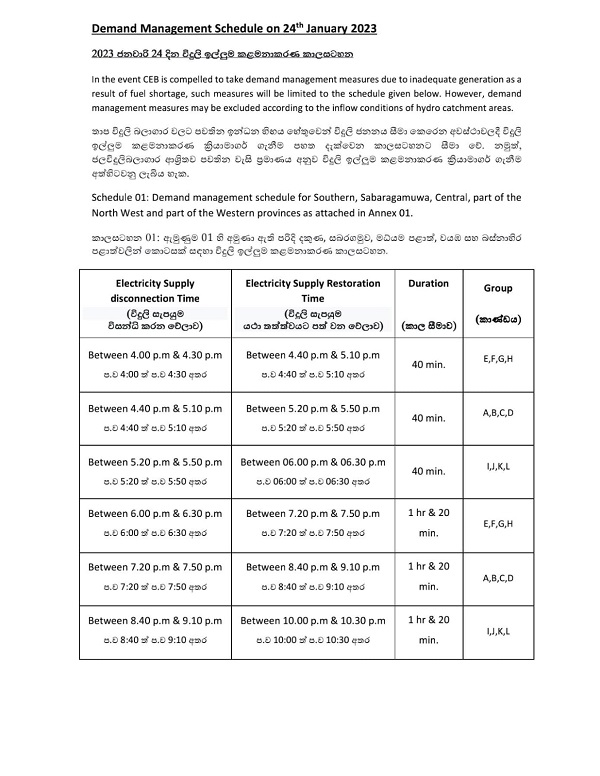
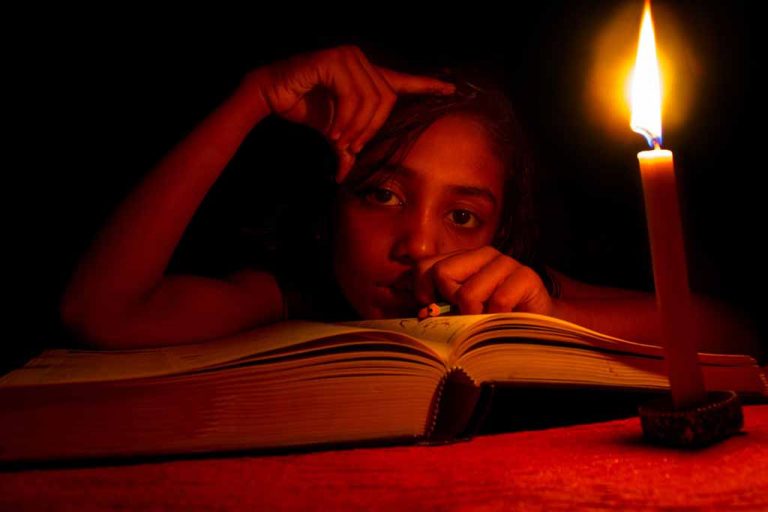
The Public Utilities Commission of Sri Lanka (PUCSL) has approved a power cut of three hours today (27) and accordingly, a power interruption schedule has been published.
A power cut of 01 hour and 40 minutes will occur at daytime and a power cut of 01 hour and 20 minutes at nighttime, the PUCSL said.
The power interruption schedule will be in effect to all zones A, B, C, D, E, F, G, H, I, J, K, L, P, Q, R, S, T, U, V, and W.
Sri Lanka Tourism will continue to expand its bilateral and cultural ties with its Indian counterparts by venturing into a series of roadshows in key Indian cities from September 26-30, 2022, Sri Lanka Tourism Development Board official said.
The first roadshow will be held at the Taj Palace Hotel in New Delhi on September 26 followed by heading to the St. Regis Hotel in Mumbai on September 28 and closing with the Hyderabad Roadshow at Taj Krishna Hotel on September 30, 2022.
The main purpose of hosting these roadshows is to promote Sri Lanka as an attractive tourism destination across India, as it is one of Sri Lanka’s key source markets and has been extremely supportive in Sri Lanka regaining lost momentum both post-pandemic and the recent economic downturn, he revealed.
Sri Lanka is witnessing a considerable increase in tourist arrivals with India leading the way and securing the number one position.
The event also focuses on promoting a myriad of tourism experiences while focusing on converting potential travellers to make bookings and highlighting the positive message that Sri Lanka is open for leisure, business and MICE tourism.
The target audience at these roadshows will be tour operators, media, key influencers, corporates and trade associations and key tourism industry stakeholders in India, who have the ability to take the message that Sri Lanka is not only one of the most beautiful countries but is also safe and secure; adhering to all the necessary health and safety guidelines, he pointed out.
A delegation of over 50 local travel agencies and hotels will be participating at this event, with the delegation being led by Tourism Minister Harin Fernando, accompanied by Chalaka Gajabahu, Chairman Sri Lanka Tourism Promotion Bureau and Thisum Jayasuriya, Chairman Sri Lanka Conventions Bureau.
Many industry stakeholders have supported this endeavour including SriLankan Airlines and Mastercard. Each roadshow will include B2B Sessions facilitating numerous discussions followed by an Evening Networking event which will also help to improve business partnerships.
A touch of glamour will be added to these events with the participation of celebrities such as Sanath Jayasuriya and Yohani De Silva, where dance and entertainment will be included at each event, to give the audience an amazing experience and also a glimpse of Sri Lankan culture.
The dancing troupe will showcase their talent along with Yohani’s musical performances.
During the Roadshows, the Minister of Tourism is expected to meet several high-profile Business Leaders, Tourism Stakeholders and Corporates while engaging in several media interviews with leading Indian media houses.
India has generated over 80,000 tourist arrivals to the country so far and it is expected to double these numbers by 2023.
Thus, these roadshows will add more value to create a positive mindset regarding Sri Lanka and its diversity of attractions, cultural value and travel opportunities, enabling Indian tourist arrivals to the destination,SLTDB officials added.
Any fund disbursements from the International Monetary Fund (IMF) to crisis-hit Sri Lanka could be at least 3-4 months away from now as financing assurances from the country’s bilateral creditors remain a key sticking point for the IMF executive board to green light its bail-out programme, a presentation made to creditors by the Sri Lankan officials on last Friday showed.
Sri Lankan officials on Friday met its creditors virtually to update them of the breadth and depth of the multifaceted crisis faced by Sri Lanka, the reform path since undertaken towards the staff-level agreement with the IMF and particularly the need to restore debt sustainability as an important precondition to unlock any fund flows back to the country.
Sri Lankan people are undergoing endless misery everyday as they are squeezed to the bone amid soaring prices of everyday goods and services as both monetary and fiscal policies were tightened after the rupee collapsed by 80 percent.
Representing the Sri Lankan side the Governor of the Central Bank and the Secretary to the Ministry of Finance who together addressed the creditors expressed hopes to obtain financing assurance from both the public and private creditors by mid November before the IMF Board is expected to approve the programme in mid-December-January 2023.
While agreements are expected to be reached in principle with all creditors within this time frame, the negotiations would continue through the second quarter of next year before the renegotiated debt agreements are legally implemented.
The financing assurances could take two forms based on the profile of the creditor groups – official and private.
The financing assurances from official creditors would mean commitment to grant Sri Lanka debt treatment compatible with the macro-economic framework and debt sustainability constraints in the IMF programme.
To expedite this process, the officials promote the formation of an ad-hoc bilateral creditor coordination platform which allows, “the official bilateral creditors to give their financing assurances to the IMF collectively after having debated among themselves, with the IMF and the Government of Sri Lanka on the general contours of the debt treatment required to support the restoration of debt sustainability,” the presentation showed.
Sri Lanka’s bilateral creditors include the Paris Club members and non-Paris Club members led by China and India accounting for 52.0 percent and 12.0 percent respectively out of a total of US$ 13.8 billion worth of bilateral debt which includes government guaranteed State-owned enterprise debt.
President Ranil Wicremesinghe on Thursday met the ambassadors representing Sri Lanka’s bilateral creditors seeking expedited financing assurances.
According to the data presented on the outstanding public debt, Sri Lanka had US$ 46.6 billion worth of foreign currency debt, US$ 34.0 billion of US$ equivalence of local currency debt, making up for US$ 80.5 billion of total public debt by the June end, working out to 122 percent of Gross Domestic Product (GDP).
The private foreign currency debt amounted to US$ 18.8 billion, out of which bonded ones including the international sovereign bonds (ISBs) and Sri Lanka Development Bonds made up of US$ 14.5 billion by the end of June.
Meanwhile, the financing assurances from private creditors would mean Sri Lanka making a ‘good faith’ effort to reach collaborative agreement with them which includes engaging in early dialogue and sharing relevant information on a timely basis.
These private bondholders of Sri Lanka’s ISBs have organised themselves into two main creditor committees—one consisting of 100 members of international investors and another consisting of eight local private banks holding slightly in excess of a billion dollars worth of ISBs.
The former group represents more than 55 percent of ISBs non-domestic holdings, led by a steering committee of 10 members advised by Rothschild and White & Case while the latter is advised by Baker & Mackenzie.
In Sri Lanka, rice is more than a sustaining staple. It is an undeniable main character in its history and identity.
By Zinara Rathnayake
My mother is a good cook.
My father is just slightly better. That’s how my younger sister would always describe my parents’ food. She’s right. My mother cooked delicious curries. But my father cooked the food we hold dear.
My father grew up in Nabiriththawewa, a small village in Kurunegala, about 120km (75 miles) from Colombo.
Unlike his two older brothers who were more interested in going out with their friends, my father accompanied my grandfather to every village wedding. From what I could gather, my grandfather was the chef at every function in the village. He had cooked to feed hundreds.
“I followed him like a thread follows the needle. That’s how I learned to cook,” my father would say.
A staple Sri Lankan rice and curry meal. Pictured are bandakka (okra stir fry), bonchi (beans in coconut milk), wam batu thel dala (eggplant), kesel muwa malluma (banana flower stir fry). Fish curry (served in a clay pot), papadam, and salt-and-pepper cucumber [Nathan Mahendra/Al Jazeera]
Although I wish I had met him, I never saw my grandfather, he was already a distant memory when I came to this world.
A paddy field by the road in a small village in Wellawaya, 282km from Colombo [Nathan Mahendra/Al Jazeera]
When I was eight years old, my family lived in a small house by the rice fields in my father’s village. My father worked a tedious office job, commuting for hours on a passenger train every day.
But when he was home, he would spend time doing two things: gardening and cooking.
My father lived a frugal life so he could build a secure future for his two daughters.
He was also a frugal cook, making use of every ingredient so nothing in his kitchen ended up in the waste pit. He mastered the art of delicious snacks, like bath aggala, a Sri Lankan sweet he makes using coconut and leftover rice and that marked our teatime ritual growing up. In Sinhala, aggala are sweet ball-shaped snacks and bath is cooked rice.
At home, teatime was when I cycled home through the rice paddies from the neighbours’ to find my little sister still in her bright sequined nursery dress with her colouring books. Outside, kids would be flying kites as men worked in the fields and women in colourful headwraps reaped golden-yellow paddy with their sharp sickles.
My mother, who was a government school teacher, would be just getting up from her afternoon nap to make tea with powdered milk for us.
During the week, teatime meant a cup of tea with a packet of biscuits or a loaf of white bread to dip. But on the weekends, it was my father’s bath aggala, eaten as we sat on the verandah watching the world. Sometimes, my parents would tell us about their childhood. Or we would just watch colonies of bats dart across the evening sky as night fell, and giggle over something my little sister said.
As I look back on those teatimes spent at home, I miss the sounds and colours of those evenings that held us together, and the taste of my father’s bath aggala.
Roasting for about 20 minutes gives aggala a brown colour and nutty taste, which is how my father makes it [Nathan Mahendra/Al Jazeera]
It is only now that I understand that, for my father, bath aggala was more than sweet rice balls he made for his family. For him, it was making the most of rice: a grain beloved to him and all Sri Lankans.
The beloved grain
“Udetath bath, dawaltath bath, retath bath” is a popular Sinhala saying that means “Rice for the morning, afternoon, and night.”
Nothing reflects the essence of my island and people better than that. Rice is not only the main staple for Sri Lankans, it’s more than that.
In island kitchens, rice boils every day in clay pots over firewood or steams in electric rice cookers. A pot of steamed rice dominates our tables often, paired with other dishes and condiments. When rice is not cooked this way for breakfast or dinner, another rice-based food blesses our empty plates.
It could be kiribath, a sticky blend of rice and coconut milk eaten for breakfast. Or rice flour is used to make idi appa or idiyappam, discs of steamed thin noodles. Or appa or appam, bowl-shaped snacks with crispy edges and fluffy centres. Or dosa, thin, crisp flatbreads made with a fermented rice-lentil mix. Or levariya, sweet-savoury pockets of rice noodles filled with caramelised coconut.
We use soaked, ground rice to prepare sweetmeats for our New Year every April and when guests come over, we cook rice with aromatics like curry leaves and cinnamon and garnish it with crunchy cashews to prepare golden kaha bath.
When food is scarce, families soak leftover rice to eat in the morning with kiri hodi, a turmeric-infused coconut gravy soured with lime. This modest meal was my father’s favourite breakfast, paired with fresh green chilli.
Rice feeds us, builds us, and shapes us in many ways. This humble grain that thrives in the mud holds a place in every Sri Lankan meal and has crept into every nook and cranny of our society.
Ingredients for bath aggala. Clockwise from the right: leftover sundried rice, grated coconut, cooked and uncooked rice, and a coconut [Nathan Mahendra/Al Jazeera]
Rice has a large share of the island’s agriculture, frames its economy, and unpacks our history. And our love for it has given birth to a host of flavourful dishes.
I learned how rice grew when we moved to our father’s village. Paddy – the word for the plant and the grain before removing the hull – flourished in the fields thanks to the farmers toiling in the sun.
My father grew paddy in a small field inherited from his parents, which grew enough rice for us. While he readied the field, I would run behind him, getting my feet muddy. Once or twice, I helped him plant seedlings.
The earliest stone carving of paddy cultivation in Sri Lanka dates back to 939-940 AD, says Professor Buddhi Marambe, who specialises in weed science and food security. Ancient Sri Lankan rulers built reservoirs to harness rainwater while people developed and preserved rice varieties for more than 3,000 years.
But when the island was colonised by the British in 1815, cash crops like tea and rubber were imposed on farmers to make money for the colonisers. British propaganda campaigns also encouraged people to replace rice with wheat in their diet. “By the 1940s, Sri Lanka had to import 60 percent of the rice needed for the country’s meagre six million population,” says Marambe.
In the following decades, refined wheat flour and white bread rose in popularity while native rice was replaced by high-yield varieties to sustain the growing population – varieties that needed chemical fertilisers and pesticides.
A child walks to the fields with a mammoty to help his parents in Pussellayaya, a village by the Wasgamuwa National Park [Nathan Mahendra/Al Jazeera]
In 2020, there was enough locally produced rice to feed Sri Lanka’s population of 21 million, Marambe says. But the then-government abruptly banned synthetic fertilisers in April 2021, forcing farmers to turn to organic fertilisers they were not used to. Farmers lost their harvest, and many deserted their rice fields.
By the time the ban was lifted in November last year, Sri Lanka did not have enough foreign currency to import chemical fertilisers and pesticides. The hard currency shortage also resulted in a fuel crisis, and farmers have to pay more now for reaping and threshing machines.
“Most people [in our village] are abandoning their fields now,” my mother said when I rang her recently. “The machine is charging 240 rupees [$0.66] per minute. They can’t afford it.”
Sri Lanka’s future rice production now depends on a crippled economy and tentative foreign loans that may or may not come.
In the past, leftover rice was considered “poor man’s food”, so people stopped eating foods like diya bath (fermented rice porridge with coconut milk) for breakfast, reaching for refined white bread slathered in preservative-laden bottled jam instead.
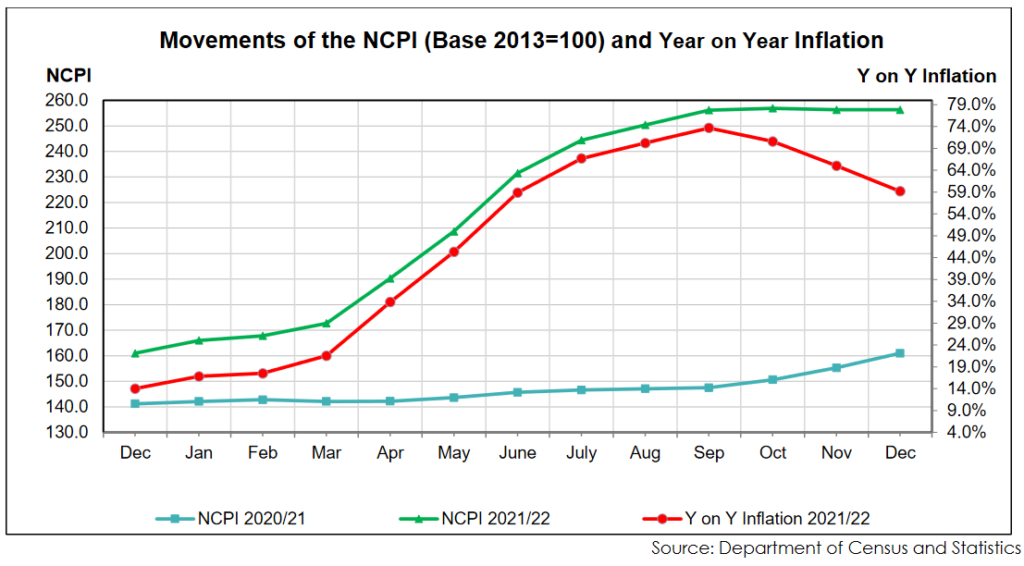
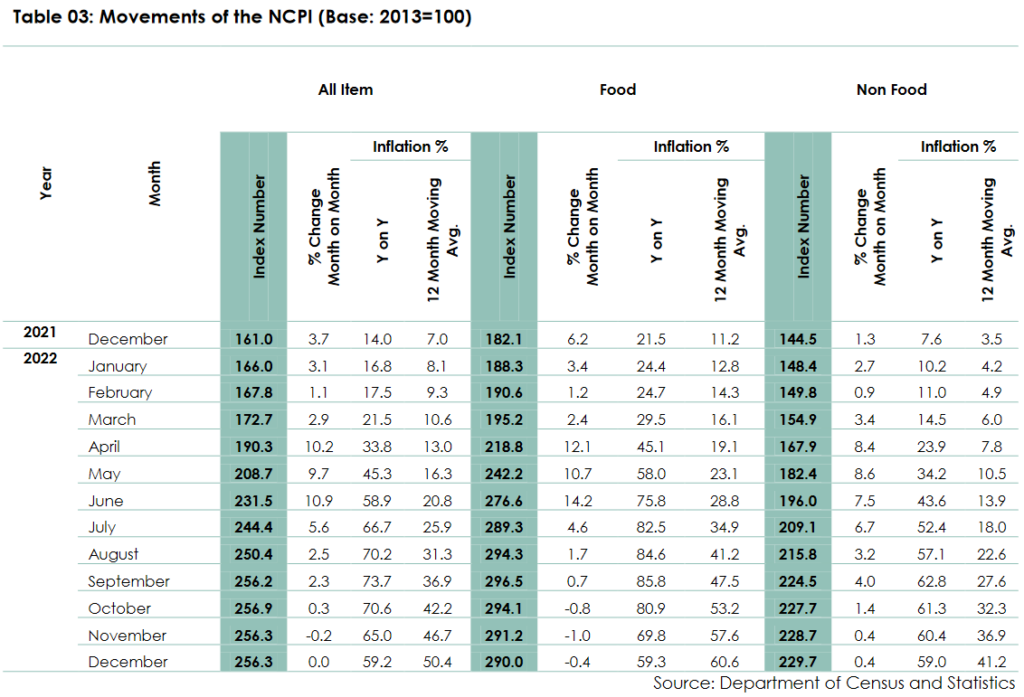
But, in June, food inflation was more than 60 percent in Sri Lanka and has since kept climbing. Prices soar daily, and most low-income families eat just one or two meals a day. As people rethink their food choices, frugal cooking has made a comeback.
My parents no longer buy biscuits or white bread. A packet of biscuits that cost 200 Sri Lankan rupees ($0.55) a week ago is now 600 rupees ($1.65). “Who would pay that much for biscuits,” my mother said. She wants me to bring her some from India, where I’m currently travelling.
My father makes bath aggala more often now. It’s a dish he learned to make by watching his parents and older sisters, he told me recently on the phone.
‘For my father, bath aggala is food security. It is minimising waste,’ writes Rathnayake [Nathan Mahendra/Al Jazeera]
When my father was a teenager, Sri Lanka was battling drought and an economic crisis in the 1970s. Even though his family had land to grow rice, there wasn’t enough water. So my grandparents made the most of what was available.
“They told us never to throw away rice, not even a single grain of it,” my father said. “When I saw a little boy digging in a dustbin for food at school, I realised what it means to have food on the table.”
Rice and coconuts
I don’t remember us ever buying rice. Even when I left home to live in Colombo, my parents would visit me with tightly packed grocery bags of rice from my father’s fields. But recently when I called home, my mother said she might have to buy rice for the first time in her life.
“The [threshing] machine will only come if we give them diesel,” my mother said. “And we can’t get diesel.”
Many families in the village are now eating diya bath in the morning, my mother said.
Making diya bath involves a few steps if you, like my father, want to eat it hot. Many people eat diya bath cold, which is faster.
If there is rice left over after dinner, my father soaks it in water, letting it soak overnight and draining it the next morning. Then he heats up the coconut milk in a pot, adds dried red chilli, curry leaves, onion, salt, half a teaspoon of turmeric powder, and Maldive fish flakes (dried, cured tuna fish), and lets it simmer.
Diya bath as my father eats it with kiri hodi, served warm [Nathan Mahendra/Al Jazeera]
For sourness, he squeezes in half a lime or adds a few pods of dark brown sun-dried tamarind. (This concoction alone is called kiri hodi). When it’s ready, my father pours it, piping hot, onto a bowl of rice and eats it with fresh green chilli and, sometimes, fried dried fish.
Cold diya bath is a no-cook meal: mix two cups of coconut milk with one cup of soaked rice. Then add thinly-sliced red onion, two tablespoons of lime juice, three-four roasted dried red chillies, one teaspoon of grated Maldive fish, and salt to taste. If you like it sourer, squeeze in some more lime juice.
Some people like fresh green chilli instead of dried red chilli. Maldive fish is optional, but it adds a nice umami punch. Many elders believe that diya bath, with its fermented rice and coconut milk, cools the body and prevents heartburn.
Speaking of coconut milk, when I make diya bath, I reach for coconut milk that comes in sealed cardboard containers but my parents have never bought coconut milk in their life, they make it. My father plucks coconuts from our garden, removes the fibrous outer husk, halves the nut, and scrapes it with a hiramanaya – a traditional grater with a wooden seat for the person to sit while grating. He mixes the grated coconut with water, squeezing it several times with his hands to make coconut milk.
Making coconut milk is laborious, but my parents still do it. If rice is our staple, coconut is its mate. It thickens our curries, binds our sambals, flavours our foods, and balances meals with healthy fats. Coconuts also make our condiments richer to pair with humble rice.
A tractor at work, ploughing the fields for paddy cultivation in Pussellayaya, by the Wasgamuwa National Park [Nathan Mahendra/Al Jazeera]
More than aggala
While people usually boil fresh rice for aggala, my father soaks leftover rice to make sugary, coconutty balls with a slight crunch. For him, bath aggala is food security. It is minimising waste.
To make this teatime snack, he ferments leftover cooked rice overnight in water. In the morning, he drains and sun-dries the rice until it is crisp, then roasts it for about 20 minutes in a skillet on a low flame, until it turns brown.
When I made bath aggala recently, I roasted the rice for five to eight minutes and switched off the stove before it changed colour, so it stayed white. Do as you like, roasting for longer gives aggala a golden-brown colour and nutty flavour.
Using a pestle and mortar, my father grinds the warm, roasted rice until he gets an uneven texture with pieces of broken rice that add a delightful crunch. You can use an electric grinder as I do, just don’t grind it into powder.
Take 250g of this ground rice and add about 100g of grated coconut, half a cup of sugar, half a teaspoon of salt, and half a cup of water. Mix it well with your hands and shape it into little balls. Some people prefer a bit of a spice kick to their aggala, which is easily done by sprinkling a hint of black pepper into the mix.
Once ready, always serve with a cup of tea.
Like rice, coconut makes up a large chunk of Sri Lankan cuisine. Photo taken in Koggala [Nathan Mahendra/Al Jazeera]
My father’s bath aggala is a testimony to Sri Lanka’s longstanding relationship with rice. It bears witness to the island’s often troubled history and present, twisted and framed by politics and economic interests.
The road to recovery is long. But for now, I’d like to be lulled into sweet teatimes at home. One bath aggala at a time.
The Sri Lanka Tourism Development Authority (SLTDA) is backing the efforts of improving local nightlife, particularly for tourists who are visiting the country, as it will encourage them to spend more money when they are in Sri Lanka.
SLTDA Chairman Priantha Fernando stated that the role of the Ministry of Tourism was to prepare policies and get them ready to provide the mandate to tourism bodies such as the SLTDA, Sri Lanka Tourism Promotion Bureau (SLTPB), and Sri Lanka Convention Bureau (SLCB) to get these policies implemented.
“The Ministry of Tourism can decide on policies but it is not the implementing body. There are bodies and implementing arms to get these policies launched. However, the Ministry of Tourism will get involved in the overall policy decisions,” he pointed out.
Fernando noted that nightlife was interpreted differently in different media and noted that even during some of the interviews he had given three or four months previously, he had highlighted the lack of nightlife entertainment in Sri Lanka.
“Tourists want to go out at night, try out different meals, and enjoy some good music. We have to create opportunities for tourists to spend money in Sri Lanka through such activities. More and more earning avenues have to be created in the entertainment category. Otherwise, we will be stuck with the same amount of tourism earnings. We need to explore and encourage tourists to spend more,” Fernando added.
He stated that the SLTDA must look for different ways to bring entertaining nightlife to Sri Lanka and added that the entertainment field was demand-based and if there was a demand created for such events, local and international players too would automatically wish to venture into Sri Lanka.
In a measure to revive the night economy in Sri Lanka, State Tourism Minister Diana Gamage ceremonially inaugurated the ‘Fairway Colombo Street Food Festival’ at the Dutch Hospital premises in Fort, with the participation of over 5,000 people.
This kind of event was last held three years ago, prior to the COVID pandemic. However, arrangements have now been made to hold this food festival on the last Saturday and Sunday of every month, from 6:00 p.m. to midnight.
Gamage was in the spotlight recently for promoting the creation of a no-holds-barred nightlife in the city of Colombo to attract high-spending tourists and is in line with her continued efforts to revive and establish a thriving and diverse night economy in Sri Lanka.
“The festival aims to promote the unique food heritage of Sri Lanka, with multiple options of varying cuisines, available at affordable prices, making this by far the biggest street food festival to hit Colombo,” said Fairway Colombo Director Business Development Romesh Amarasinghe, who is one of the key organisers of the event.
“With a fusion of great music and ambience in the air, the night included a variety of entertainment, which backs up the festive atmosphere, making Colombo the most happening place to be,” added State Tourism Ministry Coordinating Secretary Dr. Arosha Fernando.
Today’s (27) power cut will have to be extended up to three hours, due to the shutting down of the Unit 03 at the Norochcholai Coal Power Plant, said Chairman of the Public Utilities Commission of Sri Lanka (PUCSL) Janaka Ratnayake.
The PUCSL earlier today warned that the power cuts may have to be extended due to the failure at the Plant, however, Energy Minister Kanchana Wijesekara said in a tweet that the Commission has approved the Ceylon Electricity Board (CEB) to purchase power from private power plants to maintain power generation without having to extend power cuts from tomorrow.
He added that the Ceylon Petroleum Corporation (CEYPETCO) will provide the necessary diesel, naptha and furnace oil for the generation of power.
The restoration of the Unit 03, which was shut down due to a steam leak, at the Norochcholai Power Plant may require about 03 to 05 days, he added.
Sri Lanka Customs urged Sri Lankans working overseas to use only agencies registered with the Customs Department when parcels are dispatched to Sri Lanka.
The notice comes in following multiple complaints about parcels sent by Sri Lankan migrant workers being reported missing or damaged.
This could be the result of the agencies through which these parcels are being dispatched being not registered with Sri Lanka Customs, it added, citing findings of an investigation launched by the Dept.
In the backdrop, the Customs urged the expatriates to utilise agencies which are officially recognised by the Department.