Home Blog Page 1888

No discussion on GR being given titles: Ruwan Wijewardena

0

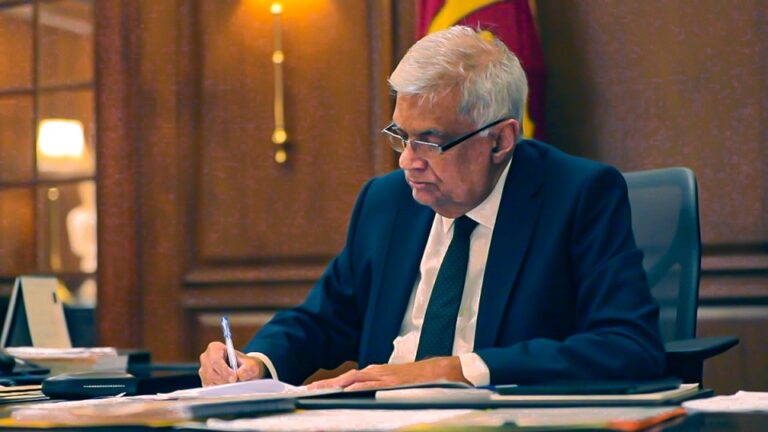
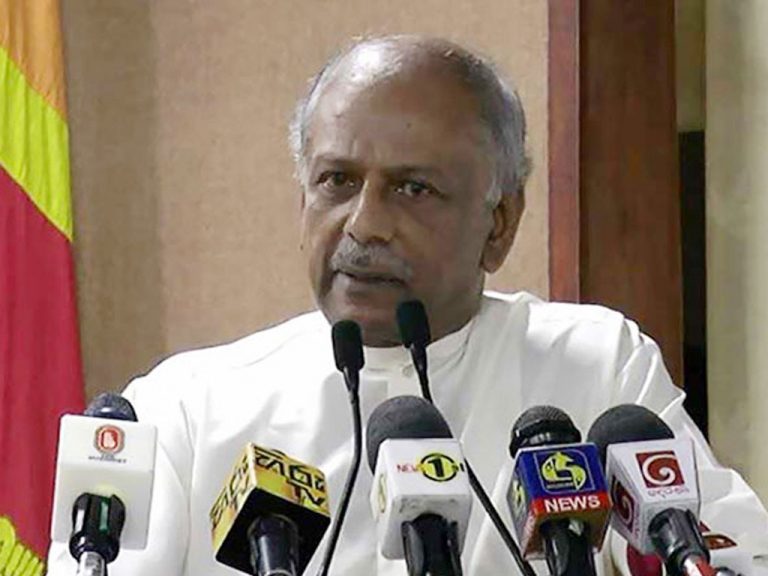
President Ranil Wickremesinghe held no negotiation pertaining to former President Gotabaya Rajapaksa being appointed as the Prime Minister, said United National Party (UNP) Deputy Leader Ruwan Wijewardena, assuring that neither the President nor his Party makes any intervention on the ex head of state’s political affairs.

Wijewardena made this observation yesterday (04) in response to reporters on the speculation that the ousted Sri Lankan President being given a top government position upon his return to Sri Lanka.

The UNP Deputy Leader also said that the President intervened to provide the necessary facilities and security for ex President Rajapaksa to return to the island based on the recommendations by the Human Rights Commission of Sri Lanka (HRCSL), and that he, accordingly, has received all the facilities entitled to a former head of state.

A group of Sri Lanka Podujana Peramuna (SLPP) MPs made the resolution on Mr. Rajapaksa being appointed as the Prime Minister, however, certain members of the Rajapaksa family are of the opinion that the ex President shall not engage in politics further.

MIAP

Paris Club ready to start the Sri Lanka debt restructuring process

0

The Paris Club has said that it is ready to start the debt treatment process of Sri Lanka following the conclusion of the Staff-Level Agreement with the International Monetary Fund (IMF) last week.

The Paris Club in a statement also reiterated its willingness to coordinate with non-Paris Club official bilateral creditors to provide the necessary financing assurances in a timely manner and ensure fair burden sharing, as already proposed to the largest other official bilateral creditors.

“The Paris Club remains at the disposal of Sri Lanka authorities and non-Paris official bilateral creditors to further discuss the next steps of the debt treatment process,” it said.

The statement said Paris Club members welcome the SLA between the Sri Lankan Government and the IMF for a 48-month arrangement under the Extended Fund Facility worth $ 2.9 billion. “This agreement represents an important step to restore macroeconomic stability and public debt sustainability,” the statement added.

The Paris Club was formed in 1956 and is an informal group of official creditors whose role is to find coordinated and sustainable solutions to the payment difficulties experienced by borrower countries.

Paris Club members are Australia, Austria, Belgium, Brazil, Canada, Denmark, Finland, France, Germany, Ireland, Israel, Italy, Japan, Netherlands, Norway, Russia, South Korea, Spain, Sweden, Switzerland, United Kingdom and United States. India has been an observer state since 2019.

Sri Lanka’s foreign currency bilateral debt as at end 2021 was $ 9.6 billion or 11% of GDP as against $ 20 billion held by private creditors. Guaranteed SOEs bilateral debt was $ 300 million and those held by the Central Bank of Sri Lanka was $ 1.8 billion. Of the Paris Club members, the giant share is held by Japan (32%) followed by Korea 3%, Germany and France 2% each, USA and Spain 1% each.

Travel advisories exert adverse impact on tourist arrivals in August

0

Sri Lanka could achieve the set target of one million tourists, whilst earning over $ 1.75 billion by year-end despite the the drop in tourist arrivals in August owing to adverse travel advisories by some foreign countries Sri Lanka Tourism Development Authority Chairman Priantha Fernando disclosed.

The adverse travel advisories imposed by multiple countries against Sri Lanka have severely impacted numbers, as August becomes the third lowest arrivals month for the year so far.

In August, arrivals fell by 20.2% to 37,760 from 47,293 in July, the shattering industry hopes to exceed the year-to-date half-a-million mark.

May recorded the lowest tourist arrivals with 30,207, whilst the second lowest inflow was in June with 32,856.

Arrivals in the first eight months amounted to 496,430 (as against 5,040 in COVID-hit August of 2021), a welcome development for the triple-hit tourism industry, but performance is still down by 81% compared to the same period in pre-COVID 2018.

The latest data released by the Sri Lanka Tourism Development Authority (SLTDA) showed the daily average arrivals have dropped to 1,218 from 1,526 in July. The highest daily average arrivals were in March with over 3,600, but the numbers kept crumbling as ramifications of the economic crisis and political upheaval.

The UK topped the tourist traffic to Sri Lanka with 18% or 6,776 tourists despite the adverse travel advisories, followed by India with 5,340 tourists (14%) and Germany with 3,251 (9%).
India remains strong as the top tourist source market for Sri Lanka YTD with cumulative number of arrivals at 80,132 followed by UK 65,655, Russia with 49,747, Germany 40,359, France 28,235, Canada 19,056, Australia 18,412, US 14,259, Ukraine 13,908, and Poland 13,334.

Earnings from tourism in the first seven months were at $ 824.9 million, as against $ 50.4 million in the corresponding period of 2021, as per Central Bank provisional data.

In July, tourism earnings were estimated at $ 85.1 million, compared to $ 6.3 million a year ago.

Despite the multiple challenges, Sri Lanka’s tourism industry looks to be in high season, as they ramp up efforts to achieve the set target of one million arrivals and boost foreign exchange inflows to overcome the economic woes.

President RW needs at least 175 MPs’ support to build SL

0

Chairman of the United National Party (UNP) MP Vajira Abeywardena speaking to a briefing called in by the Party yesterday (04) said President Ranil Wickremesinghe needs each and everyone’s support to build the country.

“Mr. Ranil Wickremesinghe has taken over the stewardship of the nation. So, he continues to ask for everyone’s support in this regard. To recover this country from where it fell, at least 175 MPs’ support is needed, he said over and over again. What is being done is uniting all compatible and incompatible political parties for a national programme. Such a programme cannot be implemented overnight,” he said.

MIAP

Consumer rights activists condemn price revision on flour (VIDEO)

0

Consumer rights activists heavily condemned the recent astronomical price revision on bread flour, alleging that a mafia worse than that of sugar is in operation in the trading of flour and urging the government for an immediate intervention.

Calling in a briefing yesterday (04), Convener of the Movement to Protect People’s Rights, Consumer Rights Activist Asela Sampath said the bread flour price must be controlled and the mafia must not be allowed to rule the industry. The lack of standard in bread flour has made it difficult to issue short-eats to the restaurants, he noted.

“The bread flour price must be controlled at this moment. If we are to let the mafiamen to rule, the people of this country will have to stay in hunger. There is no mobile bread distributor (referring to Chun Paan) to be found today. Today, it has become difficult to issue a vegetable roti, a pastry, a parata, an egg roti, or anything to the restaurants. Why? Because bread flour has no standard. Usually, bread flour used to come from cold countries,” Sampath said.

The consumer rights activist continued: “Now, the imports from India have been ceased. Because there was a surplus of stocks in India which was sent here and stocked back. By doing that, the price has gone up from Rs. 200 to Rs. 260, then Rs. 300, and then Rs. 310. Now the price is Rs. 400 – 410. The same stock of bread flour is being loaded and sold over and over again. The middlemen collect their charge, innocent people live in hunger. The industries have collapsed. You may see for yourself, how many bakeries have now been closed? A slice of bread like this (showing one to the media) will have to be sold for Rs. 30 from now on, if a loaf of bread ought to be sold for Rs. 300. This is because a kilo of bread flour is sold for Rs. 400. Because of this black market mafia, innocent consumers are being exploited. Please, the government must intervene on this matter. This is a mafia worse than that of sugar. For god’s sake, to increase the price on a daily basis, do they add gold dust to bread flour?”

MIAP

Fitch Ratings warns of risks from political instability in Sri Lanka

0

Political instability in Sri Lanka will pose risks to the implementation of reforms and the distribution of IMF funding, Fitch Ratings warned today.
Fitch Ratings said that the IMF staff-level agreement with Sri Lanka on a USD2.9 billion programme, confirmed on 1 September, appears to signal a sharp change in policy settings in order to achieve macroeconomic stability, including through large fiscal adjustment, greater exchange-rate flexibility and more central bank autonomy.
Fitch said that this should facilitate negotiations with official and private creditors, but the timing of any debt restructuring agreement remains uncertain.

The Extended Fund Facility will not be approved by the IMF’s Executive Board until the government has implemented a number of agreed prior actions (not publicly specified), financing assurances have been received from official creditors, and good faith efforts have been made to reach agreement with private creditors.

The IMF has assessed Sri Lanka’s debt burden as unsustainable, so the outcome of negotiations with creditors should involve debt relief, Fitch Ratings pointed out.

“Tax reform will be an important element of the agreed programme. Personal income tax will be made more progressive and corporate income tax and VAT will be broadened, with a goal of achieving a primary fiscal surplus of 2.3% of GDP by 2025, compared with a deficit of 5.7% in 2021.

“In line with this, the interim 2022 budget unveiled by the new government on 30 August laid out plans to raise the standard rate of VAT to 15% from 12% from 1 September, and proposed compulsory tax registration for all residents aged over 18 years. The budget sought to raise government revenue/GDP from 8.2% in 2021 to 15% by 2025, and to reduce public debt/GDP from around 110% at end-2021 to not more than 100% in the medium term. The revised budget deficit for 2022 is projected at 9.8% of GDP, up from 8.8% of GDP in the original 2022 budget.”

The credit rating agency said it believes the Sri Lankan government has some room to reduce capex, but its non-discretionary expenditure is large. Interest payments and wages were equivalent to 1.3x government revenue in 2021. “We expect additional revenue raising to be the main driver of fiscal consolidation, but the budget signalled there will be reallocation of expenditure towards social spending to cushion the effects of the economic crisis.”

The statement cautioned that political instability will pose risks to the implementation of reforms and the distribution of IMF funding, even if a debt restructuring is agreed. “Additional social spending may not be sufficient to prevent public opposition, particularly given that the government’s public support appears weak, in our assessment, and that the economic growth recovery in 2023-2024 will be constrained by the strong fiscal consolidation.”

Fitch Ratings rates Sri Lanka’s Long-Term Foreign-Currency (LTFC) Issuer Default Rating (IDR) at ‘RD’ (Restricted Default). The Long-Term Local-Currency IDR is ‘CCC’, and is Under Criteria Observation following our introduction of +/- modifiers in the ‘CCC’ category. A default on local-currency debt could have adverse effects on Sri Lanka’s banking sector that would erode the net benefits of such a restructuring.

When the credit rating agency affirmed the Long-Term Local-Currency IDR in May, it assumed that the government would continue to service local-currency debt. Nonetheless, the ‘CCC’ rating reflects a high risk that local-currency debt will be included in debt restructuring, as the stock and interest costs are large, and omitting it could increase the restructuring burden on holders of foreign-currency debt. The central bank governor in late August affirmed that Sri Lanka would not restructure domestic debt, but this was partly in response to comments from President Wickremesinghe that appeared to suggest that this policy option was being examined, Fitch said.

Fitch may move Sri Lanka’s LTFC IDR out of ‘RD’ upon the sovereign’s completion of a commercial debt restructuring that we judge to have normalized the relationship with the international financial community.

Foreigners don’t visit a country with a disturbed society: K.D. Lalkantha

0

In the society’s collapse it is hardly believable that foreigners will come to Sri Lanka by spending an unnecessary amount of money for their needs, said Janatha Vimukthi Peramuna (JVP) Politburo member former MP K.D. Lal Kantha, addressing a summit organised by the National People’s Power (NPP).

The former MP emphasised that the current Sri Lankan society is disturbed, saying, “Foreigners do not visit a place where the society is unstable. It is very difficult to find a medicine. They will not come. Why? Because the society of our country is disturbed. The society is messed up. The price of an egg today is not as same as yesterday. Even the shopkeeper does not remember its price. Even he remembers the price of an egg by looking at the bill.”

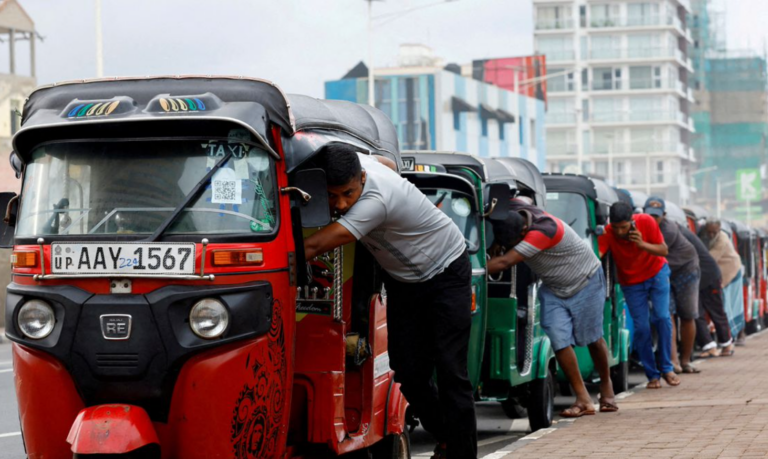
Lalkantha went on: “What is the price of a loaf of bread now? Rs. 300. Will foreigners come to eat bread for Rs. 300? They rather visit the Maldives for that. Why bother coming here? Do they have to come to eat an egg for Rs. 65 – 70? The charges rooms and other facilities have also risen; everything gone up; cannot continue without it. The charge of a threewheeler has gone up. So they know, that the society is unstable.”

MIAP

A Board of 75 Ministers to be formed, sources

0

The board of ministers due on formation this week will consist of 75 ministers total, internal sources disclosed.

Accordingly, the board of ministers will consist of 40 Cabinet Ministers and 35 State Ministers, according to sources.

The existing 18 Cabinet Ministers will also be included to the new Board, sources further disclosed.

MIAP

Sri Lanka’s demand for legal liquor drops by 40 percent

0

Sri Lanka’s economic crisis has brought down the demand for legally produced liquor by 40 percent shying away the boozers from liquor bars and wine stores in the country at present, Excise Department head divulged.

Commissioner General of Excise M.J Gunasiri said that the demand of liquor has dropped significantly due to unbearable price hike of arrack and other alcoholic beverages by manufacturing companies and present economic hard ships faced by the people.

The daily revenue of the department has dropped by Rs 100 to Rs 150 million as the people cannot afford to buy a widely consumed 750 millilitre bottle of extra special arrack at the price of Rs.2500 an increase of Rs 680 from the previous price he revealed.

Locally manufactured beer containing 450 millilitres also rose by Rs 30 rupees, with the market price at Rs.330.

This was not due to tax hike but owing to massive decline in the buying power of people he pointed out adding that the monthly excise duty paid to the government which used to be approximately Rs 9 billion had reduced to Rs. 5.4 billion.

Liquor manufacturing companies had to make three price revisions recently due to high prices and scarcity of the main ingredient ethanol being produced locally using sugar cane which has impacted by organic fertiliser mania, a senior official of a leading distilleries company said.

Production costs and raw materials as well as other ingredient costs like essence have also increased he pointed out adding that ethanol previously priced at at Rs 500 to 600 has been increased to Rs 1000 to 1500.

Domestic ethanol production has come down drastically due to low harvests of sugar cane and corn as a result of using organic fertiliser for cultivation.

Leading local manufactures have urged the government to enable the importation of ethanol to cater even to the lower demands, as the scarcity of ethanol badly hits the industry.

Mr Gunasiri noted that excise officers are conducting raids to crack down on liquor bars and wine stores selling liquor bottle without stickers with unique code or affixed with false liquors.

He revealed that the department has recently imported 11 million security stickers from, Madras Security Printers Company of India and there was no shortage of stickers at present.

Sri Lanka’s oil spill management capability enhances with JICA assistance

0

Sri Lanka’s management capability and techniques on oil spill response system will be getting updated and modernized with Japan International Cooperation Agency (JICA) assistance to prevent marine pollution.

The need of tackling. maritime oil spill incidents has become essential for the island nation following the two ship disasters in its territorial waters within last two years.

A fire broke out on the MT New Diamond oil tanker , about 30 nautical miles off the coast of Sri Lanka on Sept. 8, 2020 causing severe damage to natural marine environment and ecosystem

On 20 May 2021, cargo ship “X-PRESS PEARL with 1,486 containers onboard carrying dangerous cargo caught fire about nine nautical miles (16 km) off the coast of Colombo commercial shipping harbor causing massive damge to the coastline, natural marine environment and ecosystem.

Under this setup japan International Cooperation Agency (JICA) launched a three year new technical cooperation project together with Japan Coast Guard (JCG)and Sri LankaCoast Guard(SLCG) in further assisting SLCGto establishan in-houseoil spill responsetraining system,an extensionof pastcooperationon oil spill incident management techniques.

Sri Lanka located on the important maritime transport route between Asia and Europe/ Middle-east, amaritime accident would have major impacts on safe navigation of vessels, maritime environmentand economic activitiesof the region.

SLCG is recognized as one of the principal players to combat maritime oil spill incidentsand JICA has extended its continuous support to SLCG since 2014up to now, including provision of two (2) patrol vessels tailored in Japan and continuous technical training to enhance SLCG’s response capacity.

Following theproject Kickoff in July 2022, a JICA mission has been deployed to SriLanka Coast Guard from 29thAugust to 2ndSeptember that consists of three (3) JCG officers including the Mobile Cooperation Team as JICA Experts and a SeniorAdvisorof JICA HQs to commence project activities in Sri Lanka.

JICA Expert members conducted an inspection of the SLCG patrol vessel 501 Samudraraksha, and 502 Samaraksha which were handed over to SLCG in year 2018,and oil spill combat equipment expected to be used in the practical training sessions.

The 3-year project aims at strengthening SLCG’s in-house training system to establish and sustain the knowledge and skills accumulated on oil spill response through the series of JICA’s cooperation in the past 10 years.

22trained SLCG instructors are expected to receive additional intensive training in Japan and Sri Lanka through transfer ofknowledge and skills used by JCG under Japan’s Official Development Assistance

.A Joint Coordinating Committee Meeting was held between SLCG, JCG and JICA on 30th August to finalize the project approach including its operational plan for the next 3 years.