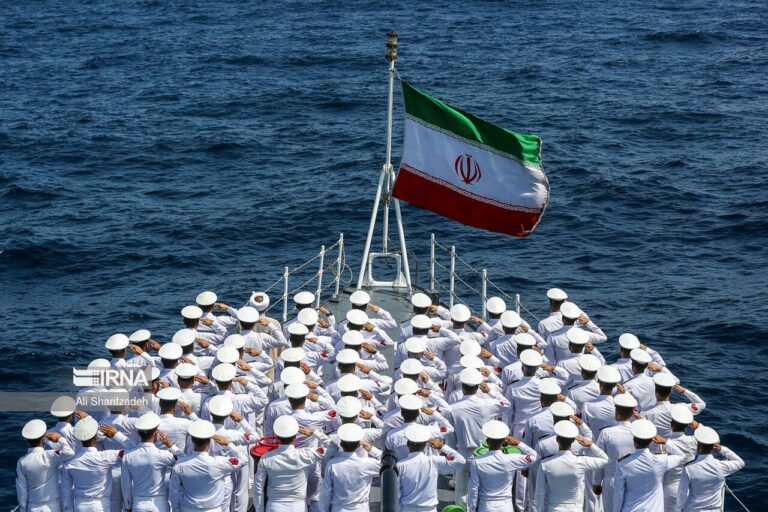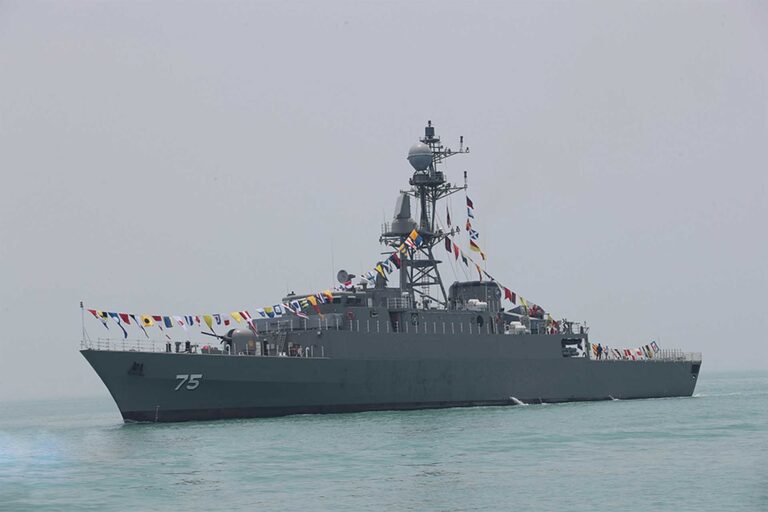

December 09, Colombo (LNW): India has dispatched a further contingent of naval vessels to bolster relief operations in Sri Lanka, which continues to grapple with the aftermath of the destructive cyclone.
The latest phase of the ongoing Operation Sagar Bandhu is focused on expanding search-and-rescue efforts and ensuring rapid delivery of humanitarian assistance to affected communities.
The newest deployment comprises the amphibious ship INS Gharial along with three Landing Craft Utility vessels — LCU 54, LCU 51, and LCU 57. Collectively, they are transporting close to a thousand tonnes of essential supplies, including food stocks, medical items, temporary shelter materials, and other urgently needed provisions.
Indian reports indicate that the LCUs have already arrived in Colombo, where relief cargo was formally handed over to Sri Lankan officials.
INS Gharial, carrying additional equipment and personnel, is due to call at Trincomalee later today as part of a continued push to reach coastal districts still struggling to regain basic services.
These ships follow an earlier group — INS Vikrant, INS Udaygiri, and INS Sukanya — which delivered immediate assistance in the cyclone’s immediate aftermath, including helicopter sorties to locate stranded individuals and survey damage along the shoreline.
According to India’s Defence Ministry, the expanded mission underscores the longstanding partnership between the two neighbours and reflects New Delhi’s determination to respond swiftly when regional states face humanitarian emergencies. The ministry noted that the Indian Navy remains on standby to provide further support should Sri Lanka request it.
India Sends Additional Naval Support for Sri Lanka’s Cyclone Recovery
Sri Lanka Introduces Special Process to Record Deaths Linked to Cyclone Ditwah
December 09, Colombo (LNW): Sri Lanka’s Registrar General’s Department has confirmed that new legal arrangements are now in force to allow the formal registration of deaths of those who perished or disappeared during the landslides and flooding triggered by Cyclone Ditwah.
In a public notice, the department explained that families and close associates of individuals still unaccounted for may now apply to have their loved ones officially recognised as deceased, ensuring they are not left in administrative limbo while dealing with the aftermath of the disaster.
These temporary regulations, issued through an Extraordinary Gazette on December 02, outline a streamlined procedure for communities in districts affected by the cyclone. To begin the process, an applicant must submit the designated form together with an affidavit verifying the circumstances, and hand both documents to the Grama Niladhari of the missing person’s last known place of residence.
The Grama Niladhari is then required to pass the file to the Divisional Secretary, who will display the application publicly at both the Divisional Secretariat and the local Grama Niladhari office for a two-week period. If no objections are raised, the case is forwarded to the Deputy or Assistant Registrar General for final approval. However, should concerns or objections arise, an inquiry will be launched before any decision is reached.
The department added that requests for certificates of absence—used when a formal death registration is not immediately possible—will follow the same procedure, with Divisional Secretaries instructed to conduct thorough checks before issuing documentation.
Meanwhile, the Department of National Archives reported significant damage to official records following the widespread flooding. Director General Dr Nadeera Rupasinghe noted that the Kandy District had suffered particularly heavy losses, with many historical and administrative documents now requiring urgent restoration or preservation work.
Authorities Order Widespread Evacuations as Heavy Rains Trigger Maximum Landslide Alerts
December 09, Colombo (LNW): Sri Lanka’s Disaster Management Centre (DMC) has instructed District Secretaries to move residents from areas vulnerable to landslides in Kandy, Kegalle, Kurunegala, and Matale to officially designated safe shelters, as severe weather continues to batter the country.
The directive follows the National Building Research Organisation (NBRO) issuing Level 3 (Red) landslide warnings—the highest alert level—amid persistent, destabilising rainfall. According to the NBRO, numerous locations across the four districts have been categorised as high-risk, prompting what officials describe as an urgent need for preventative relocation.
Under the DMC’s instructions, evacuations are to take place between December 09 and 19, with the aim of ensuring that at-risk families are moved well ahead of any potential slope failures.
Authorities anticipate that the operation—described by officials as one of the more extensive pre-emptive evacuations in recent years—will involve close coordination among District and Divisional Secretaries, NBRO specialists, Grama Niladharis, the Sri Lanka Police, and several other state bodies.
The areas currently under Level 3 (Red) alerts are:
Kandy District: Hatharaliyadda, Yatinuwara, Udadumbara, Pathahewaheta, Medadumbara, Pasbage Korale, Deltota, Poojapitiya, Ganga Ihala Korale, Panwila, Gangawata Korale, Udapalatha, Harispattuwa, Kundasale, Minipe, Doluwa, Thumpane, Akurana, Udunuwara, Pathadumbara and adjacent localities.
Kegalle District: Kegalle, Galigamuwa, Mawanella, Bulathkohupitiya, Aranayaka, Yatiyanthota, Rambukkana, Warakapola and neighbouring villages.
Kurunegala District: Mawathagama, Mallawapitiya, Rideegama and surrounding settlements.
Matale District: Naula, Wilgamuwa, Pallepola, Ambanganga Korale, Laggala Pallegama, Ukuwela, Rattota, Matale, Yatawatta and nearby communities.
Meteorological officials, meanwhile, warn that the intensifying north-east monsoon is likely to bring intermittent showers or thunderstorms throughout the day (09) across the Northern, North-Central, Eastern, Central, and Uva provinces.
Meril Mendis, Deputy Director of Weather Forecasting and Disaster Management, stated that the unsettled weather may persist until December 19, 2025, raising concerns about further ground instability and the potential need for additional emergency measures.
In light of the prolonged downpours, local authorities have urged residents to comply promptly with evacuation orders and to avoid travelling through hilly terrain where slopes remain saturated and unpredictable.
Northern Japan Shaken by Major Quake: Minor Tsunami Reaches Coast
By: Isuru Parakrama
December 09, World (LNW): A strong earthquake rattled northern Japan on Monday, leaving several guests at a hotel in the town of Hachinohe in Aomori Prefecture nursing injuries after parts of the building were shaken violently.
The tremor, measured at magnitude 7.6, originated off the coast near the northern tip of Honshu, close to the strait separating it from Hokkaido. The force of the quake sent a small tsunami—reaching roughly 40 centimetres—into a number of coastal communities, where officials briefly urged residents to stay clear of the shoreline.
According to early reports, waves were recorded along the port of Mutsu Ogawara in Aomori as well as in the Hokkaido town of Urakawa. Local authorities said that while the tsunami was modest, they were taking no chances given the region’s long memory of past disasters.
Prime Minister Sanae Takaichi told journalists that an emergency response team had been convened to determine the scale of the damage. She stressed that the government’s priority was to safeguard residents and maintain clear lines of communication with affected areas.
Public broadcaster NHK noted that nuclear facilities in the north immediately initiated precautionary inspections, though no irregularities were reported at the time. Emergency responders were continuing to survey buildings, ports, and roadways as aftershocks were expected through the evening.
Bandaranaike Foundation Pledges Major Donation to Support Flood-Hit Nation’s Recovery
December 09, Colombo (LNW): The Bandaranaike Memorial National Foundation has announced a substantial contribution of Rs. 250 million to assist with the country’s ongoing recovery efforts in the wake of the recent calamity.
The cheque was formally presented to Prime Minister Dr Harini Amarasuriya at her office on Monday (08), marking what officials described as a significant gesture of solidarity during a challenging period for many communities.
Former President Chandrika Bandaranaike Kumaratunga, who currently chairs the Foundation, personally handed over the donation alongside several members of the organisation’s Board of Directors. The Prime Minister’s Office reported that the meeting evolved into a warm exchange of views on how civil society and state institutions might continue to collaborate in rebuilding essential services and strengthening support for affected families.
Also in attendance were Pradeep Saputhanthri, Secretary to the Prime Minister, the Minister of Buddhasasana, Religious and Cultural Affairs Dr Hiniduma Sunil Senevi, and representatives from the Foundation’s board.
Showers, thundershowers to occur across Island: Heavy falls above 100 mm expected (Dec 09)
December 09, Colombo (LNW): The Northeast monsoon conditions are gradually establishing over the island, the Department of Meteorology said in its daily weather forecast today (09).
Showers or thundershowers will occur at times in Northern, North-Central, Eastern, Central and Uva provinces. Heavy falls above 100 mm are likely at some places in Northern and Eastern provinces and in Polonnaruwa district.
Showers or thundershowers may occur at several places in the other areas of the island after 1.00 p.m. Fairly heavy falls about 75 mm are likely at some places in these areas.
Fairly strong winds of about (30-40) kmph can be expected at times over Northern, North-central and North-western provinces and in Trincomalee district.
Misty conditions can be expected at some places in Sabaragamuwa and Southern provinces during the early hours of the morning.
The general public is kindly requested to take adequate precautions to minimise damages caused by temporary localised strong winds and lightning during thundershowers.
Marine Weather:
Showers will occur at times in the sea areas off the coast extending from to Hambantota to Mannar via Batticaloa, Trincomalee and Kankasanthurai. Showers or thundershowers may occur at several places in the other sea areas around the island during the evening or night.
Winds:
Winds will be north-easterly. Wind speed will be (25-35) kmph. Wind speed can increase up to 50 kmph at times in the sea areas off the coast extending from Kalutara to Trincomalee via Puttalam and Kankasanthurai.
State of Sea:
The sea areas off the coast extending from Kalutara to Trincomalee via Puttalam and Kankasanthurai will be fairly rough at times. The other sea areas around the island will be Slight to moderate.
Lower VAT Threshold Sparks Fears of Higher Consumer Prices
By: Staff Writer
December 08, Colombo (LNW): Sri Lanka’s move to slash the VAT and Social Security Contribution Levy (SSCL) registration threshold from Rs. 60 million to Rs. 36 million marks one of the most sweeping tax adjustments since the country’s fiscal breakdown in 2022.
Announced in the 2026 Budget, the change aims to widen the tax net, curb avoidance practices, and rebuild state revenue that eroded under earlier tax cuts. But the reform has triggered unease among the small-business community, which remains weakened by years of economic distress.
The government argues the rationale is straightforward. When the VAT threshold was dramatically raised in 2019 from Rs. 12 million to Rs. 300 million the number of VAT-registered taxpayers plunged by 71 percent, dropping from 29,151 to just 8,391. Tax authorities say the new reduction is necessary to reverse this collapse and re-formalise businesses that exited the tax system.
But for many small and medium enterprises, VAT registration represents far more than administrative paperwork. Small traders, shopkeepers, and service providers warn that registering for VAT brings additional compliance costs, accounting expenses, and working-capital strain.
Many fear they will be forced to pass on the full 18 percent VAT and additional SSCL charges directly to customers raising retail prices across essential items. A senior tax official admitted that although the law does not require businesses to pass VAT to consumers, “it is inevitable” that many will do so.
This puts small retailers in a difficult position. In sectors such as groceries, household essentials, and low-margin services where competition is intense businesses must choose between absorbing the tax burden and risking losses, or raising prices and risking customer attrition. Given the dominance of small retailers in Sri Lanka’s supply chain, even minor price increases could push up the overall cost of basic goods.
Some economists warn the reform could create broad-based, short-term price pressures. Because SMEs supply a significant share of daily consumer goods and services, widespread VAT pass-through could temporarily lift the cost of living.
However, others argue fears may be overstated. Previous reductions of the VAT threshold from Rs. 300 million to Rs. 80 million, and later to Rs. 60 million did not trigger a jump in inflation, as reflected in national indices. Analysts note that other cost factors such as declining electricity and fuel tariffs helped offset price pressures.
A key reason behind the reform is to curb tax avoidance. Over recent years, many businesses legally split operations into multiple entities to remain below the threshold. Lowering it to Rs. 36 million is designed to shut this avenue and ensure a more equitable tax system.
The Treasury expects a sizeable increase in tax revenue, particularly from retail trade, food and beverages, distribution networks, and professional services.
A business earning roughly Rs. 100,000 a day will now fall into the VAT net, expanding the taxpayer base significantly. Although the Budget offered no precise estimate, Treasury numbers later showed a Rs. 60 billion upward revision—signalling strong expectations for revenue gains.
Government officials also point to international evidence. IMF studies covering 35 countries show that in nearly two-thirds of cases, VAT changes had little lasting impact on inflation suggesting that while prices may adjust initially, sustained inflationary pressure is unlikely.
Sri Lanka Moves to Overhaul Troubled Non-Bank Finance Sector
By: Staff Writer
December 08, Colombo (LNW): Sri Lanka’s non-banking financial sector is on the verge of its most significant overhaul in more than a decade, as the Central Bank of Sri Lanka (CBSL) pushes forward sweeping amendments to the Finance Business Act (FBA) No. 42 of 2011, the core legal framework governing finance companies and deposit-taking non-bank institutions.
The draft amendments now open for public comments until 30 November 2025—seek to seal long-standing regulatory gaps, strengthen supervision, and prevent a repeat of the high-profile collapses that have battered confidence in the sector in recent years.
The FBA, introduced in 2011 to replace the outdated Finance Companies Act, was designed to regulate licensing, governance, and operational conduct of finance companies.
However, persistent governance lapses, most visibly the failures of institutions such as The Finance Company and Bimputh Finance, exposed weaknesses in enforcement and supervision, undermining depositor trust and destabilising the wider financial system.
The Central Bank says the new reforms are intended to “modernise the law to match evolving market realities and align with global regulatory standards.” Under the proposed changes, the regulator will gain expanded investigative and enforcement powers enabling faster action against illegal deposit-taking and unlicensed financial operations issues that have repeatedly endangered vulnerable depositors.
A major feature of the amendment package is the introduction of pre-emptive resolution tools. These will allow the CBSL to restructure, merge, or wind down financially distressed companies before they threaten systemic stability. The move mirrors international post-crisis best practices aimed at preventing disorderly institutional collapses.
Governance reforms form another central pillar. Stricter “fit-and-proper” criteria will determine who can serve as directors and major shareholders, in an effort to ensure that only experienced and reputable individuals are allowed to manage regulated entities.
Furthermore, higher capital adequacy requirements, enhanced financial disclosure rules, and tighter controls over financial advertising are expected to improve transparency and reduce misleading deposit solicitation.
While the reforms have been broadly welcomed by analysts and consumer-protection groups, concerns are mounting within the industry—particularly among smaller finance companies. Senior officials warn that steep compliance costs and higher capital thresholds may push smaller NBFIs towards forced consolidation, potentially shrinking credit availability for small and medium-sized enterprises (SMEs), which remain central to post-crisis economic recovery.
Industry associations, including the Finance Houses Association, have requested more time to review the proposed amendments. Its chairman, Arjuna Gunaratne, stressed the need for detailed consultation before submitting formal responses.
Financial analyst Anuruddha Jayawardena echoed these concerns, noting that policymakers must strike a balance between safeguarding depositors and preserving access to legitimate credit, especially in underserved regions.
Experts argue that if introduced with careful sequencing, the reforms could help rebuild investor confidence, attract foreign capital, and significantly reduce systemic risk in the non-bank financial system. The public consultation period, they say, is a crucial opportunity to refine the framework and ensure that the restructuring of the sector is inclusive, stable, and resilient.
US Disaster Airlift Marks Sharp Shift from Past Secrecy
By: Staff Writer
December 08, Colombo (LNW): The arrival of two U.S. Air Force C-130J Super Hercules aircraft in Sri Lanka with full media visibility and an unusually high-profile diplomatic presence marks a striking departure from Washington’s historically discreet approach to military disaster assistance on the island.
While past U.S. military deployments for emergency relief have often been conducted with minimal publicity due to geopolitical sensitivities, this week’s response to Cyclone Ditwah has been accompanied by extensive public messaging, embassy-issued photographs, and top-level diplomatic commentary.
The aircraft, deployed under U.S. Indo-Pacific Command, were welcomed at Katunayake Air Base by Ambassador Julie Chung and senior Sri Lankan officials. The Embassy’s announcement highlighted America’s “airlift and logistics muscle,” presenting the operation as a visible symbol of U.S. commitment to Sri Lanka.
The messaging stood in contrast to earlier instances such as disaster operations following floods or landslides over the past decade when U.S. air assets were deployed more quietly, sometimes without advance public disclosure.
Diplomatic observers note that the sudden emphasis on visibility comes at a time when major powers are intensifying humanitarian diplomacy across the Indian Ocean.
Sri Lanka’s strategic location makes disaster-relief optics a valuable tool for influence. Several analysts argue that the U.S. may be signalling greater operational transparency or strategic presence amid heightened competition with other regional actors.
The official narrative frames the deployment squarely as humanitarian. According to the U.S. Embassy, the C-130Js and personnel from the 36th Contingency
Response Group will provide rapid airlift to deliver shelter materials, sanitation supplies, medical aid, and food to cyclone-affected regions.
Additional support from the 374th Airlift Wing and the U.S. Marine Corps reinforces what officials call a “multinational, inter-service humanitarian partnership.”
Ambassador Chung praised Sri Lankan responders and underscored the urgency of logistics following severe damage to road infrastructure.
“The United States is here to take on some heavy lifting,” she said. Defense Attaché Matthew House emphasized that the mission builds on long-running military cooperation, noting that joint exercises have strengthened coordination for crises like Cyclone Ditwah.
However beneath the humanitarian partnership lies a broader geopolitical context. The public roll-out of this operation raises questions about why previous U.S. military-supported relief missions some involving aerial surveillance, airlift support, or operational planners received little or no publicity.
Officials who follow defense cooperation note that the U.S. typically keeps deployments low-profile to avoid triggering regional sensitivities,
But the robust public messaging in this instance suggests a shift: either an effort to demonstrate commitment to Sri Lanka, or an intention to maintain visibility in a crowded strategic theatre.
The United States has also recently provided SLAF with $2.1 million worth of airlift-support equipment, fuel trucks, loading platforms, and ground-power units now deployed in the cyclone response. This accompanies the $2 million in humanitarian aid announced within 72 hours of landfall.
As relief operations continue, the high-visibility American deployment raises a new question: Is this transparency a one-off gesture for Cyclone Ditwah, or the beginning of a more assertive U.S. humanitarian footprint in Sri Lanka?
COPF Flags Central Bank’s Opaque FX Swaps as NIR Distortion
By: Staff Writer
December 08, Colombo (LNW): Sri Lanka’s Parliament Committee on Public Finance (COPF) has sharply criticised the Central Bank of Sri Lanka (CBSL) over its rapidly expanding domestic foreign exchange swaps, warning that the practice resembles a “hot money operation” and risks distorting the country’s true reserve strength as it attempts to rebuild credibility ahead of 2025.
The issue came under intense scrutiny when COPF discovered that domestic FX swaps short-term dollar borrowing from local banks—are not deducted from Sri Lanka’s official Net International Reserves (NIR) calculation.
COPF Chairman Dr. Harsha de Silva called the omission “deeply problematic,” saying it provides an incomplete and potentially misleading picture of the nation’s reserve buffer.
What the COPF Found Explained Simply
The Central Bank’s NIR figure is calculated by subtracting foreign liabilities—such as IMF loans, the Reserve Bank of India swap, and the People’s Bank of China (PBoC) swapfrom gross reserves.
CBSL Director of Economic Research Sujatha Jegajeevan told COPF that with gross reserves at US$ 6.2 billion, the Bank deducts:
US$ 1.36 billion PBoC swap
US$ 880 million RBI swap
US$ 580 million IMF liability
This results in an NIR of US$ 3.4 billion.
However, domestic swaps with private banks such as HSBC or Standard Chartered are excluded, despite being foreign currency liabilities that must eventually be settled in dollars.
“But these are still forex obligations, aren’t they?” Dr. de Silva pressed.Jegajeevan responded: “They are domestic liabilities… only external liabilities are taken out.”
De Silva countered that “a domestic liability in forex still requires forex to settle,” raising concerns that leaving them out artificially boosts the NIR.
“Hot Money Operation” Accusations
COPF member MP Ravi Karunanayake went further, calling the swaps “a hot money type of operation.”
De Silva agreed, saying such swaps had previously been used to “window dress reserves” under earlier administrations.
Governor Dr. Nandalal Weerasinghe, however, defended the practice, saying the swaps are short-term (less than one year) and are primarily used to provide temporary rupee liquidity to banks.
“This is an instrument banks use for short-term liquidity. If there is an opportunity, we should use it,” he said, adding that swaps help boost gross reserves temporarily while genuine inflows are accumulated.
Why Analysts Are Concerned
Independent analysts warn that buy–sell swaps inject fresh rupee liquidity, increasing credit and imports. This can:
Reduce CBSL’s ability to purchase dollars later.
Force the Bank to sell reserves to defend the rupee.
Trigger forex losses regardless of whether swap dollars are officially labelled as “liabilities.”
The central bank recorded a Rs. 788 billion forex loss in 2022 on reserve-related debt, illustrating the high risk of such operations.
If banks use newly created liquidity for import payments, dollars flow out, weakening the rupee. CBSL must then buy back liquidity or sell its reserves a cycle that can repeat until interest rates rise sharply.
Deeper Structural Issue
The founding Governor John Exter warned that purchasing dollars by printing rupees “monetizing the balance of payments surplus” is inherently inflationary unless sterilised.
COPF members argue that domestic swaps worsen this risk by:creating artificial reserve build-ups,masking short-term liabilities,increasing import-driven pressure, and placing future burdens on taxpayers when losses materialise.
A Call for Transparency
Dr. de Silva urged CBSL to disclose all swap-related obligations—external and domestic separately and clearly, arguing that only transparent reserve accounting will protect Sri Lanka from repeating past crises.
“Stable, long-term reserves must be distinguishable from temporary swaps,” he warned.
Karunanayake added: “If these are hot money flows that is even worse.”
With Sri Lanka attempting to rebuild its reserve credibility after the 2022 collapse, the COPF’s intervention highlights the urgent need to prevent temporary liquidity manoeuvres from being mistaken for permanent financial strength.