
April 16, Colombo (LNW): The traditional schedule of auspicious timings linked to the Sinhala and Tamil New Year indicates that the moment deemed favourable for setting out on urgent matters falls tomorrow, April 17.
According to these customary guidelines, individuals are encouraged to begin such tasks at precisely 5:38 a.m., dressed in garments and adornments of a golden hue, symbolising prosperity and good fortune.
Looking ahead, the recommended time for resuming routine employment has been set for Monday, April 20, at 6:27 a.m. On this occasion, people are advised to wear white attire and ornaments, partake in milk rice beforehand, and commence their journey while facing south.
An alternative time is also provided later that morning at 6:50 a.m., allowing individuals to leave for work dressed in white or pearl shades after enjoying a more elaborate meal of milk rice prepared with ghee and sesame, accompanied by curd, ‘Aggala’, and other traditional sweetmeats, while facing east.
In addition to these observances, the schedule highlights an auspicious moment for environmental and agricultural activity. Planting tree saplings is recommended on Thursday, April 23, at 9:01 a.m. Participants are encouraged to wear golden-coloured clothing and face north during this act, which is seen as both culturally significant and symbolically tied to growth and renewal.
Auspicious Time for Setting Out Urgent Matters Falls Tomorrow (April 17)

Health Officials Crack Down on Unsanitary Food Sales Ahead of Festive Season
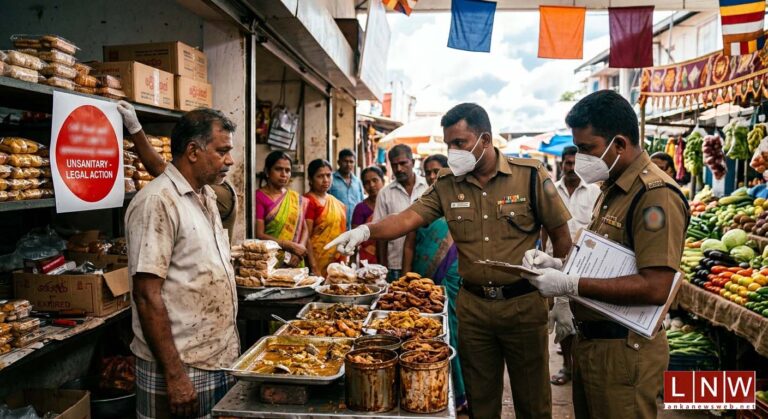
April 16, Colombo (LNW): Authorities have launched widespread enforcement measures against hundreds of traders following a series of inspections carried out across the country in preparation for the Sinhala and Tamil New Year celebrations.
According to officials from the Public Health Inspectors’ Union, more than 400 vendors are now facing legal proceedings after being found in violation of food safety regulations. These actions stem from an extensive operation conducted over nearly two weeks, during which inspectors visited upwards of 12,000 retail outlets as part of close to 2,000 coordinated inspection drives.
The investigations uncovered numerous breaches, including the sale of food prepared or stored in unhygienic environments, as well as the circulation of expired consumables. Authorities expressed concern that such practices could pose serious health risks to the public, particularly during periods of heightened consumer activity.
Officials also indicated that this enforcement campaign is far from over. Similar inspection efforts are expected to intensify in the coming weeks, especially as the country approaches the Vesak and Poson festive periods, when food sales typically surge.
The union emphasised that maintaining food safety standards remains a priority, warning traders to adhere strictly to regulations or face further legal consequences.
Afternoon showers to further continue across SL (April 16)

April 16, Colombo (LNW): Showers or thundershowers will occur at several places in Western, Sabaragamuwa, Southern, Central, Uva and North-western provinces after 1.00 pm., the Department of Meteorology said today (16).
A few showers may occur in the coastal areas of Western and Southern provinces and Puttalam district during the morning too.
Fairly heavy falls above 50 mm are likely at some places in Sabaragamuwa province and in Galle, Matara, Kandy and Nuwara-Eliya districts.
Mainly fair weather will prevail over the other parts of the island.
Misty conditions can be expected at some places in Central, Sabaragamuwa, Northcentral and Uva provinces and in Galle, Matara and Kurunegala districts during the early hours of the morning.
The general public is kindly requested to take adequate precautions to minimise damages caused by temporary localised strong winds and lightning during thundershowers.
Marine Weather:
Condition of Rain:
Showers or thundershowers are likely at several places in the sea areas off the coast extending from Chilaw to Hambantota via Colombo, Galle and Matara.
Winds:
Winds will be South-westerly or variable in direction. Wind speed will be (20-30) kmph.
State of Sea:
The sea areas around the island will be slight.
Temporarily strong gusty winds and very rough seas can be expected during thundershowers.
Sri Lankan student could be deported from UK after one-day student fee delay

Coventry University reported Navodya De Silva, 25, to Home Office after £8,000 arrived late, causing termination of visa
The Guardian: A Sri Lankan university student says her life has been ruined because a one-day delay in paying her tuition fees led to her being thrown off her degree course and put at risk of deportation.
Navodya De Silva, 25, secured a place at Coventry University to study international hospitality and tourism management, with overseas student fees for the three-year undergraduate course of £42,000.

Her father used his life savings to pay for the course. Sri Lanka is a popular destination for international tourists and her plan was to apply for senior-level tourism jobs in her home country after completing her UK degree.
Now, because of a delay with the fee payment processing system she has fallen foul of Home Office rules for universities that sponsor overseas students.
De Silva began her degree in October 2024 and completed her first year. The deadline for making the first payment for the second year of her studies was 6 October 2025. She transferred the required £8,000 payment on 3 October but due to a delay in her payment arriving into the university’s bank account, the university did not receive it until 7 October, one day after the deadline.
The university reported this delay to the Home Office and as a result she was unable to continue with her degree course and her study visa has been terminated. She has applied for further leave to remain in the UK and is awaiting a Home Office decision. If her application is refused she could be deported.

“The UK is one of the best countries in the world to do a university degree in. I thought that by studying here I would improve my chances of having a good career in the tourism industry in my home country,” she said.
“I did my part properly, paying my fees before the deadline. It was out of my control that there was a delay in the university receiving my payment. I was a student who attended all my classes, got high marks and did all my assignments. I never expected this to happen. I’m in a state of shock and am so stressed.
“If I go back to Sri Lanka with no degree, having lost my father’s life savings, my life will be ruined, just because of a delay in the system for transferring a payment. This decision, based on just a one-day delay, is extremely harsh and disproportionate.”
Her lawyer, Naga Kandiah, said: “She is an international student from Sri Lanka whose parents have invested their life savings in her education in the UK. Despite a one-day delay in the university receiving payment it proceeded to report her to the Home Office, withdraw sponsorship, and trigger the curtailment of her student visa, resulting in severe and life-altering consequences.”
A Coventry University Group spokesperson said: “While we cannot comment on individual cases, all students have a six-week timeframe in which to make payment and complete enrolment and we issue clear guidance and reminders regarding deadlines to support students through the process.
“We are proud of our record in providing wide-ranging support for students but this is balanced with our responsibility to comply with UKVI rules regarding enrolment. We do not set those rules but we are required to enforce them.”
The Home Office has been approached for comment.
Subcontinent might see subdued monsoon as ‘super El Niño’ expected this year: weather expert

‘super El Niño’ expected this year: weather expert
KARACHI: The subcontinent might witness a subdued monsoon this summer as the warming El Niño weather phenomenon is expected to form later this year, according to a weather expert.
“We are expecting El Niño in the coming summer and it is expected to become ‘super El Niño’ by the end of August to September,” Pakistan Meteorological Department’s (PMD) spokesperson Anjum Nazir Zaigham told Dawn.
He noted that El Niño suppresses the summer monsoon in the subcontinent.
El Niño and its cooler sister La Niña are climate patterns in the Pacific Ocean that can affect weather worldwide.
El Niño and La Niña events occur every two to seven years, on average, but they do not occur on a regular schedule, according to the United States’ National Oceanic and Atmospheric Administration (NOAA).
In a report published yesterday, The Guardiannoted, “A strong El Niño would put 2027 in the running to break global heat records, and could produce a series of devastating effects, ranging from supercharged rainstorms to drought, depending on the region of the world.”
Last month, NOAA noted there was a 50- to 60-per cent chance of El Niño developing during the July-September period and beyond.
El Niño’s impact would be higher in 2027 than in 2026 if it develops in the second half of this year, according to Tido Semmler, a climate scientist at Ireland’s National Meteorological Service. “It takes time for the global atmosphere to react to the El Nino,” he said earlier.
Meanwhile, in a weather forecast issued on Wednesday, the PMD said “hot and dry weather was likely to prevail over most parts” of Sindh.
It forecasted “warm” weather today and tomorrow in Karachi, with the maximum temperature reaching 36 degrees Celsius today.
Humidity levels in the morning were expected to remain 80 per cent, before dropping to 40-50pc in the evening.
For Friday, the PMD predicted hot weather in the metropolis, with mercury surging to 37°C during the day and remaining between 24-26°C at night.
What is El Niño?
El Niño typically results in drier conditions across southeast Asia, Australia, southern Africa, and northern Brazil, and wetter conditions in the Horn of Africa, the southern United States, Peru and Ecuador.
The last El Niño occurred in 2023-2024, contributing to making 2023 the second-highest year on record and 2024 the all-time high.
El Niño can weaken consistent trade winds that blow east to west across the tropical Pacific. “Warm water is pushed back east, toward the west coast of the Americas,” NOAA notes.
This weakening warms the usually cooler central and eastern sides of the ocean, altering rainfall over the equatorial Pacific and wind patterns around the world.
The extra heat at the surface of the Pacific releases energy into the atmosphere that can temporarily drive up global temperatures, which is why El Niño years are often among the warmest on record.
DAWN
Passing the buck in Cooray’s style
By – Robinhood
April 16, LNW (Colombo):Thirteen point two billion rupees has vanished from NDB Bank. The public knows almost nothing about how. The Board has offered no press conference, no detailed explanation, no credible accountability statement. The silence from the institution’s leadership has been as damaging as the fraud itself.
At the center of that silence sits Sriyan Cooray, the bank’s Chairman and one of Sri Lanka’s most recognisable rugby figures. Cooray built his reputation on the field and in the stands at CR and FC, the club he has championed with visible passion for years. That passion, unfortunately, does not appear to have extended to the governance of the institution he chairs.
Sources familiar with the bank’s internal operations indicate that Cooray used his position to pressure the bank’s marketing division into securing a long-term sponsorship arrangement for CR and FC. If accurate, that is not a minor lapse in judgment.
That is a textbook conflict of interest, a chairman directing institutional resources toward an organisation he personally involved and publicly champions.
The contrast is difficult to ignore. The same energy and follow-through that Cooray reportedly applied to securing that sponsorship deal was never applied to the risk controls that should have caught a fraud building quietly inside his own institution. A 290 million rupee irregularity surfaced in January. No total audit followed. No public reckoning came. The damage compounded to 13.2 billion.
Rugby teaches its players one principle above all others, that is when the team is losing, the captain does not pass the ball and look away. Cooray has spent decades understanding that.
His depositors are still waiting for him to apply it and the Central Bank of Sri Lanka is passing the ball too happily.
Did NDB Board mislead Bond Investors?
By Adolf
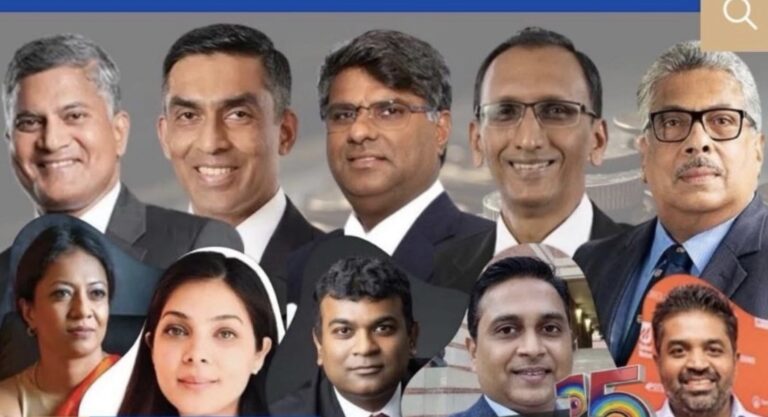
Serious questions are now being raised about whether investors in the recent sustainable bond issued by National Development Bank PLC were adequately informed of material developments within the bank before the issue was launched. The matter has sparked debate within financial circles, with some investors and analysts calling for a thorough and transparent investigation.
Bond Issue
NDB launched and opened subscriptions for a Basel III–compliant Green, Social, Sustainability and Sustainability-Linked (GSS+) bond on 10 March 2026, raising approximately LKR 16 billion. The bond was oversubscribed on the opening day, reflecting strong investor appetite and confidence in the bank’s reputation and financial standing. The issue was also notable as one of the largest thematic sustainable bond offerings in Sri Lanka’s banking sector, aimed at financing environmentally and socially responsible projects. Such projects typically include renewable energy, climate-resilient infrastructure, and other initiatives aligned with environmental, social, and governance (ESG) objectives. The strong investor response indicated confidence in the credibility of the institution and the disclosures accompanying the bond issue. However, in the weeks following the issuance, concerns began to emerge within the market regarding governance issues and possible financial irregularities linked to the bank’s operations. Analysts and market observers have suggested that certain warning signals may have been known internally as early as January or February 2026. If that is the case, an important governance question arises: whether the board and senior management had knowledge of material risks prior to the bond issuance and whether such information should have been disclosed to investors before raising funds from the market.
Downgrade
The situation has been further complicated by credit rating downgrades affecting several of the bank’s financial instruments, which have unsettled investors who subscribed to the bond. In capital markets, transparency and timely disclosure of material information are fundamental principles that underpin investor confidence.As a result, some investors are reportedly considering legal and criminal action against the chairman and members of the board of directors, arguing that they may have been misled about the bank’s internal situation at the time of the bond issuance. If material information was knowingly withheld, critics argue that this could constitute a breach of fiduciary responsibility owed to investors and the market.
CBSL failed
Beyond the responsibilities of the board, attention is also turning to the role of regulators. Institutions such as the Central Bank of Sri Lanka and the Colombo Stock Exchange have a critical fiduciary and statutory duty to safeguard market integrity and ensure that the investing public is kept properly informed of material developments affecting listed entities and financial instruments.Calls are now growing for the Criminal Investigation Department to examine the circumstances surrounding the events leading up to the bond issue and to determine whether any violations of disclosure, governance, or financial regulations occurred. At the same time, market participants expect regulators to communicate transparently with the public and investors if material concerns arise.
Conclusion
The episode has reignited a broader discussion on corporate governance, regulatory vigilance, and investor protection in Sri Lanka’s financial sector. Banks operate on public trust, and both boards and regulators carry a shared responsibility to ensure transparency, accountability, and the timely disclosure of information that may materially affect investor decisions. Ultimately, the outcome of any investigation will determine whether this episode represents a governance lapse, a regulatory oversight, or a misunderstanding. Regardless of the final findings, the case underscores a critical principle: confidence in capital markets depends not only on the conduct of corporate boards but also on the vigilance and fiduciary responsibility of regulators to keep the investing public fully informed. In the final analysis, it is evident that no investor would have invested even a single rupee had they been aware of the alleged underlying issues associated with the reported Rs. 13.2 billion fraud.
Beyond Circulars: Has Supervisory Vigilance Kept Pace with Technology Risks?

LISTEN TO STORY
WATCH STORY
By : Nalinda Indatissa (President’s Counsel)
April 15, LNW (Colombo): When oversight becomes passive, risk becomes systemic—and the cost is borne by the public.
When a bank’s systems fail, the public looks to the bank for answers. But when the warning signs were there and no effective intervention followed, a more uncomfortable question arises: was the regulator merely watching? In a financial system where technology underpins trust, silence, delay, or passive oversight can be just as consequential as the failure itself. The real risk, therefore, may not lie only within banks, but in whether supervision has kept pace with the very threats it is meant to contain.
The Central Bank of Sri Lanka (CBSL), as the apex monetary authority and financial sector regulator, is entrusted with the responsibility of preserving the stability, integrity, and resilience of Sri Lanka’s banking system. In an era where financial services are deeply intertwined with digital infrastructure, this responsibility extends decisively into the realm of technology risk management.
The regulatory framework governing this space, notably Banking Act Directions No. 16 of 2021 (as amended), establishes comprehensive obligations on licensed banks to identify, protect against, detect, respond to, and recover from technology-related risks, including cyber threats and system failures. These regulatory instruments are both necessary and foundational.
The recent issues surrounding National Development Bank PLC (NDB) have brought into sharp focus the question of whether the issuance of directions and circulars is sufficient to discharge the Central Bank’s supervisory mandate, particularly in the face of evolving technology risks.
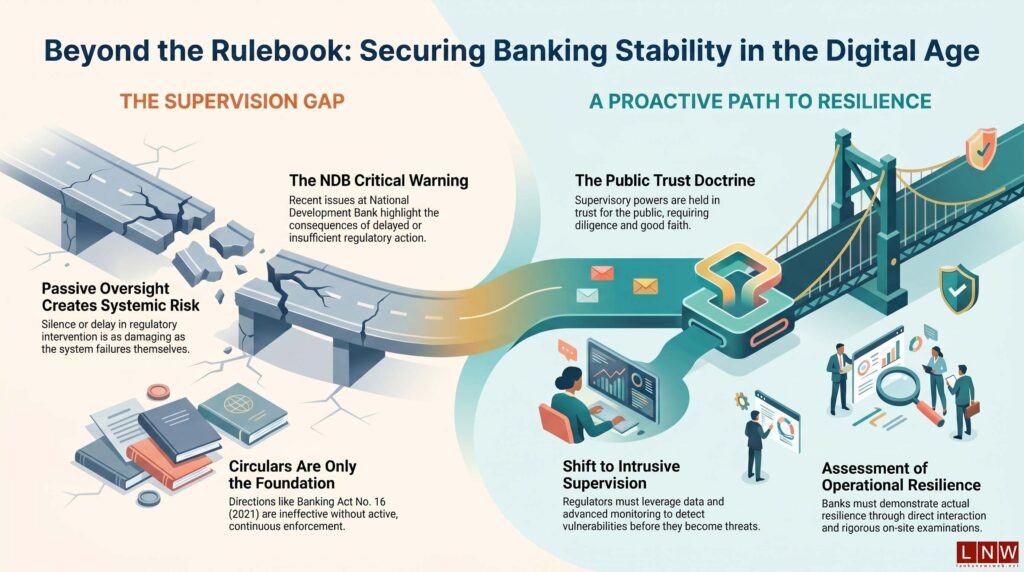
Supervision is a continuous obligation requiring the Central Bank to move beyond rule-making into active engagement with regulated entities. This encompasses off-site surveillance, on-site examinations, and intervention when necessary. The expectation is that the regulator will identify early warning signals and act in a timely manner.
Modern banking supervision is anchored in a risk-based approach aligned with international standards. This requires evaluating the effectiveness and adequacy of risk management systems within banks. In technology risk, it is insufficient for banks to demonstrate mere compliance; the Central Bank must assess operational effectiveness and real resilience.
The Central Bank’s supervisory engagement necessarily involves direct interaction with bank management and boards, the communication of findings, and the imposition of corrective measures where deficiencies are identified. Enforcement is a critical component of this framework, supported by statutory powers to impose sanctions and mandate remedial action.
In this context, the Public Trust Doctrine assumes particular relevance. Traditionally associated with the stewardship of natural resources, the doctrine has evolved to impose a duty on public authorities to act as trustees of powers held for the benefit of the people. The Central Bank’s supervisory powers can, in this light, be understood as fiduciary in nature—held in trust for the public, including depositors whose financial security depends on a sound and stable banking system.
This perspective underscores that the Central Bank’s obligations extend beyond formal compliance with statutory mandates. It must act with diligence, good faith, and due care, consistently prioritizing the public interest. A failure to exercise supervisory powers effectively—whether through delay, inattention, or inadequate intervention—may therefore give rise to serious questions of accountability.
The NDB incident illustrates the risks inherent in supervisory complacency. In a financial system increasingly dependent on complex and rapidly evolving technological infrastructure, the consequences of delayed or insufficient regulatory action can be significant. It reinforces the need for the Central Bank to adopt a proactive and, where necessary, intrusive supervisory posture, leveraging data, intelligence, and advanced monitoring tools to detect vulnerabilities before they escalate into systemic threats.
Ultimately, the effectiveness of the regulatory framework lies not in the existence of directions and circulars, but in their implementation and enforcement. The Central Bank must continuously adapt its supervisory practices to keep pace with the speed, scale, and sophistication of modern technology risks, ensuring that regulatory expectations translate into actual operational resilience within financial institutions.
In the final analysis, the Central Bank’s failure to act decisively in the face of emerging technology risks cannot be dismissed as a mere regulatory lapse. While inaction does not automatically amount to corruption, it assumes far greater legal and moral significance where there is a clear duty to intervene and protect the stability of the financial system. As the guardian of public confidence and the trustee of powers exercised for the benefit of depositors and the wider public, the Central Bank is bound to act with vigilance, timeliness, and integrity. Any sustained or unexplained supervisory inaction, particularly in a high-risk and rapidly evolving technological environment, raises serious questions of accountability and may, in appropriate circumstances, cross the threshold into misconduct. Ultimately, circulars and directions, however well-crafted, are only as effective as the supervision that enforces them. It is this active, responsible, and trust-driven supervision—not mere rule-making—that will determine whether the Central Bank truly fulfils its mandate to safeguard the resilience and integrity of Sri Lanka’s banking system.

Alleged Interference Claims Surround Digital Motor System Failure
The prolonged failure to implement Sri Lanka’s e-Motoring system has triggered an intensifying debate over administrative accountability, procurement governance, and possible interference at multiple levels of the public sector.
Designed as a comprehensive digital platform to replace outdated manual vehicle registration processes, the system was expected to significantly reduce corruption risks, improve efficiency, and strengthen institutional transparency within the Department of Motor Traffic (DMT).
Despite being formally procured in 2018 following years of preparatory reform work initiated between 2009 and 2010, the project remains unimplemented.
This delay, now stretching into its eighth year post-award, has become a focal point of concern among oversight bodies and governance analysts who question how a fully funded and contracted national system could remain inactive for so long.
In parallel, law enforcement agencies have recently intensified investigations into alleged corruption linked to vehicle registration processes.
Arrests involving several current and former DMT officials, including a former senior administrator, have drawn attention to longstanding weaknesses in the existing system.
These developments have reinforced suspicions that the legacy manual framework, in place for more than three decades, has enabled opportunities for manipulation and irregular transactions.
However, attention is now shifting beyond individual misconduct toward systemic failure. Critics argue that arresting individuals alone does not address the structural deficiencies that allowed such practices to occur in the first place.
At the center of this argument is the stalled e-Motoring system, which was intended to eliminate precisely these vulnerabilities through automation and centralized digital controls.
Additional controversy emerged following a parliamentary oversight session on 4 March 2026, where senior officials reportedly claimed that the system remains operational and subject to ongoing updates.
These statements have been challenged by emerging claims that the system’s external software vendor discontinued support in late 2024, potentially leaving critical components outdated or unsupported. If accurate, this raises serious questions about both technical management and transparency in official reporting.
Allegations have also surfaced suggesting that bureaucratic actors, possibly in coordination with political interests, may have contributed to deliberate delays in the system’s deployment. While these claims remain unverified, they have intensified calls for an independent and comprehensive investigation into decision-making processes surrounding the project.
Key unresolved issues now dominate the discourse: whether the repeated delays were the result of negligence, intentional obstruction, or procurement mismanagement; whether false or misleading assurances were provided to Parliament and oversight committees; and where ultimate responsibility lies for the financial and operational costs incurred due to non-implementation.
In response to growing concerns, governance experts are calling for an urgent independent audit of the entire e-Motoring project. They emphasize that without transparent disclosure, accountability mechanisms, and immediate deployment of a secure digital vehicle registration system, public trust in major state digital transformation initiatives will continue to erode
Tax Surge Driven By Imports, Compliance and Recovery Momentum

The Inland Revenue Department (IRD) has reported a striking acceleration in tax collection, collecting Rs. 606 billion in the first quarter of 2026 alone. The 17.7% year-on-year increase reflects more than routine fiscal improvement; it signals a broader structural shift in Sri Lanka’s post-crisis revenue recovery, driven by import normalization, tighter enforcement, and expanding taxpayer compliance.
Officials confirm that all major tax categories including Income Tax, Value Added Tax (VAT), and the Social Security Contribution Levy (SSCL) recorded strong gains. However, behind these headline figures lies a more complex set of drivers reshaping state revenue dynamics.
One of the most significant contributors has been the gradual rebound in vehicle imports following prolonged restrictions. As import channels reopened under regulated conditions, customs-linked VAT, excise duties, and related income tax flows surged.
The revival of motor vehicle imports particularly hybrid and used vehicles has created a ripple effect across tax streams, boosting both corporate earnings in the automotive trade and indirect consumption taxes.
At the same time, domestic consumption has stabilised after years of inflationary pressure, supporting VAT collections across retail, telecommunications, and financial services. The IRD has also intensified compliance audits and third-party data matching, reducing underreporting and improving declarations from medium and large taxpayers.
A key internal driver has been the strengthening of digital tax administration systems, particularly the expansion of real-time reporting under the Revenue Administration Management Information System (RAMIS). This has enabled faster reconciliation of tax filings and reduced delays in enforcement actions. Officials say this has also contributed to a notable rise in voluntary compliance, as taxpayers increasingly perceive the system as more transparent and less prone to discretion.
The IRD credits its administrative reforms and risk-based audit selection for plugging revenue leakages. High-risk sectors including construction, import-export trading, and professional services have come under closer scrutiny, contributing to improved compliance ratios.
Economic expansion has also played a role, albeit unevenly. While export manufacturing remains stable, domestic services and logistics have shown renewed growth, feeding into corporate income tax inflows.
Despite these gains, analysts caution that the current momentum remains sensitive to import policy shifts, currency stability, and global demand fluctuations. The IRD’s ability to sustain this trajectory will depend on whether compliance improvements can offset volatility in trade-related taxes.
With nearly a quarter of its annual target already achieved in the first three months, the department now faces the challenge of maintaining consistency across the remaining quarters particularly as base effects normalize and one-off import-driven gains taper off.