Home Blog Page 1929

Elections is Democratic way to ensure Political Stability

0

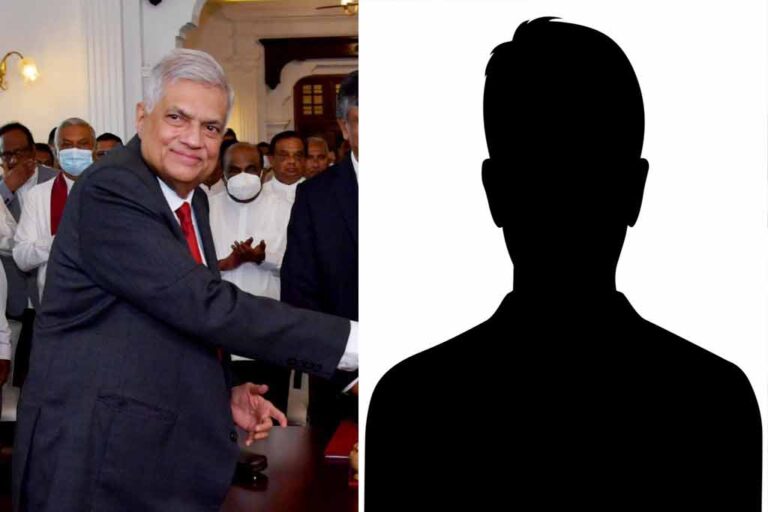
President Ranil Wickremesinghe has been stressing the importance of political stability to achieve the common dream of economic restoration. His recent statement that the security forces will be used to negate any unauthorized protest is a sign that the government expects the conditions of economic hardship to escalate.  The president also stated that there will no early general elections.  Stability in a polity can be ensured either through legitimacy or through force. Political stability cannot be created in a vacuum.  Politicians are needed to express provincial and local level issues as well as national level issues in parliament.

Therefore, elections need to be held at different levels of the polity as a democratic process to strengthen political stability.  They will enable the people to express their views in a democratic manner to elect their representatives who they deem to be suitable for the present time.  This would provide the government with guidance in terms of the decisions it is being called to take to revive the economy and place the burden in a manner that will be acceptable to the people.  Local government elections have been postponed for a year and are reaching their legal maximum in terms of postponement.  These elections need to be held.

The provincial council elections have been postponed since 2018.  Democratically elected provincial councils share in the burdens of governance.  The devolution of power through the provincial councils was intended to promote ethnic harmony in the country. Due to postponement of those elections the provinces are being governed by presidentially appointed governors which makes a mockery of the devolution of power.  The president has recently stated that the solution to problems affecting the Tamil people would be found by the 75th anniversary of the country’s independence.

In the aftermath of the mass protests that led to the resignation of the prime minister, ministers and president in the period of May to July this year, there is a distance that has grown between the government and people.  As a first step to healing this divide the National Peace Council calls for both local government and provincial council elections to be held without delay.   The president and government could then work with them in a broader alliance to ensure political stability through decisions made that are legitimate and have the acceptance of the people.

National Peace Council of Sri Lanka

Sri Lanka‘s tourist arrivals reach over 50,000 mark this month (Nov 2022)

0

Sri Lanka’s short- and long-term plans to revive the troubled tourism sector have begun to bear fruit with the support of resilient and agile tourism stakeholders.

Tourism Minster Harin Fernando affirmed Sri Lanka’s tourism industry bounced back over the past three months, despite the multiple challenges.

“Things are turning out to be good. Over the last three months, tourism has picked up in Sri Lanka. The industry is strong, and the hoteliers and travel agents have a long history and vast experience. Tourism is one industry Sri Lanka needs to put our hands up and perform,” he said.

 Minister Fernando expressed confidence in Sri Lanka’s product offering, adding that the industry has a short and long-term plan to revive the billion-dollar tourism industry.

The monthly tourist arrivals to the country crossed the 50,000 mark for the first time since the political and economic crisis erupted, indicating that the country’s tourism industry is moving towards some form of revival.

For the November 01-27 period, the island nation welcomed 51,865 international visitors.After April 2022, when the arrivals dropped to 62,980, from 106,500 in March, the highest-ever arrival for the year thus far, November shows improved interest towards Sri Lanka among tourists from across the world.

With the arrival numbers for the November 01-27 period, the tourist arrival total for the year is 620,120, the provisional data released by the Sri Lanka Tourism Development Authority showed.

The daily arrival average for November so far is 1,920, a significant improvement when compared with the daily arrival average witnessed in recent months.

The analysis of the weekly arrival numbers also shows a steady increase in the arrival numbers, where the momentum achieved from the fourth week of October is maintained.

For the first week (November 01-07), 12,431 visitors entered Sri Lanka. In the second week (November 08 -14), the arrival increased to 13,051. In the third week, the number further expanded to 14,298. For the fourth week (November 22-27), a dip is seen, where the tourist arrivals fell to 12,085.

The tourist arrivals to Sri Lanka for November are led by the Russian Federation, which accounted for 24 percent of the total arrivals.

India ranks as the second largest tourist traffic generator, bringing in 18 percent of the total tourists to Sri Lanka and the United Kingdom ranks as the third largest source market, accounting for 8 percent of the total tourist arrivals.

 The month of November saw tourists entering the country not only by air but also by sea. Last week, luxury cruise liner Viking Mars docked at the Colombo Port, bringing in 900 tourists.

Mein Schiff 5, owned by TUI Cruises, is expected to arrive at the East Container Terminal today, bringing in 2030 passengers and 945 crew members, Tourism Minister Harin Fernando announced recently.

Maj. Gen. Channa Weerasuriya appointed as Army Chief of Staff!

0

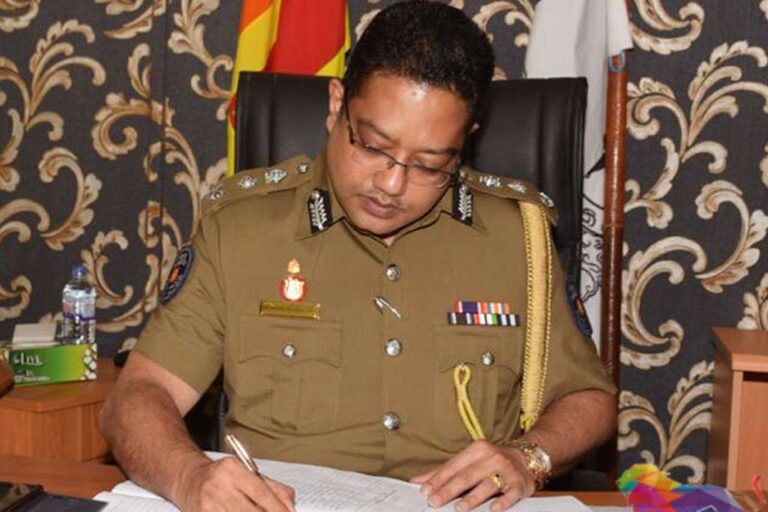
Major General Channa Weerasuriya has been appointed as the Chief of Staff of Sri Lanka Army today (29).

Born on July 15, 1968, Channa is the child of Benson Patrick Weerasuriya and Weerakonda Arachchi Viola and studied in Mahanama College, Colombo.

He joined the Sri Lanka Army on October 27, 1986 in his strongwill of serving his motherland as a young and energetic leader.

Maj. Gen. Weerasuriya completed his postgraduate on Public Administration at the Postgraduate Institute of the University of Sri Jayawardenapura and completed a number of degrees and diplomas at overseas universities.

His contribution to ending the 30-year war is greatly appreciated on and off the military and Weerasuriya is considered as a genuine and humble officer and a human being among many.

MIAP

SL tax collection becomes problematic with malfunctioning RAMIS

0

Sri Lanka Government is facing an obstacle in achieving the budget 2023 tax revenue target of 69 percent increase in revenue collection of Rs. 3,130 billion from this year’s estimate of Rs. 1,852 billion due to malfunctioning of Revenue Administration Management Information System (RAMIS).

The RAMIS software system introduced at Inland Revenue Department in 2016 spending around Rs. 13 billion was ot properly functioning making it impossible for tax officers to send the returns according to the 2017 policy through this system and collect the taxes.

The IRD officials have brought to the notice of the finance ministry about this matter but no action has been taken up to now

H A L Udayasiri, Secretary of the Inland Revenue Service Union said an expert committee should be appointed to look into problems in the Revenue Administration Management Information System (RAMIS).

The RAMIS system was originally to come from an Asian Development Bank loan but it had been rejected and leading to the current crisis, he claimed.

He said “The new Social Security Contribution Tax has now come. We told the Commissioner General not to put that also on this system and mess that up also. When state revenues are down the Departments gets blamed. We have also asked the Ministry (of Finance) about this.”

Udayasiri alleged that the Asian Development Bank was originally going to fund the information system in 2014 but some officials had decided to change the supplier.

“We do not know why the ADB conditions were not adhered to,” Udayasiri said. “The ADB loan was rejected. If matters were done according to what the ADB said this RAMIS system would be successful today.”

The malfunction of the RAMIS system was taken into the discussion yesterday (28) at the Committee on Public Accounts (COPA).

During the meeting, the Auditor General pointed out that the Inland Revenue Department is refusing to give him necessary details with regard to the agreement on the RAMIS system and it is a violation of the Constitution.

 As of 30 June 2022, the department has a total Rs 773 billion in tax dues, fines and interest. Out of that, Rs 201 billion could be earned without any legal obstacle while earning Rs 572 billion has been halted owing to several reasons.

The Auditor General has recognised this sum as the due income that should be charged under both RAMIS and Legacy systems.

When queried as to why the above Rs 201 billion has not been collected as yet, the department officials said the sum is being charged in instalments. COPA Chairman Kabir Hashim then instructed the officials to present a report, on how they expect to charge this sum, to the committee soon.

Furthermore, the Auditor General noted that despite giving instructions at several committee meetings to repair the RAMIS system, the Inland Revenue Department has failed to do so.

Therefore, COPA instructed the department officials to provide a report within one month on how to repair the RAMIS system and make it operational.

Embassy official involved in human trafficking to Oman apprehends at BIA

0

The third secretary of the Sri Lanka Embassy in Oman, E. Kushan has been arrested by the Criminal Investigation Department officers upon his arrival at the Bandaranaike International Airport (BIA) in Katunayake.

The official in question has been accused of allegedly being involved in the human trafficking racket where Sri Lankan females seeking foreign employment as domestic workers had been sent to Oman on tourist visas and later used for sex trafficking.

Kushan arrived in Sri Lanka at around 3.57 a.m. this morning (Nov. 29) from Muscat, Oman’s port capital, according to Ada Derana correspondent at the BIA.

On Monday (November 28), the CID obtained an open warrant for his arrest.After the incident came to light, this embassy staffer was interdicted, and his diplomatic passport was revoked.

Meanwhile, the Committee on Public Accounts (COPA) recently disclosed that complaints against the currently suspended embassy official had been made since February this year, however, a decision on the matter had been delayed.

In the wake of over 90 Sri Lankan women smuggled to Oman by several employment agencies, the officer attached to the Sri Lankan Embassy in Oman who was alleged to have committed human trafficking in Oman has been interdicted and he has now been brought to Sri Lanka for investigations, official source said

It was revealed very recently that a large number of Sri Lankan women had left for Oman to find jobs with tourist visa and many of them have become victims of human trafficking.

They have been detained and used for prostitution, it was reported. Some of the women had entered Oman by crossing the borders from Dubai and Abu Dhabi.

The Criminal Investigation Department (CID) probing the case have identified that several foreign employment agencies operating in Colombo also have supported this human trafficking.

The Oman Embassy said the Sri Lankan victims were sheltered at the safehouse for which the expenses are borne by the Sri Lanka Bureau of Foreign Employment (SLBFE). The Embassy provides welfare facilities to these female workers which includes medical assistance.

The Embassy has been continuously coordinating with the Omani authorities to facilitate early repatriation of these stranded migrant workers.

The Embassy has facilitated repatriation of over 240 female workers during this year and the Embassy said it has also sought the assistance of the International Organization for Migration (IOM) to assist such victims.

The Embassy encourages Sri Lankans who seek jobs in Oman to obtain their employment only through genuine channels.

Central Bank Independence and Prudent Economic Fundamentals – Will the Public come out of the present bankruptcy?

0

Lanka News Web has reported two news items given below.

1. State Finance Minister Shehan Semasinghe assets “that prudent economic fundamentals are being deployed towards economic stabilization and to raise the economic growth rate to around 7%-8% in the next two years.”

2. CB Governor Nandalal Weerasinghe says new Act to “strengthen Central Bank Independence” and thereby curb monetary financing of the budget and place a check on inflation” is to be enacted shortly: new law said to be a “prior action” to unlock the IMF deal that is yet to take place even after 8-1/2 months of negotiation.

The purpose of this article is to educate readers of some of public issues involved in the two news items as highlighted below.

Prudent Economic Fundamentals

It would be better if the Minister states;

  • What are those prudent economic fundamentals, at least a list,
  • From where those are bought to be deployed?
  • What is their link to economic stabilization and to economic growth rate around 7%-8% in the next two years?

I could not find any details from any economic text books or policy literature.

A new Act for Central Bank Independence

I would like to lawmakers to ensure that following questions are answered in the proposed Act.

  • Whether the present Monetary Law Act is repealed and members of the Central Bank are let to act anyway they want?
  • Will there be a new set of currency to be issued by the newly independent central bank and who will pay the face value of the present currencies?
  • Whether capital of the Central Bank already provided by the Government is removed?
  • Whether the EPF, Foreign Exchange Department, Financial Intelligence Unit, fiscal agent and agent of the Government, issuance of Government Securities on behalf of the Government, official depository of the Government and bank supervision are removed from the new Central Bank to avoid conflicts between the Central Bank and Government?
  • Who appoints members of the Central Bank? Will their be a separate general election? Can they be foreign nationals?
  • On whose behalf money will be printed? Against private assets of the members of the Central Bank?
  • Will the Central Bank be permitted to buy government debt in the primary market or secondary market for printing money?
  • In the event the Government finds difficult to borrow in the market for public projects, will the Government authorize the state banks to print money for the Government?
  • Will the foreign currency proceeds of the Government be sold to state banks at market rates?
  • What are the assets the Central Bank is permitted to acquire for printing money? Will the members of the Central Bank pay for bad assets?
  • Will the members of the Central Bank share its profit and losses?
  • Who will audit the money printing? Private auditors?
  • Will the Government remove price control and subsidies for letting the Central Bank to control inflation as its members wish?
  • Who will offer the price index to the Central Bank for monitoring and controlling inflation? Will the Central Bank have its own price index?
  • If inflation rises above set limits, will members of the Central Bank be prosecuted for financial losses to the public?
  • In the case of a banking liquidity crisis, will the members of the Central Bank payout deposits?
  • In the event of a collapse of the monetary system, will the members of the Central Bank pay for the value of currency? If not, are they prosecuted for financial fraud?
  • Will the members of the Central Bank be outside the Constitution?
  • Whether such a mignitude of sacrifice of the state monetary powers is worth for 2.9 bn from IMF which is still undoubted.

There is no difficulty in getting the new law passed by the Parliament because the majority lawmakers do not have any idea of the monetary systems in the world whereas some are even interested in getting the Central Bank to overthrow the Government as happened recently in the UK.

However, unless above stated issues are resolved in the public interest, the newly independent Central Bank will be a threat not only to the governments elected by the public but also to the national security of the country.

(This article is released in the interest of participating in the professional dialogue to find out solutions to present economic crisis confronted by the general public consequent to the global Corona pandemic, subsequent economic disruptions and shocks both local and global and policy failures.)

P Samarasiri

Former Deputy Governor, Central Bank of Sri Lanka

(Former Director of Bank Supervision, Assistant Governor, Secretary to the Monetary Board and Compliance Officer of the Central Bank, Former Chairman of the Sri Lanka Accounting and Auditing Standards Board and Credit Information Bureau, Former Chairman and Vice Chairman of the Institute of Bankers of Sri Lanka, Former Member of the Securities and Exchange Commission and Insurance Regulatory Commission and the Author of 10 Economics and Banking Books and a large number of articles publish. 

The author holds BA Hons in Economics from University of Colombo, MA in Economics from University of Kansas, USA, and international training exposures in economic management and financial system regulation)

Economy Forward: https://economyforward.blogspot.com/2022/11/central-bank-independence-and-prudent.html

Sri Lanka goes ahead with power sector reforms with cabinet endorsement 

0

The government will be implementing power sector reforms to restructure Ceylon Electricity Board (CEB) to make it a profitable entity serving the people.  

Minister of Power and Energy Kanchana Wijesekera announced that Cabinet approval was granted yesterday Monday 28 to the recommendations proposed by the Committee on Restructuring the Ceylon Electricity Board (CEB) appointed on August 05.  

The eight member committee has submitted its report couple of months ago making recommendations on the restructuring of CEB and improving power generation

Sri Lanka’s state-run Ceylon Electricity Board (CEB) has incurred a massive loss of Rs 44.31billion billion in the third quarter this year (from July to September) compared to Rs 21.45 billion during the same period last year  due to high costs for fuel and coal along with operational expenditure, the latest CEB financial statement divulged.

In the first eight months of 2022, the CEB has suffered a loss of Rs 108.6 billion rupees, and It anticipates a loss of RS.108 billion rupees in the fourth quarter despite electricity tariff reforms that were implemented in August, Minister Wijesekera said.

Explaining the reasons for the long-running losses of the CEB, the minister noted that a delay in imposing cost-reflective pricing was the main reason for the utility provider to make losses.

He disclosed the CEB expects an additional income of Rs.15 billion following tariff revisions in August this year.

The limited foreign currency liquidity and resultant shortages of key inputs including heavy fuels and disruptions to the CPC refinery have constrained operations of the CEB resulting in power outages creating significant economic and social challenges, financial statement clarified.

The CEB with a staff of  23 000 members consisting of over 1400 professionals has become a liability to the government due to its massive losses since 2016 as it has been selling electricity to its consumers below cost price which is around Rs 20 per unit.

CEB has massive hidden costs due to its inefficiencies in supply and administration, including over compensation and overstaffing, which are covered through subsidies by large-scale industrial and commercial clients and government guarantees.

The Electricity Reforms Bill will be drafted within a month to begin the unbundling process of the CEB while taking measuresas soonas possible to enact it in parliament.

Successive governments had tried to introduce power sector reforms following recommendations of international agencies the World Bank (WB), ADB and JICA after conducting comprehensive feasibility studies spending millions of dollars from time to time during the past two decades.

As a last ditch attempt, Energy Ministry has been directed by President Ranil Wickremasinghe to expedite the restructuring process of unbundling the CEB by setting up of  state owned companies jointly with the private sector management to take over the generation, transmission, distribution and other functions.

There will be one joint venture each for generation and transmission and three or more for distribution, according to the CEB cabinet memorandum.

It has also been proposed to form separate power generation joint venture companies to undertake functions of the CEB relating to hydro electricity, thermal electricity, coal power and non renewable power generation, distribution, and other activities as well as Lanka Electricity Company (LECO).

These companies will serve as independent power producers (IPP) and will have to sell the energy they generate to the transmission company, along with other IPPs.

Sri Lanka Original Narrative Summary: 29/11

0
  1. Govt to study Singapore’s “Misuse of Drugs Act” which includes the death penalty for drug trafficking: may bring similar laws to combat drug menace: however, no decision on introduction of capital punishment yet.
  2. Chairman of the Public Finance Committee Dr Harsha de Silva instructs officials of the Ministry of Finance and Trade to calculate and give the proper price at which an egg can be sold.
  3. Opposition Leader Sajith Premadasa says SJB will take to the streets along with tens of thousands of people to protect democracy: also says “everything in this country now is working backwards”.
  4. State Finance Minister Shehan Semasinghe solemnly assures there will not be a domestic debt hair-cut: asserts “prudent economic fundamentals are being deployed towards economic stabilization and to raise the economic growth rate to around 7 to 8% in the next 2 years”.
  5. President of the Independent Engineers’ Association of the Electricity Board Nihal Weeraratne warns the country will have its longest power cut in history if sufficient stocks of coal are not received before 15th April: asserts 38 shipments with 60,000 MT of coal is required to meet current electricity needs, but only 4 received so far.
  6. Bangladesh PM Sheikh Hasina says many countries have asked for assistance from Bangladesh, after it helped Sri Lanka with the USD 200mn Currency SWAP, in August 2021.
  7. Chinese Embassy says another consignment of 1,000 MT (100,000 packs) of rice donated by China to Sri Lankan students has arrived: since June, a total of 8,000 MT of Chinese rice has been donated.
  8. CB Governor Nandalal Weerasinghe says new Act to “strengthen Central Bank independence” and thereby “curb monetary financing of the budget and place a check on inflation” is to be enacted shortly: new law said to be a “prior action” to “unlock the IMF deal” that is yet to take place even after 8-1/2 months of negotiation.
  9. More pilots leave SriLankan Airlines: puts carrier’s revival under pressure: compared to pre-COVID cadre of 318 pilots, the number had fallen to 265, post-COVID: current number down to 235, with nearly 40 to follow: Airline CEO Richard Nutall admits “the matter is of concern”.
  10. Police say an Easter Sunday Terror Attack suspect, 38, who was out on bail, hacked to death in Mattakkuliya by two persons who arrived in a vehicle.

Govt. revenue records Rs. 1 trillion mark by July up by 37 percent  

0

The Government has managed to net Rs. 1 trillion in revenue in the first seven months of this year, reflecting a robust 37% growth from a year earlier, Central Bank data showed.

As per the latest Central Bank data, January to July 2022 Government revenue amounted to Rs. 1,093 billion as against Rs. 799.8 billion in the corresponding period of last year.

Tax revenue has improved due to Surcharge Tax, increased Value Added Tax (VAT) rates and Telecommunication Levy, imposition of Social Security Contribution Levy and high inflation.

The increase also comes amidst the sharp contraction in the economy so far this year. Forecast is for the economy to contract by 9% in 2022.

In the first seven months, total expenditure and net lending increased by 17% to Rs. 2.1 trillion from the corresponding period of last year.

The increase is despite the expenditure rationalisation attempts, and mainly attributed to the escalation of additional expenditure on relief measures to alleviate the ripple effects of the pandemic on poor and vulnerable segments of the population.

This achievement was made in unfavourable market developments emanating from increased domestic interest rates, and escalating cost of goods and services  owing to high inflation and large depreciation of the exchange rate, among others.

The overall Budget Deficit in the first seven months was Rs. 1 trillion same as a year ago.

The CBSL has cautioned that any settlement in the near term payments of the Government that were in arrears over the past two years and thus far in 2022  could result in further deterioration of fiscal balances  unless a substantial flow of Government revenue is realised in the period ahead.

This was confirmed in its “Recent Economic Developments – Highlights of 2022 and Prospects for 2023” publication released ahead of Budget 2023 presentation.

During the seven months ending July 2022, domestic financing decreased to Rs. 1,053.4 billion compared to Rs. 1,204.6 billion a year ago.

Foreign financing recorded a net repayment of Rs. 43.3 billion during the period from January to July 2022, compared to the net repayment of Rs. 190 billion in the first seven months of 2021, the report revealed.

Coal tender bender triggers 40 percent of total energy generation loss   

0

Sri Lanka’s power generation is on the verge of loosing the power generation of 40 percent of total energy demand as the energy ministry is grappling to solve the current coal import issue which was arisen due to no bidders for recent coal tenders.     

The supply of coal to the Lakvijaya Power Plant (LVPP) in Norochcholai has become a mission impossible for the energy ministry as nota single supplier had submitted bids to supply coal on credit basis for both term and spot tenders called by the Lanka Coal Company (LCC) recently.

This will result in further extended power cuts for long hours in the coming months if the Lanka Coal Company (LCC) is failed to award the coal supply contract to a prospective supplier as soon as possible, energy ministry sources revealed.      

The suppliers are demanding an upfront payment for the supply of coal and the government is not in position to make such payments due present dollar crisis

Therefore, the LCC is compelled to award the contract considering unsolicited proposals from suppliers, especially on Government-to-Government (G2G) basis.

The relevant advertisement calling for suppliers to submit expressions of interest / proposals to supply coal for Norochcholai power plant was published by the LCC last week and the closing date is on or before December 1.

The Lanka Coal Company has to import adequate stocks during the coal unloading season from October to April, as it can only be unloaded when the sea is calm during the period from October to April each year.

Normally it imports stocks annually through four spot tenders (300,000 MT each) and a single term tender of 1.2 million MT via at least 35 shipments and it has to be  minimum of five shipments per month.

The process of coal procurement has now turned to a cumbersome affair for state authorities following the cancellation of the awarding of spot and term tender twice within less than two months this year first over legal issue and second failure of bidders to comply with guide lines.

 The entry of the entry of two companies Browns / CMEC’s and a Dubai based firm  Coral  energy submitting bids for the second tender  has brought down the Coal pricing from $ 312per MT quoted by the first tender winner Suek AG/Black Sand to the lowest level of $ 250-290.

If the cabinet approved procurement committee has allowed to proceed the tender to one of these companies without cancelling the tender then the Lanka Coal (Pvt) Ltd would have been able to save a staggering Rs.30 billion, senior energy ministry official said.

Sri Lanka has managed to secure 240,000 MT of coal, which will be sufficient till early January next year as the full payments have been made for four shipments, which have been unloaded.

This will result in the shutdown of  Norochchcolai Lakwijaya power plant after January next year due to no supply of coal the whole of next year compelling Ceylon Electricity Board to continue the ongoing power cut keeping the people in the dark for long hours further, Energy Ministry sources divulged.

However the Cabinet of Ministers at its meeting has approved the cancellation of the second spot and term tender for the procurement of Coal recently.