Home Blog Page 1950

RIGHT TO PEACEFUL PROTEST IS AT THE HEART OF DEMOCRACY

0

The swearing in of the new cabinet of ministers by the new president took place in the midst of chaos earlier in the day. Shortly past midnight the protest site that was instrumental in forcing a change of government and was peaceful at the dead of night was forcefully cleared by the military and police perhaps for that event. By this action the new government has risked alienating itself from significant sections of the local and international communities. The past 104 days in which the protest site was in existence saw tens of thousands of people visit it from all parts of the country and all walks of life to demonstrate their solidarity and take part in direct protest as and when they felt it warranted.

The National Peace Council expresses its anguish and disappointment at this turn of events. The brutal attack on the peaceful and helpless protestors are a negation of the ideals and aspirations that the protest movement has been standing for, and which led to the resignation of the former president, prime minister and cabinet of ministers and paved the way to a new president, prime minister and cabinet of ministers. We condemn the manner in which the security forces dealt with the protestors, cordoning off the area prior to moving in, even going to the extent of blocking the entry of medical personnel and ambulances into the site where protestors, media and lawyers alike were being subjected to physical assault.

We believe that the present government that has come to power due to this protest movement should have negotiated with the protestors rather than clear them out with batons. It was known that the protestors were to leave the Presidential premises at around 2 pm in any event. In addition, they had stated that they have made arrangements to hand over the occupied premises by afternoon. It is in such time the government led forces acted to clear the protest site in the early hours of the morning.

NPC calls on the government to protect the democratic right of protest of the people which is at the heart of democracy. Failure to do so could lead to the beginning of a new wave, (another meaning of the word Aragalaya), of protests with an uncertain conclusion. In order to access financial support from the IMF and the international community, the government has to show evidence of good governance and political stability. These include, most importantly, winning the trust and confidence of the people by being consensus oriented, equitable and inclusive, being accountable and respecting the Rule of Law.

It is the responsibility of the new government to lead by its example at this time of economic collapse. NPC renews our call for the appointment of an all-party government alluded to by the new president in his victory speech when he invited the opposition leaders to join the government, actions to resolve the economic crisis, bringing in the 21st Amendment to strengthen institutions of governance and accountability, elections in six months for parliament and provincial councils and a referendum on the abolition of the executive presidency as previously agreed to. It is this change of culture we seek in the larger interest of the country.

Governing Council

The National Peace Council is an independent and non partisan organization that works towards a negotiated political solution to the ethnic conflict in Sri Lanka. It has a vision of a peaceful and prosperous Sri Lanka in which the freedom, human rights and democratic rights of all the communities are respected. The policy of the National Peace Council is determined by its Governing Council of 20 members who are drawn from diverse walks of life and belong to all the main ethnic and religious communities in the country.

National Peace Council

of Sri Lanka


Billionaire Chamath Palihapitiya Issues Global Economic Warning, Says Demand-Side Recession Incoming

0

Billionaire venture capitalist Chamath Palihapitiya is warning that the global economy appears on track to witness two phases of recession.

In a recent interview on the All-In Podcast, Palihapitiya says the world is currently experiencing supply-side recession, which he notes is the first part of the process.

“We have been in a supply-side recession. That is what has caused inflation.

We have to go through a process of taking all the excess money, that’s been put in, out. And when you do that, we will destroy demand and then that’ll trigger a demand-side recession… and we will destroy asset values…

I think we’re still firmly in that first phase, and I hate to be the bearer of bad news, but the reason why I still think we’re in the first part of this process is because people, broadly speaking, still have a lot of savings because of all the stimulus checks. There is still a lot of money.”

Palihapitiya says there are few indicators suggesting when those savings have been depleted and the global economy is about to enter the second phase of the recession.

“When people are more motivated to re-enter the workforce. I think that’s a signal. When credit delinquencies really start to spike, [that’s another signal], because people then tapped out their savings, then they tap their credit cards and then all of a sudden, they become delinquent.

When all of those things happen, you’re probably now at a point where that first phase of the supply side issues [is] largely done and now you get to the demand destruction. But all of those roads, unfortunately, lead to the same conclusion, which is equities get really under pressure.”


THE DAILY HODL

President asks to expedite the fuel distribution throughout the island

0

Ranil Wickremesinghe has given instructions to the concerned parties to speed up and regularize the fuel distribution all over the island.

The President gave these instructions during the discussion held at the Prime Minister’s Office this morning (23) on the fuel problem and its next steps.

Education Minister Susil Premajayant drew the President’s attention to the provision of necessary transportation facilities for school children when starting schools across the island from next Monday. Accordingly, the President instructed the Minister of Transport to provide an opportunity for buses and vans transporting school children to get fuel from all Langama depots across the island from 3.00 pm today.

According to the previous system, it was decided to release fuel for agricultural activities including fishing, tourism and fertilizer distribution as well as for public transport activities through the SLTB depot and at the tri-army bases all over the island.

The president also directed the police to expand the related raids and strictly enforce the law against the concerned individuals and groups.

Sri Lanka: Security Forces Assault Peaceful Protesters

0

(New York, July 22, 2022) – In the early hours of July 22, 2022, Sri Lankan security forces forcibly dispersed people at a peaceful protest site and assaulted protesters in central Colombo, injuring more than 50 people and arresting at least 9 others, Human Rights Watch said today.

President Ranil Wickremesinghe, who took office on July 21, should immediately order the security forces to cease all unlawful use of force against protesters, release everyone arbitrarily detained, and investigate and appropriately prosecute those responsible for abuses. Foreign governments and multilateral agencies that have sought to address Sri Lanka’s economic crisis should emphasize to the new government that respect for human rights is critical for economic recovery.

“Just one day after taking office, President Wickremesinghe oversaw a brutal assault by security forces on peaceful protesters in the heart of Colombo,” said Meenakshi Ganguly, South Asia director at Human Rights Watch. “This action sends a dangerous message to the Sri Lankan people that the new government intends to act through brute force rather than the rule of law.”

Several hundred police, army, navy, and air force personnel carried out the July 22 raid. Hours earlier, protest organizers had announced that they would leave the protest site the following day. Using batons, the security forces attacked demonstrators who had remained at the protest site, along with several journalists and two lawyers who were there. Protesters told Human Rights Watch that air force personnel detained a small group of people for several hours and severely beat them before they were released.

A person who was there at around 1 a.m., when the security forces attacked the protest site, said: “Some people were badly injured. Since we were surrounded by security forces, we couldn’t get the ambulance inside [the site].” He said the first ambulance arrived at about 7 a.m. “There was one person who got beaten very badly, he couldn’t even stand. He got to hospital after five hours.” He said that the security forces appeared to be targeting perceived leaders of the protest movement: “They pointed out some specific people and they took them in.” Others were beaten but not arrested.

Nine people who were arrested were produced in court on July 22 and released on bail. A Bar Association of Sri Lanka statement said that they included “at least one lawyer and several journalists. . . The use of the Armed Forces to supress civilian protesters on the very first day in office of the new President is despicable and will have serious consequences on our country’s social, economic, and political stability.”

Since the beginning of 2022, Sri Lanka has experienced an escalating economic crisis and the government has defaulted on its foreign loans. The United Nations warned that 5.7 million people “require immediate humanitarian assistance.” With many Sri Lankans experiencing extreme shortages of essentials including food and fuel, peaceful protests began in March. The protests led then-Prime Minister Mahinda Rajapaksa to resign on May 9, and his brother, President Gotabaya Rajapaksa, to flee the country on July 13 and resign the following day.

Wickremasinghe became acting president, and parliament elected him as the new president on July 20 with the support of the Rajapaksas’ political party, the Sri Lanka Podujana Peramuna. He had previously described some protesters as “fascists” and declared a state of emergency on July 18.

On July 21, Wickremesinghe issued an order to “call out with effect from July 22, 2022 all the members of the Armed Forces . . . for the maintenance of public order.” Under emergency powers the president can override, amend, or suspend a provision of any law, except the constitution. Emergency powers can be used to detain people while bypassing the ordinary process of the courts and have repeatedly been used in the past to enable human rights violations.

While international law permits the suspension of certain rights during an emergency, protections against torture, excessive use of force, and other fundamental rights must never be violated. The Human Rights Commission of Sri Lanka said the state of emergency was “inappropriate” and called for it to be withdrawn. It called the military attack on peaceful protesters “brutal and despicable.” Diplomats from countries including the United States, United Kingdom, Switzerland and Canada, as well as the UN and European Union, also condemned the assault on the protest site.

Following the raid, fresh protests were staged in Colombo against the security force crackdown. Law enforcement for public assemblies should normally be carried out by civilian police, not military personnel, as military personnel typically have little training in crowd control. All security forces should abide by the UN Code of Conduct for Law Enforcement Officials and the Basic Principles on the Use of Force and Firearms by Law Enforcement Officials, Human Rights Watch said.

“Urgently needed measures to address the economic needs of Sri Lankans demand a government that respects fundamental rights,” Ganguly said. “Sri Lanka’s international partners should send the message loud and clear that they can’t support an administration that tramples on the rights of its people.”

HRW press

Summon the Parliament on Monday – SJB

0

The Samagi Jana Balawegaya has requested the Prime Minister to convene the Parliament on the coming Monday (25).

The People’s Liberation Army has requested for a debate on the attack on the golf face struggle ground yesterday morning (22) and the current situation of the country on that day.

The Hope and Fear of the Sri Lankan Protest Movement

0

Last week, protesters in Colombo stormed the residence of Gotabaya Rajapaksa, the President of Sri Lanka, who had fled the country and later resigned over e-mail. After months of rising prices and dwindling supplies of food and medicine, discontent in Sri Lanka has reached a fever pitch. (Rajapaksa’s brother, the Prime Minister, also resigned.) The country now faces a period of uncertainty, but also opportunity. It must navigate out of the current economic and political crises just a dozen years after the end of its brutal civil war, when, in 2009, the government, led by the Rajapaksa brothers, defeated a decades-long insurgency by the Tamil Tigers. (On Wednesday, Sri Lankan lawmakers voted to replace Rajapaksa with Ranil Wickremesinghe, an establishment figure whose house had already been set on fire by protesters. Two days later, security forces raided the main protest camp. Wickremesinghe said the uprising had been infiltrated by fascists.)

I recently spoke about the situation, by phone, with Ahilan Kadirgamar, a political economist at the University of Jaffna. During our conversation, which has been edited for length and clarity, we discussed the causes of the current crisis, the legacy of the Sri Lankan civil war, and where the protests might go from here.

What are we seeing in Sri Lanka? How would you characterize it? Is this a revolution?

This is by far the most formidable protest in the history of the country over the past two centuries. It has completely shaken up state and society. I characterize it as a revolt and not yet a revolution, because it doesn’t want to change fundamental social relations. It’s only looking for regime change. That has been the demand, and it has succeeded. They have chased away the President, but they are not thinking in terms of, say, changing social relations, or property relations. It hasn’t gone that far, but there’s this huge politicization of people that is also coming along with these protests. It’s not as if there’s some ideological vanguard that is pushing this protest forward. It’s through the practice of protest and larger waves of people coming out on the streets that it has become so powerful.

Four decades ago, the President at that time, J. R. Jayewardene, created an executive Presidency to be able to consolidate power for himself. And, since then, we’ve had this Presidency kind of similar to the French model, but with overwhelming powers, which the movement put the blame squarely on—especially the last President, who was just dislodged. And now there are also tremors to abolish the executive Presidency. They hope to bring stability to address the underlying causes of this political crisis, which is the economic crisis that has been unfolding. So, again, I would characterize it as a tremendous revolt, but not quite a revolution yet.

What were the causes of the economic crisis?

If you had to trace this economic crisis backward, the real aggravation was caused by the war in Ukraine, where global oil, commodity, and fertilizer prices have doubled or more. And in Sri Lanka it led to a foreign-exchange crisis, where we were unable to import many of the commodities necessary to run the economy. That’s why we are seeing so many shortages and tremendous price hikes. Compared with six months ago, the price of bread has tripled, the price of rice has tripled, the prices of petrol and diesel have more or less tripled.

The cost of living has gone through the roof. And the war in Ukraine has some part to play in it, but it goes further back. This is really a crisis of the external sector, or what we are calling here a “dollar crisis”—the lack of dollars for imports and to be able to repay our debt. With the pandemic, in March, 2020, it was obvious to us that we were very quickly heading toward this kind of a crisis, because a large amount of our earnings come from tourism. That was completely disrupted. And then foreign remittances—that is, from going to the Middle East and Southeast Asia as blue-collar or domestic workers—also started to decline, because of the disruptions in those countries with the pandemic.

It was also the gross mismanagement by the [Gotabaya] Rajapaksa regime, which came to power in 2019. They could have prioritized imports, they could have saved some of our foreign reserves to be able to wade through a crisis. It’s the gross management that led to such a severe situation.

But I would argue the crisis actually goes even further back. Sri Lanka went through a civil war for twenty-six years, from 1983 to 2009. The end of the civil war coincided with the global financial crisis of 2008. When Sri Lanka’s war ended, in May, 2009, there was a lot of global capital flowing into emerging markets. But Sri Lanka was actually seen as not only an emerging market but a postwar economy. So global-capital investors were euphoric about Sri Lanka to the point that, between 2009 and 2010, Sri Lanka had the best-performing stock market in the world—the Colombo Stock Exchange more or less quadrupled in eighteen months.

And, with that, the government borrowed extensively and invested in infrastructure. Because of the inflow of capital and the construction, they could show fairly high levels of growth for the first three years, on the order of eight per cent of the G.D.P., but there were no returns on it. And so, in my view, the crisis really started a decade ago with that kind of bubble investment, which was also cheered on by the Bretton Woods institutions and global financiers.

Aside from the economic impact, how did the civil war lay the ground for what’s going on now?

The Rajapaksa regime—President Gotabaya Rajapaksa, who just recently resigned, and his older brother Mahinda Rajapaksa, who became President in 2005, with Gotabaya Rajapaksa as the defense secretary under him and considered a very brutal character, with allegations of grave human-rights abuses—that regime finally defeated the Liberation Tigers of Tamil Eelam, considered one of the most brutal armed organizations. They were considered impossible to defeat, and the Rajapaksas defeated them in May, 2009, which gave them carte blanche to consolidate their regime. They had a landslide victory six months later, and part of it was because Sri Lanka was seen as stable because they had such a strong authoritarian regime. Their authoritarianism, combined with the development push—where they saw development as a solution to all of Sri Lanka’s problems, instead of considering the grievances of the minorities, and so on—was also the thrust of our economic trajectory.

But Sri Lanka also has a very strong democratic sensibility. Sri Lanka was the first country in Asia to get universal suffrage, way back in 1931. The British actually decided to do an experiment in Sri Lanka, because of mounting pressure from the ground at that time. So, well ahead of many European countries, all men and women got the right to vote in 1931. And that democratic sensibility continued, because when Mahinda Rajapaksa won the war many analysts were saying, “Now this regime is going to be there for the next two decades.” In 2015, they were dislodged. They were thrown out of power, but they were waiting in the wings to take it back. And they managed to do that in 2019, when the coalition government failed miserably on the economic front.

To go back to your question—2009, the war, militarization, authoritarian power, the euphoria, and the majoritarian nationalism were all part of consolidating the regime’s power, and the economic trajectory was set by that regime without democratic engagement.

My understanding is that the Rajapaksa regime was interested in developing closer economic ties with China, which was a hotly debated issue within Sri Lanka. The United States and India, which is very connected to Sri Lanka, had strong opinions about this. How big a change was the embrace of China, and did it have a role in the economic collapse we’re seeing now?

Sri Lanka actually has a long relationship obviously with India but also with China. It goes back to the [end] of the Korean War, when we imported rice from China and exported rubber. Then when Sri Lanka was part of the Non-Aligned Movement, from 1956 to 1976, we had a very close relationship with China, and that relationship gained traction again in the middle of the civil war, when Sri Lanka got support from various international actors in its fight against the Tamil Tigers. The United States was backing it, and so was India.

India, who had a former Prime Minister who was killed by the Tigers.

Absolutely. And there were Indian peacekeeping forces. They actually had boots on the ground here between 1987 and 1990. But, in another way, the Indians were the ones who also supported the Tamil militancy, including the Tigers early on, as Sri Lanka shifted away from nonalignment and toward the U.S. in 1977. From 2006 to 2009, China also supported Sri Lanka’s military effort. Sri Lanka went to every actor. They even got close to Qaddafi, in Libya, and with Iran, to get oil. They were playing with everyone during that last phase of the war, which unnerved the West. The grave human-rights abuses, the war crimes that were committed by both the Tamil Tigers and the government, led to the sanctioning of Sri Lanka, particularly by the U.N. Human Rights Council. In the process, the Rajapaksa regime became increasingly alienated from India and the West.

In terms of the economic crisis, as I mentioned, it’s primarily a crisis of the external sector and foreign debt. But only ten per cent of our external debt is owed to China. The real problem is our commercial borrowing in the capital markets, which amounts to fifty-three per cent of our external debt. That’s what really pushed us into this debt trap. There’s geopolitics with China, but I would put the weight of the current crisis, and particularly the debt crisis, on this rampant commercial borrowing by the state.

With the Rajapaksas gone, what do you see as the goals of this movement?

If I can trace the protest movement a bit—throughout the war, the state was asking the population to tighten their belts, saying, “We are fighting a war, and we can’t provide relief. It’s difficult times.” So there were a lot of expectations at the end of the war that now there’s going to be development and prosperity.

In reality, there was no peace dividend to the people. The inequalities continued to rise. There was all this infrastructure development, and certain financial classes in Colombo made a killing during that time. That was one of the reasons why the Rajapaksas were overthrown. Sri Lanka has a very long history of social welfare. To this day, we have universal health care. Anybody can go to hospital, and get admitted, with free health care. All our universities are free. All my students have free education from primary school through university. Until the nineteen-seventies, we even had a food subsidy.

People have this expectation from the state in terms of addressing their economic needs. One of the reasons why the previous government that replaced the Rajapaksas was overthrown was that, in 2016 and 2017, there was a major drought and they really didn’t respond to the agricultural community. We have a history of these kinds of protests coming up on economic issues. When the pandemic hit, Sri Lanka provided the least amount of relief to people in South Asia as a percentage of G.D.P. So there were all these grumblings that you could hear from people becoming disenchanted with this regime—that [the Rajapaksas] have only focussed on consolidating power.

The straw that broke the camel’s back was that they tried to militarize and privatize education. The teachers, the students, university teachers—all of us started to protest. A year ago, their legitimacy was cracking. That’s when they brought about this disastrous fertilizer ban for agriculture. The President said he was going to make Sri Lanka a completely organic country overnight, and ban the import of all [chemical] fertilizers, which pretty much devastated our agricultural sector. The farmers were resentful.

What comes next for the protest movement?

We should go back to a parliamentary style of government. Even in Parliament, where we have two hundred and twenty-five members, the overwhelming majority belong to the President’s party, and they’re all discredited. They’re the ones who’ve been governing. It’s very hard to have elections now; there would need to be some kind of an interim government, possibly a minority government of the opposition, to bring about political and economic stability.

An idea that has been emerging out of the protests is an idea of a people’s council. A people’s council would have representation from the protesters, various professional organizations, the bar association, trade unions—all of them coming together to be a consultative body to the Parliament, and also to keep a check on it, because people have really lost confidence in Parliament. If you don’t have that kind of a mechanism, every time the Parliament goes off track the only option is to go out on the streets and protest.

What about the makeup of this protest movement? The country is about seventy per cent Buddhist, but there’s a large Hindu minority and a Muslim minority, as well. How multiethnic and multi-faith has the protest movement been?

That’s been the positive, encouraging thing. In the protest, all three ethnic communities have been coming together. Keep in mind that there was a huge anti-Muslim wave that was mobilized by the Rajapaksas over the past decade. So people are coming together.

Just to be clear, for people who don’t know—the Tamil Tigers were not a Muslim group.

In terms of the ethnic communities in Sri Lanka, about seventy-three per cent belong to the Sinhala community, mainly Buddhist. A small percentage of them converted [to Christianity] because Sri Lankans went through five centuries of colonialism, with the Portuguese, the Dutch, and the British.

Then there are the Lankan Tamils, who have lived in Sri Lanka for a couple millenia. The Tamil Tigers wanted a separate state for this ethnic community. The Tamil Tigers are not Hindu. I would say they were secular—they had Christian and Hindu members—but they were virulent nationalists, and almost fascist in terms of one leader, one nation, one people. They ethnically cleansed the Muslims out of the north, in 1990. There’s also the up-country Tamils who were indentured labor brought over from South India by the British, to work in the first coffee and tea plantations. And there are Muslims who are Tamil-speaking, who have their own ethnic identity.

All of them have been part of this protest movement. That’s been really encouraging. The protests have been spreading all over the country. They’ve been protesting in my home town, Jaffna, as well, but it has not been as powerful, for a couple reasons. One, the north has been much more militarized than the rest of the country. The Rajapaksas militarized the north, so not as many spontaneous protests have happened, because people have also gone through a civil war and they’re much more cautious.

Two, many Tamil nationalists have also been discouraging people from participating because they want to keep this exclusive Tamil nationalism, and they’re also concerned about the Tamils joining with the Sinhalese. But, for the most part, if you look at the protests, all communities have been participating. As the protests mount, people come in waves, like the big protests on July 9th, where you had hundreds of thousands of people. And this despite all kinds of fuel shortages. They were jumping on trucks and lorries, and people were giving them lifts. They forced the trains to run.

What are your biggest concerns about where things might be headed?

I would compare the crisis we are facing economically to the time of the Great Depression in the nineteen-thirties. It’s a very similar moment to 1934 and 1935, when the Depression was affecting the entire world. Sri Lanka also went through a malaria epidemic, and almost two per cent of our population died. That was huge. It had an even bigger impact than the pandemic. That crisis left a huge legacy. The thirties—that’s when our democratic sense emerged, that’s when we pushed for free education. We’ve had free education since 1944, and universal health care since 1951.

It led to certain progressive changes, which made Sri Lanka a model development state in the seventies, because even though our per-capita income was low we had very high human-development indicators in terms of literacy, in terms of life expectancy, and so on. The seventies brought another global conjunction, with the price of oil going up, very similar to the situation now. We went into a severe crisis and that led to an authoritarian regime emerging with J. R. Jayewardene, who took us in the direction of liberalization, undermining social welfare. He instituted the Prevention of Terrorism Act, created a state of emergency, and crushed organized labor, which led to the civil war, as well, by 1983, under his rule.

Now we are at a similar moment of crisis, and that’s where I have my hope, but also my fears. It could go in a progressive direction, of addressing the concerns of the people, further democratization, equality, and freedom in terms of inter-ethnic relations, and all of that. Or it could lead to a very worrying, polarized, authoritarian, almost fascist rule, if the military or various actors get together and decide to completely repress this movement. 

By Isaac Chotiner

Train fares increased from today!

0

Railway General Manager Dhammika Jayasundara says that the railway fare revision will be implemented from today (23).

Accordingly, according to the new railway fare revision, the minimum railway fare which was 10 rupees will be increased to 20 rupees, the minimum fare for the second class is 50 rupees and the minimum fare for the first class has been revised to 100 rupees.

The stage ticket fee has also been increased to 20 rupees.

These revised fares are also to be displayed at every railway station from today.

Although the train fares have also increased, these fares are still low compared to the bus fares.

CPC’s spot purchases hike fuel price to a new high

0

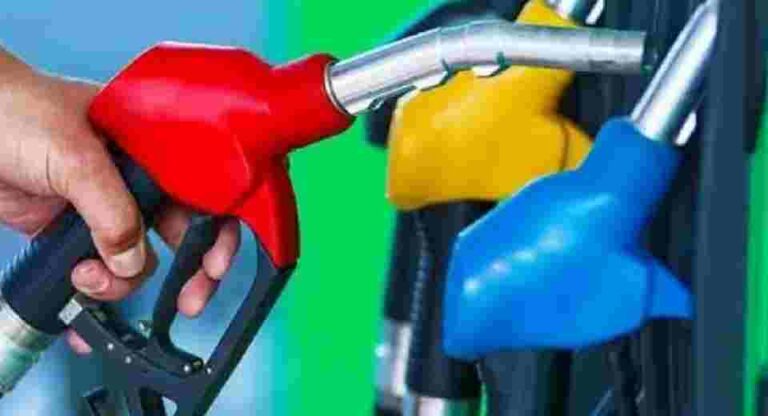
Due to a combination of spot purchases, unsolicited bids (instead of established term contracts) and miscalculation of the pricing formula, Sri Lankan motorists – in recent months – are forced to pay more for fuel at the pump.

Motorists are forced to pay an additional sum of around Rs.145 per litre for 92 petrol, Rs.162 per litre for 95 petrol and Rs.175 per litre for auto diesel due to the recent practice of spot purchase of fuel from any supplier at their selling price in unsolicited bids, a senior Finance Ministry said. .

He noted that the Energy Ministry has no option other than approving the Ceylon Petroleum Corporation (CPC)’s unsolicited proposals to procure fuel from available suppliers due to the present dollar crisis.

The increase in prices on June 26 was based on an inflated landed cost under a new fuel pricing formula introduced on May 24, Sri Lanka Customs and Finance Ministry data showed.

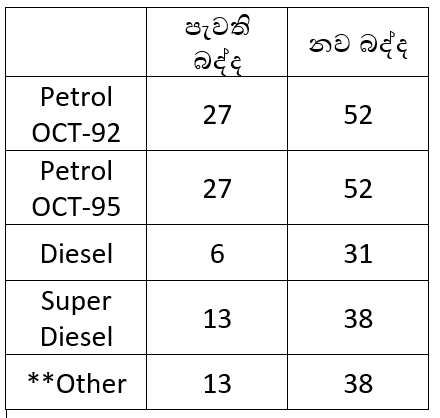
Then petrol 92 increased by Rs.50 to Rs.470 per litre, petrol 95 by Rs.100 to Rs.550, diesel by Rs.60 to Rs.460 and Super diesel by Rs.75 to Rs.520.

This price revision under the new formula included all costs incurred in importing, unloading, distribution to the stations, taxes, as well as operational and administration costs, an Energy Ministry report revealed.

However the new formula is based on a report released on estimated cost of imported refined petroleum products by spot purchasing and it cannot be considered as a proper fuel pricing mathematical model, several energy experts including a former CPC chairman told the Business Times.

They noted that considering the spot purchase price of fuel in calculating landed cost of fuel will lead to discrepancies and manipulations in fixing the wholesale and retail price (price at pump).

A previous fuel price formula formulated by the Finance Ministry in 2018 was based on CIF price (FOB + freight + insurance + evaporation losses) to which the following costs were added – port + jetty charges + customs and excise duty + financial charges + storage and terminal charges + marketing and distribution charges – to arrive at the wholesale cost.

The retail price was arrived at by adding the profit margin of 5 per cent + retailer and dealer margin of 2.5 per cent of the wholesale price + VAT.

Fuel prices had been revised monthly at that time to reflect changes in Singapore Platts average FOB price and exchange rates.

The steep fuel retail price was fixed by the Energy Ministry based on the high landed cost compared to the actual cost, Sri Lanka Customs data shows.

According to the table published along with the details of the new fuel pricing formula by the ministry in May this year, the landed cost of 92 octane petrol is Rs. 363.50 per litre but the actual cost indicated in Customs records is Rs.228.26 per litre with the gap being Rs.135.24.

Similarly the landed cost of 95 octane is Rs.367.18 per litre while the actual cost is Rs.235.23 per litre, the difference being Rs.131.95. The landed cost of auto diesel is Rs.403 per litre but the actual cost is Rs. 255 and the difference is Rs.148.

With a view to justifying the fuel price hike to a new high the total tax on 92 octane petrol has also been inflated to Rs.59.26 compared to an actual tax of Rs.49.12, Treasury records show.

According to the fuel pricing formula data the total tax imposed on 95 octane petrol is Rs. 80.54 while the actual tax component should be Rs.49.64.

Auto diesel tax indicated in the new formula is Rs.36 whereas the actual tax component is Rs.19.19.

A notice from the European Union to protect the GSP plus tax relief!

0

The European Union has informed that the Sri Lankan government should act to protect the GSP plus tax relief.

They state that they will further commit themselves to economic and reconciliation activities in Sri Lanka while protecting democratic rights.

The European Union emphasizes this by issuing a press release strongly condemning the attack on a group of peaceful protestors in the Galle Face protest area yesterday morning.

Accordingly, they have emphasized the government of this country to confirm the right of civilians to assemble peacefully and express their opinions freely.

They inform to prepare a sustainable program to bring the country’s economy on the right track and to protect human rights, rule of law and good governance policies.

In the past few years, the European Union has provided 01 billion euros in aid to Sri Lanka and the European Union also points out that the Sri Lankan economy received strong support due to the GSP plus tax relief that was re-enforced in 2017.

Sri Lanka ‘s new President to prorogue Parliament to initiate system change

0

After swearing in as the 8th Executive President of Sri Lanka, Ranil Wickremesinghe informed party leaders that he intends to prorogue parliament for 24 hours for a “fresh ceremonial start”, Parliamentarian Mano Ganesan said.

“President Ranil Wickremesinghe informed party leaders that he intends to prorogue parliament for 24 hours for a “fresh ceremonial start”,” he tweeted.

The prorogation of parliament even for one day will enable the new President to reconstitute parliamentary select committees and appoint five new finance committees along with 10 oversight committees to resolve the economic and political crisis faced by the country.

According to Mr .Wickremesinghe said new committees will be appointed to supplement the already existing committees on government finance namely: the Public Finance Committee, the Accounts Committee, and the Committee on Public Enterprises.

Ten oversight committees that report to the parliament on policies will be appointed, and the parliament should act on the recommendations of these committees, the new Sri Lankan PM said in a special statement.

“The youth are calling for a change in the existing system. They also want to know the current issues. Therefore, I propose to appoint four youth representatives to each of these 15 committees,” he said.

President Wickremesinghe also stressed on the need to change the structure of the parliament to strengthen it adding that his aim is to fulfill the aspirations of a new breed of youths who were conducting struggle at Galle Face Green demanding a system change.

Following the implementation of this strategic plan will make the youths struggle null and void and automatically they will be involved in the country’s administrative process , if they are willing to give up the acts of sabotage and damages to public property and looting of assets,several economic analysts said.

His aim is to establish a National Council, a committee consisting of the Speaker, the Prime Minister, the leader of the opposition and the leaders of the major parties

. The National Council can talk about the policies of the country as well as about the decisions of the Cabinet,” said Sri Lankan President.

Ranil Wickremesinghe took oaths as the 8th Executive President of Sri Lankaon Thursday 21 . He was sworn in before Chief Justice Jayantha Jayasuriya at the parliamentary complex.

Wickremesinghe, a six-time former prime minister had the backing of the Sri Lanka Podujana Peramuna (SLPP), the largest bloc in the parliament.

He is thus qualified to hold the office of the President for the remaining term of the presidency, which was left vacant after his predecessor Gotabaya Rajapaksa stepped down last week.

Wickremesinghe was appointed as the caretaker president, Rajapaksa fled the country on a military plane to the Maldives and then took a commercial flight to Singapore.

He has held the office of prime minister six times although he never completed a term. His latest and shortest term in office as the prime minister was when former President Gotabaya Rajapaksa appointed him to the position on July 13 this year.

This appointment was made by him after his brother Mahinda Rajapaksa was forced to step down amidst growing public agitation over economic mismanagement and corruption allegations.